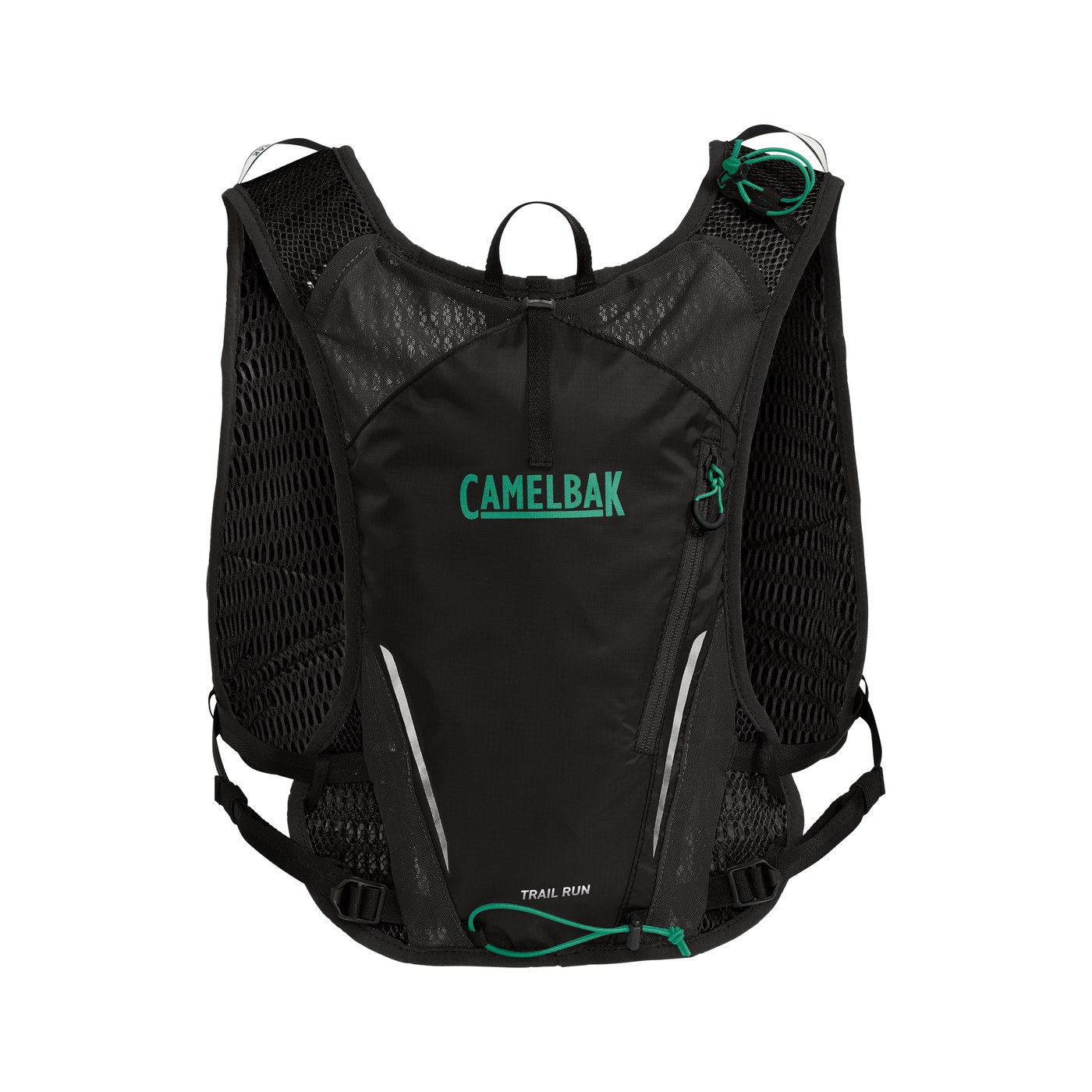
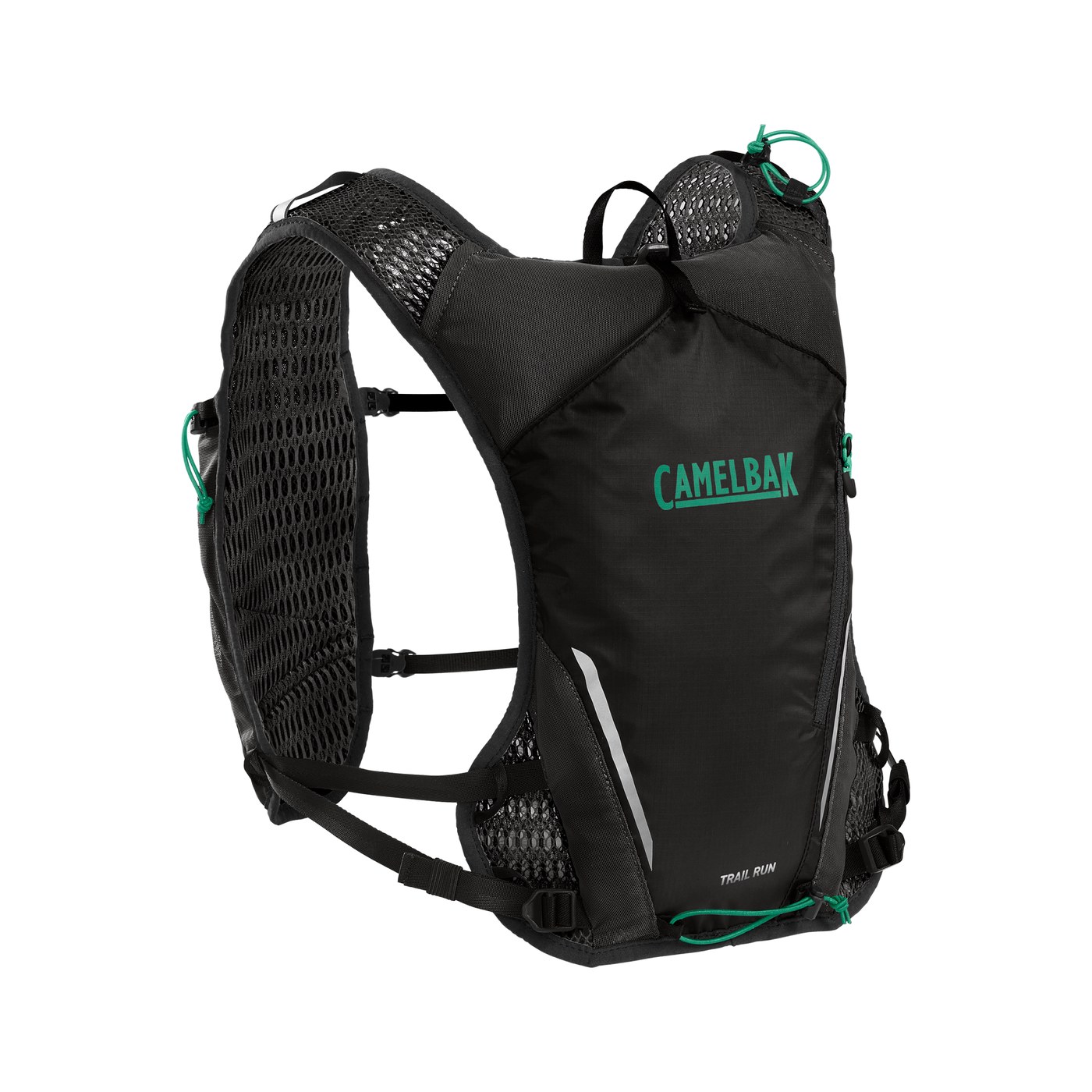
Field test: from quick runs to technical midday trails
Independent reviews of the CamelBak Trail Run Vest covered runs from 10 to 19 km, with total elevation gain between 300 and 700 m and temperatures from 18 to 29 degrees, including one run that ended in light rain. That protocol matches what the vest is built for: fast trail running in training or timed races, not multi-hour ultras.
On comfort and ventilation, the field-test consensus is clear and positive. The 3D mesh really does breathe, and no one reported a hot spot in the lower back, even on runs of more than two hours at a solid pace. The Command Center shoulder straps are well padded without being thick, and they don't chafe under the arms or at the collarbones on long runs of close to 20 km.
Stability is where opinions split. A review published by a French-language trail magazine notes a shearing effect along the sides when the straps are cinched too tight, with the vest tending to ride up toward the lower ribs as you run. A more thorough French review confirms that limit. You don't feel the missing hip belt on smooth terrain, but it becomes noticeable on a technical loop with several hundred meters of fast descent, where the pack tends to ride up slightly. The remaining vertical movement is rated acceptable up to 70-75% of maximum load; beyond that, the lack of a low anchor point shows more.
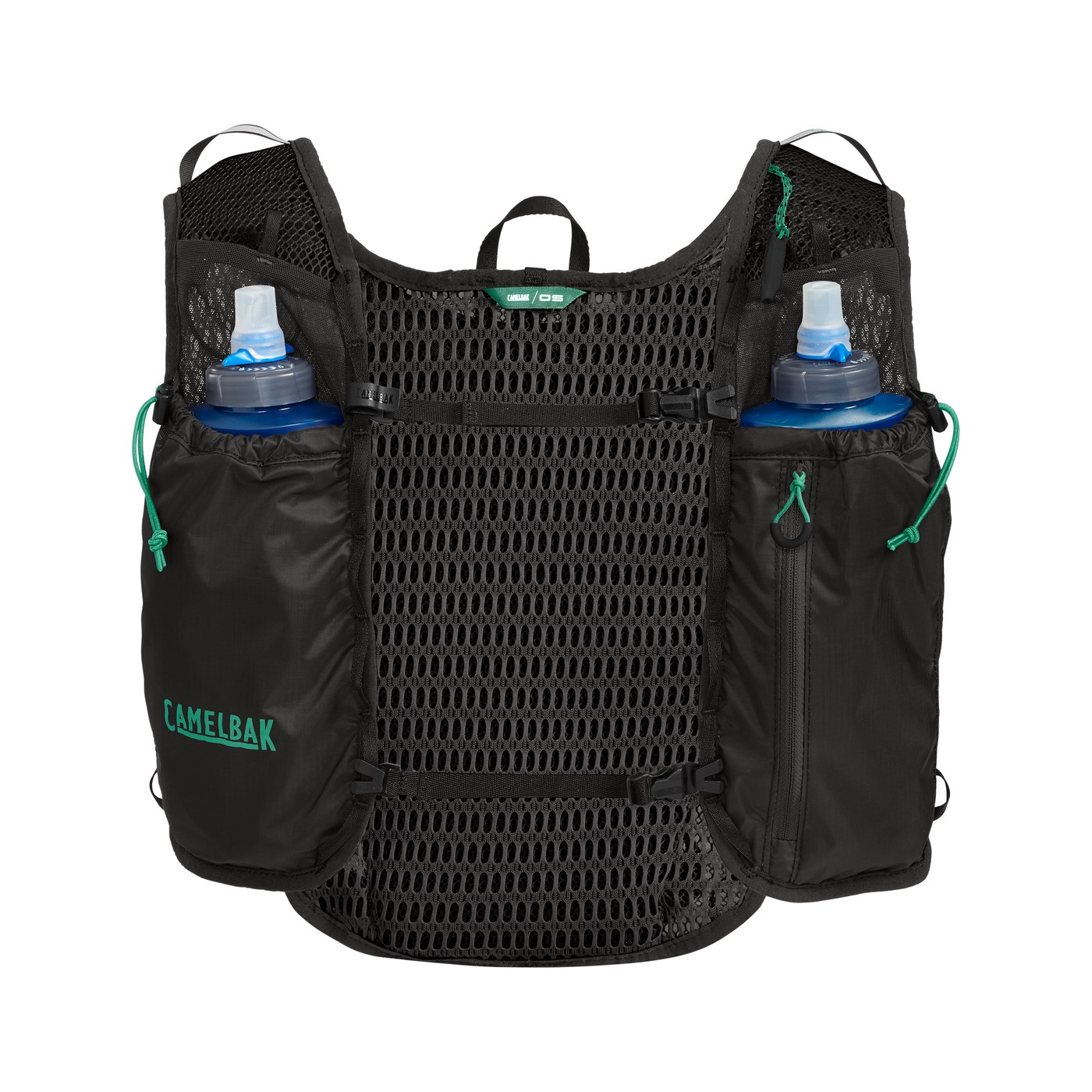
On storage access, the feedback once again leans heavily in the vest's favor. You reach the front flasks without twisting or breaking stride, in under three seconds once the move becomes automatic. The Command Center pocket holds a standard smartphone without throwing off your running form. As for the hydration system itself, independent testers unanimously praise the quality of the materials and report zero leaks over several runs, with a Big Bite valve that delivers from the very first kilometers. There's one point of disagreement at the end of the flask, though. Several user reports say the Quick Stow flasks get harder to seat properly in their pockets once they're nearly empty and can shift slightly, while other testers had no trouble at all, even with the flasks three-quarters empty. At RunMorph, the practical takeaway from this feedback is simple: blow a little air back into the flasks before stowing them mid-run. It makes them much easier to put back in place.
RunMorph tip: the CamelBak Trail Run Vest is at its best on 10 to 20 km runs with a specific pace target. For long runs beyond two and a half hours, always pack a compact waterproof layer in the main compartment, since the fabric has no water-repellent treatment. If your go-to distance is closer to ultra territory, look instead at the Salomon Active Skin 8 or the Black Diamond Distance 8, both of which offer more volume.
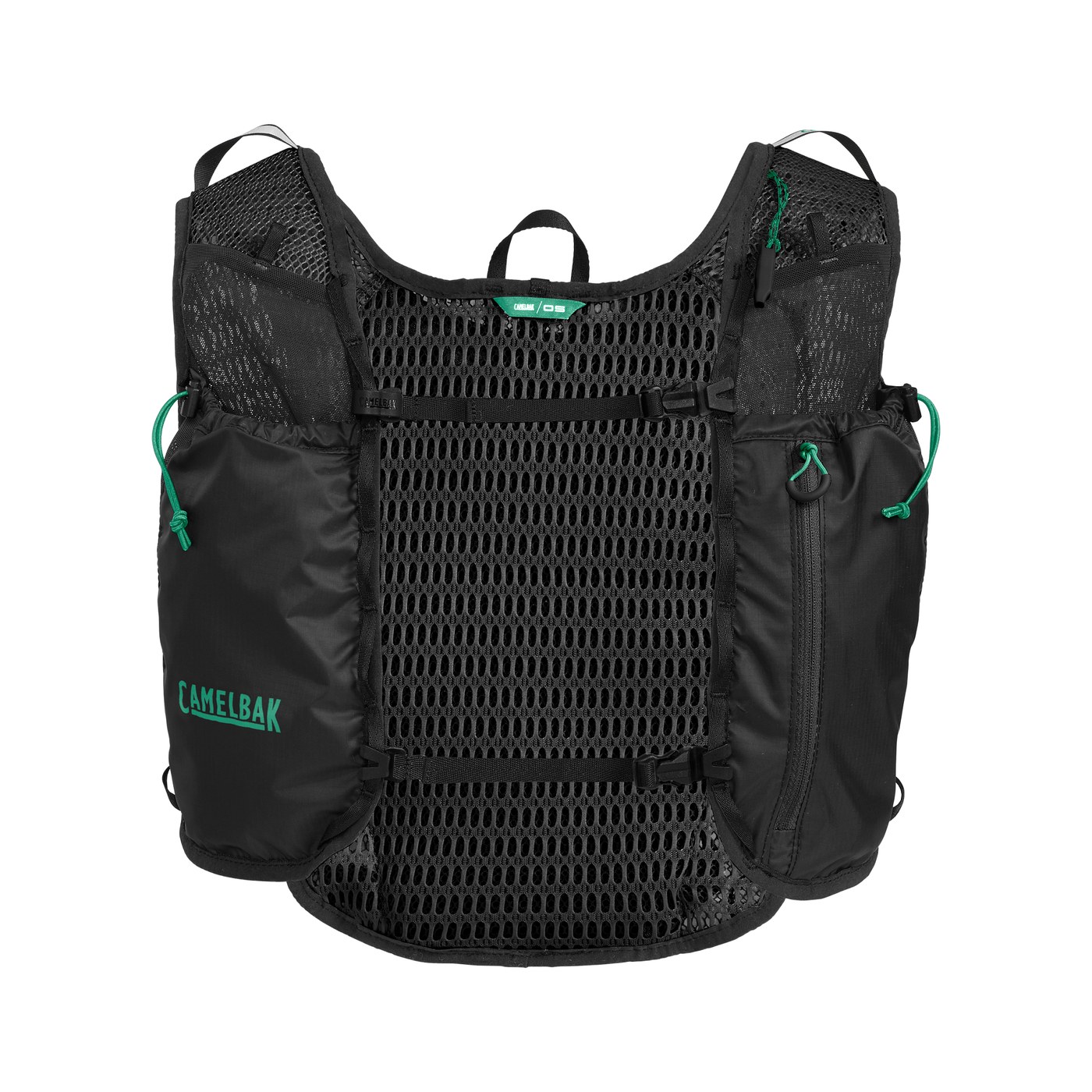
© CamelBak, official photo used for editorial purposes
On durability, the thin 3D mesh that delivers all that ventilation is also the most frequently cited weak spot. It holds up well on open trails, but it can snag in brushy sections or with repeated contact against rock. On the flip side, the silicone flasks and the sternum strap clips are unanimously praised for their toughness, and CamelBak's lifetime warranty is a real safety net at this price.