All reviews
August 18, 2026

Coros Pace 3 Review: Dual-Frequency GPS for Under 230 Euros

8/10
Coros Pace 3 Review: Dual-Frequency GPS for Under 230 Euros
  • Accurate dual-frequency GPS, confirmed by several independent reviews against more expensive Garmin watches
  • Featherweight 30 grams you forget on your wrist, even on long runs
  • Comfortable battery life in real weekly use, despite a measured gap under heavy use
  • No full mapping, only a breadcrumb trail to follow a pre-planned route

A GPS watch under 230 euros with dual-frequency GPS, a next-generation heart rate sensor and a built-in MP3 player sounds like a marketing promise too good to be true. Yet three years after launch, the Coros Pace 3 is still one of the most-cited watches in French buyer's guides, alongside models that cost twice as much. At RunMorph, this review draws on the consistent feedback of several French testers who wore it for weeks, some for more than a year and over 3,000 kilometers, rather than just unboxing it for a photo.

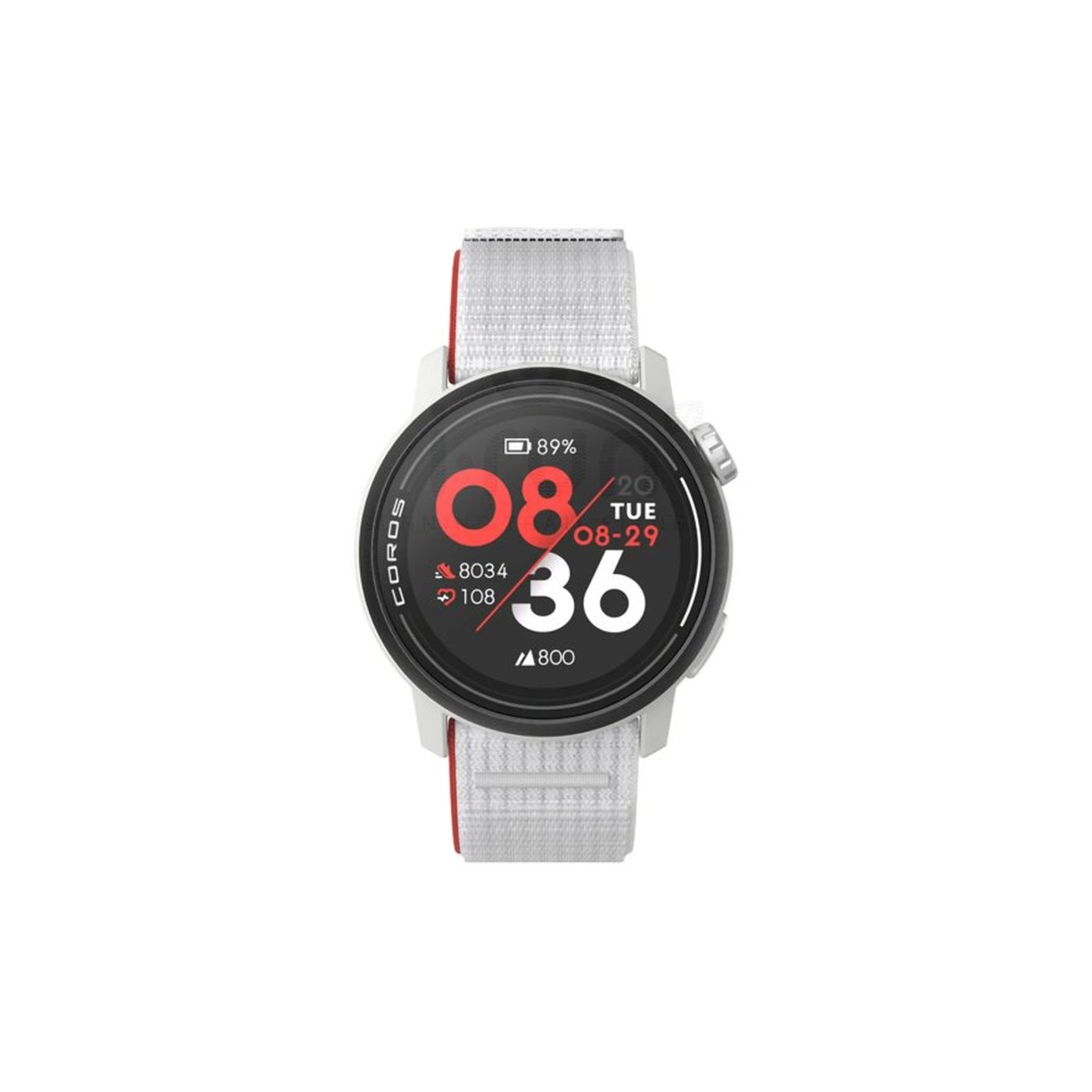
Coros Pace 3 with Track Edition nylon band, display on

© Coros, official photo used for editorial purposes

The essentials in 3 sentences

The Coros Pace 3 is a light, affordable multisport GPS watch built for runners and triathletes who want the essentials without paying for a high-end model. It bets on accurate dual-frequency GPS, comfortable battery life and a reliable heart rate sensor, but gives up full mapping and contactless payments. After months of combined independent testing, it lives up to its billing as the best value for money in the running GPS watch market.

8.0
/ 10 · RunMorph overall score
GPS accuracy
8.5 / 10
Battery life
7.0 / 10
Mapping
2.0 / 10
Metrics
7.5 / 10
Value for money
9.5 / 10
Who is it for?Runners and triathletes who want an accurate, light, full-featured GPS watch for no more than 250 euros, for road running, runnable trails, swimming or everyday multisport.
Who should skip it?Trail runners who navigate with full maps in unfamiliar terrain, and anyone who wants to pay contactless or stream music straight from the watch.

Coros Pace 3: the watch that pushed Garmin to rethink its entry-level range

When Coros launched the Pace 3 in summer 2023, the brand was only a few years old, up against a Garmin that had dominated for two decades. The bet was simple on paper and formidable in practice: pack dual-frequency GPS, a next-generation optical heart rate sensor and a built-in MP3 player into a 30-gram case, for 249 euros. At the time, Garmin had nothing comparable under 350 euros.

The impact showed up fast in French buyer's guides. The Pace 3 became a benchmark cited almost everywhere entry-level GPS watches came up, often pitted head-to-head against the Garmin Forerunner 255, which cost 100 euros more for broadly similar features. Coros has since extended the lineup with the Pace 4 and then the Pace Pro, but the Pace 3 is still on sale, now under 230 euros at most French retailers, and still holds its own three years after launch. That longevity, rare in sports electronics, is why it still earns a spot in 2026 buyer's guides.

Coros Pace 3 specs: dual-frequency GPS under 250 euros

FeatureDetails
BrandCoros
ModelPace 3
LaunchSummer 2023
Case42 x 42 x 11.7 mm, glass-fiber-reinforced polymer
Weight30 g (nylon band) / 35 to 39 g (silicone band)
DisplayAlways-on transflective MIP touchscreen, 1.2 inches, 240 x 240 px, 64 colors, Corning Gorilla glass
GPSMulti-GNSS (GPS, GLONASS, Galileo, BeiDou, QZSS) with dual frequency
Heart rate sensorNext-generation optical, 5 LEDs and 4 photodetectors, SpO2 pulse oximeter
Other sensorsBarometric altimeter, 3D compass, thermometer, accelerometer, gyroscope
MappingNo, breadcrumb navigation and route following only
Sport profiles22, including running, trail running, triathlon, swimming, cycling, strength training, skiing
MusicBuilt-in MP3 player, 4 GB of storage, no native streaming
Contactless paymentsNo
Water resistance5 ATM (50 m)
Battery life38 h standard GPS / 25 h all systems / 15 h dual frequency / 15 days daily use
ConnectivityBluetooth and Wi-Fi, iOS and Android, proprietary USB-A cable
Price249 euros at launch, around 229 euros today

Dual-frequency GPS, 5-LED sensor, MP3 player: what these choices really change

The Pace 3's main technical selling point is its dual-frequency satellite chip, a technology Garmin reserved for far more expensive models when the watch came out. In practice, the watch picks up two GPS frequency bands at once, which cuts track errors in tough environments: dense city centers, under tree cover or between buildings. The trade-off is higher battery drain, which explains the gap between the claimed 38 hours in standard GPS and 15 hours in full dual-frequency mode.

The next-generation optical heart rate sensor, with 5 LEDs and 4 photodetectors, replaces the one on the Pace 2, which the press found disappointing at the time. The built-in pulse oximeter also enables an altitude mode that monitors blood oxygen saturation above 2,500 meters, a plus for high-mountain hikers.

Finally, the onboard MP3 player is a rarity at this price: 4 GB of storage lets you carry several hundred tracks without a smartphone, as long as you transfer them manually from a computer. There's no Spotify or Deezer integration, unlike pricier watches in the Coros lineup such as the Pace Pro.

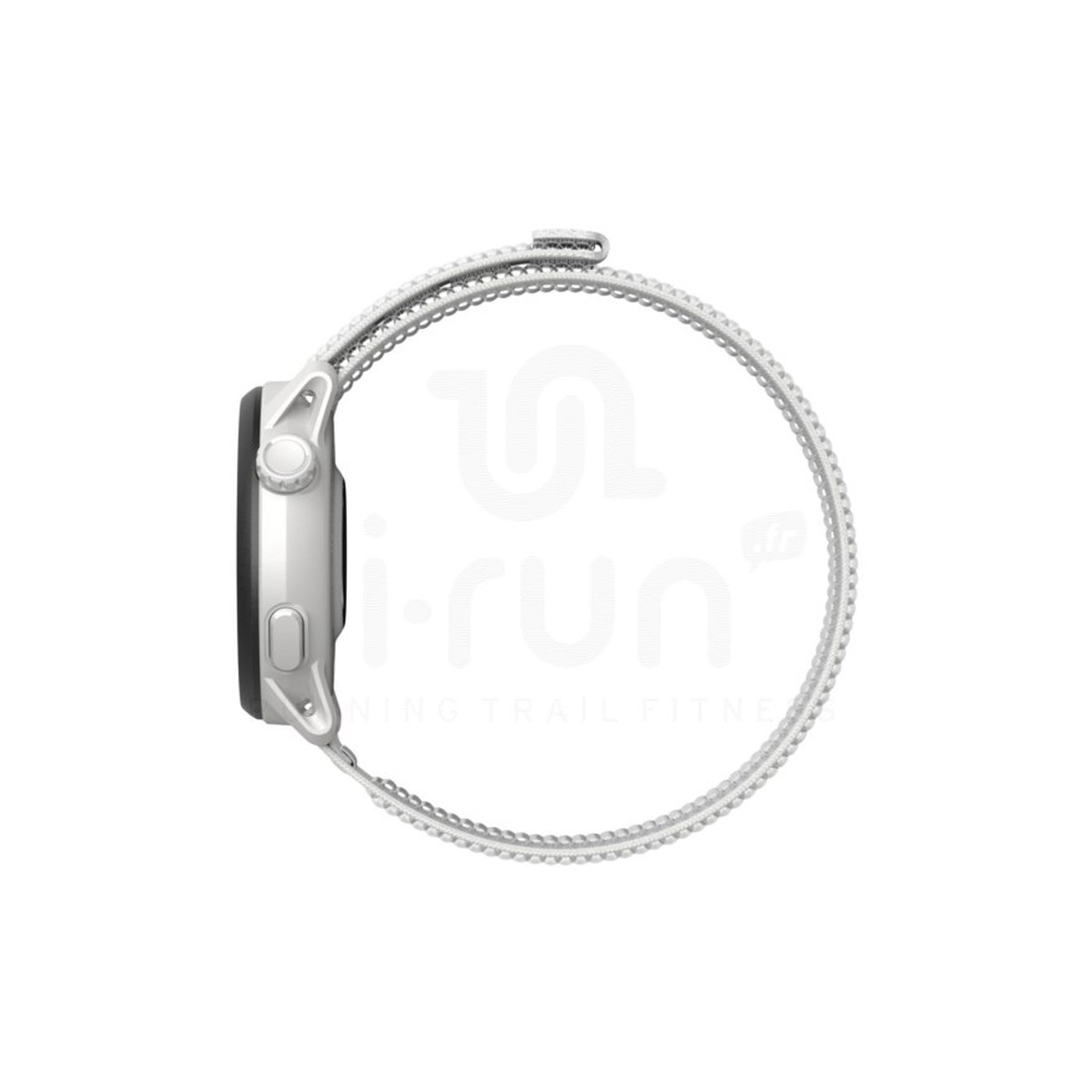
Coros Pace 3 side view, digital dial and buttons

© Coros, official photo used for editorial purposes

Field test: running, triathlon and multisport over several months

At RunMorph, our analysis of how the Pace 3 behaves in the real world draws on several independent French reviews whose testers actually wore the watch over time, not just on the official spec sheet.

Sport-Passion, which tested the watch for four weeks with a detailed GPS comparison protocol, found a track very close to that of a Garmin Forerunner 255 worn at the same time, with small, consistent deviations of around 2 meters and no effect on the total distance measured. The review also puts numbers on a clear gap between claimed and measured battery life: about 33 hours in standard GPS mode versus 38 hours claimed, and 12 to 14 hours in dual frequency versus 15 hours claimed, with heavy use of navigation and zoom draining the battery noticeably faster. Conversely, in smartwatch mode with sleep tracking, real-world battery life beats the claim, at around 22 days.

FFL, after more than a year of combined use by two testers over more than 3,000 kilometers of running, from -15 to 35 degrees and up to 3,200 meters of altitude, highlights very fast satellite lock, within seconds, where a Garmin Forerunner 255 tested alongside it sometimes needed nearly three minutes. This review also confirms comfortable battery life in real weekly use: a charge every 7 to 10 days for someone running 4 to 6 times a week, with a full charge taking about 1 h 30 min.

On the multisport side, a third review rates the MIP display's outdoor readability as excellent, even in direct sunlight or during open-water swims, and reports a consistent GPS track in the city, in forests and in the mountains, with no notable dropouts over several weeks of varied use including trail running, swimming and strength training. The same review points to a heart rate sensor that still has room to improve during the hardest efforts, a finding shared by Sport-Passion, which notes small dropouts during surges.

Opinions mainly diverge on one point: the gap between claimed and real battery life under heavy use, precisely measured by Sport-Passion, contrasts with FFL's broadly positive experience in standard weekly use. Our take at RunMorph is simple: the Pace 3 easily delivers on its promises in everyday use, but a trail runner who pushes dual-frequency mode on a long run should expect real battery life about 15 to 20 percent below the marketing figure.

RunMorph tip: on a long run in dual frequency, plan a margin of at least 15 percent below the claimed battery life. For comparison, the Garmin Forerunner 255 and the Garmin Forerunner 165 remain the two direct rivals in this price segment.
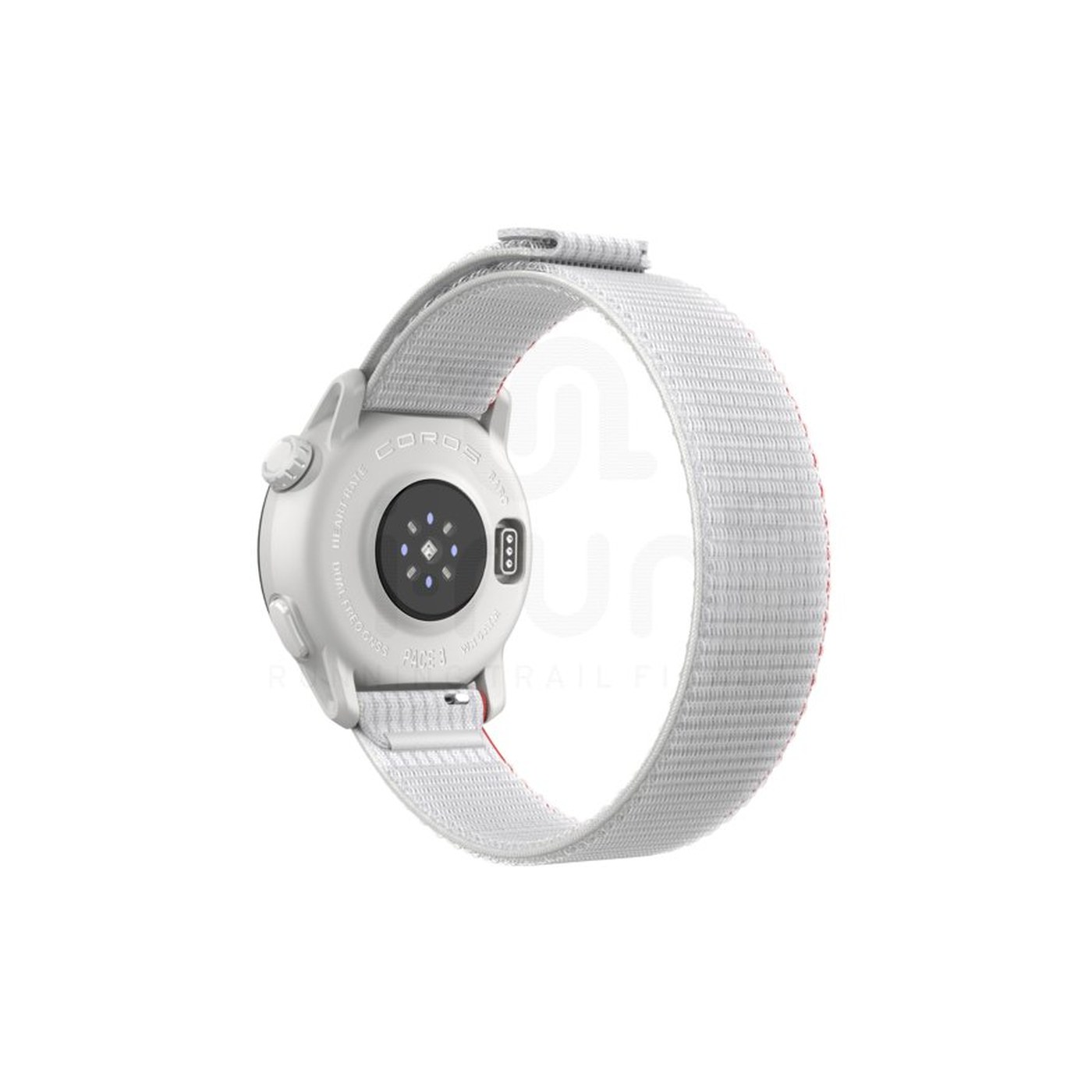
Coros Pace 3 rear view, optical heart rate sensor

© Coros, official photo used for editorial purposes
Coros Pace 3 vs Coros Pace 4: which one should you pick?

The question readers ask most when they're on the fence is how much the Coros Pace 4 really changes; it has come out since and RunMorph has already reviewed it. On paper, the Pace 4 improves on almost every point, but the price gap deserves to be spelled out in black and white.

CriterionCoros Pace 3Coros Pace 4
DisplayTransflective MIP 1.2"Curved AMOLED 1.2"
Battery life, standard GPS38 h41 h
Battery life, dual frequency15 h14 h
Battery life, daily use15 days19 days
Weight30 g32 g
MusicMP3 onlyMP3 only
Launch price249 euros269 euros

In practice, the Pace 4 mainly adds an AMOLED display that looks better day to day and a slight battery gain in everyday use, for 20 euros more at launch, a gap now often cut to under 40 euros on sale. GPS and heart rate performance stay very close across both generations. On a tight budget, the Pace 3 remains a rational choice, with no real sacrifice on the essentials.

Coros Pace 3 pros and cons

Pros
  • Accurate dual-frequency GPS, confirmed by several independent reviews against more expensive Garmin watches
  • Featherweight 30 grams you forget on your wrist, even on long runs
  • Comfortable battery life in real weekly use, despite a measured gap under heavy use
  • Complete Coros software ecosystem (Training Hub, EvoLab, free training plans)
  • Value for money rated unbeatable by every source reviewed
Cons
  • No full mapping, only a breadcrumb trail to follow a pre-planned route
  • Optical heart rate sensor has room to improve during very intense efforts
  • A single case size, a limitation for wrists wider than 20.5 cm with the nylon band
  • No contactless payments or native music streaming
  • Proprietary USB-A charging cable, less convenient than a universal connector

Our field verdict: who is the Coros Pace 3 for?

The Pace 3 targets a specific profile: runners and triathletes who want a reliable tool to structure their training without paying for features they'll never use. It's a perfect fit for a road 10K, half marathon or marathon build, or for runnable trail outings where breadcrumb navigation is enough. It makes less sense for ultra-trail in unfamiliar terrain, where the lack of full mapping becomes a real handicap as soon as course markings get sparse.

Whether your next race is a 10K, a half marathon or your first long run on the road to a marathon, the Pace 3's GPS accuracy and training load tracking slot naturally into a structured plan.

Explore RunMorph training plans built around your goal

RunMorph Coach verdict

Three years after launch, the Coros Pace 3 still has no real direct rival under 230 euros. It owns its trade-offs (no mapping, no contactless payments, a single case size) but delivers the essentials with a seriousness that's rare at this price: reliable dual-frequency GPS, battery life that holds up in real use despite a measured gap against the marketing figures, and a heart rate sensor that's more than good enough for everyday training. 8.0/10: an excellent entry-level choice, best reserved for runners who don't need full mapping.

Key takeaways for your training

  • Reliable dual-frequency GPS: accuracy confirmed by several independent comparisons against watches that cost twice as much.
  • Keep an eye on battery life in dual frequency: on a long run, plan a margin of about 15 percent below the claimed 15 hours.
  • Not a tool for ultras in unfamiliar terrain: without full mapping, plan your route ahead of time in the app.
  • Heart rate sensor good enough for training: pair it with a chest strap for threshold or high-intensity interval sessions if you want maximum accuracy.
  • An excellent first GPS watch: ideal for structuring a first 10K, half marathon or marathon build without blowing your budget.
← Back to reviews