A chest strap is still the most reliable sensor for training, but Garmin now sells several models in its HRM lineup. The HRM-Dual sits at the entry point: cheaper than the HRM-Pro or the HRM 600, it bets on dual Bluetooth connectivity rather than advanced metrics. We went through the French reviews available to see whether that positioning really holds up.
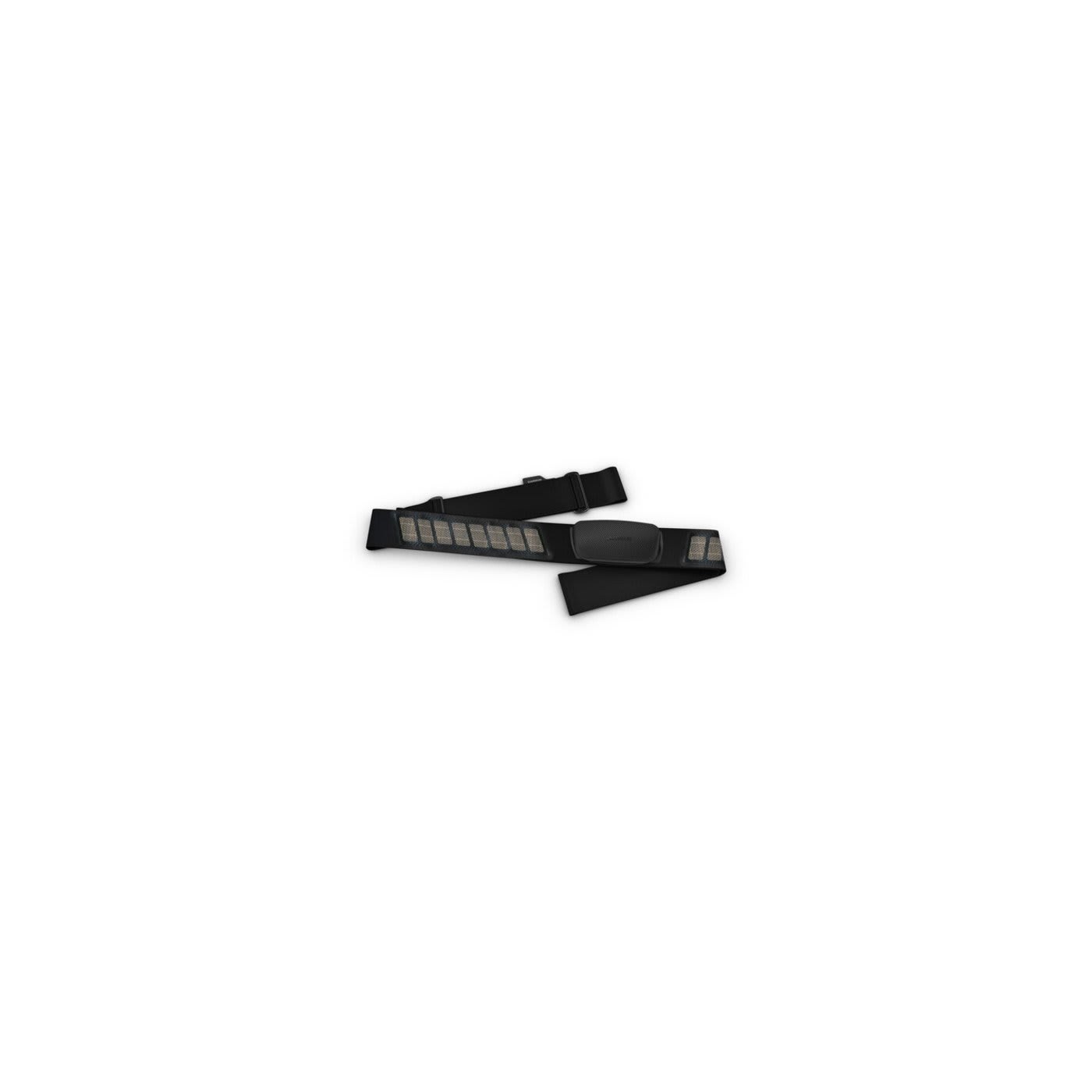
© Garmin, official photo used for editorial purposes
Garmin HRM-Dual: the strap that goes all in on dual Bluetooth
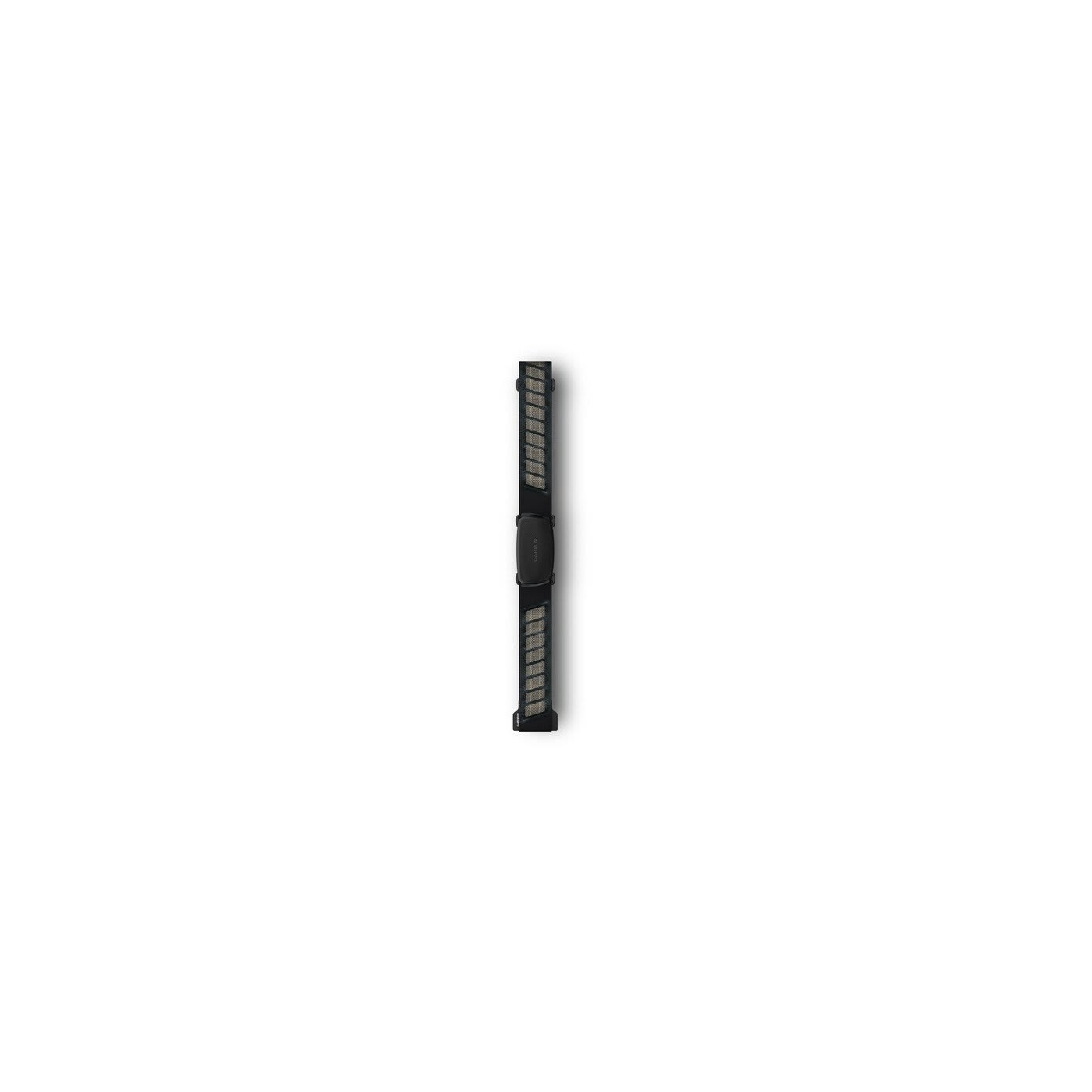
In Garmin's chest strap lineup, the HRM-Dual clearly sits below the HRM-Pro and the HRM 600, which both add running dynamics, plus swim tracking on the latter. Under the hood, the HRM-Dual reuses the architecture of the old first-generation HRM-Run: the pod attaches to the fabric strap with two snaps instead of being permanently bonded to it. Garmin has dropped this design on its newer models, but it has one concrete advantage: when the strap's elastic wears out, you just buy a new strap and keep the pod.
As the name suggests, the headline feature is dual connectivity: on top of ANT+, the strap handles two simultaneous Bluetooth Low Energy connections. In practice, you can send your heart rate to a GPS watch or bike computer and to a tablet or laptop at the same time. That makes it especially relevant for cyclists who ride Zwift on a smart trainer while keeping their bike computer connected.
Garmin HRM-Dual specs
| Brand | Garmin |
| Model | HRM-Dual |
| Weight | 53 g (strap and pod) |
| Connectivity | ANT+ and 2 simultaneous Bluetooth Low Energy connections |
| Pod attachment | 2 snaps on the fabric strap, detachable pod |
| Battery | CR2032 coin cell, about 3.5 years of battery life |
| Running dynamics | Not supported, even with a compatible watch |
| Onboard memory | None, no standalone recording for swimming |
| Strap material | Soft, washable fabric, strap detaches from the pod |
| Compatibility | GPS watches, bike computers, smartphones, apps such as Zwift |
| Price | 69.99 euros list price at Garmin, often found for 40 to 55 euros at retailers |

© Garmin, official photo used for editorial purposes
What independent reviews say: a real split on value
We looked at three independent French sources for this review, and their conclusions clearly split on one specific point: how much the HRM-Dual is really worth against the competition.
Ceinture-running.com gives a broadly positive verdict after a standard field test. The strap is rated comfortable, readings are reliable for regular runs and intervals alike, and dual Bluetooth works without a hitch to pair a watch and a third-party app at the same time. The site also highlights the long life of the coin cell battery, easy to swap without tools, as a real strength against optical sensors that need regular charging.
Ceinture-cardio.com takes a much more measured tone, summed up in one line: the HRM-Dual "won't change the world." The site puts its price side by side with the Wahoo TICKR, sold for around 49 euros against 69 euros for the Garmin, while admitting the HRM-Dual is "slightly more comfortable" to wear. For this reviewer, the price gap isn't clearly justified by any measurable difference in performance.
Montre-cardio-gps.fr goes further, stating outright that the HRM-Dual "is not an innovation." The technical argument is specific: dual Bluetooth already existed on the Wahoo TICKR X, cited as direct prior art, and Garmin simply reuses an old pod architecture without adding running dynamics or swim tracking. The site concludes that the product mainly targets cyclists on Zwift, and that owners of another Garmin strap have, on the face of it, no reason to switch to this model unless they ride.
This split deserves to be flagged, not smoothed over. All three sources praise its everyday comfort and reliability, but their take on value for money and on how innovative the product really is varies sharply depending on whether the reviewer compares the HRM-Dual with Garmin's previous generation or with direct rivals like Wahoo.

© Garmin, official photo used for editorial purposes
Its real positioning: a sensor for connected cyclists, not a do-everything replacement
Beyond the mixed reviews, all three sources agree on one point: the HRM-Dual only makes sense for a specific use. Its dual Bluetooth connection meets a real but narrow need: cyclists who ride Zwift on a smart trainer and want their data synced to a bike computer or watch at the same time. For a runner who doesn't need to broadcast to two devices at once, the product's main selling point loses most of its relevance.
RunMorph's advice: if you're a cyclist who rides Zwift or a connected smart trainer regularly, the HRM-Dual does exactly what you need. If you're a runner and you mostly want the accuracy and comfort of a standard Garmin strap, look at the HRM 600 instead: it adds running dynamics for a higher but more complete price.
Garmin HRM-Dual vs Garmin HRM 600 vs Wahoo TRACKR Heart Rate
| Criterion | Garmin HRM-Dual | Garmin HRM 600 | Wahoo TRACKR Heart Rate |
|---|
| Weight | 53 g | About 54 g | 39 g |
| Connectivity | ANT+ and dual Bluetooth | ANT+ and Bluetooth | ANT+ and Bluetooth |
| Running dynamics | No | Yes | No |
| Battery | Coin cell, about 3.5 years | Rechargeable | Rechargeable, about 100 h |
| Price | 69.99 euros | Higher, premium pricing | About 49 to 59 euros |
© Garmin, official photo used for editorial purposes
What we liked
- Two simultaneous Bluetooth connections, a real asset for Zwift riders confirmed by all three sources
- Comfort rated good to very good, including in a head-to-head with the Wahoo TICKR
- Coin cell battery lasts about 3.5 years and swaps without tools
- Pod detaches via snaps, so only the strap needs replacing when it wears out
- Reliable readings on runs and during intervals, according to the most thorough field test
What we liked less
- No running dynamics, even paired with a compatible Garmin watch
- No onboard memory, so it can't record heart rate while swimming
- Two sources out of three find the value disappointing next to the cheaper Wahoo TICKR
- Seen as hardly innovative, since rivals already offered dual connectivity
- Little appeal if you don't use Zwift or a connected smart trainer
© Garmin, official photo used for editorial purposes
Our take: who is it for?
Cyclists who ride Zwift or a connected smart trainer
Yes, no question. This is exactly the rider dual Bluetooth was designed for, and all three sources agree on it.
Runners who want running dynamics to fine-tune their stride
No. The HRM-Dual doesn't measure them, even paired with a compatible watch. Look at the Garmin HRM 600 instead, which has them built in.
Runners who just want a reliable strap at the best price
Maybe, but first compare it with the Wahoo TRACKR Heart Rate or the Polar H10, two options the reviews we read often call better value for money.
Training with the Garmin HRM-Dual
For the interval sessions in a
RunMorph training plan, a reliable chest strap is still the benchmark for managing your pace by zones, as long as you don't expect the HRM-Dual to do things it was never designed for.
RunMorph Coach verdict
The Garmin HRM-Dual delivers on its promise: a reliable, comfortable chest strap with generous coin cell battery life and dual Bluetooth that genuinely helps connected cyclists. But its positioning for runners is fuzzy. It's squeezed between more complete Garmin models like the HRM 600 and cheaper rivals like the Wahoo TRACKR Heart Rate, which cover the essentials without the memory and running dynamics limits. Two of the three reviews we consulted also find its value disappointing against that direct competition.
6.5/10: a reliable, comfortable strap, but one whose real appeal is mostly limited to cyclists on Zwift, with value for money that most of the reviews we consulted see as room for improvement.