Nine years after launch, the Polar H10 is still the first heart rate strap people name when a runner asks where to find the truth about their heart rate. In 2026, with wrist-based optical sensors vastly improved and armbands everywhere, this ECG-electrode chest strap remains the gold standard for labs and coaches alike. We took the H10 back out for short interval sessions, long runs and hill repeats to see whether the legend still holds up.
Polar H10 Review: The Benchmark ECG Chest Strap for Intervals
9.3/10
The essentials in 3 sentences
The Polar H10 delivers the most reliable heart rate measurement on the market thanks to its ECG electrodes, and it responds instantly to pace changes. Its triple connectivity (two simultaneous Bluetooth channels, ANT plus and GymLink) makes it compatible with almost every watch, app and gym machine. At a list price of 99.90 euros, and often heavily discounted, it remains the best-value investment for anyone who wants to train by heart rate.
9.3 / 10 · RunMorph overall score
Polar H10: the ECG chest strap that is still the benchmark
The Polar H10 isn't new, and that's exactly what makes it interesting. Since 2017, it has outlasted every generation of optical sensors, AMOLED watches packed with green LEDs and more comfortable optical armbands. It's still here because it measures heart rate at the source, through an electrocardiographic signal picked up on the chest, where blood flow can't skew anything. At RunMorph, we treat it as our reference strap: the one we compare everything else against.
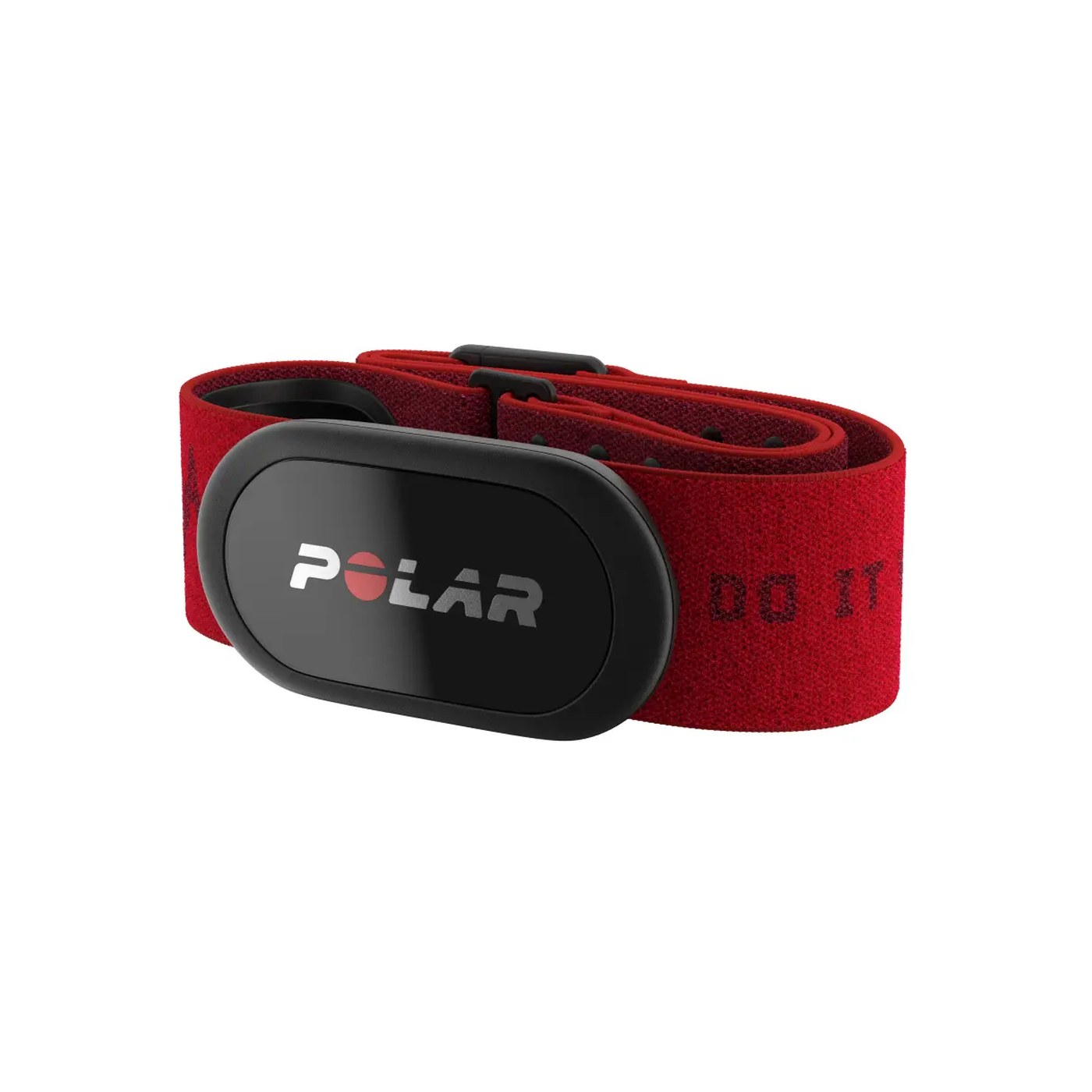
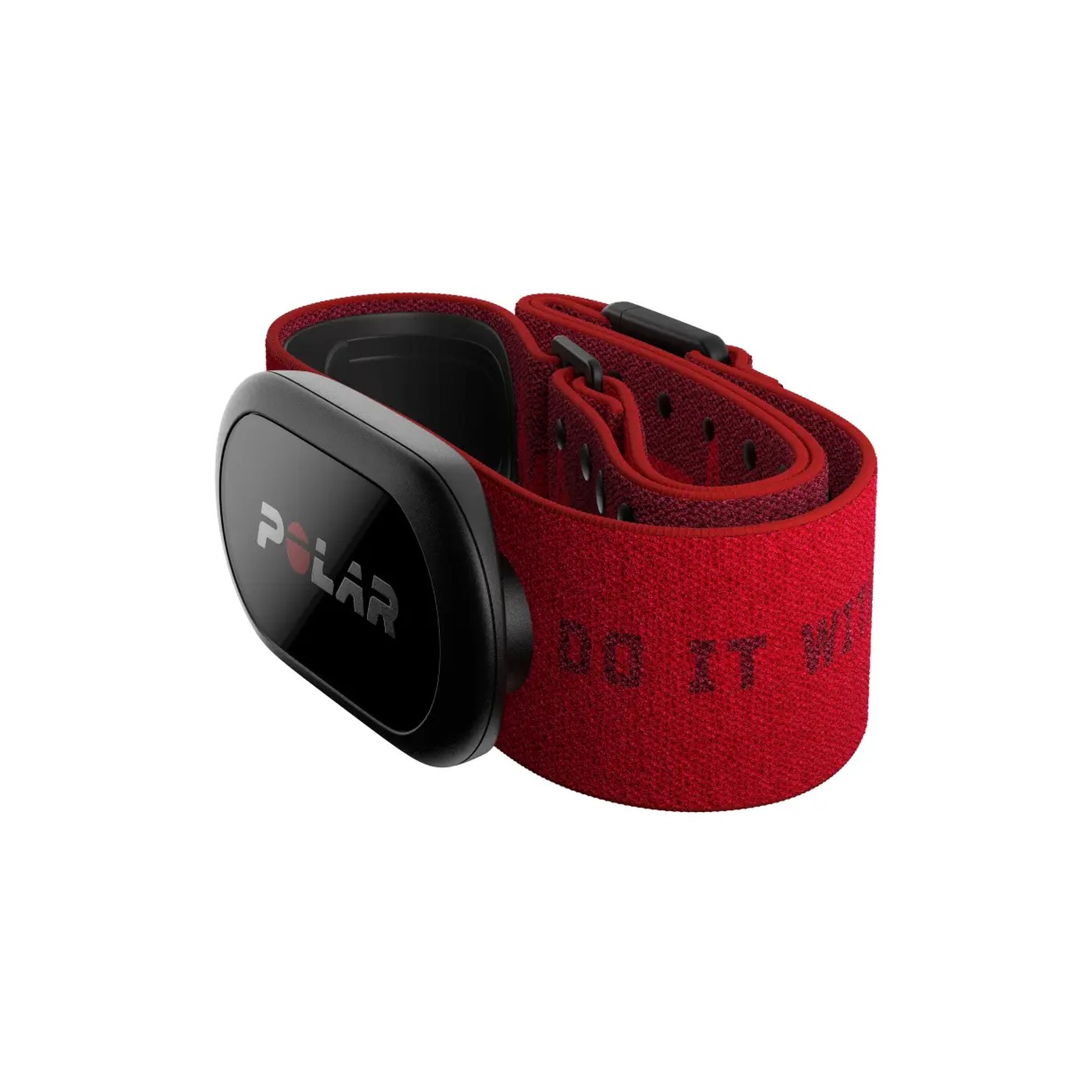
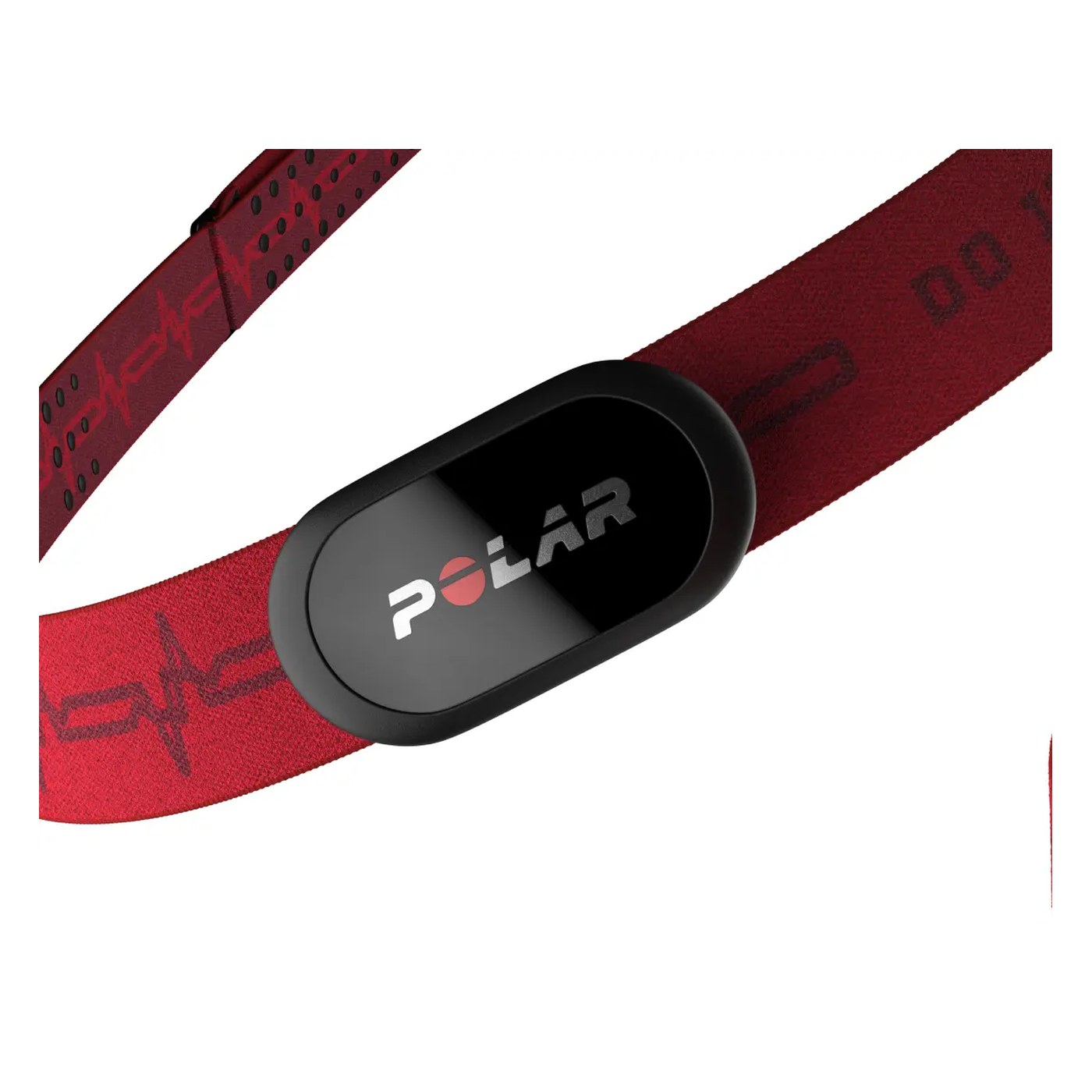
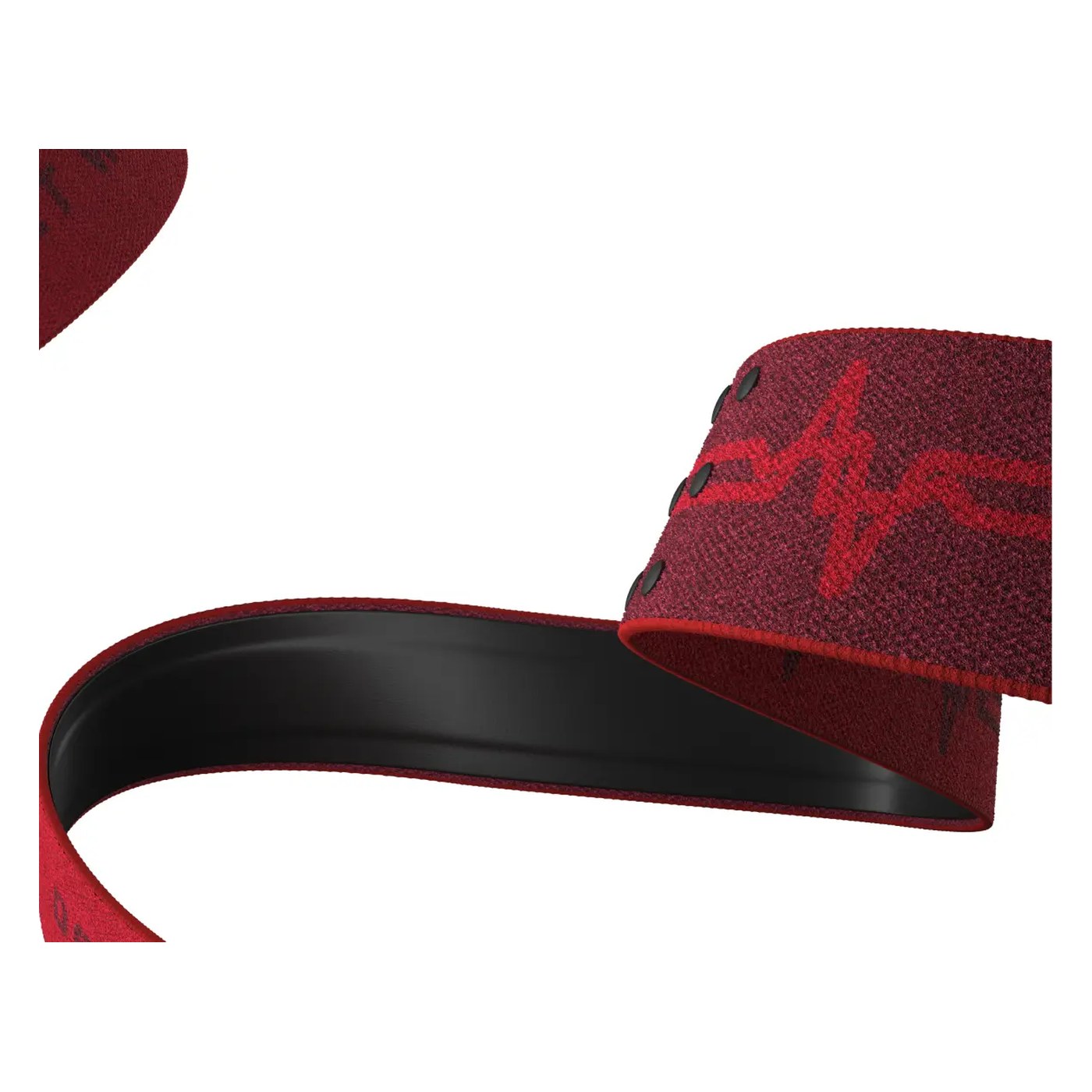
In practice, the H10 is a transmitter pod clipped onto a Pro Strap textile band with silicone dots that grip the skin and limit slipping. It's a simple, almost austere device, but every detail serves signal reliability. For a runner who trains by heart rate, that simplicity is a guarantee.
RunMorph tip. If you're new to heart rate zone training, a chest strap changes everything: your threshold sessions and easy runs stop drifting because of a wrist sensor that loses the signal. The H10 is the choice for total reliability. If you'd rather skip the chest strap, check out our review of the Coros HR Monitor optical armband, more comfortable but a notch below on very short intervals.
Technical specs
| Spec | Polar H10 |
|---|---|
| Type | ECG-electrode chest strap |
| Release | 2017 (still in the lineup in 2026) |
| Connectivity | Bluetooth (2 simultaneous connections), ANT plus, GymLink 5 kHz |
| Internal memory | Yes, 1 session recorded standalone (via Polar Flow / Polar Beat) |
| Battery life | About 400 hours, replaceable CR2025 battery |
| Water resistance | 30 m (WR30) |
| Weight | Pod about 21 g, full set about 60 g |
| Strap | Pro Strap with silicone dots, sizes XS-S and M-XXL |
| Compatibility | Polar, Garmin, Suunto, Coros and Apple Watch watches, apps (Strava, Zwift, Peloton), gym machines |
| List price | 99.90 euros |
Accuracy: why ECG is still unbeatable for intervals
This is the heart of the matter. An optical sensor estimates heart rate by analyzing light variations under the skin, a method that always lags slightly and can lose the signal on explosive efforts, when blood is suddenly redistributed. The H10 reads the heart's electrical signal, exactly like an electrocardiogram. On our 30/30 sets and 400-meter reps, the reading climbs and drops with no smoothing and no delay: every rep shows a clean peak, so you can actually check whether the runner hits the target zone.
Independent lab tests have ranked the H10 as the accuracy benchmark for years, even against newer straps. In the field, that means total confidence: when the H10 shows 172 beats, it's 172 beats. For a training plan built around zones, it's the difference between a calibrated session and a session run blind. The Garmin HRM 600 has closed much of the gap, but the H10 keeps an edge on pure signal stability.
Pros
- Benchmark ECG accuracy, unbeatable for intervals
- Triple connectivity, compatible with almost everything
- Two simultaneous Bluetooth connections (watch + app)
- 400 h battery life with a replaceable battery
- Reliable, durable Pro Strap
Cons
- Chest strap less comfortable than an armband
- Signal sometimes erratic in the first minutes on dry skin
- No screen and no standalone visual feedback
- Pricier than entry-level straps
Who is the Polar H10 for?
The runner who trains by heart rate
If your RunMorph plan is built on heart rate zones, the H10 is the tool that makes them reliable. Threshold, easy aerobic base, hills: you always know exactly where you are, no guessing. This is the ideal user for this strap.
Triathletes and multisport athletes
With its two Bluetooth channels and ANT plus, the H10 connects to a watch and to a bike computer or Zwift at the same time. Water-resistant to 30 meters, it even records pool swims using its internal memory. One sensor for three sports.
The runner who wants a strap for life
With a replaceable battery and a spare strap, the H10 lasts for years. At RunMorph, we meet runners who have used the same one since 2018. It pays for itself many times over.
Comfort, hold and everyday use
Let's be blunt: no chest strap will ever be as discreet as an armband. The H10 sits under the chest, snug but not tight, and it takes a few runs before you forget it's there. The good news is that the Pro Strap's silicone dots really keep it in place, even on hard efforts or in the rain. We never had to pull it back up mid-run.
The one known weak spot is the very start of a session on dry skin: the signal can jump around for one to two minutes before it settles. The fix is simple: wet the electrodes before you head out. Once the strap warms up, the reading stays rock solid. On long runs of more than two hours, we saw no signal dropouts.
Polar H10 vs Garmin HRM 600 vs Coros HR Monitor: the comparison
Three approaches, three philosophies. The H10 bets on raw ECG accuracy and universal compatibility. The Garmin HRM 600 adds running dynamics metrics and targets the Garmin ecosystem. The Coros optical armband trades a little accuracy for better comfort. Here's how they compare.
| Model | Type | Interval accuracy | Comfort | Price |
|---|---|---|---|---|
| Garmin HRM 600 | ECG chest strap | Very high | Average | About 170 euros |
| Polar H10 | ECG chest strap | Benchmark | Average | 99.90 euros |
| Coros HR Monitor | Optical armband | Good | High | 89 euros |
The verdict is nuanced. For total reliability at the best price, the H10 remains unbeatable. If you live in the Garmin world and want running dynamics, the HRM 600 earns its place. And if chest straps put you off, the Coros armband is an excellent compromise. On the audio side, if you're also looking for something to run to music without shutting out traffic, take a look at our review of the Shokz OpenRun Pro 2.
How to fit the Polar H10 into your RunMorph training plan
A heart rate strap only matters if it feeds a structured plan. Paired with a RunMorph plan, the H10 becomes a real co-pilot: it checks that your easy aerobic runs stay below the aerobic threshold, that your threshold sessions hit the right zone and that your recovery between reps is real. It's the difference between running by feel and training with method.
From sensor to plan. A good heart rate sensor gives you the data, a good plan tells you what to do with it. The RunMorph training plans turn your heart rate zones into calibrated sessions week after week, so you improve without burning out. Strap on your H10, pick your goal and let the plan manage the intensity.
RunMorph Coach verdict
The Polar H10 is neither the newest nor the most comfortable, but it's still the most reliable heart rate strap you can put around your chest in 2026. For a runner who takes training seriously and runs sessions by heart rate, it's an investment that is hardly up for debate. We give it 9.3/10, docking just a few tenths for strap comfort and the short initial warm-up period.
Key takeaways for your training
- ECG accuracy: the benchmark for checking your zones, especially on short intervals.
- Triple connectivity: works with watches, apps and machines, with two simultaneous Bluetooth channels.
- 400 h battery life: replaceable CR2025 battery, a strap that lasts for years.
- Comfort takes getting used to: wet the electrodes before you head out for a stable signal from the very first minute.
- Unbeatable value for money: at under 100 euros, it's the best-value heart rate tool on the market.