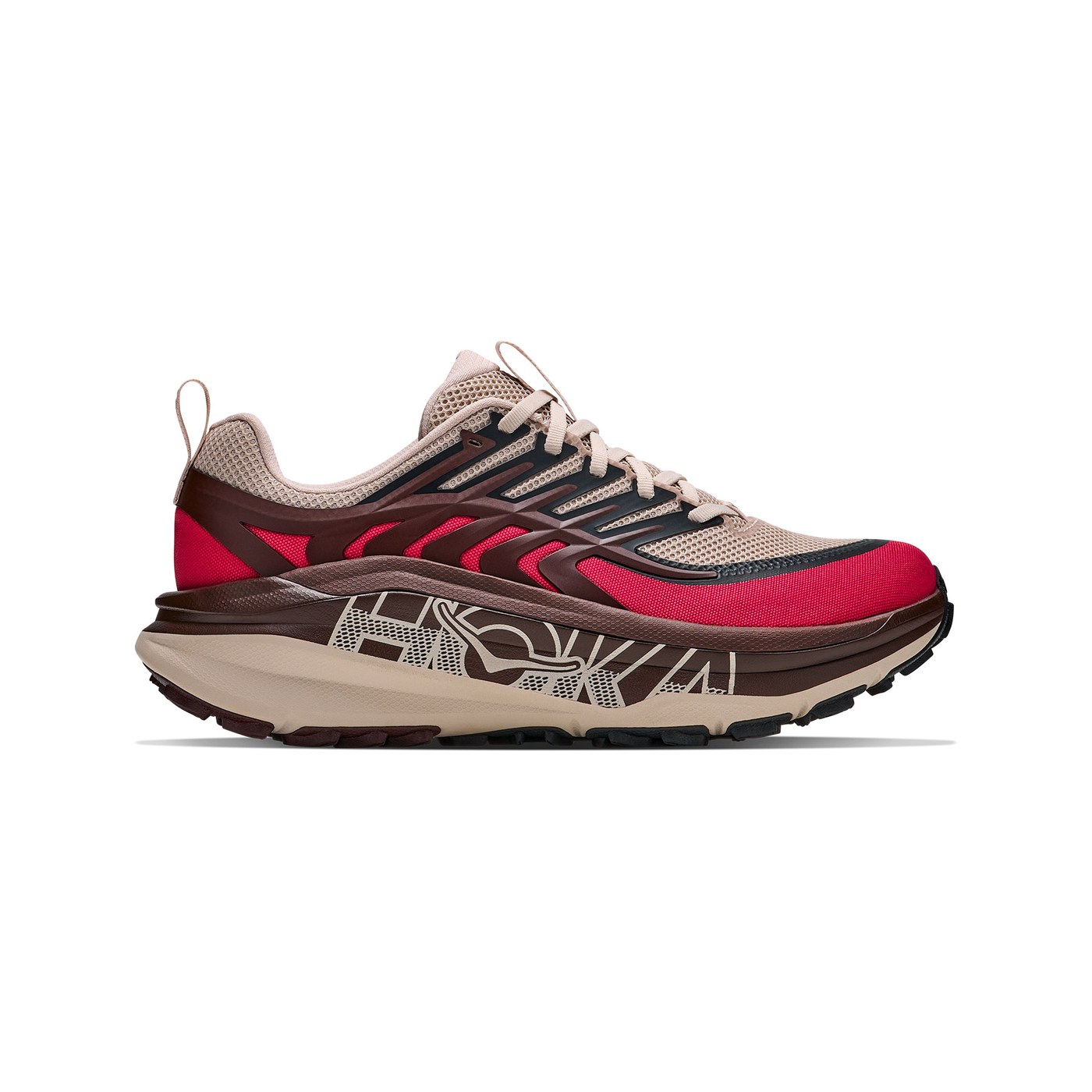
On sale since August 5, 2026, the Stinson 8 arrives three years after its predecessor with a fully redesigned midsole. Hoka used the overhaul to strip weight from its benchmark road-to-trail max-cushion shoe without touching its core mission: soaking up long mixed-terrain runs with generous cushioning. RunMorph tested it on asphalt, smooth trails and technical singletrack to see what the diet changed.
© Hoka, official photo used for editorial purposes
The Stinson sheds weight but stays a max-cushion shoe
Since day one, the Stinson has held a unique spot in Hoka's lineup. Sitting between a road daily trainer and a dedicated trail shoe, it targets runners who want one pair that eats up kilometers on asphalt and smooth trails alike, without ever giving up generous cushioning. Version 8 keeps that philosophy but reworks it in depth, three years after the last major update.
The biggest change is weight. At 320 g in a men's EU 44, the Stinson 8 is the lightest version of the entire line, well under the 365 g listed for the Stinson 7. The diet comes from a new dual-density midsole, with a thicker, shock-absorbing bottom layer under an H-Frame reworked for stability, and an airier woven upper that replaces the old, denser construction.
H-Frame and dual density: what the new midsole changes
The H-Frame structure, already used on the previous generation, has been reworked to improve lateral stability without making the shoe's tall stack overly stiff. Paired with the new dual-density midsole, it aims to reconcile two needs that seem to clash: very generous cushioning to absorb impact over long distances, and enough support to stay stable on uneven ground.
RunMorph tip: if you lean more toward dirt paths and technical trails within the Hoka range, the Hoka Challenger 7 remains the lighter road-to-trail benchmark. For pure trail running with more grip, the Hoka Speedgoat 7 is still the brand's icon.
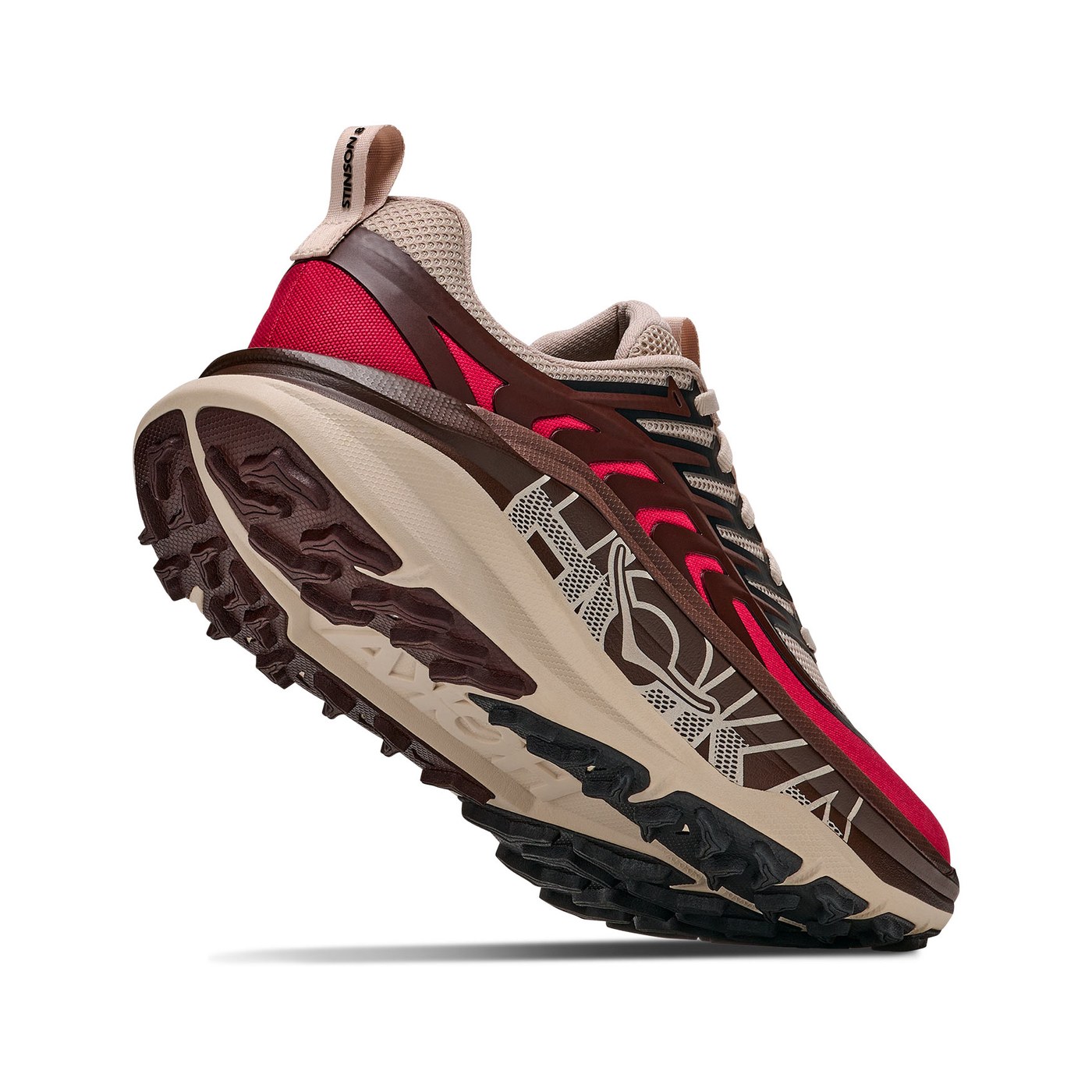
On the outsole, the Durabrasion lugs lose 0.5 mm of height compared with the previous generation and get a new pattern designed to smooth the switch from asphalt to smooth trails. Hoka's trade-off is clear: less outright grip on technical terrain in exchange for better versatility on most mixed routes.
On the run: cushioning still generous, road-to-trail transition improved
On road and smooth trails, the Stinson 8 confirms the line's philosophy right away: very thick cushioning that soaks up impact on long runs and never feels unstable, despite the stack height. You feel the reworked H-Frame mostly in corners and on quick changes of direction, where the shoe tracks better than its bulky build suggests.
The weight drop compared with the previous generation really changes how lively the shoe feels. The Stinson 8 feels lighter on the foot as the hours go by, a real plus in a segment long saddled with a clunky image next to lighter rivals. The new woven upper also breathes much better than the Stinson 7's, without sacrificing foot lockdown in the shoe's roomy volume.
On singletrack, the formula's limits show more clearly. The 3.5 mm lugs, already shorter than on the previous generation, hold well on smooth trails and dry ground but hit their limits on steep slopes, loose terrain or wet roots. No surprise there: the Stinson has never targeted technical trail running, and this version even tilts the compromise slightly further toward the road side of the equation.
© Hoka, official photo used for editorial purposes
Hoka Stinson 8 vs Hoka Challenger 7: which road-to-trail shoe should you pick?
| Criteria | Hoka Stinson 8 | Hoka Challenger 7 |
|---|
| Price | €180 | €145 |
| Heel stack height | 44.3 mm | Significantly lower |
| Drop | 5 mm | 5 mm |
| Weight (M) | 320 g | Lighter |
| Positioning | Max-cushion, long distances | Light all-rounder, daily use |
| Best terrain | Road and smooth trails | Road and easy trails |
Both models share the same road-to-trail mission at Hoka, but with the dials set differently. The Stinson 8 goes all-in on maximum cushioning for your longest runs, even if that means carrying more weight despite its diet. The Challenger 7 stays lighter and more versatile day to day, with less massive cushioning. Your choice mainly comes down to target distance: beyond the marathon, or for ultra distances on runnable terrain, the Stinson 8 has the edge.
Our take: who is it for, and which RunMorph training does it fit?
The Stinson 8 is built for runners who pile up long runs on mixed routes, road and smooth trails, and who put cushioned comfort over distance ahead of pure performance. It's made for marathon training on rolling terrain or ultra-distance events on non-technical courses, where leg endurance matters more than extreme grip.
If you regularly tackle technical, steep or loose trails, the Stinson 8 shows its limits against more aggressive trail shoes like the Speedgoat 7. That's not a flaw in the product, just a reminder of its deliberate positioning: road-to-trail versatility, not mountain performance.
To build this versatile max-cushion shoe into your long-distance training, pair it with a RunMorph plan matched to your weekly volume and your course profile. 👉 Discover RunMorph training plans.
RunMorph Coach verdict
The Hoka Stinson 8 pulls off its diet without losing what built its reputation: massive cushioning and real road-to-trail versatility on smooth trails. The lower weight and more breathable upper are welcome upgrades, even if the lower-profile lugs confirm this shoe is still designed for road and easy trails rather than technical trail running. 8/10: a lighter max-cushion road-to-trail shoe that's more enjoyable day to day, best kept for long distances on gentle terrain.