Salomon S/Lab Genesis Review: Elite Trail Speed Meets Comfort
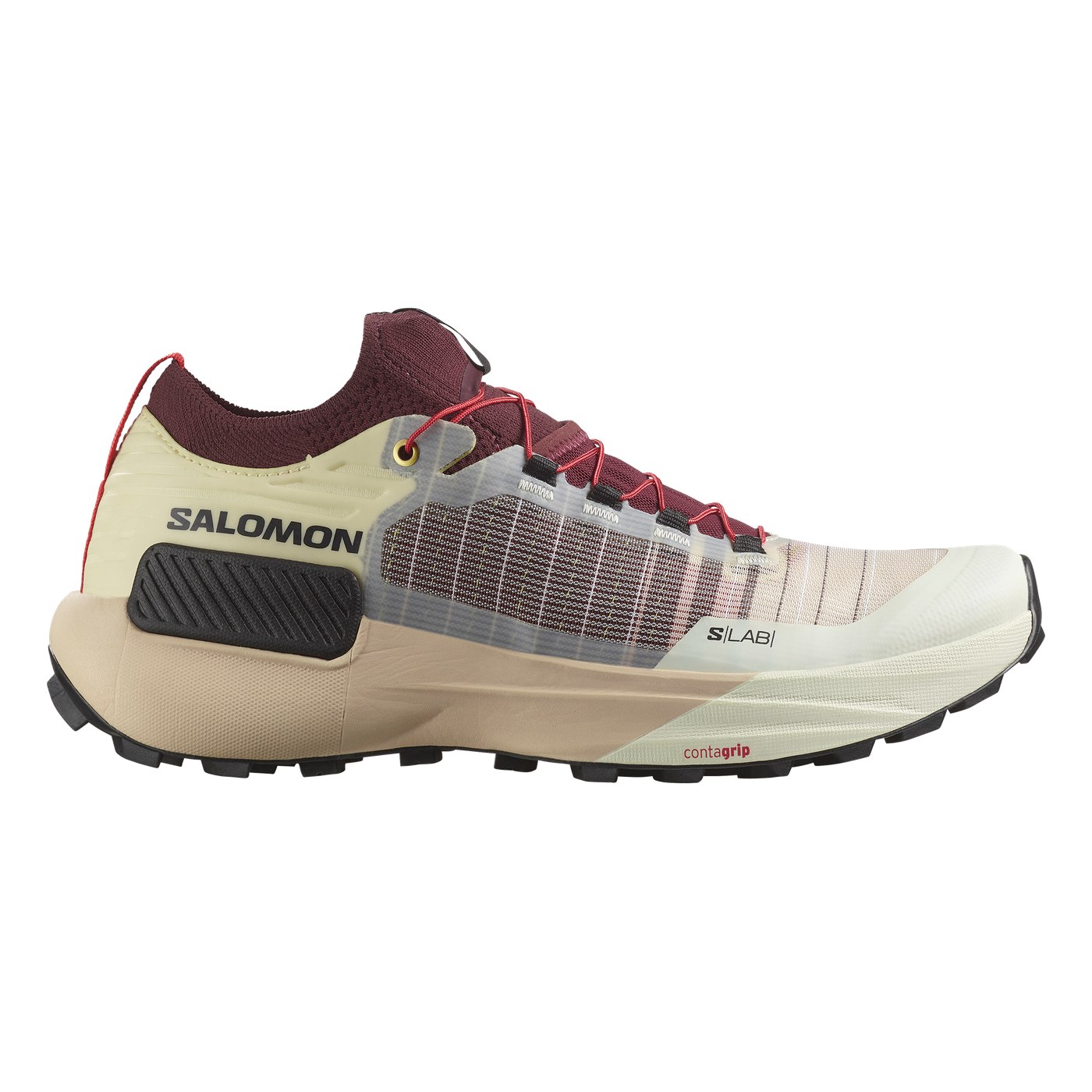
The S/Lab Genesis: the shoe built with Kilian Jornet for trail pros.
Salomon's S/Lab range is the pro line. Designed with and for elite athletes (Kilian Jornet first among them), it makes no compromises on pure performance. The S/Lab Genesis, released in 2024, is the culmination of that philosophy: a versatile trail shoe that can handle a technical 30 km just as well as a 100 km in the mountains.
What you get: a shoe designed by pro athletes for serious runners who are willing to pay €200 for maximum performance. Let's dig into whether it deserves a spot in your arsenal, or whether it's too specialized for amateur use.
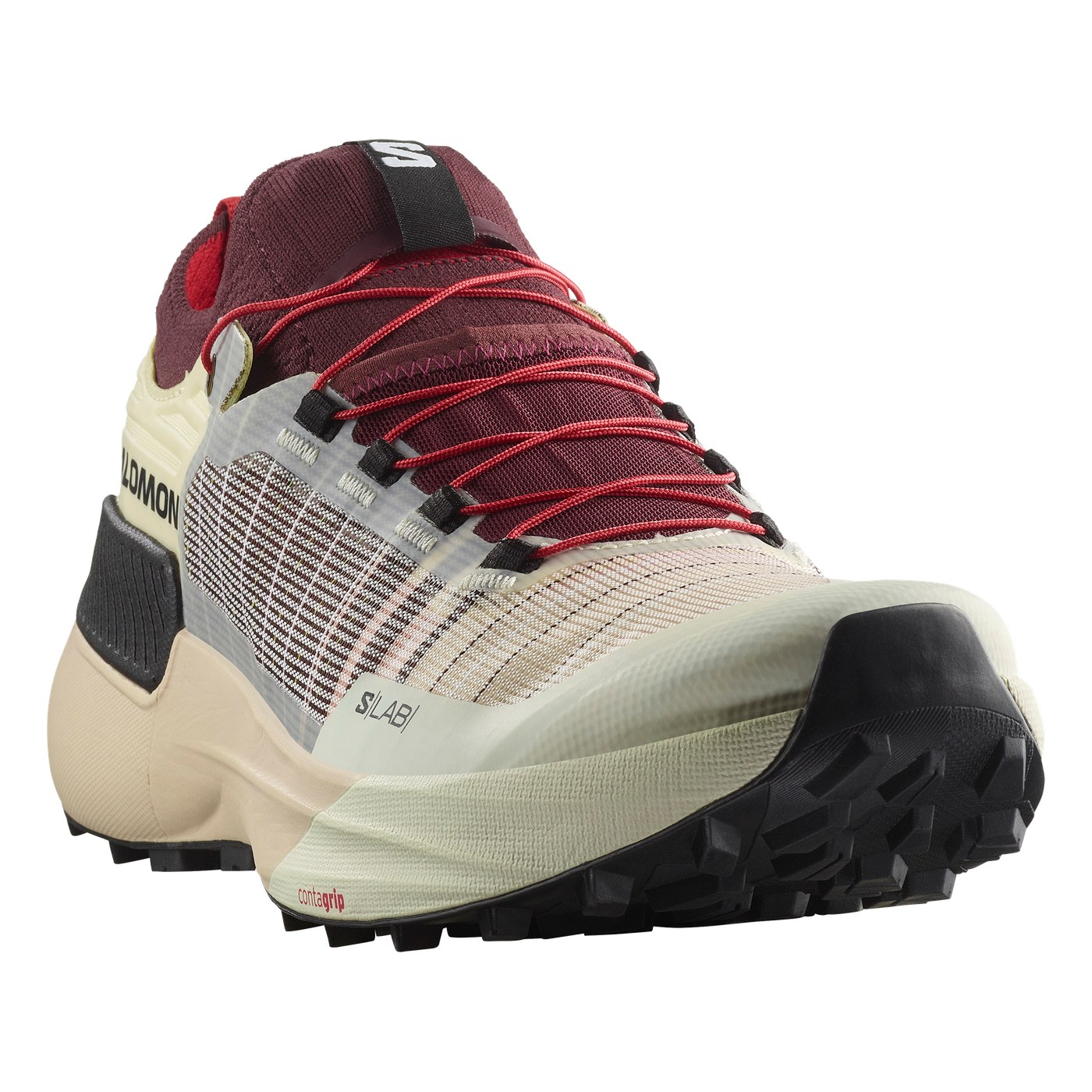
Salomon S/Lab Genesis specs
| Brand | Salomon |
| Model | S/Lab Genesis |
| Release date | June 15, 2024 |
| Use | Trail, versatile racing, short to ultra distance |
| Drop | 8 mm |
| Stack height (forefoot / heel) | 25 mm / 33 mm |
| Weight (men's size 42) | 245 g |
| Foam | Energy Surge (supercritical) + Energy Blade (rocker plate) |
| Outsole | Contagrip MA, 4 mm lugs |
| Upper | Ultra-tough Matryx + Quicklace |
| Recommended distance | 21 km to 100+ km |
| Retail price | €200 |
| RunMorph score | 9.2 / 10 |
The S/Lab Genesis: for the trail runner who wants the very best
Three things justify the premium price and the elite target of this shoe:
- Supercritical Energy Surge foam: a premium compound that pairs maximum lightness with high energy return. You get the bounce of a road super shoe, carried over to the trail. That's rare in the versatile trail segment, where conventional foam still dominates.
- An Energy Blade rocker: Salomon doesn't use a true carbon plate, but a flexible TPU plate that creates a progressive rocker effect. The upside: you gain propulsion without losing stability on technical trails. No "harsh plate" punishing you through technical sections.
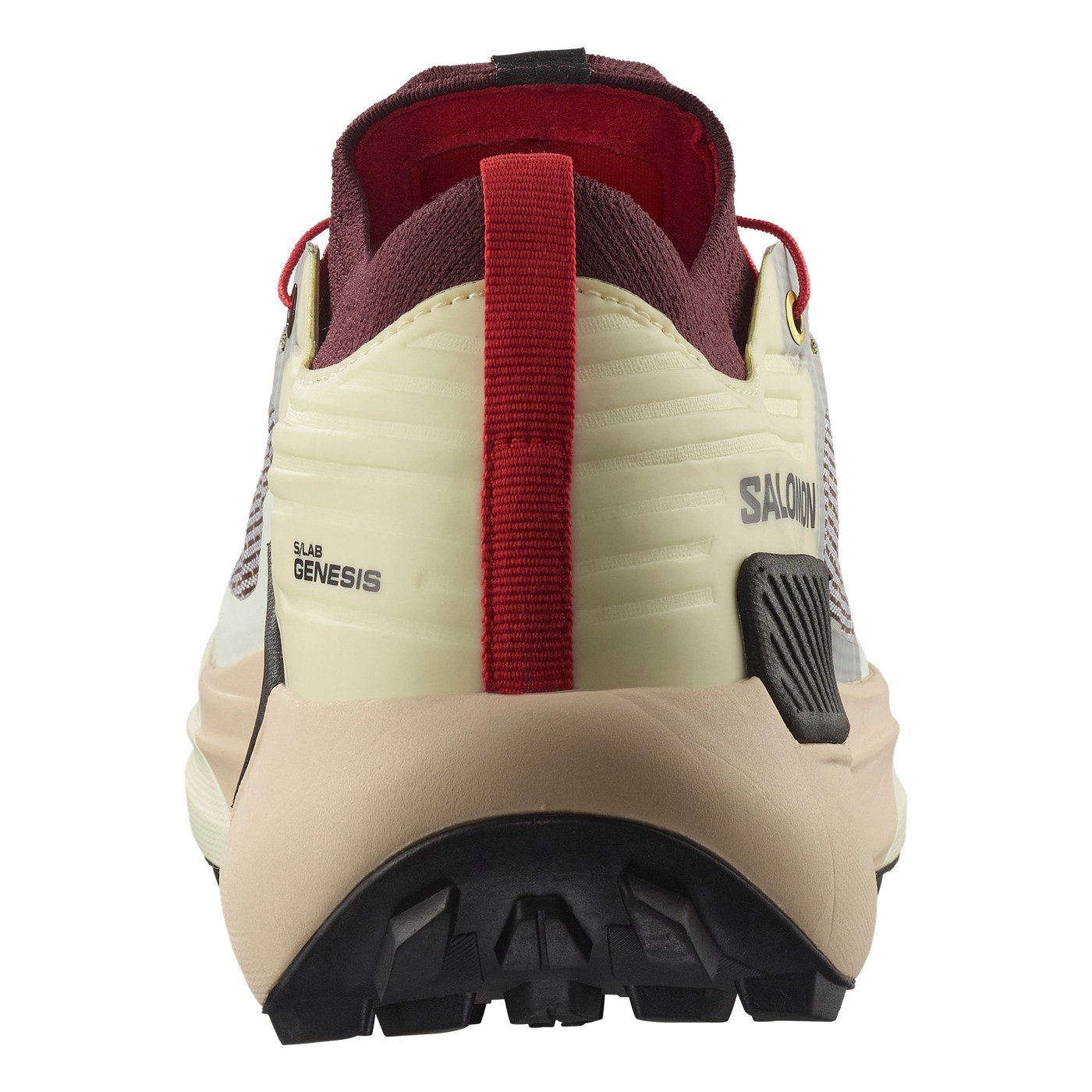
- An ultra-tough Matryx upper: a woven technical fabric that combines extreme lightness with abrasion resistance. On a rocky ultra, this material makes sure your upper holds up all the way to the finish line, a crucial detail over 100 km when every cm² of upper takes constant stress.
RunMorph's advice: the S/Lab Genesis is an elite shoe. It's built for the trail runner who knows how to run fast in the mountains, has a dialed-in stride and logs 60-100 km a week. For casual amateur running, look at the Hoka Speedgoat 7 instead: it's more forgiving and €35 cheaper.
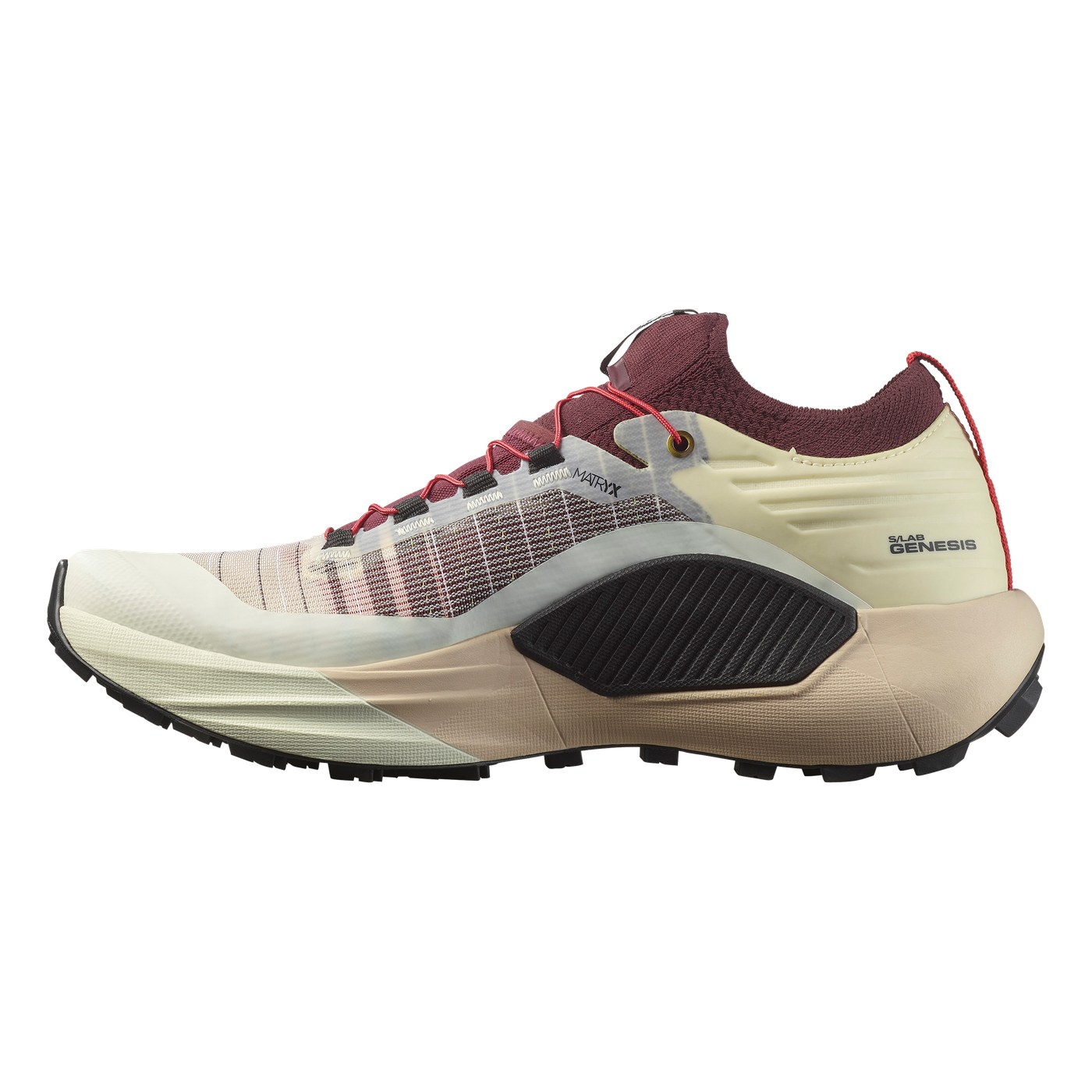
Who is the Salomon S/Lab Genesis for?
Here's our coaching take, profile by profile.
Verdict: the S/Lab Genesis is a pure trail racing shoe. It's for elite or sub-elite runners with a dialed-in stride and serious volume. If you want to train in the same Matryx geometry without wearing out your race pair, the Salomon Genesis is its ideal sidekick at €150. For amateur trail runners, the Speedgoat 7 or the La Sportiva Prodigio 2 are more accessible picks.
Under the hood: the tech in detail
Energy Surge: the supercritical race foam
Salomon developed its own premium supercritical foam for the S/Lab Genesis. You get record lightness (245 g for a shoe this protective) and meaningful energy return. The trade-off: it doesn't last as long as a conventional EVA foam. Expect 500-700 km at most before a noticeable drop in performance, which works out to 1-2 race seasons for an elite runner.
Energy Blade: a flexible TPU rocker plate
Unlike the La Sportiva Prodigio Pro or the Hoka Tecton X 3, which use stiff carbon, Salomon went with a flexible TPU plate. The upside: the shoe stays stable and adaptable on technical trails. The downside: the propulsion is less "snappy" than a full carbon plate.
For technical mountain trails, that's the right compromise. For "fast" trail racing on smooth, runnable paths, a carbon plate would be more efficient. Salomon chose mountain versatility over pure performance on easy terrain.
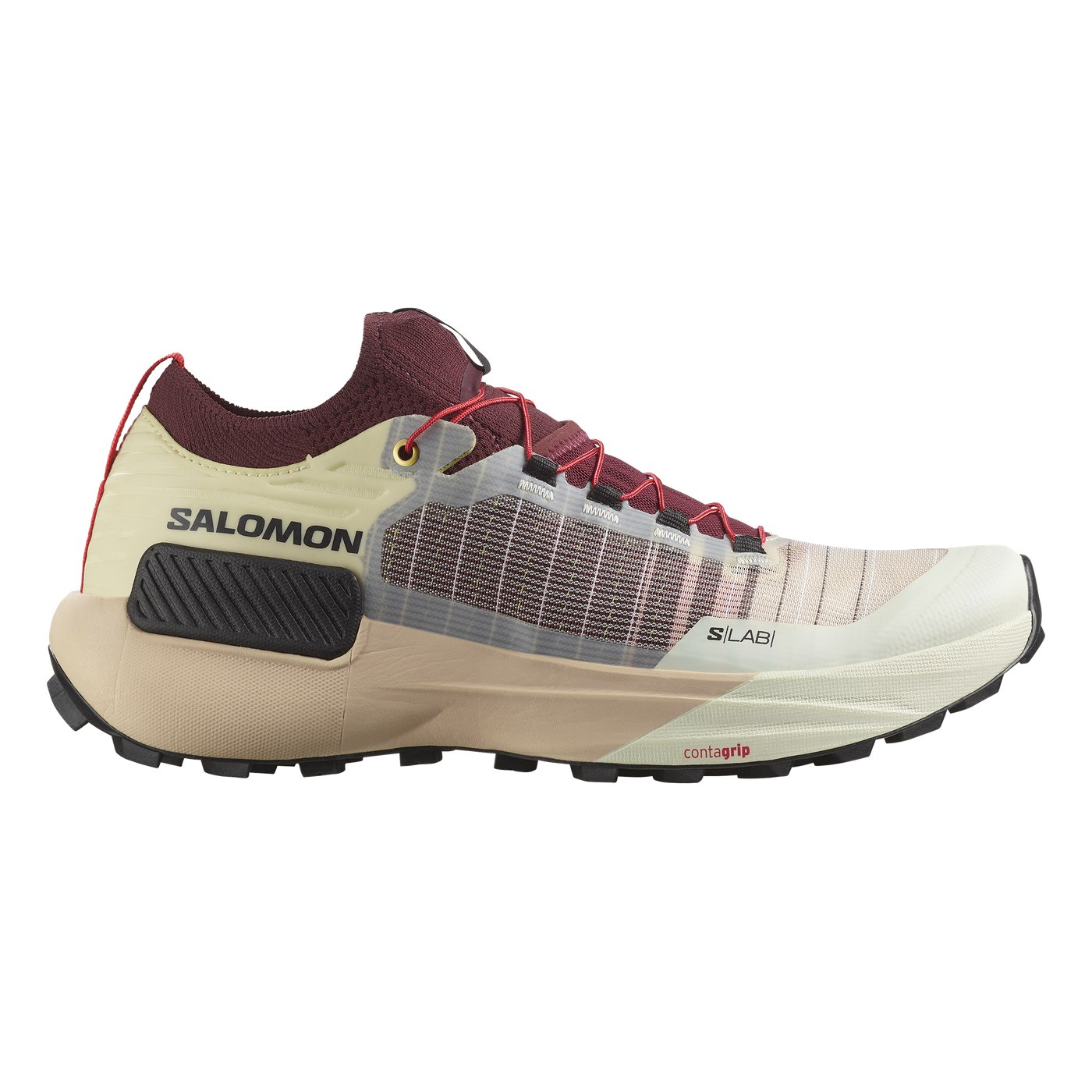
Contagrip MA: Salomon's benchmark grip
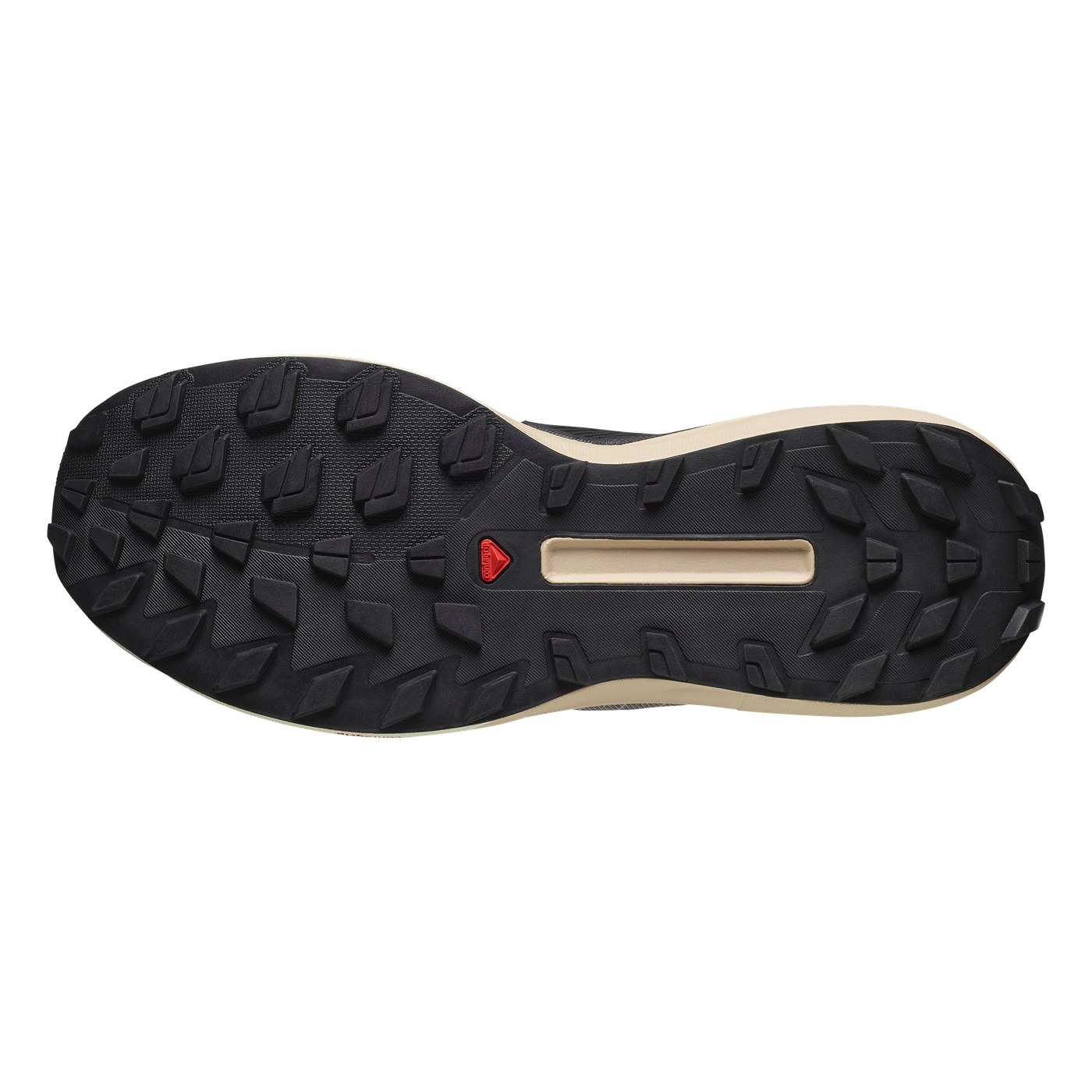
Contagrip MA rubber is one of the benchmarks of the trail market, on par with the Vibram Megagrip on the Speedgoat 7. The S/Lab Genesis outsole pattern uses 4 mm multidirectional lugs, optimized for traction on both climbs and descents.
On dry trails, grip is excellent. On wet ground and roots, it stays very good. In deep mud, 4 mm lugs are at their limit: for that terrain, look at the Inov-8 Mudtalon Speed instead.
Quicklace + Matryx upper: Salomon precision
Salomon keeps its famous Quicklace system (single-pull lacing with a lock), which lets you adjust your shoe in 2 seconds, even with gloves on. Paired with the ultra-tough Matryx upper, you get a precise lockdown that doesn't loosen over time, which is crucial on an ultra when your feet swell.
What the French trail press says
u-Trail calls the S/Lab Genesis one of the most versatile trail super shoes on the market, with a unique balance of comfort, propulsion and technical stability. The review especially praises the Energy Surge foam and the Quicklace system.
Pacing Trail highlights the quality of the Matryx upper and the shoe's overall durability, exceptional for the racing segment. The verdict is clear: for an elite runner looking for one shoe for all their races, it's one of the three best options on the market.
Lepape-Info confirms the model's premium position in the trail racing segment, pointing to the ideal balance between pure performance and mountain stability. Value for money is rated fair given the ultra-premium segment.
Our RunMorph coaching take. The consensus comes as no surprise: with the S/Lab Genesis, Salomon doubles down on its pro signature strategy. For an elite all-around trail runner, it's probably the best shoe on the market right now. For casual amateur use, it's probably too technical and too expensive.
Quick comparison
S/Lab Genesis vs Hoka Speedgoat 7. The Speedgoat is more protective (40 mm stack height vs 33 mm) and more versatile for 90% of runners. The S/Lab Genesis is faster and more precise, but demands a more seasoned runner. Verdict: Speedgoat for the high-mileage amateur trail runner, S/Lab Genesis for the elite trail racer.
S/Lab Genesis vs La Sportiva Prodigio 2. Two premium versatile trail shoes. The Prodigio 2 is more affordable (€175) and geared more toward mid-distance trails. The S/Lab Genesis is more versatile for ultras. Verdict: Prodigio 2 for intermediate trail running, S/Lab Genesis for elite trail racing and ultras.
S/Lab Genesis vs Hoka Tecton X 3. The Tecton X 3 is a full carbon-plate trail shoe, geared more toward fast racing on smooth, runnable trails. With its flexible TPU plate, the S/Lab Genesis is more versatile on technical terrain. Verdict: Tecton X 3 for fast, runnable trails, S/Lab Genesis for technical mountain trails.
Fitting the S/Lab Genesis into your training strategy
A €200 trail racing shoe deserves to be used wisely. Here's our game plan:
- Your daily foundation: keep a durable, versatile trail shoe like the Hoka Speedgoat 7 or the La Sportiva Prodigio 2. They soak up your weekly mileage without wearing out your race pair.
- Your 2-3 key sessions in the S/Lab Genesis: in the 4 weeks before your race, schedule 2-3 goal-pace sessions in your S/Lab Genesis to get used to the shoe and lock in your stride.
- Race day: this is the one. You know the shoe, your body knows the shoe, and you're ready for the 30 km, the 50 km or the 100 km.
RunMorph's advice: never wear the S/Lab Genesis for the first time on race day. The feel of the Energy Surge foam and the Energy Blade plate is distinctive enough that you need time to adapt. Take your calibration sessions seriously.
The RunMorph coach's verdict
As a coach, the S/Lab Genesis is the shoe I recommend to my elite or ambitious sub-elite trail runners. For that profile (regional or national sub-elite, 60-100 km a week, time goals on mid and long-distance trails), it's probably the best shoe on the market right now.
Salomon pulled off the feat of combining pure performance (Energy Surge foam, rocker plate) with mountain versatility (Contagrip MA, Matryx upper, flexible plate). Very few shoes tick all those boxes at once.
The only real drawback: the target audience is narrow. For 80% of amateur trail runners, a Speedgoat 7 at €165 will do the job just fine, without the constraints of an elite shoe. The S/Lab Genesis only makes sense if you have the mechanics and the volume to get the most out of it.
RunMorph score: 9.2 / 10. At €200, it's a major investment, but in line with the premium segment. Buy it if you're an ambitious elite trail runner. Look elsewhere if you're new to trail running or if you want a single shoe for both training and racing.
Key takeaways for your next race
- Elite trail racing shoe: built for sub-elite runners with a dialed-in stride and serious volume.
- Supercritical Energy Surge foam: record lightness (245 g) and high energy return.
- Energy Blade TPU plate: progressive rocker propulsion, more versatile than a full carbon plate on technical trails.
- Contagrip MA + 4 mm lugs: excellent grip on all terrain, except deep mud.
- Matryx upper + Quicklace: lightness, durability and a precise lockdown.
- 8 mm drop: average for the segment, versatile across different stride types.
- 500-700 km lifespan: save it for races and key calibration sessions.
Frequently asked questions
Is the Salomon S/Lab Genesis good for beginners?
No. It's an elite shoe that demands a well-developed stride, consistent weekly mileage (60 km a week minimum) and several structured training blocks. If you're getting into trail running, go with the Hoka Speedgoat 7 instead: it's more forgiving and cheaper.
How durable is the S/Lab Genesis in practice?
Expect 500 to 700 km of actual running. The supercritical Energy Surge foam holds up well to mileage for a racing shoe, but still falls short of a conventional CMEVA. For an elite runner doing 2-3 ultras a year, that's 1-2 full race seasons.
Does the S/Lab Genesis run large or small?
It fits true to size with a snug volume, in line with Salomon's DNA. If you're between sizes or have wide feet, go up half a size, especially for ultras where your feet will swell.
What's the difference between the S/Lab Genesis and the regular Genesis?
The S/Lab line uses premium materials (supercritical Energy Surge foam, Matryx upper) and a geometry optimized for pure performance. The regular, "non-S/Lab" Genesis is cheaper (~€150), with a conventional foam and a more standard upper. If you're targeting elite racing, get the S/Lab. Otherwise, the regular Genesis will be more than enough.
Is the S/Lab Genesis suited to ultras (80+ km)?
Yes, it's actually one of its strengths. The Energy Surge + Energy Blade + Matryx combination ensures the shoe will go the distance without breaking down or tearing. It's the shoe Kilian Jornet wears for his ultras, which says a lot about what it can handle over long distances.
Recommended reading
- Hoka Speedgoat 7: the full RunMorph review
- La Sportiva Prodigio 2: versatile trail review
- Trail training plan: the complete guide (in French)