At RunMorph, open-ear clip earbuds had never really won us over for running: too much sound lost outdoors, not enough hold once you're past the first kilometer. With the FreeClip 2, Huawei goes back to the drawing board and joins the RunMorph review catalog for the first time.
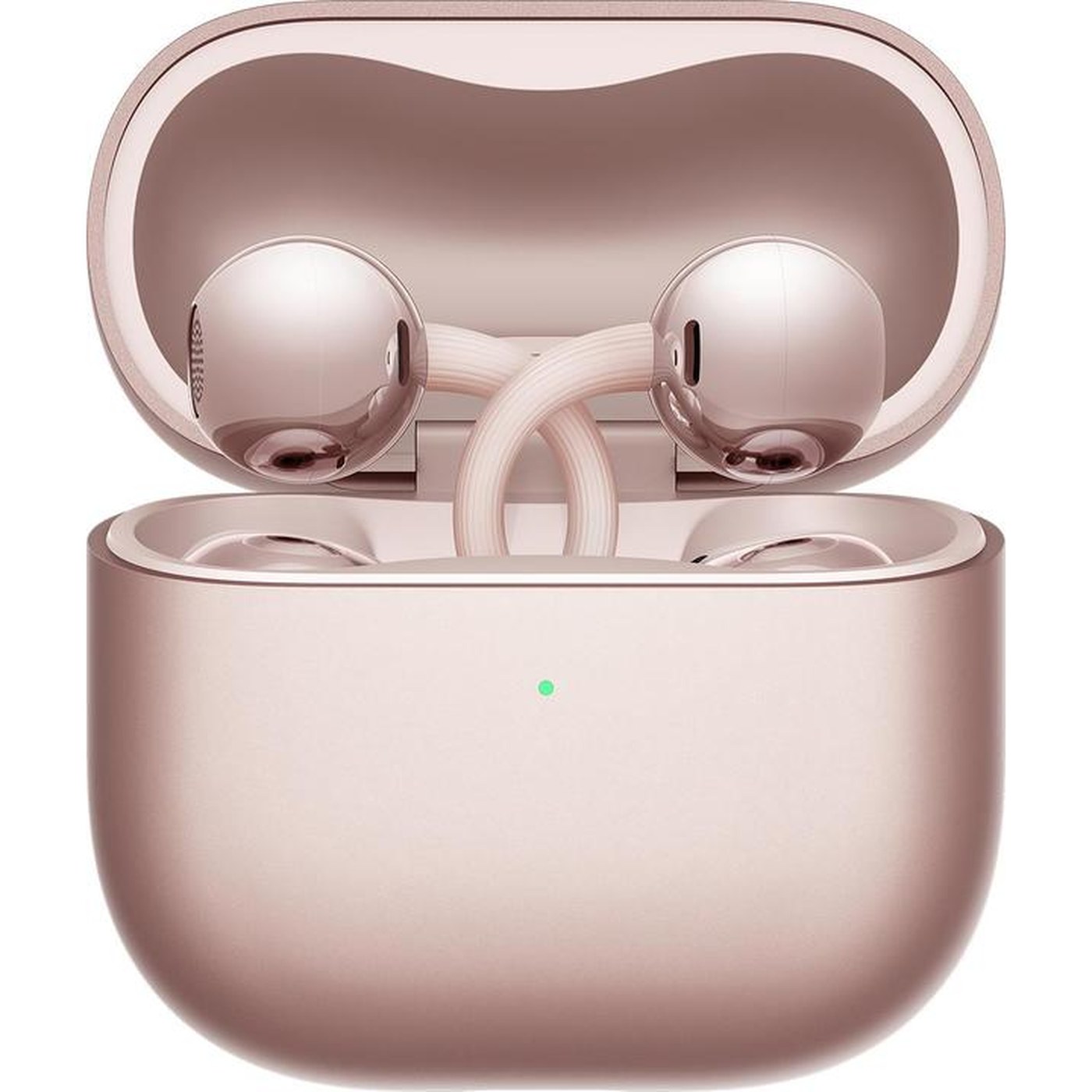
© Huawei, official photo used for editorial purposes
Huawei FreeClip 2: the first Huawei reviewed by RunMorph
Huawei had never appeared in the RunMorph review catalog, in any category. That's a deliberate choice: the FreeClip 2, launched on January 20, 2026, is the second generation of a format few brands dare to try, a fully open earring-style earbud with no ear tip and no over-ear hook. For a runner, the argument is simple. Nothing blocks the ear canal, so traffic, other runners and a training group's instructions stay audible. The bet for this second generation is to fix the two complaints leveled at the first, a weight you could still feel after an hour and sound that was too thin, without losing what made the format worth running with.
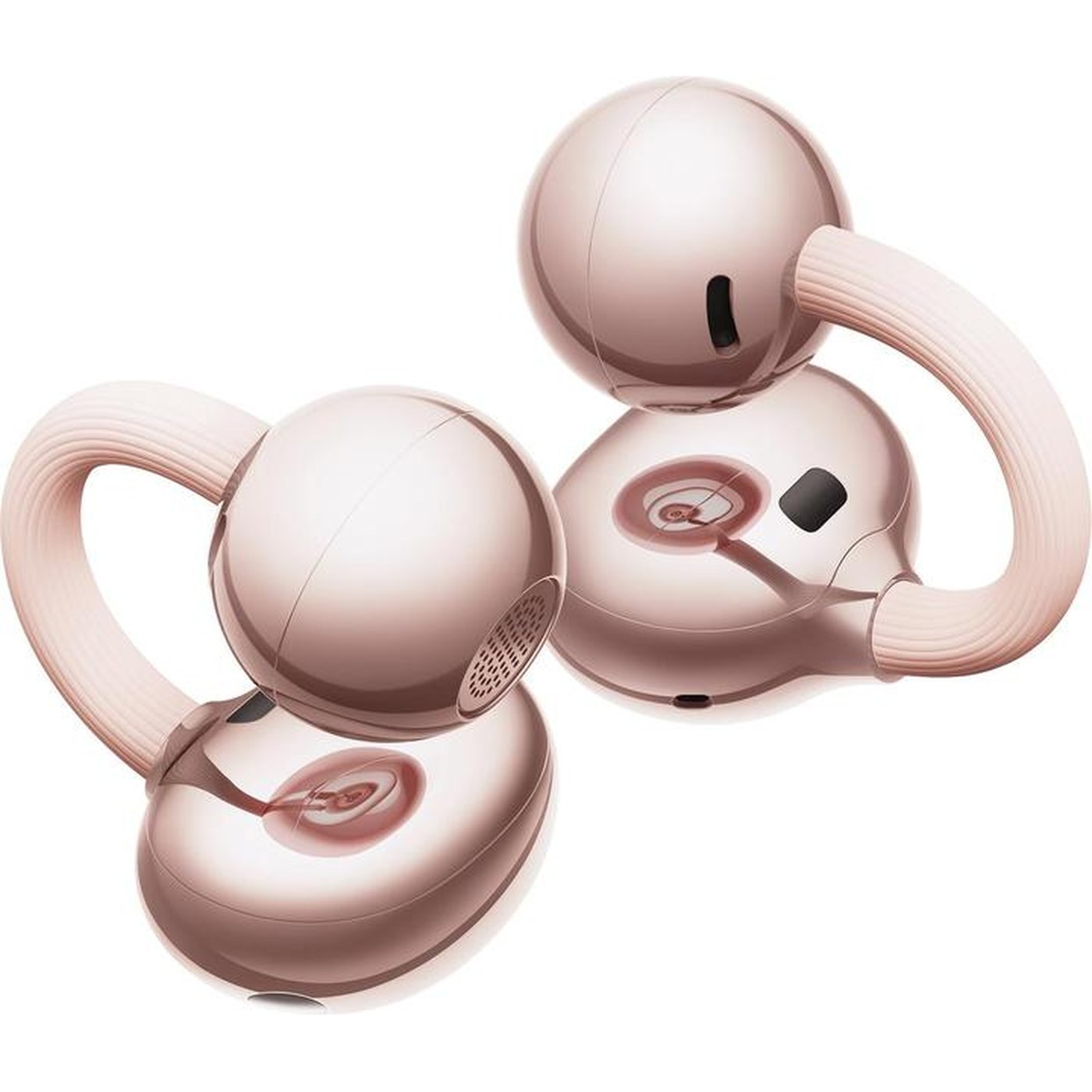
© Huawei, official photo used for editorial purposes
First impressions: a clip designed for ordinary ears
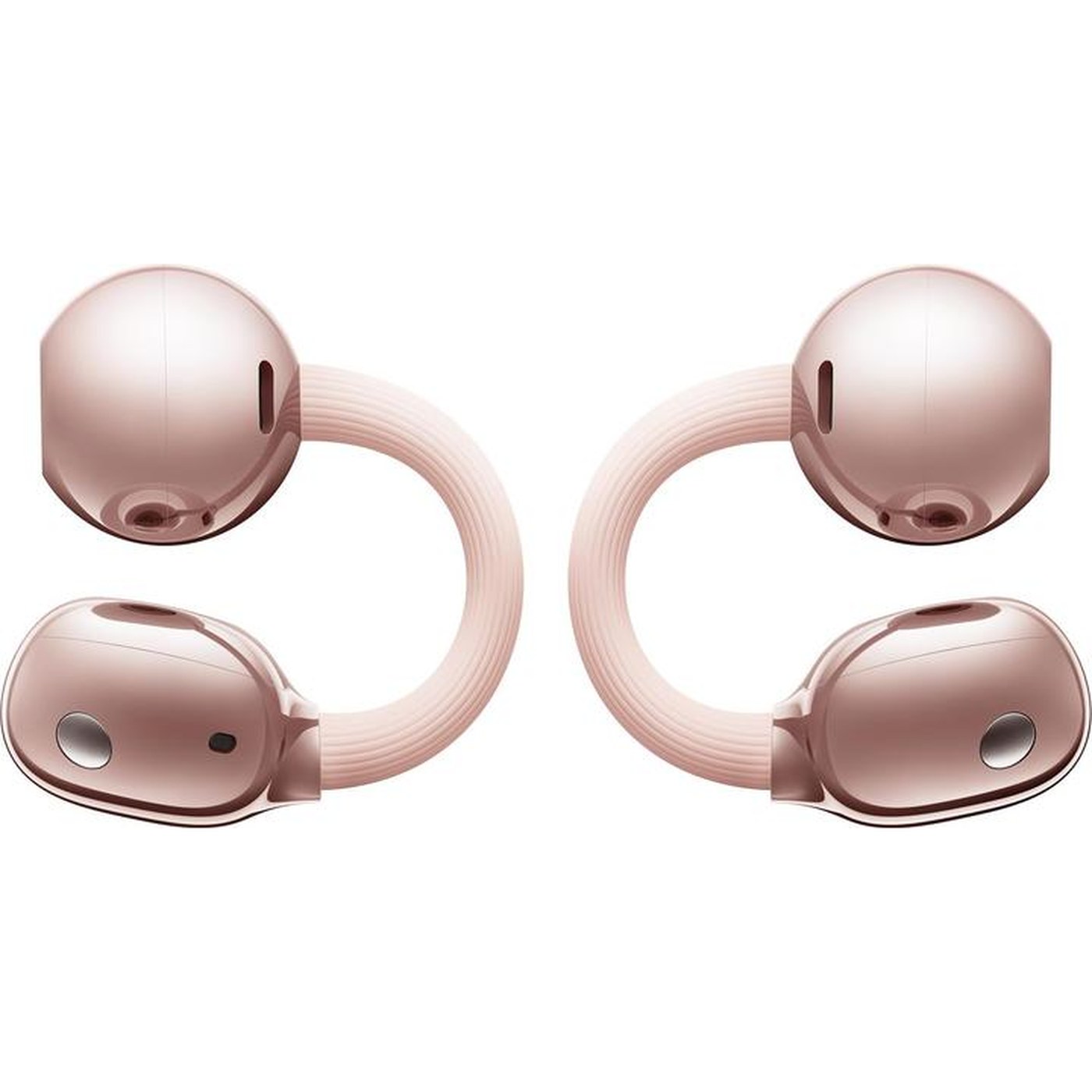
You feel the difference from the first generation as soon as they come out of the case. The central silicone band is a little stiffer but squeezes less around the ear, and the bulk behind the ear has shrunk, which helps small ears in particular. The silicone-covered nickel-titanium arc spreads pressure along its whole length instead of on a single point, and several hours of wear create no hot spot, a common problem with rigid over-ear hooks. You adjust the volume by swiping a finger across a new touch surface on the back of the earbud. Good idea on paper, but it stays finicky for the first few days.
The flip side of this design is how much it depends on the shape of your ear. A field test run with several runners reports that people with pronounced ear contours (prominent cartilage, sometimes called "cauliflower ears") struggle to seat the clip properly: it slips or never finds a stable anchor point. That's not a manufacturing defect. It's a structural limit of the earring format, which doesn't suit every anatomy, unlike an in-ear earbud that comes with several ear tip sizes.
© Huawei, official photo used for editorial purposes
Field test: what the independent reviews report
We read three French reviews in full for this article. Wanarun, the only source in the panel focused specifically on running, confirms a flawless hold even through sudden movements and changes of terrain, though the product page itself warns that the FreeClip 2 isn't universal across all ear shapes. Fnac, in a lab test, measures battery life close to 10 hours of continuous playback at moderate volume, in line with Huawei's claim, and confirms the IP57 rating in rainy conditions. Phonandroid, in a review focused more on everyday use, praises bass that is clearly more present than on the first generation from around 40 Hz, while noting it still trails a sealed in-ear like the FreeBuds Pro. It also points out the lack of active noise cancellation, a design choice dictated by the open format rather than an oversight.
All three sources agree on a point rarely highlighted elsewhere: the Huawei AI Life app isn't on the Google Play Store. On Android, you have to install the APK file manually via a QR code or an alternative store, a step many runners simply won't bother with. On iPhone, multi-device management isn't available either, since it's reserved for Android and HarmonyOS.
Major flaw: an app you can't find on the Play Store
This is what weighs most heavily on the value score. Without the Huawei AI Life app, you can't adjust the 10-band equalizer, customize double and triple taps, or turn on fall detection. Yet the app doesn't show up on the Google Play Store: you have to get it as an APK, through a QR code supplied by Huawei or an alternative store, a step no direct competitor tested by RunMorph requires. If you switch Android phones every year or lend your earbuds out, that friction comes back with every reinstall.
Major flaw: a format that doesn't suit every ear
The second structural flaw comes from the product's very promise. The FreeClip 2 attaches by pinching the outer ear, with no size adjustment and no interchangeable ear tips. One tester reports that wearers with fleshy ears or pronounced contours can't get it to stay put: the earbud rotates or slips during effort. Unlike an in-ear model shipped with several ear tip sizes, there's no adjustment at all. Either your ear shape works or it doesn't. Trying them in a store before buying is the only way to check, and RunMorph explicitly recommends it for this particular product.
© Huawei, official photo used for editorial purposes
Huawei FreeClip 2 vs Shokz OpenDots 2: head to head
Both earbuds share the same principle, a clip that pinches the ear without putting anything in the canal. Shokz, already established in this segment with the OpenDots One, pushes battery life further with the OpenDots 2.
| Criterion | Huawei FreeClip 2 | Shokz OpenDots 2 |
|---|
| Total battery life (with case) | 38 h | 40 h |
| Water resistance | IP57 | Improved over the OpenDots One |
| Android app | Not on Play Store (APK required) | Available on the Play Store |
| Ecosystem | Huawei AI Life (first Huawei product tested by RunMorph) | Shokz, already in the catalog with 6 models |
Bottom line: on the spec sheet the two are evenly matched, but an app you can install without jumping through hoops tips the balance toward the Shokz OpenDots 2 for a runner who doesn't want to sideload an APK file before the first run.
Huawei FreeClip 2 vs Bose Ultra Open Earbuds: head to head
A different philosophy with the Bose Ultra Open Earbuds, which bet on immersive spatial audio rather than the discretion of the clip.
| Criterion | Huawei FreeClip 2 | Bose Ultra Open Earbuds |
|---|
| Positioning | Everyday comfort and discretion | Sound quality and spatial audio |
| RunMorph score | 7.8 / 10 | 8 / 10 |
| Isolation | None, by design | None, by design |
| Android app | Not on Play Store (APK required) | Available on the Play Store |
If your ears belong to a music lover, the Bose keep the edge. If weight and easy setup come first, the FreeClip 2 stays competitive on paper, but loses on this specific point to both rivals in the comparison.
Our field take: who is it for?
The FreeClip 2 is first and foremost for the urban or road runner who wants to keep an ear on traffic without giving up comfort on a long run. If you're preparing a 10K or a half marathon with runs in the city or in a group, this kind of open earbud makes sense all season long, and RunMorph recommends it alongside a RunMorph 10K training plan where urban safety matters as much as the music.
The RunMorph coach's verdict
The Huawei FreeClip 2 delivers on comfort and hold, the two criteria that decide everything when you run, and tackles the flaws of the first generation head on. 7.8/10, a score weighted toward comfort and hold rather than an arithmetic average of the six bars: the friction of an app that isn't on the Play Store and the fact that it won't fit every ear drag down the value score, but they don't undermine the essentials for a runner with standard ears.
FAQ
How much do the Huawei FreeClip 2 cost in France?
€169 at a specialist retailer like i-run, 15% below the €199 list price.
What battery life do the Huawei FreeClip 2 get?
9 h per earbud on their own and 38 h in total with the case, with an independent measurement close to 10 h of continuous playback.
Are the Huawei FreeClip 2 waterproof enough to run in the rain?
Yes, the IP57 rating covers rain and sweat, but not prolonged immersion like swimming.
How much does a Huawei FreeClip 2 weigh?
5.1 g per earbud, against 5.6 g for the first generation, so 0.5 g lighter.
Do you need a Huawei account to use the FreeClip 2 on Android?
The Huawei AI Life app (version 16) isn't on the Google Play Store: you have to install it from an APK file, a real obstacle to an impulse buy at €169.