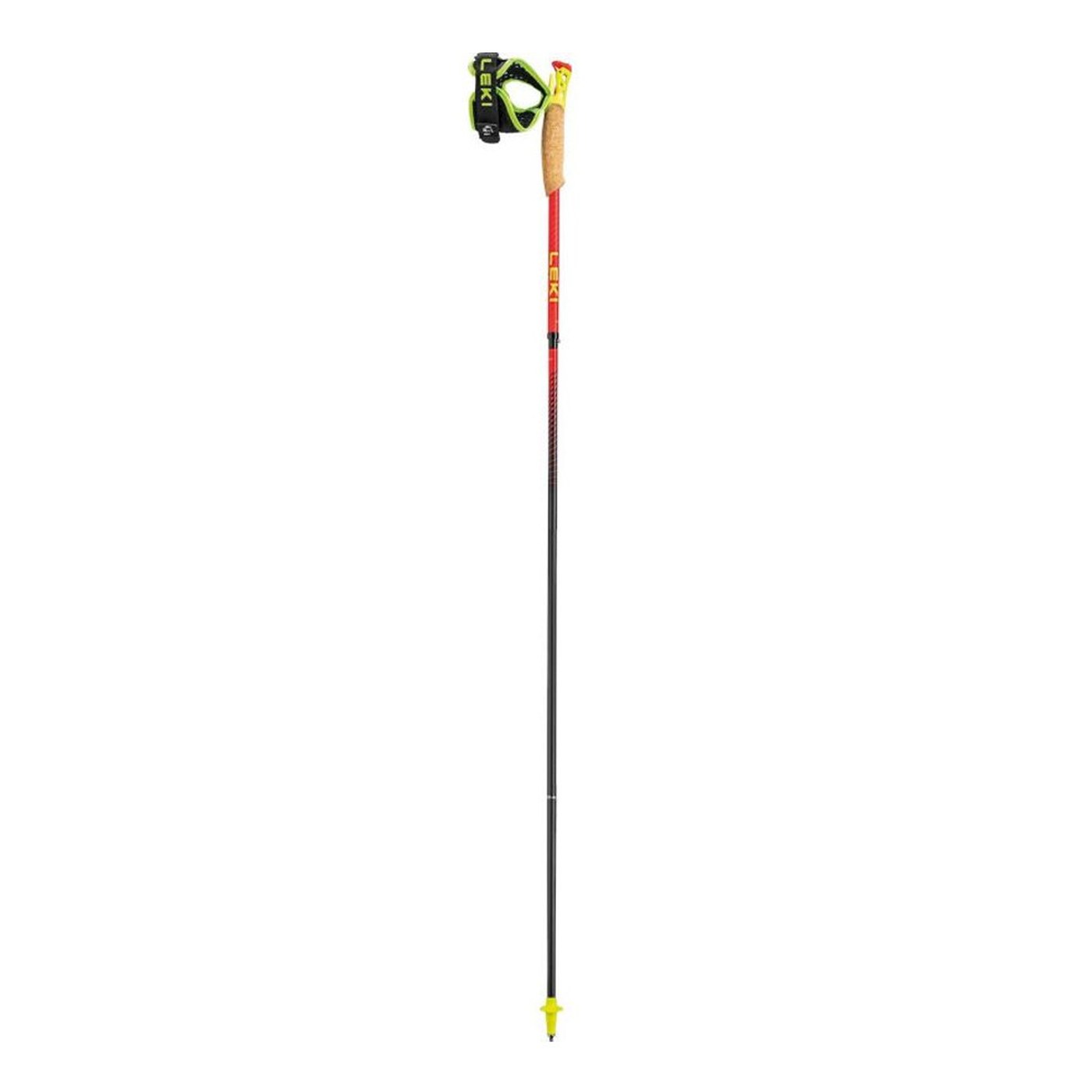
Looking for a trail pole that can handle a skyrace without weighing on your shoulders or cluttering your pack? Leki brings out the carbon artillery with the FX.One Superlite: 137 g per pole, 35 cm folded, and a Shark Frame Strap Mesh strap that is 30% lighter. This review puts the promises of this 190-euro gem to the test, from technical climbs to committing descents.
Leki Ultratrail FX.One Superlite Review: 137 g Carbon for Skyrace
8.5/10
Leki Ultratrail FX.One Superlite: the carbon benchmark that owns its price
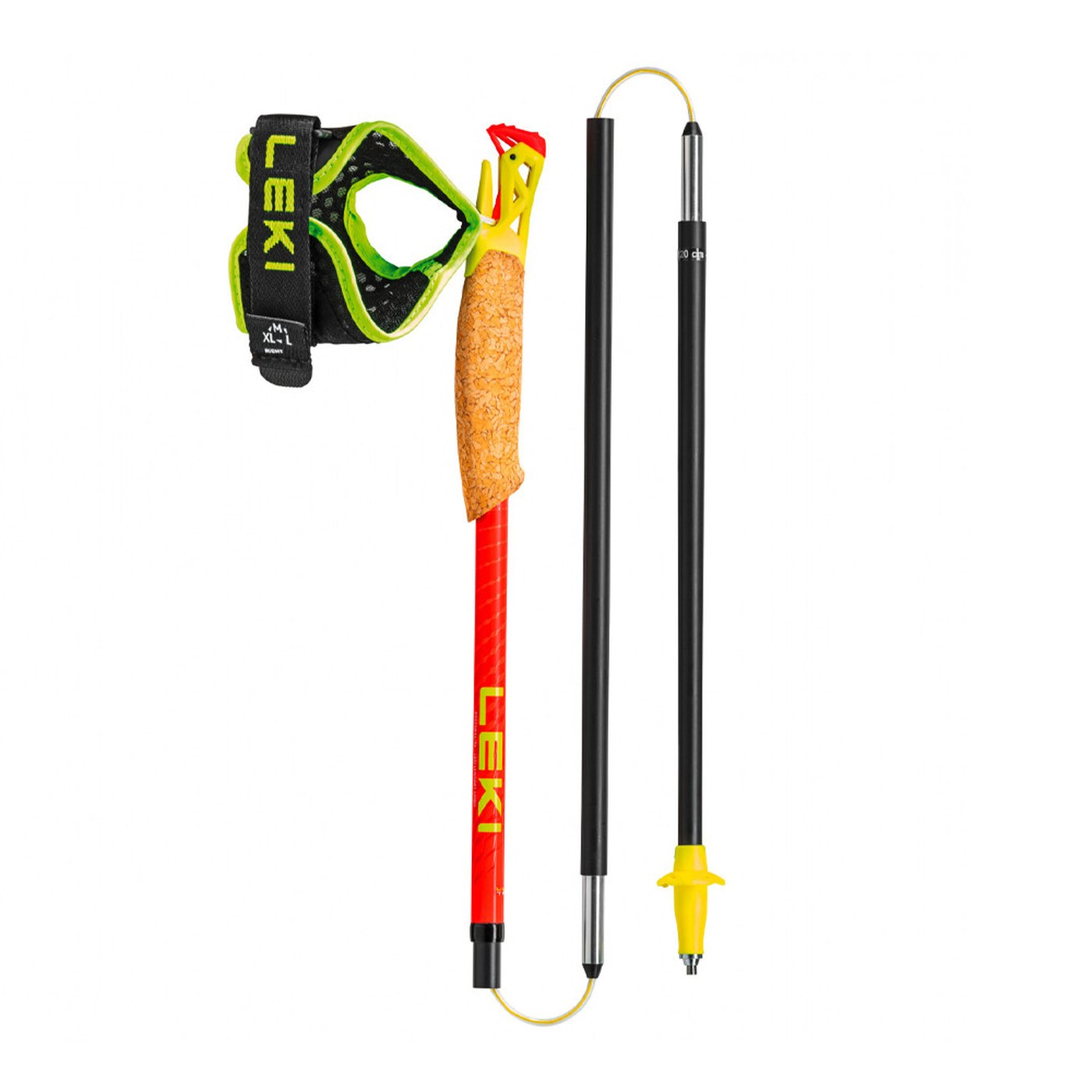
With the FX.One Superlite, Leki stops pretending. The German brand releases the lightest trail pole in its lineup, with an HRC carbon shaft just 14 mm in diameter, three folding sections and a Push-Button system at the top. On the scale, each pole weighs 137 g. The pair comes in at around 274 g, a figure that puts the FX.One Superlite in the very exclusive club of poles built for racing.
The official price sits around 190 euros per pair, a deliberately premium position. Leki justifies it with a spec sheet where every component was optimized together with its Trail Running Team. The result: an optimized carbon shaft, the Shark Frame Strap Mesh strap, a grip hollowed out with air channels and a minimalist basket. Everything is designed to go fast. Really fast.
RunMorph tip: before you invest 190 euros in this racing pole, make sure you have mastered pole placement on steep climbs and the timing between poles and stride. If you are new to training with poles, start with a more versatile model and train with the Black Diamond Distance 22 pack on your back, which has quick-stow pole holders. The FX.One Superlite excels when you already know what to do with it.
Objective technical data
| Feature | Value |
|---|---|
| Brand | Leki |
| Model | Ultratrail FX.One Superlite |
| Shaft material | HRC carbon, 14 mm diameter |
| Construction | 3 folding sections |
| Folded length | 35 cm |
| Extended lengths | 105, 110, 115, 120, 125, 130 cm (fixed length) |
| Weight per pole | 137 g (120 cm size) |
| Pair weight | about 274 g |
| Folding system | Push-Button (push button at the top) |
| Grip | Aircore with air channels, soft extension |
| Strap | Shark Frame Strap Mesh, Trail Shark clip |
| Tip | Tungsten carbide, minimalist trail basket |
| Carry bag included | Yes, 35 cm |
| Official price | about 190 euros |
Who are these poles for?
The skyrunner chasing the clock
The FX.One Superlite was designed for skyraces, vertical kilometers and short formats with big elevation gain. At 274 g for the pair, it weighs less than many single-piece telescopic aluminum poles. On a 25 km loop with 2,000 m of elevation gain, you will really feel the difference compared with a classic 350-400 g pole. The stiffness of the HRC carbon returns every push without any unwanted flex. The pole becomes an extension of your forearm on steep slopes.
The ultra finisher who saves every watt
Over 100 km and beyond, cumulative weight matters. Carrying 80 g less per pole for 20 hours means less fatigue in your shoulders and arms as the hours go by. The Shark Frame Strap Mesh holds your wrist without squeezing it, which prevents the nerve pain you get with straps that are too thin. For a runner targeting a sub-24 h finish in an alpine race, the FX.One Superlite is a defensible investment.
Fast self-supported trail hiking
This is where it falls short. The FX.One Superlite is not built for hiking with a loaded pack. The 14 mm shaft is thin and optimized for propulsion, not for absorbing the weight of an 8 kg pack on a rocky descent. If your use is mixed, look at the more versatile Cross Trail FX.One Superlite or a telescopic FLZ model instead.
Comfort, support and ergonomics
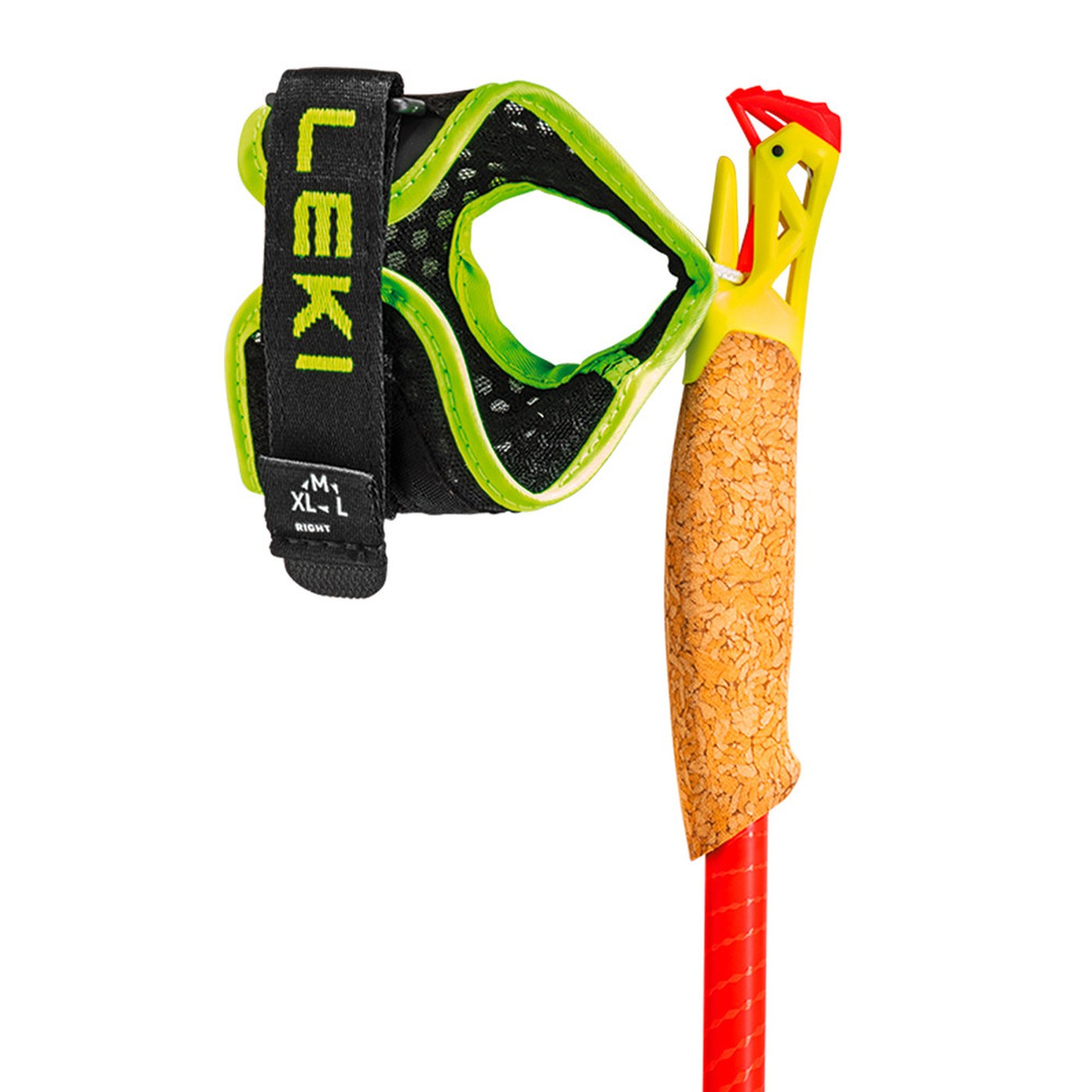
The Aircore grip is one of the strengths of the FX.One Superlite. Its air channels cut grip weight by 30% compared with the classic Shark system. You feel the difference as the hours pile up: your hand stays dry, the strap does not mark your skin, and the soft extension below the grip gives you a comfortable low hold on flat traverses or descents.
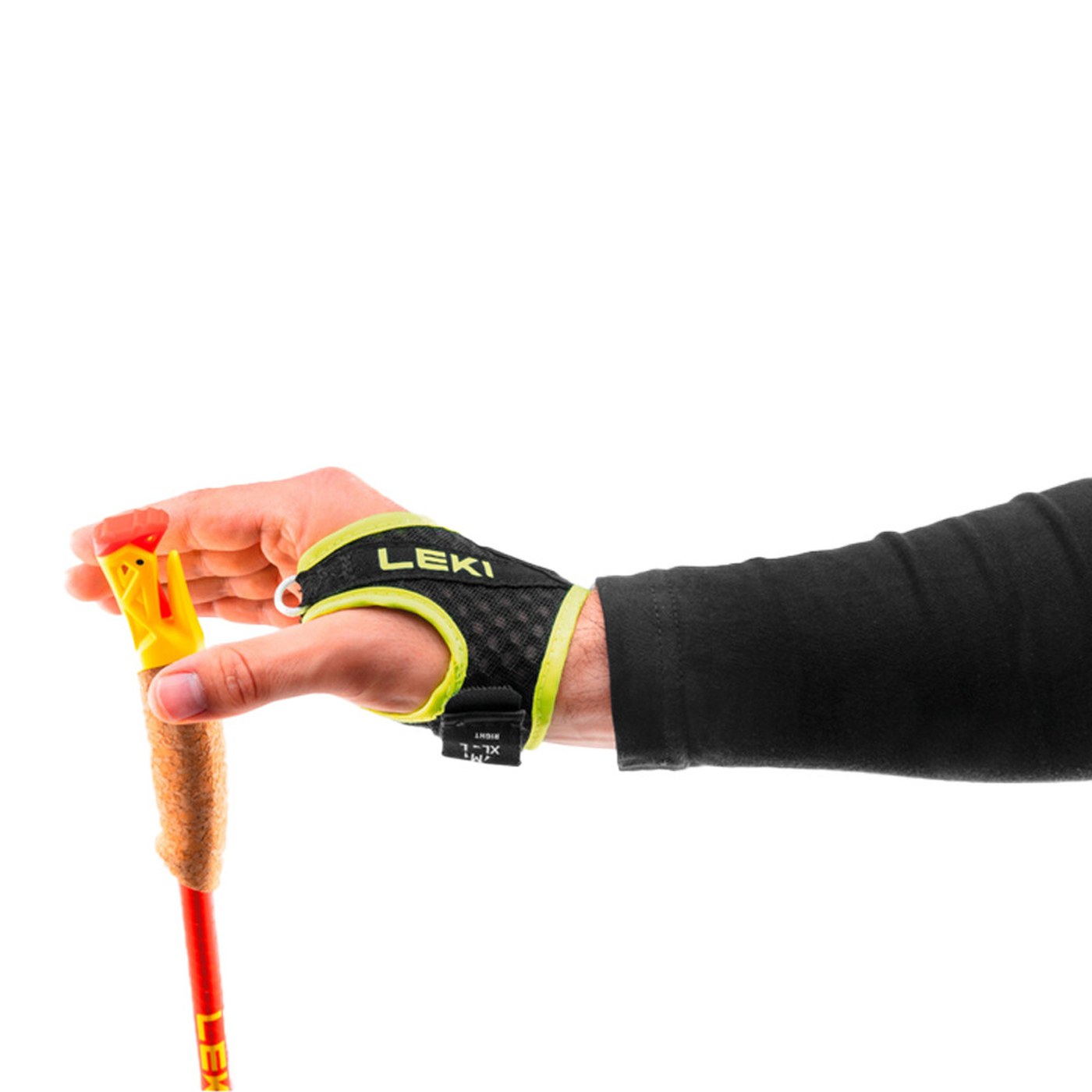
The Shark Frame Strap Mesh is the second revolution. It combines a breathable mesh strap, a rigid frame and a Trail Shark clip that locks into the top of the pole. You can free your hand with a single press on the clip button. At aid stations, you unclip, eat, stow your food and clip back in. It is fast and reliable. The mesh dries quickly after a downpour or a stream crossing.
One small drawback: lateral support is less enveloping than a full Salomon-style glove. If you push very hard on a long climb, you may feel a slight twist at the wrist when the pole length is poorly matched. Length adjustment is not possible (fixed-length model), so choose your size carefully.
Folding and adjustment system
The Push-Button folding is crystal clear. One metal button at the top of the shaft, a single press, and the pole breaks down into three sections. To deploy it, give it one sharp pull: the sections line up and the button pops back into place with a firm click. Count two to three seconds between pulling the pole out of your pack and having it ready to push. That is as fast as the best systems on the market.
The pole stows in the included 35 cm mesh bag. To carry it while running, most recent trail packs have side pole holders or hip belt attachments that take this format. The Black Diamond Distance 22 and the Raidlight Ultralight 12L swallow the FX.One Superlite with no trouble.
Watch out: the FX.One Superlite is a fixed-length pole. You choose your length when you buy it (usually your height in cm minus 50). If you want an adjustable system, look at the classic FX.One version, which offers centimeter-by-centimeter adjustment.
On the trail
On steep climbs, the HRC carbon returns every push with a crisp response. You push, the pole does not flex, the energy goes into the ground. On a 25% grade where you drive with alternating arms, the difference from an aluminum pole shows by the fifth minute. Your shoulders tire less, and your heart rate drops by 3 to 5 beats at the same intensity.
On technical descents, the FX.One Superlite shows its limits. The thin shaft is not built to absorb big vertical impacts on every stride. If you plant it hard against a rock at 12 km/h on a descent, you feel the shaft vibrate. It is not dangerous, but it reminds you that this pole is optimized for propulsion, not for aggressive braking. Save it for flowing descents where you use your poles as light supports, not as shock absorbers.
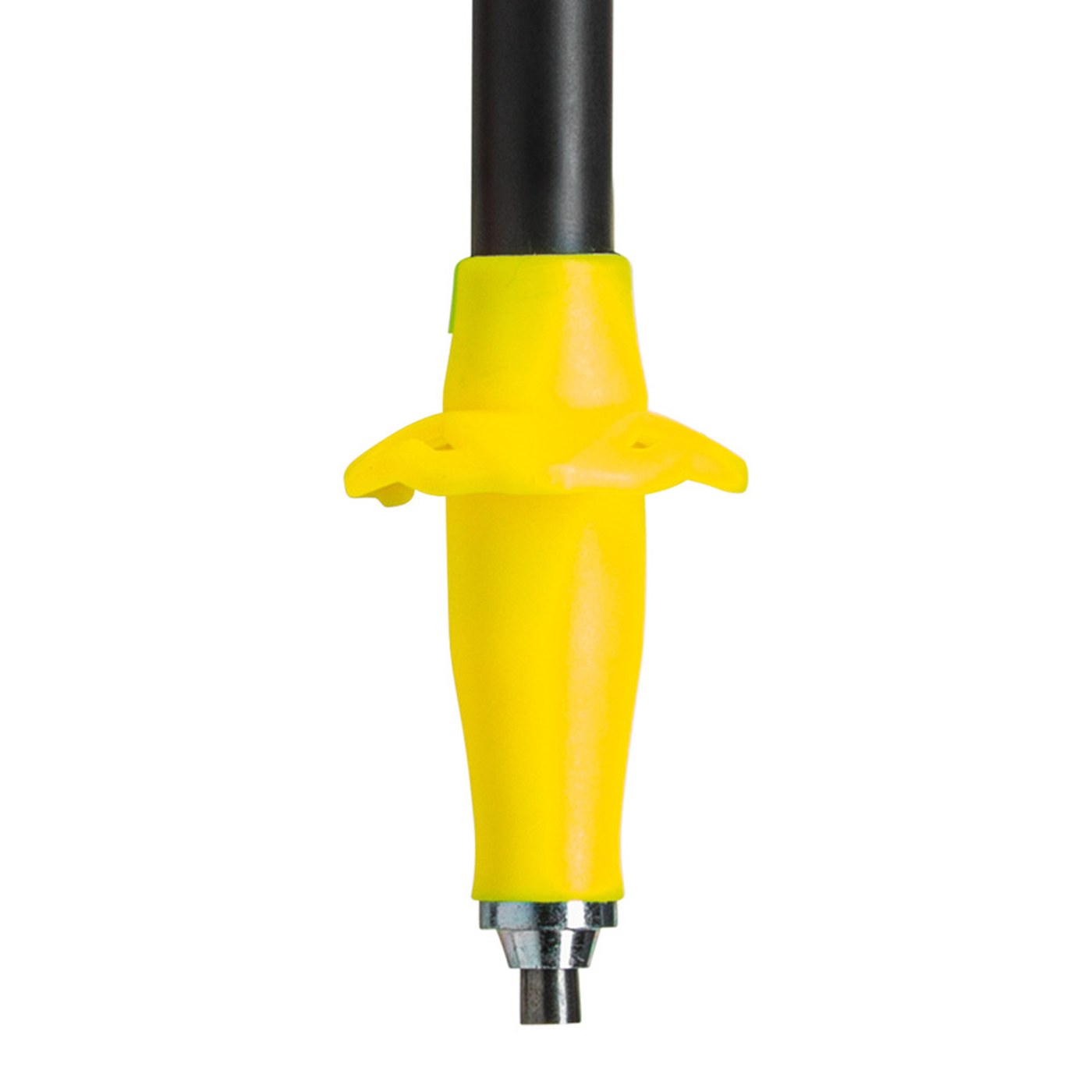
On mixed technical terrain (singletrack, roots, slabs), the tungsten carbide tip bites well. The minimalist basket avoids snagging on low branches and vegetation. On packed snow or boggy ground, this basket becomes too small and the pole sinks in. For that kind of terrain, Leki sells larger compatible baskets as an option.
How it compares with the competition
Against the Black Diamond Distance Carbon Z, the Leki wins on two fronts: weight (274 g versus 280-298 g depending on size) and the strap system (the Shark Frame Strap Mesh clips in faster and frees your hand completely at aid stations). The Black Diamond takes back the advantage on price (around 180 euros versus 190) and on versatility, thanks to its interchangeable carbide/rubber Tech Tips.
Against entry-level aluminum poles (Decathlon Evadict, Naturehike), the FX.One Superlite plays in another league. You pay 5 to 6 times more, but you save 100 to 150 g per pair and get a strap system that is in a different class. It is up to you to decide whether that gap justifies the investment, based on how much you use poles each year.
Against a Salomon S/Lab Carbon, the Leki is lighter, but the Salomon offers a full, more enveloping glove, ideal for runners who want maximum support. It comes down to personal preference.
How to fit them into your RunMorph training plan
A premium trail pole does not replace specific hill work. It makes it more effective. If you are targeting a race with more than 1,500 m of elevation gain, add hill sessions with poles to your RunMorph training plan. The idea: schedule one weekly session of 8 to 12 hill repeats lasting 1 to 3 minutes, with poles on half of the repeats and without them on the other half. Your body learns both modes of propulsion.
During the taper before a long race, take your poles on your long runs for 2 to 3 weeks before race day. Your hand-foot coordination needs to be dialed in so you do not lose 5 minutes on the first steep pitch on race day. Since the FX.One Superlite is fixed-length, lock in the right length well in advance: too short and you lose propulsion, too long and you tire your shoulders.
On the shoe side, pairing the FX.One Superlite with the Salomon S/Lab Genesis or the Hoka Tecton X 3 covers most competitive terrain, from the VK to the 100 km alpine ultra. For muddier, more technical ground, go for the NNormal Tomir 2 instead.
RunMorph verdict
The Leki Ultratrail FX.One Superlite is a racing trail pole in the strictest sense. Not a versatile hiking companion. If you want a tool that makes the difference in a skyrace, a VK or an ultra with big elevation gain, it delivers exactly what the spec sheet promises: 274 g, lightning-fast deployment, a highly effective Shark Frame Strap Mesh strap and HRC carbon that returns every push without flexing.
The trade-offs are deliberate: fixed length with no centimeter adjustment, borderline on technical descents, and a price of 190 euros that demands regular race use to pay off. For the runner giving 100% toward goals where every watt counts, it is a defensible investment. For mixed recreational trail running, go for a more forgiving telescopic FLZ model instead.
Final score: 8.5/10. A precision tool that deserves its reputation, as long as you use it on its home turf.
Key takeaways for your training
- 137 g per pole, 274 g per pair: the FX.One Superlite is one of the lightest trail poles on the market, ideal for skyraces and ultras with big elevation gain.
- 14 mm HRC carbon + Push-Button folding: maximum push transfer and deployment in 2-3 seconds. As quick to pull out as to put away.
- Shark Frame Strap Mesh: the Trail Shark clip frees your hand with one press at aid stations, the mesh dries fast, and grip weight drops by 30%.
- Fixed length chosen at purchase: pick the exact length based on your height minus 50 cm, since no adjustment is possible afterward.
- To make your 190-euro investment pay off, build specific pole sessions into your training plan and save the poles for race goals.