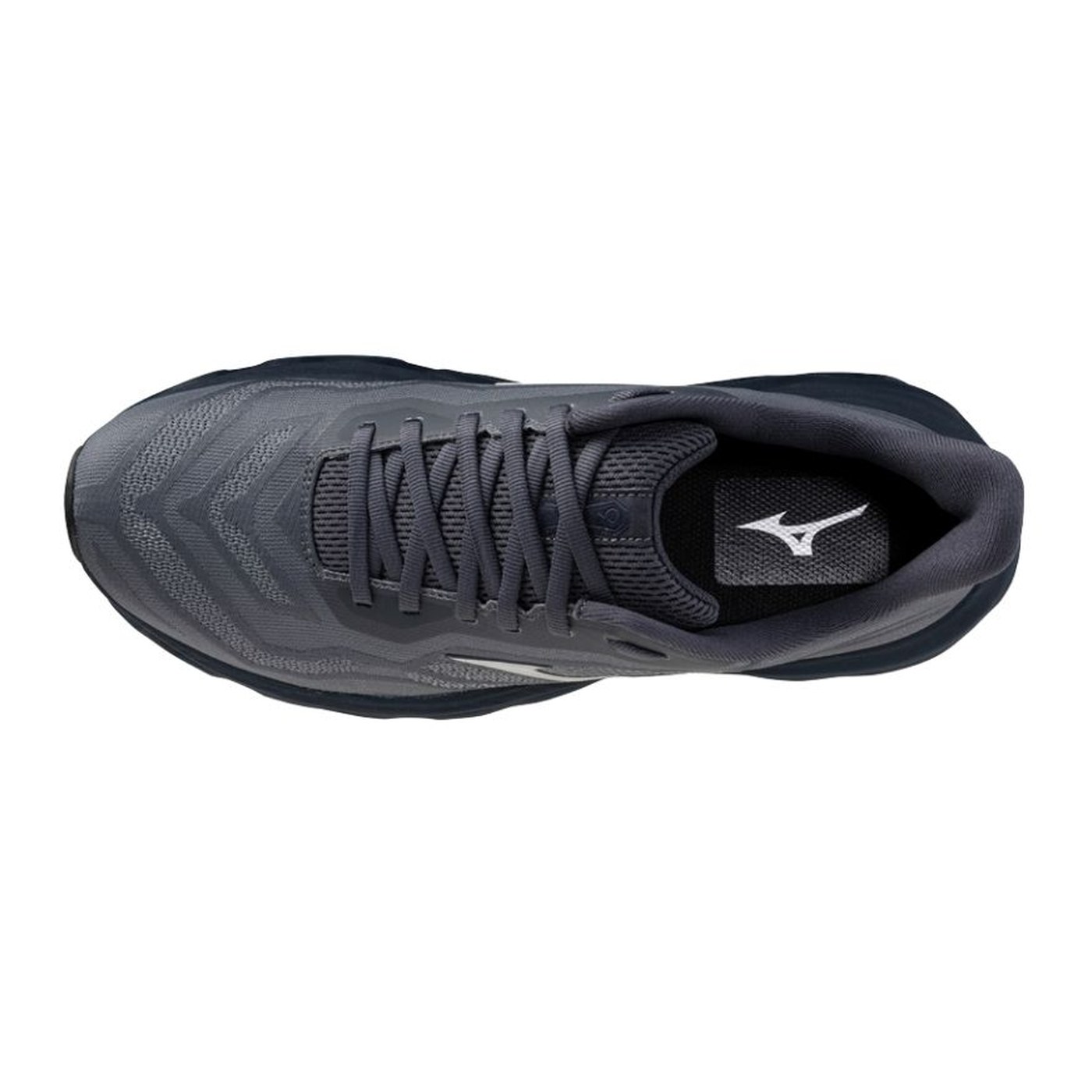
Mizuno Wave Horizon 9 Review: Premium Stability for High Mileage
7.5/10
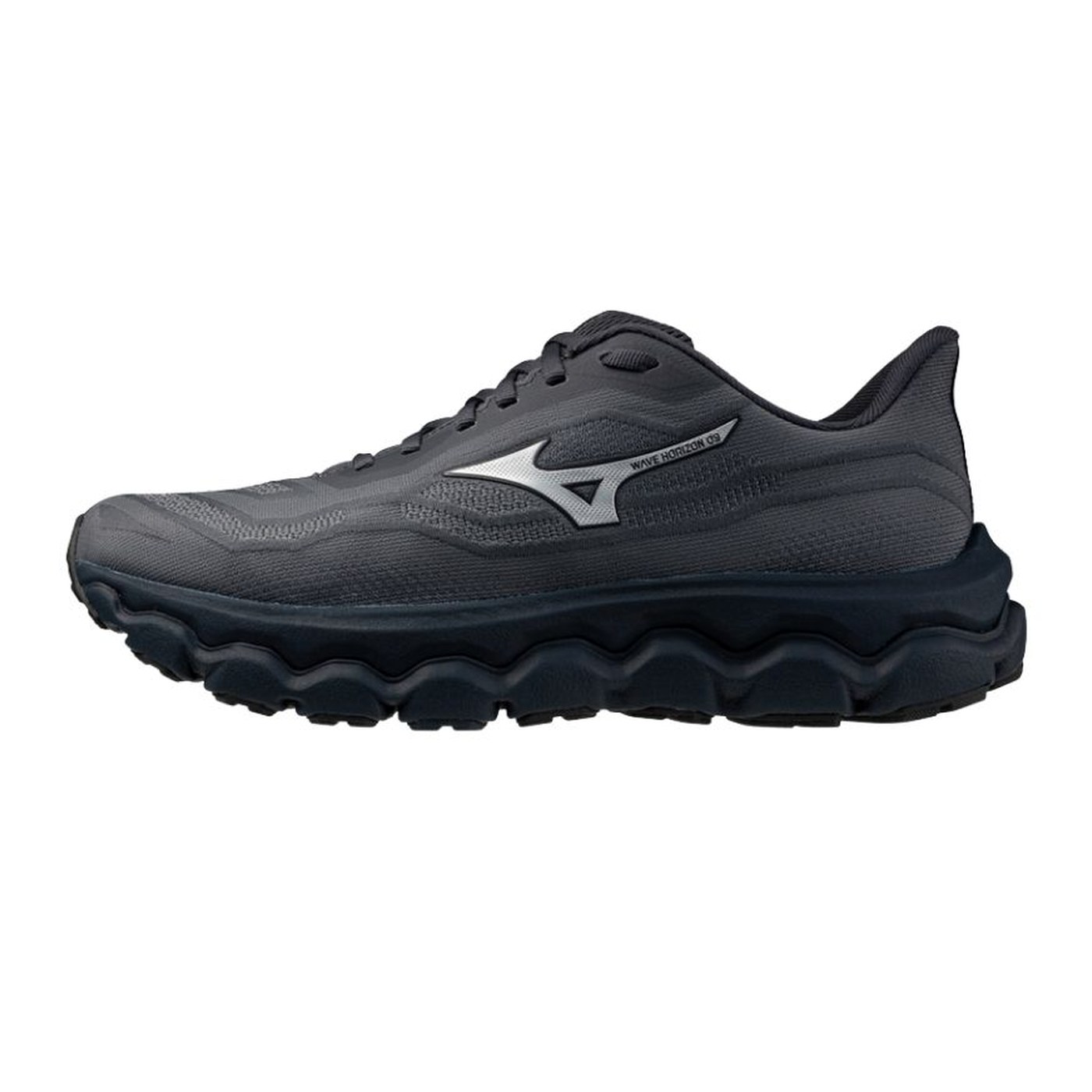
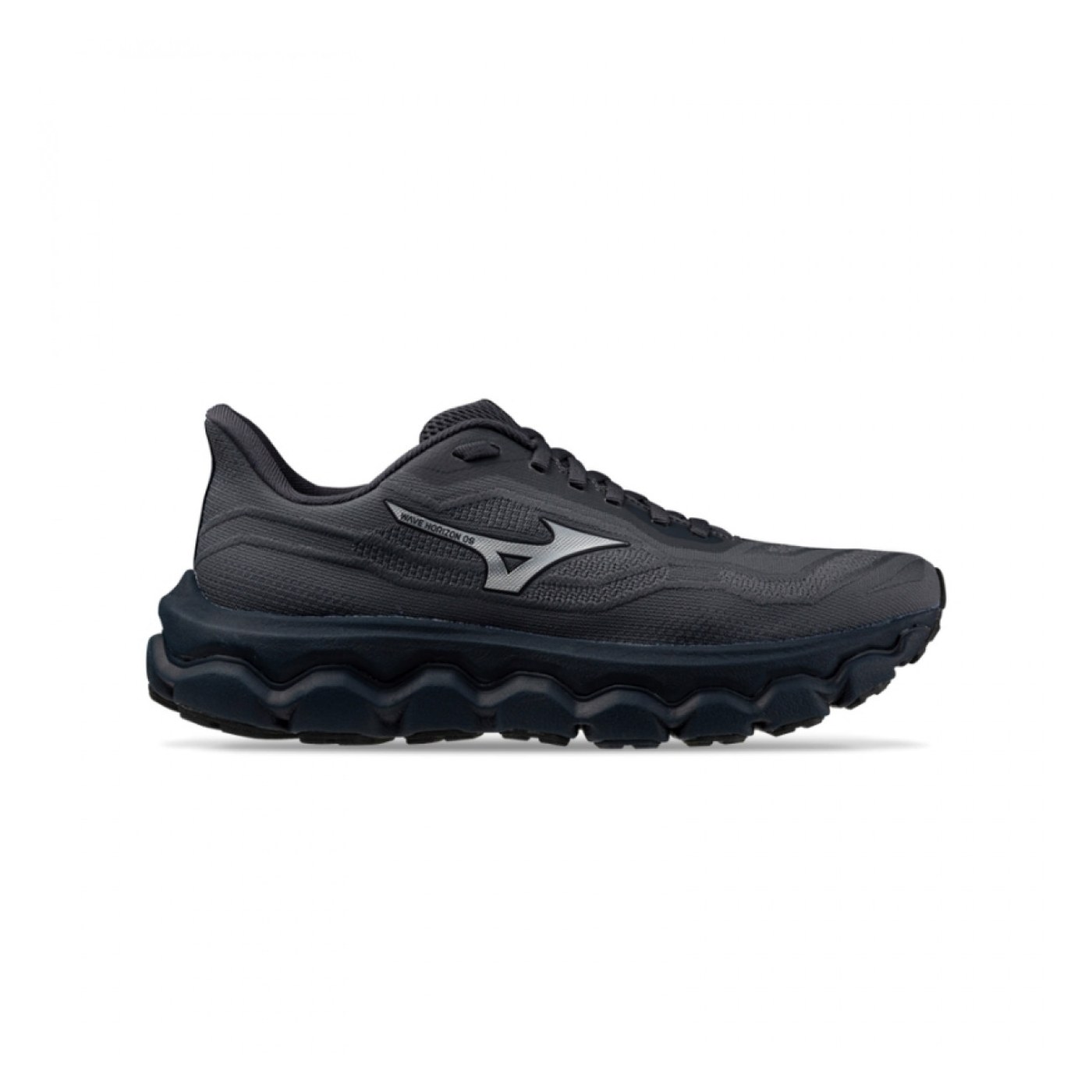
At Mizuno, stability has never needed rigid uppers or punishing density wedges to exist. For thirty years, the Japanese brand has relied on a fan-shaped piece of plastic, the famous Wave plate, to discipline your stride without restricting it. The Wave Horizon 9 is the pinnacle of that philosophy: a support daily trainer that stacks 41 mm of foam, two layers of Enerzy and a full-width Wave to carry you through high mileage. One question remains, the real one: does this 320 g heavyweight deserve a spot in your rotation?
The Mizuno Wave Horizon 9 is a premium stability daily trainer built for neutral to mildly overpronating runners who log big mileage. It bets on comfort, hold and protection rather than snap, with a Wave plate that structures each footstrike without forcing a correction. It delivers on its stability promise, but the high weight and tame toe-off limit it to easy paces.
7.5 / 10 · RunMorph overall score
Cushioning8 / 10
Stability8.5 / 10
Comfort8 / 10
Liveliness6 / 10
Value for money6.5 / 10
Who it is forNeutral or mildly overpronating runners who want a comfortable, stable high-mileage shoe for their easy runs and long runs.
Who it is not forRunners who want a light, lively shoe for intervals or race-pace work: at 320 g, this shoe isn't built to go fast.
Mizuno and stability: the Wave versus the medial post
While almost the entire market corrects pronation with a denser foam wedge under the arch (the medial post), Mizuno has always played a different tune. Its long-standing answer is the Wave plate: a wavy, fan-shaped Pebax plate set into the midsole. It spreads stress at impact and resists collapse on the inner side of the foot, which stabilizes your stride without creating a hard spot and without pushing the foot outward. At RunMorph, we like this approach because it guides instead of constraining: the stability feels like a chassis, not a punishment.
Within this lineup, the Wave Horizon is the most ambitious model: maximum stability paired with generous cushioning. Version 9 pushes comfort up another notch, with the biggest dose of foam ever seen in the line. It's a choice that runs against the all-bounce, all-carbon trend: this is about protection, hold and endurance, not records.
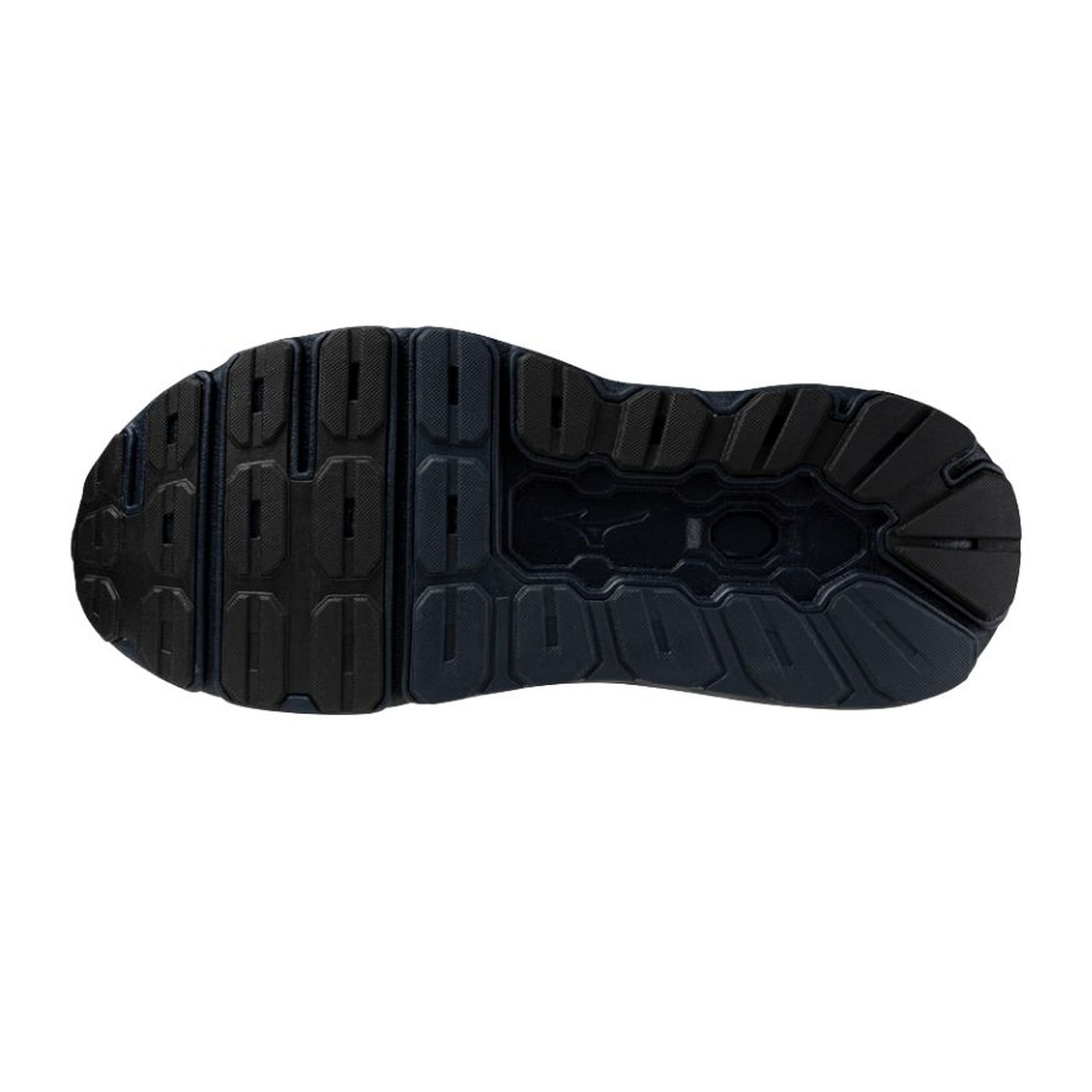
Two numbers tell the whole story: 41 mm of heel stack height and 320 g on the scale. The Wave Horizon 9 owns its status as a massive shoe. The 8 mm drop sits at the high end of average, consistent with a heel-striker target, and the X10 carbon rubber outsole promises above-average durability. This is a shoe you measure in hundreds of kilometers, not in race times.
Dual Enerzy NXT and Wave plate: what changes underfoot?
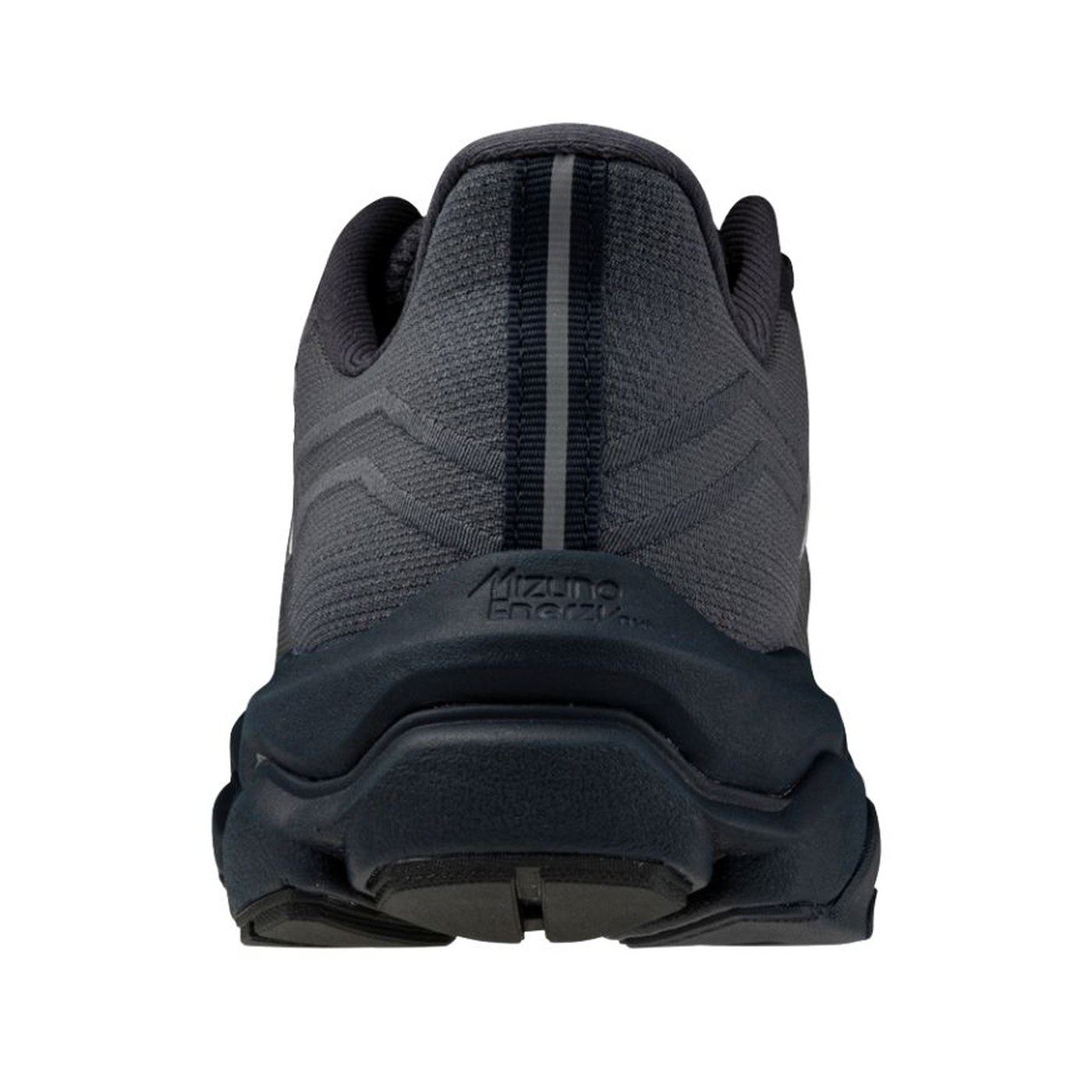
The recipe relies on a two-tier stack. The top layer, in Enerzy NXT, is the softest: it cradles your foot and absorbs the initial impact. The bottom layer, in classic Enerzy, is firmer and acts as a stabilizing base. Between the two, the Wave plate ties everything together and distributes energy. Underfoot, you get a feeling of deep protection with a soft landing that doesn't collapse: you sink in a little, then hit a firm floor that sends you off cleanly.
This setup also explains the shoe's character. The Wave adds structure, but it slightly stiffens the heel-to-toe transition: the Horizon 9 isn't a foam that bounces on its own. It protects, it reassures, it goes the distance, but it asks you to bring your own drive. That's the classic trade-off of high-end stability shoes: plenty of stability and comfort, with deliberately tame efficiency.
RunMorph tip: if you're torn between the Wave Horizon 9 and a neutral daily trainer like the Mizuno Wave Rider 30, ask yourself the right question. Do you need support because your foot collapses inward, or because you tire on long runs? Take the Horizon. Do you just want a versatile, slightly livelier shoe? Stick with the Rider.
The run test: from 5:00 to 6:30 per kilometer
At RunMorph, we ran the Wave Horizon 9 where it makes sense: easy aerobic running and long runs, between 5:00 and 6:30 per kilometer. In that range, it's excellent. The hold is immediate, your foot stays centered on the platform, and late-run fatigue is far less noticeable thanks to the generous cushioning. The fit is plush, almost premium, with a mesh that breathes well enough and a firm heel counter that locks your heel in place.
As soon as you try to push below 4:45, though, the shoe shows its limits. The weight makes itself felt, the Wave-structured transition lacks snap, and the whole package feels like running in a fine but heavy machine. That isn't a flaw: it's a design choice. The Horizon 9 is made to pile up easy kilometers, not to play with the clock. Runners who expect it to handle intervals will be disappointed. Those who save it for easy runs and long runs will be delighted.
Wave Horizon 9 vs Gel-Kayano 33 vs Guide 19: the stability comparison
Three support shoes, three philosophies. The Asics Gel-Kayano 33 relies on a soft chassis and a wraparound hold. The Saucony Guide 19 offers light, discreet stability with its CenterPath platform. The Wave Horizon 9 is the most structured and protective of the three, but also the heaviest.
Criterion
Mizuno Wave Horizon 9
Asics Gel-Kayano 33
Saucony Guide 19
Support type
Wave plate, structured
FluidSupport, wraparound
CenterPath, discreet
Drop
8 mm
10 mm
6 mm
Weight (men's size 42)
about 320 g
about 300 g
about 275 g
Cushioning
Generous, firm underneath
Very soft
Supple and balanced
Liveliness
Tame
Tame
Average
Ideal use
High mileage, long runs
Comfort and volume
Versatile daily trainer
The RunMorph verdict: the Wave Horizon 9 is the pick for runners who want maximum hold and protection, even if it means carrying a bit more weight. If you're after the lightest stability, the Guide 19 is more versatile. If you want softness above all, the Kayano 33 remains the comfort benchmark.
Structured, reassuring stability from the Wave plate
Generous cushioning that protects you on long runs
Plush fit and a very firm heel counter
X10 outsole built for durability
What we liked less
High weight (about 320 g) that you feel as soon as you speed up
Slightly stiff transition, tame toe-off
High official price (€190) at full retail
Unsuited to intervals and fast paces
Our take from the road: which runner is it for?
The runner who needs support
If your foot rolls inward or a professional has steered you toward a stability shoe, the Wave Horizon 9 does exactly the job. Its stability doesn't force a correction, it gently structures your stride, which keeps it comfortable even for daily use.
The high-mileage endurance runner
If you stack high-mileage weeks back to back, the Horizon 9 is an insurance policy. The deep cushioning and hold limit muscle fatigue at the end of a run, and the tough outsole soaks up the kilometers without complaint.
The heavier runner
Above 80 kg, many daily trainers flatten out and lose their hold. The wide platform and dual-density Enerzy of the Horizon 9 hold up under load, which makes it a smart pick for bigger builds.
Take it up a gear. A stability shoe like the Wave Horizon 9 really comes into its own in a structured build-up that mixes long runs, endurance work and quality sessions. To set your volume without getting injured and turn your kilometers into progress, rely on a RunMorph training plan tailored to your goal.
The Mizuno Wave Horizon 9 does exactly what you expect from it: it delivers premium stability and generous cushioning for runners who put hold and comfort first when they log big mileage. The Wave plate remains a smart signature that disciplines your stride without punishing it, and the dual Enerzy layer brings deep protection. The flip side is a high weight and a tame transition that keep it for easy paces. At €190 full price, it isn't cheap, but you'll regularly find it well below that, which clearly improves the equation. A safe bet for support, as long as you know why you're buying it. RunMorph score: 7.5/10.
Key takeaways for your training
Stability without punishment: the Wave plate gently structures your stride, without the hard medial post of traditional stability shoes.
A volume shoe: save it for easy runs and long runs, between 5:00 and 6:30 per kilometer, where it excels.
Not for speed: you feel the 320 g as soon as you speed up, so keep a lighter shoe for intervals.
Ideal for heavier builds: the wide platform and dual density hold up under load.
Durable: the X10 outsole soaks up the kilometers, a good long-term investment.
Recommended articles
Saucony Guide 19: stability that guides you without correcting you
Asics Gel-Kayano 33: soft stability, now with FluidSupport
Mizuno Wave Sky 9: the max-cushion shoe that keeps its stability
Mizuno Wave Rider 30: the Japanese daily trainer loyal to its Wave plate