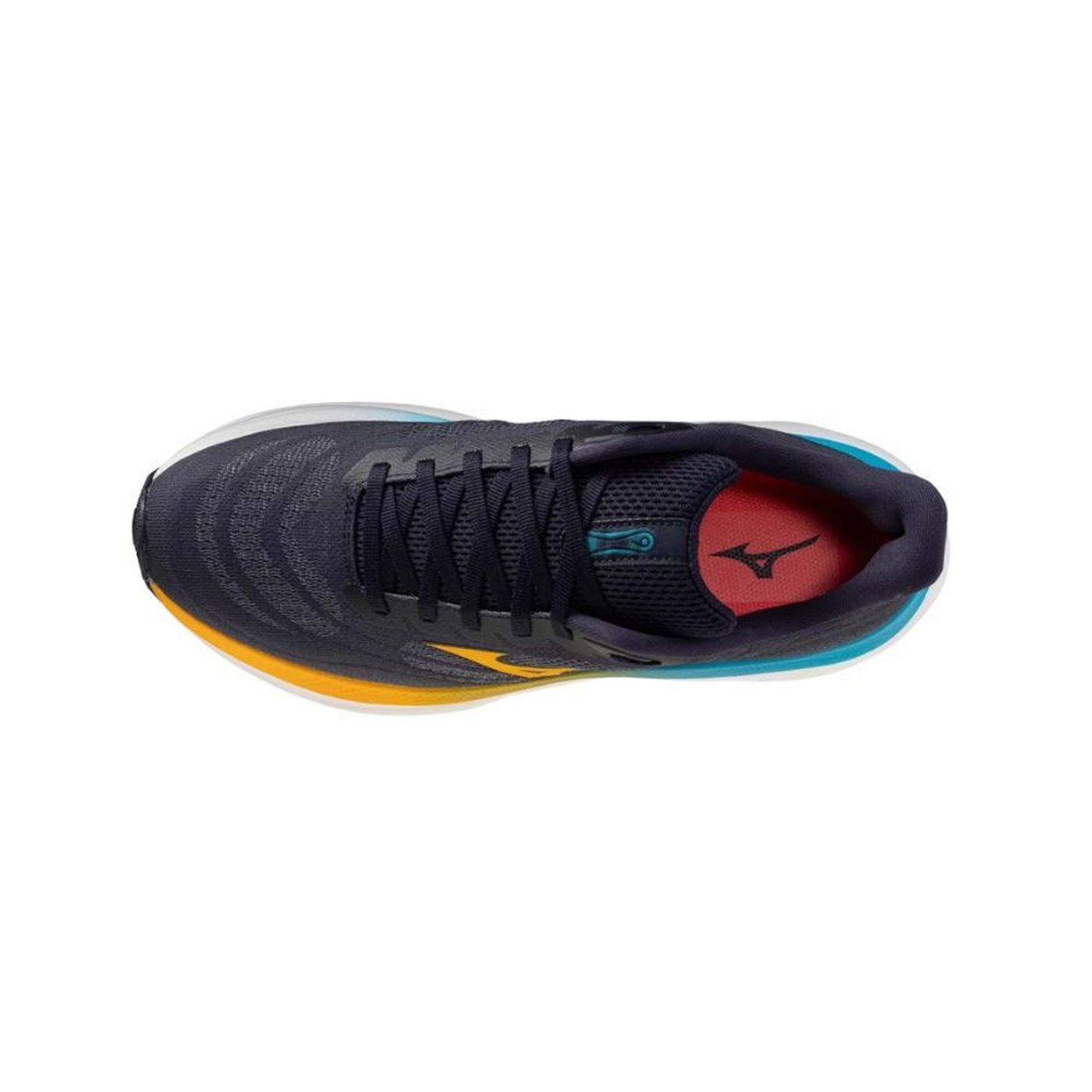
Mizuno Wave Sky 9 Review: 44 mm of Stable Max Cushioning
8/10
While almost the entire 2026 market chases the bounciest supercritical foam, Mizuno sticks to a quieter idea: generous cushioning is worthless if it throws you off balance. The Wave Sky 9, flagship of the Float line, stacks 44 mm of foam under the heel but refuses to let you tip over. Here's why this Japanese max-cushion shoe deserves your attention, and which runner it really makes sense for.
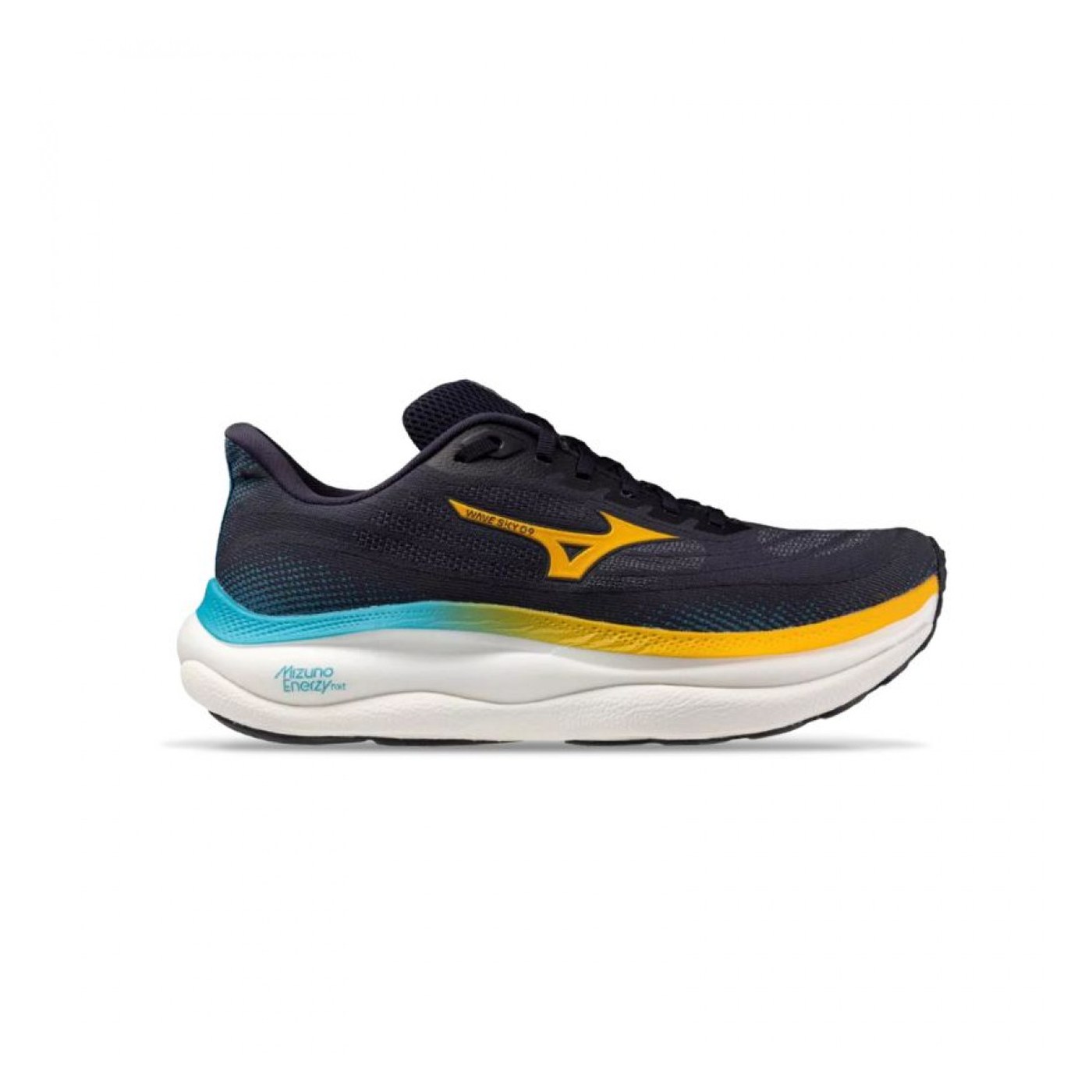
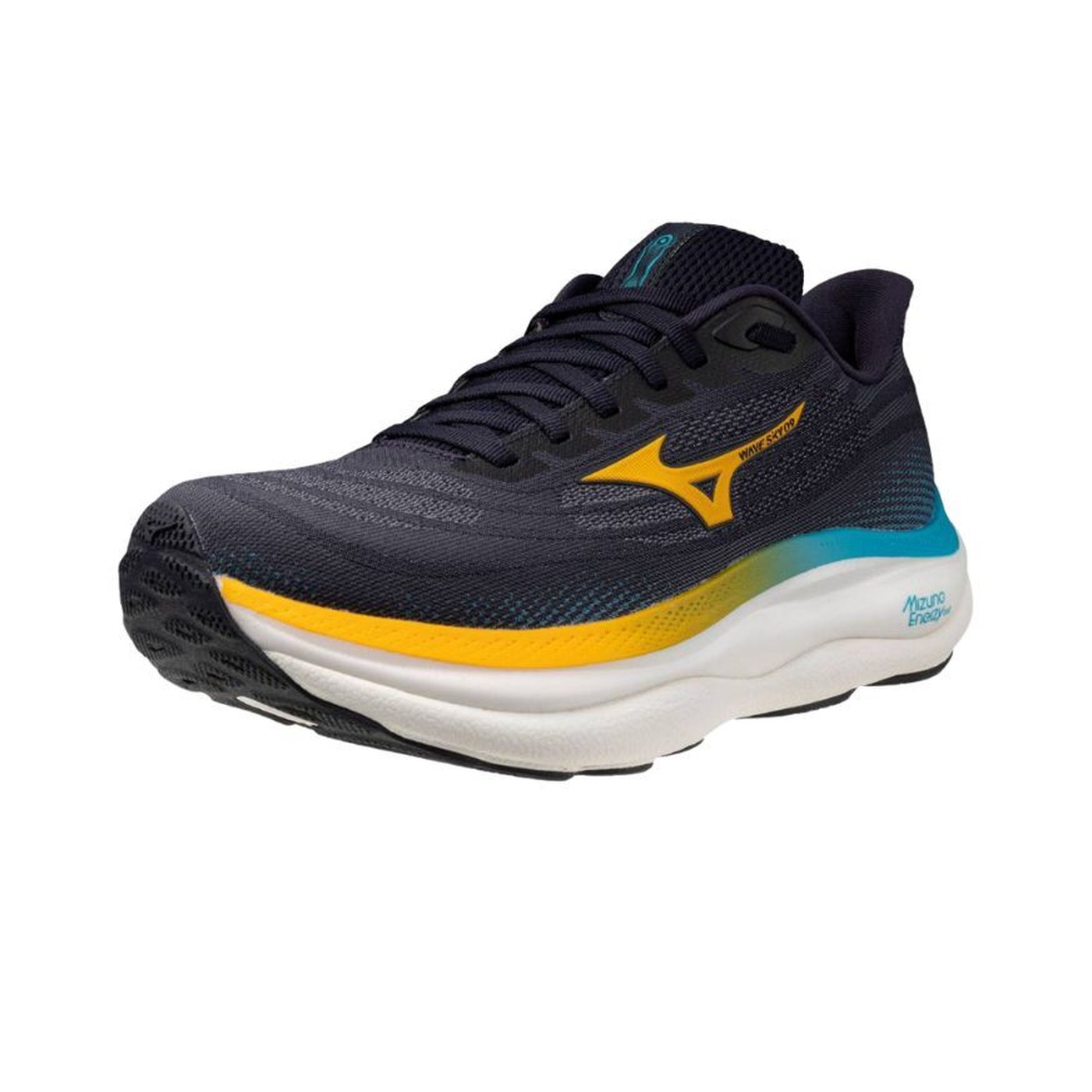
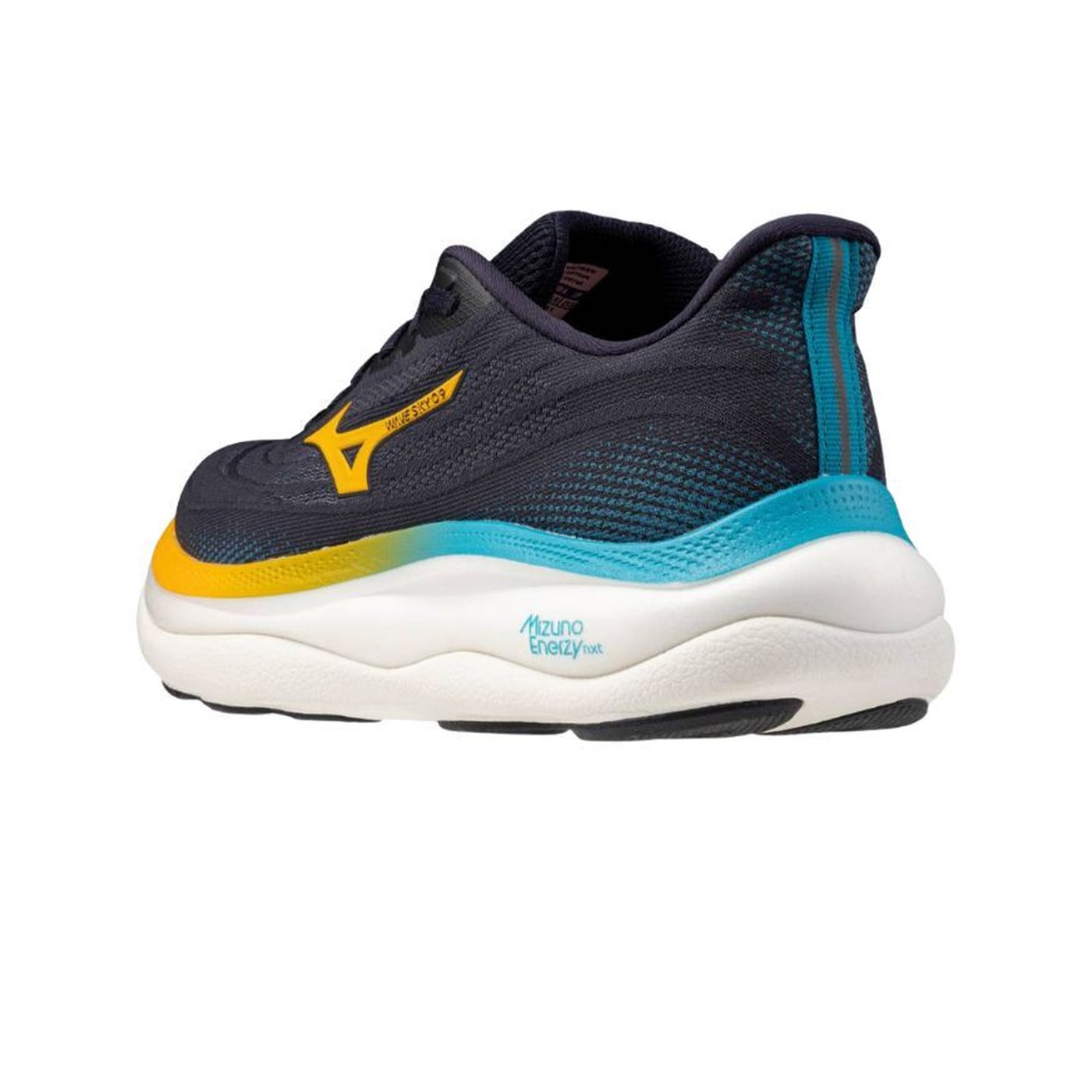
The Mizuno Wave Sky 9 is the brand's most protective max-cushion daily trainer, with a dual layer of Enerzy NXT and a Wave plate reborn as foam to add stability without stiffness. It targets runners who log easy miles and long runs at a moderate pace, not runners chasing a PR. On the road, it delivers on its promise of stable comfort, at the cost of weight and a ride that stays on the tame side.
8 / 10 · RunMorph overall score
Cushioning
Responsiveness
Comfort
Durability
Value for money
Who it is forRunners who want maximum, stable protection for easy runs, long runs and recovery days, without giving up support.
Who it is not forAnyone looking for a lively shoe for intervals or racing: 286 g and tame energy return rule it out at fast paces.
Mizuno Float: the Japanese brand's contrarian strategy
At Mizuno, the Wave Sky sits at the top of the Float line, the range designed to make you feel like you're floating down the road. While most brands push ever softer, less stable foams to win the race for sensations, Mizuno holds its course: cushion a lot, but never at the expense of guiding the foot. That's the legacy of the famous Wave plate, for years a rigid plastic blade tucked into the sole.
What's new in this 9th version is that the rigid Wave plate is gone, reborn as Foam Wave, a wave made of foam. The bet: keep the signature stability without the harsh firmness that older Wave Sky models were criticized for. Mizuno also drops the heel-to-toe drop from 8 to 6 mm and adds a lot more foam (+6 mm in the forefoot, +4 mm at the heel). The result: the Wave Sky 9 is the tallest and softest shoe in the lineage, while remaining, on paper, a supportive shoe. At RunMorph, we see few brands still making the case for stability in the age of all-out bounce, and that's exactly what makes this model worth analyzing.
Wave Sky 9 specs: 44 mm stack height and dual foam
Dual Enerzy NXT and Foam Wave: what changes underfoot?
The heart of the Wave Sky 9 is its two-layer midsole. The top layer, nitrogen-infused Mizuno Enerzy NXT, brings softness and energy return. The bottom layer, a firmer EVA-based Enerzy NXT, acts as a stable chassis. Between the two, Foam Wave replaces the old rigid plate to spread the shock wave and keep the foam's compression in check. Compared with its previous generation of foam, Mizuno claims about 17% more softness and 15% more energy return.
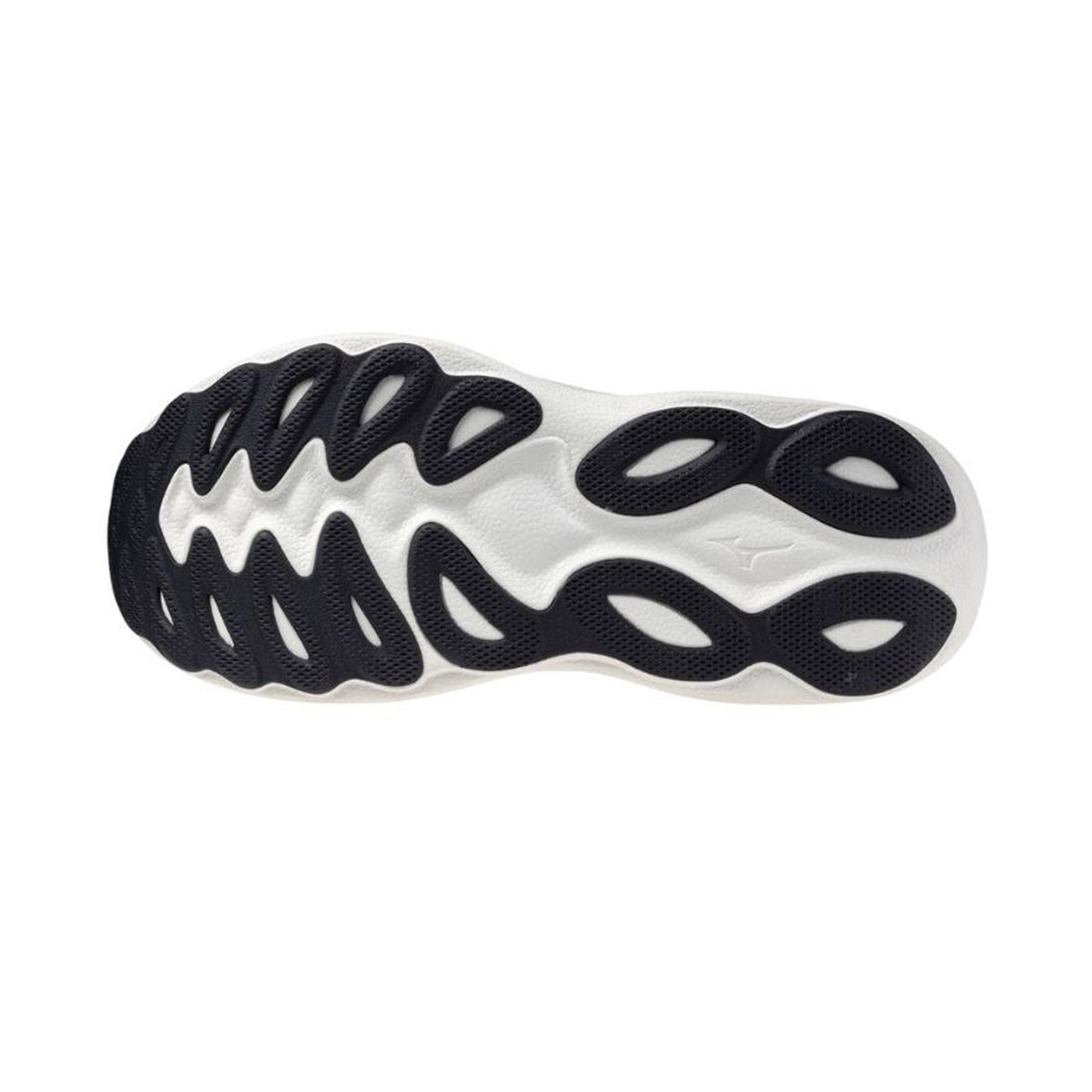
In practice, it doesn't feel like a trampoline. It's more of a deep, enveloping platform that absorbs impact without bouncing you back like a spring. Independent lab measurements confirm a softer foam than on previous Wave Sky models, but a shoe that stays protective first rather than propulsive. The X10 carbon rubber outsole, widened at the midfoot, adds a reassuring platform and durable grip on dry and wet roads alike. The drop, now down to 6 mm, modernizes the ride and encourages a slightly flatter foot strike than the old 12 mm Wave Sky models.
Our road test: from 5:00 to 6:30 per km
The Wave Sky 9 reads instantly as a high-mileage shoe. On easy runs at 5:30 or 6:00 per km, it excels: your foot sinks into a thick platform, heel impact is wiped out, and the wide base keeps things stable even when fatigue breaks down your stride. It's the kind of shoe that earns its keep the day after a big session, when your legs want protection more than sensations.
On long runs at a moderate pace, it confirms where it belongs: comfort holds up over time, with no pressure points, thanks to a breathable Smooth Stretch Woven upper and a redesigned tongue that locks down the instep well. But as soon as you try to pick it up toward 4:30 per km, the shoe shows its limits. The weight (286 g) and deliberately tame energy return kill the momentum: Foam Wave stabilizes, but it doesn't give you toe-off. That's not a flaw, it's a deliberate engineering choice. At RunMorph, we prefer a max-cushion shoe that's honest about its purpose to a heavy shoe that claims to do it all.
RunMorph's advice: use the Wave Sky 9 as your high-mileage and recovery shoe, in rotation with a livelier model for your quality sessions. Paired with a versatile daily trainer like the Mizuno Wave Rider 30 or a carbon shoe for intervals, it comes into its own in a two- or three-pair rotation.
Wave Sky 9 vs Gel-Nimbus 28, Bondi 9 and Glycerin Max 2: the max-cushion comparison
The Wave Sky 9 lands in the most contested segment right now: the premium max-cushion daily trainer. Here's how it stacks up against three benchmarks we've already reviewed at RunMorph.
Model
Heel stack
Drop
Weight size 42
Signature
Mizuno Wave Sky 9
44 mm
6 mm
286 g
Foam Wave stability
Asics Gel-Nimbus 28
~42 mm
8 mm
266 g
Plush FF Blast Max
Hoka Bondi 9
43 mm
5 mm
284 g
Supercritical rocker
Brooks Glycerin Max 2
45 mm
6 mm
318 g
DNA Tuned dual-cell
Against the Asics Gel-Nimbus 28, the Mizuno is a bit heavier but offers a more stable platform and a lower drop. Against the Hoka Bondi 9, it trades Hoka's smooth rocker for firmer guidance, with less focus on toe-off. Against the Brooks Glycerin Max 2, it's 32 g lighter while sitting a notch below in pure plushness. Its trump card is stability: none of the three rivals keeps the foam in check underfoot as clearly. For heavier runners, or anyone whose form falls apart late in a long run, that's a decisive argument.
Pros and cons
What we liked
Deep, protective cushioning, ideal for high mileage
Remarkable stability for a max-cushion shoe (Foam Wave + wide base)
Street price often attractive compared with rivals
What we liked less
High weight (286 g) that you feel as soon as you speed up
Tame energy return: little toe-off
Not suited to intervals or racing
The drop change will throw off loyal fans of older Wave Sky models
Our verdict on the road: which runner is it for?
Runners looking for protection on high mileage
If you pile up easy miles and your knees or calves are begging for cushioning, the Wave Sky 9 is a no-brainer. It absorbs, it protects, and it lets you string together heavy weeks without getting beaten up. That's its core purpose.
Heavier runners or runners returning to training
Above 80 kg, or when coming back from an injury, the combination of generous stack + wide base + Foam Wave is reassuring. The shoe doesn't collapse unpredictably and keeps your foot aligned, which limits wasted fatigue.
The relaxed marathoner
For a first marathon run for the finish, with no aggressive time goal, the Wave Sky 9 goes the distance in comfort. Runners chasing a time will turn to a lighter, more responsive model.
A max-cushion shoe like the Wave Sky 9 only adds miles to your legs if it fits into a coherent training load. To build your week around long runs and easy recovery runs, rely on a RunMorph training plan tailored to your goal, from 10K to the marathon. That's where this high-mileage shoe reaches its full potential.
The Mizuno Wave Sky 9 doesn't play the bounce marketing game, and it deserves credit for that. It owns a clear identity: a max-cushion daily trainer that protects a lot and genuinely stabilizes, where so many rivals sacrifice support on the altar of softness. Its dual Enerzy NXT layers and Foam Wave make a coherent pair, and the drop cut to 6 mm modernizes the shoe without changing its nature.
Its limits are the exact flip side of its strengths: heavy and tame, it's no workout shoe. But for runners who know why they're buying a max-cushion shoe, namely to soak up mileage in comfort, it delivers. With a street price that's often gentle, it's a real alternative to the segment's benchmarks. RunMorph score: 8/10.