
The Mizuno Wave Rider 30 marks 30 years of the most consistent daily trainer franchise on the market with an almost complete redesign. Mizuno stacks 42.5 mm at the heel, cuts the drop from 12 to 8 mm, doubles up on Enerzy NXT foam and, for the first time, runs its Wave plate along the full length of the shoe. Official claims: 17% more cushioning and 19% more energy return than the 29. Here is the RunMorph Coach's verdict after a full analysis of the technical data and the French running press.
Mizuno Wave Rider 30 Review: Dual Enerzy NXT and Full Wave Plate
8.5/10
Mizuno Wave Rider 30: the biggest overhaul in 30 years
The Wave Rider stands for three decades of consistency. Moderate foam, a high drop, a Wave plate that gives the rearfoot its structure. The deal with the runner has barely changed: reliability over novelty. The V30, released on June 16, 2026 at i-Run for €160, breaks that deal. Mizuno piles on foam, lowers the drop to 8 mm, doubles the Enerzy NXT formulation and extends the Wave plate along the entire length of the shoe. On paper, this is the first Wave Rider that fully rides the wave of max-cushioned daily trainers.
The technical picture is clear. The V29 had a 12 mm drop and a fairly firm midsole. The V30 brings 42.5 mm of stack height at the heel, 34.5 mm at the forefoot, an 8 mm drop and a measured weight of 258 g in size 42 at i-Run. The nitrogen-infused Enerzy NXT foam now comes in two layers: a top layer dedicated to comfort and energy return, and a bottom layer that keeps the range's stable character. That is the shoe's signature.
RunMorph's advice. If you were already running in the Mizuno Wave Rider 29 and found it too firm on long runs, the V30 answers exactly that complaint. If you want a soft but structured daily trainer for marathon prep, put it on the same shortlist as the Asics Gel-Cumulus 28 and the Brooks Ghost 18. If you want more playful bounce, look at the Asics Novablast 6 instead.
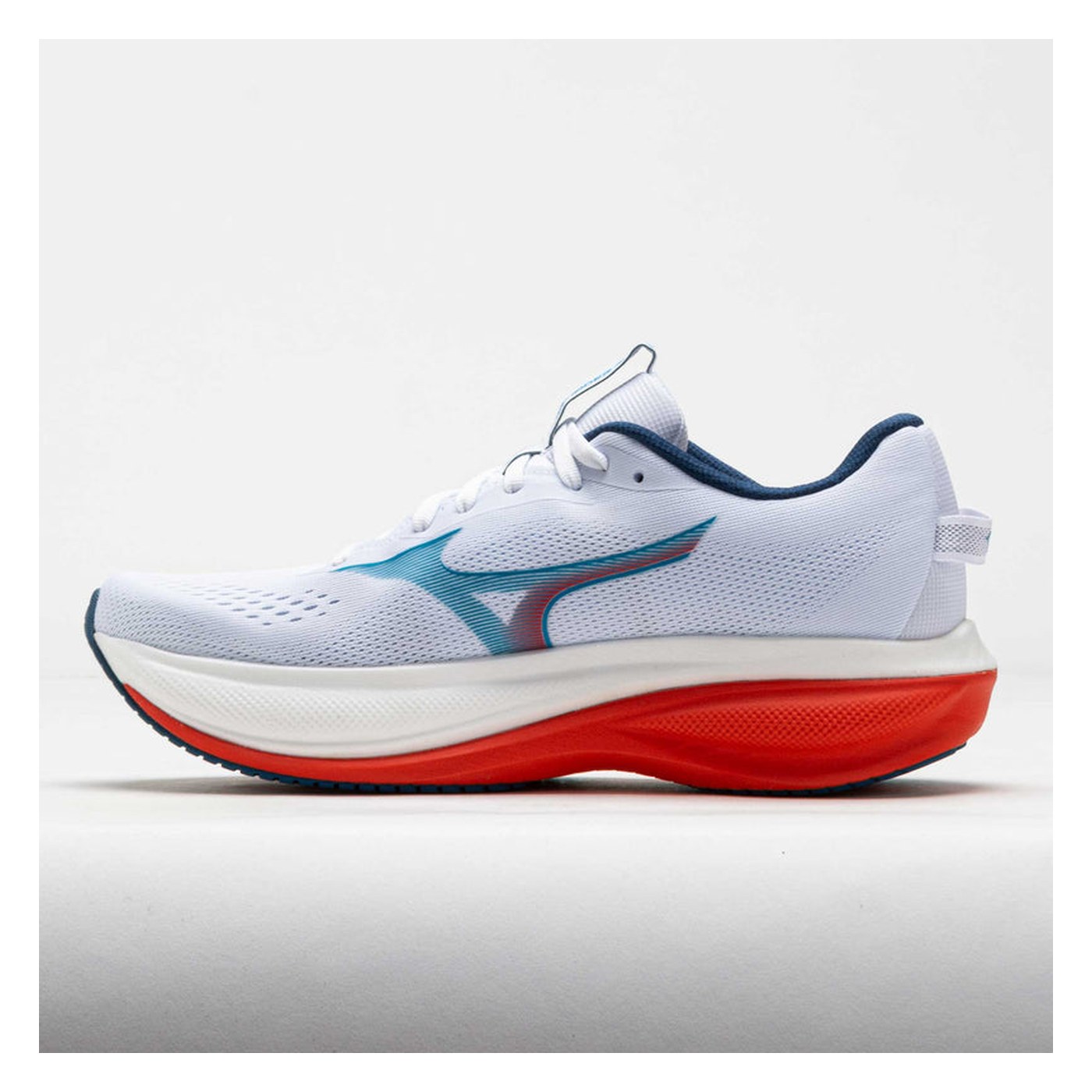
© Mizuno, official photo used for editorial purposes
Objective technical data
| Brand | Mizuno |
| Model | Wave Rider 30 |
| Official release | June 16, 2026 (i-Run, Mizuno.com) |
| Use | Road daily trainer, neutral gait |
| Drop | 8 mm (12 mm on the V29) |
| Stack height | 42.5 mm heel / 34.5 mm forefoot |
| Measured weight | 258 g in men's EU 42 (i-Run) / 242 g in women's EU 39 |
| Foam | Mizuno Enerzy NXT with nitrogen, dual layer (soft on top, more stable underneath) |
| Plate | Full-length Mizuno Wave plate (a first in the Rider range) |
| Outsole | High-abrasion X10 carbon rubber |
| Upper | Breathable AIRmesh + laces made from 90% recycled materials |
| Target distance | 5 km to marathon, long runs included |
| Price | €160 (Mizuno.com, i-Run, Alltricks) |
Who is the Wave Rider 30 for?
1. The loyal Rider fan who finally wants softness
If you have been running in Wave Riders for several generations, you have surely noticed the drift. More stack height with every version, more foam, and in the end a widening gap with competing daily trainers. The V30 closes that gap in one go. You keep the Wave stability and the reliable X10 outsole, but on a much more generous platform. For a runner who logs 40 to 60 km a week and wants one pair for everything, this is exactly the compromise you would hope for.
2. The intermediate runner preparing for a marathon
With 42.5 mm of stack height and a full-length Wave plate, the V30 absorbs impact on long runs without drifting into soft recovery-shoe territory. The 8 mm drop helps you hold a clean stride when fatigue sets in. If you follow a RunMorph marathon plan of 12 to 16 weeks, it is a credible option for 80% of your weekly volume, while you keep a carbon-plated shoe for quality sessions and race day.
3. The runner coming back or building endurance
The Wave Rider has always ticked the "you can hand it to a beginner" box. The V30 does not change that. Width stays neutral, the bottom foam layer preserves stability, and midfoot lockdown is solid thanks to the redesigned upper. If you are coming back from injury or building your first weeks of running, the V30 cushions well without throwing you off balance.
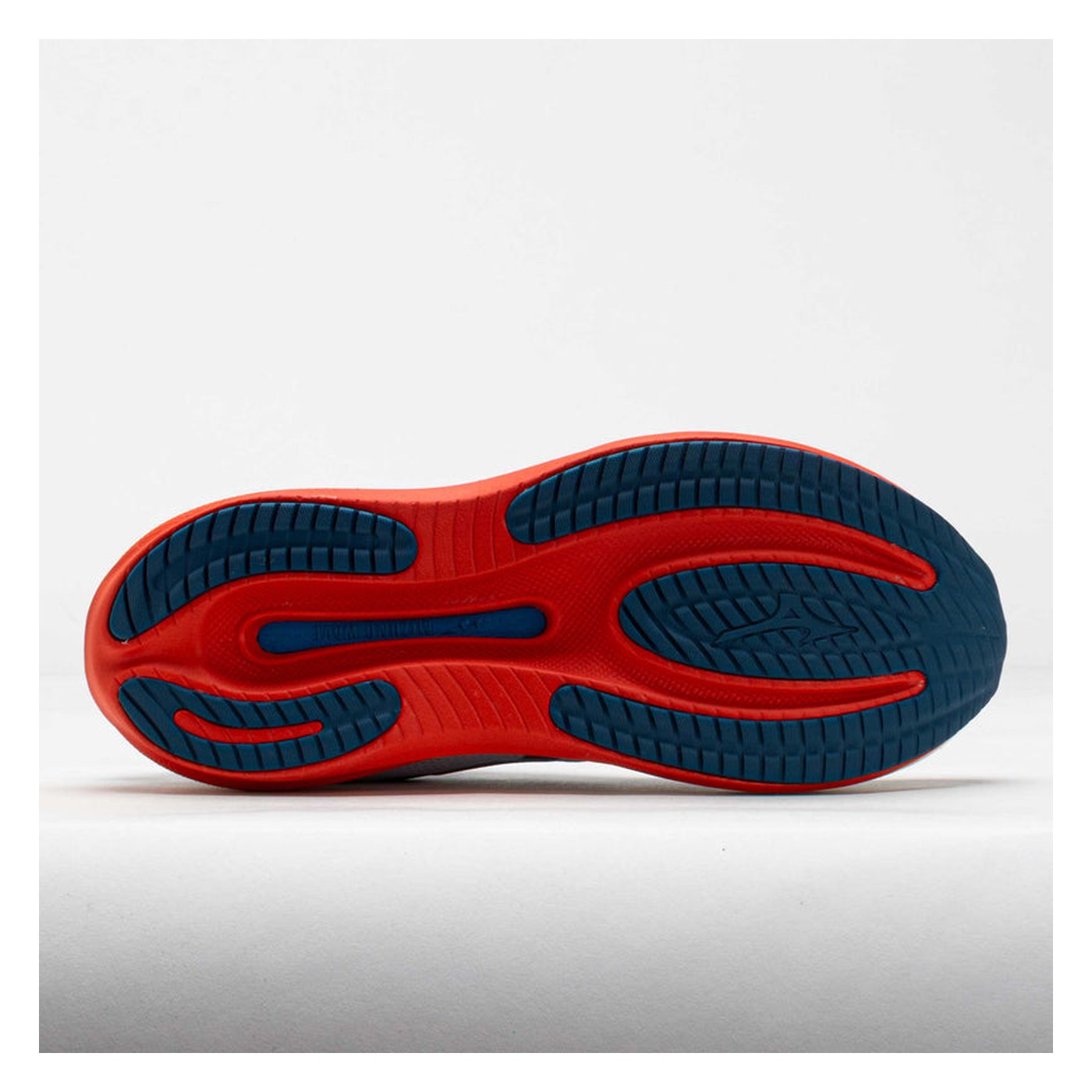
© Mizuno, official photo used for editorial purposes
Comfort, ride and grip
As a RunMorph coach, I see three concrete changes in this V30. First, the feel at footstrike. The dual Enerzy NXT delivers an instantly soft layer without drowning out ground feel. You can feel the foam working, but the bottom layer keeps you from sinking in. If you are used to the old, firmer Rider, give yourself two or three runs to adapt.
Next, the heel-to-forefoot transition. The full-length Wave plate is a real game changer. It structures the roll-through and gives a sense of continuity, where older Riders had a slight pause at midfoot. You do not get the propulsion of a carbon plate, and that is not the goal, but your stride gets smoother, especially between 4:30 and 5:30 per km.
Finally, stability. Mizuno may have piled on stack height, but the shoe does not wobble. The denser bottom layer, the Wave plate stiffening the rearfoot and the wide X10 outsole are enough to control the movement. That is the difference from an Asics Novablast 6, more playful but less stable, or a Hoka Clifton 10, soft but more sluggish when you pick up the pace.
X10 grip remains one of the best on the market on dry and wet asphalt. It proved itself on the V28 and V29 and carries over without major changes. Expected durability is around 700 to 900 km depending on your profile, which puts the V30 near the top of the daily trainer class.
How it stacks up against the competition
The Wave Rider 30 goes head to head with daily trainers in the €150-180 segment, built on premium foam and high cushioning. You will find several models already reviewed on RunMorph:
- Asics Gel-Cumulus 28 (€160, 270 g, 8 mm drop): the most direct rival for comfort and stability. The Cumulus 28 bets on a wraparound upper, the V30 answers with more energy return and the Wave plate. If you want pure softness, go Cumulus. If you want more responsiveness and a smoother transition, go Wave Rider 30.
- Brooks Ghost 18 (€150, 290 g, 10 mm drop): the Ghost is still the benchmark for a reliable neutral daily trainer. It is more grounded, less soft, and sticks with a 10 mm drop. The V30 feels more modern, but the Ghost keeps the edge if you want a 100% predictable shoe.
- Hoka Clifton 10 (€155, 280 g, 8 mm drop): the Clifton is softer, more sluggish when you pick up the pace and more recovery-oriented. The V30 keeps more precision through the roll-through. It comes down to pure feel.
- New Balance Fresh Foam X 1080v15 (€180, 280 g, 6 mm drop): the 1080 goes all in on max cushioning with a low drop. The V30 strikes a more balanced compromise between cushioning and structure. The 1080 stays ahead on very long runs.
If you are torn between the Wave Rider 30 and the previous Wave Rider 29, price is not the question: both cost €160. It is about philosophy. The V29 remains the classic Rider: firm, structured, 12 mm drop. The V30 is a different shoe. If you want softness and a modern feel, take the V30. If you want the franchise's historic signature, take the V29.
How to fit the Wave Rider 30 into your RunMorph training plan
The Wave Rider 30 is typically the shoe I assign to 80% of weekly volume in a RunMorph plan. Here is how I would set it up depending on your goal:
- 10K plan: easy runs at base aerobic pace, Sunday long runs, recovery runs. For threshold or maximal aerobic speed sessions, keep a snappier shoe such as the Asics Magic Speed 5 or the Saucony Endorphin Speed 5.
- Half marathon plan: all your aerobic volume, including long runs up to 18-20 km. Stick with a carbon-plated shoe for the race-pace session and for the race itself.
- Marathon plan: easy runs, endurance work and even long runs with marathon-pace segments. The V30 handles weekly 25-30 km long runs well. Keep a Nike Vaporfly 4 or a Saucony Endorphin Pro 5 for race day.
- Returning from injury: this is one of its strong suits. The new softness of the V30, combined with the historic stability of the Rider, makes it a reassuring choice for rebuilding volume.
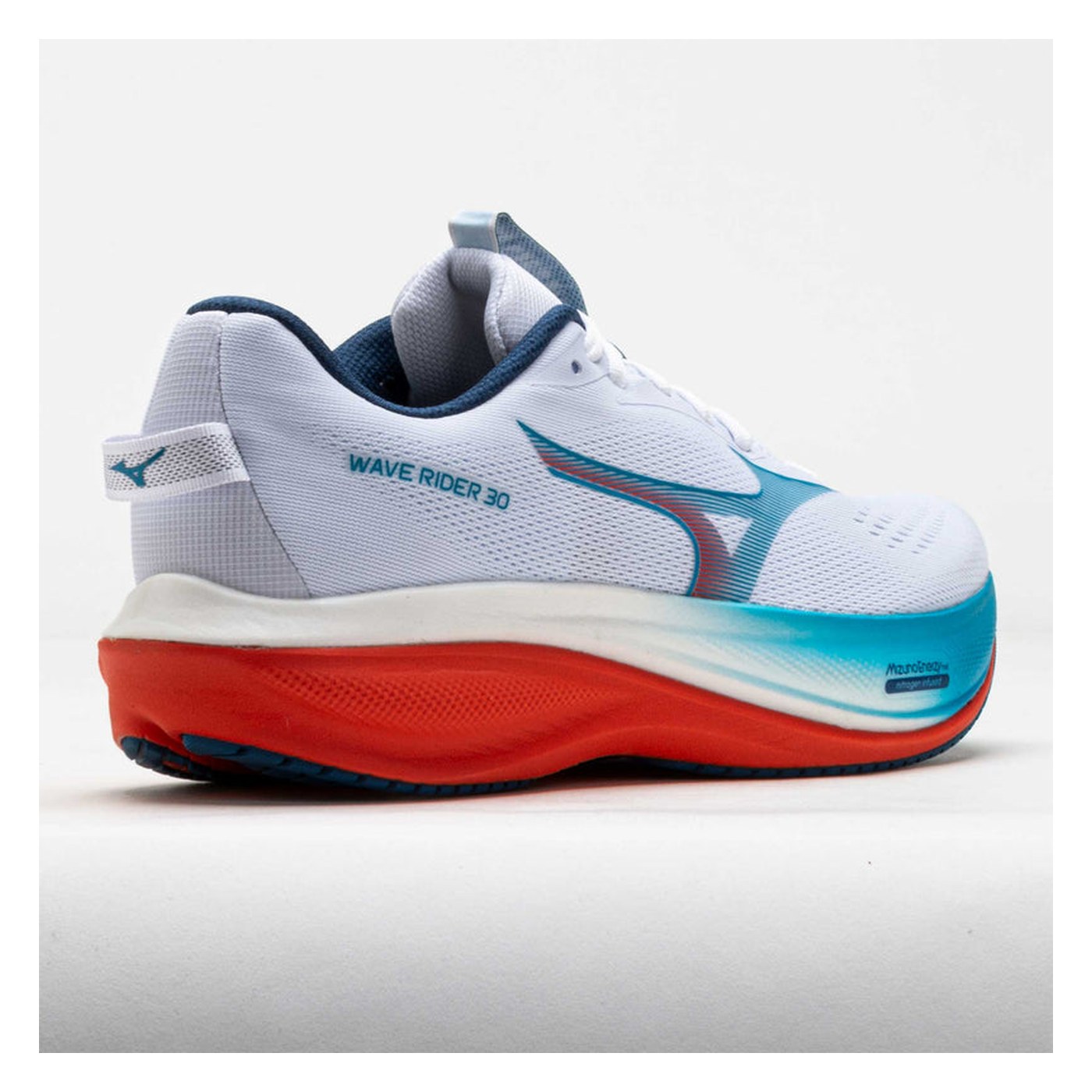
© Mizuno, official photo used for editorial purposes
RunMorph Coach verdict
The Mizuno Wave Rider 30 is the most ambitious update to the franchise in a very long time. It finally brings the Rider up to current market standards: dual nitrogen-infused foam, full-length plate, generous stack height, low drop. Mizuno keeps the fundamentals that built the range's reputation, stability and a durable X10 outsole, and adds the modern softness that older Riders left on the table.
There are limits. The measured weight of 258 g is not excessive, but it does not stand out in the category either. Energy return is that of a nitrogen-infused EVA foam, not pure PEBA. And dropping the historic firm signature will throw off some longtime loyalists. But for the vast majority of runners looking for a reliable, versatile, modernized daily trainer at €160, the verdict is crystal clear.
RunMorph score: 8.5/10. A successful redesign, a preserved signature, and a real alternative to the big four: Asics Cumulus, Brooks Ghost, Hoka Clifton and New Balance 1080.
Key takeaways for your training
- Historic overhaul: the drop goes from 12 mm on the V29 to 8 mm on the V30, plus 42.5 mm of stack height at the heel. This is the softest Rider ever made.
- Dual Enerzy NXT: a soft top layer for comfort and a denser bottom layer for stability, with no carbon plate.
- Full-length Wave plate: a first in the history of the range, with a much smoother heel-to-forefoot transition than before.
- Maximum versatility: from 5K to marathon, from beginner to intermediate runner, including a comeback from injury.
- Sensible price: €160 at Mizuno.com, i-Run and Alltricks, for a shoe positioned against the Cumulus 28 and the Ghost 18.