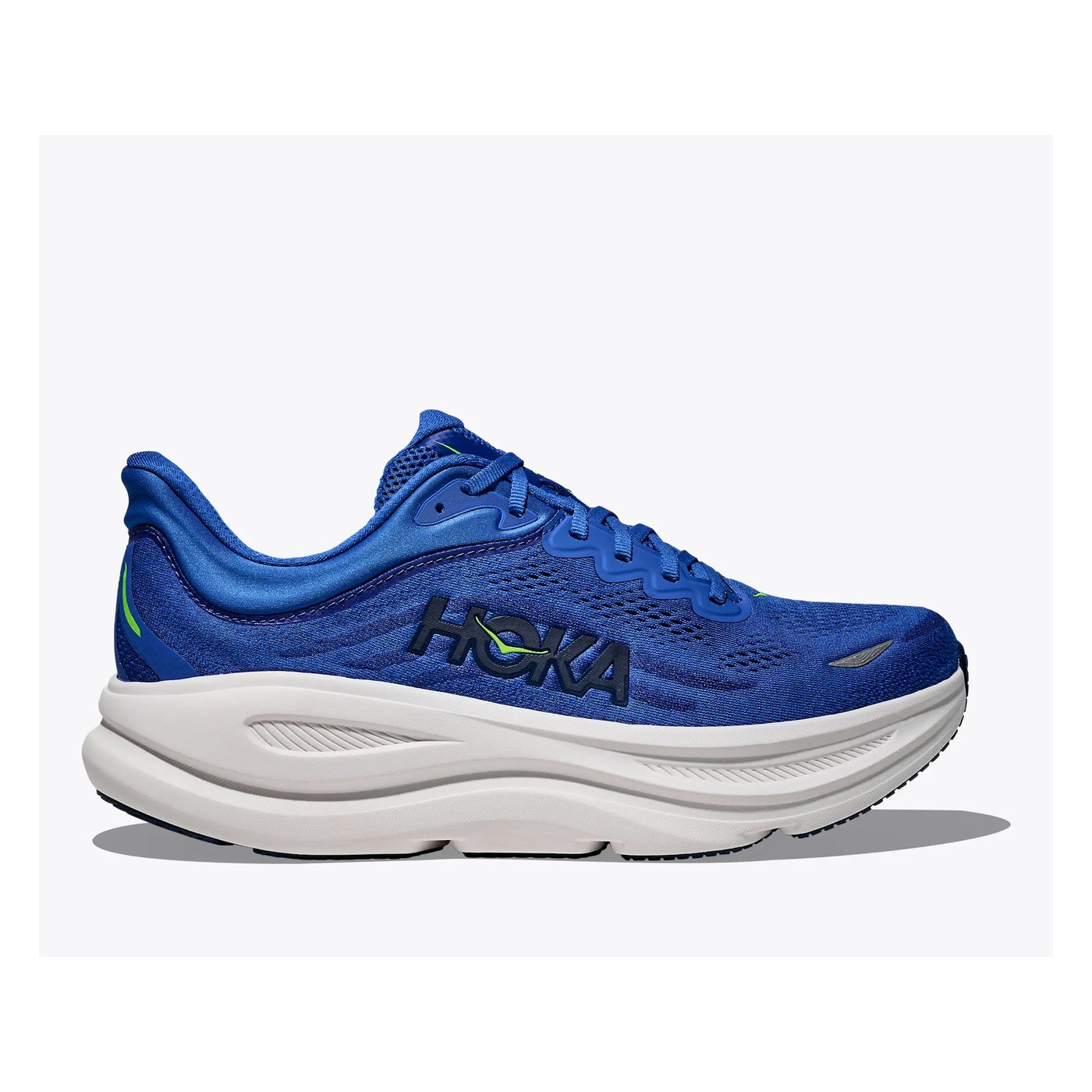
For fifteen years, the Bondi has been Hoka's benchmark max-cushion road shoe, the model runners pick when they want to forget the asphalt under their feet. The Bondi 9 keeps that philosophy but quietly swaps the engine: the foam moves to supercritical EVA and the stack height climbs by 2 mm. Released in early 2025 at €180, it promises more comfort without getting any bulkier. The question is whether it actually moves, or stays the soft cruiser you already know.
Hoka Bondi 9 Review: 43 mm of Supercritical Max-Cushion Comfort
8.5/10
Hoka Bondi 9: Hoka's cushion goes supercritical
The Hoka Bondi 9 is the 9th version of the historic max-cushion daily trainer from a brand born in France and now global. Its mission has never changed: deliver the most generous cushioning in Hoka's road lineup for comfort runs, active recovery and long distances at an easy pace. Where the Bondi 8 still used a nitrogen-injected CMEVA foam, the Bondi 9 switches entirely to supercritical EVA, formed under high pressure with gas injection to create a fine, uniform cell structure. The expected result: a little more energy return, a little less weight and, above all, cushioning that stays consistent over time.
The positioning is crystal clear. You don't buy a Bondi 9 to go fast. You buy it because your knees, your Achilles tendon or your back need a shoe that absorbs impact instead of firing the energy straight back at you. It's the shoe we recommend to heavier runners, to beginners who need a safety margin, and to marathoners who finish their runs on heavy legs and want to get home pain-free. The segment is crowded, but the Bondi 9 remains one of the three or four benchmarks you can't ignore.
RunMorph's tip: the Bondi 9 isn't meant to be your only shoe, it's a strategic second pair. If you already run in a Hoka Mach 7 or a Nike Pegasus 42 as your daily trainer, keep those for quality sessions and slot the Bondi 9 into your rotation for long runs at marathon pace plus 30 to 45 seconds per kilometer, recovery runs the day after a hard session, and the days when accumulated fatigue caps your enjoyment. That's where it earns its price.
© Hoka, official photo used for editorial purposes
Objective specs
| Brand | Hoka |
| Model | Bondi 9 |
| Official release | Early 2025 |
| Type | Road, max-cushion daily trainer |
| Drop | 5 mm |
| Stack height (forefoot / heel) | 38 mm / 43 mm (men's), 37 mm / 42 mm (women's) |
| Weight (EU size 42) | 297 g men's, 264 g women's |
| Carbon plate | No |
| Foam | Supercritical EVA (new Bondi 9 formulation) |
| Outsole | Durabrasion Rubber in high-wear zones |
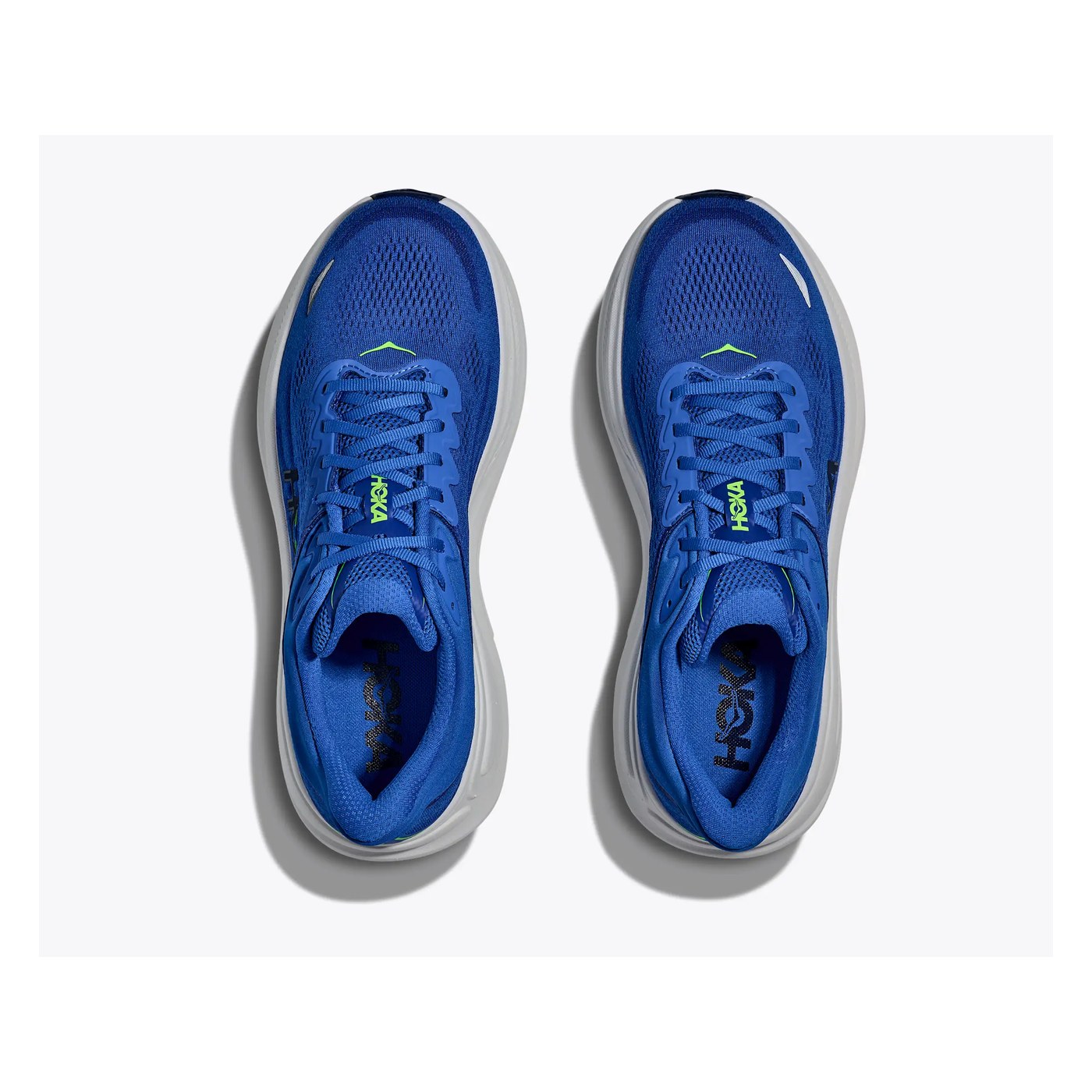
| Upper | Engineered knit, 55% recycled polyester, vegan |
| Available widths | Standard, Wide, Extra Wide |
| Recommended distance | 5 km to marathon at comfort pace, long runs, recovery |
| Official price | €180 |
Who is the Bondi 9 for?
Heavier runners who want to protect their joints
This is the Bondi 9's primary audience, and probably the one it serves best. Above 80 kg, most shoes on the market compress too much under impact, and that bottomed-out feeling comes fast. The Bondi 9 is built to absorb those loads: 43 mm of stack height at the heel, a bouncier foam than the Bondi 8, and Wide and Extra Wide versions. Plenty of athletes returning from injury or a change in body weight use it as a bridge back into running. The smart move is not to lock it into that role: once your fitness is back, the Bondi 9 stays excellent for long runs, even as your weight comes down.
Marathoners logging big weekly mileage
If you run 60 to 90 km a week in a marathon build, the volume will wreck your legs long before the speed does. The Bondi 9 is the ideal active recovery tool for very slow easy runs the day after a session, for the Sunday shakeout after your long run, and for those rough days when you know your body won't cooperate with an Asics Superblast 3 or a Hoka Skyward X 2. Treat it as a longevity tool, not a performance tool.
Older runners and comeback runners looking for confidence
The Bondi 9 has another natural audience: runners over 50, people who have played sports for years but are starting to feel hard surfaces. The Active Foot Frame geometry and wider base deliver reassuring passive stability without resorting to a heavy pronation-control system. For someone returning to running after several years off, or looking to limit the pounding asphalt puts on aging joints, the Bondi 9 is a credible entry point, especially paired with a plan that builds mileage gradually.
© Hoka, official photo used for editorial purposes
Comfort, ride and grip
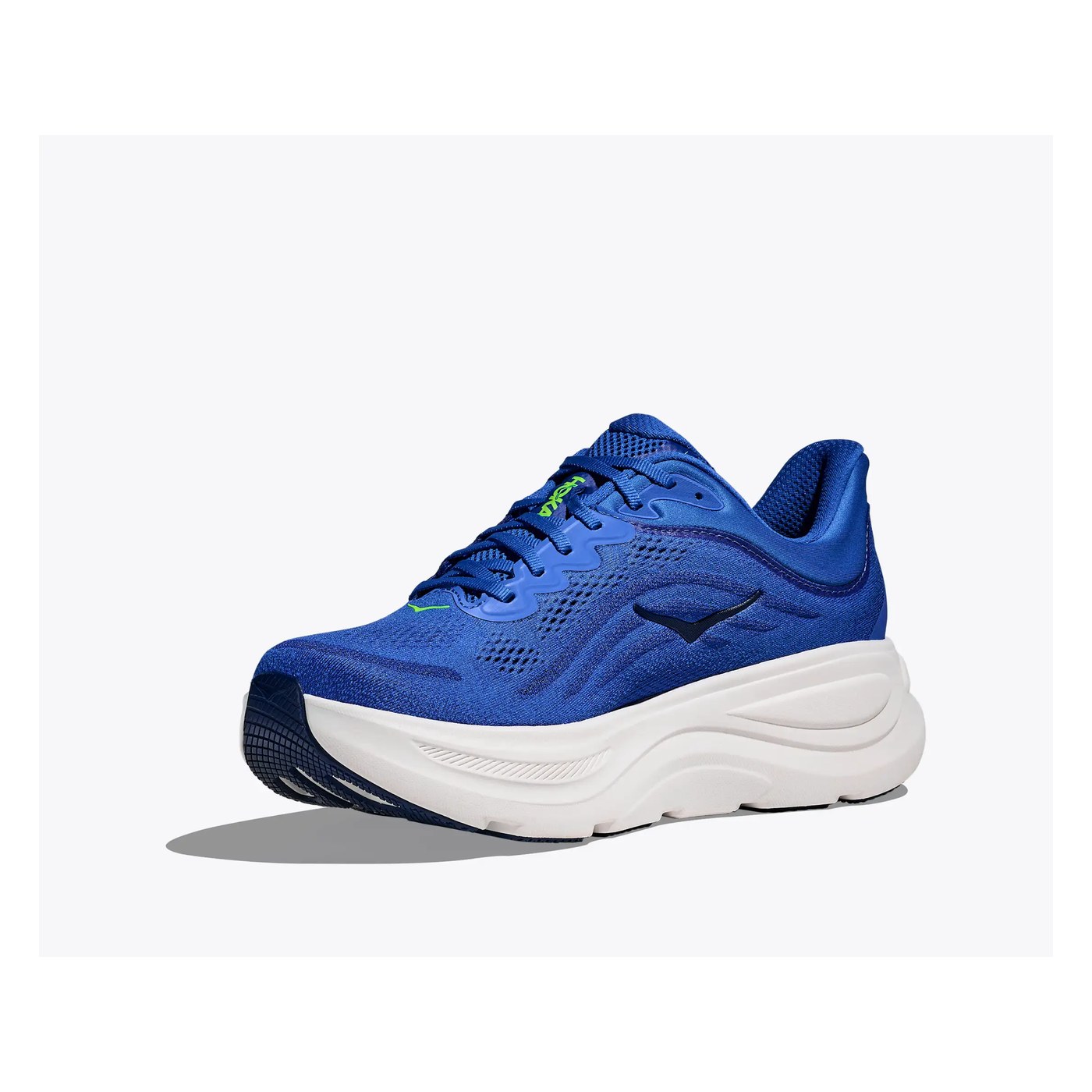
The first impression when you slip it on matches the promise: the Bondi 9 sits you high off the ground, but without the unstable mushiness sometimes associated with earlier generations. The supercritical EVA is more structured than the Bondi 8's foam: you feel a firmer platform under the heel and a crisper response when you pick up the pace. The rocker is still there but feels reworked: the heel-to-toe transition is smooth, without the pogo-stick feeling some rival max-cushion models had.
Long runs at a moderate pace (5:00 to 5:30 per km) are where it shines. Comfort stays constant from the first minute to the thirtieth, the foam never feels like it's packing down, and the engineered knit upper stays breathable with no hot spots. Push faster (under 4:30 per km) and you hit the limit fast: the weight, around 297 g, makes itself felt, and the rocker isn't designed for explosive transitions. Above 13 km/h, the shoe endures the speed instead of going with it.
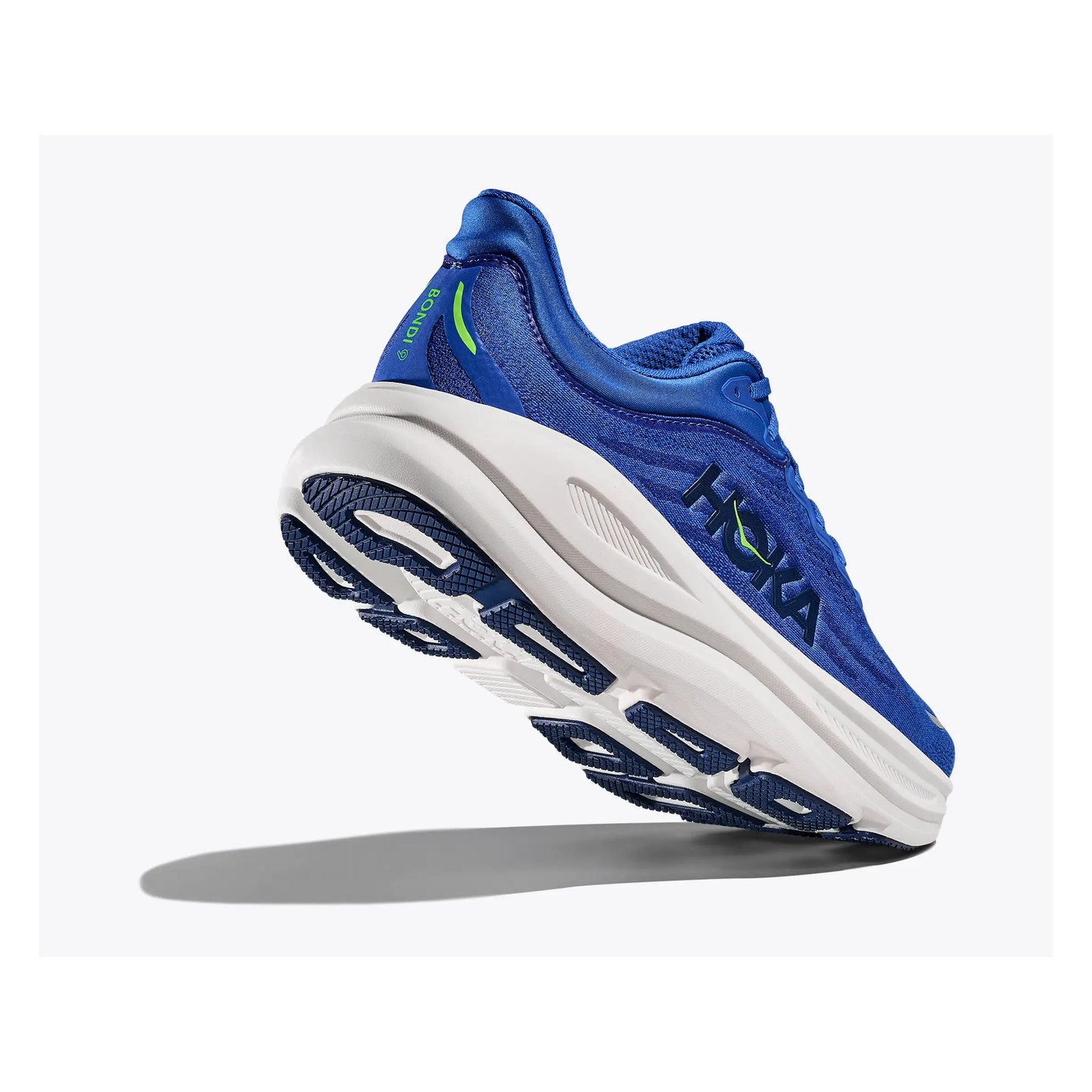
Wet-road grip is on par with the segment average: the Durabrasion Rubber holds well on damp asphalt and dry cobblestones, but shows some limits on wet metal (manhole covers, road markings). On smooth dirt paths or compact gravel towpaths, the Bondi 9 rolls through without complaint as long as the ground stays flat. It's neither designed nor equipped for light trail: the wide base turns unstable on off-camber ground, and the upper has no rock protection at all.
© Hoka, official photo used for editorial purposes
How it stacks up against the competition
The Bondi 9 faces a pack of premium max-cushion daily trainers, almost all priced between €170 and €200, each with a clear signature:
- Asics Gel-Nimbus 28 (€180): softer foam feel, more glide in the forefoot, gentler transition. Pick it if you want a slightly more enveloping platform and a calmer ride. The Bondi 9 is firmer and livelier.
- New Balance Fresh Foam X 1080v15 (€180): the most direct rival in the high-cushion daily trainer segment. The 1080v15 is slightly more versatile at moderate paces, while the Bondi 9 offers more protection against repeated impacts. Solid trade-offs on both sides.
- Saucony Triumph 23 (€180): 100% PWRRUN PB, bouncier, faster at tempo. Choose the Triumph 23 if you want to mix easy runs and progression runs. On tired days, the Bondi 9 still rules.
- Brooks Ghost 18 (€150): a more versatile, less maximalist daily trainer with a 10 mm drop. Pick it if you want one shoe that covers the full range of moderate paces. The Bondi 9 targets more specific protection for long distances and recovery.
How to fit it into your RunMorph training plan
The Bondi 9 belongs in a two- or three-shoe rotation: it's your volume shoe, never your quality shoe. In practice, in a RunMorph plan, use it for very slow easy runs (marathon pace plus 45 to 60 seconds per kilometer), long runs at comfort pace and recovery runs the day after intervals. Skip it for short high-intensity intervals, threshold work, tempo runs and fartleks, where the weight and the rocker blunt every surge.
In a 12-week marathon plan, the Bondi 9 will typically cover 60 to 70% of your weekly volume: every slow easy run, the long run as long as it stays slower than marathon pace, and the next-day shakeout. The remaining 30 to 40% goes to a faster shoe for sessions (an Asics Superblast 3, a Hoka Mach 7 or a Saucony Endorphin Pro 5 depending on your profile), plus a racing shoe on race day. That split gets the most value out of the Bondi 9: keep it for what it does best instead of turning it into a Swiss Army knife.
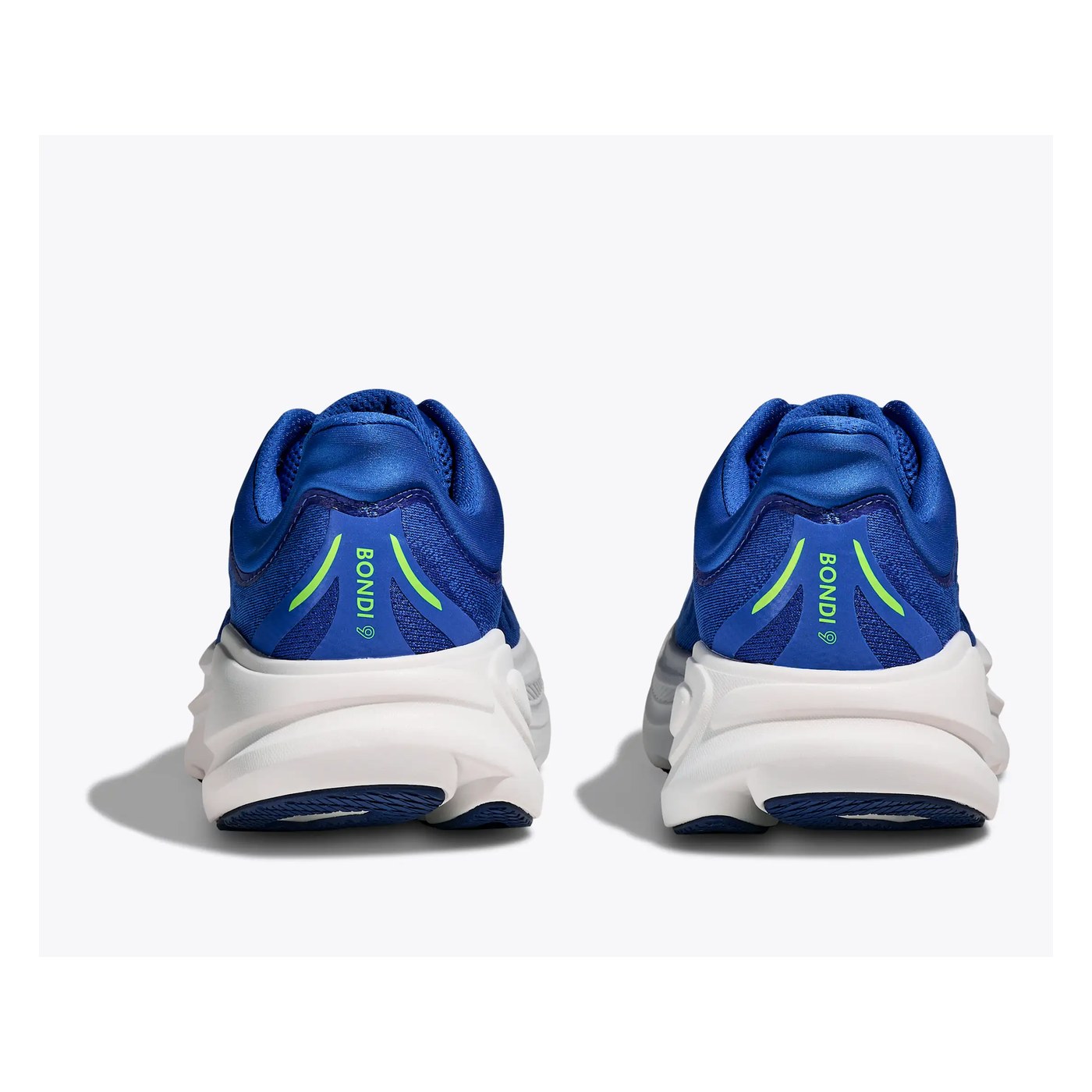
© Hoka, official photo used for editorial purposes
The RunMorph Coach's verdict
The Hoka Bondi 9 is a successful update without being revolutionary. The switch to supercritical EVA brings a noticeable but subtle gain in responsiveness, and the 2 mm stack increase adds protection without changing the model's identity. What stands out most is the consistency: Hoka didn't try to turn the Bondi into an all-rounder. The Bondi 9 fully owns its role as a pure comfort tool for well-defined uses.
For runners who know what it's for, it's an excellent buy. For anyone looking for a single do-it-all shoe, it's the wrong choice. RunMorph score: 8.5/10, with a special mention for heavier runners and high-mileage marathoners, who will likely find it the best-value shoe in their rotation.
Key takeaways for your training
- Give it a specific job in your rotation: the Bondi 9 is a tool for slow volume, not for quality sessions. It earns its price on easy runs, long runs and recovery.
- Keep it under 13 km/h: beyond that, the weight and the rocker work against you. Keep a faster shoe for tempo runs and intervals.
- Watch your footing: the wide base keeps you stable on the road, but throws you off on cambers, technical trails or sloped sidewalks. Stick to clean, flat ground.
- Take advantage of Wide and Extra Wide: if you have wide feet or your feet swell late in a long run, these versions change the experience. No point suffering in the Standard version if it doesn't fit you.
- Use it as a longevity tool: the Bondi 9 won't raise your top-end aerobic speed, but it will let you sustain 60 to 90 km a week without breaking down. That consistency is what builds a marathon, not the occasional big session.