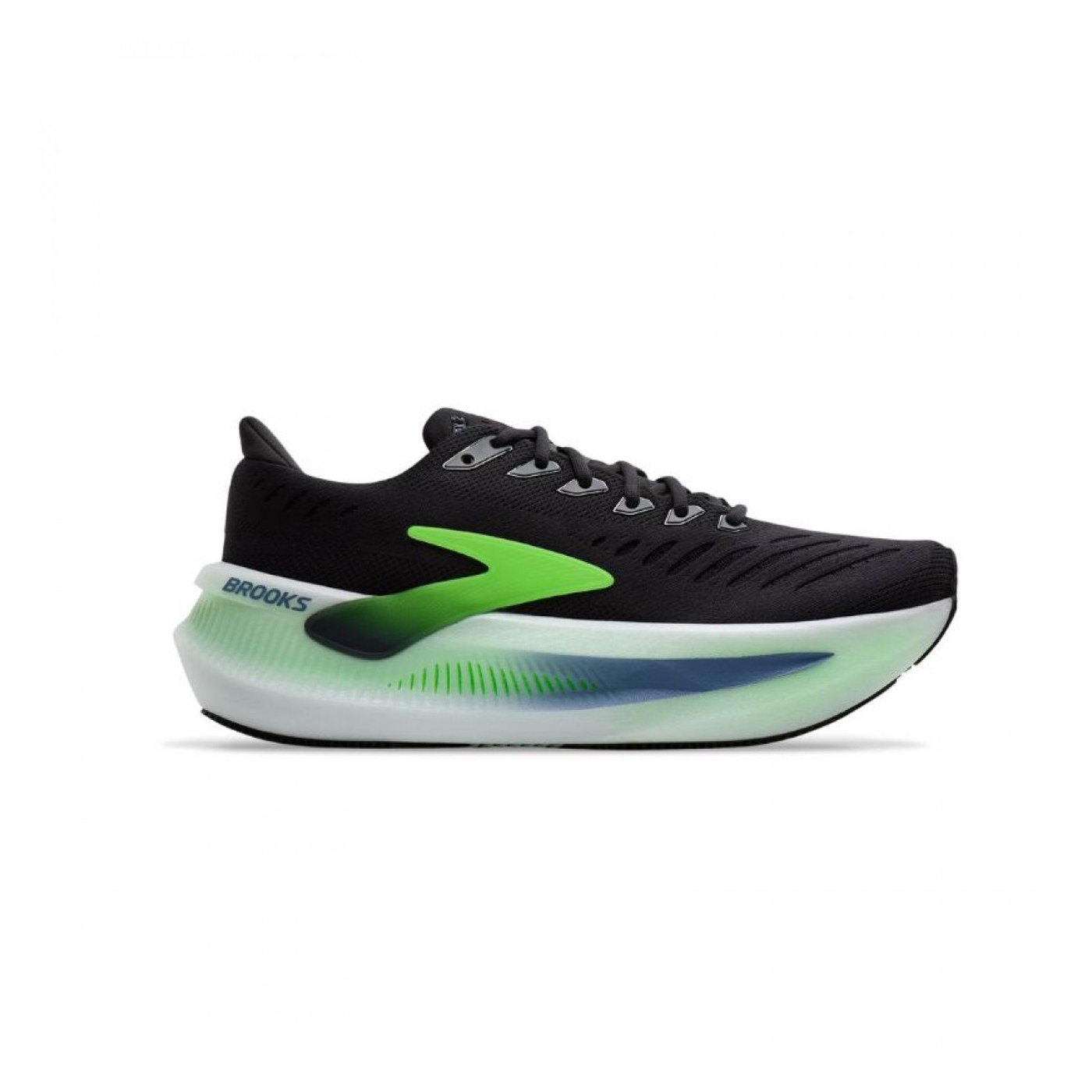
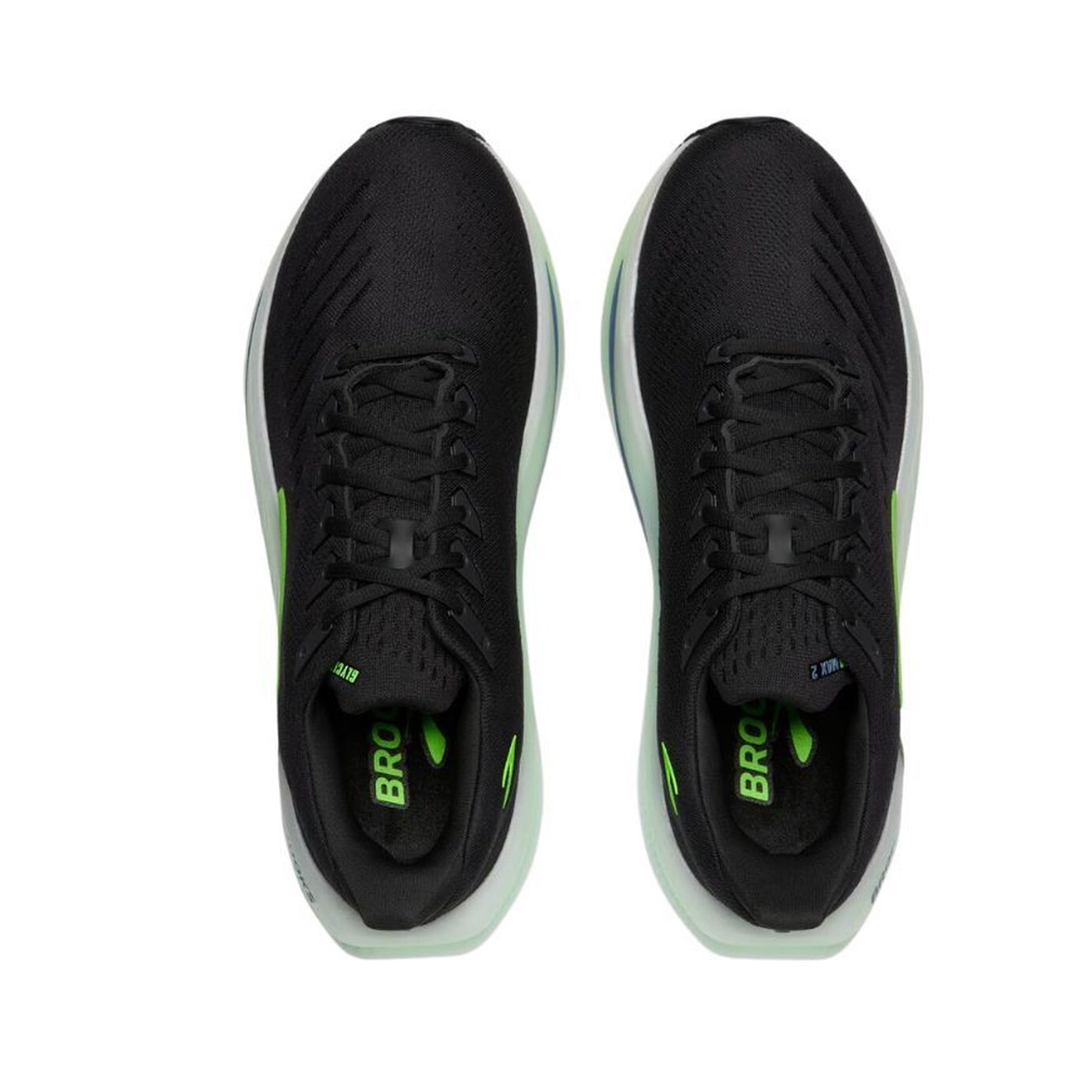
Brooks has stopped apologizing for building an SUV. The Glycerin Max 2 owns its 45.4 mm stack height, its 318 g on the scale and a rocker that tips your foot forward. It's not the liveliest shoe in the 2026 field. But it's probably the one that leaves your legs the freshest after 30 km. And that's exactly the deal.
Brooks Glycerin Max 2 Review: 45 mm Stack, 318 g and Proud of It
8/10
Brooks Glycerin Max 2: the daily SUV that no longer pretends to do it all
The first Glycerin Max caught people off guard in 2024: Brooks finally stepped into the ultra-premium max-cushion segment, long left to the Hoka Bondi and Asics Gel-Nimbus. The V2 refines without changing course. Still 45 mm under the heel. Still no carbon plate. Still the foam-for-foam's-sake philosophy.
What's new fits in three lines: the DNA TUNED foam moves to a nitrogen-infused dual-cell build (large cells under the heel, smaller ones in the forefoot), the upper switches to a more breathable triple-layer Jacquard, and the outsole gets tougher after early real-world feedback on the V1, which wore down a bit fast.
RunMorph's advice. The Glycerin Max 2 doesn't replace the Brooks Glycerin 23, it complements it. The 23 remains the versatile daily trainer, while the Max 2 is the cushion you save for long runs. If you're torn between it and the Hoka Bondi 9, check the drop first: 6 mm on the Brooks versus 5 mm on the Hoka, but the Brooks sits on a wider platform that inspires confidence in heel stability.
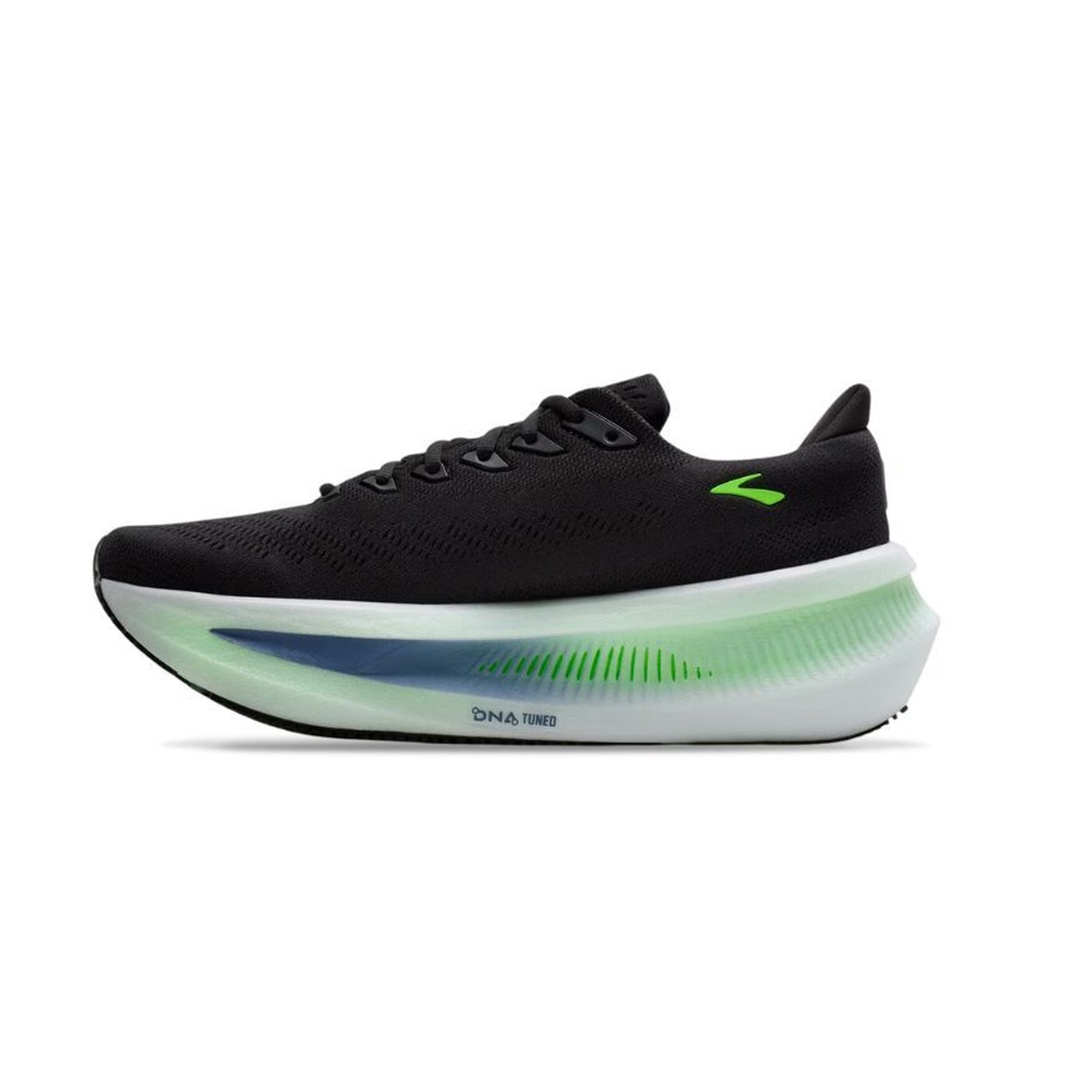
© Brooks, official photo used for editorial purposes.
Objective technical specs
| Feature | Brooks Glycerin Max 2 details |
|---|---|
| Brand | Brooks |
| Model | Glycerin Max 2 |
| Official release | November 2025 (on sale in France late 2025) |
| Type | Max-cushion daily trainer (road) |
| Drop | 6 mm (official manufacturer figure, measured at 8 mm by an independent test) |
| Stack height | 45.4 mm heel / 37.3 mm forefoot |
| Weight | 318 g (men's EU 42) / 283 g (women's EU 39) |
| Foam | Nitrogen-infused DNA TUNED dual-cell (large cells in the heel, small cells in the forefoot) |
| Carbon plate | No. GlideRoll Rocker geometry instead. |
| Outsole | Rubber reinforced in high-wear zones, wide footprint |
| Upper | Triple-layer Jacquard mesh, flat-knit tongue, padded collar |
| Widths | Standard and Wide depending on colorway |
| Distance | 10 km to marathon at a controlled pace, long runs, recovery |
| Official price | €200 |
Who is the Glycerin Max 2 for?
The heavier or bigger runner who wants to feel a cushion under the heel
This is the historic target of the premium max-cushion segment. Brooks clearly tuned the DNA TUNED density to absorb a hard heel landing without bottoming out after 5 km. Above 85 kg, you'll get a sense of protection that the Glycerin 23, with its 38 mm stack height, can't offer. The wide platform also reassures: no side-to-side wobble on a moderately overpronating stride.
The experienced runner recovering or returning from injury
Achilles tendinopathy on the mend, shin splints that keep coming back, a return to running after a stress fracture: the Max 2 protects without a plate and without artificial propulsion. The GlideRoll rocker handles the transition. You don't force the ankle. You let the foam soak up the impact. For a comeback, it's more forgiving than the Nike Vomero Premium with its 55 mm stack height, which puts the ankle a bit higher.
The marathoner who finishes long runs wiped out
If you're training for a 4:30 marathon or slower and your Sunday 30 km runs end with your quads screaming, the Glycerin Max 2 has a real place in your rotation. Not for your tempo runs, not for your threshold sessions. For the long run at a free pace, for the reverse-progression run on recovery day, for marathon-pace reminders at the end of a training cycle.
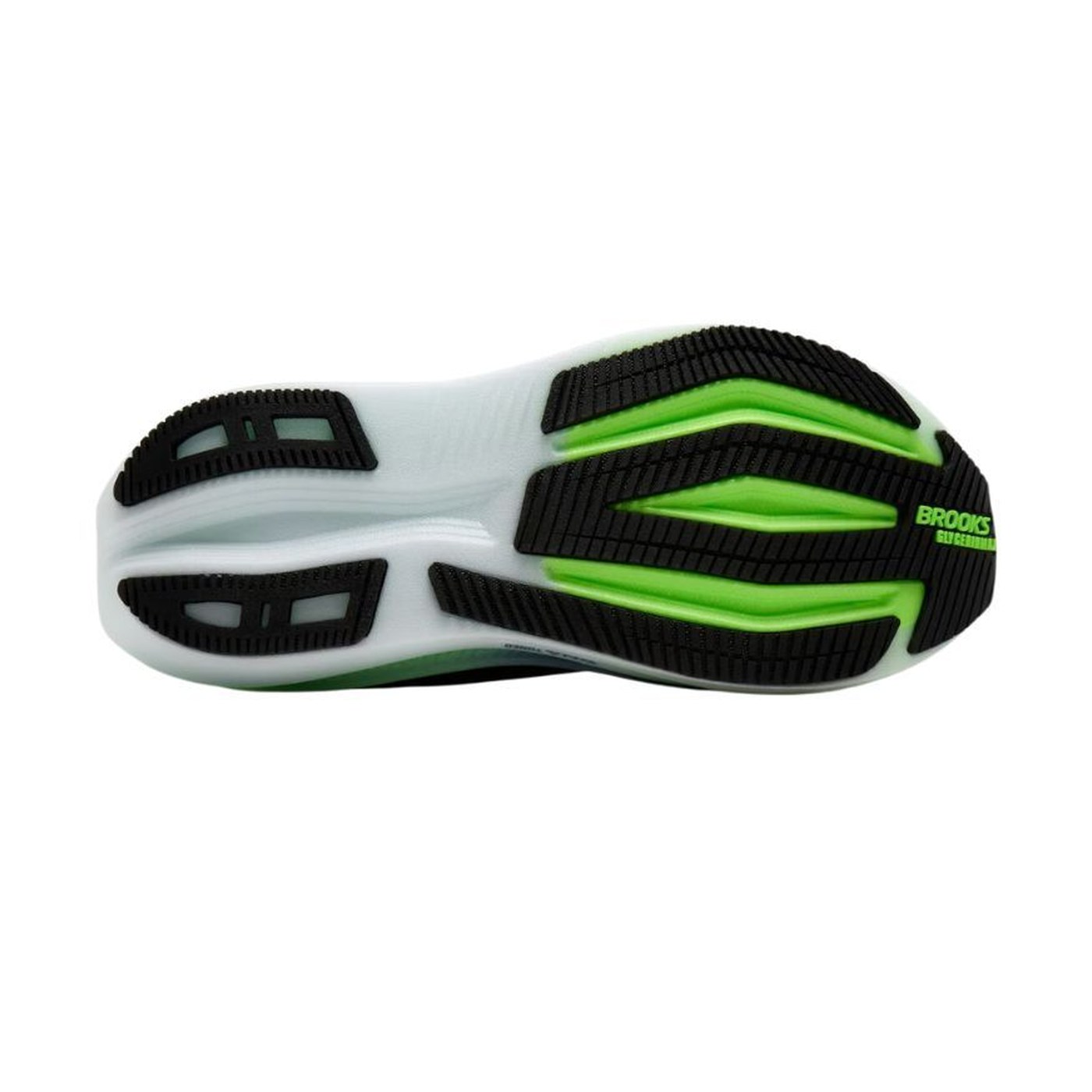
© Brooks, official photo used for editorial purposes.
Ride, cushioning and long-run comfort
Step-in sets the tone. The Jacquard mesh breathes better than on the V1, the padded collar holds the heel without pressure, and the forefoot has gained a little room without feeling sloppy. You feel the cushion under the heel right away: deep, slow to rebound, somewhere between pure cushioning and the sinking feel of 50 mm super trainers. That's deliberate. Brooks doesn't want you to bounce. Brooks wants you to settle in.
On the run, the GlideRoll Rocker does its job. The heel-to-toe transition stays smooth despite the shoe's weight and stack height. At 5 min/km, you feel the mass a little on every stride. At 5:30, it disappears. At 6 min/km and slower, the Glycerin Max 2 goes invisible again. The rocker takes over. You just roll.
The forefoot is a surprise. The denser cells of the DNA TUNED foam give a small kick at toe-off, without ever turning explosive. This isn't a carbon rebound. It's a subtle return that saves you a few seconds over 30 km without demanding extra muscular effort. On a long threshold block like 6 km at marathon pace, the shoe holds up. Not brilliant, but stable.
On grip, the reinforced rubber outsole bites well on both dry and wet asphalt. The V1 drew criticism for premature heel wear. The V2 fixes that with a denser zone and a slightly redesigned lug pattern. After 80 km of testing reported by the French running press, the outsole still looks clean, with no visible wear.
Weight remains the weak point. At 318 g, it's no minor detail. If you want a versatile daily trainer that can handle short intervals, forget it. The Max 2 punishes you as soon as you drop below 4:30 per km. The Saucony Triumph 23, at 270 g, will be more fun at faster paces while keeping similar comfort.
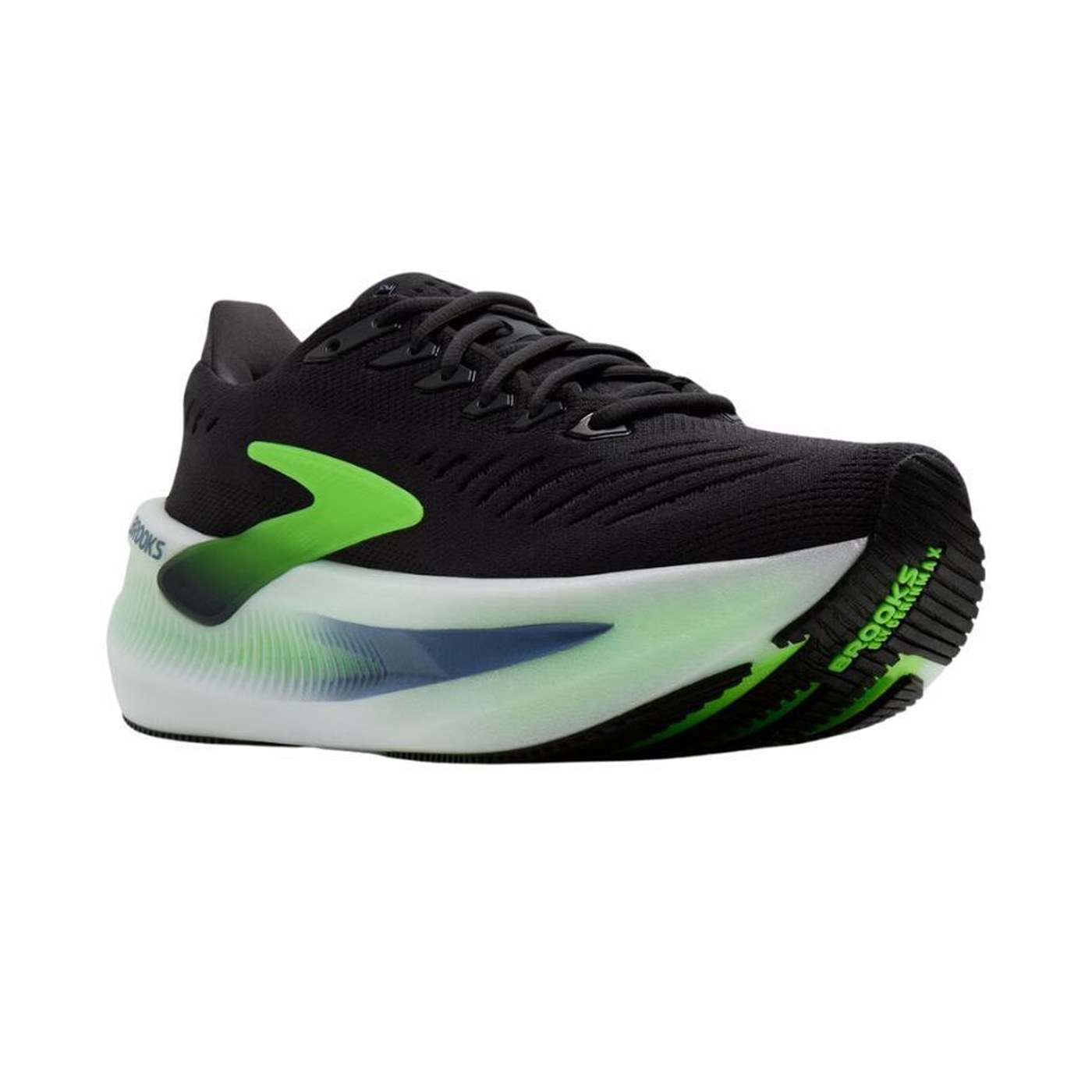
© Brooks, official photo used for editorial purposes.
How it stacks up against the competition
The premium max-cushion daily segment is crowded in 2026. Four rivals shape the market: Hoka Bondi 9, Asics Gel-Nimbus 28, Nike Vomero Plus, and the in-house cousin Saucony Triumph 23.
Against the Bondi 9 (43 mm stack height, 297 g, 5 mm drop), the Brooks goes higher on foam but belongs to the same school. The Bondi is more compact, more stable at the heel and a bit more approachable for beginners. The Max 2 has a more pronounced rocker, so the transition is smoother at moderate pace.
Against the Gel-Nimbus 28 (42/34 mm, 295 g, 8 mm drop), Asics keeps the edge with its higher drop for committed heel strikers and a firmer forefoot. Brooks wins on pure heel impact absorption and outsole durability.
Against the Vomero Plus (45/35 mm, 275 g, 10 mm drop) and the Nike Vomero Premium, which climbs to a 55.5 mm stack height with 2 Air Zoom units, Brooks plays it safe. Nike pushes further on foam stack and that gravity-defying feel. Brooks favors balance and predictability. With a 6 mm drop versus 10 mm on the Nike, the posture differs too: the Max 2 sits you lower, which can ease tight Achilles tendons.
Against the Triumph 23 (37/27 mm, 270 g, 10 mm drop), Saucony plays a completely different tune: lighter, livelier, but clearly less protective on very long runs. If you're training for a sub-1:45 half marathon, go Saucony. If you're training for a marathon slower than 4 hours, go Brooks.
One lesson from the road worth saying out loud, because it stings: past a certain stack height, the Max 2 does no better than the Glycerin 23 over short distances. You pay €20 more and carry 18 g more for zero benefit under 15 km. The SUV only earns its keep once the run gets long.
How to fit it into your RunMorph training plan
In a 3- or 4-pair rotation, the Max 2 takes over as your recovery and long-run shoe. Its sweet spot covers 60 to 70% of the weekly volume for a marathoner targeting 4:15 to 5:15: recovery easy runs at 6 min/km, long runs at 5:30, marathon-pace reminders at 5:15.
Keep a faster shoe alongside it for quality sessions. A Saucony Endorphin Speed 5 or an Asics Magic Speed 5 will cover your intervals and threshold work. A Saucony Endorphin Pro 5 or a Nike Vaporfly 4 stays reserved for race day.
To build your week around the Max 2, the RunMorph training plans with a long marathon build (16 to 18 weeks) are a good fit. Weekly volume climbs progressively, long runs grow from 1:30 to 3:15, and it's precisely on those late-cycle sessions that the Glycerin Max 2 protects your legs for the next day's training.
© Brooks, official photo used for editorial purposes.
RunMorph review verdict
The Brooks Glycerin Max 2 doesn't reinvent anything. That's its strength. Brooks fixed the V1's flaws (fast-wearing outsole, poorly breathable upper, heel stability that needed work) without joining the race for watts. The promise is simple: you get a shoe built to eat up kilometers SUV-style, at a free pace, without beating up your legs. The promise is kept.
The GlideRoll rocker works, the DNA TUNED dual-cell foam strikes a credible balance between cushion and return, the Jacquard upper breathes, and the outsole goes the distance. At 318 g, it rules itself out as a versatile daily trainer, but that's a deliberate editorial choice: the Max 2 lives in your closet next to a faster shoe, not instead of one.
At €200 official (often €160-180 in practice at French retailers), you're buying security, not innovation. That's what you were looking for.
8/10.
Key takeaways for your training
- Sunday long run: the Max 2 shines beyond 1:30 of running, right where the Glycerin 23 starts to show its limits.
- Active recovery: easy run at 6 min/km the day after a hard session, ideal for unloading your quads.
- Return from injury: Achilles tendinopathy at the end of rehab, settled shin splints, stress fracture: maximum cushioning without forced propulsion.
- Marathon rotation: use it for 60% of your weekly volume and keep an Endorphin Speed 5 for quality work.
- Avoid: any intervals faster than 4:30 per km, any race under 10 km, any uneven terrain.