The Salomon Genesis is the shoe Salomon shouldn't have released if it wanted you to buy the S/Lab. Matryx upper, Contagrip MA, 8 mm drop and 269 g: the Genesis borrows almost all the DNA of its big sister, the S/Lab, but swaps the racing foam for a training foam and goes from €200 to €150. That math deserves a real test on the trails.
Salomon Genesis Review: Matryx Upper and Contagrip MA for €150
8/10
The essentials in 3 sentences
The Salomon Genesis is a 2024 all-around trail shoe that pairs the Matryx upper and Contagrip MA outsole of the S/Lab Genesis with an EnergyFOAM midsole built for regular training. It stands out for its low weight (269 g), its excellent balance of comfort and grip on mixed terrain, and its €150 price. It's the logical pick for trail runners who want premium Salomon without paying racing-shoe money.
8
/ 10 · RunMorph overall score
Who it is forVersatile trail runners covering 20-60 km who want low weight and grip without paying the S/Lab price
Who it is not forRunners who face deep mud or want max-cushion protection for very long distances
Salomon Genesis: the affordable S/Lab in all but name
Salomon had a problem: the S/Lab Genesis was so good that intermediate trail runners bought it for training and wore out a €200 shoe in a few months. The Genesis fixes that. Same Matryx upper (Salomon's light, tough composite textile), same multi-terrain Contagrip MA, but a more durable EnergyFOAM in place of the performance-oriented EnergyCell+. The result is an all-around trail training shoe that disappears on your foot while keeping you secure on varied terrain.
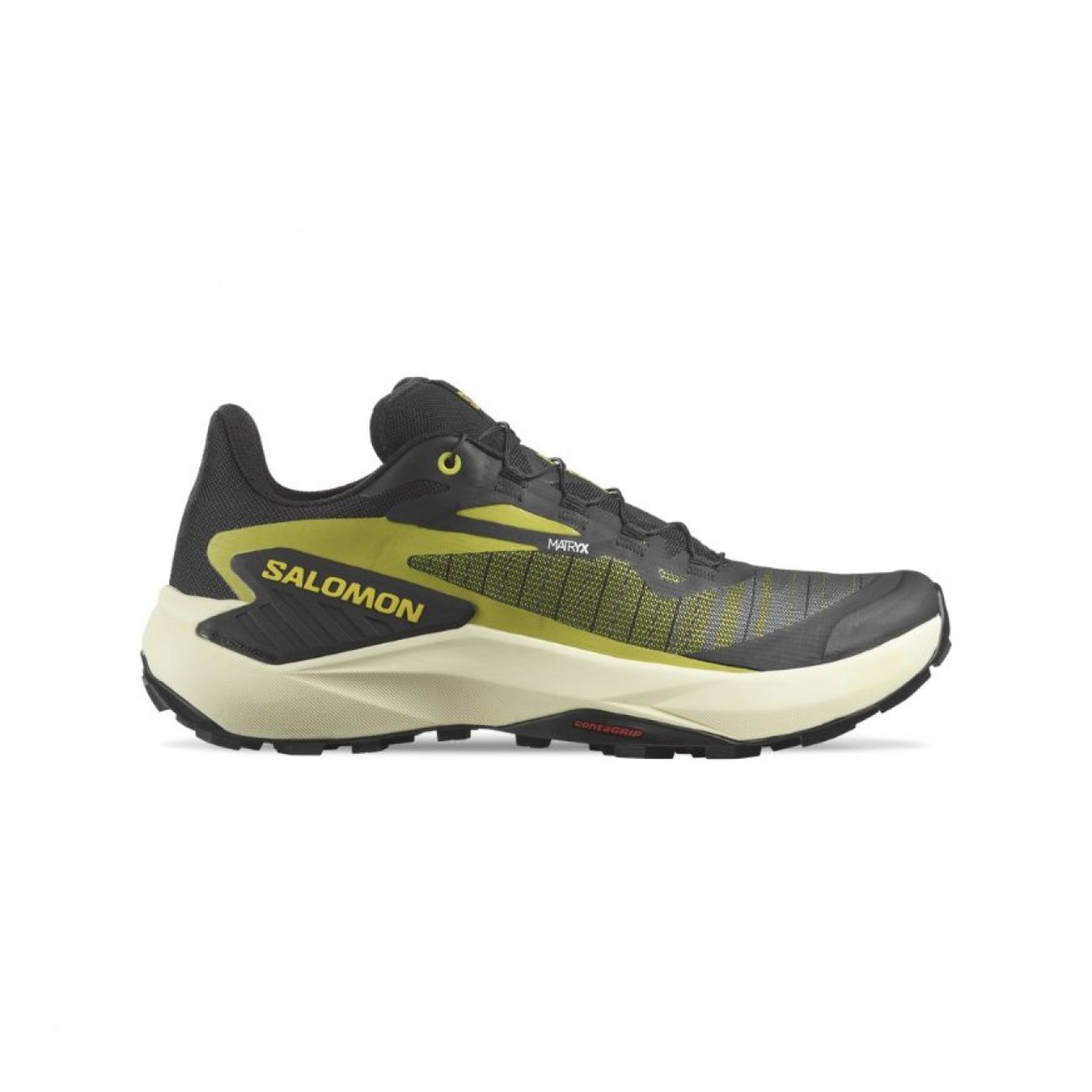
© Salomon, official photo used for editorial purposes
RunMorph tip: if you run 20 to 60 km a week on mixed terrain (dirt roads, singletrack, wet pavement), the Genesis is the ideal entry point into Salomon's trail lineup. For ultra distances or extreme terrain, look instead at the Salomon Ultra Glide 4 (more cushioning) or the Salomon Speedcross 6 (muddy ground).
Technical specs
| Spec | Value |
|---|---|
| Brand | Salomon |
| Model | Genesis |
| Release | 2024 |
| Type | All-around trail |
| Drop | 8 mm |
| Estimated stack height | ~33 / 25 mm (heel/forefoot) |
| Weight | 269 g (men's size 42) |
| Foam | EnergyFOAM (compressed EVA) |
| Carbon plate | No |
| Outsole | Contagrip MA multi-terrain |
| Upper | Matryx composite textile |
| Recommended distance | 20-60 km per run |
| MSRP | €150 |
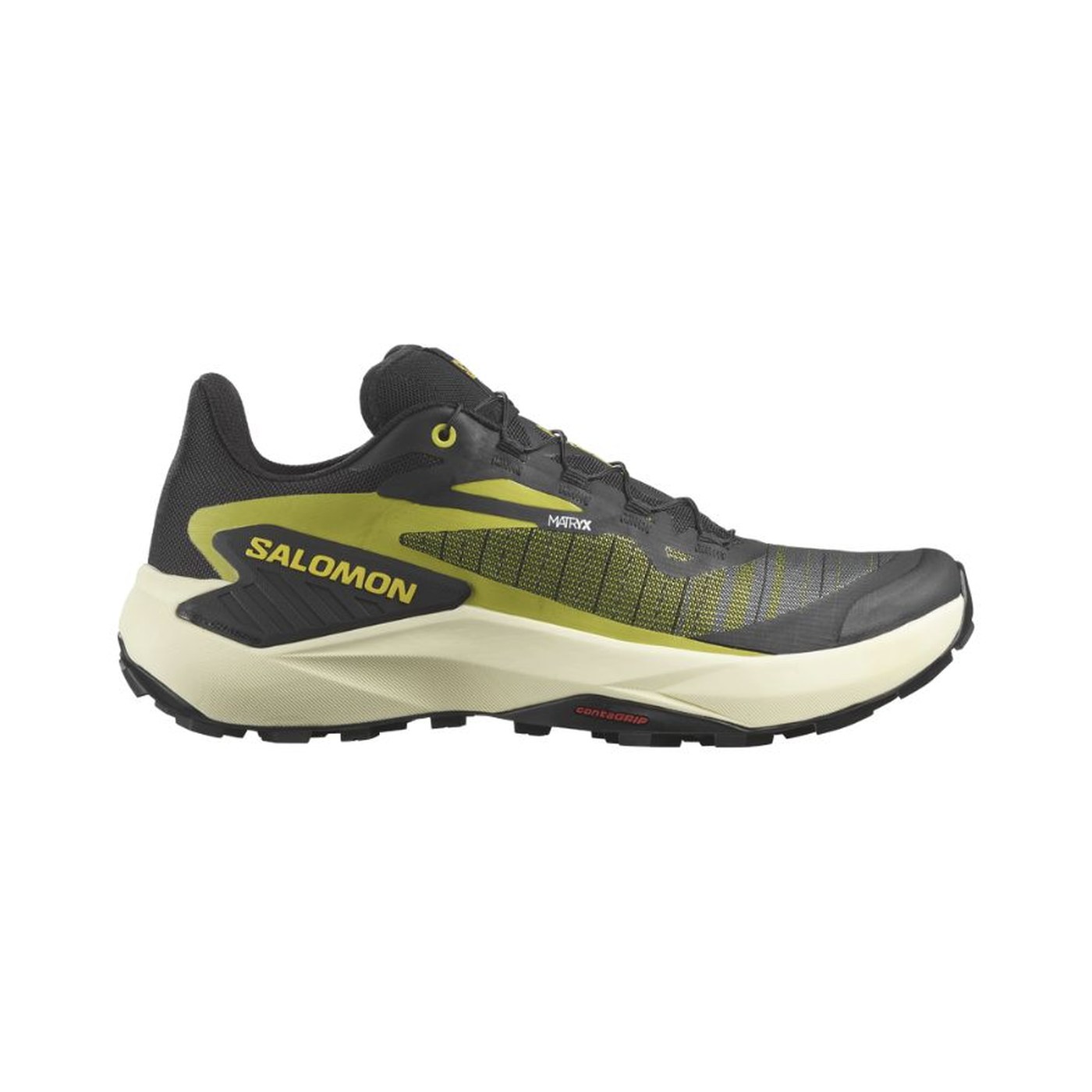
© Salomon, official photo used for editorial purposes
Who is the Salomon Genesis for?
The regular trail runner who wants a do-it-all tool
If you run 3 to 4 times a week on mixed routes (mountain roads, singletrack, forest trails), the Genesis will be your Swiss Army knife. It absorbs rock hits without cutting you off from the ground, and the Contagrip MA sticks to wet surfaces without slowing you down on dry ones. The EnergyFOAM racks up the kilometers without breaking down: expect 700 to 900 km of life depending on your build and terrain.
The trail half marathon and marathon runner
Over 21 to 42 km on trail, the Genesis is in its element. It's light enough (269 g) not to weigh you down late in the race and protective enough to handle hours of rocky descents without beating up your feet. The Matryx upper holds well without smothering, and the 8 mm drop gives a natural transition for middle-distance strides.
The ultra runner looking for a training shoe
If your racing shoe is the Salomon S/Lab Genesis, the Genesis is its perfect training partner. Same feel underfoot (identical Matryx upper, same Contagrip geometry), but the EnergyFOAM soaks up high-volume runs without making you feel you're wearing out your race pair. It's the same logic as the Saucony Endorphin Speed 5 in a road lineup.
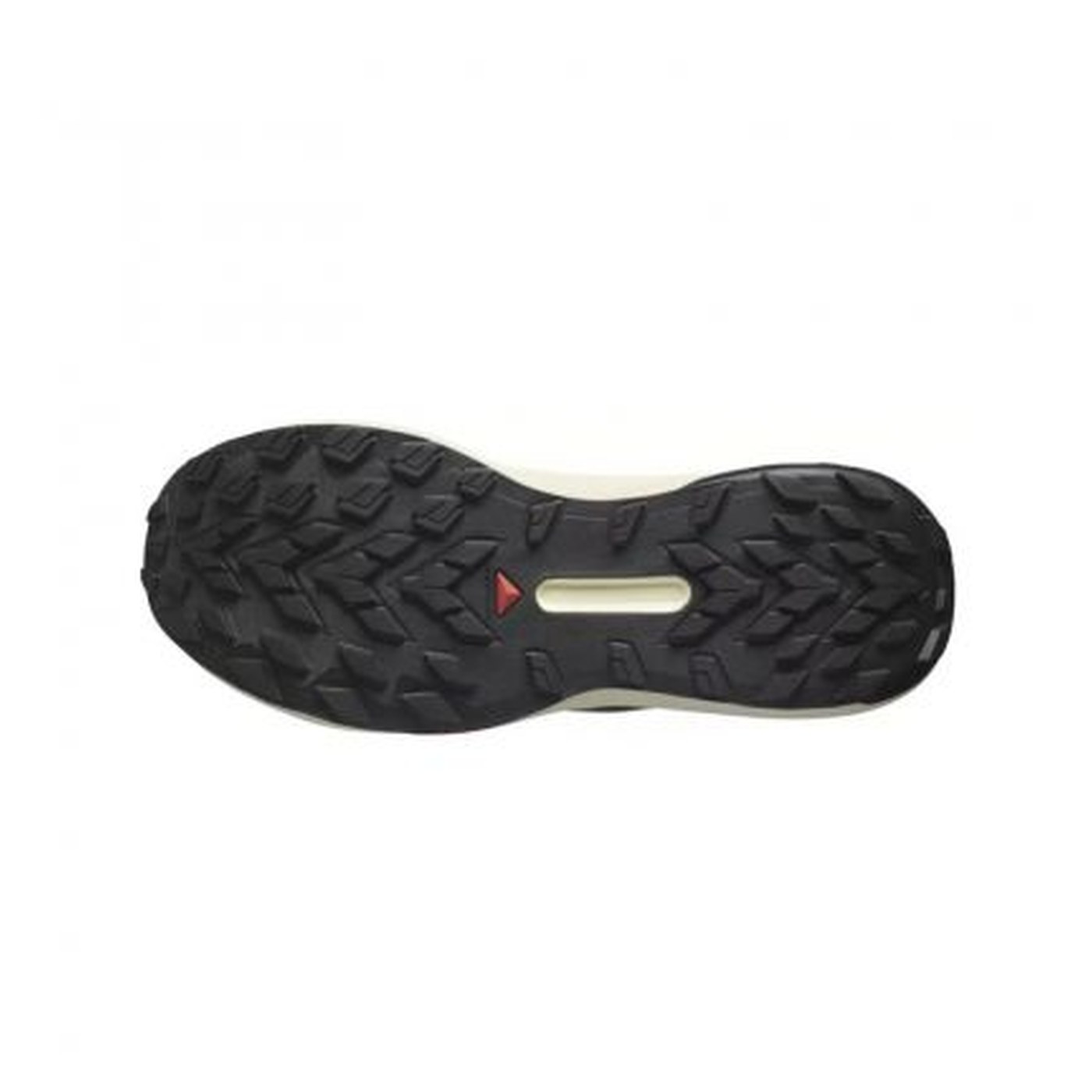
© Salomon, official photo used for editorial purposes
Comfort, ride and grip on the trail
From the first kilometers, the Genesis comes across as an honest shoe. The EnergyFOAM platform with its 8 mm drop gives natural ground contact, without the marshmallow feel of max-cushion shoes that disconnect you from the terrain. On dry, hard-packed singletrack, it filters out irregularities well without going soft. On wet or slightly muddy ground, the Contagrip MA grips firmly: the multidirectional lugs handle transitions without slipping.
At paces from 5 min/km to 6:30 min/km (its sweet spot, according to feedback from the field), the Genesis is smooth and reassuring. It isn't a speed shoe: faster than 5 min/km, you'll feel the lack of a propulsive foam. But on long runs at a moderate pace, it delivers what it promises. Downhill hold is convincing thanks to the Matryx upper, which wraps the foot well without creating friction points.
One caveat: the Genesis isn't made for deep mud or the ultra-greasy winter ground of the Pyrenees. On that kind of surface, the Salomon Speedcross 6 and its tall lugs remain far more relevant. The Genesis thrives on dry to moderately wet trails, on beaten paths and varied tracks.
Salomon Genesis vs S/Lab Genesis: the comparison
The question comes up often: should you buy the Genesis or the S/Lab Genesis for training? Here's the head-to-head to help you choose.
| Criterion | Salomon Genesis | S/Lab Genesis | Hoka Speedgoat 7 | On Cloudultra 3 |
|---|---|---|---|---|
| Price | €150 | €200 | €165 | €200 |
| Weight (men's size 42) | 269 g | ~245 g | ~295 g | ~275 g |
| Drop | 8 mm | 6 mm | 4 mm | 8 mm |
| Foam | EnergyFOAM | EnergyCell+ | CMEVA | Helion |
| Outsole | Contagrip MA | Contagrip TA | Vibram Megagrip | Missiongrip |
| Upper | Matryx | Matryx | Standard mesh | On mesh |
| Ideal use | All-around training | Racing / speed | Technical trail | Long distance |
| RunMorph score | 8 / 10 | 8.5 / 10 | 8.5 / 10 | 8 / 10 |
The verdict is clear: if you train regularly and aren't chasing top speed, the Genesis is the smart financial choice. The S/Lab only justifies its extra €50 if you want the best possible propulsion for race day itself.
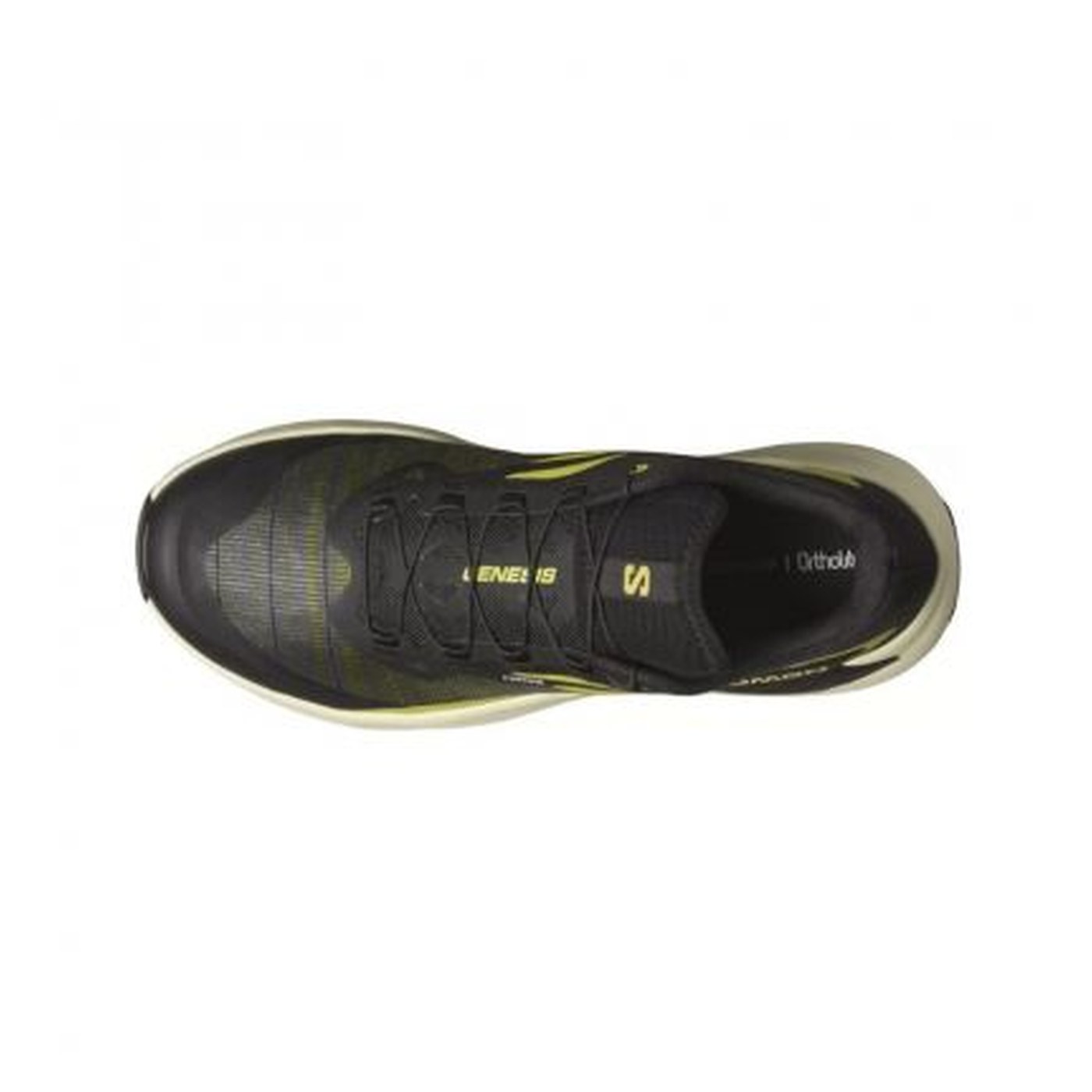
© Salomon, official photo used for editorial purposes
Salomon Genesis pros and cons
Pros
- Matryx upper: light and tough over the long haul
- Contagrip MA versatile on all dry to wet terrain
- 269 g: light for a trail training shoe
- 8 mm drop: works for every stride type
- Excellent value for money (€150, often less on sale)
- Same geometry as the S/Lab: ideal as a companion shoe
Cons
- EnergyFOAM lacks pop: not a speed shoe
- Contagrip MA limited in deep mud or packed snow
- No excess padding: not well suited to ultra distances (80 km+)
- Moderate cushioning: heavier runners (90 kg+) may find the ride harsh late in a run
How to fit the Salomon Genesis into your RunMorph training plan
The Genesis is a volume shoe through and through. In a RunMorph trail training plan, use it for your easy long runs (5:30 to 6:30 min/km pace) and your recovery runs on trails. It handles heavy 50 to 80 km weeks without complaint.
For quality sessions (hill intervals, trail tempo), keep a more responsive shoe like the S/Lab Genesis or the Hoka Speedgoat 7. And if you're preparing for an ultra (80 km or more), consider the Salomon Ultra Glide 4 for its protective 40 mm stack height.
To find the trail training plan that matches your level and goals, check out the RunMorph plans: from first trail steps to ultra prep, each plan lists the recommended shoes for each session type.
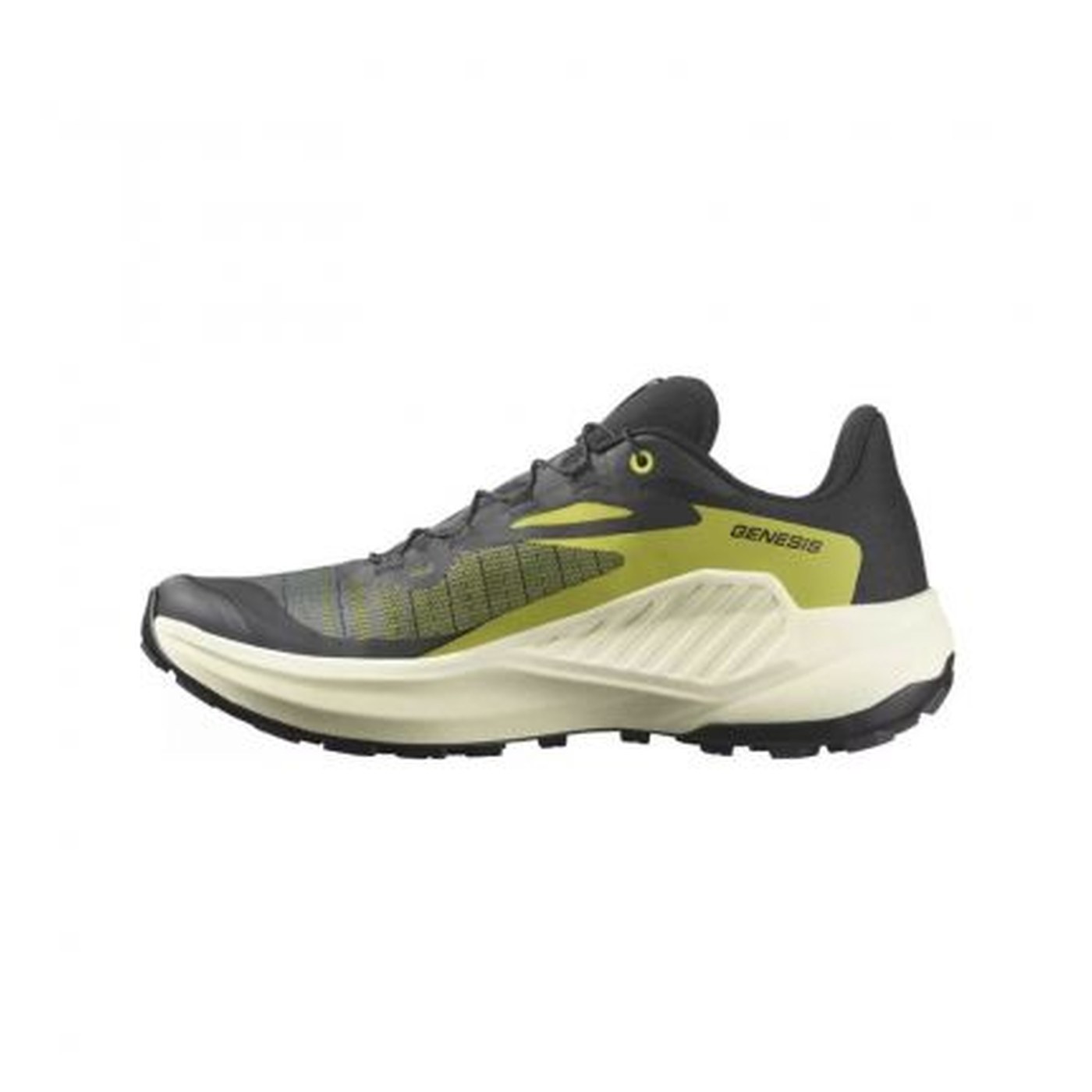
© Salomon, official photo used for editorial purposes
The RunMorph Coach's verdict
The Salomon Genesis is a quiet success. It lacks the prestige of the S/Lab Genesis and the fame of the Speedcross, but it fills its role as an all-around trail training shoe better than most rivals at this price. The Matryx upper gives it a serious long-term edge in durability and hold, and the Contagrip MA covers 80% of European trail situations without a hitch.
In 2026, with the Genesis 2 announced for UTMB in August, the V1 often sells for under €100 on clearance. Now is the perfect time to add it to your rotation. RunMorph score: 8/10.
Key takeaways for your training
- The Matryx upper: it shares this textile with the S/Lab Genesis, which gives you above-average durability and hold in this price range.
- 269 g, 8 mm drop: light and approachable, suited to runners with a heel to midfoot strike.
- EnergyFOAM is built to last: expect 700-900 km before you think about replacing it, ideal for high-volume plans.
- Handles 80% of terrain: dry, wet, hard-packed, moderately rocky, the Genesis adapts. Avoid deep mud and snow.
- The Genesis 2 arrives in August 2026: if you want the latest version, wait. But at under €100, the V1 is a smart buy right now.