Samsung has given its most ambitious watch a refresh, three months after launch. A 5,000-nit display, dual-frequency GPS, a Trail mode with GPX maps, and 800 mAh packed into a titanium case that's 12% thinner. On paper, the Galaxy Watch Ultra 2 checks almost every box of a serious sports watch. Four independent French tests and Samsung's own spec sheet tell a slightly less polished story, especially once you put it up against a Garmin or a Coros.
Samsung Galaxy Watch Ultra 2: 5,000-nit AMOLED screen and dual-frequency GPS for €749, but battery life and mapping lag behind for trail running
6.3/10
Samsung Galaxy Watch Ultra 2: the smartwatch that wants to talk to runners
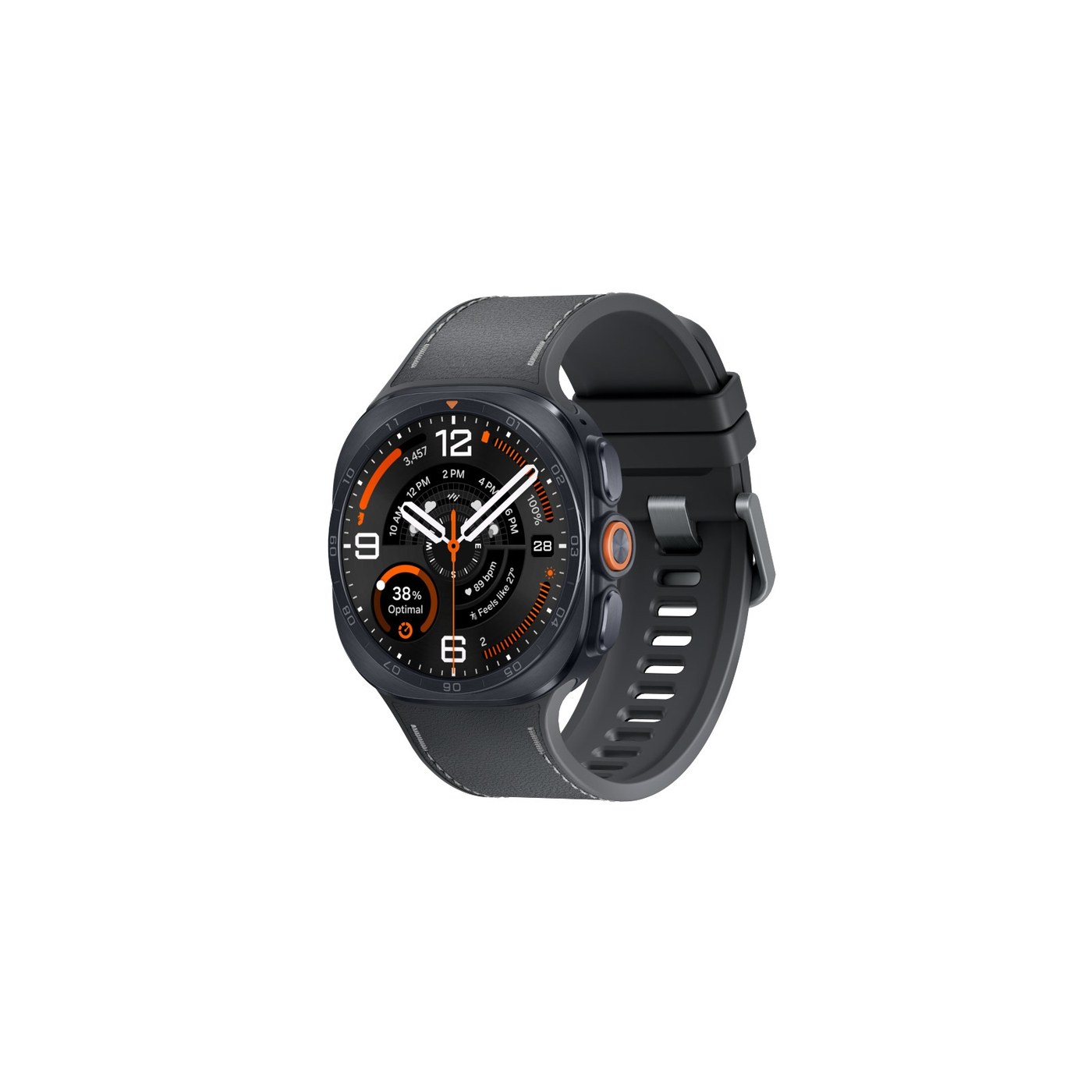
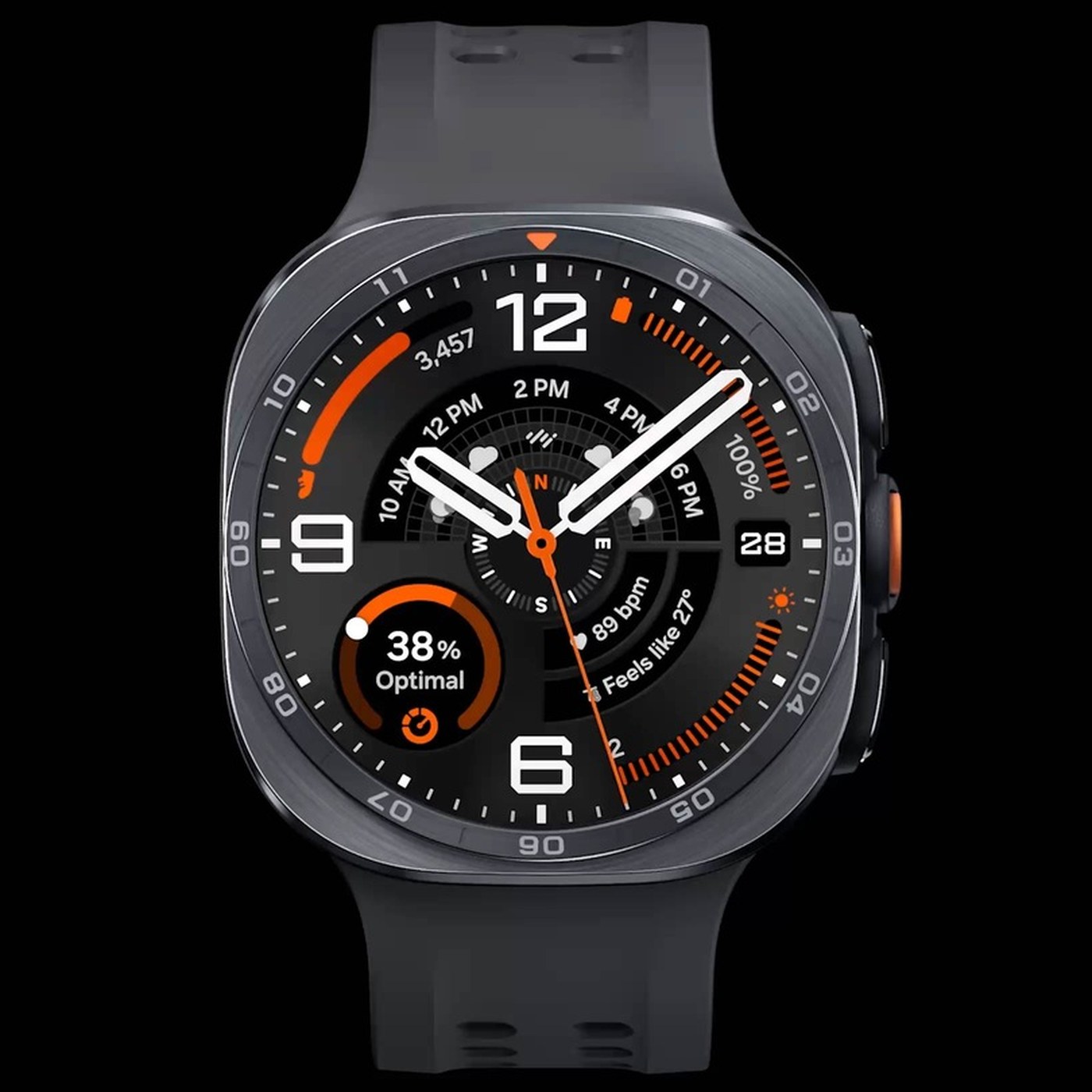
Launched on July 22, 2026 and available in France since August 3, the Galaxy Watch Ultra 2 follows the original Galaxy Watch Ultra without quite replacing it. Samsung refines the formula rather than reinventing it. The grade-4 titanium case drops from 12.1 to 10.7 mm, the straps lose a third of their thickness, and the Super AMOLED screen climbs from 3,000 to 5,000 peak nits. Under the hood, the new Snapdragon Wear Elite promises 32% more CPU performance and 19% more GPU performance than the 2024 chip.
The positioning hasn't changed: a full-featured connected watch built for Samsung smartphone owners, one that also wants to win over the outdoor sports crowd against Garmin and Apple. The Apple Watch Ultra 3 remains the openly acknowledged target, so much so that a Clubic tester said the Galaxy Watch Ultra 2 made him want to swap out his own Apple Watch during testing.
RunMorph's advice: if running is your priority, look at a Garmin Forerunner 970 or a COROS Pace 4 Pro first. The Galaxy Watch Ultra 2 earns its place if you want one watch for both sport AND connected everyday life, with an Android phone in your pocket.

© Samsung, official photo used for editorial purposes
The essentials in three sentences
The Galaxy Watch Ultra 2 refines the original Ultra with a case that's 12% thinner, a screen twice as bright, and a battery that's 35% bigger. Dual-frequency GPS and Trail mode do their job in everyday use, but mapping depends on the phone and battery life stays well short of dedicated GPS watches. At €749 at launch, it's an excellent Android smartwatch that remains a secondary sports watch for anyone running seriously.
6,3
/ 10 · RunMorph overall score
Who it's for?Android runner who wants one watch for both sport and everyday connected life
Who it's not for?iPhone owners, ultra-distance trail runners far from network coverage
Objective specs
| Specification | Galaxy Watch Ultra 2 |
|---|---|
| Brand | Samsung |
| Model | Galaxy Watch Ultra 2 (SM-L715) |
| Release | July 22, 2026 (announcement), August 3, 2026 (France) |
| Case size | 47.4 x 47.1 x 10.7 mm |
| Weight | 60.5 to 61.5 g depending on the source, without strap |
| Display | Super AMOLED 1.52", 498 x 498 px, 5,000 nits peak |
| Battery life | 3.5 to 4 days in moderate use, 2 to 2.5 days with always-on display and daily GPS |
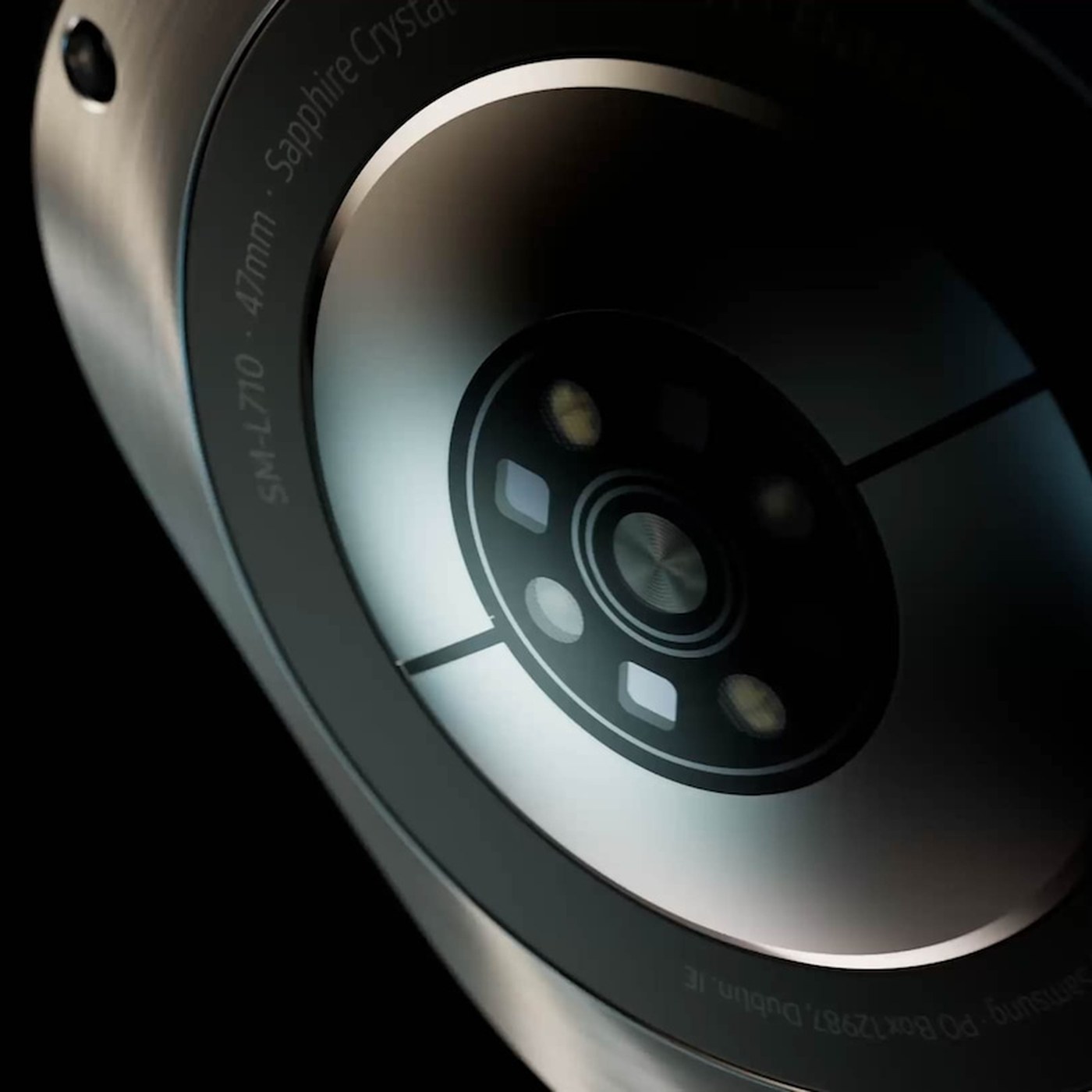
| GNSS | Dual-frequency GPS L1 and L5, GLONASS, Galileo, BeiDou |
| Sensors | BioActive optical heart rate, SpO2, ECG, skin temperature, barometer, compass |
| Mapping | No native offline vector maps, line guidance and Google Maps depending on connection |
| Sport profiles | Dozens of sports including running, trail, swimming, diving, cycling |
| Music storage | 64 GB |
| Contactless payment | NFC, Samsung Wallet |
| Water resistance | 10 ATM, IP68, IP69K, EN13319 diving down to 40 m |
| Smartphone connection | Android only (no iOS), Bluetooth, Wi-Fi, optional LTE/eSIM |
| Price | €749 at launch, between €475 and €700 at some retailers three months later |
Who is the Galaxy Watch Ultra 2 for?
The spec sheet is impressive. The profile of the right buyer is less so, once the French tests are scrutinized.
The urban runner who wants one watch for everything
This is the natural audience for the Galaxy Watch Ultra 2. It handles a daily 40-minute run, notifications, contactless payment and general health tracking without needing to juggle two devices. Measured by PhonAndroid, battery life holds for 3.5 to 4 days in this scenario, with the always-on display switched off. A good compromise for anyone running three to four times a week without chasing pure performance.
The occasional trail runner, not the ultra-trail runner
Trail mode imports GPX tracks and displays remaining elevation gain and vertical speed across two customizable screens, according to PhonAndroid's test. For a day hike or a short trail run, that's enough. For a multi-day outing with no network coverage, the lack of offline vector maps becomes a real problem: DroidSoft rates the sport tracking as needing improvement for the most demanding runners.
The multisport triathlete, with reservations on long distance
Swimming, diving down to 40 meters, cycling with dedicated screens: the sport versatility is real. But over a long event, battery life of 2 to 2.5 days under sustained use with daily GPS, as measured by PhonAndroid, stays well short of the 60 to 140 hours of a Garmin or a COROS built for ultra distances.
© Samsung, official photo used for editorial purposes
GPS accuracy and heart rate sensor under effort
Dual-frequency L1 and L5 GPS locks on fast. A Clubic tester reports a satellite lock in about three seconds, with an accurate track on an open-countryside course. PhonAndroid confirms accuracy it calls excellent, including in forests and dense urban areas. DroidSoft tempers that view: sport tracking reportedly lacks finesse for the most demanding runners, an opinion its own tester qualifies by noting he isn't the most dedicated athlete around.
The BioActive optical heart rate sensor gives more mixed results depending on the type of effort. On a steady run, Clubic and PhonAndroid judge it reliable, with values consistent against an external reference. In the first minutes of a run and during interval training, Techradar measured a gap of up to 20 beats per minute below an Apple Watch Ultra 3 and a Polar H10 chest strap. The sensor then stabilizes after ten to fifteen minutes. PhonAndroid observes the same pattern during interval training, which it describes as typical lag for wrist-based optical sensors compared with a chest strap.
Two sources out of four therefore agree on one specific point: the Galaxy Watch Ultra 2 reads heart rate well during steady endurance efforts, less well at the start of an intense effort or during tight interval sessions.
Mapping and navigation: the real limit against Garmin
French tests don't quite agree on this point, and it's worth knowing before buying. DroidSoft writes that Trail mode displays mapping. PhonAndroid is more precise on this point. There is no native offline vector map, and guidance is limited to route lines on a dark background. Detailed maps depend on Google Maps via a data connection, eSIM, or a nearby phone. The two tests do agree, however, on the practical conclusion: for a long trip off the network, Garmin keeps the edge with its full topographic maps stored locally.
In plain terms, the Galaxy Watch Ultra 2 is enough to follow a route prepared in advance close to home. It becomes less reliable as soon as you head beyond mobile coverage for several days.
Training and recovery metrics
Samsung Health calculates an energy and vitality score out of 100, a sleep score, and a cardiac load metric designed to flag overtraining, according to PhonAndroid's test. Techradar flags an unreliable body-composition measurement on this model. The scale showed 19% actual body fat against an estimated 9% right after a workout, then 16% after rehydrating and repositioning the arm. Sleep tracking is judged accurate by both sources, with correct detection of wake phases.
On the coaching side, Techradar confirms the return of a Running Coach with advanced analysis, an asset for anyone structuring their sessions without relying solely on Strava, which Clubic notes as compatible.
Real-world battery life: how far the 800 mAh battery goes
Samsung advertises up to 90 hours in average use and up to 60 hours with the always-on display active, depending on which page you check. PhonAndroid's detailed manufacturer table distinguishes 3.5 to 4 days in moderate use without the always-on display, versus 2 to 2.5 days in sustained use with the always-on display and a daily GPS session of about 1h30.
Real-world measurements stay in this lower range. Clubic got just under three days with the always-on display running continuously and about one hour of GPS activity. DroidSoft lands in the same ballpark, close to three days. The tester notes that the battery drains faster than a simple GPS tracker: a dedicated sports watch lasts one to two weeks under the same conditions. A full charge takes between 1h20 and 1h30 on the proprietary magnetic dock, with 40% recovered in 30 minutes according to DroidSoft.
Galaxy Watch Ultra 2 vs Apple Watch Ultra 3: the comparison
Both watches target the same high-end buyer, but not the same ecosystem. Techradar tested the two watches side by side over a 30-minute run. The site judges Apple's design more polished, without reporting any numerical distance or pace results for either watch.
| Criterion | Galaxy Watch Ultra 2 | Apple Watch Ultra 3 |
|---|---|---|
| Compatibility | Android only | iOS only |
| Display | Super AMOLED, 5,000 nits | OLED LTPO3, 3,000 nits |
| Case thickness | 10.7 mm | Thinner according to Techradar, no precise figure given |
| Offline mapping | Not native, depends on the phone | More complete maps and routes according to the side-by-side test |
| Price in France | €749 | Price for a comparable positioning |
Comparison against Android and pure-running competitors
Against a Google Pixel Watch 5, the Galaxy Watch Ultra 2 clearly plays the outdoor card, with its titanium case and reinforced water resistance. The Pixel Watch aims more at lighter everyday use. Against a Garmin Forerunner 970 or a COROS Pace 4 Pro, DroidSoft and PhonAndroid point to the same conclusion. Dedicated running watches keep the edge on GPS battery life and offline mapping, often at a price below the Galaxy Watch Ultra 2's €749 launch price.
© Samsung, official photo used for editorial purposes
How to fit it into your RunMorph training plan
If your goal is a trail race or regular outdoor outings, the Galaxy Watch Ultra 2 handles the sessions of a RunMorph trail plan without trouble. GPX import, elevation tracking and hydration alerts cover the essentials of a training block. Just plan to charge the watch the night before a long outing with active navigation, since GPS battery life stays the model's weak point.
© Samsung, official photo used for editorial purposes
RunMorph Coach's verdict
The Galaxy Watch Ultra 2 succeeds at what it sets out to do: a premium Android smartwatch, solid on screen, design and build quality, with a genuine outdoor sport mode thrown in. Dual-frequency GPS and heart rate during steady endurance efforts meet the expected standard for €749. But battery life under intensive sport use and the lack of native offline maps put it clearly behind a dedicated GPS watch as soon as running training gets serious and regular.
RunMorph verdict: 6,3/10. An excellent connected watch for an occasional-to-moderately-demanding Android runner, not a reference tool for anyone structuring a real race plan or aiming for ultra-trail.
What to remember for your training
- Dual-frequency L1/L5 GPS reliable on a standard run, with no measured gap figure from the French tests.
- Optical heart rate reliable during steady endurance efforts, with a gap of up to 20 bpm during the first fifteen minutes of an intense effort or interval session.
- Real battery life of 2 to 2.5 days with the always-on display and a daily GPS session of about 1h30, well short of dedicated GPS watches.
- No native offline vector maps: plan a route in advance for a trail outing far from network coverage.
- Not compatible with iPhone: limited to runners with an Android smartphone.