€449 buys you a 1.47-inch AMOLED screen under sapphire, a titanium bezel, 40 hours of dual-frequency GPS and offline maps. With the Pace 4 Pro, launched on 22 September 2026, COROS is no longer playing in the budget league: it is going straight after the Garmin Forerunner 970, which costs €300 more. At RunMorph, we took apart the official spec sheet and the first independent measurements to see whether the gamble pays off.
COROS Pace 4 Pro review: 40 h of GPS and offline maps for €449
8.4/10
- Dual-frequency GPS accuracy on par with Garmin's high-end watches.
- Record battery life: 40 h of GPS, more than 7 real days in always-on.
- Bright 1.47-inch AMOLED screen, sapphire and titanium bezel.
COROS Pace 4 Pro: the Pace goes premium
The Pace line is COROS's best-seller, the one that built the brand's reputation among runners: light, accurate, long-lasting and affordable. The Pace 4 (November 2025, €269) brought AMOLED to the range, and the Pace Pro (€349) brought maps. The Pace 4 Pro slots in above both and ticks the boxes that were still missing: the biggest screen COROS has ever fitted (1.47-inch LTPO AMOLED, 466 x 466 pixels), sapphire glass, a TC4 titanium alloy bezel, 32 GB of storage, a speaker alongside the mic, and offline maps with street names.
The case grows (47.6 x 47.6 mm versus 43.4 mm on the Pace 4) but stays remarkably slim: 11.8 mm, thinner than the Forerunner 970 (12.9 mm). On the wrist, it weighs 51 g with the silicone strap and 43 g with the nylon one. The Pace family now has three price tiers (€269, €349, €449), which makes the line-up less obvious than before, but the technical hierarchy is clear: the Pace 4 Pro is the most complete of COROS's compact watches.
The bottom line in 3 sentences
The Pace 4 Pro keeps the Pace recipe (low weight, battery life, GPS accuracy) and adds the screen, premium materials and maps it was missing. The first independent measurements confirm GPS on par with Garmin's high-end watches, heart rate very close to a chest strap and more than 7 days of real-world battery with always-on display. On the other hand, it skips the smart features (no NFC payments, no music streaming), and the official spec sheet lists no ECG, unlike the Pace Pro.
8.4
/ 10 · RunMorph overall score
Who is it for?The marathoner or triathlete who wants maximum accuracy, screen and battery life without paying €750.
Who should skip it?Anyone who wants contactless payments or Spotify on the wrist, and the 100-mile ultra trail runner, who should be looking at a Vertix.
RunMorph's advice. If maps are not a must for you, the COROS Pace 4 at €269 gives you the same dual-frequency GPS accuracy for €180 less, and it has gained maps through a software update. If you want maps in a more compact package, the Pace Pro at €349 is still an excellent compromise. The Pace 4 Pro earns its price with its screen, its materials and its longer battery life.
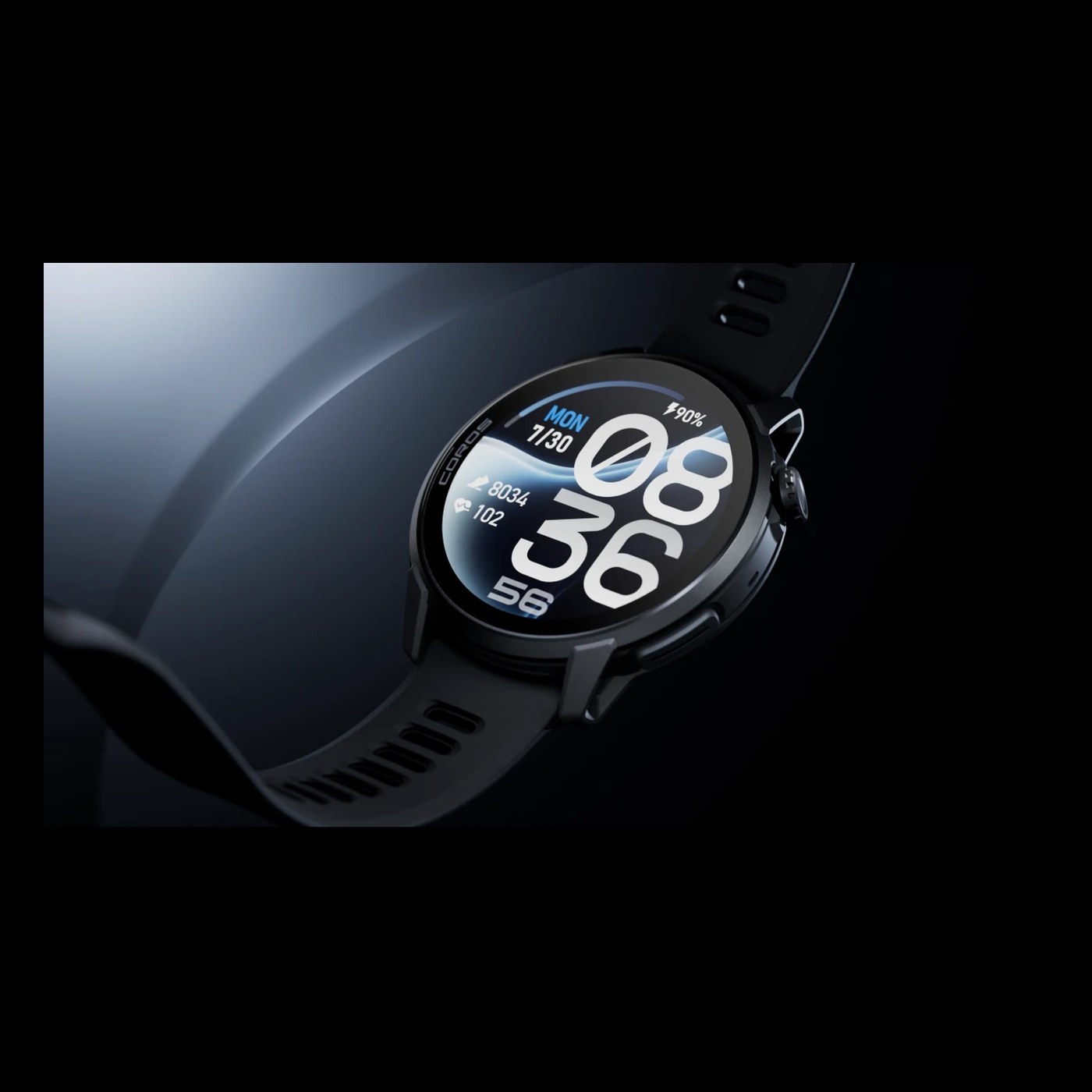
© COROS, official photo used for editorial purposes
Objective technical data: claimed vs measured
| Feature | Official COROS spec sheet | Independent measurement |
|---|---|---|
| Release | 22 September 2026 | On sale in France from launch day (coros.com, i-Run, Alltricks) |
| Case | 47.6 x 47.6 x 11.8 mm, fibre-reinforced polymer, TC4 titanium bezel, sapphire glass | Finish is a clear step up, the most premium of COROS's compact watches |
| Weight | 51 g (silicone) / 43 g (nylon) | Comfortable 24/7, doesn't snag on jacket sleeves |
| Screen | 1.47-inch LTPO AMOLED, 466 x 466 px, touchscreen, always-on | The brightest the brand has made, readable even in standby, up to 13 data fields |
| Daily battery life | 21 days (7 days always-on) | More than 7 days measured in always-on with one GPS run a day and live heart rate: better than promised |
| GPS battery life | 60 h standard, 40 h dual-frequency (30 h always-on), 15 to 17 h with music | Around 40 h observed in max accuracy mode, as claimed |
| GNSS | GPS, GLONASS, Galileo, BeiDou, QZSS, dual-frequency on all systems | Tracks on par with a Forerunner 970 and a Fenix 9 Pro on the same routes |
| Optical heart rate | Latest-generation COROS sensor | Very close to a chest strap for running and cycling; a few erratic spikes in strength training |
| Maps | Landscape with street names (worldwide) + regional topo, downloadable for offline use | Not routable: turn-by-turn guidance only on routes built in the app |
| Sensors | Heart rate, SpO2, barometric altimeter, 3D compass, gyroscope, thermometer | No ECG on the French spec sheet, unlike the Pace Pro |
| Audio and storage | 32 GB, offline MP3, mic + speaker (hands-free calls, voice notes) | No streaming (no Spotify, no Deezer) |
| Contactless payments | No | Confirmed: no NFC |
| Water resistance | 5 ATM | Surface swimming, no diving |
| Price | €449 | Same price at French retailers at launch |
Two takeaways. First, the big promises hold up, and in the first real-world tests daily battery life even beats the spec sheet, which is rare enough to point out. Second, COROS owns its choices (no NFC, no streaming, no ECG on this spec sheet, non-routable maps), and those choices clearly set the Pace 4 Pro apart from a Garmin Forerunner 970, which costs more but is far more connected.
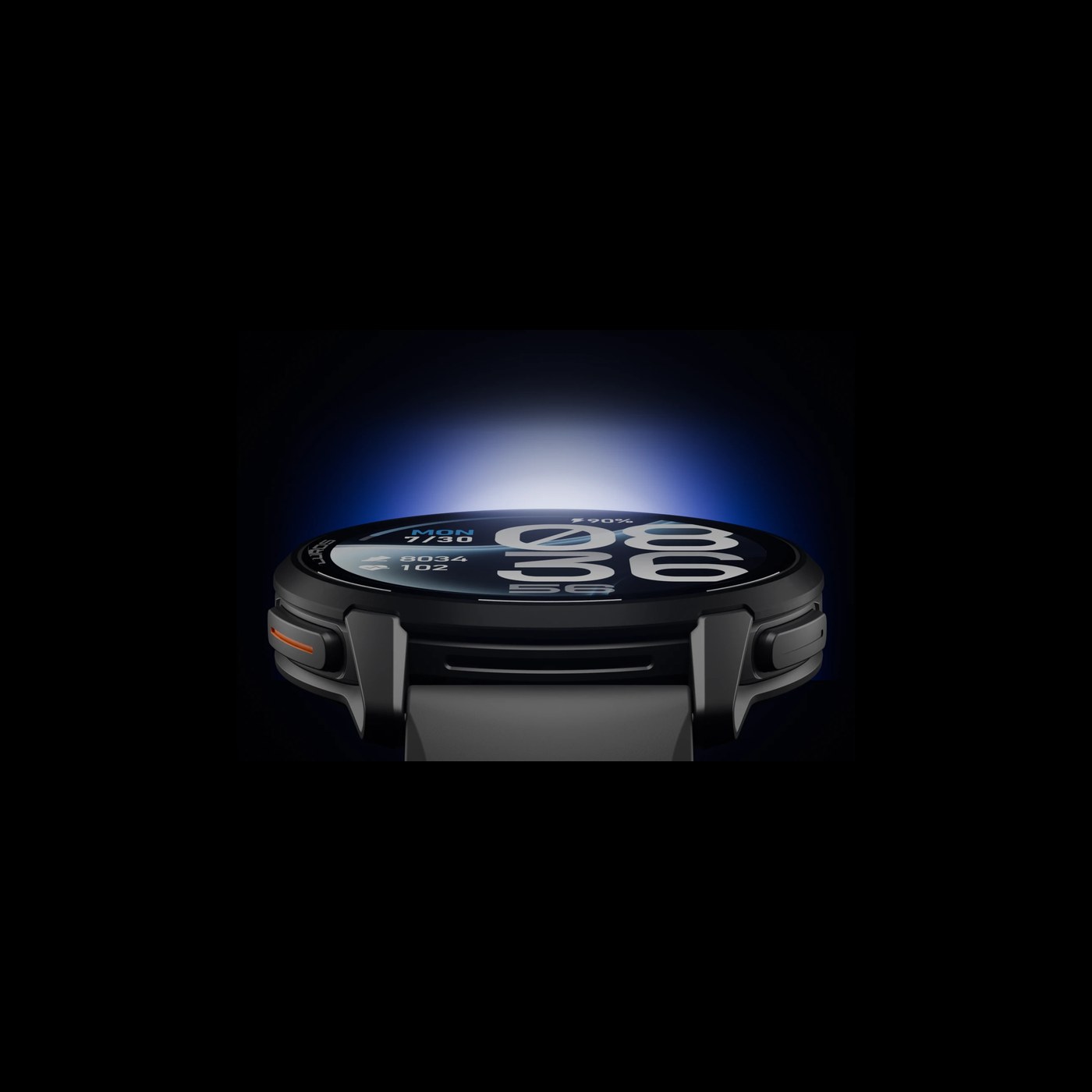
© COROS, official photo used for editorial purposes
GPS accuracy and heart rate sensor: benchmark level
This is what makes or breaks a running watch, and the first independent measurements are clear-cut: in dual-frequency, all-systems mode, the Pace 4 Pro's tracks sit right on top of those from a Garmin Forerunner 970 and Fenix 9 Pro worn on the same runs, even between buildings in the city. COROS has clearly kept the chipset quality that was already the Pace 4's big strength.
On optical heart rate, the new sensor comes very close to a chest strap for running and cycling, with only brief, isolated erratic spikes. Like every wrist sensor, it shows its limits in strength training, where the gaps widen a little. For short interval sessions where every beat counts, the chest strap is still the gold standard, but for daily tracking and long runs, wrist-based readings are now reliable. One detail matters within the range: the official French spec sheet for the Pace 4 Pro lists no ECG sensor, while the Pace Pro has one.
Maps and navigation: offline, but not routable
The Pace 4 Pro carries landscape maps with street names (downloadable worldwide) and regional topo maps, a decisive step up from the simple breadcrumb trail on the Pace 3. On the 1.47-inch screen, touch navigation (zooming, panning) is smooth, and the processor loads map tiles with no noticeable lag.
Key caveat: these maps are not routable. You can't ask the watch to work out a route on its own, the way Garmin's TopoActive maps let you. On a route built in the COROS app (or imported as a GPX), however, you get turn-by-turn guidance, an elevation profile and alerts for climbs and descents. On top of that you get back-to-start, off-course alerts, checkpoints, live location sharing via a link and SOS alerts. For 95% of your runs, that's more than enough; for fully improvised mountain outings, Garmin still has the edge.

© COROS, official photo used for editorial purposes
Training metrics: EvoLab, but no morning readiness score
The EvoLab suite covers the essentials: estimated VO2 max, training load, fatigue, recovery, race predictor from 5 km to the marathon, threshold zones, running fitness, and now overnight HRV to track your form. The multi-data screen can show up to 13 fields at once (readable, but that's a lot). Voice notes recorded after a session are automatically transcribed in the app, which is handy for logging how you felt without pulling out your phone.
COROS's well-known weak spot is still there: no single morning readiness score like Garmin's Training Readiness. You get HRV and recovery, but connecting the dots is up to you. The app makes up for it with its clarity and direct integrations (Strava, TrainingPeaks, Komoot, Apple Health, Decathlon), with no subscription.
Real-world battery life: better than the spec sheet
COROS claims 21 days of daily use, 7 days in always-on, 60 h of standard GPS and 40 h in dual-frequency. The first field tests do better: more than 7 days in always-on with one GPS run a day and continuous heart rate tracking, where a Forerunner 970 lasts 4 to 5 days under the same conditions. In max accuracy mode, the claimed 40 h holds up, enough to cover an Ironman or a 100 km without a second thought. A full charge takes about 1 h 30.
Who is it for?
The road runner, from 10 km to the marathon
This is its home turf: top-tier GPS accuracy, reliable heart rate, a huge screen to read your paces at a glance during intervals, and battery life that makes you forget the charger exists. If you're torn between it and the Forerunner 970, it comes down to a €300 gap and the smart features.
The triathlete
Native multisport, 5 ATM, 40 h of dual-frequency GPS: a full Ironman goes by without breaking a sweat. The lack of NFC and streaming hardly matters here. The one limitation: no ANT+, so external sensors connect over Bluetooth only.
The trail runner, with a distance caveat
Offline maps with street names are a game changer compared with a Pace 3. But with 40 h in dual-frequency, the Pace 4 Pro is built for trail races up to around 100 km. For a 100-miler or a full week off the grid, the COROS Apex 4 (65 h of GPS) or a Vertix are the safer bet.
COROS Pace 4 Pro vs Garmin Forerunner 970 vs COROS Pace 4: head to head
| Criterion | COROS Pace 4 Pro | Garmin Forerunner 970 | COROS Pace 4 |
|---|---|---|---|
| Price | €449 | €749 (€649 on sale) | €269 |
| Screen | AMOLED 1.47" 466 x 466, sapphire | AMOLED 1.4" 454 x 454, sapphire | AMOLED 1.2" 390 x 390, mineral glass |
| Bezel | TC4 titanium | Titanium | Polymer |
| Weight | 51 g (silicone) | 56 g | 40 g |
| Dual-frequency GPS | 40 h | 21 h | 31 h |
| Maps | Offline, not routable | Routable TopoActive | Breadcrumb (maps added via update) |
| NFC payments | No | Yes | No |
| Music | Offline MP3 (32 GB) | Streaming + offline | MP3 (4 GB) |
| ECG / flashlight | No / No | Yes / Yes | No / No |
The verdict is clear. The Pace 4 Pro matches the Forerunner 970 on accuracy, beats it on screen and battery life, and costs €300 less at full retail price. The Garmin hits back with routable maps, NFC, streaming, a flashlight and ECG: a feature package that justifies the gap if you actually use it. Against the Pace 4, the Pro brings a bigger, brighter screen, sapphire, titanium, 32 GB, a speaker and longer battery life; the Pace 4 remains the smart pick at €269 if those upgrades don't speak to you.
What the Pace 4 Pro does really well
- Dual-frequency GPS accuracy on par with Garmin's high-end watches.
- Record battery life: 40 h of GPS, more than 7 real days in always-on.
- Bright 1.47-inch AMOLED screen, sapphire and titanium bezel.
- Offline maps with street names and turn-by-turn guidance.
- €300 less than the Forerunner 970 for the same sports performance.
Its real limitations
- No NFC payments and no music streaming (no Spotify).
- Non-routable maps: no on-the-fly route calculation.
- No ECG on the French spec sheet, unlike the Pace Pro.
- No morning readiness score like Training Readiness.
- No ANT+: external sensors over Bluetooth only.
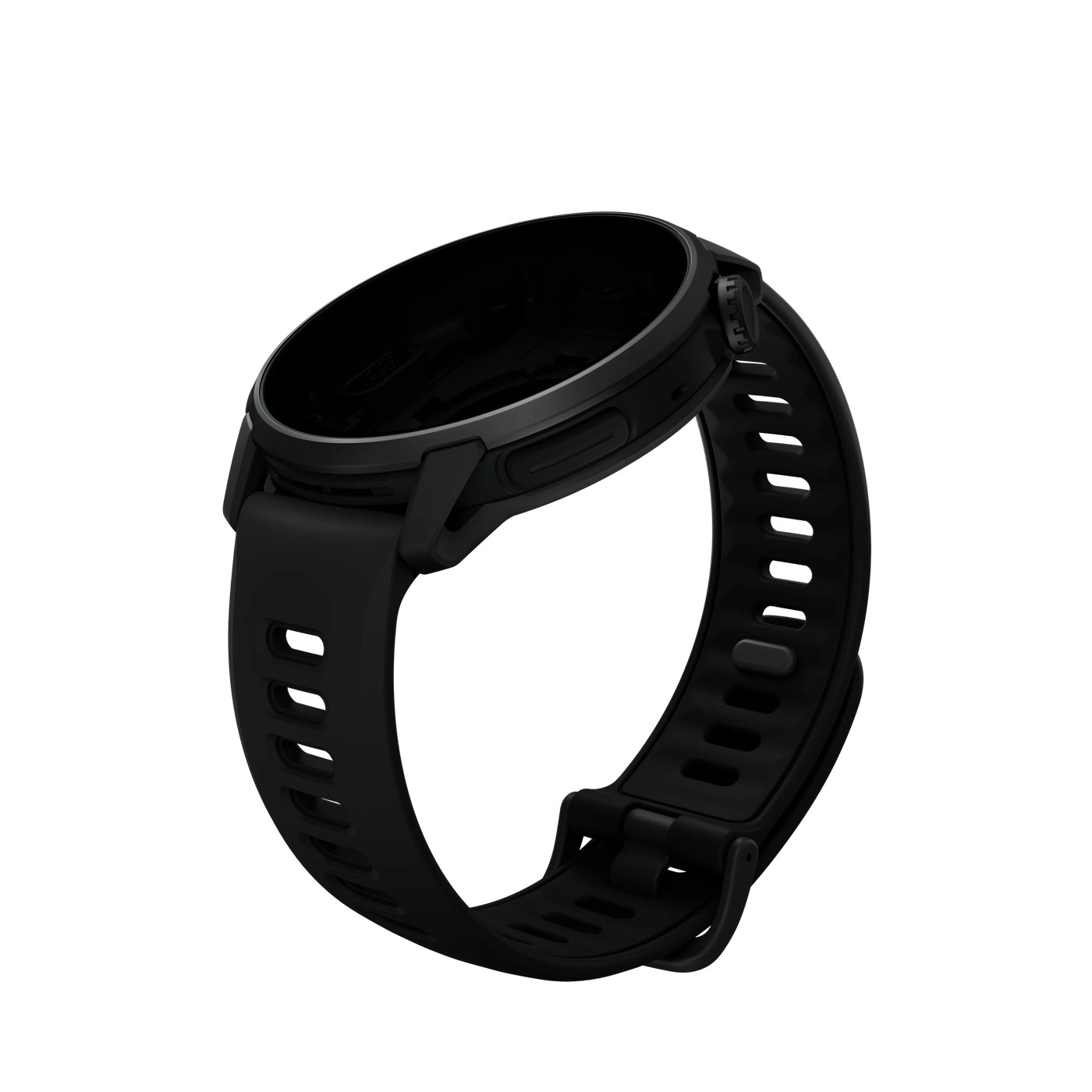
© COROS, official photo used for editorial purposes
How to fit it into your RunMorph training plan
At RunMorph, we see it as the watch for the structured runner: you build your sessions in your RunMorph training plan (intervals, target paces, long runs), you follow them on your wrist with accuracy that leaves no room for measurement excuses, and you log how you felt with transcribed voice notes. The Strava and TrainingPeaks integrations keep your data flowing without friction.
During heavy weeks, make the most of the multi-data screen for intervals (pace, heart rate, time remaining on a single page) and use overnight HRV to adjust your hard sessions. Its battery life gives you something simple but precious: never heading out on a long run with 30% battery because you forgot to charge it the night before.
The RunMorph Coach's verdict
The COROS Pace 4 Pro is the most complete watch the brand has ever made: it keeps the Pace DNA (low weight, battery life, accuracy) and adds the screen, materials and maps that lift it to the level of the €700-plus benchmarks. The first independent measurements back up the promises, with real-world battery life even beating the claims. The trade-offs (NFC, streaming, ECG, routable maps, ANT+) are real but targeted: none of them affect your training. At €449, it simply offers the best sports performance per euro spent right now. RunMorph score: 8.4/10.
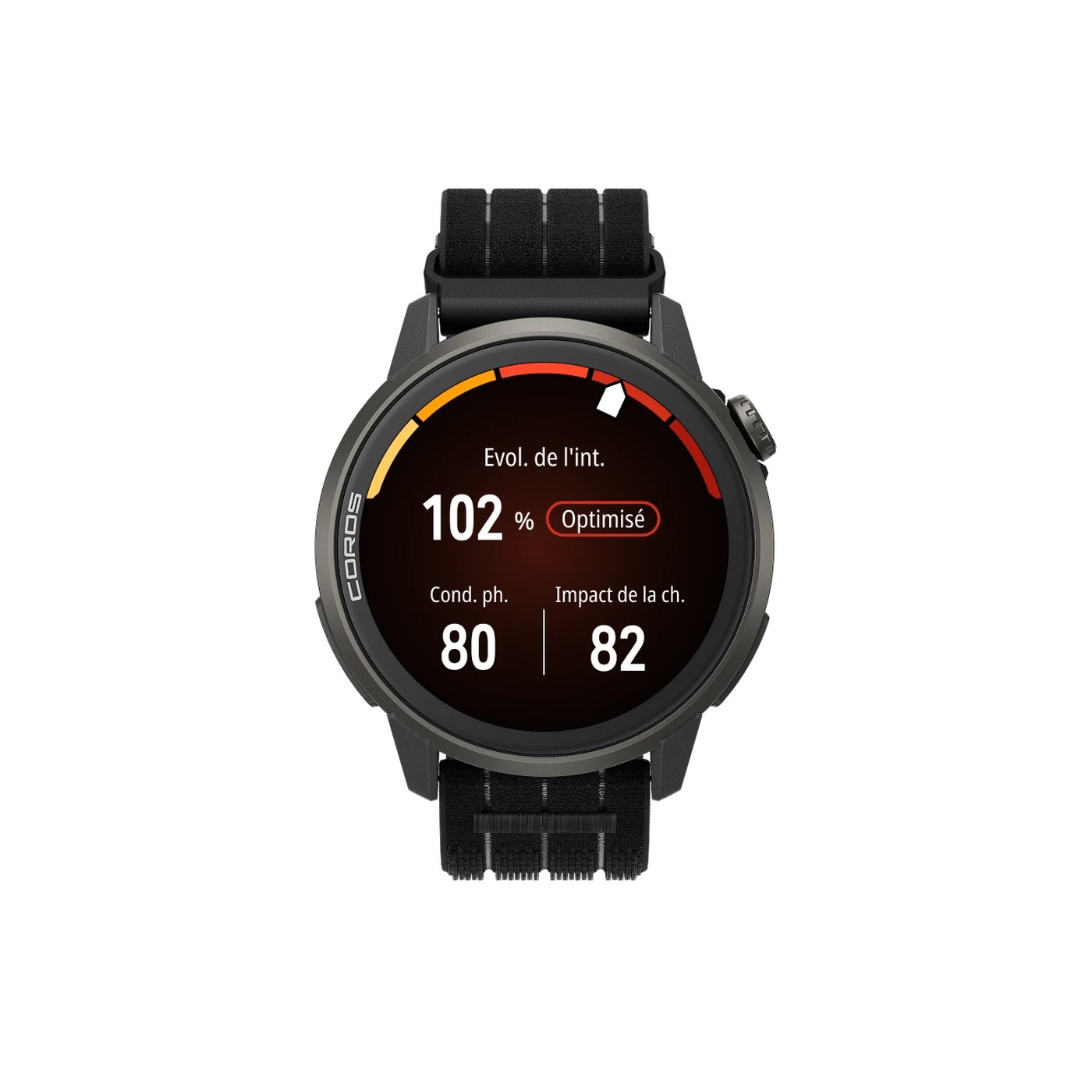
© COROS, official photo used for editorial purposes
Key takeaways for your training
- Dual-frequency GPS on par with a Forerunner 970, for €300 less.
- 40 h of max accuracy GPS: an Ironman or a 100 km without managing your battery.
- More than 7 real days measured in always-on, beyond the spec sheet.
- Offline maps with street names, but not routable: plan your routes in the app.
- No NFC, no streaming, no ECG: if those features matter, look at the Forerunner 970 or the Pace Pro.