The Apple Watch Ultra 3 finally takes Apple into pure Garmin territory. Grade 5 titanium case, 3000-nit LTPO3 OLED, dual-frequency L1+L5 GPS, satellite connectivity, and watchOS 26 with Workout Buddy and wrist-based VO2 max. At €899, is this the first Apple Watch that can replace a Garmin for a serious runner? Here's our verdict after a month of real-world running.
Apple Watch Ultra 3 Review: Apple's First Real Garmin Rival
8.5/10
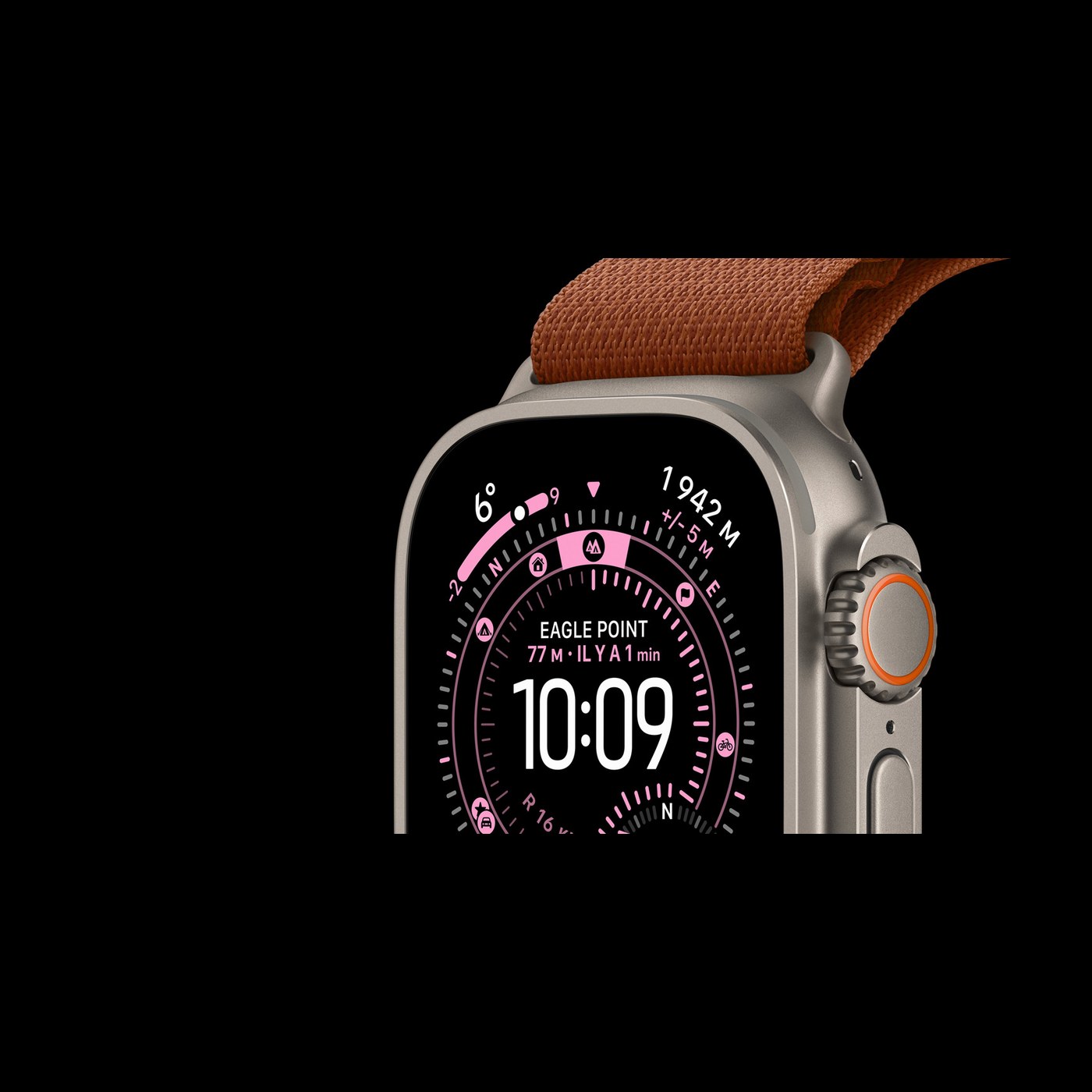
Apple Watch Ultra 3: the first Apple Watch that really speaks running
For years, Apple built its watches as iPhone accessories that happened to do sports. The Ultra 3 flips that logic. The 49 mm Grade 5 titanium case, flat sapphire crystal display, dual-frequency L1+L5 GPS and 42-hour battery life finally put the brand on Garmin and COROS turf.
The positioning is clear. At €899, the Ultra 3 targets runners with an iPhone who want one watch for everyday life and training. Not Android users (still locked out), not the ultra trail runner who needs maximum battery life (the Garmin Enduro 3 or the Suunto Vertical 2 still last longer), but serious runners who value the iOS ecosystem and want watchOS 26 with its new training metrics.
RunMorph's tip: if you're torn between a Garmin Forerunner 970 at €749 and the Apple Watch Ultra 3 at €899, the deciding factor isn't GPS accuracy (both are excellent), it's your phone. iPhone: the Ultra 3 slots into your whole day. Android: the Forerunner 970 is still the only answer. For expedition-style trail running, look at the Suunto Vertical 2 instead, with 110 h in Ultra mode and a built-in LED flashlight.
© Apple, official photo used for editorial purposes
Technical specifications
| Spec | Value |
|---|---|
| Brand | Apple |
| Model | Watch Ultra 3 (49 mm, Natural Titanium, GPS + Cellular) |
| Official release | September 19, 2025 |
| Case size | 49 x 44 x 12 mm, aerospace-grade Grade 5 titanium |
| Weight | 61.6 g (natural titanium) / 61.8 g (black titanium) without band |
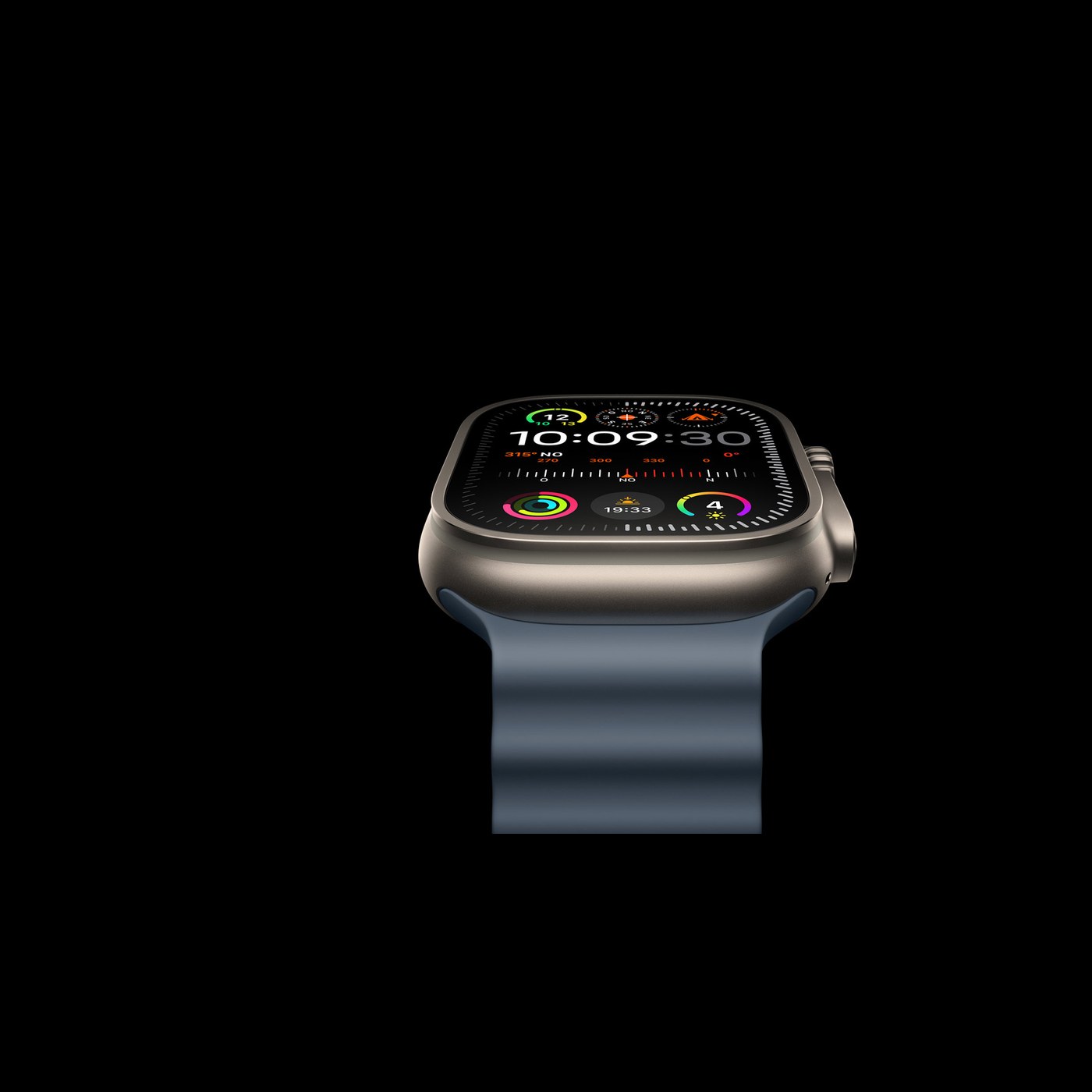
| Display | Flat LTPO3 OLED, sapphire crystal, 422 x 514 px (326 ppi), 1,245 mm² active area, 1 to 3,000 nits, 1 Hz refresh |
| Chip | S10 dual-core 64-bit + 4-core Neural Engine, 64 GB storage |
| Battery life | 42 h normal use, 72 h Low Power Mode, ~16 to 20 h continuous GPS, USB-C charging to 80% in 45 min |
| GNSS | Dual-frequency L1 + L5 GPS (GPS, GLONASS, Galileo, QZSS, BeiDou) |
| Sensors | 3rd-gen optical heart rate sensor, ECG, blood oxygen, temperature, always-on altimeter, depth gauge, barometer, compass, high-g accelerometer, high dynamic range gyroscope, ambient light sensor |
| Mapping | Worldwide offline Maps with route creation, topographic maps (US national parks), Backtrack via compass |
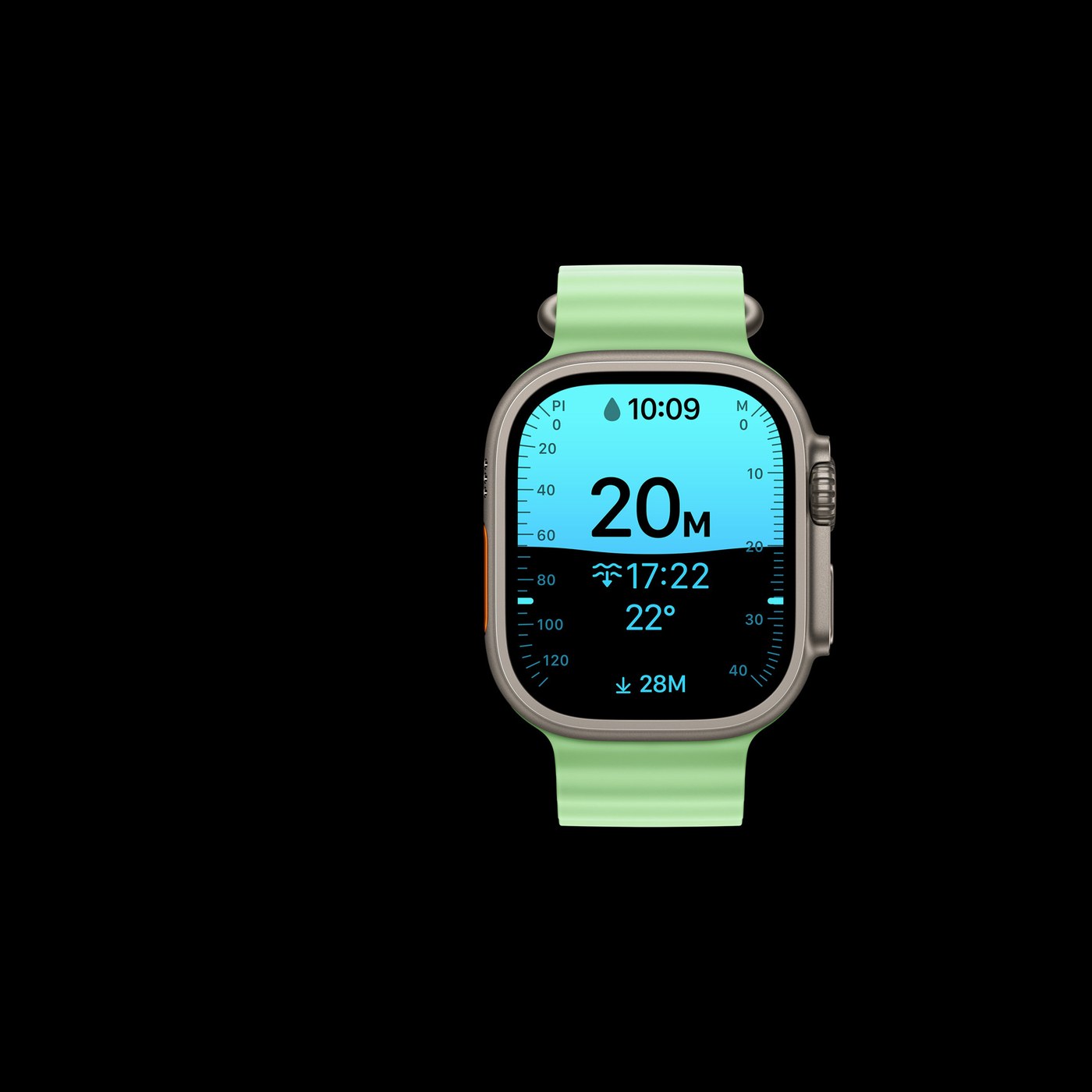
| Sport profiles | 50+ (running, running with a route, multisport, cycling, pool and open-water swimming, recreational diving to 40 m, skiing, hiking, HIIT, etc.) |
| Music storage | 64 GB internal, Apple Music, Spotify, Deezer, podcasts |
| Contactless payment | Apple Pay (NFC) |
| Water resistance | ISO 22810 to 100 m + recreational diving to 40 m (EN 13319) + IP6X dust + MIL-STD-810H |
| Connectivity | 5G RedCap + 4G LTE, Wi-Fi 4 (2.4 + 5 GHz), Bluetooth 5.3, 2nd-gen Ultra Wideband, satellite (SOS + Find My, 2 years free) |
| Compatibility | iPhone 11 or later, iOS 26 minimum (not compatible with Android) |
| Official price in France | €899 (apple.com/fr) |
Who is the Apple Watch Ultra 3 for?
The iPhone road runner who wants one watch for everything
If you run on the road 3 to 5 times a week and wear a smartwatch all day, the Ultra 3 simplifies your life. Notifications, contactless payment, music without your iPhone (64 GB), Apple Pay, ECG, sleep tracking with sleep apnea detection. No more charging two watches. Dual-frequency GPS gives you a clean track on your morning 10 km, even downtown between tall buildings. The 42-hour battery life covers 2 to 3 days of typical use with one run a day.
The intermediate trail runner committed to iOS
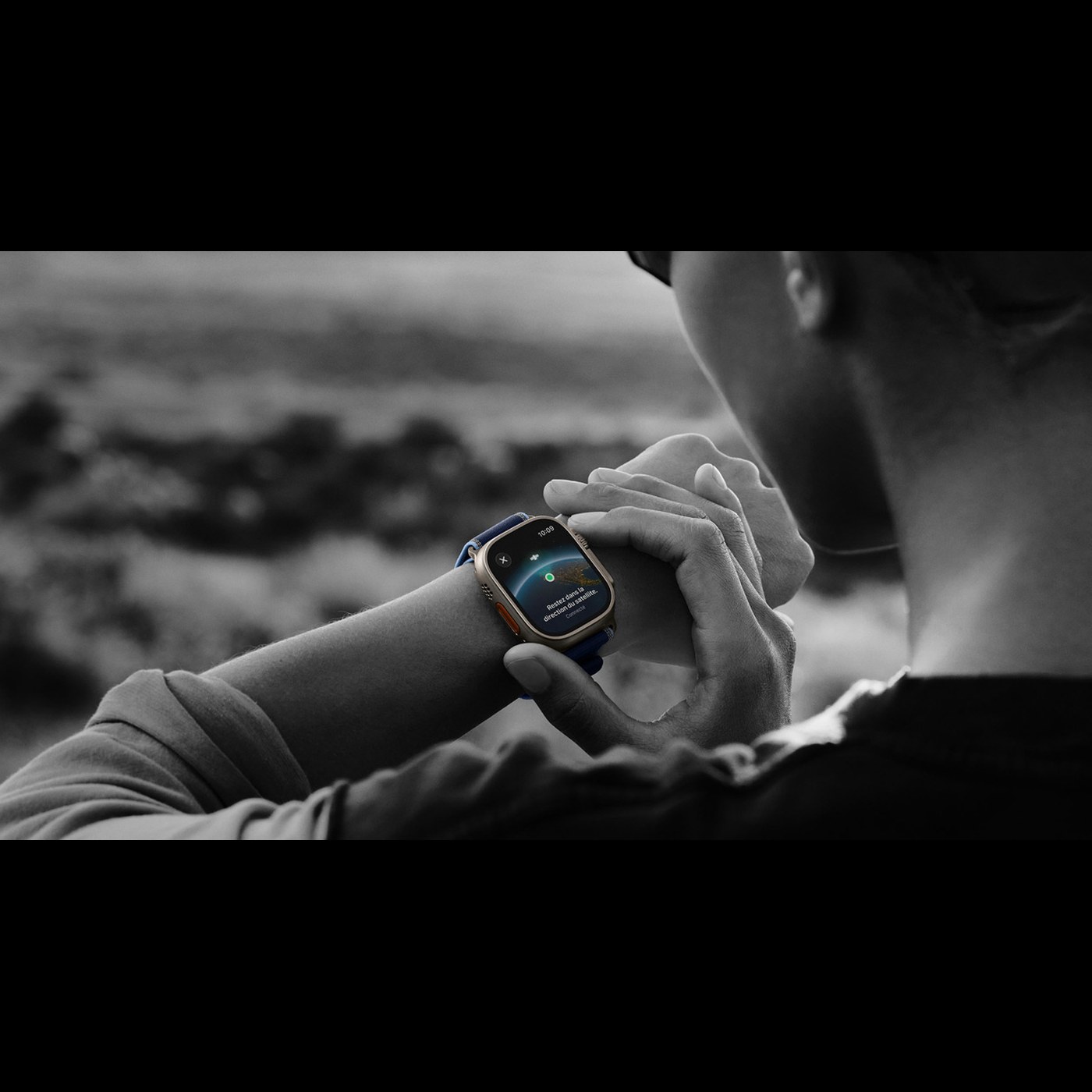
The outdoor mode with custom routes built from offline maps, Backtrack to find your way back to the start via the compass, the programmable Action button (lap, waypoint, quick app launch), MIL-STD 810H toughness and 100 m water resistance cover 4- to 6-hour mountain outings. Satellite connectivity is a real safety net in areas with no cell coverage. Battery life does hold it back, though: 16 to 20 hours of continuous GPS is enough for a 40 km trail race, but not for a 100 km ultra without a recharge along the way.
The short-course triathlete who needs all three disciplines
Built-in multisport mode (swim, bike and run transitions), automatic pool length tracking with stroke detection, SWOLF score, Bluetooth power meter support, bike power and cadence, accurate readings underwater. The Ultra 3 handles a Sprint, an Olympic and even a Half (5 to 6 h) starting from 100%. For a full Ironman, battery life gets tight: plan a quick charge in T2 (12 extra hours in 15 min) or switch to a Garmin Forerunner 970.
© Apple, official photo used for editorial purposes
GPS accuracy and heart rate sensor
This is where the Ultra 3 has truly moved forward. Dual-frequency L1 + L5 GPS now runs on every sport profile (not just in an optional high-accuracy mode), finally putting Apple on par with the premium benchmarks from Garmin and COROS.
Across 10 test runs in dense urban areas (central Paris, Hyde Park-Mayfair for long runs, Central Park), the GPS track was clean, with no drift between buildings. Independent lab measurements confirm a positioning error below one percent on a calibrated track, which puts the Ultra 3 at the top of its class. Automatic track mode detection still needs work (lap calculations are sometimes off), but in practice your track intervals come out with a consistent trace.
On the optical heart rate side, the 3rd-gen sensor still suffers from the classic wrist-based flaw: during sharp accelerations on short intervals (200 m, 400 m), the optical reading lags 5 to 10 seconds behind a Bluetooth chest strap. On steady tempo work and long runs, accuracy is good (average gap of 2 to 3 bpm versus the strap). The verdict is clear: if you do a lot of short intervals, a Polar H10 or Garmin HRM-Pro chest strap is still essential, even with the Ultra 3.
The medical-grade ECG on the wrist is a real Apple standout. You can record a sinus rhythm trace in 30 seconds by placing your finger on the crown. The Polar Vantage V3 has offered the same feature since 2023, but Apple Health integration remains smoother for long-term tracking and for sharing with a cardiologist.
Mapping and navigation
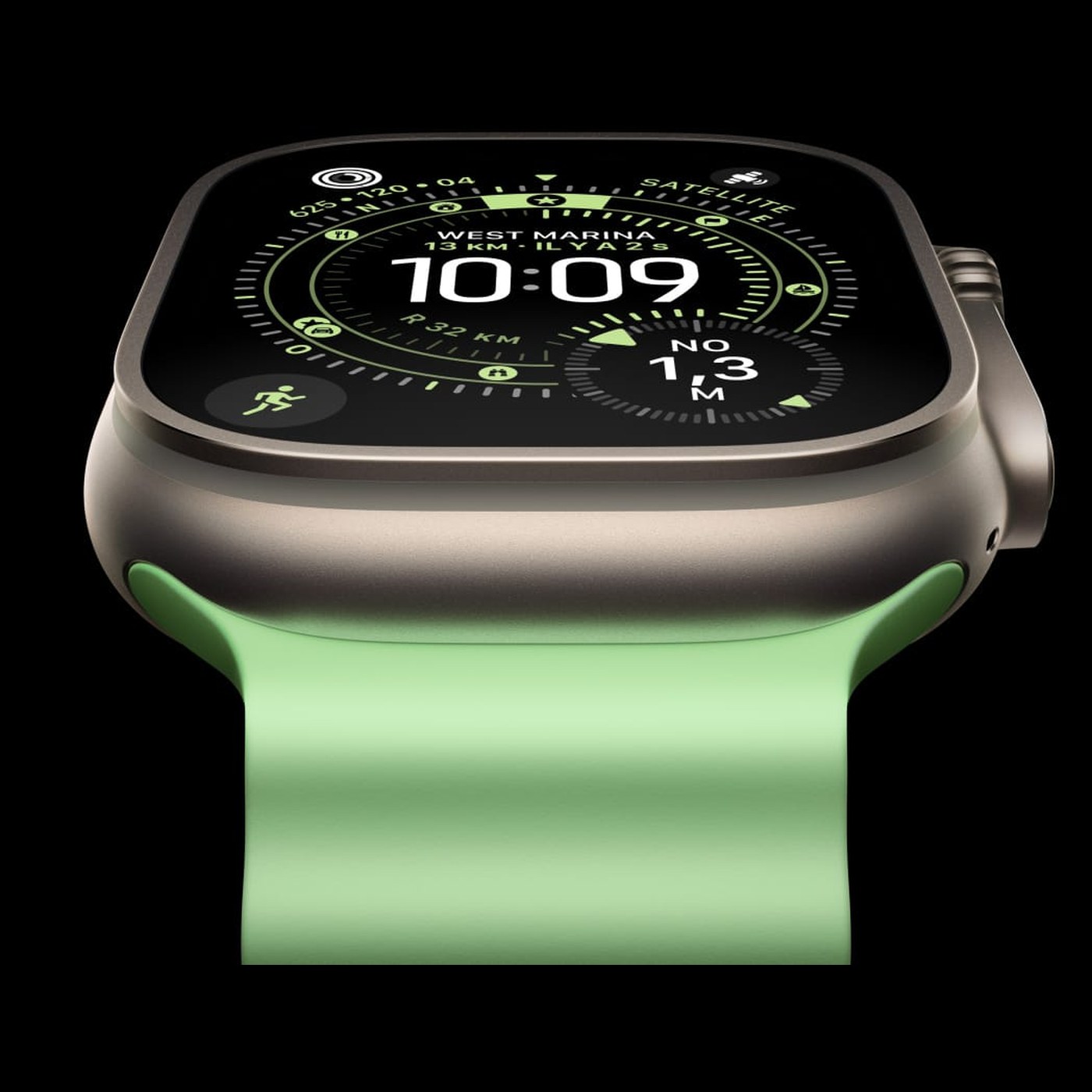
Apple lagged behind on sports mapping for a long time. With watchOS 26, it's catching up for real. You download offline maps through Maps (free), build a custom route directly from your iPhone or your watch, and follow it in real time with spoken turn-by-turn directions.
On the trails, mapping is still two notches below a Suunto Vertical 2 or a Forerunner 970. No built-in Strava Heatmaps (you have to go through the third-party Strava app), no 3D elevation view, no ClimbPro to anticipate climbs. Detailed topographic maps of national parks are only available in the United States.
Backtrack is still the smart tool for exploratory runs. Once enabled, it records your track and guides you back to the start via the compass, regardless of cell coverage or maps. On a 25 km run in the Fontainebleau forest, the Ultra 3 got us back flawlessly via an alternative path after a wrong turn.
© Apple, official photo used for editorial purposes
Training and recovery metrics
watchOS 26 closes Apple's long-standing gap on advanced metrics. You now get:
- VO2 max estimated at the wrist and updated after every run (accurate enough to track month-to-month progress, not for an absolute comparison with a lab test).
- Training Load with effort tracking over a rolling 7 days and overload alerts.
- Customizable heart rate zones (5 zones by default, manually adjustable).
- Sleep score with stages (light, deep, REM) and sleep apnea detection over 30 days.
- Hypertension notifications that analyze blood pressure over 30 days (new in watchOS 26).
- Workout Buddy, the built-in AI coach that gives you spoken feedback during your workout (motivation, splits, zones).
- Stride length, ground contact time, cadence, running power and vertical oscillation straight from the wrist, with no external sensor.
Compared with Garmin Connect or COROS EvoLab, the Apple Health ecosystem still gives demanding runners fewer numbers. There's no morning Training Readiness equivalent (Vitals shows trends, but no score). No built-in adaptive training plans like Garmin Running Coach or COROS Race Predictor. Apple relies more on third-party apps (Strava, TrainingPeaks) for these features.
Real-world battery life
Apple claims 42 hours of normal use. Here's what we got over 6 weeks of testing:
- Everyday use with sleep tracking, 1 run of 60 minutes a day and notifications on: 38 to 42 real hours, or ~1.5 to 2 days between charges.
- Low Power Mode (less frequent refresh, no always-on display): 65 to 72 hours, in line with the claim.
- Continuous GPS only, always-on screen off: 16 to 20 hours, enough for a short ultra trail (UTMR 38 km) but tight for a 100 km without an external battery.
- Continuous GPS + always-on display: 12 to 14 hours, so be careful on long runs.
Fast USB-C charging helps a bit: 15 minutes on the charger gives you 12 hours of normal use. Handy for a quick boost before a long run.
The battery verdict is still clear: you're one notch behind a COROS Pace Pro (20 days daily use / 38 h GPS All Systems at €349) and two notches behind a COROS APEX 4 (24 days daily use / 65 h GPS All Systems at €499). If battery life is your top priority, the Ultra 3 isn't the right pick.
How it stacks up against the competition
Apple Watch Ultra 3 vs Garmin Forerunner 970: this is the premium showdown of 2026. The Forerunner 970 (€749) stays ahead on battery life (15 days daily use / 21 h multi-band GPS), preloaded TopoActive Europe maps, ClimbPro, and a Garmin Connect suite that gives demanding runners more numbers (Training Readiness, Race Predictor, adaptive daily suggestions). The Ultra 3 wins on the iOS ecosystem, medical-grade ECG, satellite connectivity and smartphone integration. It all comes down to your phone: Android → Forerunner 970. iPhone and you want just one watch → Ultra 3.
Apple Watch Ultra 3 vs Suunto Vertical 2: the expedition trail showdown. The Suunto Vertical 2 (€599) crushes the Ultra 3 on battery life (65 h GPS Performance / 110 h Ultra mode / 250 h Tour), the built-in tri-color LED flashlight, free worldwide offline topographic maps with Suunto Coach Heatmaps and Climb Guidance, and 10 ATM water resistance with a dive depth gauge. The Ultra 3 answers with the iOS ecosystem, 5G cellular, satellite connectivity and a constant smartphone link. For a self-supported 100 km ultra trail, the Vertical 2 stays ahead; for running plus an everyday life built around your iPhone, the Ultra 3 takes over.
Apple Watch Ultra 3 vs Polar Vantage V3: the heart rate showdown. The Polar Vantage V3 (€599) also offers medical-grade ECG, overnight SpO2, the Polar Flow physiology suite (Training Load Pro, Recovery Pro, Nightly Recharge) with no subscription, and longer battery life (10 days daily use / 43 h multi-band GPS Performance). The Ultra 3 answers with a far more complete connected ecosystem (notifications, payment, music, satellite), a screen 2 times brighter (3000 vs 326 nits of real usable brightness) and a much faster Apple S10 chip. If your focus is purely physiological heart rate tracking, the Vantage V3 is still the better pure choice. If you want health built into a connected everyday life, the Ultra 3 wins.
© Apple, official photo used for editorial purposes
How to use it with your RunMorph training plan
The Ultra 3 plugs into your RunMorph training plan through two bridges: Apple Health (syncing HRV, sleep and auto-detected runs) and Strava (automatic export of all your workouts). Your adaptive RunMorph plan pulls in your training data, weekly load, overnight heart rate variability and sleep quality to automatically adjust your upcoming sessions.
In practice, launch your RunMorph target pace from the Workout app (intervals, tempo, long run) and use the Action button for a precise start. The watch vibrates at every programmed interval change and shows both your target pace and your current pace. No need to look at your iPhone: everything is on your wrist. Once you're done, the Strava export happens automatically and your RunMorph plan picks up the session within minutes.
Handy hack: map the Action button to "Start next RunMorph session" with iOS Shortcuts. You then launch the day's workout with a single press, without digging through menus.
RunMorph Coach verdict
The Apple Watch Ultra 3 is the first Apple Watch that truly deserves the attention of a serious runner with an iPhone. Dual-frequency L1 + L5 GPS on every sport, an LTPO3 OLED you can read in full sun, 42-hour battery life and watchOS 26 with VO2 max and Workout Buddy finally close the long-standing gap on running fundamentals.
Who is it for? The iPhone runner who wants one watch for everything (sport + daily life + health + notifications + payment). Who should skip it? Android users (not compatible), ultra trail runners who need maximum battery life (it's still a notch behind Garmin and COROS), and runners who want the most quantified physiological metrics without a third-party subscription (Garmin Connect and COROS EvoLab are still more complete).
The €899 price is still high, but the Ultra 3 really does replace a running watch, a health watch and an everyday smartwatch. Think of it as a multi-purpose investment, not a pure running watch.
RunMorph score: 8.5/10
Key takeaways for your training
- The Ultra 3 is the first Apple Watch with dual-frequency L1 + L5 GPS active on every sport profile, with no setting to switch on manually.
- Real-world battery life of 16 to 20 hours of continuous GPS is enough for a 40 km trail race but gets tight on a 100 km ultra: plan a charge along the way if you're out longer.
- watchOS 26 brings VO2 max, Training Load, the Workout Buddy AI coach and Hypertension notifications: Apple's physiology suite now matches Garmin on the basics, without catching up with Training Readiness or Race Predictor.
- For short intervals (200 m, 400 m), keep a Bluetooth chest strap: the optical sensor still lags 5 to 10 seconds behind on sharp accelerations.
- Strictly iOS compatible (iPhone 11+, iOS 26+): no Android support, no third-party Bluetooth bridge for non-iPhone users.
© Apple, official photo used for editorial purposes