Ever since the Endorphin Elite 3 and its €320 IncrediRUN foam, Saucony has faced the question every high-mileage runner keeps asking: when do we get this supercritical TPEE foam for everyday training? The answer is called Paramount Max. It launches on July 1, 2026 at €200 and promises to bring super shoe technology to the masses without sacrificing durability.
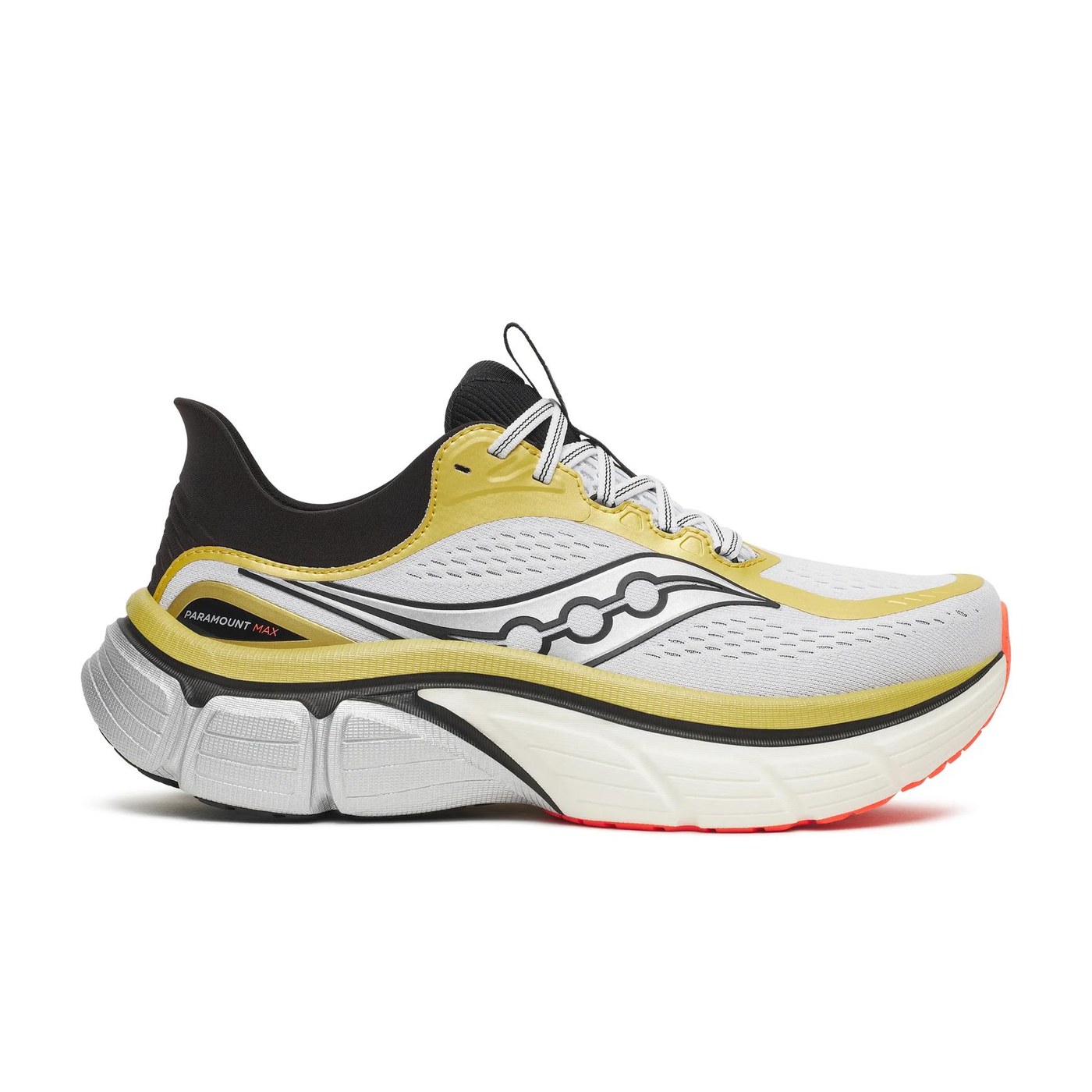
© Saucony, official photo used for editorial purposes
Saucony Paramount Max: champion foam for your long runs
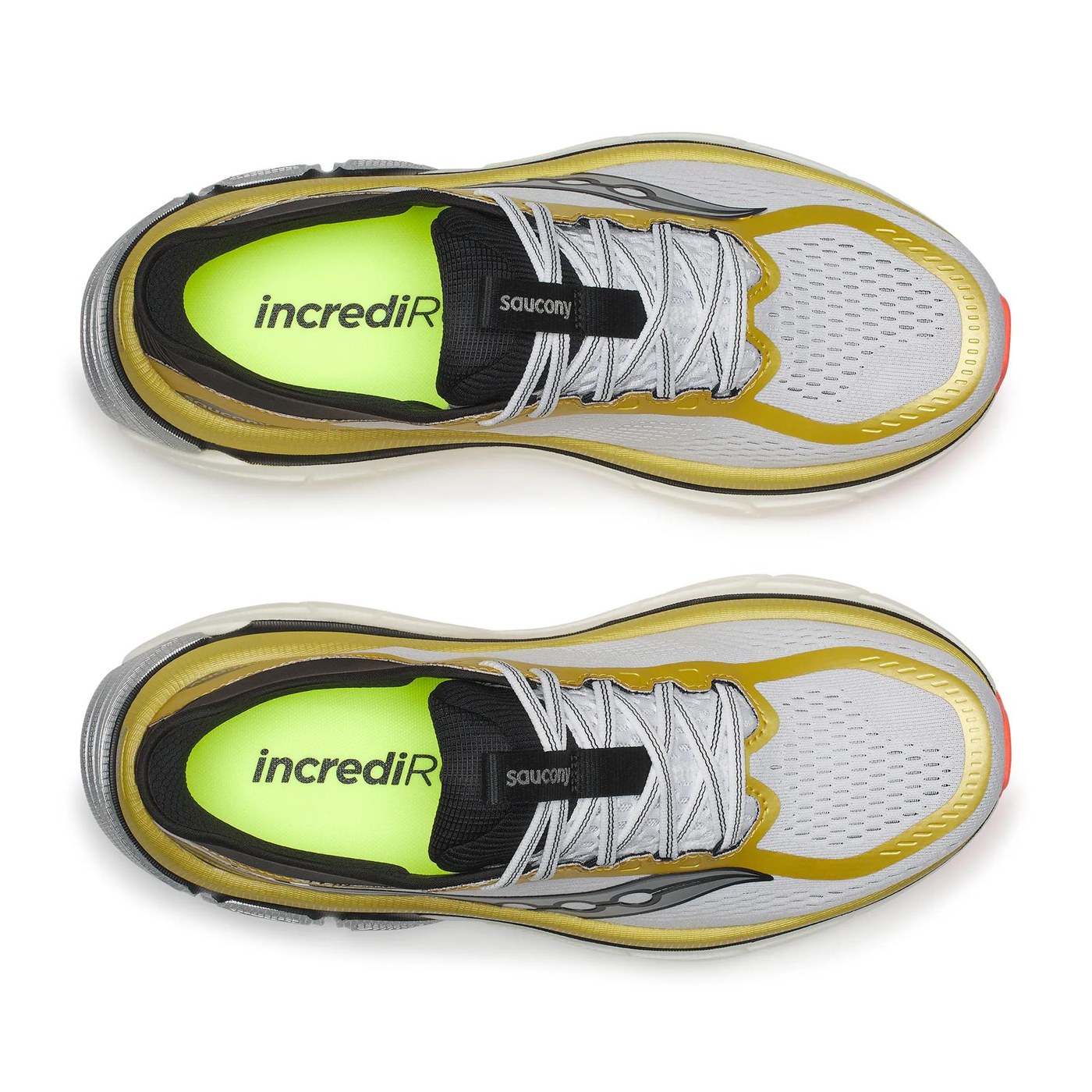
Saucony positions the Paramount Max as its first max-cushion super trainer. The concept is simple: take the IncrediRUN foam from its racing shoes, reformulate it 17% firmer so it holds up over thousands of kilometers, and put it on a 43 mm stack platform with a wider base for stability. The result is a shoe that bounces more than any of the brand's classic max-cushion models while keeping its cushioning over time.
In the Saucony lineup, the Paramount Max sits alongside the Triumph 24 (IncrediLUX, €200) and becomes the brand's go-to high-mileage shoe. It targets long-distance runners, people who run for therapeutic purposes, and anyone logging 50 to 80 km per week who needs cushioning that won't bottom out.
RunMorph's advice: If you're torn between the Paramount Max and the Triumph 24, remember that IncrediRUN is a generation ahead of IncrediLUX for bounce and durability. The Paramount Max keeps its bounce longer. On the other hand, if you run less than 40 km per week, the Triumph 24 at the same price remains the better return on your investment.
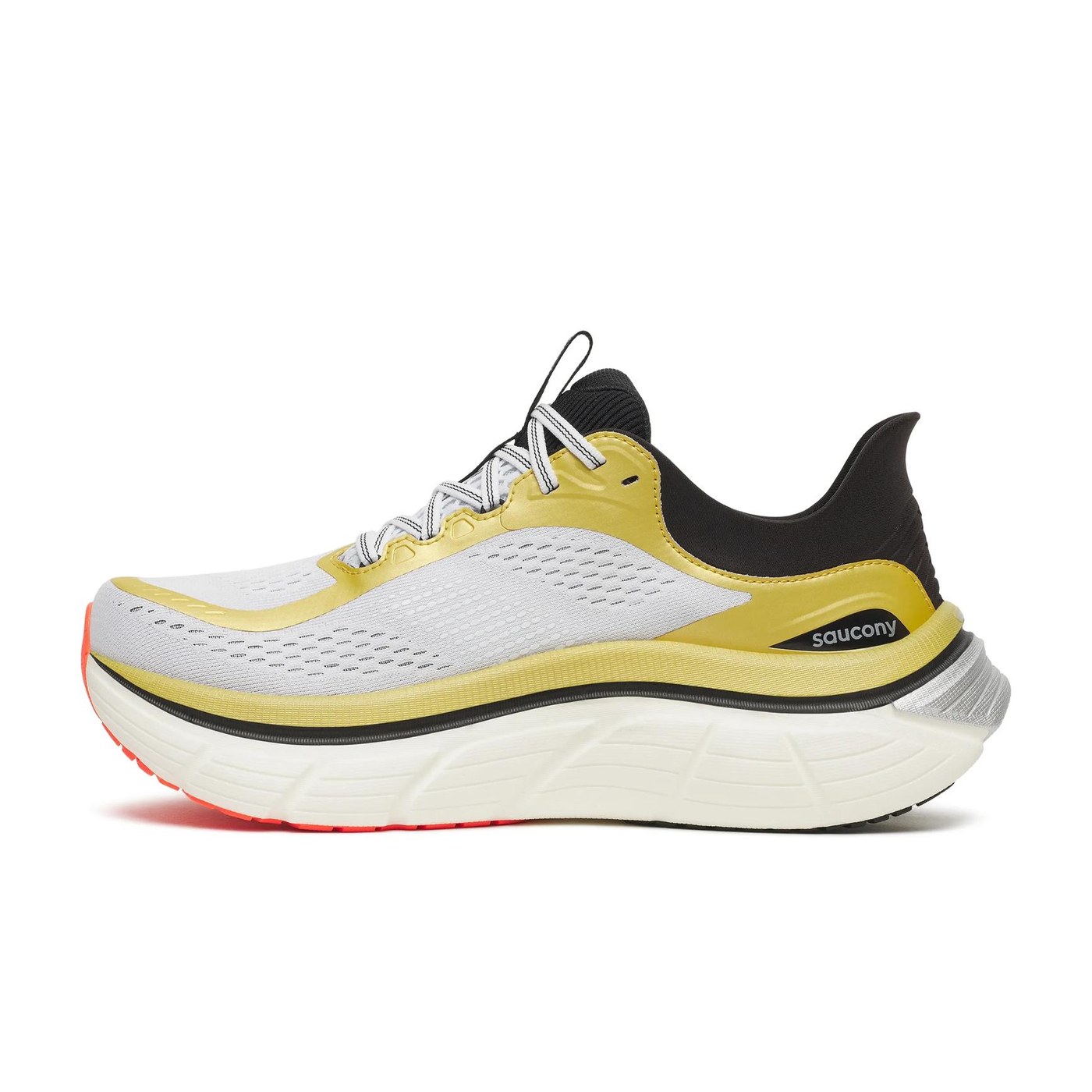
© Saucony, official photo used for editorial purposes
Who is the Saucony Paramount Max for?
The Paramount Max is a very specific shoe. It excels in one clear role and doesn't try to do everything.
The high-mileage runner training for an ultra or a marathon
YES: You log 50 to 80 km per week and want a long-run shoe that doesn't wear your legs out over the last 25 kilometers. Full-length IncrediRUN absorbs repeated impacts and still returns energy after 30 km. That's this shoe's biggest strength.
The runner in active recovery or with fragile joints
YES: The wide platform, high midfoot sidewalls and generous cushioning make the Paramount Max one of the few high-tech foam shoes that work with custom orthotics. It suits runners with sensitive tendons, temperamental knees or a history of overuse injuries.
The runner chasing speed or doing intervals
NO: At 302 g and 43 mm of stack height, it's clearly a mileage tool, not a speed tool. For 10x1000 m or a demanding tempo run, the Endorphin Speed 5 (235 g, PWRRUN PB with a nylon plate) is the right tool. The Paramount Max feels flat at paces faster than 4:30/km.
IncrediRUN outside racing shoes: what does it really change?
IncrediRUN is a supercritical TPEE (thermoplastic polyester elastomer), expanded under pressure to create closed cells with high energy density. In the Endorphin Elite 3, this foam is tuned for maximum performance: very soft, very responsive, but less suited to a daily training rotation.
For the Paramount Max, Saucony reworked the formula to make it 17% firmer. In practice, you feel less of the racing version's trampoline effect, but you gain durability (the bounce lasts for thousands of kilometers) and stability (the base doesn't collapse under a strong medial load). Independent measurements confirm that the Paramount Max keeps most of its stack height after 500 km of use.
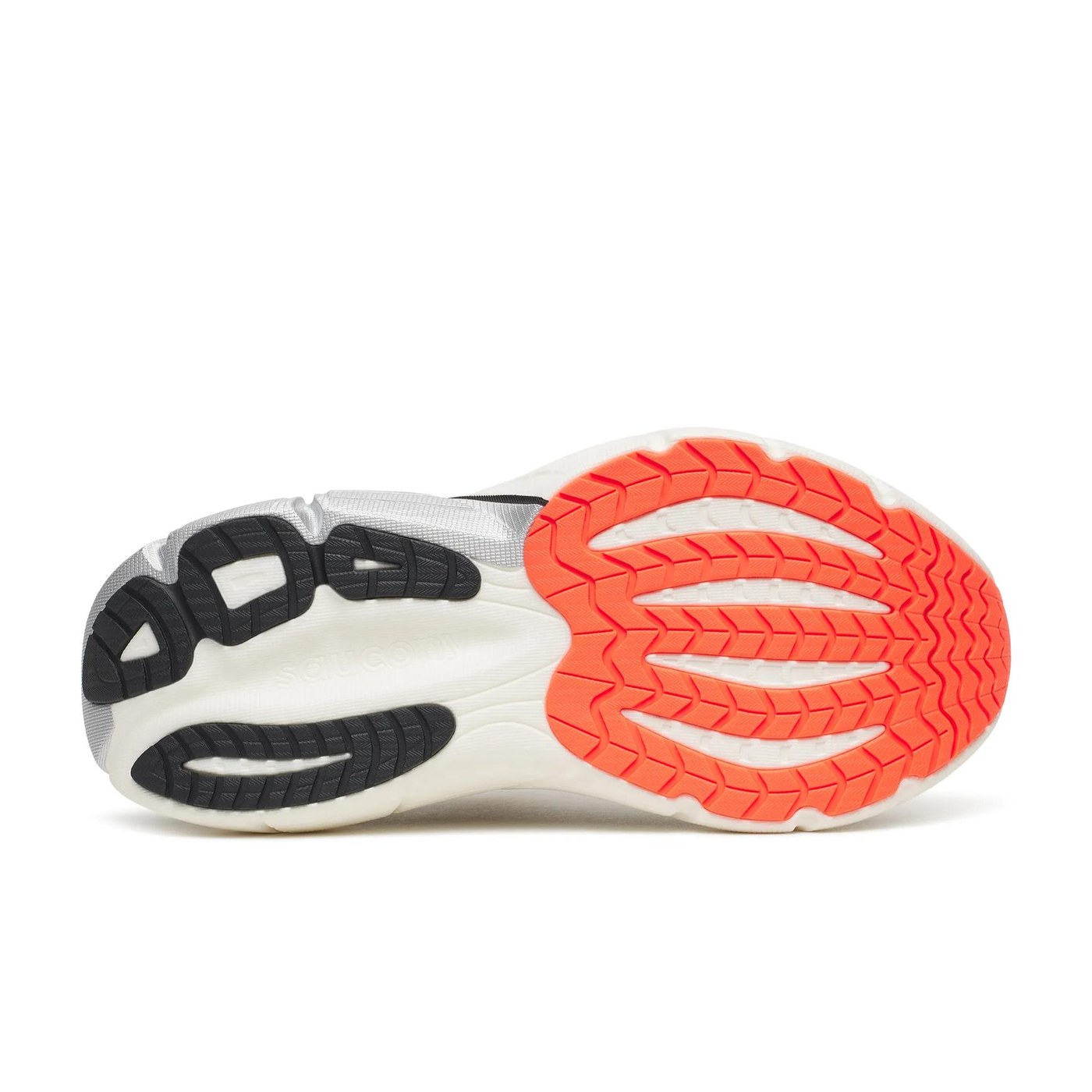
© Saucony, official photo used for editorial purposes
On the road: tested at different paces
At RunMorph, we tested the Paramount Max across paces from 5:15 to 6:30 per kilometer, on long runs (18 to 32 km) on paved roads.
At 6:00 to 6:30/km (recovery run): This is where the Paramount Max shines. The transition is buttery smooth, the bounce is noticeable without being aggressive, and the upper wraps the foot comfortably with no pressure. Over 2 h at an easy pace, your legs finish less tired than in a Triumph 24 or a Hoka Bondi 9.
At 5:15 to 5:45/km (easy aerobic running): The Paramount Max holds this pace well. It doesn't resist gradual acceleration, but you feel the 302 g as soon as you try to pick up the pace. The transition gets lazier beyond 5:30.
Faster than 5:00/km (tempo and intervals): Not its thing. The foam is too plush for this kind of effort. If your RunMorph training plan includes demanding tempo blocks, keep the Paramount Max for mileage runs and pick a more responsive shoe for fast sessions.
Pros
- IncrediRUN technology within reach (vs. €320 on the Elite 3)
- 43 mm of stack height for exceptional long-distance comfort
- Works with custom orthotics (wide base, deep footbed)
- Good foam durability over time
- Soft, airy upper, anatomical heel with no irritation
Cons
- 302 g: among the heaviest in the super trainer segment
- Not very responsive faster than 5 min/km, best kept for mileage
- €200 for a plateless daily trainer, up against the Triumph 24
- Wide platform: less suited to narrow feet
Paramount Max vs. Triumph 24 vs. Bondi 9 vs. Glycerin Max 2: the comparison
The Paramount Max lands in an already crowded segment. Here's how it stacks up against its direct rivals.
The Paramount Max is the only shoe in this group to use a racing-grade supercritical TPEE foam. The Hoka Bondi 9 is lighter and slightly cheaper, but its supercritical CMEVA is less lively. The Glycerin Max 2 has the tallest stack but weighs 318 g and feels less responsive. The Triumph 24, at the same price, is more versatile (8 mm drop, lower weight) but lacks the next-generation IncrediRUN foam.
How to fit the Paramount Max into your RunMorph training plan
The Paramount Max slots naturally into long-distance plans: marathon, high-volume half marathon, runnable trail or ultra. Make it your go-to shoe for every long run and active recovery run.
In a well-built shoe rotation, the Paramount Max covers runs of 15 km and up at a moderate pace (slower than 5 min/km). For intervals and tempo runs, use the Endorphin Speed 5. For marathon racing, the Endorphin Elite 3 takes over.
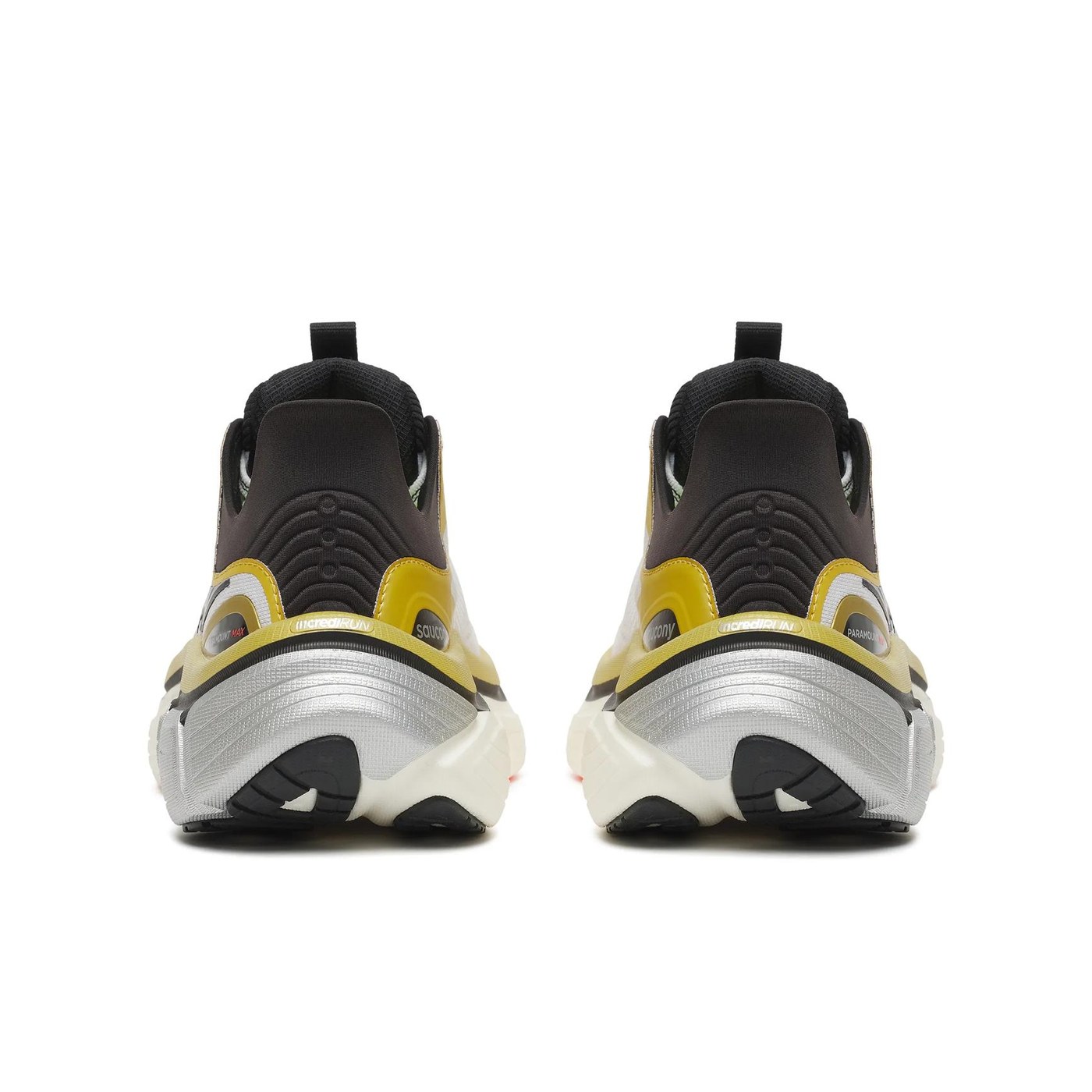
© Saucony, official photo used for editorial purposes
Key takeaways for your training
- Reformulated IncrediRUN: super shoe foam, tuned 17% firmer to last thousands of kilometers of daily training.
- 43 mm of stack height and a 6 mm drop: maximum comfort for long runs, with a transition helped by the sole height.
- Orthotic-friendly: the deep footbed and wide platform make it one of the few tech shoes that accept custom insoles.
- Not a speed shoe: keep it for paces slower than 5 min/km, easy runs, long runs and active recovery.
- Price positioning: at €200, the foam quality and expected durability justify it against the Bondi 9 or the Glycerin Max 2.
© Saucony, official photo used for editorial purposes