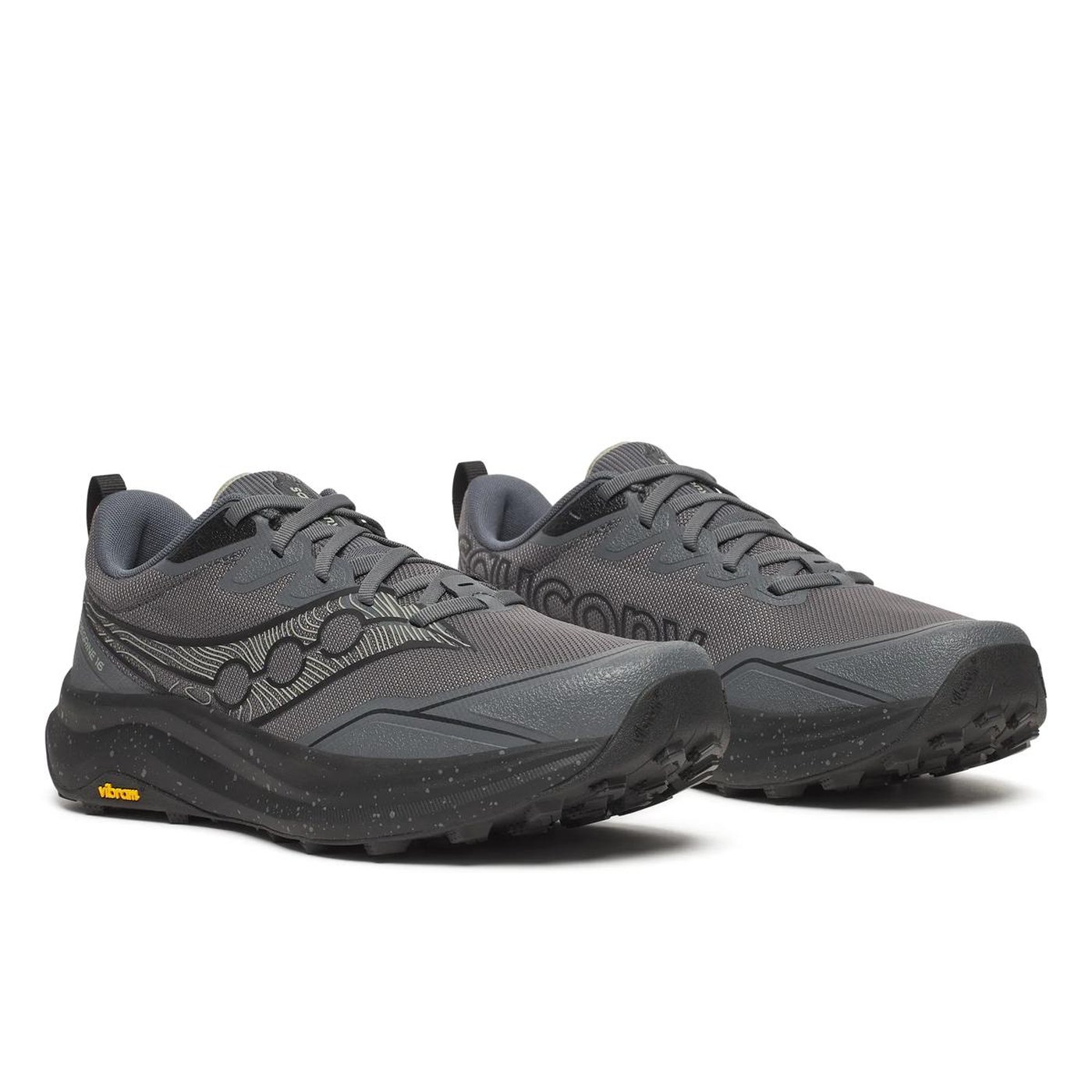
If you run technical trails, you probably know the Peregrine already. This season Saucony rolls out version 16, pairing a Vibram MEGAGRIP outsole with PWRRUN+ foam. Here's our coach's take, no detours.
Saucony Peregrine 16 Review: Technical Trail Shoe Goes PEBA
8/10
Saucony Peregrine 16: a versatile trail shoe that embraces technical ground
The Peregrine is one of the most iconic trail shoes on the market. Around since 2012, it has carried generations of runners over every kind of terrain: gravel paths, muddy singletrack, technical ultras. With version 16, Saucony stays true to its DNA: a shoe that really can do everything on the trails, from 10 km to 80 km.
As a coach, I recommend it to runners who want one pair to cover 90% of their trail running. The 16 doesn't reinvent the formula. It refines it: a slightly more rockered geometry, a reworked Vibram MEGAGRIP outsole, and better comfort with no sacrifice in grip.
RunMorph's advice: the Peregrine 16 is not a road training shoe. If your mix includes more pavement, look at the Hoka Challenger 7 or the Salomon Sense Ride 5 instead. The Peregrine is built for trails. Period.
Objective technical data
Here are Saucony's official specs, along with measurements compiled by international testing labs:
- Drop: 4 mm
- Stack height: 24.5 mm forefoot / 28.5 mm heel
- Weight: 281 g (size 42)
- Foam: PWRRUN+ (expanded PEBA, higher energy return than standard PWRRUN)
- Lugs: 5 mm, Vibram MEGAGRIP outsole
- Upper: reinforced engineered mesh with an integrated rock guard
- Retail price: €150
The profile stays very low (28.5 mm at the heel), so you sit close to the ground, which is ideal for feel and technical precision. It's the opposite of a Hoka Speedgoat 7 or an Asics Trabuco Max 5, both far more maximalist.
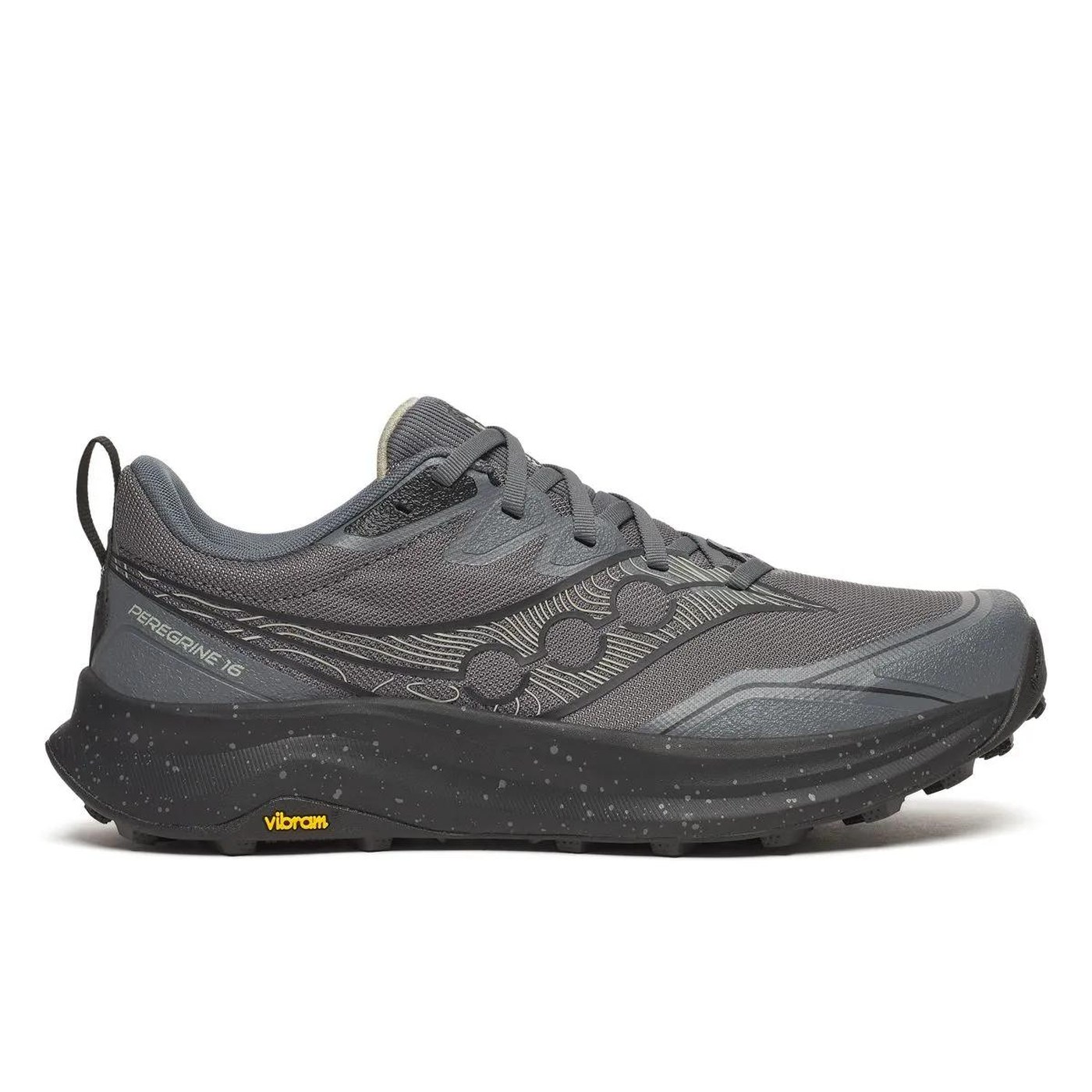
© Saucony, official photo used for editorial purposes
Vibram MEGAGRIP traction: the number one selling point
The outsole is where the Peregrine 16 really shines. Vibram MEGAGRIP is widely regarded as the most versatile rubber compound on the market today: excellent on wet rock, roots and greasy mud. The 5 mm lugs sit in multidirectional chevrons, giving you traction on the climbs and braking power on the descents.
International testing labs measure a wet-surface grip coefficient among the best in the category, on par with a Salomon Speedcross 6, but with greater versatility on mixed terrain (dry and wet).
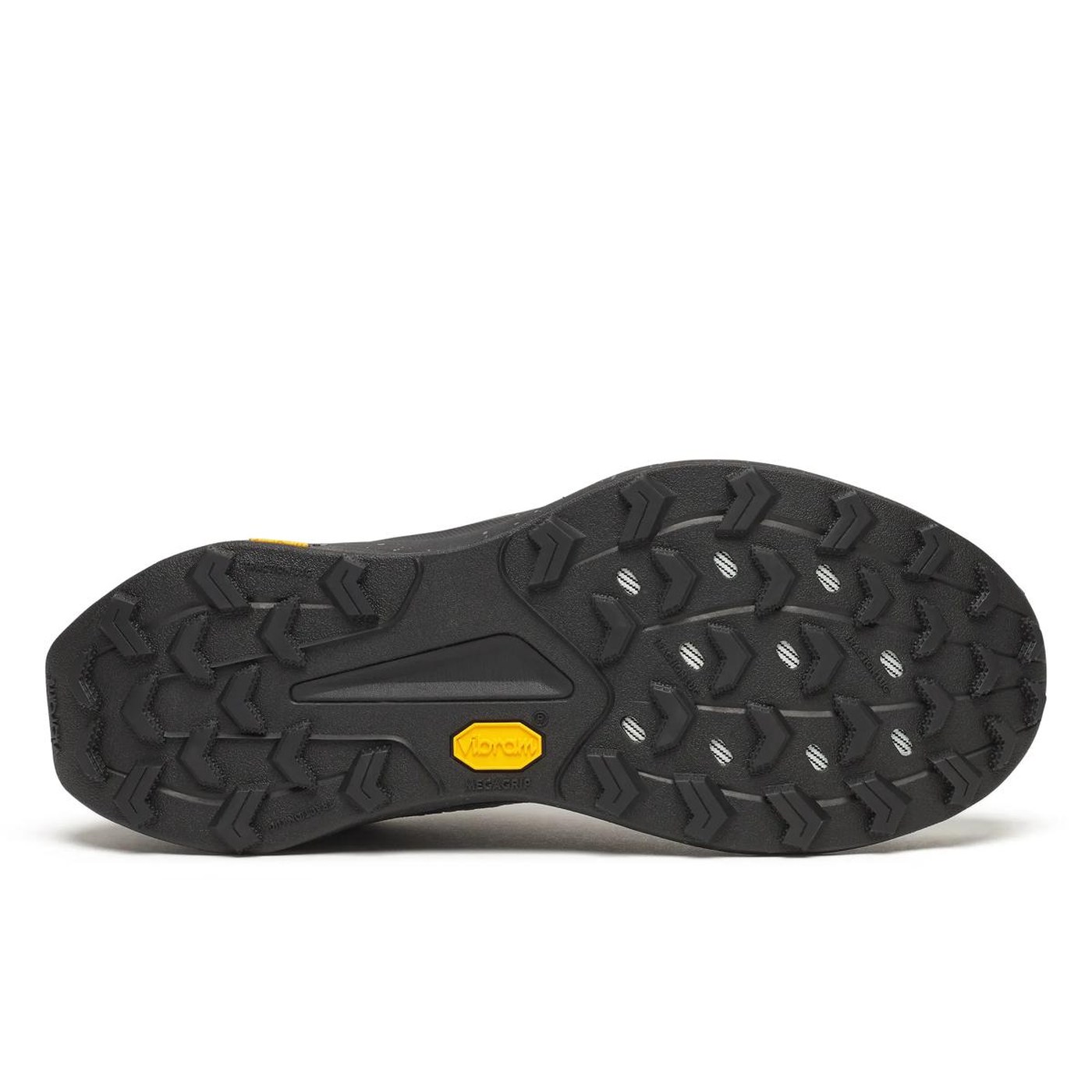
© Saucony, official photo used for editorial purposes
Who is the Peregrine 16 for?
The all-around trail runner (target #1)
If most of your running happens on trails (singletrack, long-distance hiking routes, technical alpine paths), the Peregrine 16 is probably the best single purchase for your trail training. Low drop, exceptional grip, reasonable weight: it's all there.
The runner who wants ground feel (target #2)
With a stack height of just 28.5 mm, the Peregrine 16 keeps you close to the ground. If you dislike the "armchair" ride of Hoka's maximalist shoes, you'll love the precise ground feel of the Peregrine, especially on technical descents.
The short to mid-distance trail racer (target #3)
For races up to 50 km on technical terrain, the Peregrine 16 gets the job done without flinching. Beyond that (ultra distance), many runners prefer a more protective shoe such as a Speedgoat 7 or a Hoka Tecton X 3.
Comparison: Peregrine 16 vs. the competition
Here's how the Peregrine 16 stacks up against its main rivals in the technical trail segment:
- vs Salomon Speedcross 6: the Speedcross is more of a soft-ground specialist (longer, more aggressive lugs). The Peregrine 16 is more versatile on mixed dry and wet terrain.
- vs Hoka Speedgoat 7: the Speedgoat is far more maximalist (35 mm at the heel vs 28.5). More protective for ultras, but a completely different feel underfoot.
- vs La Sportiva Prodigio 2: the Prodigio is snappier on climbs, and pricier. The Peregrine 16 offers better value for money.
- vs Salomon Sense Ride 5: the Sense Ride leans toward road-to-trail versatility. The Peregrine 16 is pure trail.
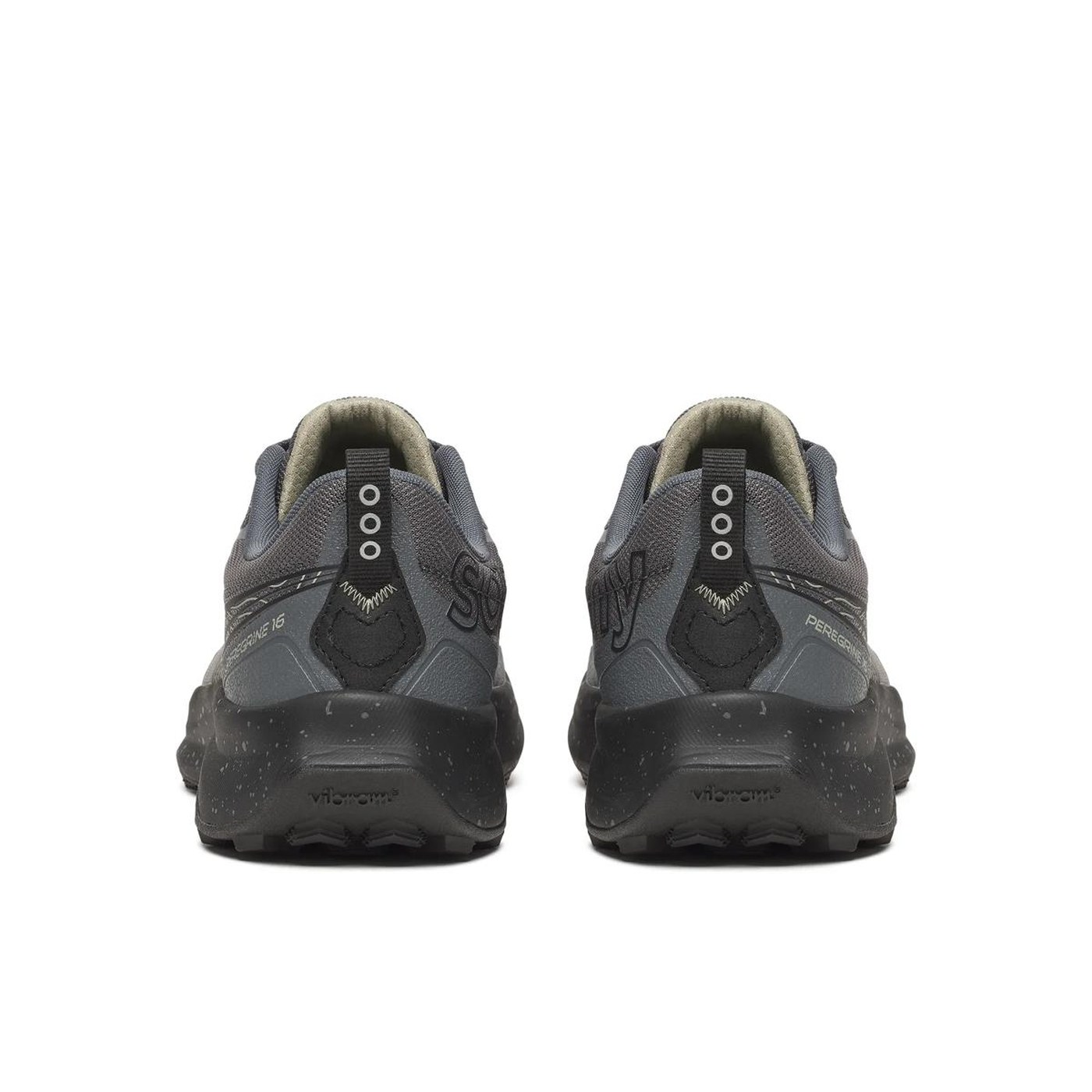
© Saucony, official photo used for editorial purposes
How to fit it into your RunMorph training plan
Here's how I recommend using this shoe in your trail preparation:
- Technical trail long runs (1:30 to 4 hours): this is its natural playground. The grip keeps you secure through technical sections, and the PWRRUN+ foam goes the distance.
- Trail-specific sessions (hill repeats, technical descents): forefoot precision and grip let you push hard on the climbs and brake with confidence on the way down.
- Trail races up to 50 km: reasonable weight, stability, grip. An excellent balance between speed and comfort.
- Avoid: easy runs in town (the lugs wear fast on pavement) and ultras over 80 km (pick a more protective shoe).
If you're preparing for a technical trail race or a demanding off-road event, bring the Peregrine 16 into your RunMorph training plan from the elevation-adaptation phase onward. Trail running mechanics (landing on unstable ground, constant work for the stabilizer muscles) take weeks of training in the right gear if you want to avoid ankle and plantar fascia injuries.
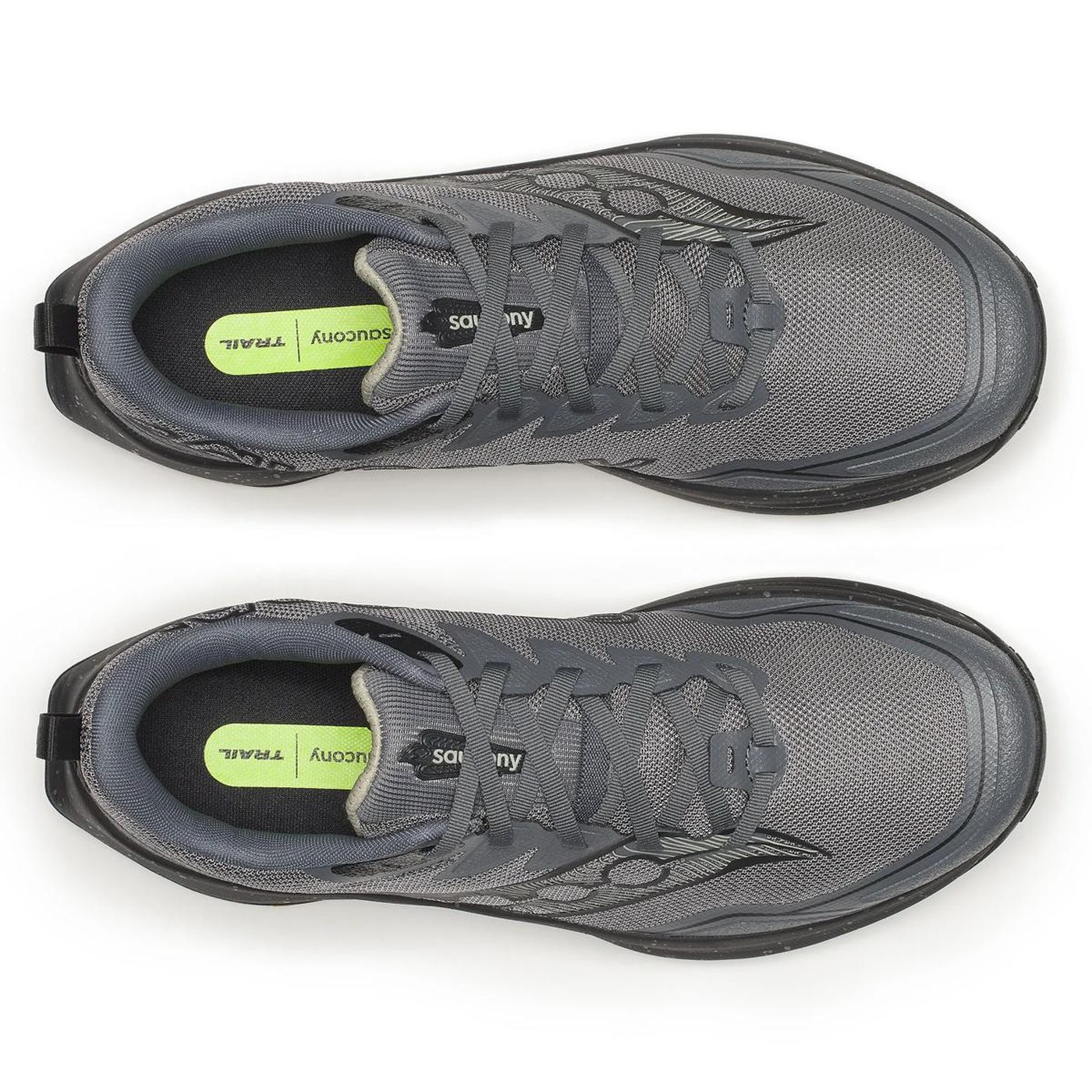
© Saucony, official photo used for editorial purposes
RunMorph coach verdict
The Peregrine 16 confirms what trail runners have known for 14 iterations: it's one of the most reliable shoes on the market. No technical gimmicks. It simply does what you expect it to do, at a reasonable price (€150). The new PWRRUN+ foam delivers a real gain in energy return over the 15, with no loss of stability.
It's probably the best buy of 2026 in the versatile technical trail category. If you're torn between a Salomon Speedcross and a Hoka Speedgoat, the Peregrine is the most balanced compromise.
Key takeaways for your training
- Versatile trail benchmark: exceptional grip plus technical precision
- Vibram MEGAGRIP: the best all-surface compound on the market
- Low drop (4 mm) and moderate stack height: precise ground feel, ideal for technical descents
- PWRRUN+ foam: better energy return than version 15
- Limitation: not suited to road easy runs or very long ultras
- Excellent value for money at €150