August 8, 2026Skechers GoRun Ride 12 Review: The Full RunMorph Test
8/10
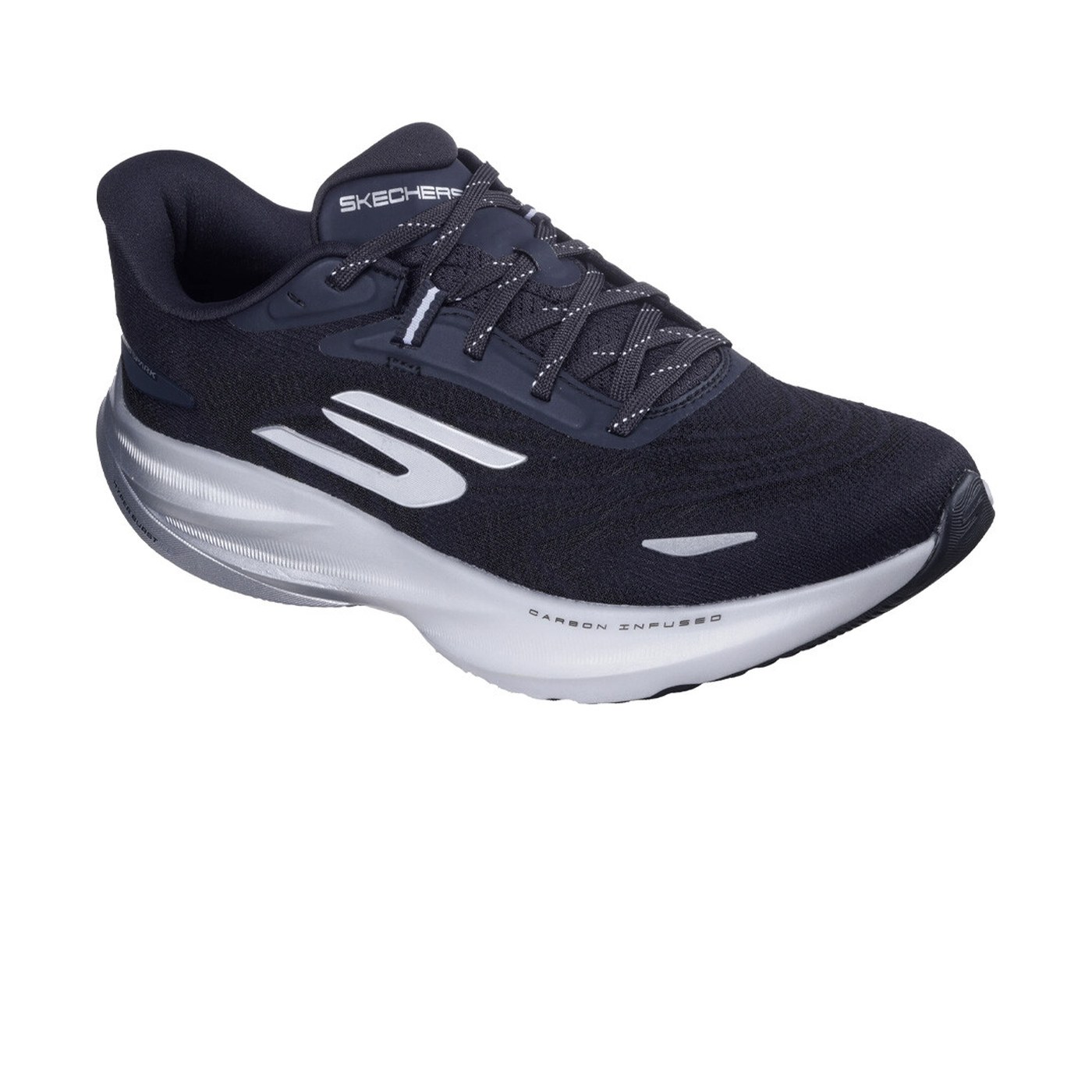
Skechers is the brand of office comfort and memory-foam insoles for Sunday strolls. Except that for several generations now, its Performance division has been taking running seriously, to the point of putting a carbon plate in a training shoe that sells for half the price of a premium daily trainer. The GoRun Ride 12 (sold as the Aero Spark by some European retailers) is the latest chapter in that story. RunMorph put it to the test to see whether the promise holds up on the road, beyond the marketing pitch.
© Skechers, official photo used for editorial purposes
The essentials in three sentences
The Skechers GoRun Ride 12 is a 275 g neutral daily trainer with an integrated carbon plate (H-Plate) and Hyper Burst Ice foam, which give it a livelier feel than the average mainstream training shoe. It targets regular runners who want comfortable cushioning with a bit of pop underfoot, without paying for a premium model. It largely delivers on comfort and responsiveness, with reservations about lateral support and long-term durability, which nobody in France had tested until now.
8
/ 10 · RunMorph overall score
Who is it for?Regular runners who string together easy runs and long runs, want soft cushioning with a bit of spring, and want to step off the beaten Nike-Hoka-Asics path without breaking the bank.
Who should skip it?Runners with wide feet who need firm lateral support, or anyone looking for a proven running shoe with a durability record documented over several hundred kilometers.
Skechers and running: the brand nobody expects
Skechers first brings to mind a mass-market image: memory-foam insoles, instant comfort, affordable prices at big-box sporting goods stores. Not exactly the résumé you'd expect from a brand capable of releasing a carbon-plated running shoe. Yet the Skechers Performance division has been working on it for more than a decade, with a GoRun line that has supported several elite runners (including Olympic medalist Meb Keflezighi) and a carbon range that has grown with each generation of the Speed and Razor models.
The GoRun Ride plays a different role in the lineup: it's the daily trainer, the everyday shoe, not the Sunday race flat. Bringing a carbon plate down to this entry-level segment is a telling choice. Skechers wants to prove its technology isn't reserved for a handful of showcase models, even if that means selling it at a price that, on paper, stays below the premium daily trainers from running's heritage brands.
The result calls for nuance from the start: a carbon plate in a mainstream training shoe doesn't do the same job as in a racing shoe. The goal here isn't to set a PR, but to make everyday runs a little snappier without sacrificing comfort. That specific promise is what we're judging, not the promise of a record-chasing shoe.
GoRun Ride 12 specs: what changes underfoot
| Spec | Value |
|---|
| Brand | Skechers Performance |
| Model | GoRun Ride 12 (Aero Spark in Europe) |
| Type | Road, neutral daily trainer |
| Drop | 6 mm |
| Stack height (forefoot / heel) | 30 mm / 36 mm |
| Weight (standard size) | 275 g |
| Plate | Carbon-infused H-Plate (forefoot) |
| Foam | Hyper Burst Ice (dual density) |
| Outsole | Goodyear Performance |
| Insole | Removable Arch Fit |
| Recommended distance | Easy runs to long runs |
| Official price | Around €140 |
The number that stands out is the weight: 275 g for a shoe with a carbon plate and dual-density foam sits at the lower end of the daily trainer category, helped by a deliberately minimalist mesh upper. The 6 mm drop and 30/36 mm stack height give the GoRun Ride 12 a classic modern trainer geometry, neither too flat nor overly maximalist.
Hyper Burst Ice, H-Plate and Hyper Arc: what does the tech really change?
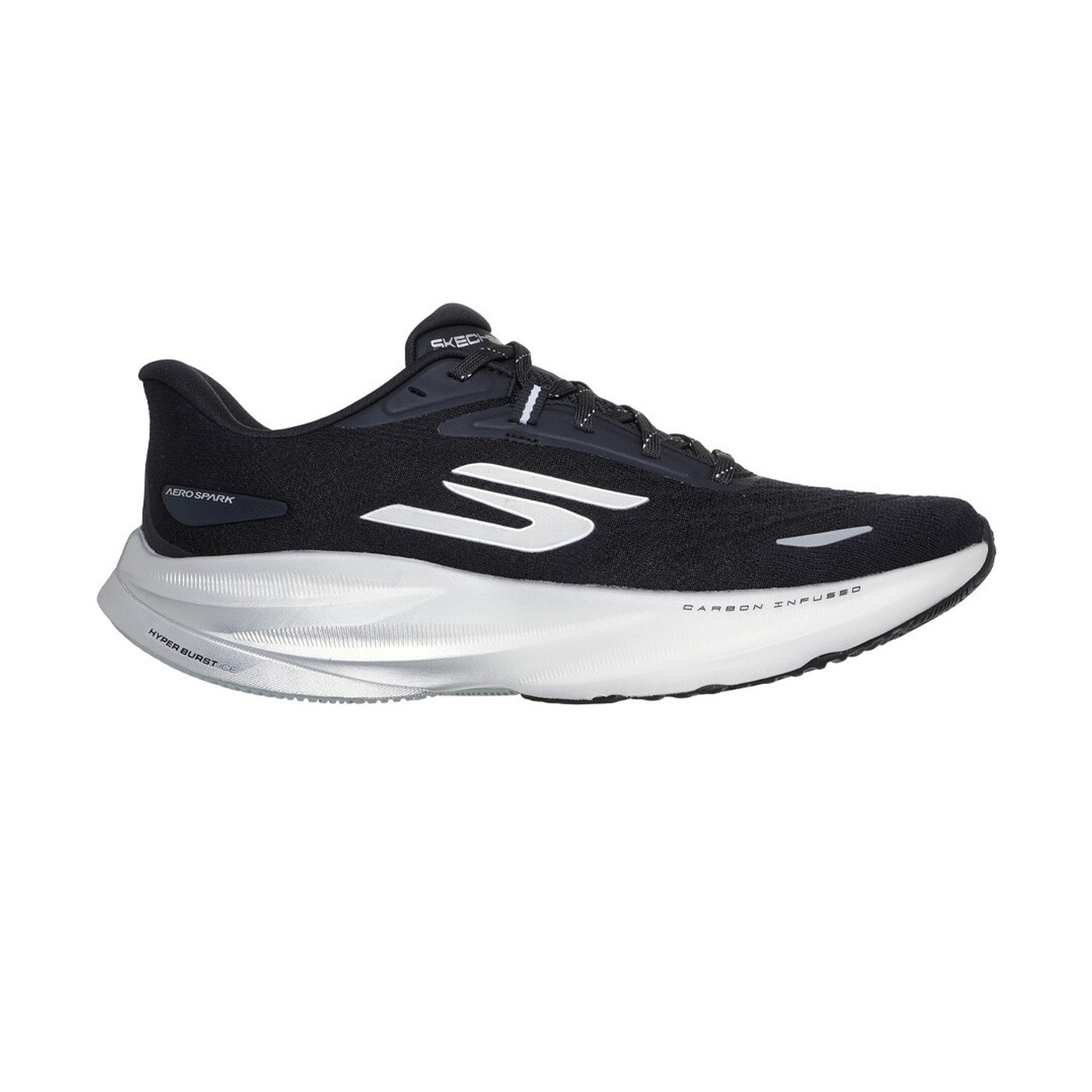
Three technologies share the space underfoot. Hyper Burst Ice foam builds on the classic Hyper Burst concept (an expanded closed-cell EVA foam already used in Skechers walking shoes), but in dual density: softer against the foot, firmer near the outsole to avoid the "sponge" effect typical of very soft foams. At RunMorph, we found that signature feel: a plush landing on the first step, which firms up slightly once your body weight transfers.
The H-Plate, a carbon fiber plate built into the forefoot, isn't trying to propel you the way it would in a racing shoe. Its job is to stiffen the transition and keep the soft foam from collapsing under the ball of the foot at toe-off. Combined with the Hyper Arc geometry (a rocker profile that guides your stride), it creates a "gliding" sensation at the end of each stride, more noticeable than on a plateless daily trainer like the previous version in the line.
On the road, this combination works better on brisk easy runs (5:00 to 5:30/km) than at a very slow jog. Slower than 6:00/km, the rocker fades and the shoe goes back to being a simple cushioned shoe, with no clear benefit from the plate.
© Skechers, official photo used for editorial purposes
The road test: from easy jogs to long runs
We tested it at paces ranging from 6:00/km (recovery runs) to 4:45/km (pickups at the end of a run), and the GoRun Ride 12 behaves consistently. It cushions the first kilometers well and stays stable up to 15-18 km. Then it starts to show the limits of its very thin mesh upper once fatigue sets in and your form breaks down slightly.
The fit is the biggest surprise. Unlike the "wide and comfy" image usually associated with Skechers, the GoRun Ride 12 has a forefoot on the narrow side, with little lateral support through the midfoot. Runners with slim feet will feel at home. If you have wide feet or a real need for stability, try it on before buying, or go up a size.
RunMorph's tip: use the GoRun Ride 12 for regular easy runs or long runs at a controlled pace rather than interval sessions. The carbon plate adds spring at toe-off, but the shoe has neither the stiffness nor the stability of a model like the New Balance Fresh Foam X 880v15 for sustained fast paces.
GoRun Ride 12 vs. New Balance Fresh Foam X 880v15: head to head
The comparison with the New Balance 880v15 is a natural one: same category (neutral daily trainer), same 6 mm drop, same target audience (runners who log kilometer after kilometer without chasing pure performance).
| Criterion | Skechers GoRun Ride 12 | New Balance 880v15 |
|---|
| Weight | 275 g | 274 g |
| Drop | 6 mm | 6 mm |
| Stack height (forefoot / heel) | 30 / 36 mm | 34.5 / 40.5 mm |
| Plate | Carbon (H-Plate) | None |
| Feel | Livelier, narrower | More enveloping, more stable |
| Price | Around €140 | €160 |
Livelier than the 880v15 thanks to its carbon plate, but less stable and less enveloping on very long runs. The 880v15 remains the safest pick if maximum comfort comes first; the GoRun Ride 12 is for runners who want a bit more pop without switching shoe categories.
Pros and cons
What we liked
- Carbon plate at a price rarely seen in the category
- Comfortable cushioning with no "sponge" effect
- Low weight (275 g) for a cushioned daily trainer
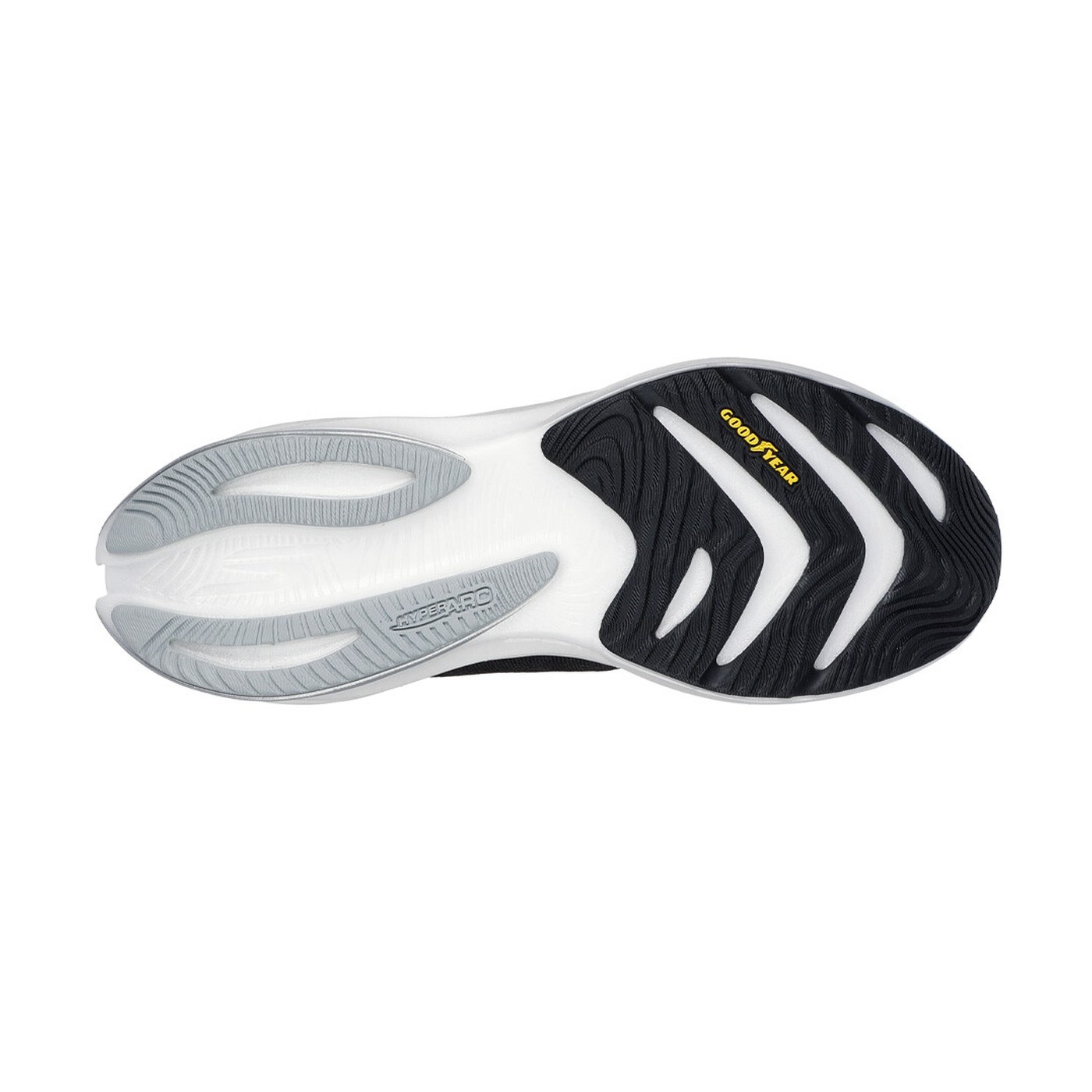
- Goodyear outsole with solid grip on dry and wet pavement
What we liked less
- Limited lateral support, narrow forefoot
- No durability track record in France (a brand rarely tested there)
- Rocker effect barely noticeable slower than 6:00/km
- Thin mesh upper, less protective in cold weather
© Skechers, official photo used for editorial purposes
Our take: who is the GoRun Ride 12 for?
Regular runners looking for their first carbon-plated shoe
Yes. This is the most honest selling point of the GoRun Ride 12: a taste of what a carbon plate feels like without shelling out €250 for a racing shoe. The effect is moderate, but real as soon as your pace drops below 5:30/km.
Runners with wide feet or who need stability
With reservations. The narrow forefoot and limited lateral support won't suit every foot shape. Try it on first, even more so than with most shoes in the RunMorph catalog.
Runners training for a marathon or half marathon
Yes, as a complementary training shoe. The GoRun Ride 12 fits the easy runs and moderate long runs of a training block, rotated with a stability shoe if needed.
To build the GoRun Ride 12 into a coherent training structure (rather than just grabbing it at random), head to the RunMorph training plans: the shoe naturally fits the easy runs and moderate long runs of a 10 km, half marathon or marathon build.
RunMorph Coach verdict
The Skechers GoRun Ride 12 delivers on a real technical promise at a price that, on paper, stays below competing premium daily trainers. The carbon plate isn't an empty marketing claim: you feel it at a brisk stride, and it doesn't turn the shoe into a record-breaking machine. The big question mark remains durability, which the French press has never documented for this specific model, along with the narrow fit that will rule out some runners.
RunMorph score: 8/10. A good choice for stepping off the beaten path of the big heritage brands, as long as your feet get along with a snug fit.
Skechers GoRun Ride 12 FAQ
Is the GoRun Ride 12 good for beginners?
Yes, if you're after comfortable cushioning for easy runs. You don't need an experienced stride to appreciate its carbon plate.
Does the GoRun Ride 12 run large or small?
The fit is on the narrow side in the forefoot. If you're used to wide shoes, consider going up half a size.
What's the difference between the GoRun Ride 12 and the previous version?
The Ride 12 introduces dual-density Hyper Burst Ice foam and the carbon H-Plate, two features missing from earlier generations of the Ride line.
Is the GoRun Ride 12 a good marathon shoe?
It's better suited to training (easy runs, moderate long runs) than to race day itself, since it isn't designed for pure performance.
Key takeaways for your training
- Affordable carbon plate: a technology usually reserved for racing shoes, built into a daily trainer here.
- Sweet-spot pace: the rocker and plate come through mainly between 4:45 and 5:30/km, less at slower paces.
- Try the fit before you buy: narrow forefoot, limited lateral support; wide feet should check first.
- Recommended use: easy runs and moderate long runs, alongside a stability shoe if needed.
- Solid value for money: the technology on offer is a good deal compared with equivalent premium daily trainers.