Wahoo launched its first GPS watch in November 2020, with a simple promise: automate triathlon transitions without a single button press mid race. Five years later, the brand has stopped making watches altogether, and its product page now redirects to Coros watches resold under its own banner. The ELEMNT RIVAL is still on sale at several French retailers, sometimes for less than half its launch price. Is it still worth buying in 2026? At RunMorph, we read every available test in full, cross checked the numbers, and made up our mind.
Wahoo ELEMNT RIVAL: automatic triathlon transitions and 53 g, the test of a watch Wahoo eventually discontinued
5.3/10
The essentials in three sentences
The Wahoo ELEMNT RIVAL automates natation, cycling and running transitions, a feature no Garmin or Coros watch offers in 2026. It weighs just 53 g and now sells for two to three times less than its launch price, but several independent reviewers found its optical heart rate sensor unreliable, and it offers neither maps nor structured training metrics. Wahoo has officially discontinued the line, and that weighs on the verdict just as much as the spec sheet.
5,3
/ 10 · RunMorph overall score
Who is it for?The triathlete already invested in Wahoo gear (a Kickr trainer, an Elemnt bike computer) who wants automatic transitions and an attractive second-hand price.
Who should skip it?Any runner who needs a heart rate sensor you can trust during intervals, real mapping, or structured training support for the long run.
Wahoo ELEMNT RIVAL: the triathlon watch its own maker ended up abandoning
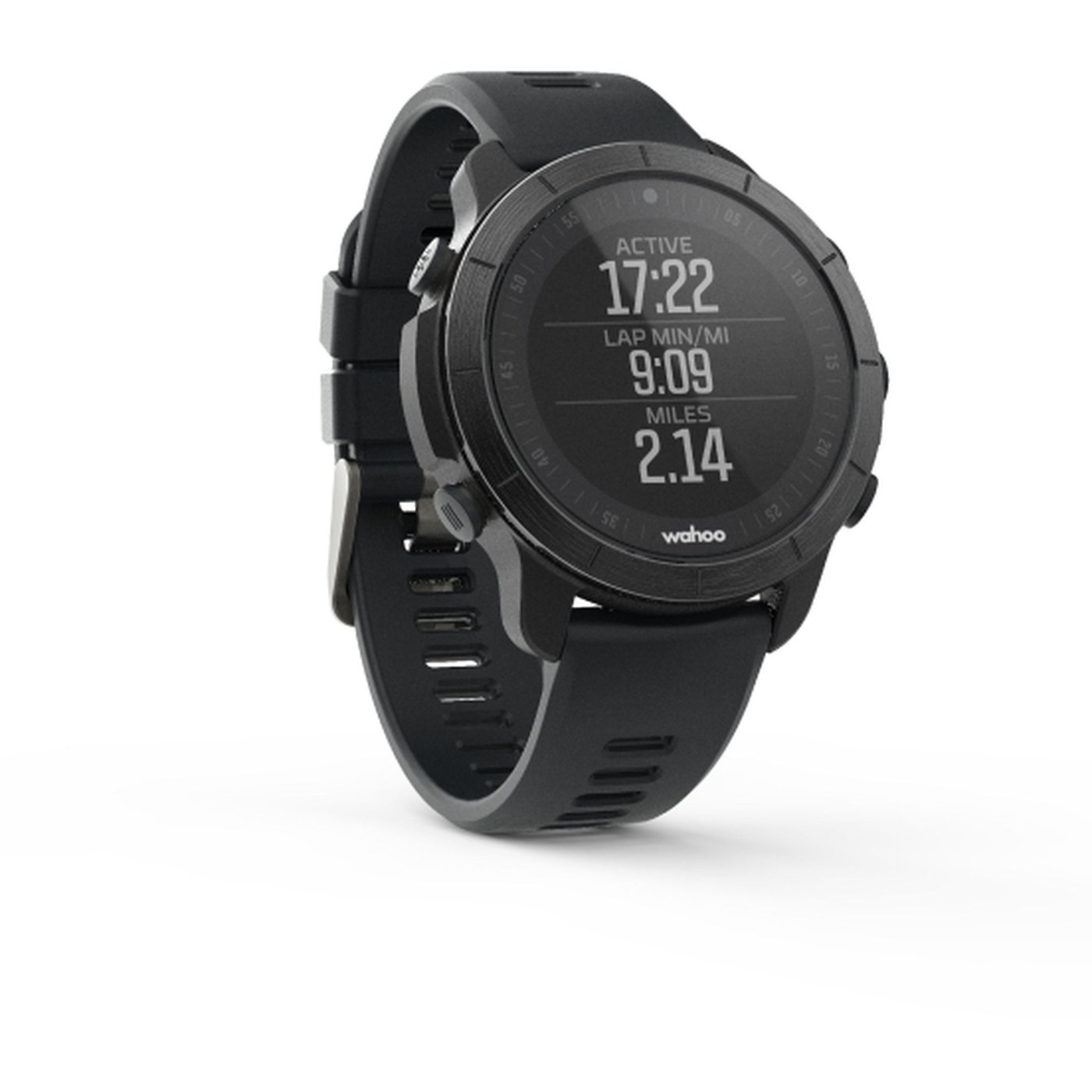
Wahoo is first and foremost a maker of bike computers and smart trainers: the Kickr, the Elemnt Bolt, the Elemnt Roam. In November 2020, the brand took a shot at multisport GPS watches with the ELEMNT RIVAL, positioned against the Garmin Forerunner 645 and the Polar Vantage V2, with an argument nobody else had at the time: automatic detection of triathlon transitions, with no button pressed mid effort. RunMag summed up the pitch in one line at launch: at 379 €, the watch cost less than both the Forerunner 645 and the Vantage V2.
Wahoo's watch venture stopped right there. The brand itself confirmed, through its official account, that it had ended production of the ELEMNT RIVAL, while still supporting units already sold. Its product page now redirects to Coros watches, resold by Wahoo rather than built by it. The name ELEMNT RIVAL once sold total simplicity for triathletes; five years after launch, the question is no longer only technical, it also concerns the software future of a product its own maker has abandoned.
RunMorph's take: if automatic triathlon transitions are your absolute priority and budget matters most, the ELEMNT RIVAL remains an interesting second-hand curiosity. For structured daily training, the Coros Pace 3 or the Polar Vantage M3 offer far more reliable heart rate tracking and mapping.
© Wahoo, official photo used for editorial purposes
Technical specifications
| Brand | Wahoo |
| Model | ELEMNT RIVAL (Stealth Grey colorway) |
| Launch | November 2020 |
| Case | 46,5 x 46,5 x 15,3 mm, polymer body with ceramic bezel |
| Weight | 53 g |
| Display | Colour transflective, 1,2 inch, 240 x 240 px, Gorilla Glass |
| GNSS | GPS and GLONASS, single frequency |
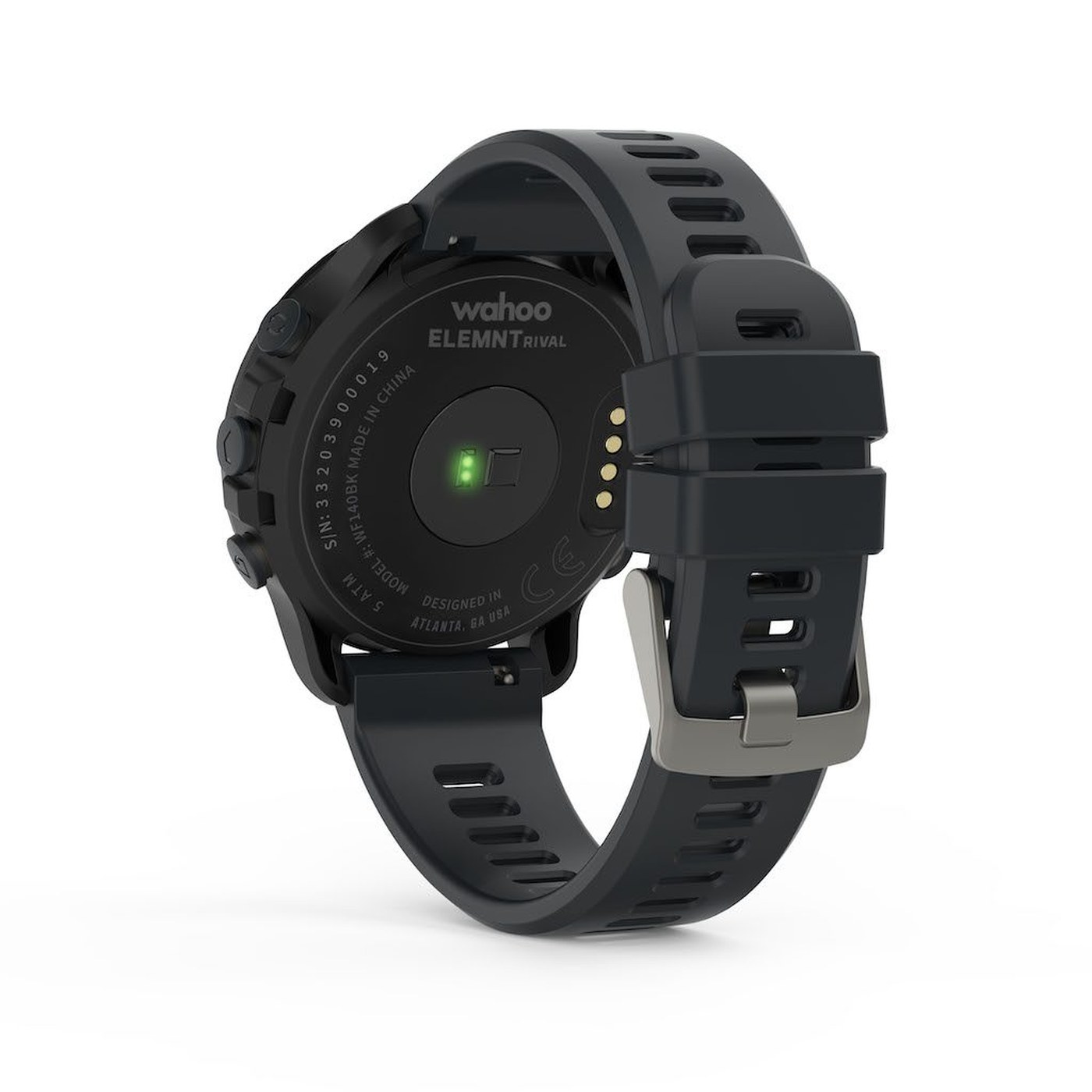
| Sensors | Wrist optical heart rate, barometer, accelerometer |
| Mapping | None, no route tracking |
| Sport profiles | Running, cycling, swimming, strength training, yoga, automatic triathlon |
| GPS battery life | 24 hours claimed |
| Smartwatch battery life | 14 days |
| Water resistance | 5 ATM (50 metres) |
| Connectivity | Bluetooth, ANT+, Wahoo app, export to TrainingPeaks and Strava |
| Launch price | 379 € |
| Price seen in 2026 | Between 199 € and 330 €, depending on the retailer |
© Wahoo, official photo used for editorial purposes
Who is the Wahoo ELEMNT RIVAL for?
The triathlete already in the Wahoo ecosystem
If you already train on a Kickr smart trainer or ride with an Elemnt bike computer, automatic syncing between your gear genuinely changes the race day experience. Hands free detection of swim to bike and bike to run transitions remains, five years on, a feature no rival has copied outright.
The runner who wants reliable heart rate data and mapping
If you want structured daily training, with accurate heart rate zones during intervals and reliable navigation on an unfamiliar route, the ELEMNT RIVAL is not the right answer: neither the mapping nor the optical sensor's reliability match 2026 standards.
The budget-conscious second-hand buyer
Under 250 €, the proposition becomes interesting again if you want a simple multisport watch with no complex training software, as long as you accept that no major update will ever come from Wahoo again.
© Wahoo, official photo used for editorial purposes
GPS accuracy and heart rate sensor: the real weak point
On runs ranging from 4'30 to 6'00 per km, tested on road and in forest, the watch stays close to the mark on distance, with an estimated 1 % margin, but it falls apart as soon as pace varies during intervals. Before writing this test, we at RunMorph read three independent French tests of this exact product in full: Clubic, Montre Cardio GPS and Journal du Trail.
Clubic judges the heart rate sensor "less accurate than the Fenix 7 and the GT Runner", without ruling it out for casual use. Montre Cardio GPS goes much further, calling it the worst heart rate sensor tested in years, with sharp dropouts in cold weather and poor correlation between measured swings and actual effort. Journal du Trail describes it as unstable, while still praising the reliability of the automatic transitions. Three out of three sources flag the exact same flaw: it is by far the most consistent finding of this test, and it hits directly at what matters most for a runner who structures sessions around heart rate zones.
© Wahoo, official photo used for editorial purposes
Mapping and navigation: completely absent
The ELEMNT RIVAL has never offered mapping or route tracking, not even a basic version. Next to a Coros Pace 3, which at least shows a simple track, or a Polar Vantage M3, which carries full offline maps, the gap widens. Journal du Trail puts it bluntly: this absence becomes a real problem the moment you leave marked trails, which rules the watch out for technical trail running or a race on an unfamiliar course.
Training and recovery metrics: the bare minimum
No VO2 max, no sleep tracking, no training load, no workout programming, no heart rate or pace alerts during effort: the ELEMNT RIVAL shows the essentials and nothing more. Clubic sums up the companion app as simplistic, with charts reminiscent of the earliest activity trackers. RunMag, the most enthusiastic source in this comparison, does not dispute that point either, and lists it among the product's accepted limits.
Real battery life
Wahoo claims 24 hours in GPS mode and 14 days in smartwatch mode. Montre Cardio GPS measured between 26 and 28 hours of continuous GPS recording, above the claim. Clubic confirms more than ten days of real world smartwatch use, short of the promised 14 days but in a comparable range. The issue is not whether the promise holds, it is how low that promise sits: five years after the ELEMNT RIVAL's launch, the Coros Pace 3 lasts 38 hours in standard GPS mode and the Polar Vantage M3 reaches 70 hours in economy mode. The Wahoo shows a clear gap on a criterion that has become central to preparing for a long distance triathlon.

© Wahoo, official photo used for editorial purposes
Pros and cons
Pros
- Automatic triathlon transitions, unmatched at this price point
- Just 53 g, one of the lightest multisport watches tested
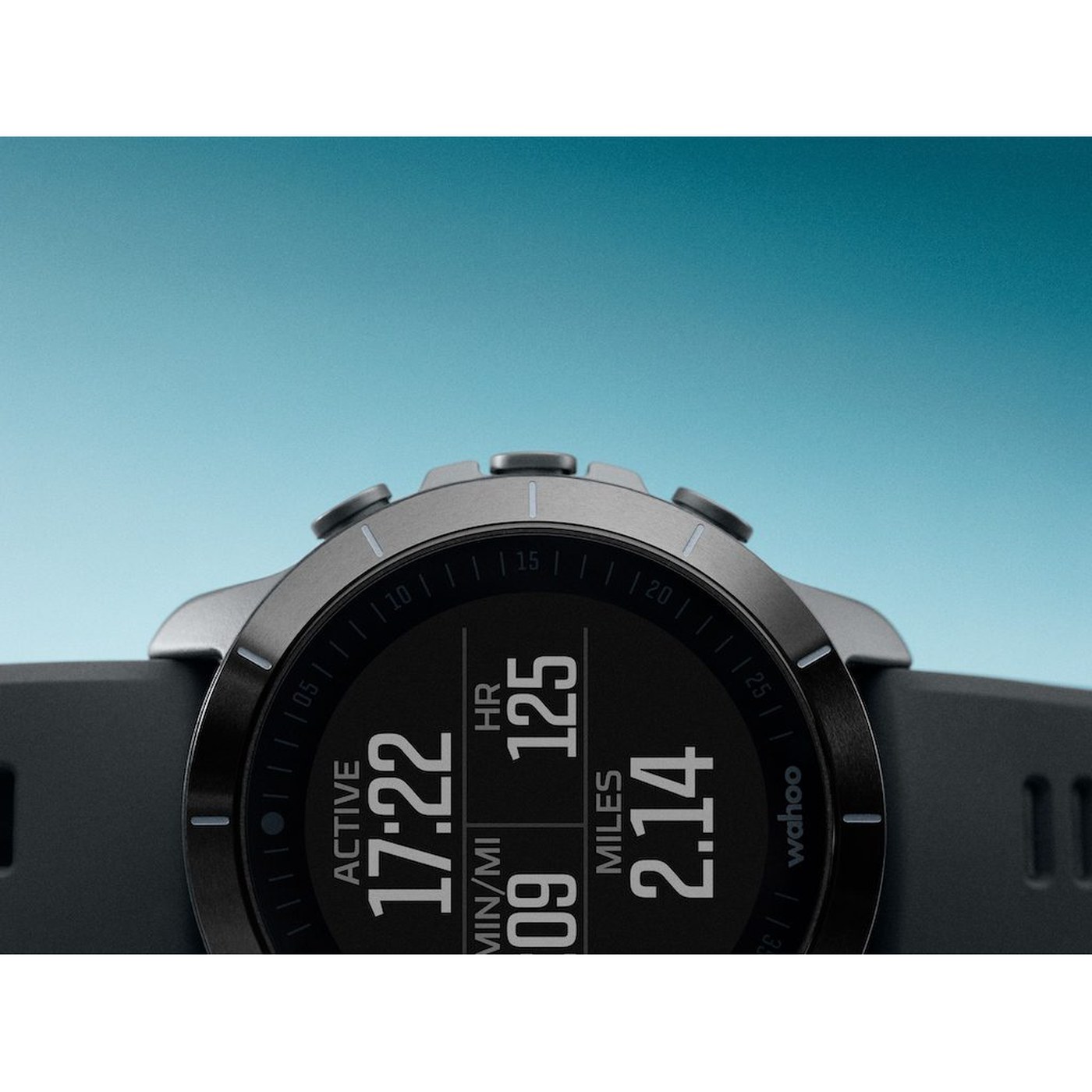
- Transflective display, easy to read in direct sunlight
- Attractive second-hand price, two to three times below launch
- Seamless integration with the Wahoo ecosystem (Kickr, Elemnt computers)
Cons
- Optical heart rate sensor judged unreliable by several independent testers
- No mapping, no route tracking at all
- No recovery metrics, no training load
- Discontinued by Wahoo, software future uncertain
- Battery life behind current market standards
Wahoo ELEMNT RIVAL vs Coros Pace 3 vs Polar Vantage M3: head to head
| Criterion | Wahoo ELEMNT RIVAL | Coros Pace 3 | Polar Vantage M3 |
|---|---|---|---|
| Weight | 53 g | 30 g | 54 g |
| GPS battery life | 24 h | 38 h (15 h in dual frequency) | 30 h (70 h in economy mode) |
| GNSS | GPS, GLONASS | Multi-GNSS dual frequency | Multi-GNSS dual frequency |
| Mapping | None | Simple track view | Full offline maps |
| Automatic triathlon transitions | Yes | No | No |
| Price | 379 € at launch, 199 to 330 € in 2026 | 249 € | 499 € |
Lighter and far more enduring than the ELEMNT RIVAL, the Coros Pace 3 beats it on nearly every training criterion for a lower price, except for automatic transitions. More expensive, the Polar Vantage M3 adds full mapping and enough battery life to make ultra distance racing realistic, which the Wahoo cannot offer.
How to fit it into your RunMorph training plan
If you finish your triathlon races on a 10K leg, or you are preparing a short running race alongside cycling and swimming, RunMorph's 10K plan remains a solid base for structuring the running side. Since the ELEMNT RIVAL does not calculate VO2 max or training load, it is better to follow the plan's pace targets than the watch's own metrics to set your intensity.
RunMorph's verdict
The ELEMNT RIVAL invented a feature nobody has copied in five years, and on that single point it remains without a direct match in 2026. But a piece of running gear is judged first on what actually serves daily training: a heart rate sensor you can trust, mapping that is actually useful, a coherent view of training load. On all three counts, the watch falls short, and its own maker has stopped producing it. RunMorph score: 5,3/10, reserved for triathletes already invested in Wahoo gear, or second-hand buyers who know exactly what they are getting.
What to remember for your training
- Automatic transitions: the signature feature, still without a direct rival in 2026.
- Fragile heart rate sensor: three out of three independent testers report dropouts, best avoided for precise threshold work.
- Zero mapping: rule it out for technical trail running or an unfamiliar race course.
- Dated battery life: 24 hours of GPS against 38 to 70 hours from current rivals.
- Discontinued product: a second-hand purchase made with eyes open, with no future software update to expect.