A consumer medical sensor in a runner's kit bag: that's the pitch behind the WHOOP MG, the version of the WHOOP band that adds an electrocardiogram and a blood pressure estimate. The real question is whether these two features do anything for a healthy runner, or whether they mostly exist to justify a subscription at 399 euros a year.
© Whoop, official photo used for editorial purposes
WHOOP: the screenless bet, now with an electrocardiogram
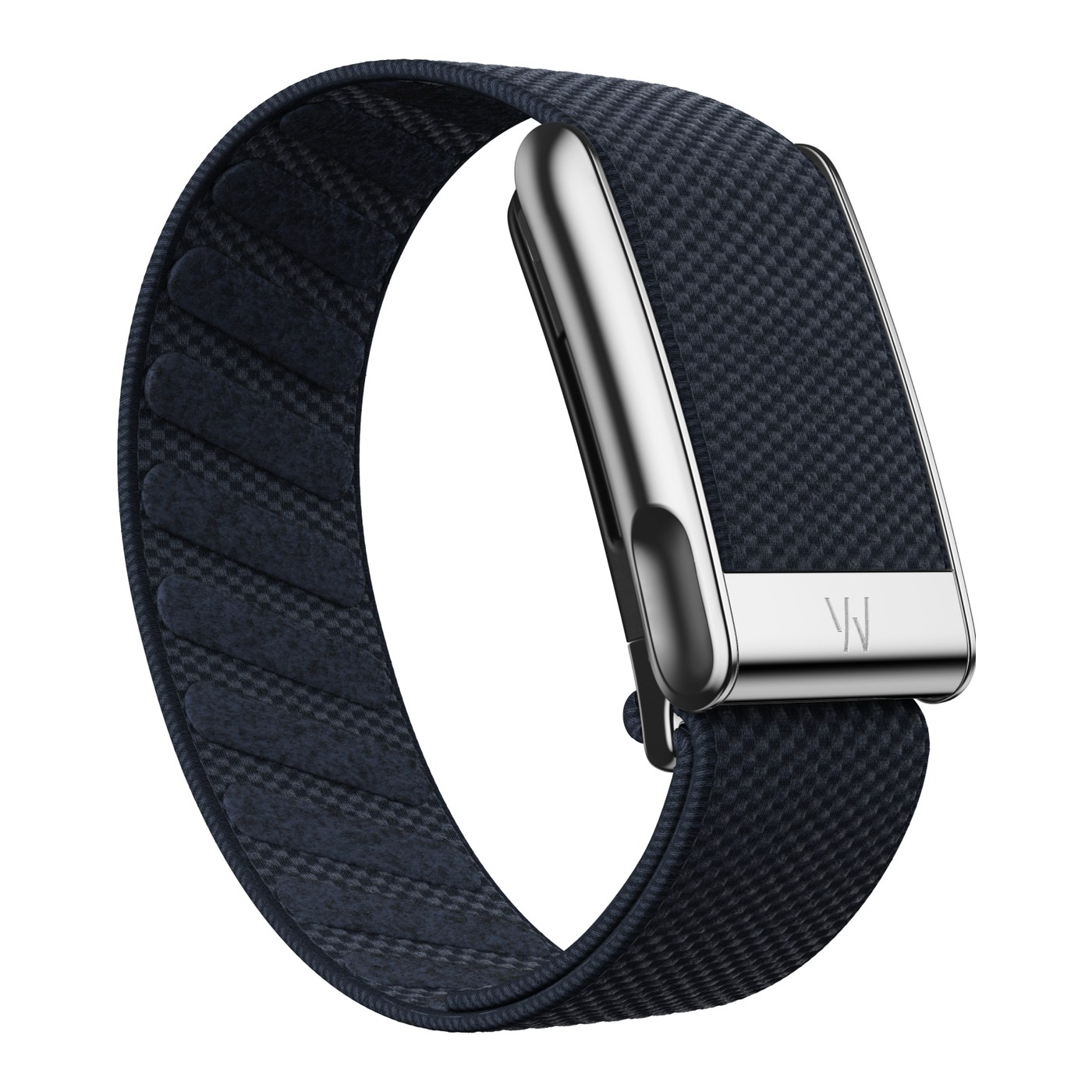
WHOOP built its reputation on an unusual bet: a sensor with no screen and no buttons, worn day and night, that turns heart rate, heart rate variability (HRV) and sleep into three daily scores (Strain, Recovery, Sleep). The WHOOP 5.0, launched on 8 May 2025, is still the benchmark version of that bet. The same day, the brand unveiled a second variant, the WHOOP MG (for "Medical Grade"), which carries the hardware needed for an electrocardiogram cleared by the US FDA and for a daily blood pressure estimate.
The chassis is the same on both models: the same sensor weighing around 18 grams, the same claimed battery life of 14 days or more, the same housing 7% more compact than the previous generation. The only difference lies in the internal electronics dedicated to the electrocardiogram and in the membership that unlocks it, WHOOP Life, billed at 399 euros a year versus 199 euros for the entry-level One and 264 euros for Peak. For a site about running training, the key question isn't whether the WHOOP MG works (WHOOP tested it and got it cleared), but whether it brings anything to a runner with no particular medical reason to monitor their heart every day.
WHOOP MG specs
| Feature | WHOOP MG |
|---|
| Brand | Whoop |
| Availability | Since 8 May 2025, WHOOP Life membership only |
| Type | Screenless smart band with built-in electrocardiogram |
| Weight | Around 18 g for the sensor alone (same chassis as the WHOOP 5.0), with SuperKnit Luxe band |
| Screen / GPS | Neither, running data depends on the smartphone |
| Claimed battery life | 14 days or more, wired charger or waterproof wireless PowerPack |
| Water resistance | IP68, rated to 10 m for 2 hours |
| Electrocardiogram | Heart Screener, 30-second reading, atrial fibrillation detection, FDA-cleared |
| Blood pressure | Blood Pressure Insights, daily systolic/diastolic estimate, beta feature |
| Metrics shared with the 5.0 | Strain (0 to 21), Recovery (0 to 100%), Sleep Score, VO2 Max, Healthspan / WHOOP Age |
| Required membership | WHOOP Life, €399/year (versus €264/year for Peak and €199/year for One, without ECG or blood pressure) |
| Band included | SuperKnit Luxe + waterproof wireless PowerPack |
© Whoop, official photo used for editorial purposes
Heart Screener and Blood Pressure Insights: what the electrocardiogram actually detects
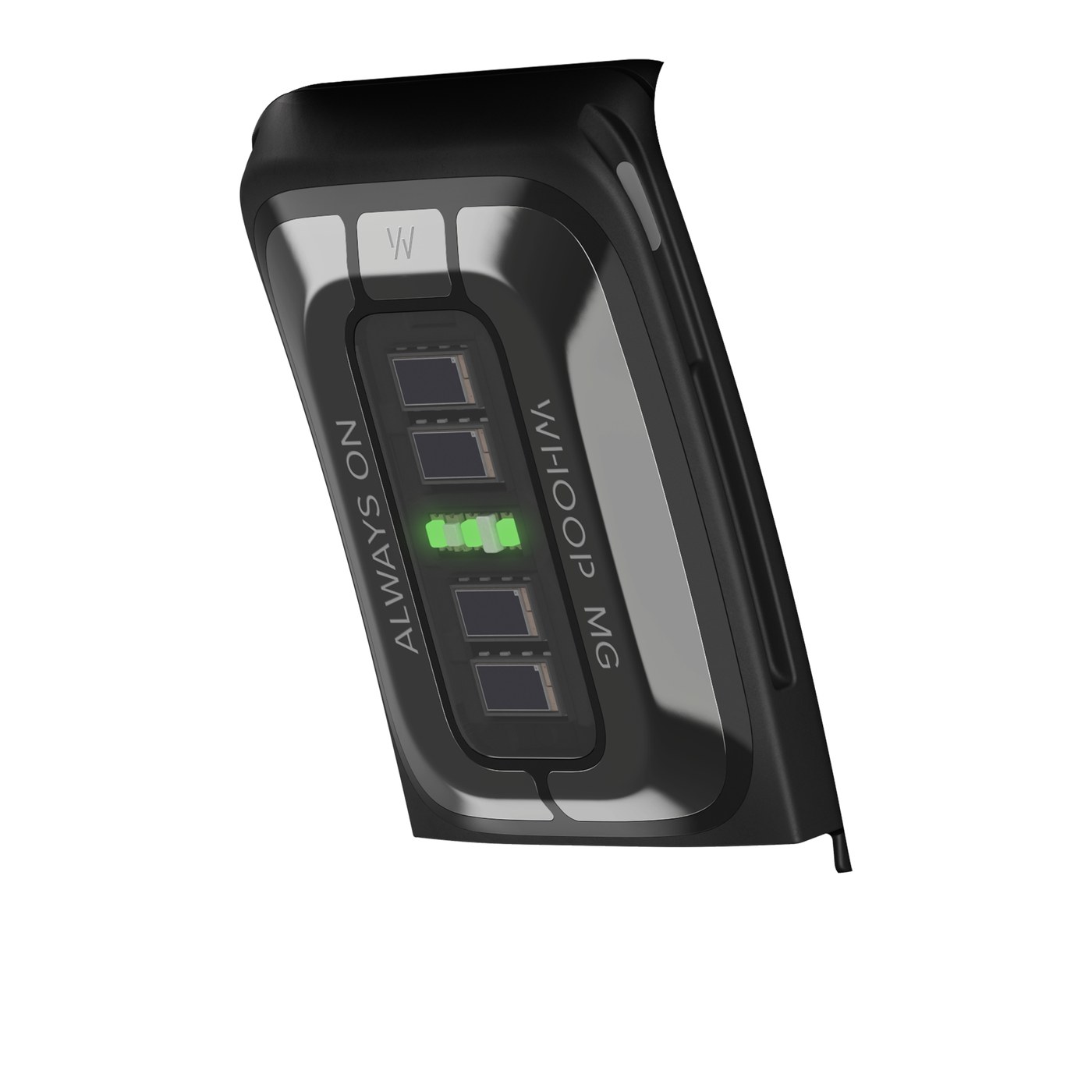
To use the Heart Screener, you place your thumb and index finger on the band's conductive clasp. In 30 seconds, the device records a trace and classifies it as normal sinus rhythm, possible sign of atrial fibrillation (AFib), high or low heart rate, or inconclusive. The feature is cleared by the US FDA and the report it generates can be shared directly with a doctor. It is restricted to users aged 22 or over and not recommended for anyone with a pacemaker or implanted defibrillator, or with an arrhythmia other than atrial fibrillation.
Blood Pressure Insights works differently: every morning, the algorithm estimates a systolic and diastolic range from overnight analysis, after an initial calibration that requires three readings with a standard cuff. In June 2026 WHOOP published its own validation results on 10,746 measurement pairs, claiming a mean absolute error of 5.03 mmHg systolic and 3.64 mmHg diastolic. These are the manufacturer's figures, not an independent peer-reviewed publication, and WHOOP itself states that the feature is neither a medical device nor a diagnostic tool.
The feature also drew a warning from US health authorities in summer 2025, which accused WHOOP of marketing Blood Pressure Insights as a medical device without the matching clearance. WHOOP kept the feature live, citing the regulatory exemption for wellness tools, while continuing talks with the regulator. In practice, for a runner, this means one simple thing: neither the ECG nor the blood pressure reading on the WHOOP MG replaces medical advice or a validated blood pressure monitor, and neither should be used to adjust an ongoing treatment.
RunMorph's advice: the Heart Screener is genuinely useful on an occasional basis if you feel unusual palpitations during or after exercise and want a first trace to show your doctor. On the other hand, it's useless for guiding a workout or judging progress, which a chest heart rate sensor or a regular GPS watch already does very well.
Field test: accuracy, comfort and battery life of the WHOOP MG on the run
Since the WHOOP MG shares its chassis with the WHOOP 5.0, its baseline heart rate accuracy rests on the same independent data. A study published in 2025 on optical wrist sensors, WHOOP included, confirms low bias on overnight heart rate and HRV, but accuracy that drops sharply during rapid changes in intensity, which directly affects runners doing interval sessions. For steady efforts (easy runs, long runs), the readings stay consistent; for short, repeated surges, much less so.
© Whoop, official photo used for editorial purposes
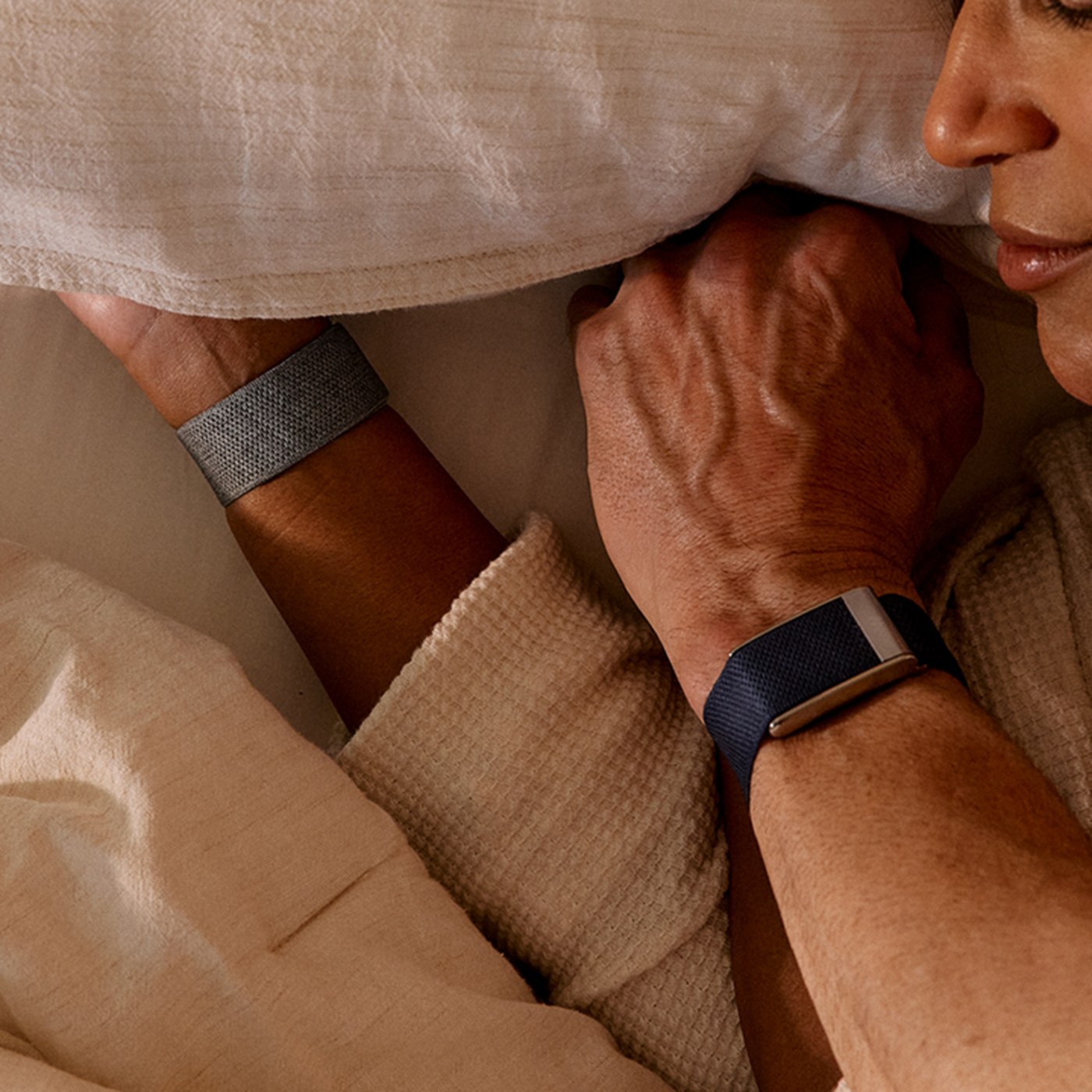
On comfort, the SuperKnit Luxe band stays light and pleasant for continuous wear, night included, as confirmed by both Le Biohacker and Collège Louis Pasteur in their respective tests of the WHOOP 5.0/MG. The downside, documented by Le Biohacker: the fabric soaks up sweat and stays damp after a workout, so a runner who trains often needs a second band or regular washing. Verified customer reviews aggregated by Maison Santé (730 reviews, average rating 4.2 out of 5) reflect the same tension: most users are satisfied, but a minority repeatedly complains about heart rate data they consider inaccurate.
On battery life, WHOOP claims 14 days or more for both the 5.0 and the MG. Independent feedback strays well away from that promise: Parrain du Web, who wore a WHOOP 5.0 for several months, reports real-world battery life closer to 4 to 5 days in normal use, far short of the manufacturer's claim. Le Biohacker is more cautious and won't commit without a personal discharge log, but points out that battery life depends heavily on battery age, signal and enabled features. On the WHOOP MG, regular use of the Heart Screener and the daily Blood Pressure Insights calculation add extra processing load compared with the 5.0, which argues for the low estimate rather than the advertised 14 days.
WHOOP MG vs WHOOP 5.0: is the Life membership worth the extra cost?
| Criterion | WHOOP 5.0 (One / Peak) | WHOOP MG (Life) |
|---|
| Membership | €199 to €264/year | €399/year |
| Strain, Recovery, Sleep | Yes | Yes |
| Healthspan / WHOOP Age | Peak only | Yes, included |
| Heart Screener (ECG) | No | Yes, 30-second reading |
| Blood Pressure Insights | No | Yes, daily estimate (beta) |
| Band included | CoreKnit or SuperKnit | SuperKnit Luxe |
| Claimed battery life | 14 days or more | 14 days or more |
| Physical sensor | Identical | Identical, plus ECG electronics |
The verdict is clear-cut for a runner with no identified medical need: the Peak membership at 264 euros a year already gives you Strain, Recovery, Sleep, VO2 Max and Healthspan on the same physical sensor. The extra 135 euros for Life only pay for the Heart Screener and Blood Pressure Insights, two occasional check-up features rather than everyday performance tools. Moving up to the WHOOP MG only makes sense if an on-demand electrocardiogram has real personal value for you (family history, palpitations already felt, close monitoring advised by a doctor). In every other case, the WHOOP 5.0 with the Peak membership covers most of what a runner needs for less money.
WHOOP MG vs a GPS watch: no GPS is a structural limit for running
Like the rest of the lineup, the WHOOP MG has no GPS and no screen at all. For a runner, that means always taking your phone along to know your pace, distance or route, with the band only recording heart rate and automatically detecting a running activity. Next to a watch like the Polar Vantage V3, which packs multi-band GPS and a wrist ECG for a one-off purchase of around 599 euros, with no mandatory subscription, the WHOOP MG looks structurally badly positioned if you want a single device on your wrist during training.
For pure heart rate accuracy during exercise, a dedicated ECG chest strap like the Polar H10 remains the benchmark for short intervals and rapid pace changes, exactly where WHOOP's optical wrist sensor, MG included, shows its limits. The simple takeaway: the WHOOP MG is a background tracking tool (recovery, HRV trend, occasional screening), not a tool for steering a workout. A runner who wants both worlds has to accept wearing two devices, or pick a GPS watch that already covers most everyday heart tracking.
Our field verdict: who is the WHOOP MG for?
The WHOOP MG targets a specific profile: a runner already sold on the WHOOP ecosystem, who wears the band around the clock for recovery and sleep, and who has a concrete reason to want an electrocardiogram within reach. For that profile, the extra spend makes sense, as long as you treat the ECG and blood pressure as occasional screening tools, never as a substitute for medical follow-up. For everyone else, especially those looking for a tool to improve their training rather than to monitor their heart, the WHOOP 5.0 or a GPS watch with built-in ECG covers the need for less.
RunMorph's business advice: whether it's a WHOOP MG worn alongside or a regular GPS watch, recovery data is only worth something if it fits into a structured plan. To turn those daily scores into coherent sessions, head to the RunMorph 10K training plan.
RunMorph verdict
The WHOOP MG delivers on its technical promise: a cleared electrocardiogram in 30 seconds, on a band that stays as light and comfortable as the WHOOP 5.0. But for a runner with no particular medical reason, these two features change nothing about training, performance or understanding training load, all of which a cheaper membership already covers on the same sensor. Add the lack of GPS, which means always running with your phone, and real-world battery life that seems to fall well short of the manufacturer's claim according to several independent reports, and the 399 euros a year bill is hard to justify for most runners. RunMorph score: 6.1 / 10.