Since the Adios Pro Evo, the Adizero line has lived under the sign of carbon plates and ever-higher stacks. The Takumi Sen 11 goes the other way: no carbon, a contained 30.6 mm heel stack and a measured weight of 184 g. At RunMorph, every available real-world test on this shoe was read to check whether turning down the arms race still keeps it competitive over 10 km.
Adidas Adizero Takumi Sen 11 Review: A Racing Flat Without a Carbon Plate
8.6/10
The essentials in 3 sentences
The Adidas Adizero Takumi Sen 11 is a 184 g racing flat priced at 200 euros, built with Lightstrike Pro foam and glass-fiber EnergyRods 2.0, with no carbon plate. Tests converge on an elite feel of speed over 5 to 10 km, undercut by a narrow heel that rubs before break-in and stability that drops off fast once you leave a forefoot strike. RunMorph verdict: a highly specialized speed weapon, not an everyday trainer.
8.6
/ 10 · RunMorph overall score
Who is it for?Experienced runners chasing a time over 5 to 10 km or a fast half marathon, with a forefoot or midfoot strike, who want a light racing shoe without the stiffness of a full carbon plate.
Who should skip it?Beginners, runners who clearly land on the heel, marathon or long-run goals, and feet that need firm rearfoot lockdown.
Adidas Adizero Takumi Sen 11: speed that says no to a carbon plate
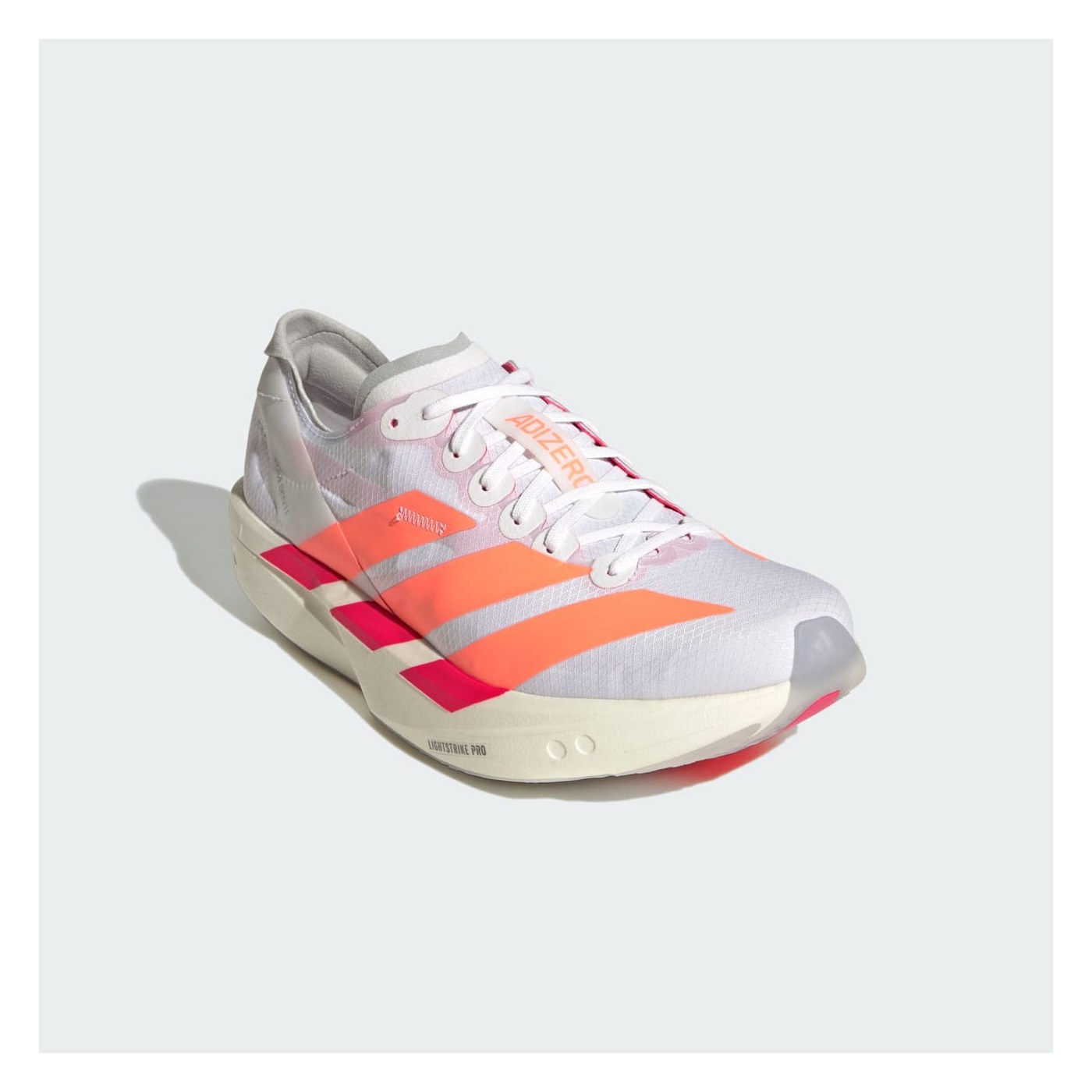
© Adidas, official photo used for editorial purposes
The Adizero line has spent recent years building around an openly accepted arms race: more carbon, more stack, more price, right up to the 500 euros of the Adios Pro Evo. The Takumi Sen has always held a separate slot in that catalog, the model closest to a track spike, built for the 5K and 10K rather than for chasing a marathon world record. The 11th generation leans into that contrarian stance: the Adizero Boston 13 and the Adios Pro share the same Lightstrike Pro foam family, but only the Takumi Sen stays plate-free, relying instead on glass-fiber EnergyRods 2.0. The headline number shows it: 184 g measured, against 253 g for the Boston 13 and over 190 g for the Adios Pro 5 across the sources read for this article.
RunMorph's advice: the Takumi Sen 11 is for runners who already know exactly what they want it for. For versatile everyday training, the Adizero Boston 13 remains the safer pick. For a marathon with a full carbon plate, look instead at the Adizero Adios Pro 5.
Adidas Adizero Takumi Sen 11 tech specs
| Spec | Adidas Adizero Takumi Sen 11 |
|---|---|
| Brand | Adidas |
| Type | Road, 5 to 10K racing flat |
| Measured weight (men's, US9) | 184 g |
| Measured weight (women's, US7) | 165 g |
| Claimed drop | 7 mm |
| Measured drop | 6.9 mm |
| Measured heel / forefoot stack | 30.6 mm / 23.7 mm |
| Foam | Lightstrike Pro (new, softer formula than the Sen 10) |
| Outsole | Lighttraxion, Continental rubber pods |
| Carbon plate | No, glass-fiber EnergyRods 2.0 |
| Claimed lifespan | No mileage figure published by Adidas (race-day shoe) |
| Sizes | US 5 to US 14 depending on gender |
| Retail price | 200 euros |
Adidas does not publish independent lab data for this specific model, but the figures above come from several field tests that converge on the same weight and the same measured drop. The most telling gap sits in the stack: marketing copy lists around 33 mm at the heel depending on the market, while the independent measurement used for this article lands at 30.6 mm, a nearly 3 mm gap that is not trivial on such a thin shoe.
Lightstrike Pro and EnergyRods 2.0: what it changes underfoot
The Lightstrike Pro in this 11th version is not the one on the Takumi Sen 10: tests describe it as noticeably softer and bouncier, at the cost of less stability at footstrike. Measured energy return reaches 74.0% at the heel and 79.5% at the forefoot, figures that sit near the top of the supercritical-foam market. Dropping carbon for glass-fiber EnergyRods 2.0 is not only a cost decision: a glass-fiber plate flexes under load instead of creating extreme stiffness, which makes the shoe more forgiving for a stride that is not perfectly tuned, unlike a full carbon plate such as the one in the Nike Vaporfly 4. The trade-off shows up at the fastest paces: several testers describe the foam turning a touch too soft once the pace really climbs, with a less crisp transition than the previous generation.
The fit of the Adidas Adizero Takumi Sen 11
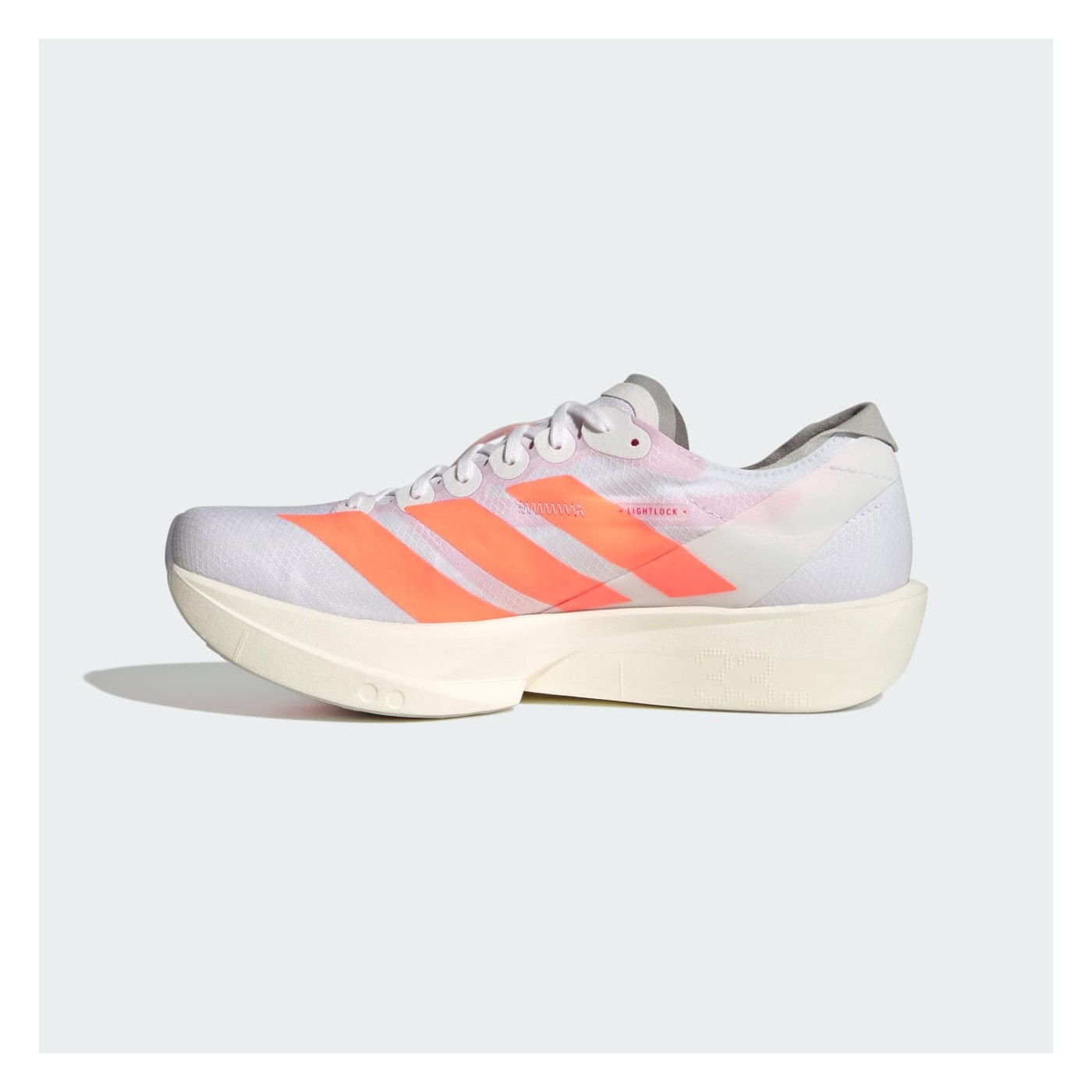
© Adidas, official photo used for editorial purposes
The Lightlock upper swaps the classic mesh for a thin, stretchy weave, more pleasant to pull on than the Sen 10 but it gives up some breathability, scored only 2 out of 5 in the independent measurements read for this article. The forefoot box opens up a bit more than on the previous version, with a measured width of 71.4 mm that leaves toes room even late in a race. The point that comes up in every test read, though, is the heel: several testers report the heel tab rubbing against the back of the foot, up to the start of a blister for one of them in low socks. The recommendation is unanimous: plan two to three break-in runs in tall socks before racing in them.
The real test: what runners who actually wore it say
Four independent tests were read in full for this article, including one French test. The consensus is clear on the feel of speed: the shoe is described as noticeably lighter underfoot than the Adios Pro, with a direct ground feel that rewards a runner who already knows how to turn their legs over fast. Over a French test route covering 200 cumulative kilometers in real training conditions, the Continental grip stayed intact and the foam showed no visible breakdown, a result that confirms solid construction despite the featherweight build. A second review, run over 48 kilometers of varied testing, found the same thing on outsole wear: no visible marks after the equivalent of about thirty fast sessions.
Opinions diverge sharply, however, on how the foam holds up at maximum effort. One test insists the midsole runs too soft and slightly slows the transition compared with the previous generation, while another praises a more generous, more enjoyable bounce over 400 to 1200 meter repeats. At RunMorph, this split reads as the direct consequence of the 2026 design choice: the softer Lightstrike Pro widens the shoe's range toward tempo work, but does so at the cost of a touch of pure top-end speed for runners who loved the very firm feel of the Sen 10.
On stability, though, there is no disagreement: every source consulted flags limited midfoot lockdown and a narrow heel that does not forgive a hard heel strike. That is not a manufacturing flaw, it is the direct result of a heel counter rated only 1 out of 5 for stiffness in the independent measurements, a design choice made on purpose to save weight.
What pace it works at, what pace it falls apart
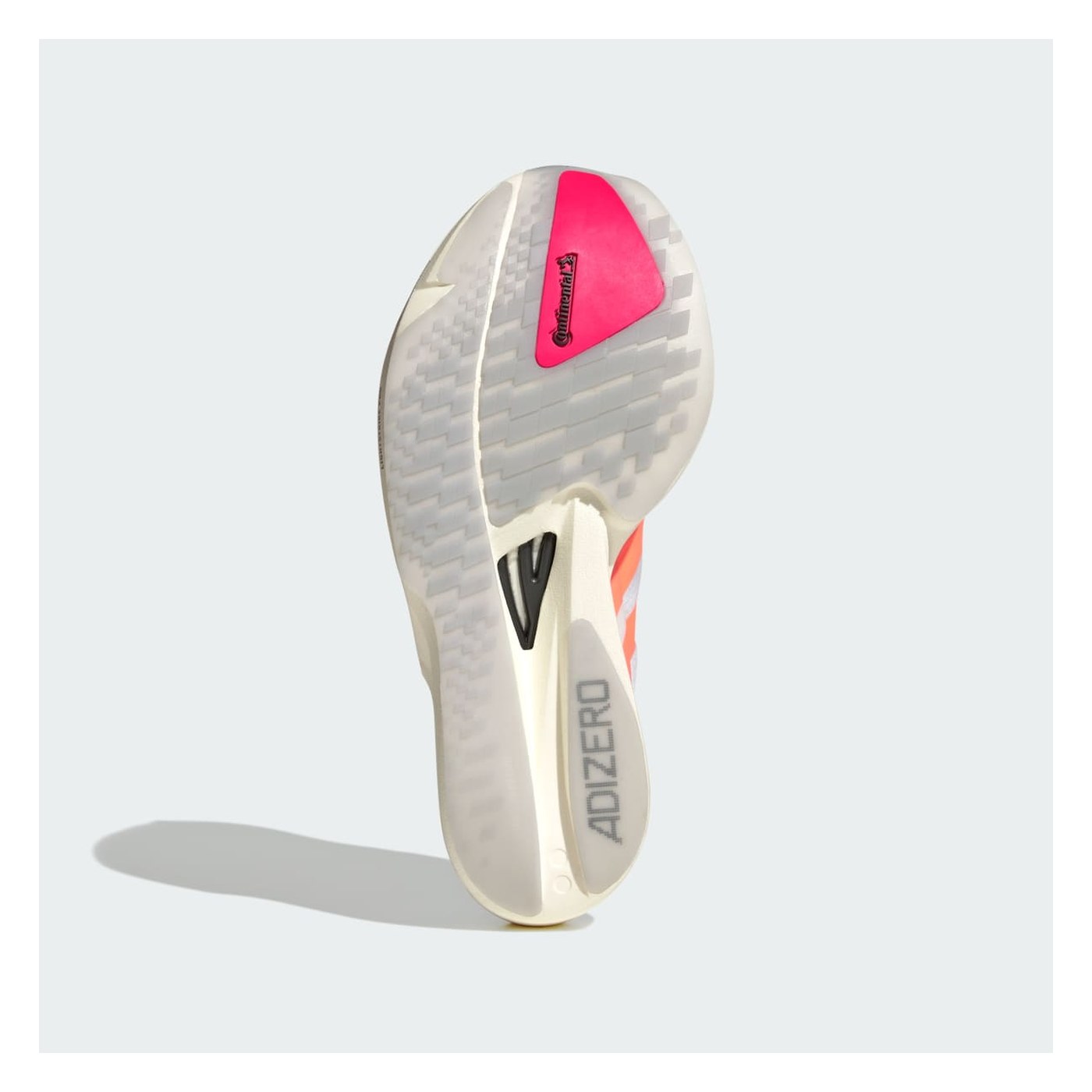
© Adidas, official photo used for editorial purposes
Short intervals and track work (under 3:30/km, 5:38/mile): this is the shoe's main playground, where the 184 g weight and the EnergyRods 2.0 work best together.
10K race pace (roughly 3:30 to 3:50/km, 5:38 to 6:09/mile): the zone where the Takumi Sen 11 feels most at home, backed up by a race-use sub-score clearly above the market average in the independent measurements.
Fast half marathon (roughly 3:50 to 4:15/km, 6:09 to 6:50/mile): it holds up for an experienced forefoot striker, but the lack of midfoot stability starts to show over distance if running form is not already solid.
Marathon pace (roughly 4:15 to 4:45/km, 6:50 to 7:39/mile): the shoe still works but moves outside its intended use, the 30.6 mm heel stack staying too thin to absorb three-plus hours of repeated impact.
Easy runs and recovery (slower than 5:00/km, 8:03/mile): a zone to avoid, this firmness of Lightstrike Pro was not built for slow paces and the narrow heel quickly turns uncomfortable without the dynamics of a fast footstrike.
Major flaw: a narrow heel that rubs before it is broken in
The heel counter scores only 1 out of 5 for stiffness in the independent measurements read for this article, a figure that directly explains the rubbing reported by several testers within the first few kilometers. One test goes as far as describing irritation close to a blister in low socks, fixed only after tightening the laces and switching to taller socks. For a purchase meant for a specific race, that is not a detail to brush aside: the converging recommendation across the sources read is to plan two to three trial runs in tall socks before considering racing in them.
Major flaw: stability that drops off once the stride is not perfect
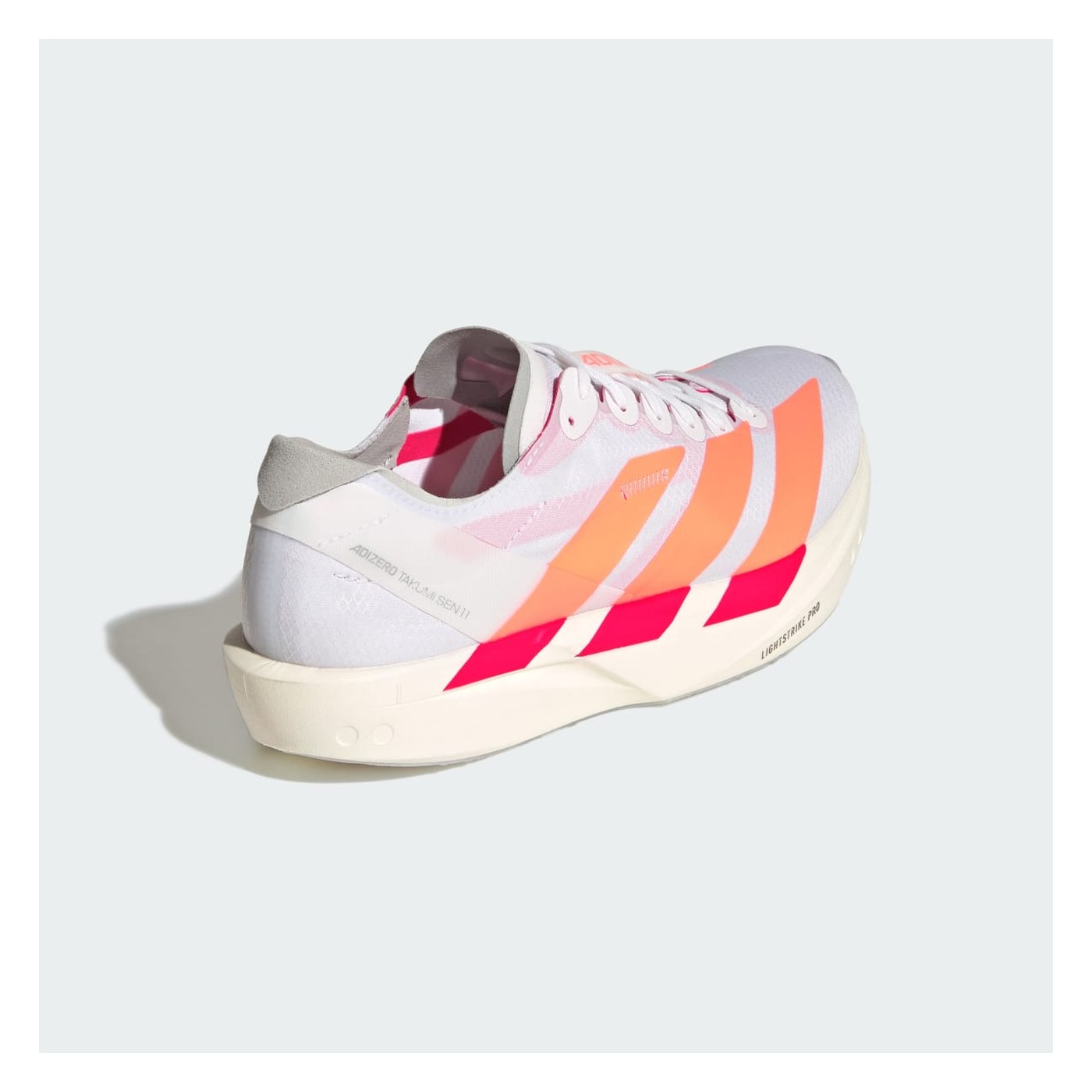
© Adidas, official photo used for editorial purposes
The independently measured stability sub-score falls to 3.8 out of 10, a figure clearly below the average for racing flats tested elsewhere. The cause is material and quantifiable: 9.9 Nm of torsional rigidity and a deliberately narrow heel, built for a stride that already strikes on the forefoot or midfoot. For a runner who heel strikes or fatigues late in a race, that combination translates into a floating sensation at footstrike, a real design trade-off to own rather than simply a matter of taste.
Adidas Adizero Takumi Sen 11 vs Adidas Adizero Boston 13: which shoe should you pick?
| Spec | Takumi Sen 11 | Boston 13 |
|---|---|---|
| Price | 200 euros | 160 euros |
| Measured weight | 184 g | 253 g |
| Drop | 7 mm claimed | 6 mm |
| Heel / forefoot stack | 30.6 mm / 23.7 mm measured | 36 mm / 30 mm |
| Plate | No, EnergyRods 2.0 | No, EnergyRods 2.0 |
| Best for | 5 to 10K, top-end speed | Daily training, tempo, half marathon |
Both share the same Lightstrike Pro and EnergyRods tech family, which makes the comparison cleaner than against a shoe outside the range. The decision rule is simple: a runner who wants one pair to run fast every day and work on tempo is better served by the Adizero Boston 13, more stable and cheaper. The Takumi Sen 11 only earns its keep for a runner who already owns a training shoe and is specifically after a race-day weapon for 5 to 10K.
Adidas Adizero Takumi Sen 11 vs Nike Vaporfly 4 and Nike Streakfly 2
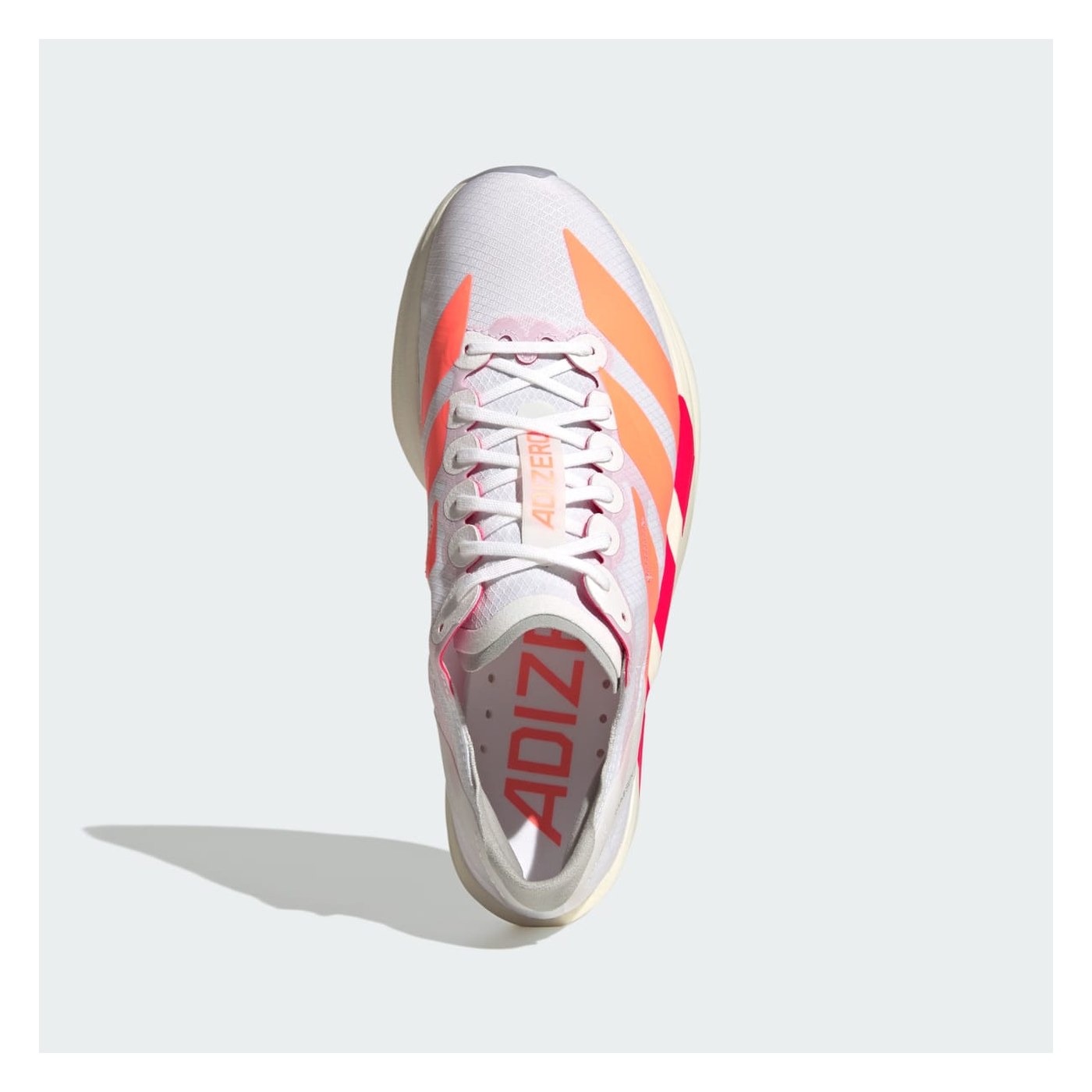
© Adidas, official photo used for editorial purposes
| Spec | Takumi Sen 11 | Vaporfly 4 | Streakfly 2 |
|---|---|---|---|
| Price | 200 euros | 259.99 euros | n/a |
| Measured weight | 184 g | 169 g | ~122 g |
| Drop | 7 mm | 6 mm | 4 mm |
| Carbon plate | No | Yes, Flyplate | No |
| Best for | 5 to 10K | 5K to half marathon | Mile to 5K |
Against the Nike Vaporfly 4, the Takumi Sen 11 accepts being less rigid and less directly propulsive: the Vaporfly's Flyplate delivers a cleaner transition, at the cost of a shoe that forgives an imperfect stride less. Against the Nike Streakfly 2, even lighter at 122 g and built for the mile and the 5K, the Takumi Sen 11 offers more midsole volume and a usable range that stretches up to 10K, even to a half marathon for a fast runner. The choice really comes down to target distance rather than a simple price gap.
Pros and cons
ProsMeasured weight of 184 g, among the lowest in its category without a carbon plate. Measured energy return of 74% at the heel and 79.5% at the forefoot, near the top of the market. Solid build confirmed by zero wear across 200 km of combined testing. Roomier forefoot box than the Sen 10.
ConsHeel counter rated 1 out of 5 for stiffness, rubbing reported by several testers. Stability measured at 3.8 out of 10, best kept for an already clean forefoot stride. Breathability limited to 2 out of 5. Retail price of 200 euros for a very specialized use.
Durability and cost per kilometer
Adidas does not publish a lifespan mileage figure for the Takumi Sen 11, a common choice in this segment of racing flats where performance takes priority over volume. The combined tests read for this article, 200 kilometers with no visible breakdown of the Lighttraxion outsole or the foam, point to a reasonable useful life of 300 to 400 kilometers for a shoe kept strictly for races and fast sessions. Dividing the 200 euro retail price across that range puts the cost between 0.50 and 0.67 euro per kilometer. For comparison, the Adizero Boston 13, built for a far larger training volume and so a lifespan closer to 600 to 700 kilometers, comes out at around 0.24 euro per kilometer. The Takumi Sen 11 therefore costs roughly twice as much per kilometer actually run, a figure that confirms its role as a race-day shoe rather than a training pair.
Our verdict: who is it really for?
The Takumi Sen 11 suits a specific profile: a runner who already has a reliable training shoe and is specifically after a light weapon for a fast 10K or half marathon, with a stride that already strikes on the forefoot or midfoot. It is not meant to replace a daily pair, and even less to serve as a first racing shoe for a beginner who needs stability. To build the aerobic base needed before reaching for this pair on race day, a RunMorph 10K training plan structures the threshold sessions and intervals that prepare exactly this pace range.
The RunMorph Coach's verdict
The Adidas Adizero Takumi Sen 11 earns 8.6/10. The score is pulled up by a measured energy return among the best on the market and a 184 g weight that delivers on its promise without a carbon plate, and pulled down by stability measured at 3.8 out of 10 and a heel that demands real break-in before a first race. At RunMorph, the weighting favors raw performance for this highly specialized segment: a racing flat is not meant to reassure a hard heel strike, it is meant to buy seconds for a runner who already knows how to run fast, which is exactly what the measurements and the tests read confirm.
What to remember for your training
- 184 g measured: one of the lowest weights in its category, with no carbon plate.
- No carbon plate: glass-fiber EnergyRods 2.0, more forgiving than a rigid plate for an imperfect stride.
- Stability at 3.8/10: best reserved for an already dialed-in forefoot or midfoot stride.
- Two to three break-in runs: needed in tall socks to avoid heel rubbing.
- Ideal use 5 to 10K: beyond a fast half marathon or below threshold pace, another shoe makes more sense.
FAQ
Does the Adidas Adizero Takumi Sen 11 have a carbon plate?
No. It uses glass-fiber EnergyRods 2.0, more flexible than a full carbon plate, which sets it apart from the Adios Pro in the same line.
What race distance suits the Takumi Sen 11 best?
The 5K and 10K are its sweet spot, with room to stretch to a half marathon for a fast, experienced runner.
Do you need to break the shoe in before a race?
Yes. Several testers recommend two to three runs in tall socks to avoid the heel counter rubbing.
Is the Takumi Sen 11 a good fit for a heel striker?
Not really recommended: its measured stability stays low and its narrow heel is built for a forefoot or midfoot strike.
What is the difference versus the Adidas Adizero Boston 13?
The Boston 13 is heavier (253 g versus 184 g) but more stable and cheaper, built for daily training rather than solely for race day.