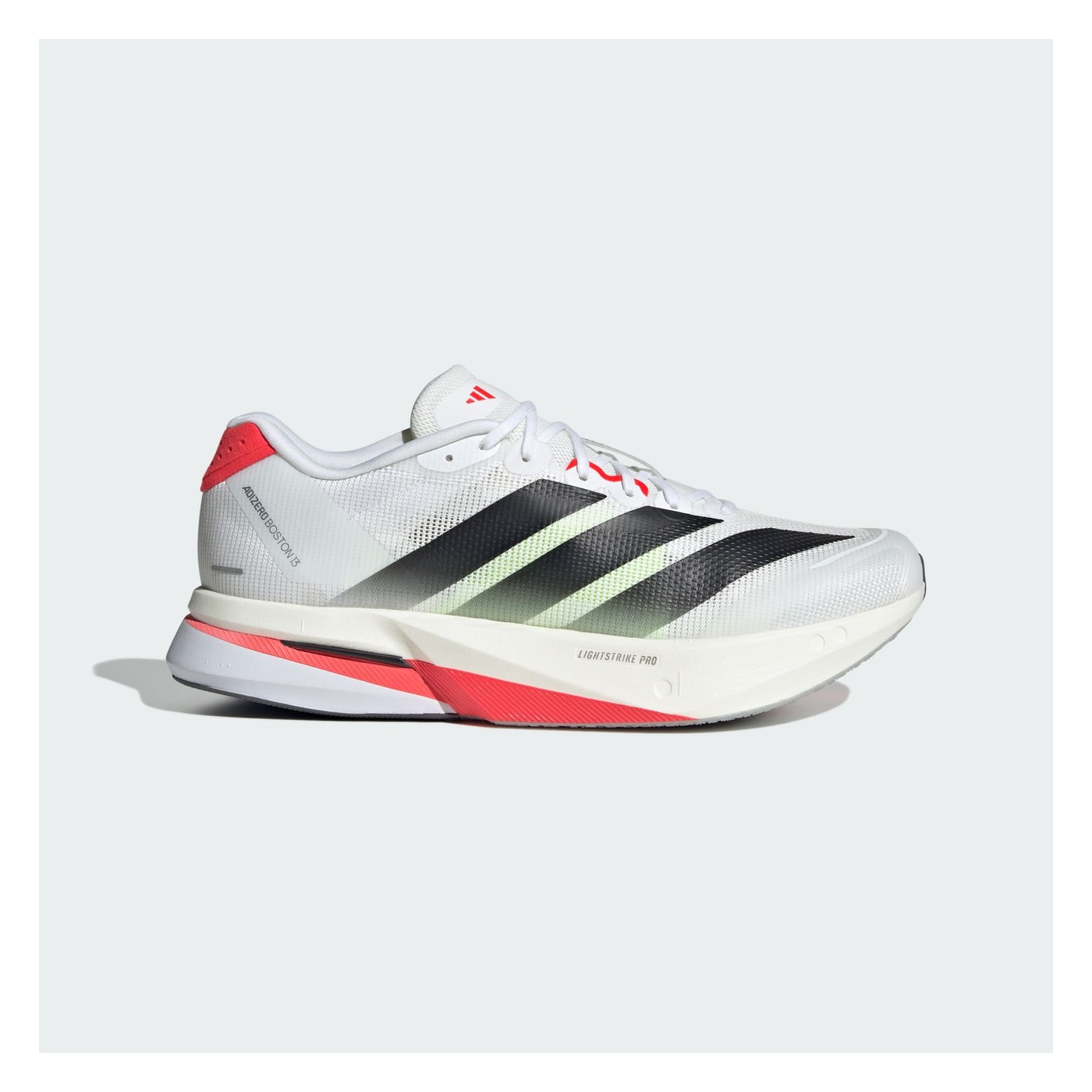
Looking for one shoe that takes you from relaxed easy runs to punchy tempo sessions, without breaking the bank or giving up that feeling of speed? The Adizero Boston 13 was built for exactly that. As a RunMorph coach, I see plenty of runners torn between a carbon super shoe and a laid-back daily trainer. The Boston 13 settles that debate: a true tempo shoe and the official training partner of the Adios Pro 4, at a price that still goes down easy.
Adidas Adizero Boston 13 Review: Race-Bred Tempo Shoe
8.5/10
Adidas Adizero Boston 13: the tempo shoe built to make you faster
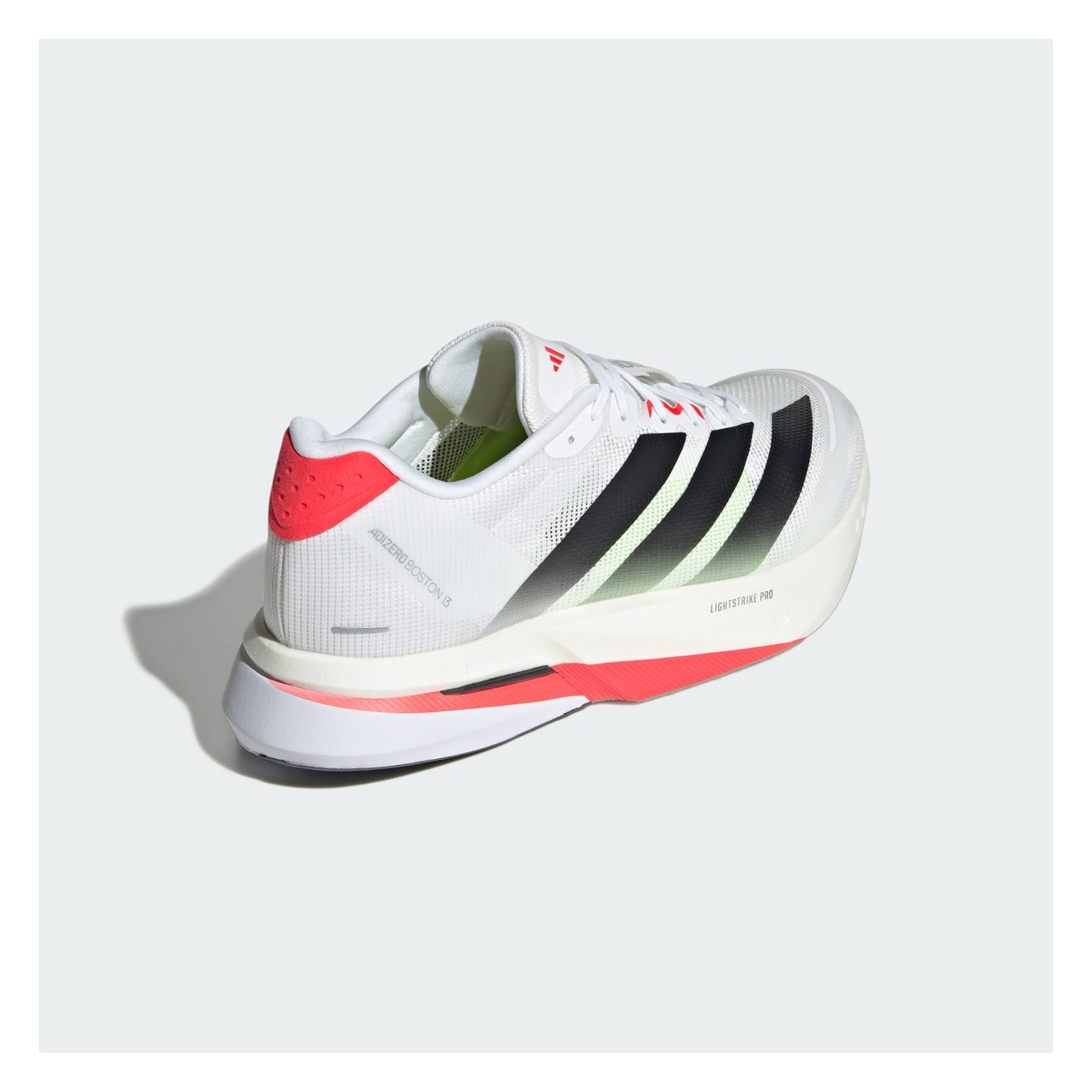
Launched around the 2025 Boston Marathon and rolled out widely for the fall-winter 2025 season, the Adizero Boston 13 is the thirteenth version of a cult adidas model. The Boston has always been the training shoe for competitive runners: comfortable enough to log mile after mile, lively enough to push hard in fast workouts. This v13 confirms that role and tightens the link with the racing line even further: more Lightstrike Pro foam (+13.8% vs the v12), reworked Energyrods 2.0 and, above all, the Lighttraxion outsole, until now reserved for the Adidas Adizero Adios Pro Evo 3.
Priced at 160 euros, weighing 253 g in the reference size and built on a 6 mm drop, the Boston 13 holds a strategic spot in the adidas lineup: above the Adidas Adizero EVO SL (a softer super trainer), just below the full-PEBA carbon-plated models. It is the do-everything shoe for athletes chasing a time goal.
RunMorph tip: if you already race in the Adios Pro Evo 3 or the Adios Pro 4, the Boston 13 is your training shoe. It keeps you in the same propulsive stride without burning through the PEBA foam you save for race day. If you want a softer, more versatile daily trainer, look at the EVO SL or the Brooks Ghost 18 instead.
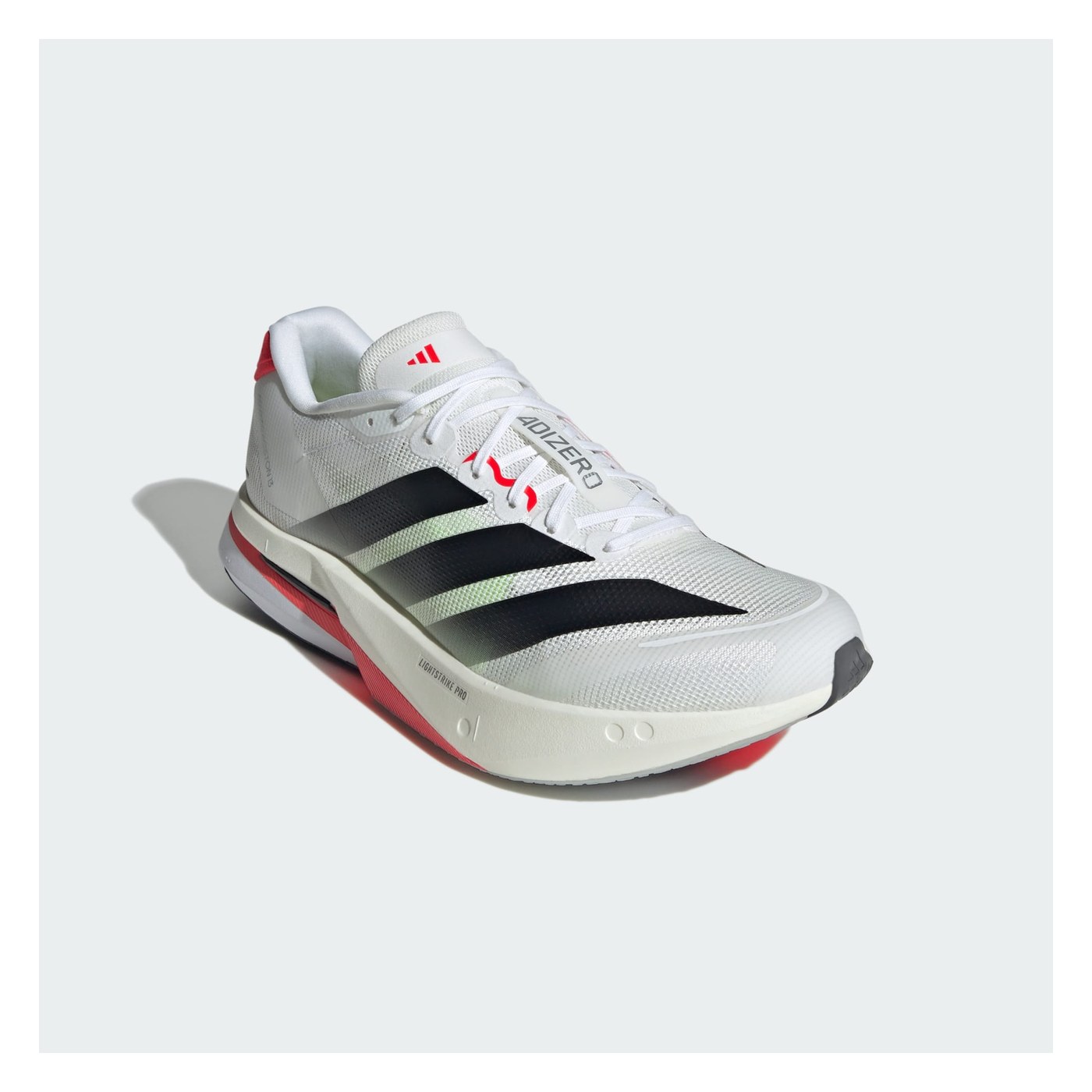
© Adidas, official photo used for editorial purposes
Objective technical data
| Brand | Adidas |
| Model | Adizero Boston 13 |
| Official release | April 2025 (Boston Marathon), FW25 rollout |
| Type | Road, tempo shoe / race-bred daily trainer |
| Drop | 6 mm |
| Heel / forefoot stack height | 36 mm / 30 mm |
| Weight (size 42.5 EU) | 253 g (men's) |
| Foam | Lightstrike (base layer) + Lightstrike Pro (+13.8% vs v12) |
| Reinforcement | Fiberglass Energyrods 2.0 |
| Outsole | Lighttraxion + Continental rubber under the forefoot |
| Upper | Ultralight engineered mesh, textile lining |
| Recommended distance | 5 km to marathon (training), plus racing over shorter distances |
| Official price | €160 |
Three numbers deserve a coach's comment. First, the 253 g: lighter than the Brooks Ghost 18 (289 g) and the Hoka Clifton 10 (272 g), which makes all the difference when you string reps together. Next, the 6 mm drop: moderate, in line with modern racing shoes, and it nudges you toward a slightly more midfoot strike. Finally, the 36/30 stack: generous enough to soak up 20 to 25 km per run, without the marshmallow feel of a max-cushion shoe like the Asics Superblast 3.
Who is the Boston 13 for?
1. The competitive runner chasing a time goal
If you are training for a 10 km, a half or a marathon with a time in mind, the Boston 13 is your training Swiss Army knife. It handles long runs at moderate pace, half-marathon-pace tempos, fartleks and short, fast intervals. It replaces two pairs: a daily trainer and a workout shoe. Plenty of runners chase a Boston qualifier or a sub-3h marathon with exactly this approach.
2. The 50-80 km/week runner who wants to feel the road
If you run between 50 and 80 km a week and dislike the pillowy feel of a max-cushion shoe, the Boston 13 brings back a more direct ride. Firm foam plus Energyrods deliver crisp, almost harsh feedback. That is also why it makes less sense if you run little and slowly: you would never tap into its engine.
3. The runner who wants a taste of carbon tech without spending 250 euros
The Boston 13 has no carbon plate, but its fiberglass Energyrods come close. You get part of the responsiveness and propulsion without paying for a Nike Vaporfly 4 or a Saucony Endorphin Pro 5. It is an excellent stepping stone to find out whether you click with this kind of construction before you invest in a super shoe.
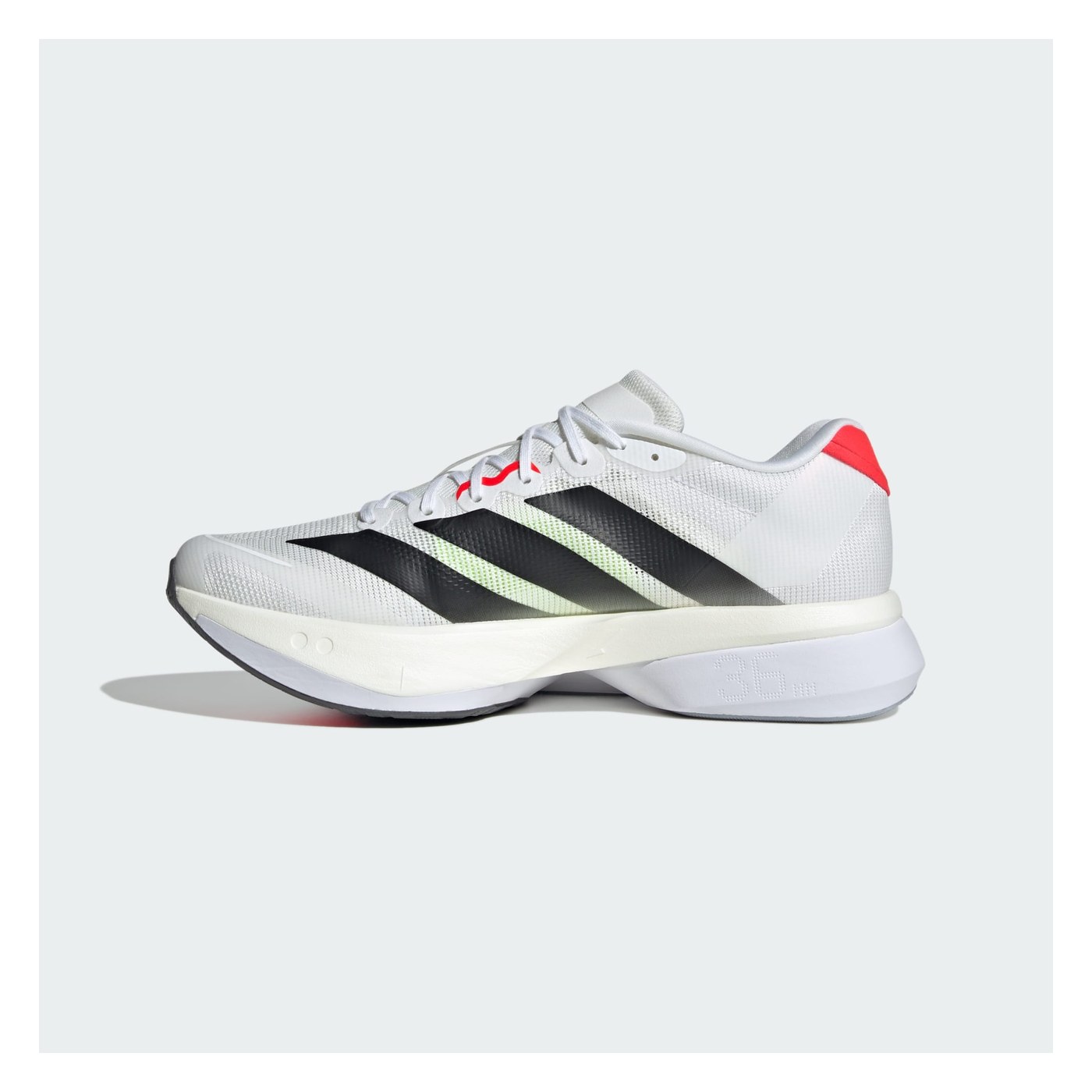
© Adidas, official photo used for editorial purposes
Comfort, ride and grip: what I took away from testing
Step-in feel and fit
The engineered mesh upper is thin and breathable, and it holds the foot well, with lacing that locks down the midfoot. The fit runs narrow, true to the Adizero racing line: if you have wide feet, plan on going up half a size or look at the Brooks Ghost 18 instead (it comes in a Wide version). A stiff heel counter grips the heel firmly, which builds confidence through turns and pace changes.
Cushioning and ride
The Lightstrike (firm base layer) + Lightstrike Pro (on top, livelier) combo creates a ride I would call propulsive and precise. On 6 to 10 km easy runs, the shoe can feel a little firm over the first few kilometers while the foam wakes up. After that, and especially as soon as you pick up the pace, the energy return becomes obvious. At marathon-pace tempo, the shoe shows what it really is: a machine for stringing together fast kilometers.
Stability and support
Despite a comfortable 36 mm heel stack, the Boston 13 stays very stable. No sideways tipping like you get on some max-cushion shoes. That fits its tempo DNA: you can push it through corners, on the track or on smooth trails without worry. Lateral support comes from the reinforced mesh and the wide footprint of the sole.
Outsole and grip
One of the big upgrades in this v13: the new Lighttraxion outsole, inherited from the Adios Pro 4 and the Adios Pro Evo 3. It is lighter than the old full Continental outsole, while keeping a Continental patch under the forefoot for grip where you push off. On wet roads, I found the grip very good. On dry roads, it is flawless. Durability looks decent (independent measurements point to 600 to 800 km before noticeable wear), although the foam could fade before the outsole if you stack hard sessions.
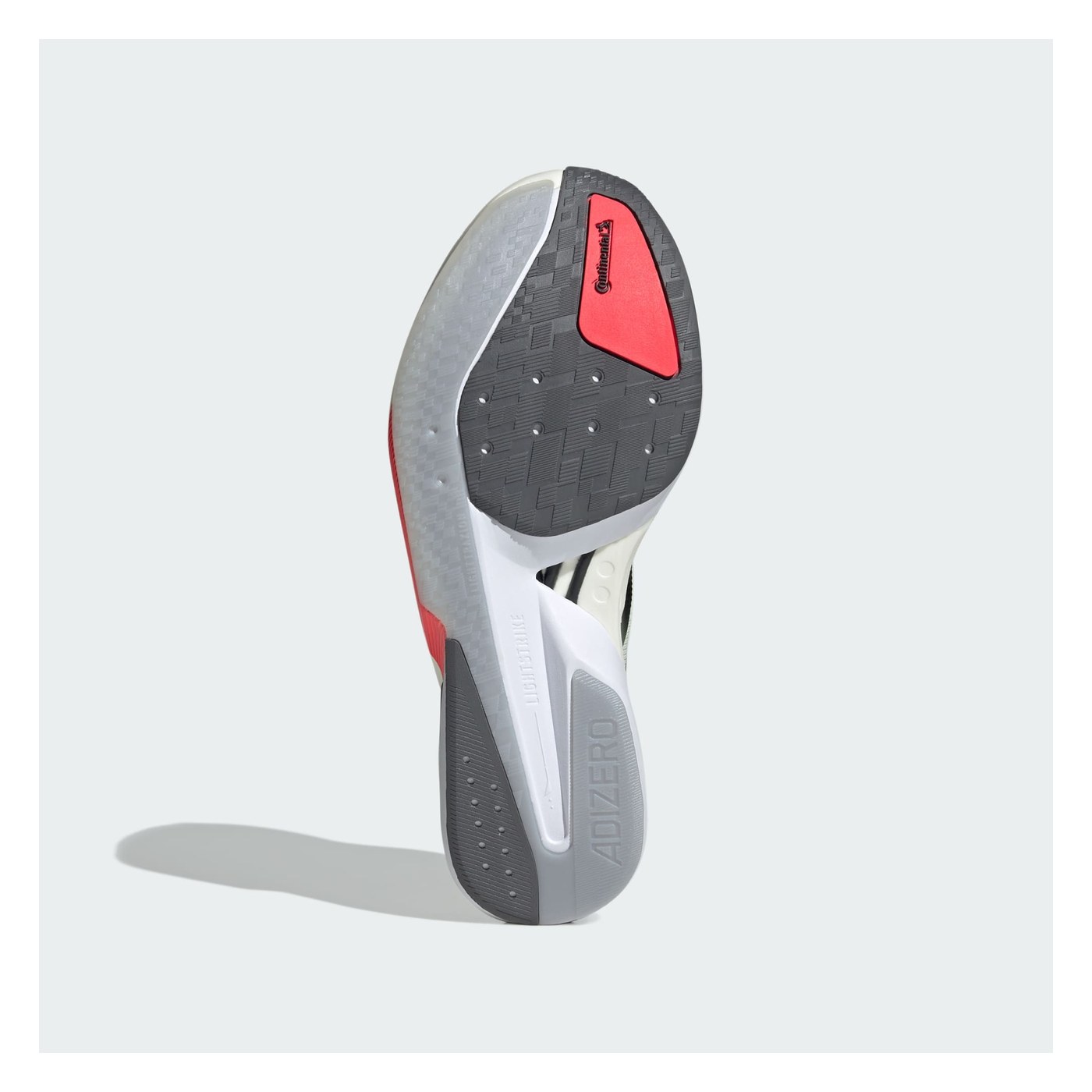
© Adidas, official photo used for editorial purposes
How it compares with the competition
The Boston 13 plays in the race-bred tempo shoe segment, a hotly contested niche in 2025-2026. Here is how it stacks up against its direct rivals.
| Model | Weight | Stack / Drop | Price | Positioning |
|---|---|---|---|---|
| Adidas Adizero Boston 13 | 253 g | 36/30 mm, 6 mm drop | €160 | Propulsive tempo shoe, Adios Pro training partner |
| Asics Magic Speed 5 | 230 g | 37/29 mm, 8 mm drop | €180 | Carbon plate, a true racing shoe |
| Hoka Mach 7 | 240 g | 37/32 mm, 5 mm drop | €160 | Fast daily trainer, softer foam |
| Asics Superblast 3 | 258 g | 45.5/37.5 mm, 8 mm drop | €200 | Max-cushion super trainer, more versatile |
Compared with the Magic Speed 5, the Boston 13 gives you less plate (fiberglass vs full-length carbon) but better foam durability and a wider range of use. Against the Hoka Mach 7, the Adidas is more propulsive and firmer, while the Hoka is softer and more forgiving. Against the Superblast 3, the Boston 13 is more precise and more connected to the road, whereas the Superblast is a luxury marshmallow for very long runs.
My coach's ranking by use: for pure workouts and racing, I pick a Magic Speed 5 or a true super shoe like the Endorphin Pro 5. For laid-back easy runs, I pick a Ghost 18 or a Clifton 10. For the one shoe that has to do everything in between, I pick the Boston 13.
How to fit the Boston 13 into your RunMorph training plan
The Boston 13 shines when you train for a time goal. As a RunMorph coach, here is how I build it into your training plans:
- Marathon or half-marathon build: Boston 13 for 80% of your weekly volume (easy runs, tempo, long runs with fast finishes). Keep a true carbon super shoe for race day and the two or three race-specific sharpening sessions.
- 10 km build: Boston 13 for all your volume, except races and very short speed intervals, where a lighter shoe like the Magic Speed 5 can make sense.
- Hybrid trail-road plan: the Boston 13 stays strictly on the road. For runnable trails, look at the Salomon GRVL Concept or the Hoka Mach 7 instead, depending on your terrain.
If you start a RunMorph plan with the Boston 13, I recommend 2 or 3 easy runs before your first pace session. The shoe really comes alive after 70 or 80 km, once the Lightstrike foam has loosened up and you have found your balance on the Energyrods.
© Adidas, official photo used for editorial purposes
RunMorph coach verdict
As a coach, I see lots of athletes buy a 250-euro carbon super shoe they do not dare wear in training, for fear of wearing it out. The result: they train in a shoe that is too soft and too heavy, and on race day their legs are not used to the feel of a racing shoe. The Boston 13 solves that problem: it delivers 70% of the racing feel with daily-trainer durability, at a reasonable price.
Strengths: a modest 253 g, a propulsive ride thanks to the Energyrods, a Lighttraxion + Continental outsole that excels on wet roads, a price justified by the tech on board, and decent foam durability.
Watch-outs: a narrow fit, a firm feel over the first kilometers at easy pace, no official Wide version in France at the time of testing, and not a shoe for very heavy or very slow runners.
RunMorph score: 8.5 / 10. A benchmark tempo shoe for 2025-2026 that deserves a spot in the rotation of any serious runner chasing a time goal.
Key takeaways for your training
- Ideal profile: competitive runner, 50-80 km/week, mostly midfoot strike, training for a 10 km, a half or a marathon.
- Ride: propulsive and precise, firmer than a max-cushion daily trainer, without the extreme bounce of pure PEBA.
- Ideal pairing: Boston 13 for training, Adidas Adizero Adios Pro 4 or Adios Pro Evo 3 for racing. You stay in the same stride pattern.
- Sizing: go true to size if you have an average foot, half a size up if you have a wide foot.
- Durability: count on 600 to 800 km of fun, with a Lighttraxion outsole that holds up well on wet roads.