With the Streakfly 2, Nike is back in the short-distance speed shoe segment. ZoomX, a carbon Flyplate and a weight close to 120 g: an explosive mix. But does this extreme lightness hide limits for the amateur runner?
Nike Streakfly 2 Review: A Featherweight Carbon Racer for 5K-10K
8.5/10
The essentials in 3 sentences
The Nike Streakfly 2 is an ultralight road racing shoe built for distances from 1500 m to 10 km. It pairs ZoomX foam with a full-length Flyplate carbon fiber plate for maximum propulsion. Its record weight and 4 mm drop make it a weapon of choice for experienced runners chasing personal bests.
8.5
/ 10 · RunMorph overall score
Who is it for?Experienced runners with a light to medium build who love intervals and short races on road or track.
Who should skip it?Beginners, heavier runners (+75 kg), or anyone looking for a versatile daily trainer.
Nike Streakfly 2: pure speed inherited from the Vaporfly
Nike's lineup is clearly split: the Vaporfly 4 owns the marathon, the Alphafly 3 chases world records, and the Streakfly 2 takes on the short distances. Released in April 2025, this second version makes a real break from the first: a full-length Flyplate carbon fiber plate replaces the original's simple Pebax insert.
That change matters. The Streakfly 2 moves into the lightweight super shoe category, the shoes built for 10 km races, fast half marathons and interval sessions on the track. With a claimed weight of around 122 g in size 42 according to i-Run, it ranks among the lightest models on the market, just behind a few prototypes worn by elite racers.
RunMorph's advice: If you're torn between the Streakfly 2 and the Vaporfly 4 for a 10 km, know this: the Streakfly gives you more feel and responsiveness at a fast pace, while the Vaporfly brings more cushioning and protection over the distance. For a half marathon, the Vaporfly remains the safer bet.
Nike Streakfly 2 in the Citron Pulse colorway: 3/4 front view with the oversized swoosh. © Nike, official photo used for editorial purposes.
Nike Streakfly 2 specs: the numbers that make the difference
| Brand | Nike |
| Model | Streakfly 2 |
| Release | April 2025 |
| Type | Road, short-distance racing |
| Drop | 4 mm |
| Stack height (forefoot / heel) | ~24 mm / ~32 mm |
| Weight (size 42) | ~122 g |
| Carbon plate | Yes, full-length carbon fiber Flyplate |
| Foam | ZoomX (PEBA) |
| Outsole | Perforated, grippy rubber |
| Upper | Lightweight technical mesh, integrated tongue |
| Recommended distance | 1500 m to 10 km |
| Retail price | €180 |
Flyplate technology: what does carbon fiber change underfoot?
The big leap of the Streakfly 2 is right there in its name: Flyplate. Where the first version made do with a partial Pebax insert, this one packs a carbon fiber plate that runs the full length of the sole. The effect is immediate: the shoe gets stiffer lengthwise, which improves the heel-to-toe transition and pushes you forward with every footstrike.
Still, this is not Vaporfly-level stiffness. The Flyplate in the Streakfly 2 flexes more than the carbon Flyplate in the marathon models (Vaporfly, Alphafly), so the shoe stays adaptable when the pace changes. It's a logical choice: over 5 or 10 km you take more turns and more surges, and an overly stiff plate would get in the way.
ZoomX foam, already proven across the Vaporfly range, handles energy return. Its PEBA formulation remains the market benchmark for weight-to-responsiveness ratio. At a claimed 122 g, the Streakfly 2 delivers one of the best weight-to-performance ratios ever measured in this segment.
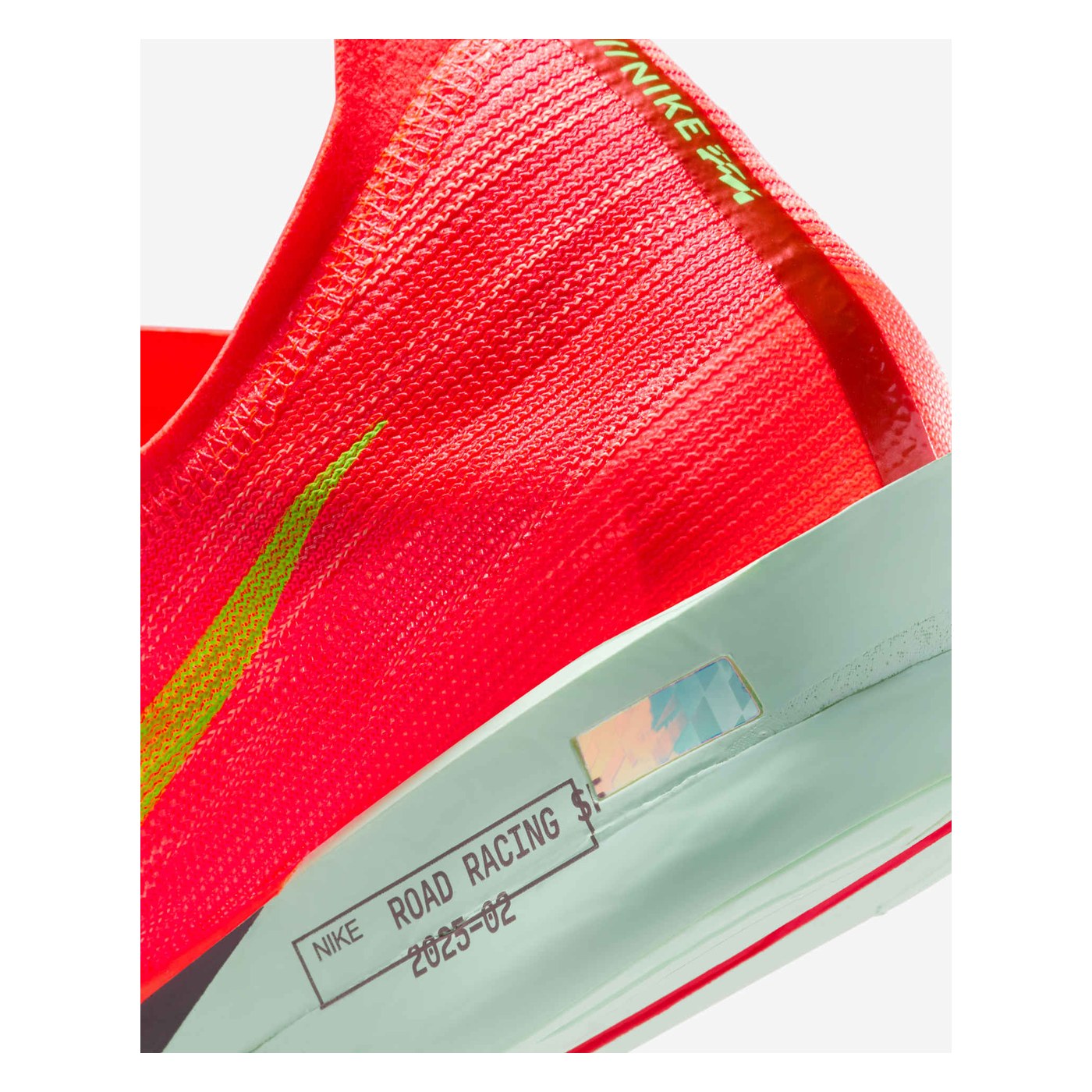
Sole detail showing the Flyplate label and the release date. © Nike, official photo used for editorial purposes.
Our on-the-road take: which paces and which runners?
At RunMorph, we put the Streakfly 2 through several types of sessions: short intervals (200/400 m), a 10 km tempo run and a 15 km long run to find its limits. The verdict is clear: this is a specialist's shoe.
From the very first surges, you feel the stiffness of the Flyplate. At 3:30/km and faster, the propulsion is sharp, almost aggressive. Your foot stays locked in despite the thin upper, and the ZoomX responsiveness kicks in from the second stride. Run Evasion backs up this impression: the Streakfly 2 excels in short maximal aerobic speed sessions and timed races.
Once your pace drops slower than 4:30/km, though, the magic fades. The lack of cushioning becomes noticeable, especially for runners over 70 kg. The thin sole doesn't shield you from repeated impacts, and after 10 km some pain under the foot can set in. This is not a shoe to lace up every day: its playground is quality sessions and short races.
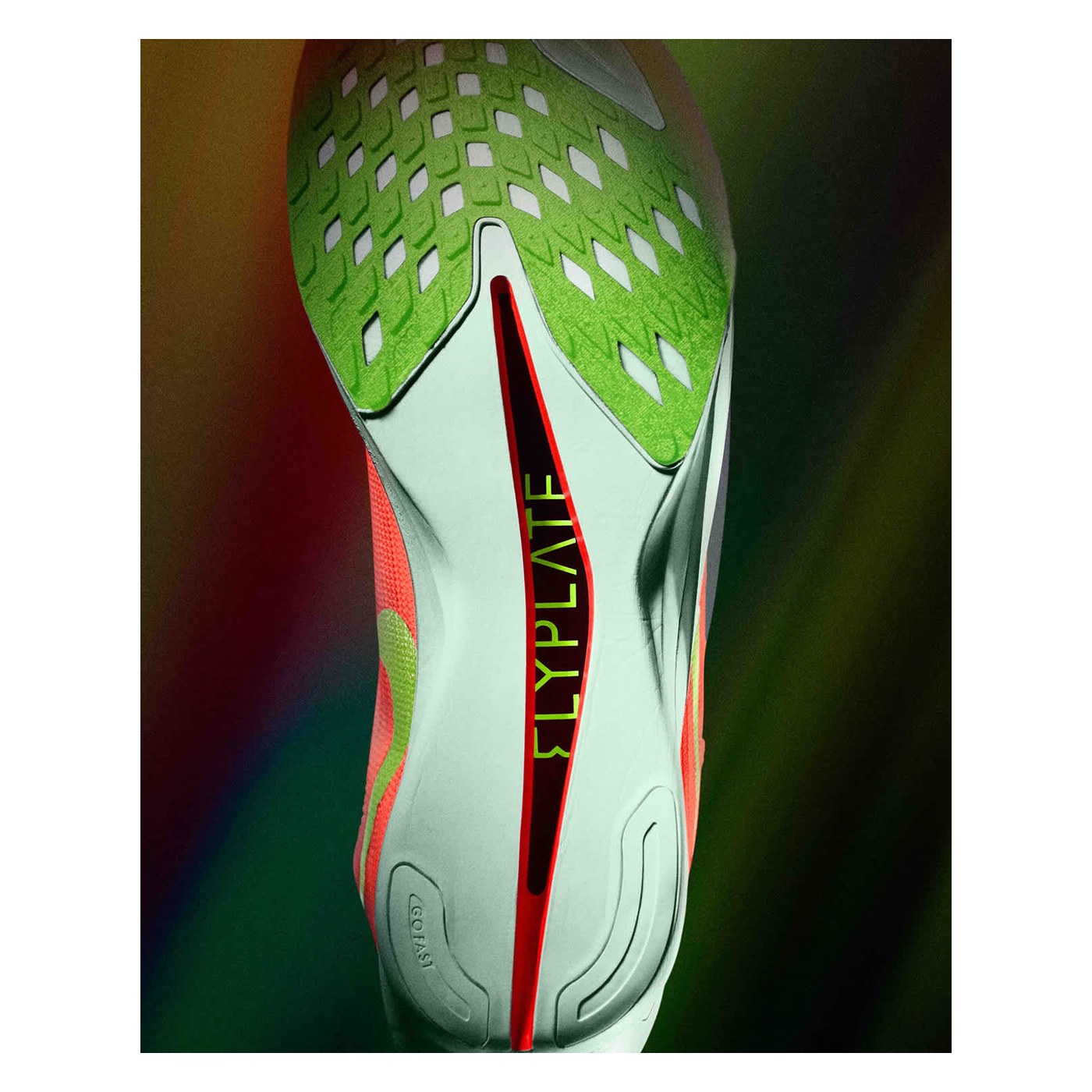
Bottom view of the sole with the central Flyplate and the perforated rubber. © Nike, official photo used for editorial purposes.
Nike Streakfly 2 vs Vaporfly 4 vs Alphafly 3: the comparison to help you choose
| Criterion | Streakfly 2 | Vaporfly 4 | Alphafly 3 |
|---|---|---|---|
| Weight (size 42) | ~122 g | ~164 g | ~198 g |
| Plate | Carbon Flyplate | Full-length carbon | Carbon + 2 Air Zoom |
| Drop | 4 mm | 8 mm | 8 mm |
| Ideal distance | 1500 m to 10 km | 10 km to marathon | Marathon, records |
| Cushioning | Minimal | Generous | Maximal |
| Price | €180 | €250 | €285 |
Nike Streakfly 2 pros and cons
Pros
- Record weight (122 g)
- Responsive carbon Flyplate
- Premium ZoomX foam
- More affordable than the Vaporfly
- Excellent grip on the track
Cons
- Limited durability (thin sole)
- Poor match for runners over 75 kg
- Not enough cushioning beyond 10 km
- Minimal upper, fit is critical
- Reserved for quality sessions
How to fit the Streakfly 2 into your RunMorph training plan
The Streakfly 2 earns its place when you prepare with a RunMorph 10 km or half marathon plan. It's ideal for short intervals (200 m to 1 km), maximal aerobic speed tests and timed 5 and 10 km races. At RunMorph, we recommend keeping it to one session per week at most, alternating with a more cushioned shoe for easy runs and long runs.
If you're training for a 10 km with a RunMorph plan, pair the Streakfly 2 with your goal-pace sessions. For the rest of the week, a Pegasus 42 or a Clifton 10 will do a better job of protecting your legs.
The RunMorph Coach verdict
The Nike Streakfly 2 nails its segment. It delivers propulsion and lightness that outclass its direct rivals, at a lower price than the Vaporfly. Its limit is clear: this is a specialist's shoe, meant for experienced runners and short distances.
RunMorph score: 8.5/10
The half point it loses against a 9/10 comes from durability and limited comfort beyond 10 km. But for its target use (intervals, 5K, fast 10K), it's close to perfect.
Key takeaways for your training
- Save it for fast sessions: intervals, tempo runs, short races. Not for everyday running.
- Make sure your technique is solid: the 4 mm drop and the stiff Flyplate demand an efficient stride.
- Alternate with a daily trainer: your legs will thank you for mixing up the cushioning.
- Check your weight: above 75 kg, go for the Vaporfly or a more protective shoe.
- Take advantage of the price: at €180, it's one of the most affordable super shoes on the market.