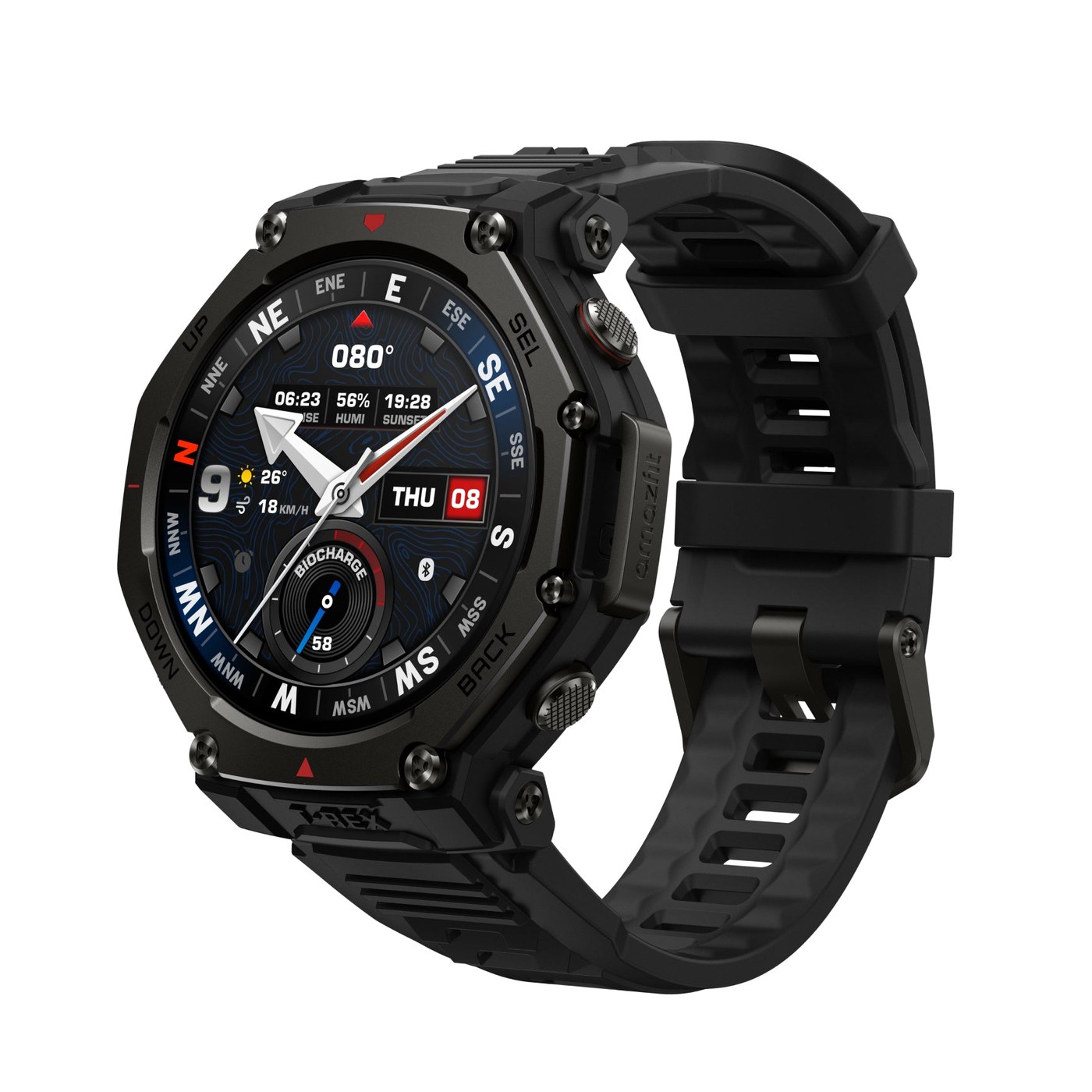
Amazfit makes no secret of it: the T-Rex 3 Pro takes direct aim at the Garmin fenix 8 Pro, for a quarter of the price. Titanium bezel, sapphire glass, LED flashlight, built-in speaker and routable maps: on paper, the copy is striking. After several weeks wearing it on trails and long runs, RunMorph separates what truly delivers from what's just a marketing pitch.
© Amazfit, official photo used for editorial purposes
Amazfit vs Garmin: the quarter-price strategy
Amazfit moves fast. Less than nine months after launching the T-Rex 3 in 2024, the brand unveiled the T-Rex 3 Pro at IFA Berlin in September 2025, with a crystal-clear roadmap: take the selling points behind the Garmin fenix 8 Pro's success (premium metal bezel, sapphire glass, flashlight, mic and speaker, full mapping) and offer them at a quarter of the price. On paper, the T-Rex 3 Pro's spec sheet is impressive: it ticks almost every box of a high-end outdoor watch.
Still, the marketing pitch needs some perspective. The Pro name and the titanium story sell watches, but a nobler bezel and tougher glass aren't enough to match Garmin's fifteen years of GPS and mapping experience. At RunMorph, the point isn't to write off the T-Rex 3 Pro as a knockoff fenix 8. It's to pin down exactly what it manages to copy, and where it falls short.
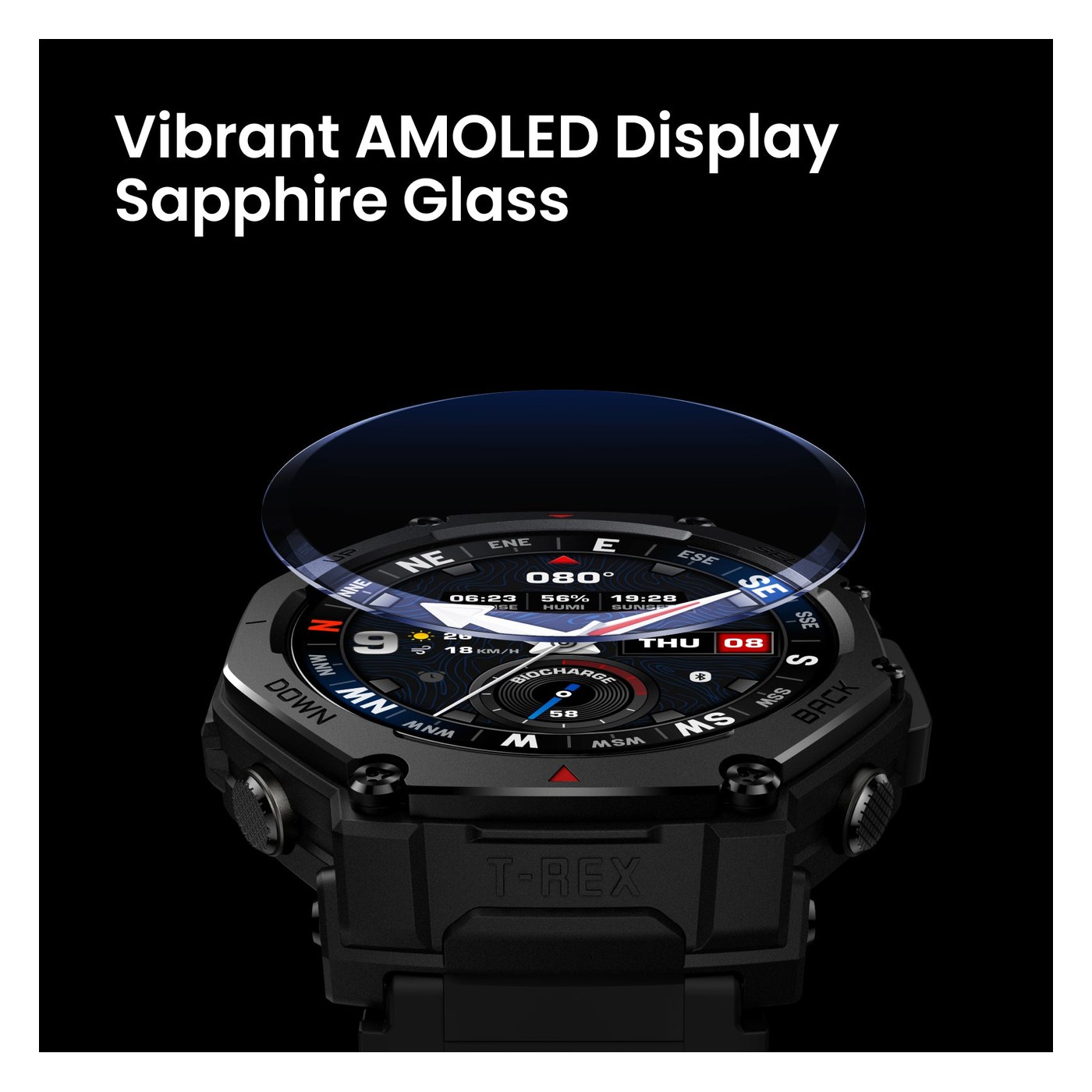
T-Rex 3 Pro specs: titanium, sapphire and LED flashlight
| Brand | Amazfit |
| Model | T-Rex 3 Pro (48 mm, Tactical Black) |
| Release | September 5, 2025 (IFA Berlin) |
| Case | 48 x 14 mm, titanium bezel, sapphire glass |
| Weight | About 52 g (silicone strap) |
| Display | 1.5" AMOLED (38 mm), 3000 nits, sapphire glass |
| GNSS / GPS | Multi-GNSS and dual-frequency GPS, automatic mode |
| Heart rate sensor | BioTracker 6.0 PPG (optical, wrist-based) + SpO2 |
| Mapping | Routable maps with route calculation |
| Sport profiles | 180+ (including HYROX modes) |
| Flashlight | Dual LED (white + red) built into the bezel |
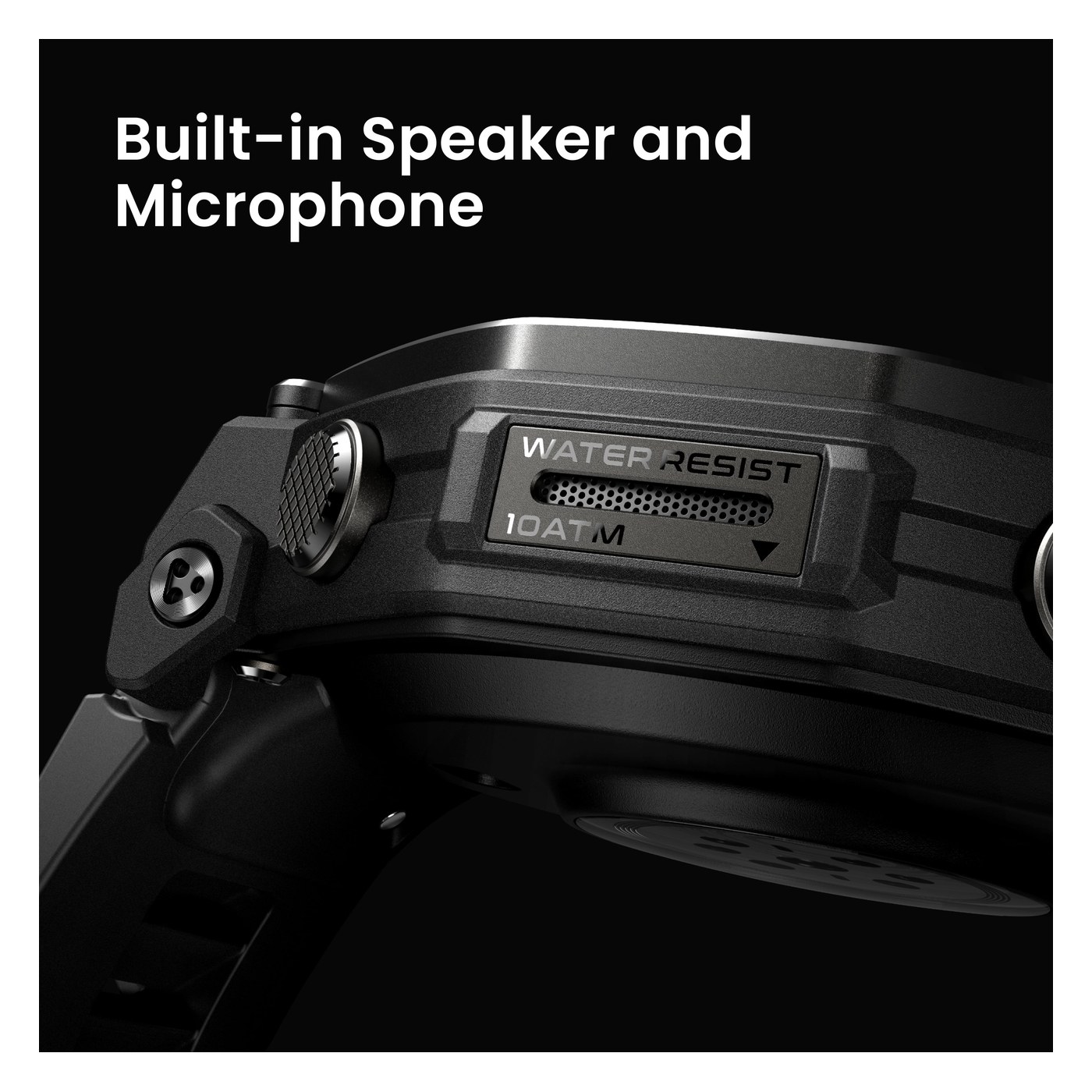
| Audio | Built-in speaker and microphone |
| Contactless payments | No |
| Water resistance | 10 ATM, MIL-STD-810H |
| Smartphone connection | Bluetooth, Zepp app (Android / iOS) |
| Official price | €399.90 |
© Amazfit, official photo used for editorial purposes
Routable maps and flashlight: what do they really change?
The LED flashlight, built into the side of the bezel, delivers. Two dimmable white LEDs plus a red LED that preserves your night vision: exactly what the equivalent Garmin models give you, handy for packing your bag before dawn or reading a paper map at a bivouac. Simple, reliable, no need to pull out your phone.
The routable maps are a more mixed story. The feature calculates a loop route right on the watch, a real selling point on paper compared with a basic breadcrumb trail. In practice, independent tests in Europe (Switzerland, France, Finland, Spain) show that the suggested routes often follow busy roads, poorly suited to running or cycling. Technically, it works. But it rarely helps a runner or trail runner looking for a safe route. On this specific point, the gap with the fenix 8's worldwide topographic maps is still clear.
RunMorph's tip: use the T-Rex 3 Pro's routable maps for a rough sense of direction, but always plan your trail route beforehand in a dedicated app. If detailed mapping is your top priority, the Garmin fenix 8 remains the benchmark, as long as you can live with the price.
Field test: from easy runs to ultra-trail
We wore the T-Rex 3 Pro for several weeks, from easy road runs at 5:30/km to longer trail outings of around 25 kilometers, with paces slowing toward 7:00/km on technical sections. In dense forest, the multiband GPS signal stays stable, with clean tracks and little drift at waypoints, a real plus for a watch at this price.
On heart rate, the BioTracker 6.0 optical sensor shows an average deviation of 0.07% to 0.50% versus a reference chest strap during steady efforts, a very solid result for a wrist sensor. The gaps naturally widen on sharp accelerations like short intervals, as with almost every optical sensor on the market.
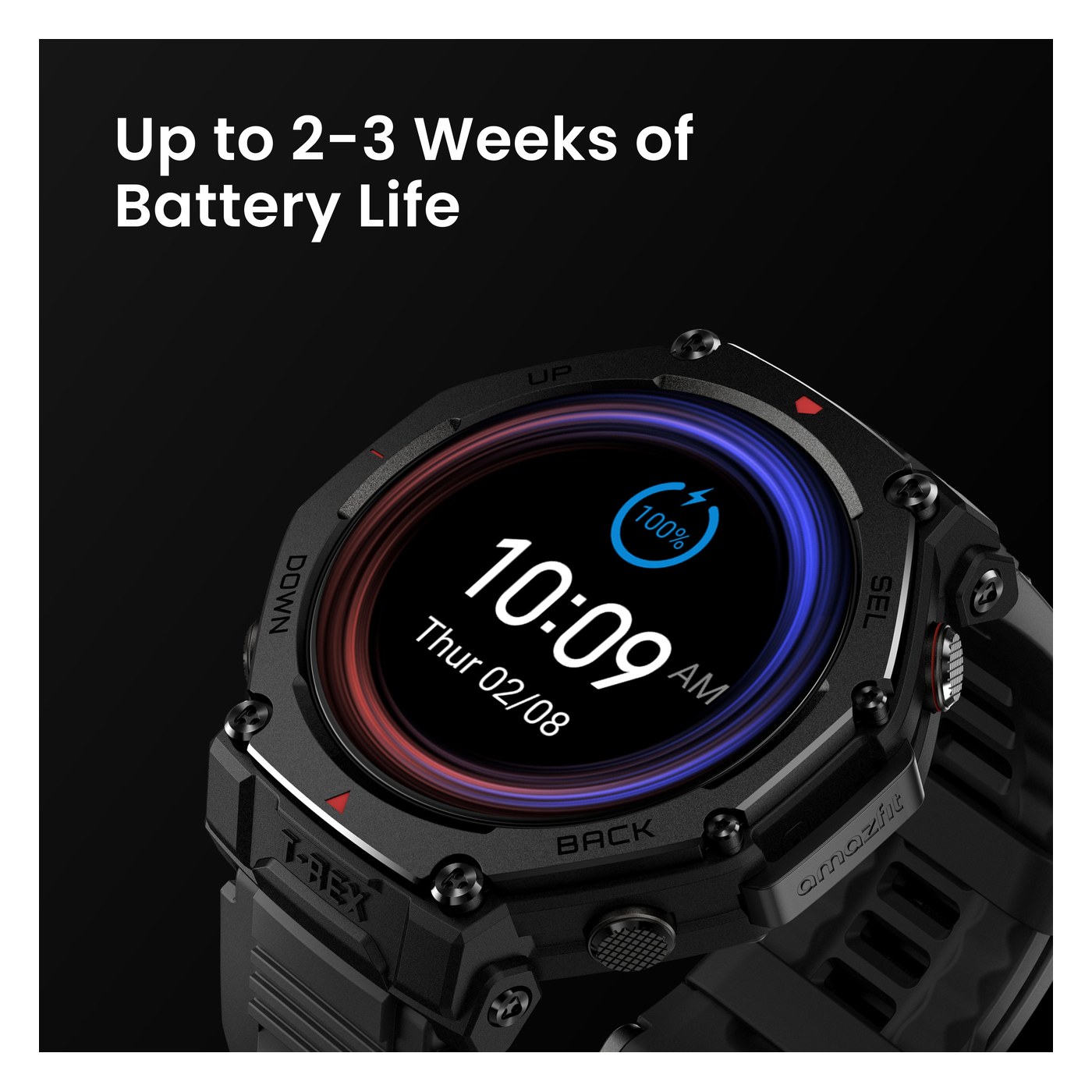
Battery life is a more measured story. Under heavy daily use (max-accuracy GPS, continuous heart rate, Always-On display), the watch lasts a little under a week. That matches the manufacturer's claims, but it puts the T-Rex 3 Pro in the bottom half of outdoor watches for battery life in its most accurate GPS mode (38 hours on the 48 mm), behind rivals like the Coros Vertix 2S. For a typical long run of three to five hours, you have plenty of margin. On ultras lasting more than two consecutive days in constant max-accuracy GPS mode, you need to plan a mid-race recharge, unlike some record-setting watches built specifically for expeditions.
One more thing we noticed over the weeks: the stock silicone strap is on the stiff side, isn't ideal for slim wrists and can feel slightly uncomfortable during the first days of heavy use. Not a deal-breaker, but worth knowing before you buy if you plan to wear it around the clock, day and night, for sleep and recovery tracking.
© Amazfit, official photo used for editorial purposes
T-Rex 3 Pro vs Garmin fenix 8: head to head
The comparison is inevitable, since Amazfit invites it. Here's how they stack up, feature by feature.
| Criterion | Amazfit T-Rex 3 Pro | Garmin fenix 8 |
|---|
| Price | €399.90 | From €899 |
| Case | Titanium, sapphire glass | Reinforced polymer or titanium Sapphire |
| Display | 1.5" AMOLED, 3000 nits | 1.4" AMOLED, Gorilla Glass DX |
| GNSS | Dual-frequency multi-GNSS | Adaptive multiband SatIQ |
| Mapping | Routable, limited real-world usefulness | Worldwide offline TopoActive, the benchmark |
| Max GPS battery life | 38 h (accuracy mode) / 116 h (eco mode) | 37 to 43 h (multiband) / 40 days (expedition) |
| Flashlight | Yes, white and red LED | Yes, white and red LED |
| Speaker / mic | Yes | Yes |
| Ecosystem | Zepp, less mature | Garmin Connect, very mature |
More than €500 cheaper than the fenix 8, the T-Rex 3 Pro carries over most of the comfort features (flashlight, audio, toughness) but falls short on the two things that really make a difference under demanding use: map detail and the depth of the software ecosystem. Against the other Amazfit watch in the RunMorph lineup, the Amazfit T-Rex Ultra 2, the T-Rex 3 Pro comes in €150 cheaper, with a more compact case and one notable addition: the built-in speaker.
Pros and cons
Pros
- Unbeatable value for money against high-end Garmins
- Titanium case and sapphire glass for under €400
- LED flashlight that's genuinely useful on early-morning runs or at a bivouac
- Accurate optical heart rate sensor during steady efforts
- Stable multiband GPS, even in dense forest
Cons
- Routable maps of little real-world use in Europe
- Max-accuracy GPS battery life trails the best outdoor watches
- Zepp software ecosystem less polished than Garmin Connect or Coros EvoLab
- No contactless payments
- Stock strap doesn't always suit slim wrists
© Amazfit, official photo used for editorial purposes
Our field verdict: who is it for, and which RunMorph training?
The T-Rex 3 Pro is aimed first and foremost at runners and trail runners who want a rugged, long-lasting, full-featured watch without chasing the absolute precision of a premium benchmark. It's especially at home guiding a trail or ultra build, where case toughness and the flashlight matter as much as meter-perfect GPS.
To structure your long runs and trail training with this battery life and built-in flashlight, pair the T-Rex 3 Pro with a RunMorph plan built for your goal: ultra-trail, half marathon or an easy comeback. 👉 Discover RunMorph training plans.
The RunMorph Coach's verdict
The T-Rex 3 Pro delivers on most of its promise: a rugged, long-lasting, well-equipped outdoor watch at a price nowhere near a fenix 8's. The titanium and sapphire glass aren't marketing gimmicks, the flashlight is genuinely useful, and the heart rate sensor proves reliable during steady efforts. The routable maps and the battery life in max-accuracy GPS mode, however, are a reminder that even a great copy can't erase Garmin's fifteen-year software lead. 8/10: an excellent choice if you put toughness and budget ahead of absolute precision.
Key takeaways for your training
- Toughness on a budget: titanium and sapphire glass for under €400, a rarity in this segment.
- Built-in flashlight: a real plus for early-morning runs or ultra-trail bivouacs.
- Reliable continuous heart rate: the BioTracker 6.0 holds up during endurance efforts.
- Take the mapping with a grain of salt: always plan your trail route beforehand, and don't count on the watch's suggestions.
- Solid but not record-setting battery life: plan a recharge on ultras longer than two days in max-accuracy GPS mode.
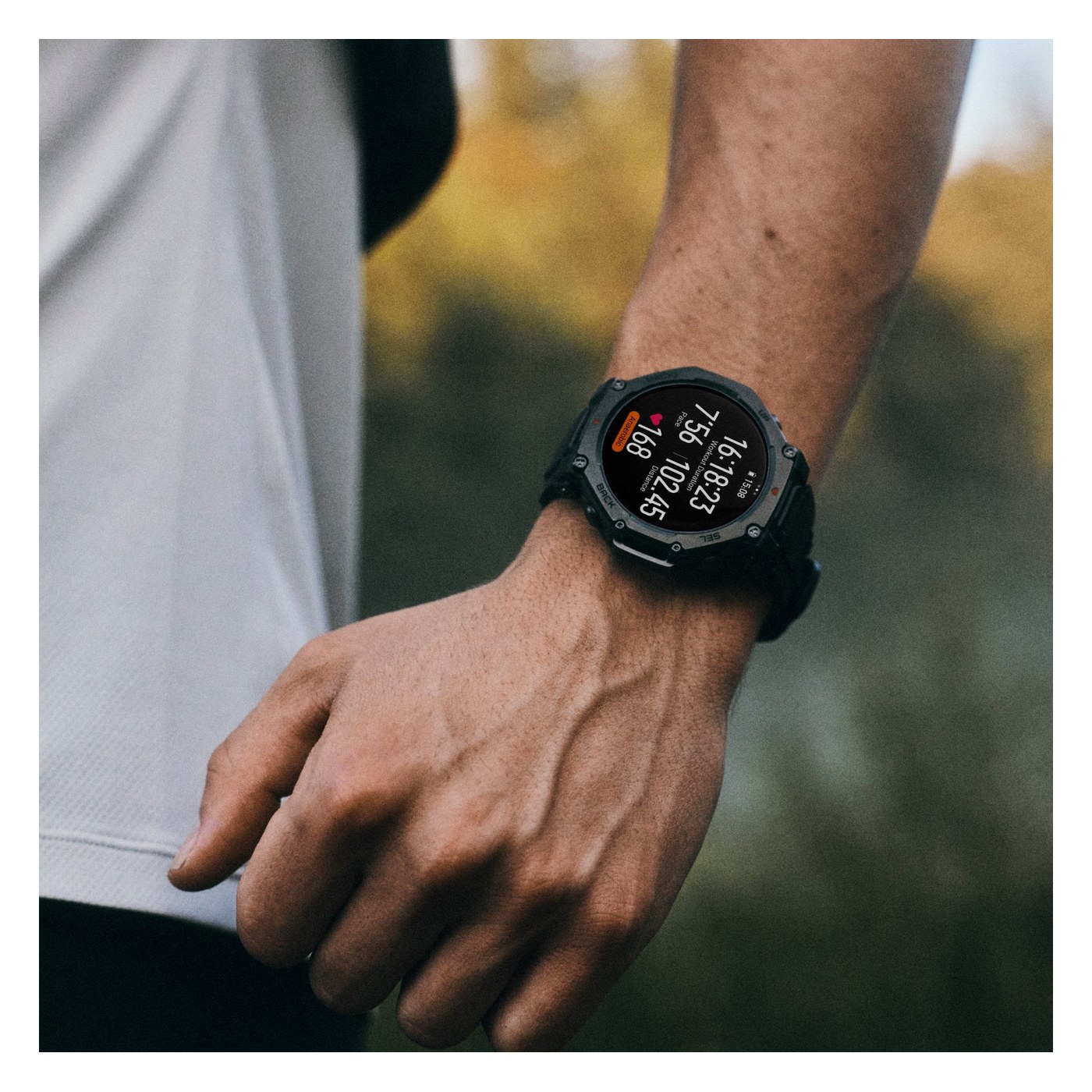
© Amazfit, official photo used for editorial purposes