COROS Vertix 2S Review: 140-Hour Battery, Titanium and Sapphire
8.5/10
While Garmin, Suunto and Polar rushed to AMOLED, COROS made an almost iconoclastic call with the Vertix 2S: keep a transflective display you can read in full sun, and bet on what really matters when you go far and long, battery life. The result: the brand's flagship claims up to 140 hours of GPS recording. At RunMorph, we put it through its paces with ultrarunners and adventurers in mind.
The COROS Vertix 2S is the brand's longest-lasting expedition watch, built for ultra-trail, mountaineering and multi-day adventures. It pairs a titanium case and sapphire glass with accurate dual-frequency GPS and free worldwide offline maps. Its transflective MIP display lacks the flash of an AMOLED, but that trade-off is exactly what gives it its extraordinary battery life.
8.5 / 10 · RunMorph overall score
GPS accuracy9/10
Battery life9.8/10
Mapping8/10
Training data8/10
Value for money7.5/10
Who is it for? Ultrarunners, mountaineers and adventurers who never want to think about charging on a multi-day adventure.
Who should skip it? Road runners who want a sleek AMOLED display, contactless payments and a light everyday watch.
COROS Vertix 2S: a deliberate bet on transflective against the AMOLED wave
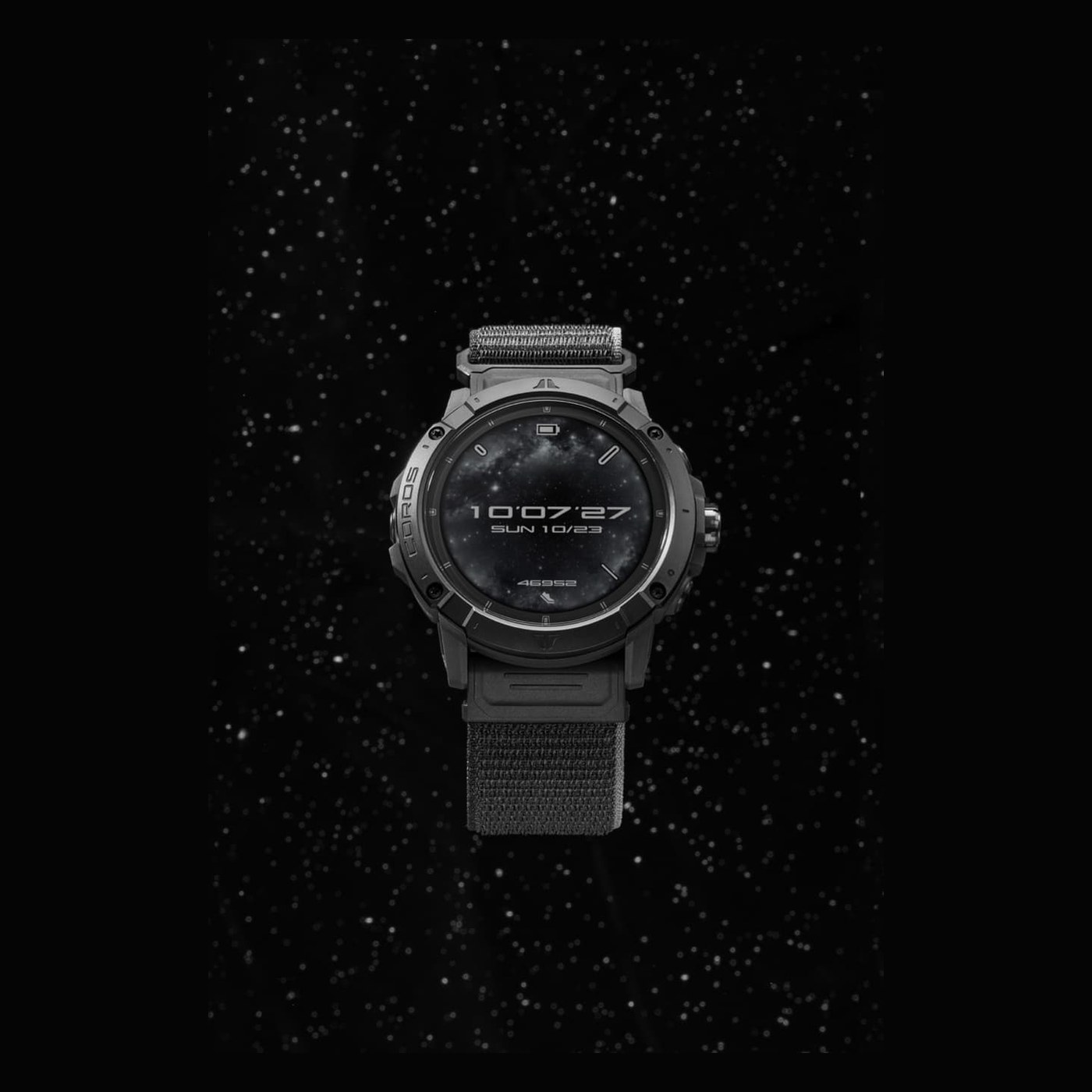
Released in spring 2024, the Vertix 2S is a quiet update to the 2021 Vertix 2. COROS keeps the same case design but adds a new optical heart rate sensor (the one from the Apex 2 and Apex 2 Pro), reworks the GNSS antenna for better accuracy, and offers three metallic colorways inspired by the space race: Space (carbon black), Earth (blue) and Moon (silver). On paper, it's a minor evolution. In the brand's strategy, it's a manifesto.
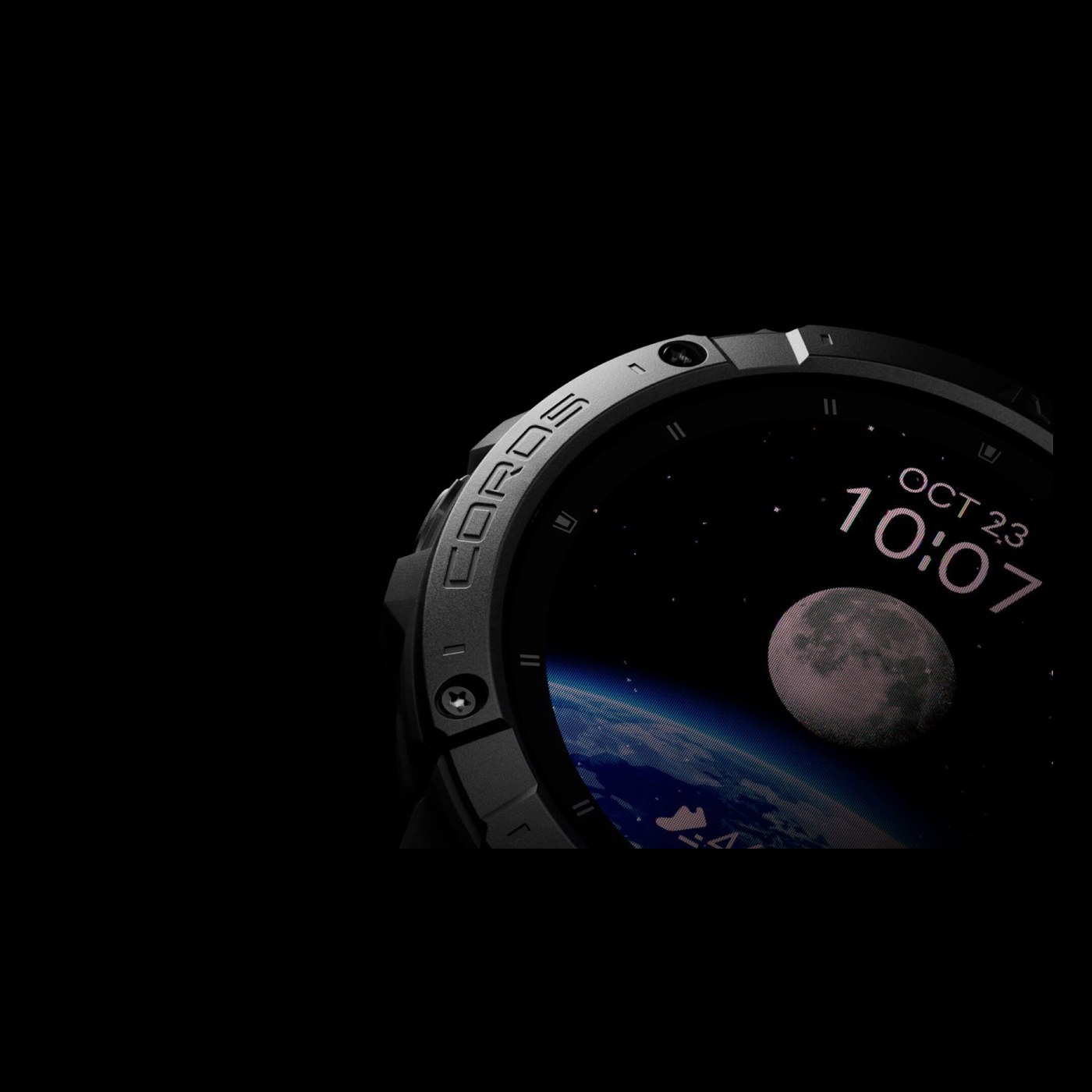
Because in 2026, nearly every premium rival has switched to AMOLED: brighter, punchier, easier to sell. COROS sticks with a transflective MIP display that feeds on ambient light instead of fighting it. The marketing verdict is harsh: the screen looks dull in the store. The verdict on the trail is a different story. Under high-altitude sun, MIP stays perfectly readable without a backlight, and above all it doesn't devour the battery. That choice is what lets the Vertix 2S post battery figures no AMOLED watch can come close to. At RunMorph, we see this positioning as consistent: the Vertix isn't an everyday watch. It's a survival and performance tool for people whose playground is measured in days and thousands of meters of elevation gain.
RunMorph's tip: if you're torn between the Vertix 2S and one of the brand's AMOLED watches, ask yourself one question: how long does your longest outing last without a recharge? Under 30 hours of GPS, the COROS APEX 4 or the COROS Pace Pro are more than enough and give you a nicer screen. Beyond that, on a 100-mile ultra or a multi-day adventure, the Vertix 2S comes into its own.
COROS Vertix 2S specs: toughness over flash
Brand
COROS
Model
Vertix 2S (tested colorway: Space)
Release
April 2024
Case
50.3 mm, titanium and polymer, PVD titanium bezel
Glass
Sapphire
Weight
70 g (case), supplied with 26 mm Quick Fit nylon and silicone bands
This is the number one criterion for an ultra watch, and the Vertix 2S delivers. Dual-frequency GPS (L1+L5) picks up two satellite signals at once, which lets it correct signal bounce in narrow canyons, under dense forest cover or along rock walls. The new antenna built into the titanium bezel sharpens readings further compared with the Vertix 2. On the trail, tracks stay glued to the path even on deep, enclosed singletrack, where many watches draw rough staircases.
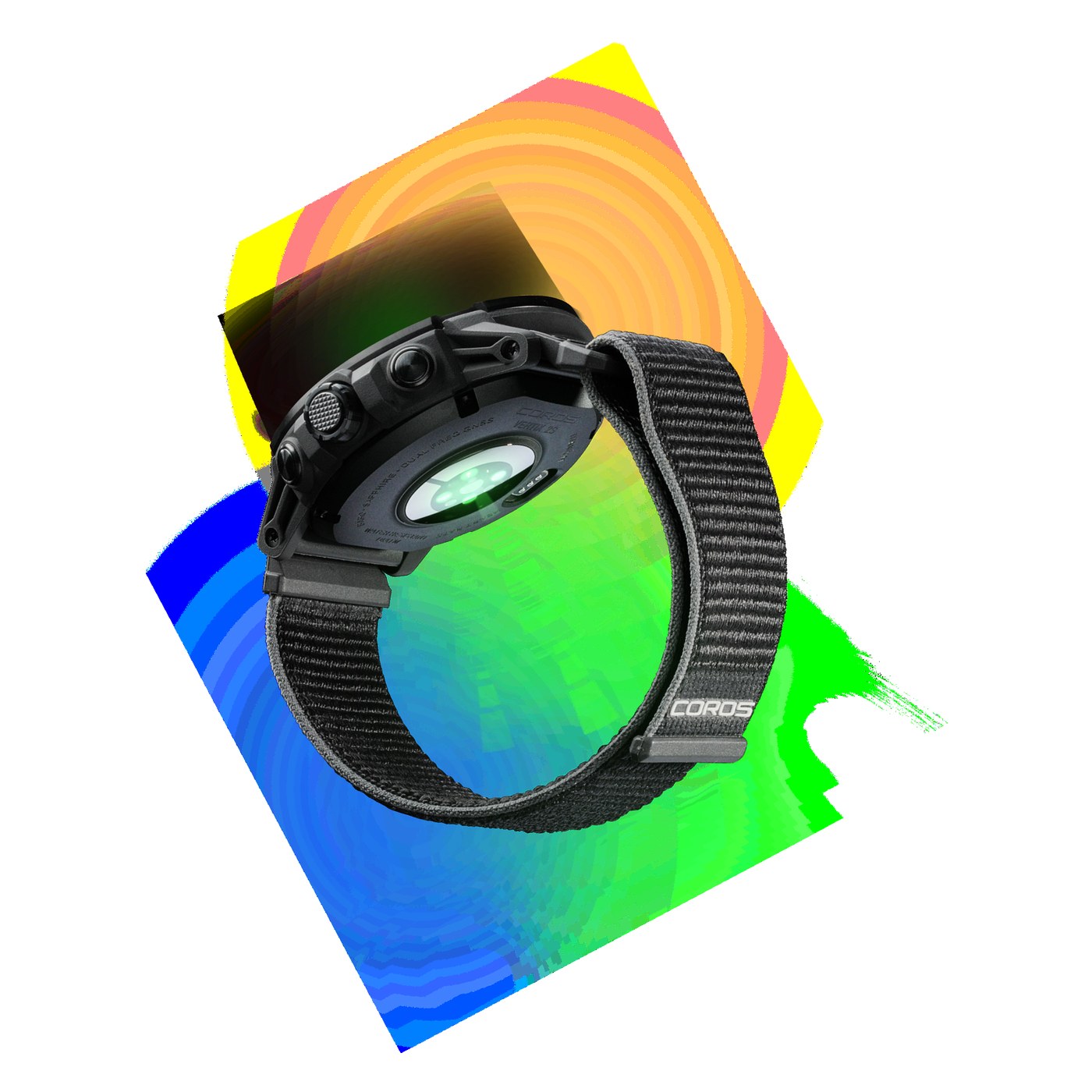
The optical heart rate sensor, inherited from the Apex 2, is one of the best COROS has made. It stays reliable at the steady easy aerobic paces where you spend most of an ultra. Like any wrist-based sensor, it drops off a bit with sudden changes in effort and in extreme cold: for threshold sessions or intervals, the smart move is still to pair a chest strap such as the Garmin HRM 600 or the COROS HR Monitor over Bluetooth. For climbing, the Vertix 2S can also be worn off the wrist, clipped to the supplied carabiner: in that case, a heart rate strap becomes essential.
Maps and navigation: it's all free, really
Where Garmin sometimes charges for its premium base maps, COROS delivers worldwide offline maps with no subscription at all: topographic, landscape and hybrid maps, downloadable by region over the built-in Wi-Fi. Navigation covers GPX track following, turn-by-turn directions, back to start, elevation profile, checkpoints and off-course alerts. The Navigation Mirroring feature even lets you follow a complex route mirrored between your phone and the watch.
The 280 x 280 px MIP display doesn't have the sharpness of a high-definition AMOLED, and the map looks less polished than on a Suunto Vertical 2 or a Garmin Forerunner 970. But it remains perfectly usable for staying on course, and the digital crown makes zooming and scrolling very intuitive, even with thick gloves. For pure navigation on an expedition, it's more than enough.
This is where the Vertix 2S crushes everything. COROS claims 36 days in smartwatch mode, 118 hours of GPS in standard mode, 73 hours in multi-GNSS, 43 hours in dual-frequency and up to 140 hours in UltraMax mode. In practice, a runner can finish a 100-mile race with the most accurate GPS mode on without the battery ever becoming an issue, and a mountaineer can head out for a fully self-supported week. Even with music playing, GPS battery life stays around 30 hours, which beats most competing watches in basic use.
The downside is the charger: COROS sticks with a proprietary connector and a USB-A cable, while almost every competitor has moved to USB-C. On a multi-day adventure, make sure you pack the right cable. But let's be clear: with that much in reserve, you'll rarely recharge during a race.
Training and recovery metrics: the full EvoLab suite
The Vertix 2S packs the entire COROS EvoLab suite: Training Load, 42-day Base Fitness, Training Status, Recovery Timer, Race Predictor, VO2max estimate, wrist-based running power, plus daily tracking (sleep, overnight heart rate variability, Wellness Check). The ecosystem is free, the COROS app is clear, and the brand regularly pushes updates that add features to its watches after purchase. That's a real strength: the 2021 Vertix 2 still gets new features today, a good sign for the longevity of the 2S.
It still sits a notch below the physiological depth of a Polar Grit X2 Pro on recovery, or the software richness of a Garmin. For trail- and ultra-focused training planning, though, EvoLab is remarkably on point.
Who is the COROS Vertix 2S for?
Ultra-trail and long-distance runners
This is its natural target. If you're training for a 100K, a 100-miler or a stage race, the battery life, dual-frequency accuracy and free maps all deliver. You switch on the most accurate GPS mode and forget about the battery. It's the right pick for anyone who puts reliability ahead of looks.
Mountaineers and adventurers
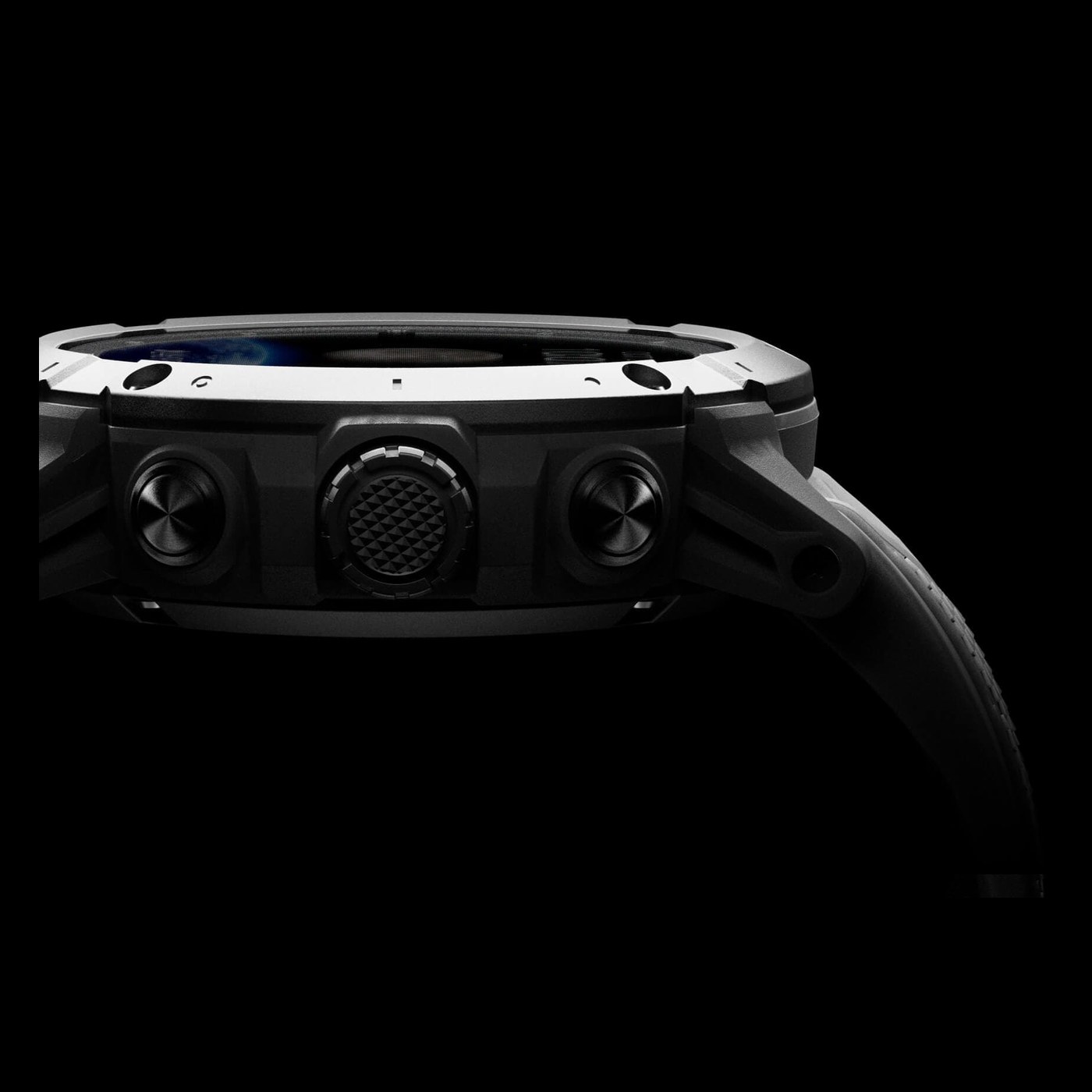
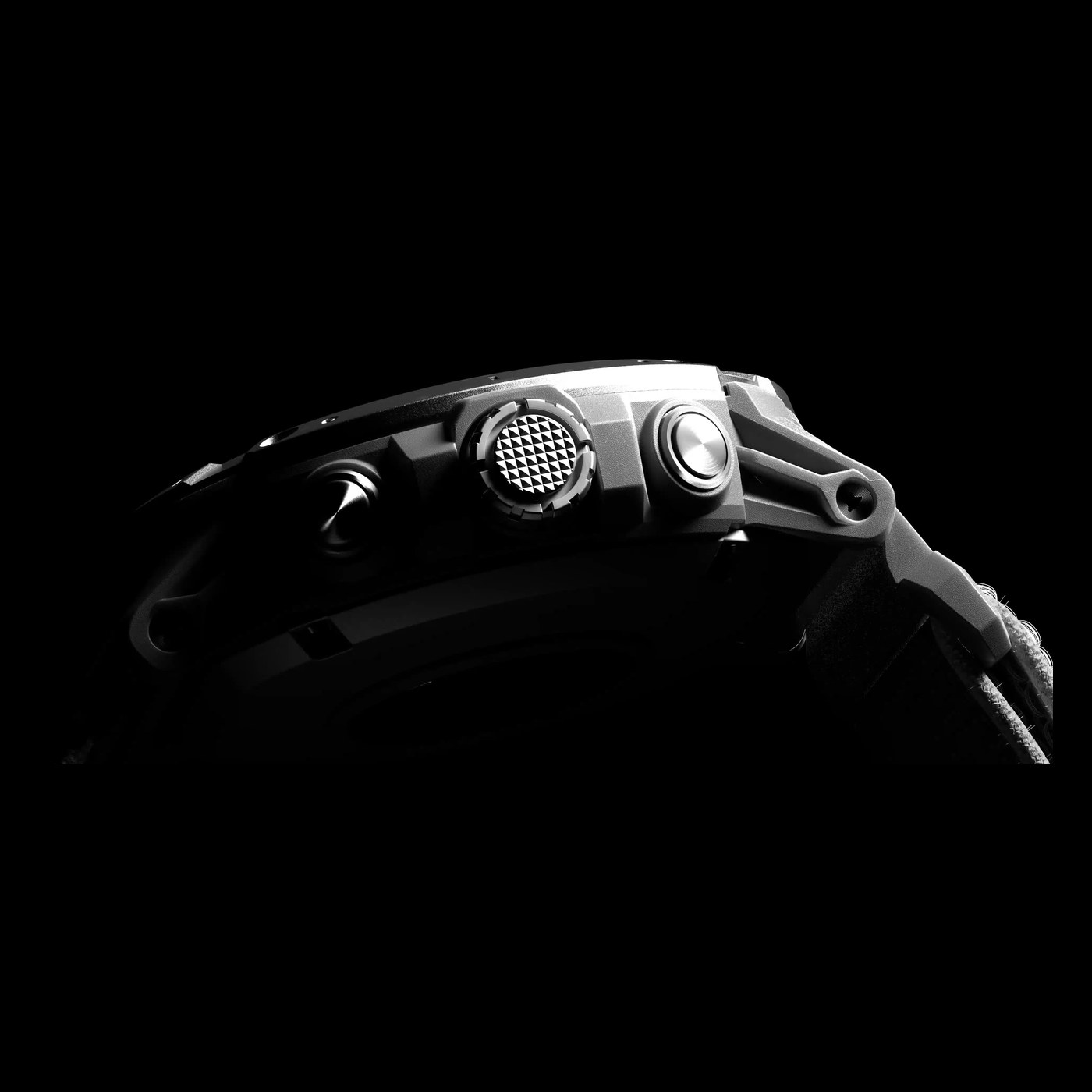
Titanium case, sapphire glass, 100 m water resistance, operating range of -30 to +50 °C, pulse oximeter to track altitude acclimatization, off-wrist carabiner mode: the Vertix 2S is designed for high mountains and hostile environments. Many Himalayan expeditions trust it, and that's no accident.
Versatile runners who want one watch for everything
With triathlon, swimming, cycling (power meter compatible), climbing, skiing profiles and more, the Vertix 2S can be your one and only multisport watch. As long as you accept its 50.3 mm size, which stays bulky on slim wrists and for everyday wear.
COROS Vertix 2S vs Suunto Vertical 2 vs COROS APEX 4: the comparison
Three expedition watches, three philosophies. Here's how the Vertix 2S stacks up against its closest rivals among our published reviews.
Criterion
COROS Vertix 2S
Suunto Vertical 2
COROS APEX 4
Display
1.4" transflective MIP
2000-nit AMOLED
AMOLED
Multi-band GPS battery life
43 h (140 h UltraMax)
65 h
65 h
Offline maps
Free worldwide
Free worldwide + flashlight
Yes
Case
50.3 mm titanium, sapphire
Titanium, sapphire
Titanium, sapphire
No. 1 strength
Record UltraMax battery life
AMOLED display + LED flashlight
Versatility and AMOLED display
Price
€699
~€629
~€499
The Suunto Vertical 2 appeals to runners who want a bright AMOLED display and a built-in flashlight for the night. The COROS APEX 4, newer and cheaper, offers AMOLED and excellent versatility if you don't need the extreme battery life of the Vertix. Against them, the Vertix 2S keeps one argument nobody can take away: its energy reserve in UltraMax mode. For the longest ultras and multi-day adventures, it remains the benchmark. You can also look at the Amazfit Cheetah 2 Ultra, which pushes battery life to 80 hours for less money, but with a less mature software ecosystem.
Pros and cons
What we liked
Exceptional battery life, up to 140 h in UltraMax
Highly accurate dual-frequency GPS on tough terrain
Completely free worldwide offline maps
Titanium and sapphire build made for extreme conditions
Intuitive digital crown, even with gloves
EvoLab ecosystem and regular software updates
What we liked less
Transflective MIP display less flattering than an AMOLED
The Vertix 2S is the ideal tool for building toward a long goal: its EvoLab metrics structure your training load, and its battery life lets you record every long run and your entire race without compromise. To turn that data into progress, pair it with a RunMorph trail or ultra plan, and let it guide you session after session toward your 80K or your 100-miler.
The COROS Vertix 2S isn't the most spectacular watch of 2026, and it doesn't try to be. It embraces its transflective display and massive case to deliver what no AMOLED can sustain: battery life counted in days, surgical GPS accuracy and free worldwide maps, all in an indestructible titanium case. For road runners and casual users, it's oversized and a bit austere. For ultrarunners and adventurers, it's a trusted companion that will never let you down mid-race. At €699, you pay a premium against newer and sometimes cheaper AMOLED watches, but its endurance remains unrivaled.
RunMorph score: 8.5/10
Key takeaways for your training
Battery life rules: up to 140 h in UltraMax, with accurate GPS on for an entire 100-miler and no battery stress.
Accuracy first: dual-frequency L1+L5 sticks to the trail even in canyons and dense forest.
Free navigation: worldwide offline maps with no subscription, ideal for self-supported adventures.
Expedition-tough: titanium, sapphire, 100 m water resistance and -30 to +50 °C for hostile terrain.
Pair a heart rate strap: for intervals and threshold work, add a Bluetooth chest strap for reliable readings.