All reviews: shoes trail
November 16, 2026

Asics Trabuco 14: 6,3 mm drop measured against 8 claimed, the unfiltered review

8.7/10
Asics Trabuco 14: 6,3 mm drop measured against 8 claimed, the unfiltered review
  • Grip in mud and on greasy ground rated "astonishing" by Journal du Trail, with a lab traction score of 0,79 against an average of 0,69.
  • Forefoot energy return of 64,6 %, above the 59,8 % average.
  • 76,3 mm toe box, ideal for wide feet and runs over three hours.
  • Real drop of 6,3 mm instead of the claimed 8 mm.

The Trabuco is the Asics trail shoe for runners who want one pair to do it all. For version fourteen, Asics drops the Gel from the heel, switches to FF Blast Max foam and claims 35 mm of stack at the heel with an 8 mm drop. In the lab, it measures 32,1 mm and 6,3 mm. Lower than advertised, flatter than advertised, and much wider than the Trabuco 13. Here is what that changes on the trail.

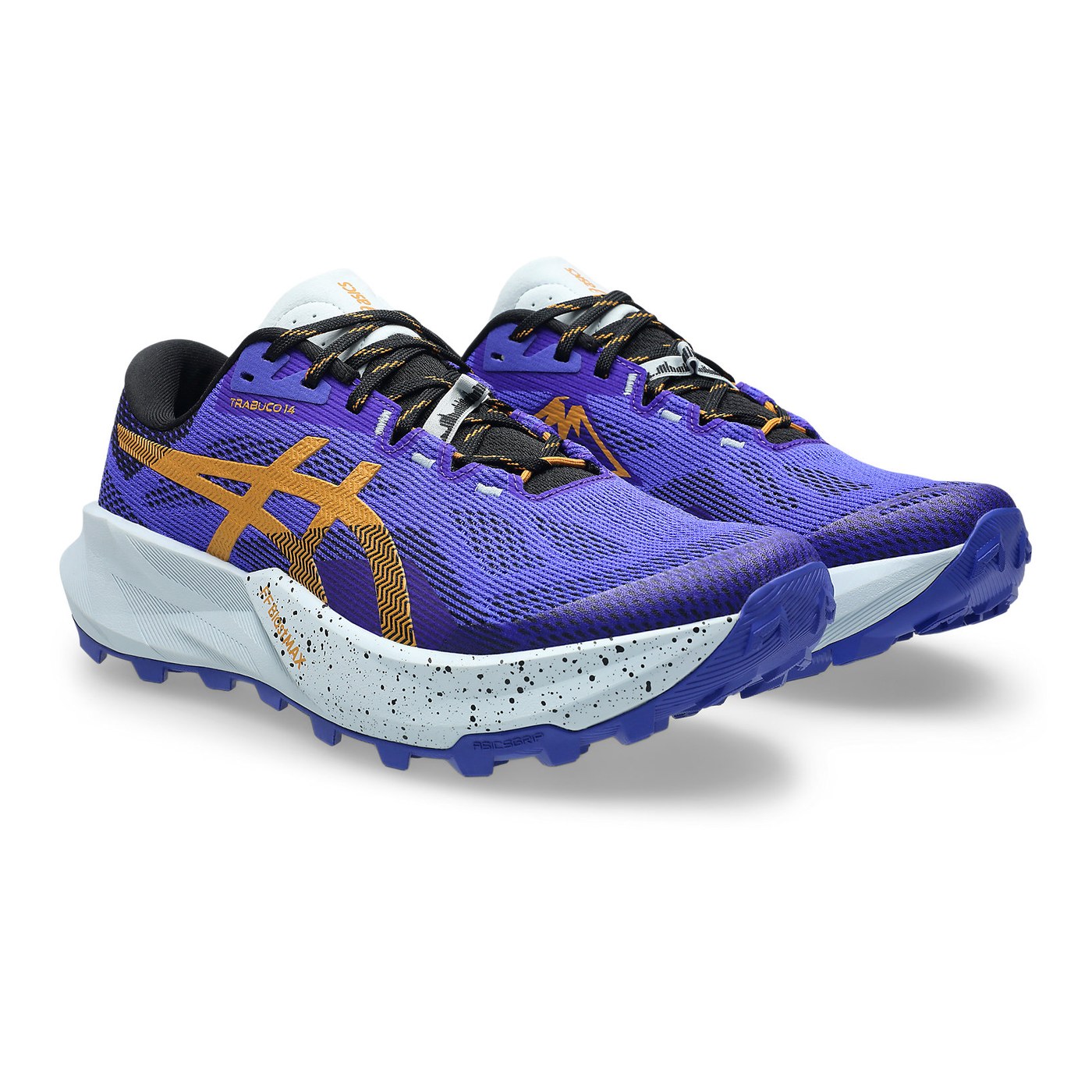
Asics Trabuco 14 three-quarter view, blue and orange colourway
© Asics, official photo used for editorial purposes

The essentials in 3 sentences

The Trabuco 14 is a 281 g, 160 € trail training shoe, softer thanks to FF Blast Max, with the widest toe box ever measured on a Trabuco (76,3 mm). The reviews agree on two points: grip on greasy ground and wet rock is excellent, and the shoe stays stable despite the softer foam. It is built for long runs and ultras at moderate pace, not for attacking a technical descent with a narrow foot.

8,7
/ 10 · RunMorph overall score
Cushioning
8 / 10
Traction
9 / 10
Stability
8 / 10
Durability
7 / 10
Value
8,5 / 10
Who is it for?Trail runners with standard to wide feet who run 20 to 80 km at moderate pace on muddy, forest or rocky trails, and want a single pair for training.
Who should skip it?Runners with narrow feet looking for precision on technical descents. And anyone who wants maximum cushioning for a 100-mile race: the Trabuco Max 5 is a better fit.

Asics Trabuco 14: the do-it-all trail shoe turns into a comfort shoe

For years, the Trabuco was Asics' "no-frills" trail shoe. Firm, precise, a little stiff. Journal du Trail sums up version 13 well: stable, precise, a bit harsh. With the 14, Asics changes course. The brand removed the Gel capsule from the heel, replaced FF Blast+ with FF Blast Max (the foam from the Novablast 5) and opened up the forefoot considerably.

The result no longer really feels like a Trabuco. Journal du Trail calls it a "plush" shoe. Le Comparatif du Trail describes an air cushion sensation. If you have been running in a Trabuco 13 for two seasons, this is a real change of character, not a simple update.

In the market, this shift puts it up against the Hoka Speedgoat 7 and the Salomon Sense Ride 5. Same target: a runner who wants one shoe for weekday training and the Sunday trail race. The difference comes down to fit and rubber.

RunMorph's advice: if you have narrow feet and loved the precision of the Trabuco 13, try the 14 in a store before ordering. The volume has changed a lot. If you want more cushioning for ultras, look at the Trabuco Max 5. If you want more snap, the Fuji Lite 7 is lighter.

Trabuco 14 specs: FF Blast Max and ASICSGRIP

FeatureAsics Trabuco 14
BrandAsics
ModelTrabuco 14 (men's reference 1011C166)
ReleaseLate 2025 (first French reviews in December 2025)
TypeTrail training shoe, all distances
Claimed weight281 g (men's US 9), 249 g (women's US 8)
Claimed drop8 mm
Claimed stack height35 mm at the heel, 27 mm at the forefoot
FoamFF Blast Max, single layer, no Gel
PlateForefoot rock plate
OutsoleASICSGRIP, 4 mm chevron lugs
UpperReinforced engineered mesh, elastic cord lacing in the lower section
Waterproof versionYes (Trabuco 14 GTX)
Recommended distance20 to 80 km, daily training
Retail price160 € (often seen around 120 € on sale)

Trabuco 14: what Asics claims versus what was measured

A lab put the Trabuco 14 under the calipers and on the scale. The gaps are real, and they all point the same way: a shoe that is lower and flatter than the spec sheet.

MetricClaimed by AsicsMeasured in the labAverage of measured trail shoes
Weight (men's)281 g283 g285 g
Heel stack35 mm32,1 mm33,0 mm
Forefoot stack27 mm25,8 mm25,8 mm
Drop8 mm6,3 mm7,2 mm
Lug depth4 mm3,7 mm3,5 mm

The weight is honest. The drop, much less so. 6,3 mm instead of 8 means almost 2 mm less under the heel. Put simply, the Trabuco 14 behaves like a mid-drop shoe, closer to a Speedgoat 7 (5 mm claimed) than to the old Trabuco. If your calves or Achilles tendons are sensitive, this detail matters more than the 2 g of weight.

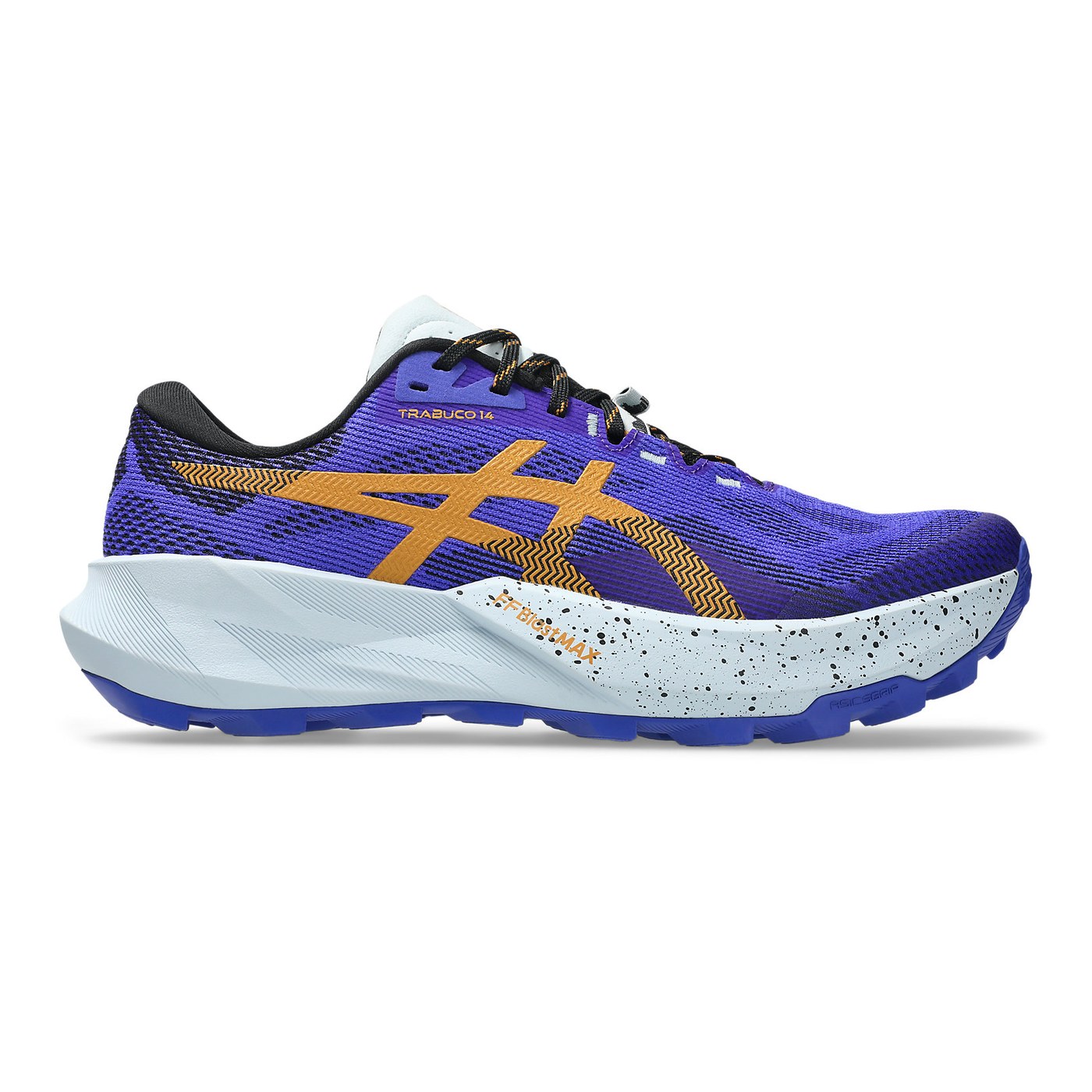
Asics Trabuco 14 side profile, FF Blast Max midsole
© Asics, official photo used for editorial purposes

FF Blast Max: what does it change underfoot?

FF Blast Max is a polyolefin-based foam, softer and bouncier than the FF Blast+ in the Trabuco 13. The numbers back this up. On the durometer, it reads 36,0 AC against an average of 38,1. So it is slightly softer than the norm. Energy return reaches 64,6 % at the forefoot, against an average of 59,8 %. That is one of the best figures for a trail shoe at this price.

Heel shock absorption measures 127 SA, against an average of 122. This is not max cushioning. It is comfortable cushioning that keeps you in touch with the ground. In the cold, the foam only stiffens slightly, a plus for winter runs.

Removing the Gel has a consequence few sites mention. Le Comparatif du Trail notes that heel landings are "slightly less well absorbed" than on the 13. The lab numbers point the same way: less material at the heel (32,1 mm), a softer foam, and therefore a heel that protects a little less on jarring descents. If you land on your heel going downhill, keep this in mind.

Stiffness, finally, is a surprise. It takes 18,8 N to flex the shoe, against an average of 14,9 N. It is stiff lengthwise, but flexible in torsion (12,4 Nm against 15,7). In practice, the forefoot rolls through like a mild rocker and your foot follows the camber of the trail.

Fit: 76,3 mm wide, but only 25,1 mm high

This is the most visible change. The toe box measures 76,3 mm at its widest point, against an average of 74,3 mm. The lab calls it the roomiest Trabuco it has ever tested. Midfoot width follows suit: 100,3 mm against an average of 95,7 mm.

Vertical volume tells a different story. The toe box is only 25,1 mm high, against an average of 26,9 mm. Wide, then, but low. If you have thick toes or a sensitive big toenail, you may feel the upper pressing down on top even though your toes have plenty of room on the sides.

On length, opinions differ, and it depends on your foot. Runninglab finds it true to size. Journal du Trail, on the other hand, says the shoe "runs large": its tester would have gone half a size down. The lab leans toward the latter: 272,0 mm of internal length, against an average of 269,3 mm. At RunMorph, we recommend going half a size down if your foot is narrow, and sticking with your usual size if it is wide.

All the testers agree the heel holds well. The heel counter has lost one point of stiffness (4 out of 5 versus 5 out of 5 on the 13), with no reported effect on lockdown. The collar is low. It avoids pressing on the ankle bones, but it lets small stones in.

On the trail: what the testers say, from mud to rock

RunMorph did not run the Trabuco 14. This section cross-checks five real-world reviews. Three come from French sites (Runninglab, Le Comparatif du Trail, Journal du Trail). On top of those, there is a user report published on Outzer after more than 500 km, and a two-person review conducted over several weeks on snow, gravel and mud.

On wet rock. Runninglab tested the shoe on 2 to 4 hour runs in the Montserrat massif near Barcelona, on slippery conglomerate. Verdict: excellent grip on varied terrain. Le Comparatif du Trail confirms it on dry and damp rock.

In mud. This is where the Trabuco 14 surprises most. Journal du Trail took it out on greasy ground and freshly thawed mud. It calls the grip "astonishing" and rates ASICSGRIP above Vibram on this terrain. The lab agrees, with a traction coefficient of 0,79 against an average of 0,69. The only caveat, from Le Comparatif du Trail: on very greasy ground, the 4 mm lugs reach their limits.

On technical descents. Here, opinions split. Journal du Trail finds the shoe surprisingly stable, glued to the ground, reassuring on off-camber sections. Le Comparatif du Trail reports small losses of balance on rocky terrain and a forefoot that is held less securely than on the 13. Runninglab notes it is not always precise on very technical terrain. Honestly, it depends on your foot. A wide foot fills the volume and gains stability. A narrow foot floats at the front, and that is where the precision goes.

Over time. Le Comparatif du Trail found no wear on the upper after 100 km. The Outzer user is past 500 km without brambles and flint getting the better of the shoe. Journal du Trail is more cautious: it finds the upper thin and suggests keeping an eye on it over time.

Paces. The two testers in the cross review, one of them a 2:40 marathoner, used it for easy runs, long runs and marathon pace. They find it unsuited to short, intense intervals. Their score: 9,1 out of 10 each.
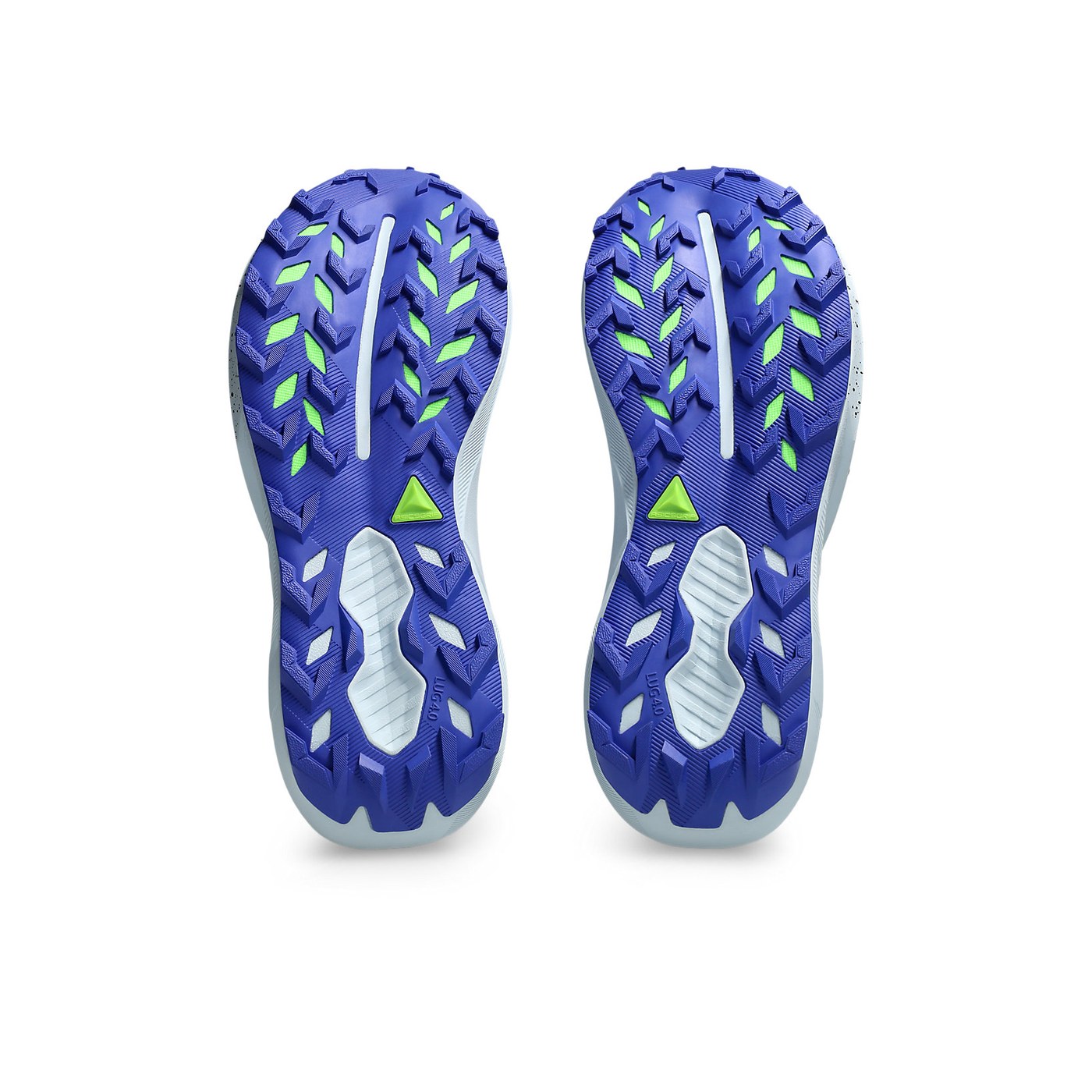
ASICSGRIP outsole of the Asics Trabuco 14 with chevron lugs
© Asics, official photo used for editorial purposes
The paces where the Trabuco 14 works, and where it falls off

  • Easy runs: its home turf. The 36,0 AC foam and the real 6,3 mm drop give a smooth, natural stride with no effort needed to keep moving.
  • Long runs: excellent. This is the use every tester highlights, from 2 to 4 hours. The 76,3 mm toe box lets your foot swell without getting squeezed.
  • Marathon pace on runnable trails: decent. The 64,6 % forefoot energy return helps you hold a steady rhythm on smooth paths.
  • Threshold and half marathon pace: borderline. At 283 g and 18,8 N of flex resistance, the shoe lacks the snap to pick up speed after every turn.
  • Short intervals: avoid. The testers say so clearly, and both the weight and the lengthwise stiffness explain why.

First flaw: a forefoot too wide for narrow feet

The width that wide feet love becomes a problem for everyone else. 100,3 mm at the midfoot is nearly 5 mm more than average. On a narrow foot, that space means your foot slides around in the shoe as soon as the terrain gets rough.

All three French sources point it out, each in its own words. The lacing does not help. Asics replaced the six lower eyelets with an elastic cord. Handy for slipping the shoe on, less effective for locking down the forefoot. The lab notes this system will not suit anyone who wants a firm hold.

For a French runner training in the Chartreuse, the Alpilles or the Vosges, with rocky descents, this flaw can make or break the purchase. If that is you, the Sense Ride 5 holds a narrow foot better.

Second flaw: thin rubber that wears faster than average

ASICSGRIP grips hard. It also wears faster. In the abrasion test, it loses 1,2 mm, against an average of 0,9 mm. And it starts out thin: 1,6 mm under the lugs, against an average of 1,9 mm.

Put simply, on tarmac and hardpack, the 3,7 mm lugs will round off faster than on a trail shoe with thick rubber. If you run 5 km of road to reach your trail on every run, factor that in. The Outzer report, more than 500 km without failure, shows the shoe holds up, but it does not measure how much lug depth is left.

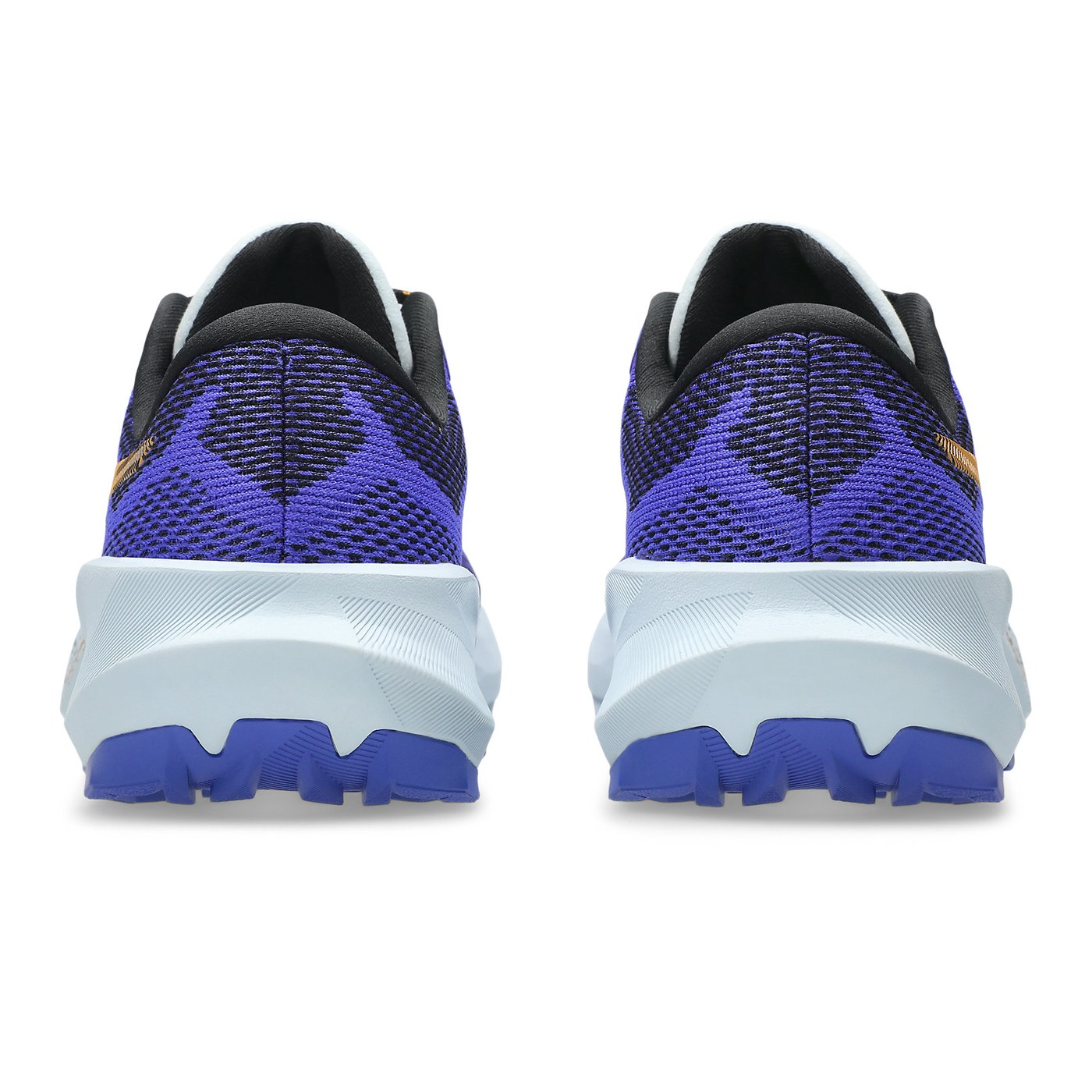
Asics Trabuco 14 heels, heel counter and low collar
© Asics, official photo used for editorial purposes
Trabuco 14 vs Trabuco 13: should you switch?

CriterionTrabuco 13Trabuco 14
FoamFF Blast+ with Gel in the heelFF Blast Max, no Gel
FeelFirm, precise, "a bit harsh"Soft, more cushioned, less precise
Foam thicknessBaselineAbout 2 mm more
Heel counter5 / 54 / 5
ForefootStandardMuch wider (76,3 mm)
Heel landingBetter absorbed according to Le Comparatif du TrailSlightly less absorbed

Switch if you have wide feet or if the 13 felt too firm beyond 30 km. Keep the 13 if you have narrow feet and mostly run technical terrain: you would lose in precision what you gain in comfort.

Trabuco 14 vs Speedgoat 7 vs Sense Ride 5: the comparison

CriterionAsics Trabuco 14Hoka Speedgoat 7Salomon Sense Ride 5
Claimed weight281 g280 g290 g
Claimed drop8 mm (6,3 mm measured)5 mm8 mm
RubberASICSGRIPVibram MegagripContagrip
FitWideSnuggerStandard, good lockdown
StrengthGrip in mud, comfortCushioning, grip on rockLockdown, precision
Retail price160 €165 €140 €

Put simply, if you have wide feet and run on greasy terrain, get the Trabuco 14. With a narrow foot on technical terrain, get the Sense Ride 5, which is 20 € cheaper. Want more cushioning and Vibram rubber with a proven record on rock? The Speedgoat 7, for 5 € more. On purely runnable routes with tarmac, a road-to-trail shoe like the Mount to Coast H1 wears more slowly.

Trabuco 14 pros and cons

Pros
  • Grip in mud and on greasy ground rated "astonishing" by Journal du Trail, with a lab traction score of 0,79 against an average of 0,69.
  • Forefoot energy return of 64,6 %, above the 59,8 % average.
  • 76,3 mm toe box, ideal for wide feet and runs over three hours.
  • Stable despite softer foam, according to three reviews out of five.
  • Tough upper: no wear at 100 km, no failure after more than 500 km on Outzer.
  • 160 € retail, often around 120 € on sale.
Cons
  • Real drop of 6,3 mm instead of the claimed 8 mm.
  • Forefoot floats on narrow feet, flagged by three French sources.
  • Thin rubber (1,6 mm) and 1,2 mm of wear in the abrasion test, against an average of 0,9 mm.
  • Low collar that lets small stones in.
  • Elastic lacing in the lower section that locks down the forefoot less well.
  • Upper that breathes poorly and holds water, according to Le Comparatif du Trail.

Grip and durability: how much does a kilometre in the Trabuco 14 cost?

Grip is the strong point. Durability is more mixed: solid upper, rubber that wears fast. Combining measured wear with field reports, RunMorph estimates a lifespan of 600 to 800 km, with faster wear if you string together tarmac sections.

At 160 €, that works out to 0,20 to 0,27 € per kilometre. At 120 € on sale, it drops to 0,15 to 0,20 €. For comparison, a Speedgoat 7 at 165 € over the same range comes to 0,21 to 0,28 € per kilometre. These figures remain an estimate: no tester has yet published wear measurements beyond 500 km.

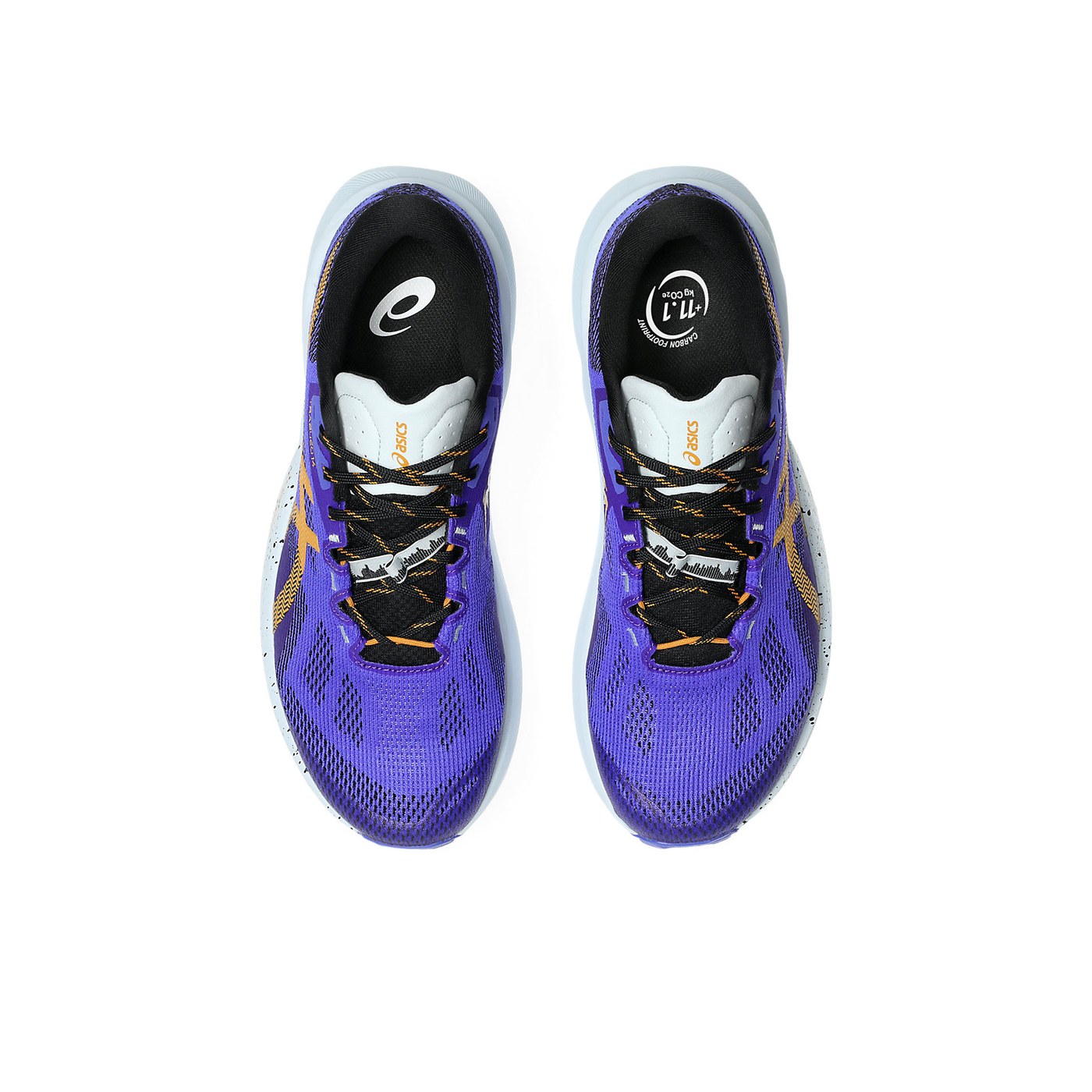
Asics Trabuco 14 top view, upper and lacing
© Asics, official photo used for editorial purposes
Our take: who is the Trabuco 14 for?

The wide-footed trail runner who runs in the woods

This is the perfect profile. Mud, roots, damp autumn trails: the rubber grips, your foot has room, the foam cushions without feeling dead. For runs of 15 to 40 km, few shoes at 160 € do better.

The runner preparing for a first ultra

Le Comparatif du Trail even prefers it to the Trabuco Max 5 for technical mountain ultras. It protects less than a max-cushioned shoe, but it stays more stable. For a 50 to 80 km race with elevation gain, it is a solid choice.

The runner who wants one pair for the whole year

Easy runs, long runs, the Sunday trail race: it covers everything except intervals. Add a GTX version for winter and you have most of your season sorted.

Training for a trail race this season? The Trabuco 14 is built for long runs in the wild. To balance your weeks between easy running, elevation gain and long runs, follow a RunMorph trail training plan matched to your distance and level.

How to fit the Trabuco 14 into your RunMorph training plan

In a RunMorph trail plan, use it for your weekend long runs and your easy runs on trails. For short hill sessions or intervals, a lighter shoe will do better. Before a race, do at least three runs of more than two hours in it to check forefoot lockdown on descents.

The RunMorph Coach verdict

The Trabuco 14 is no longer the firm, precise trail shoe it used to be. It is a comfort shoe: wide, soft, with some of the best grip on greasy ground in its category. The claimed drop is off by almost 2 mm. The rubber wears faster than average. And a narrow foot floats in it on descents.

For the score, RunMorph gives more weight to grip and long-run comfort, which are what the shoe is built for, than to responsiveness. Wide feet, long runs, muddy terrain: buy it, ideally on sale. With a narrow foot on technical terrain, get the Sense Ride 5.

8,7/10

Key takeaways for your training

  • Real drop: 6,3 mm measured against 8 mm claimed, so plan a transition if you are coming from a 10 mm shoe.
  • Fit: 76,3 mm wide but 25,1 mm high, go half a size down if your foot is narrow.
  • Grip: 0,79 traction against an average of 0,69, its biggest asset on greasy ground.
  • Use: 2 to 4 hour runs and ultras up to 80 km, not intervals.
  • Cost: 0,20 to 0,27 € per kilometre at the 160 € retail price.

Asics Trabuco 14 FAQ

Does the Trabuco 14 run large?

Slightly. Internal length measures 272,0 mm, against an average of 269,3 mm. Journal du Trail recommends going half a size down, while Runninglab sticks with its usual size.

What is the real drop of the Trabuco 14?

6,3 mm measured in the lab, against 8 mm claimed by Asics.

Trabuco 14 or Trabuco Max 5 for an ultra?

The Trabuco Max 5 has more foam (about 38,5 mm at the heel) and suits runnable ultras. The Trabuco 14, lower (32,1 mm measured), is more stable on technical terrain.

How many kilometres does the Trabuco 14 last?

RunMorph estimates 600 to 800 km. One user is past 500 km without failure, but the rubber loses 1,2 mm in the abrasion test.

Find another review