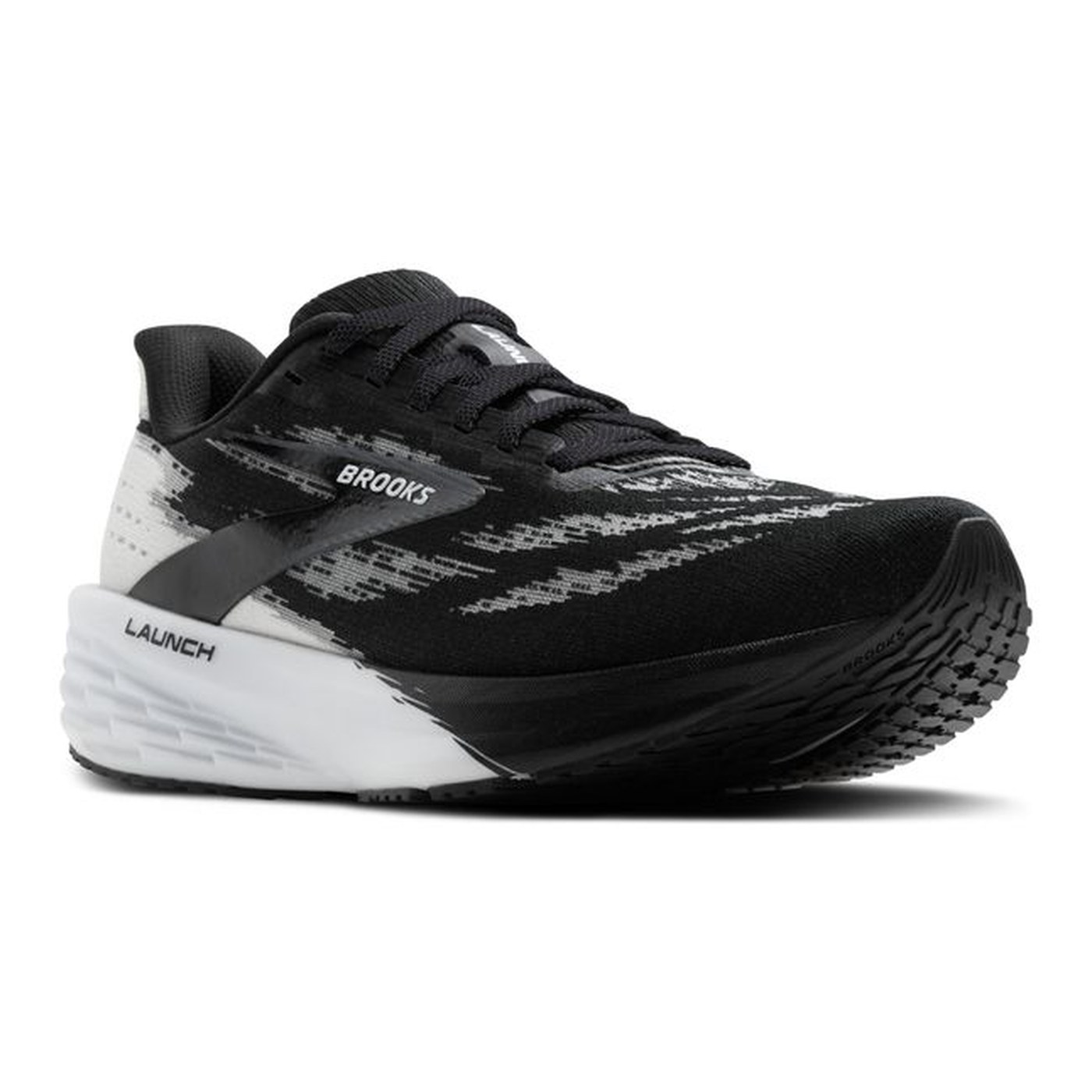
Brooks has sold the Launch as its accessible entry point into the road lineup for eleven generations, but version 11 moves the goalposts: a nitrogen-infused DNA Flash v2 midsole, a measured weight of 237 g, and an official price that climbs to 120 euros. At RunMorph, we read every independent test available to check whether this Launch 11 still delivers on the accessible-shoe promise, or whether it has simply changed category without saying so.
© Brooks, official photo used for editorial purposes
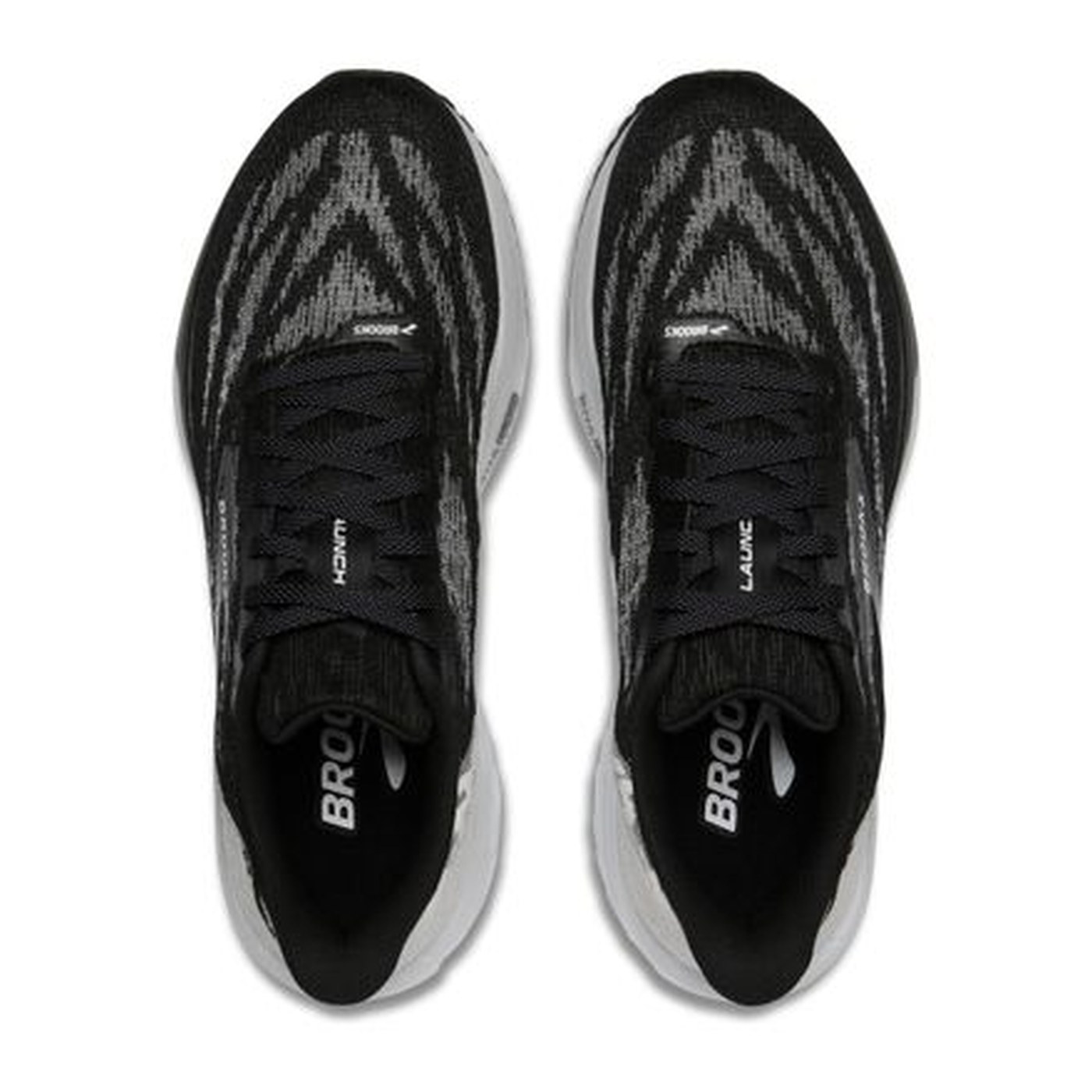
Brooks Launch 11: the daily trainer sliding toward tempo work
For eleven generations, the Launch has held the entry-level spot in the Brooks road lineup, sitting below the Ghost and the Glycerin. Version 11 no longer plays that role alone: by swapping the old DNA Flash for a nitrogen-infused DNA Flash v2, Brooks pushes the Launch 11 closer to a fast daily trainer than a simple accessible jogging shoe. Price follows the repositioning, climbing from 110 to 120 euros, a roughly ten-euro jump over the previous version. The question is whether the ride actually backs up that shift in status, or whether the Launch 11 simply kept its original audience with a pricier tag attached.
RunMorph's advice: the Launch 11 rewards narrow feet looking for a light shoe for tempo work and long intervals. For broader everyday use or regular long runs, the Brooks Ghost 18 remains the safer pick within the Brooks lineup.
Objective technical data
| Brand | Brooks |
| Model | Launch 11 |
| Release | Early 2025 |
| Type | Road, lightweight daily trainer / tempo |
| Drop | 8 mm claimed, 9.5 mm measured in an independent lab |
| Stack height heel / forefoot | 24.0 mm / 33.5 mm measured (category average: 27.1 mm / 35.6 mm) |
| Weight (US men's 9 / EU 42) | 237 g measured in an independent lab (category average: 261 g) |
| Carbon plate | No |
| Foam | Nitrogen-infused DNA Flash v2 (reduced-volume block at the forefoot per Runninglab) |
| Toe box width | 73.2 mm measured, in line with the average width, but a height of 25.5 mm well under the 27.0 mm category average |
| Recommended distance | 5K to half marathon |
| Official price | 120 euros (often found between 60 and 91 euros at RunningXpert, i-Run and Alltricks) |
The clearest gap sits on the drop: Brooks claims 8 mm, independent lab measurements show 9.5 mm, 1.5 mm steeper than the official figure. That is not a trivial marketing detail: a steeper-than-expected drop changes the load on the calf and Achilles tendon, especially for a runner coming from a lower-drop shoe who expects the same feel from an "8 mm" label.
Who is the Brooks Launch 11 for?
The narrow-footed runner who wants to mix paces
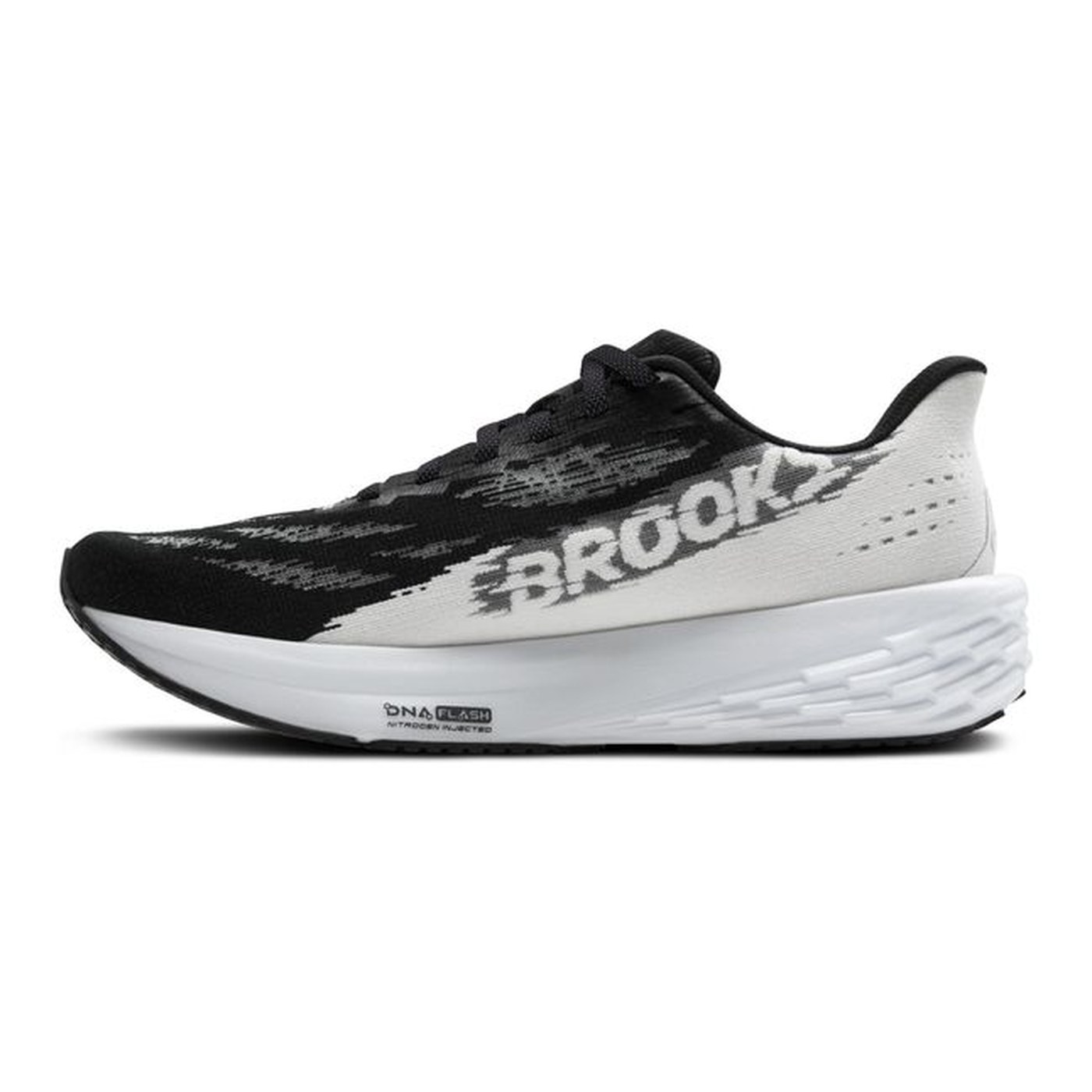
At a measured 237 g with a DNA Flash v2 midsole that is more responsive at the forefoot (66% measured energy return there, versus 55% at the heel), the Launch 11 sits among the lightest shoes in its price range. It suits a runner looking for one pair to cover fast easy runs, tempo work, and long intervals, without investing in a plated racer.
Wide feet and long-run specialists
The measured toe box width of 73.2 mm sits right at the category average, but its height of 25.5 mm is well below the segment average of 27.0 mm, which translates into a sense of tightness reported independently by several testers. Runninglab describes a shape judged too narrow for wide feet, a finding echoed by a North American test protocol covering dozens of kilometers. A wide-footed runner has a good chance of feeling cramped within the first few kilometers.
The runner chasing plush cushioning in every situation
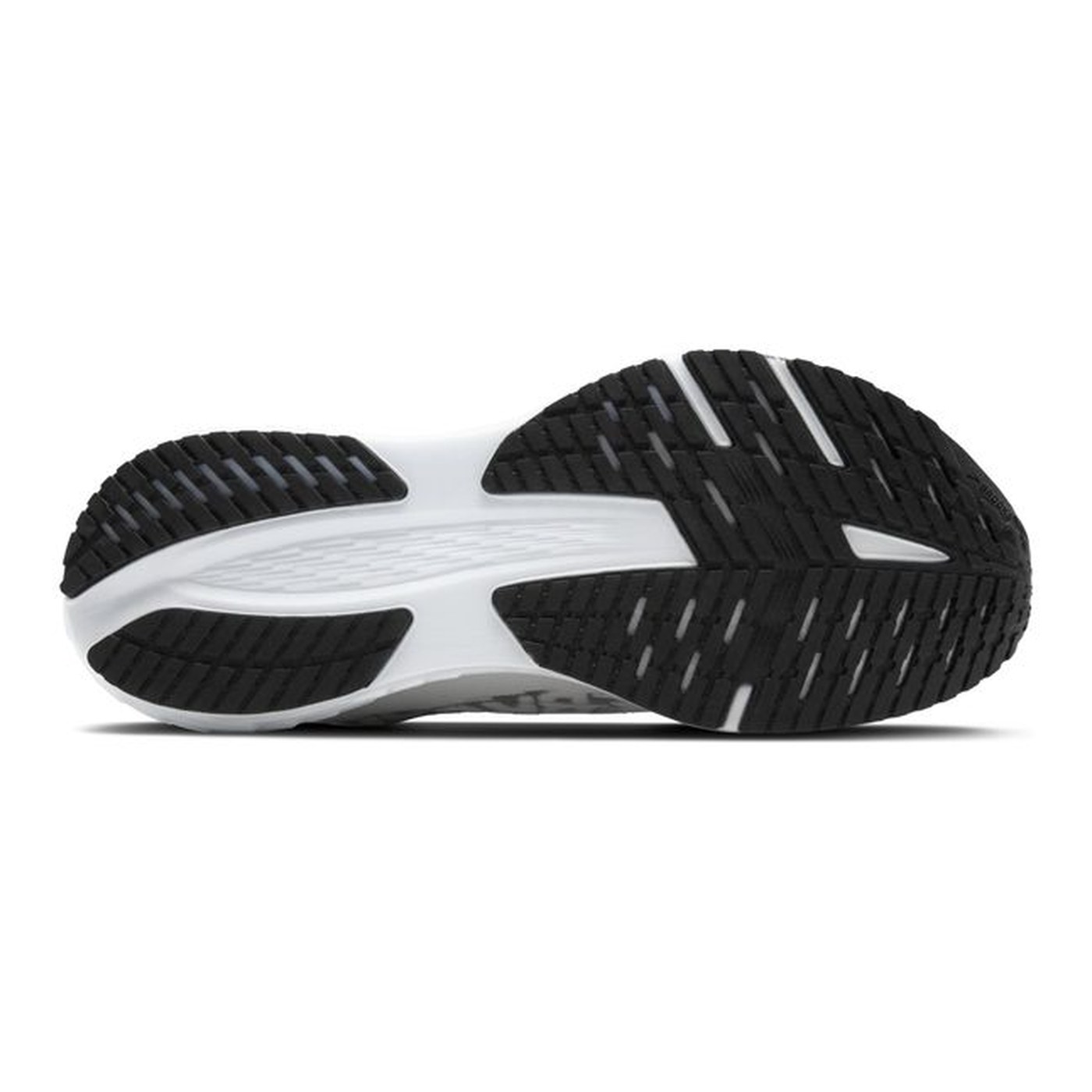
Measured midsole firmness (40.3 AC against a 35.5 AC category average) confirms a ride on the firmer side of average. Runninglab draws the line at 20 kilometers, beyond which heel pounding sets in. A runner who prioritizes pure comfort over distance will find a better match in the Brooks Ghost 18.
© Brooks, official photo used for editorial purposes
Real-world testing: what runners who actually wore it are saying
Three independent tests were read in full for this article. Runninglab logged over 20 kilometers mixing VMA repeats, trail fartlek, and everyday runs, landing on a very favorable verdict (9.2/10) for fast training sessions but a clear caveat past 20 kilometers, where the firm cushioning turns into heel pounding. A North American test protocol, covering dozens of cumulative kilometers across two testers, confirms the same snug-fit feeling: one tester never pushed past 10 kilometers per run because of a lack of volume around the big toe, while her testing partner noted a slightly narrow heel and midfoot. Runnea, on a scored spec sheet, gives the Launch 11 9/10 for weight and 9/10 for responsiveness, but only 8/10 for cushioning, consistent with the firm ride reported by the other two sources.
All three sources agree without exception on one point: the Launch 11 is not a shoe for wide feet. None reports any grip or slip issue, even on wet surfaces, which confirms that the pair's weak spot sits squarely in the fit and the long-distance cushioning, not in the outsole.
Head to head with the competition
| Criterion | Launch 11 | Skechers GoRun Ride 12 | NB FuelCell Rebel v5 |
|---|
| Official price | 120 euros | 140 euros | 160 euros |
| Weight | 237 g | 275 g | 223 g |
| Drop | 8 mm claimed / 9.5 mm measured | 6 mm | 6 mm |
| Plate | No | Carbon (H-Plate) | Nylon (single wing) |
Against the Skechers GoRun Ride 12, the Launch 11 is 20 euros cheaper but gives up the snap of a forefoot carbon plate: the Skechers stays punchier past threshold pace, while the Launch 11 stays lighter and cheaper for everyday tempo work. Against the New Balance FuelCell Rebel v5, the weight gap is marginal (14 g) but the price gap reaches 40 euros: the Launch 11 covers similar ground for a noticeably lower budget, at the cost of an even tighter fit than the Rebel v5.
Fitting the Launch 11 into your RunMorph training plan
The Launch 11 slots naturally into a 10K or half-marathon plan that alternates easy runs, tempo work, and long intervals, as long as individual runs stay under 20 kilometers. It becomes less relevant once a plan calls for regular long runs beyond that distance, where the narrow fit and firm cushioning start to weigh on comfort.
RunMorph's recommendation: pair the Launch 11 with a 10K training plan if you are building speed on a tight budget, and keep a more forgiving second pair like the Brooks Ghost 18 for the Sunday long run.
© Brooks, official photo used for editorial purposes
© Brooks, official photo used for editorial purposes
RunMorph Coach's verdict
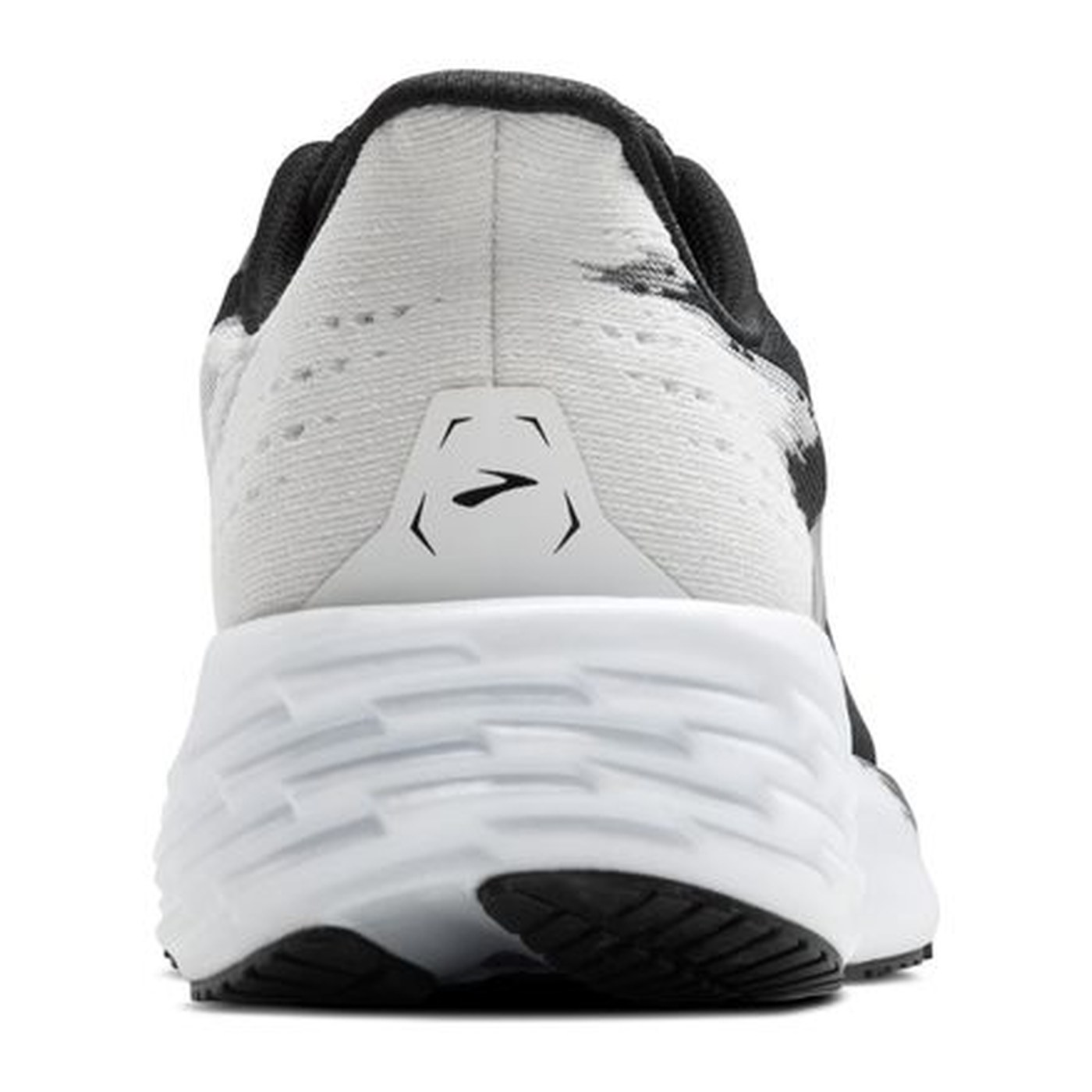
The Brooks Launch 11 earns 8.4/10. The DNA Flash v2 midsole backs up its responsiveness promise, with a measured 66% energy return at the forefoot, and the 237 g weight puts it among the lightest shoes in its price bracket. But two real flaws cap the score: a narrow fit confirmed by three independent sources that rules out wide feet from the start, and heel padding durability rated poor (1 out of 5 in an independent lab, against a 3.4 out of 5 category average), which points to faster wear right at that spot. At RunMorph, the score rewards genuine value and genuine pep, without looking away from a fit that will not work for everyone.
Key takeaways for your training
- 237 g measured: one of the lightest weights in the 120-euro category, confirmed in an independent lab.
- Real drop of 9.5 mm: 1.5 mm steeper than the claimed 8 mm, worth checking if you are switching from a lower-drop shoe.
- 20 kilometers: the point past which Runninglab reports heel pounding.
- Narrow fit confirmed by 3 sources: avoid it if you have wide feet, even by sizing up half a size.
- Fragile heel padding: 1 out of 5 on measured durability, a spot to watch once you pass 400 to 500 kilometers.
© Brooks, official photo used for editorial purposes