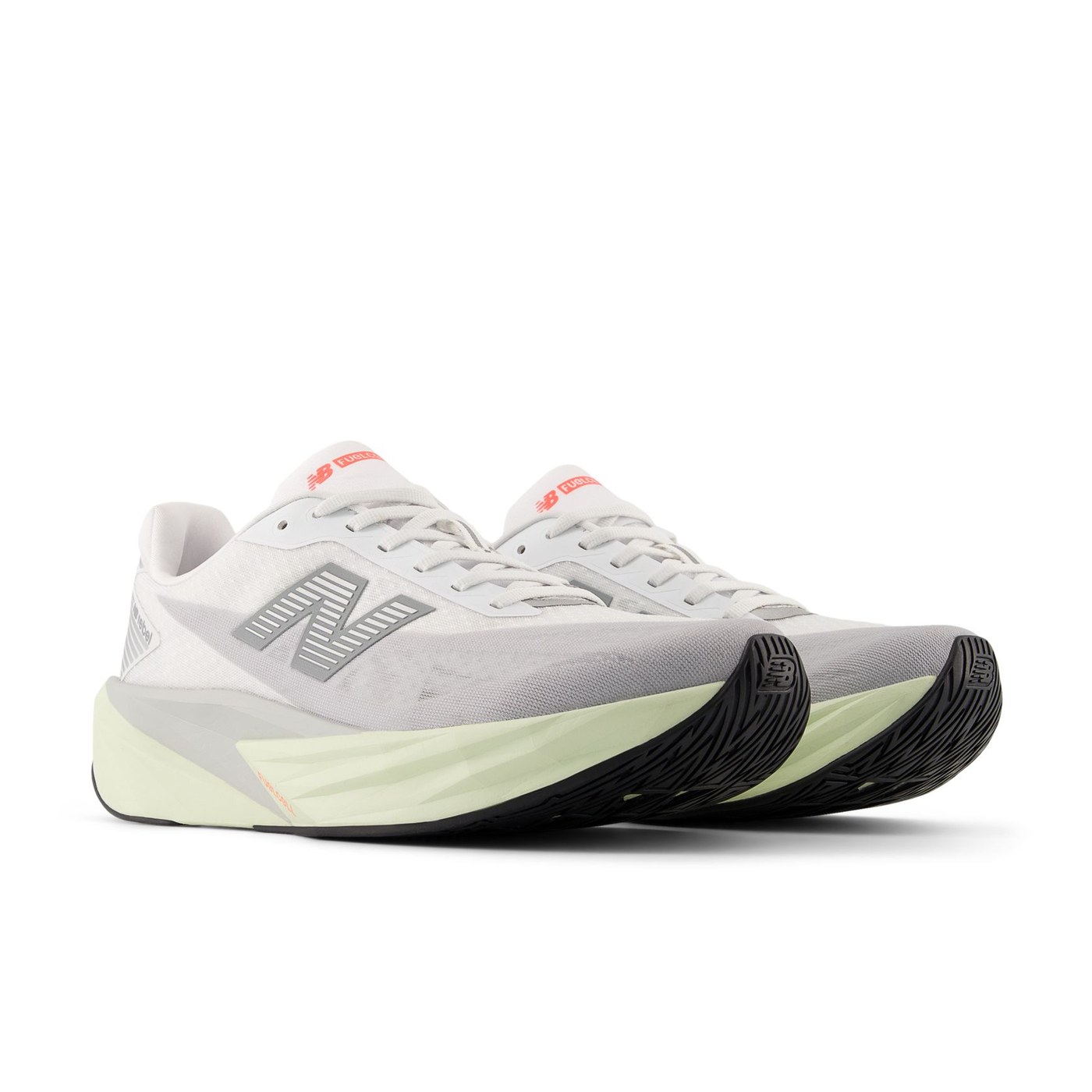
The New Balance FuelCell Rebel v5 has gone from ultralight racer to fast daily trainer. More foam, a softer 6 mm drop, a wider platform: the fifth generation targets runners who want one pair that does it all, from the easy-paced run to Thursday night's threshold block. At €160 and 223 g, it's establishing itself as one of the go-to versatile shoes of 2025-2026.
New Balance Rebel v5 Review: 223 g, PEBA-EVA Foam and More Stack
8.5/10
New Balance FuelCell Rebel v5: the fast daily trainer that owns its step up
The Rebel has never hidden its racing DNA. Since the v1 launched in 2020, it has embraced its role as a light, unleashed shoe built for runners who want energy return without paying for a carbon super shoe. The v5 doesn't turn its back on that heritage, but it widens the audience: the FuelCell PEBA/EVA foam gains 5 mm of stack height, the platform grows several millimeters wider in the forefoot, and the heel and tongue have been redesigned for more generous comfort. The result: a shoe that stays under 230 g in size 42, yet handles long runs where the v4 started to show its limits.
The other big change is the ride. The v5's FuelCell blend fine-tunes the balance between PEBA (responsiveness) and EVA (stability and durability), and it's still nitrogen-infused. The plate remains a winged nylon guide, now more flexible than on the v4 thanks to a single medial wing instead of two. The Rebel v5 isn't trying to imitate a true race shoe; it wants to be the pair you lace up for 4 runs out of 6 each week.
RunMorph tip: the Rebel v5 is one of the most complete shoes in the lively daily trainer category. If your RunMorph training plan includes threshold sessions, tempo runs, long runs at a sustained pace and recovery runs, it can cover 80% of your kilometers. Keep a Nike Vaporfly 4 or a Saucony Endorphin Pro 5 for races, and you've got a clean, budget-friendly rotation.
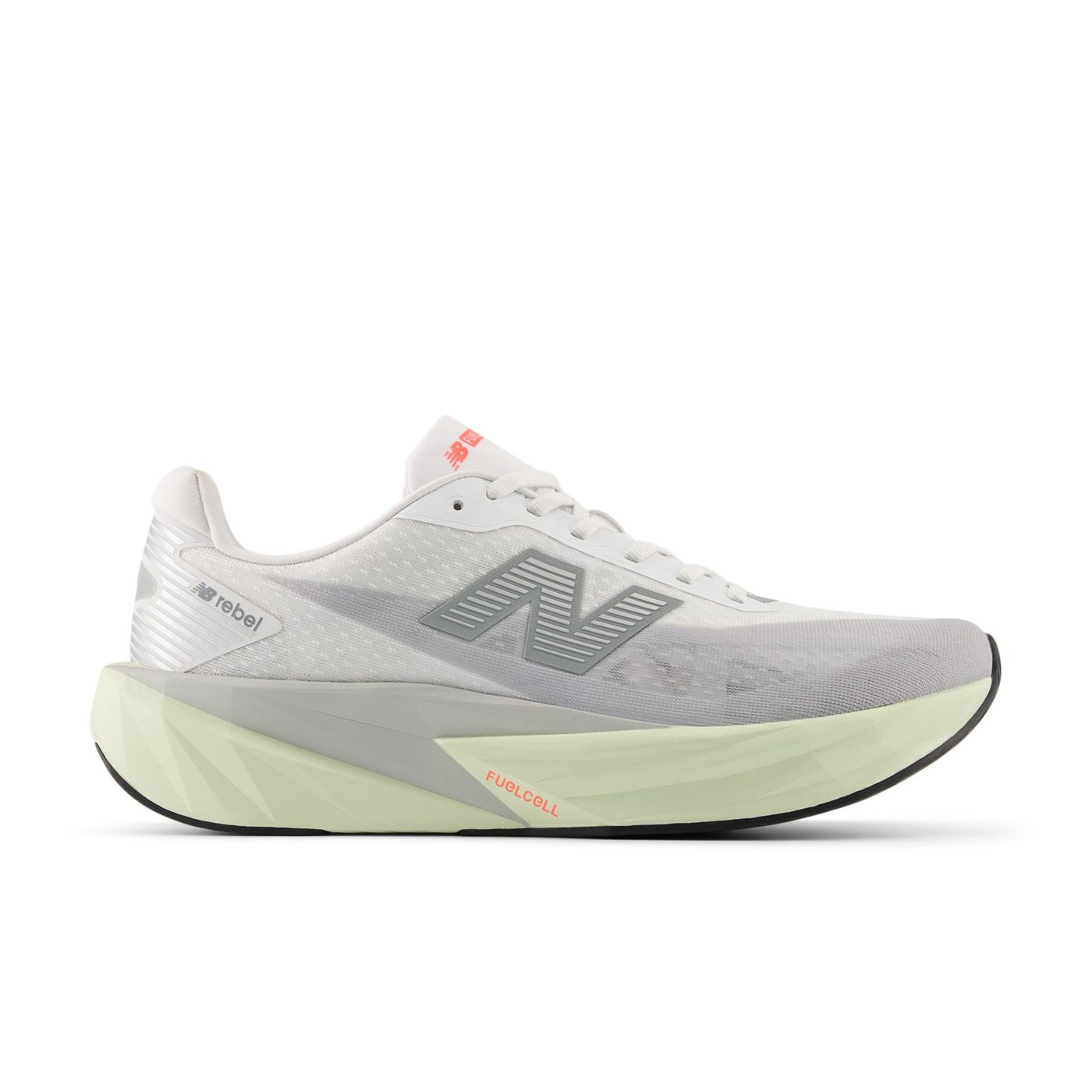
© New Balance, official photo used for editorial purposes
Objective technical specs
| Feature | Value |
|---|---|
| Brand | New Balance |
| Model | FuelCell Rebel v5 |
| Official release | June 5, 2025 (Urgent Red colorway, limited edition), July 1, 2025 (wide release) |
| Type | Fast daily trainer, versatile training shoe |
| Drop | 6 mm |
| Stack height (heel / forefoot) | 35 mm / 29 mm (manufacturer claim) |
| Weight | 223 g in men's EU 42, ~194 g women's |
| Foam | FuelCell: nitrogen-infused PEBA and EVA blend |
| Carbon plate | No, winged nylon plate for propulsion |
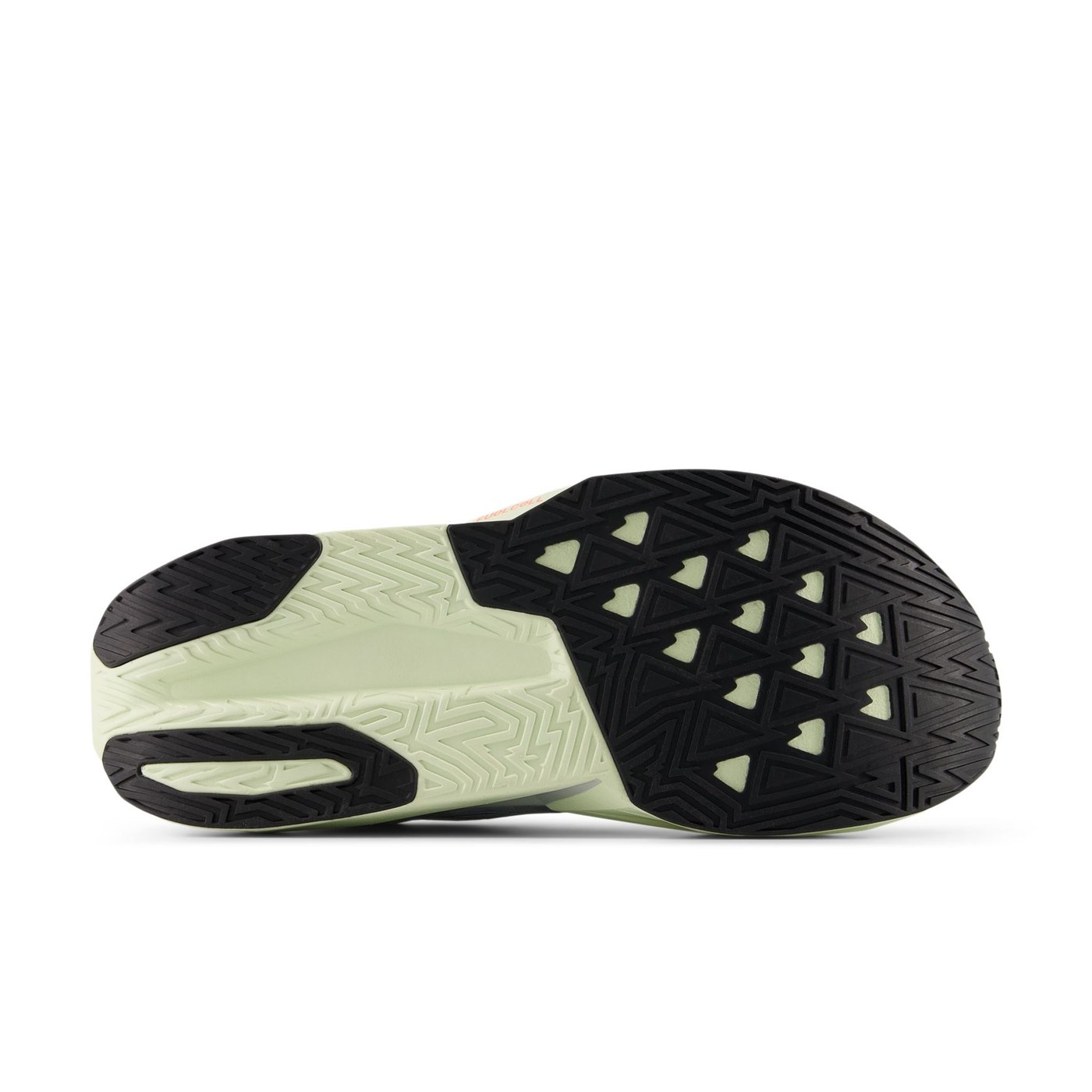
| Outsole | Redesigned rubber, more coverage in the forefoot |
| Upper | Breathable single-layer mesh + FantomFit support |
| Widths | Standard and Wide (depending on colorway) |
| Recommended distance | 10 km to marathon, daily and tempo |
| Suggested retail price (France) | €160 |
Who is the Rebel v5 for?
The intermediate runner who wants one pair for everything
If you run 3 to 5 times a week and don't feel like investing in 3 separate pairs, the Rebel v5 checks almost every box. It handles recovery runs thanks to its upgraded cushioning, it loves tempo blocks between 4:30 and 5:30 per kilometer, and it stays comfortable for 20 to 25 km. This is the runner looking for a smart compromise between the stability of a max-cushion shoe and the snap of a race shoe.
The experienced runner pairing it with a carbon super shoe
Plenty of seasoned athletes save their carbon pair for races and marathon-specific sessions. The rest of the volume, meaning 70 to 80% of their kilometers, calls for a more approachable, more stable, more durable shoe. The Rebel v5 plays exactly that supporting role. It also teaches your feet to work without carbon assistance, which makes switching to a Saucony Endorphin Pro 5 or a Nike Vaporfly 4 on race day feel much more natural.
The lighter runner or female runner who wants responsiveness without bulk
At 194 g in the women's version, the Rebel v5 is one of the lightest daily trainers on the market. For runners under 65 kg, the FuelCell cushioning feels perfectly dialed in: not marshmallowy, not hollow, just enough to absorb impact and spring back. The Wide version available in women's sizing also fits wide feet without stretching the mesh upper.
© New Balance, official photo used for editorial purposes
Comfort, ride and grip: what the v5 really changes
The first run tells you everything. On foot, the Rebel v5 runs small, especially through the midfoot, where FantomFit locks down firmly. If you're between two sizes, going up can be a smart call, especially for long runs when your feet swell. The mesh upper is seriously breathable, almost see-through in the ventilation zones, and the flat laces hold perfectly without creating pressure points.
On the run, the PEBA/EVA blend delivers a stride that bounces without ever bottoming out. It's less explosive than a carbon super shoe, but clearly livelier than a classic pure-EVA daily trainer. The geometry shaping on the outer edge of the foam, wider than on the v4, adds welcome stability on tight turns and uneven surfaces. The more flexible nylon plate lets propulsion come from your legs rather than the shoe: no forced rolling sensation, just clean energy return with every stride.
Grip is decent but not exceptional. On dry roads, the redesigned rubber does its job. On wet roads or damp cobblestones, plan ahead and ease off a little, especially on steep descents. The Rebel v5 isn't built for driving rain: in those conditions, a Brooks Ghost 18 or a Hoka Clifton 10 gives you more margin.
Durability looks solid. The PEBA/EVA bet is no small detail: by using 80% EVA and 20% PEBA, New Balance preserves the longevity of the foam, while 100% PEBA shoes pack out after 400 km. Feedback from independent testers puts the lifespan at around 700 to 800 km, making it one of the best cost-per-kilometer shoes in its category.
How it stacks up against the competition
The Rebel v5 competes in a fiercely contested segment: the fast, PEBA-infused daily trainer. Here's how it compares with three direct rivals we've already reviewed on RunMorph.
| Model | Weight | Drop | Stack heel / forefoot | Price | Positioning |
|---|---|---|---|---|---|
| New Balance FuelCell Rebel v5 | 223 g | 6 mm | 35 / 29 mm | €160 | Versatile fast daily trainer |
| Hoka Mach 7 | 250 g | 5 mm | 37 / 32 mm | €160 | High-stack Hoka daily trainer |
| Adidas Adizero Boston 13 | 253 g | 6 mm | 36 / 30 mm | €160 | Tempo trainer with race DNA |
| Puma Deviate Nitro 3 | 264 g | 10 mm | 36 / 26 mm | €170 | Carbon-plated daily trainer |
The Rebel v5 is the lightest of the four. It's also the easiest to get along with technically: no carbon plate to tame as on the Deviate Nitro 3, no near-zero drop as on the Mach 7, which can trip up runners used to more heel. Against the Boston 13, the difference comes down to character: the Boston is stiffer thanks to its Energyrods, closer to a lightweight race-day shoe; the Rebel v5 is more welcoming, more natural, and more versatile at easy-run pace.
If you want a pure tempo shoe to use once a week, the Boston 13 or the Puma Deviate Nitro 3 are solid options. If you want a single pair to carry all your weekly volume, the Rebel v5 takes the edge. It also pairs very well with a New Balance Fresh Foam X 1080v15 for easy-paced long runs, making for an unusually coherent New Balance duo.
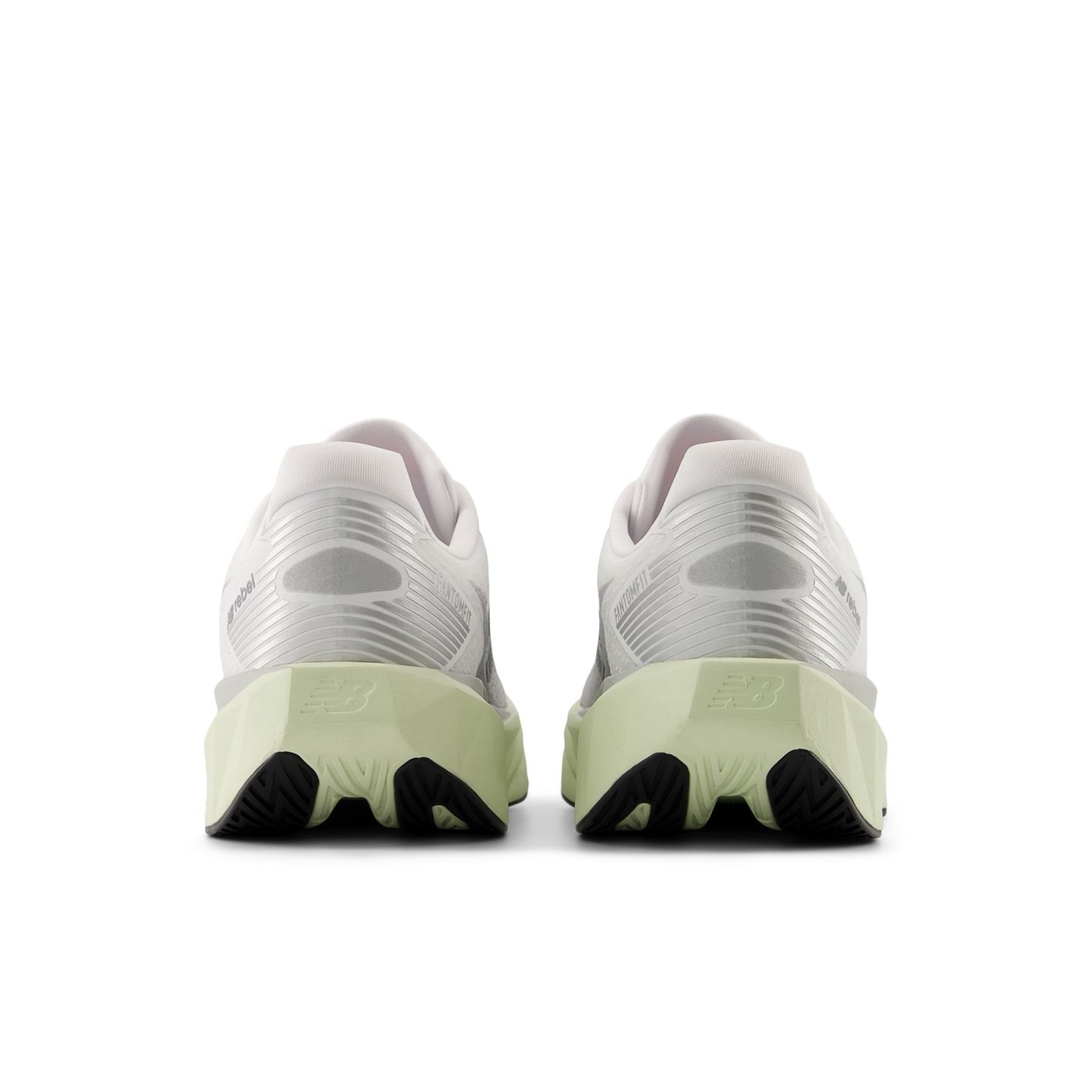
© New Balance, official photo used for editorial purposes
How to fit the Rebel v5 into your RunMorph training plan
The Rebel v5 is a Swiss Army knife of a shoe: it slots easily into most of the sessions in a RunMorph plan. Here are its best uses.
For threshold and tempo runs, it's in its element. On a 3x10-minute block at half marathon pace or a 6x4-minute fast/2-minute easy fartlek, the FuelCell foam makes every kilometer flow. Save it for sessions between 4:00 and 5:00 per kilometer: that's where its snap really shines.
For long runs at a sustained pace (30 to 35 km in a marathon build), the Rebel v5 holds up thanks to its higher stack. It handles this job better than the v4, but stays a notch below marathon-specific shoes like the Asics Superblast 3 or the Hoka Skyward X 2. If your long run goes beyond 30 km, a rotation starts to make sense.
For recovery runs and easy aerobic running, it works too, as long as you accept that it's a notch firmer than a max-cushion shoe. It's a trade-off: what you lose in softness, you gain in responsiveness.
For short races (10 km, half marathon), it can do the job if you're racing for fun rather than the clock. For a time goal, a carbon-plated shoe is still more efficient, but a tactical runner who knows how to manage effort will lose zero seconds in the Rebel v5.
A typical training week: Rebel v5 for Tuesday's tempo session, Thursday's easy run and Sunday's relaxed long run. The race pair stays on the shelf until race day, and a New Balance Fresh Foam X 1080v15 or an Asics Gel-Nimbus 28 takes care of the very easy long runs on recovery weekends.
The RunMorph verdict
The FuelCell Rebel v5 is one of the best fast daily trainers on the market right now. New Balance made the right call by adding stack and comfort without adding weight, and by keeping a 6 mm drop that works for the vast majority of runners. The FuelCell PEBA/EVA foam is a real strength: lively enough for fast sessions, stable enough for long runs, and likely more durable than the 100% PEBA foams of its rivals. At €160, it sits right in the price range of the segment, and regular deals at Decathlon or French retailers make it even more competitive. The only gripes: average grip on wet surfaces and a fit that runs narrow through the midfoot.
Score: 8.5/10
Key takeaways for your training
- Maximum versatility: a daily trainer that can handle easy runs, tempo and long runs back to back. One pair covers 80% of RunMorph sessions.
- Balanced PEBA/EVA foam: 20% PEBA for responsiveness, 80% EVA for stability and an estimated lifespan of 700-800 km.
- Lightness intact: 223 g for a 35/29 mm stack height, one of the best weight-to-cushioning ratios in the segment.
- Accessible 6 mm drop: a natural bridge between traditional shoes (8-10 mm) and super shoes (4-6 mm).
- Plan for the fit: go up half a size for long runs and wide feet (Wide version available).