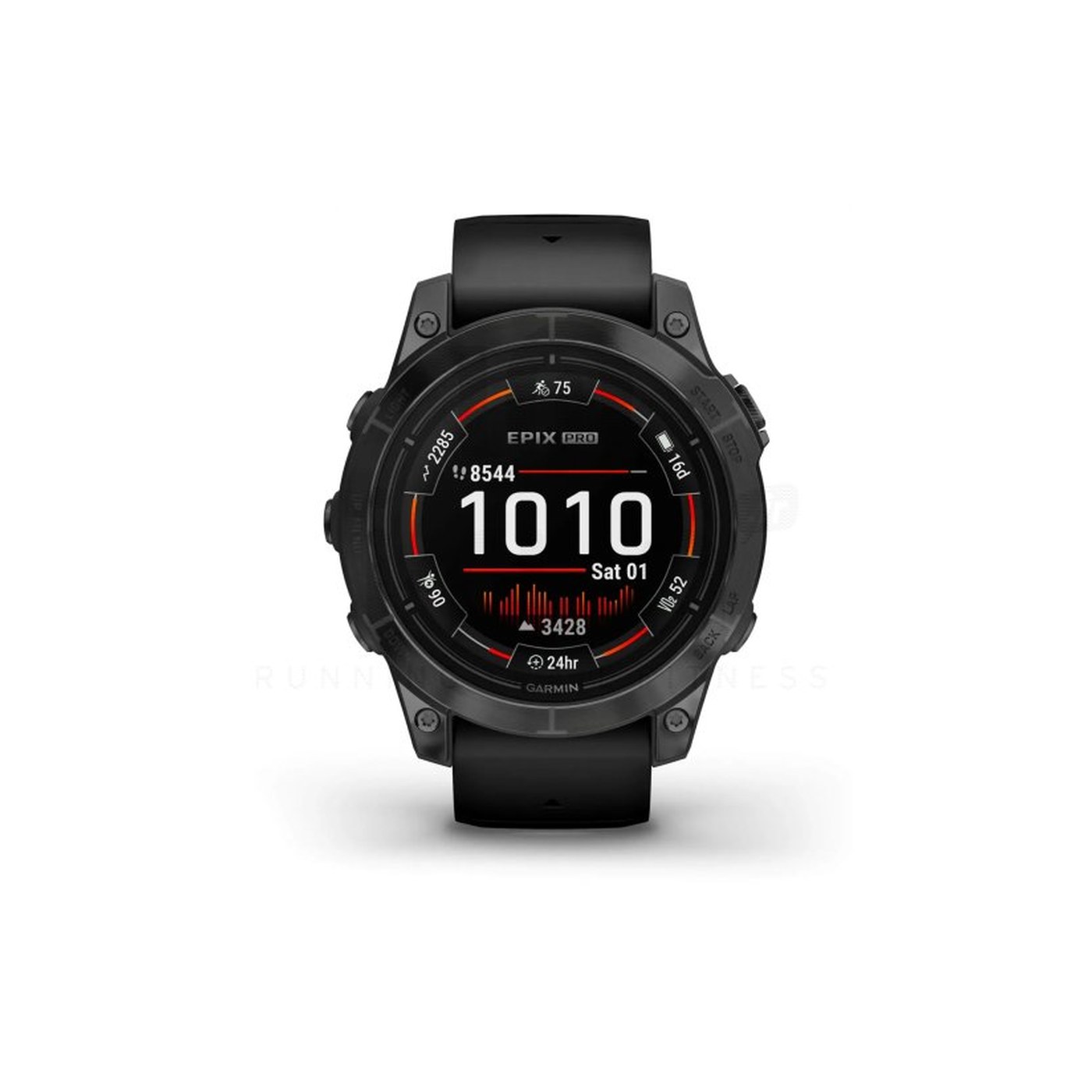
For years, picking a high-end Garmin outdoor watch meant giving up an AMOLED screen: the fenix's transflective display delivered battery life at the cost of readability. The epix Pro (Gen 2) was Garmin's answer to that dilemma, putting AMOLED into a case as tough as a fenix. Several years and several generations later, it's still on sale and still convincing, now at a far more accessible price than at launch.
© Garmin, official photo used for editorial purposes
Garmin epix Pro (Gen 2): the fenix that went AMOLED before everyone else
When Garmin launched the epix Pro (Gen 2), the brand already knew that the MIP transflective screen, however power-efficient, would no longer satisfy users used to mainstream smartwatches. The answer was radical: take the fenix's rugged skeleton (titanium case, multiband GNSS, full maps) and give it an always-on color AMOLED screen. The bet paid off, so much so that Garmin has since rolled AMOLED out across its entire outdoor lineup with the fenix 8.
Several years after launch, the epix Pro (Gen 2) is still on sale and still selling very well, largely thanks to regular discounts that bring it close to the price of a fenix 7 Pro. The name can be confusing, but the epix Pro (Gen 2) is neither the first epix (MIP screen, 2022) nor the fenix 8 (latest generation): it sits in between, with a features-to-price ratio that stays very competitive on the discounted new market.
RunMorph's tip: if you're torn between the epix Pro (Gen 2) and the Garmin fenix 8, look at your budget first. Both watches share the core AMOLED and mapping experience, but the fenix 8 adds newer sensors and better battery life for a significant extra cost.
Multiband GNSS and multi-continent maps: what difference do they make on the trail?
Multiband GNSS is no longer exclusive in the premium outdoor watch market, but Garmin pairs it with its SatIQ algorithm, which automatically adjusts the satellite frequency used to suit the environment, balancing accuracy and power consumption. In dense forest or urban canyons, the difference over single-band GPS is clear: tracks stay clean, without the zigzags typical of bad signal reflections.
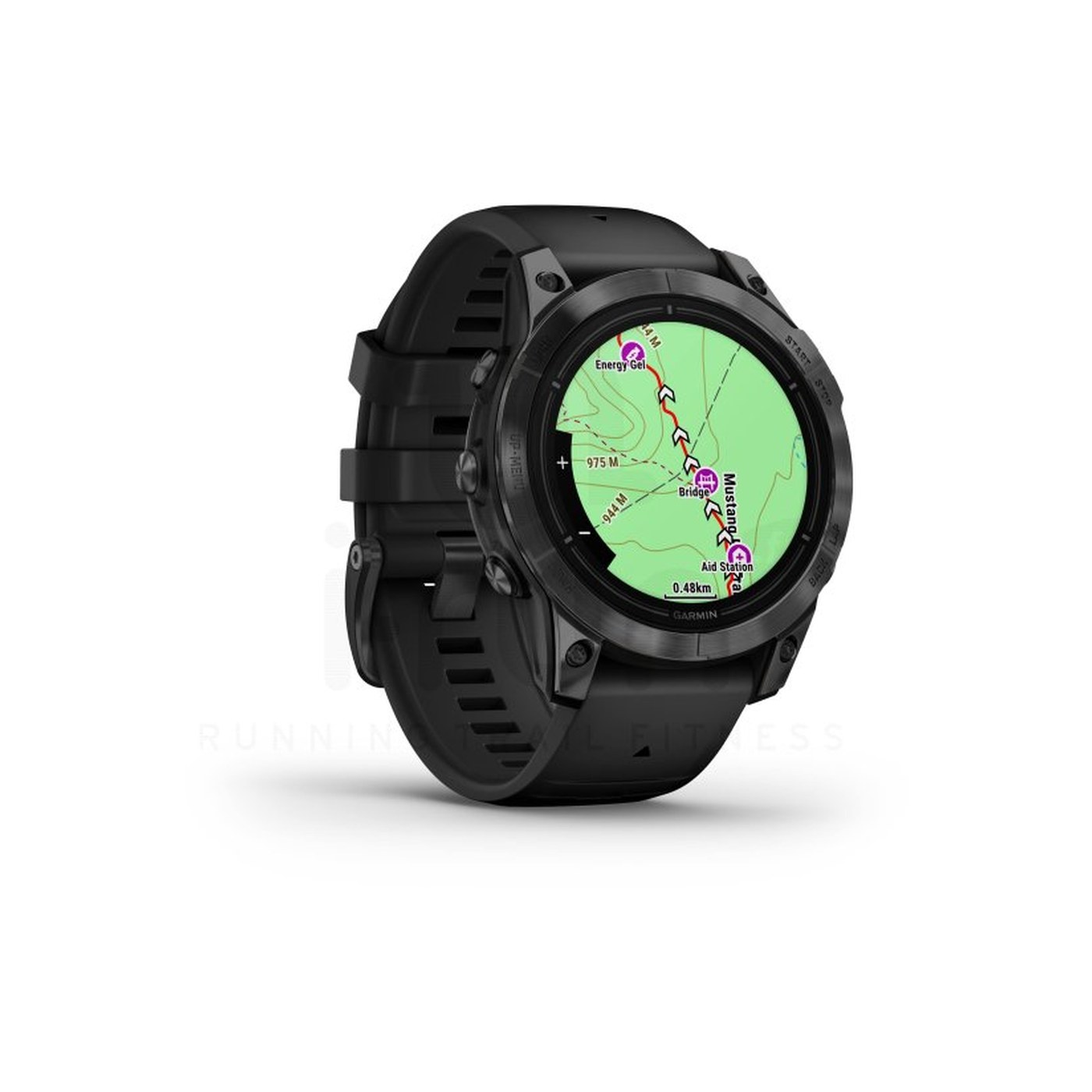
Preloaded multi-continent maps remain one of the epix Pro (Gen 2)'s biggest strengths. Unlike some competitors that charge extra for maps or limit geographic coverage, Garmin ships full topography out of the box, with contour lines, peaks, water sources and trails. Paired with the AMOLED screen, reading a map becomes a real pleasure, far from the limited readability of transflective screens on older models.
© Garmin, official photo used for editorial purposes
Field test: GPS accuracy and heart rate tracking on the trail
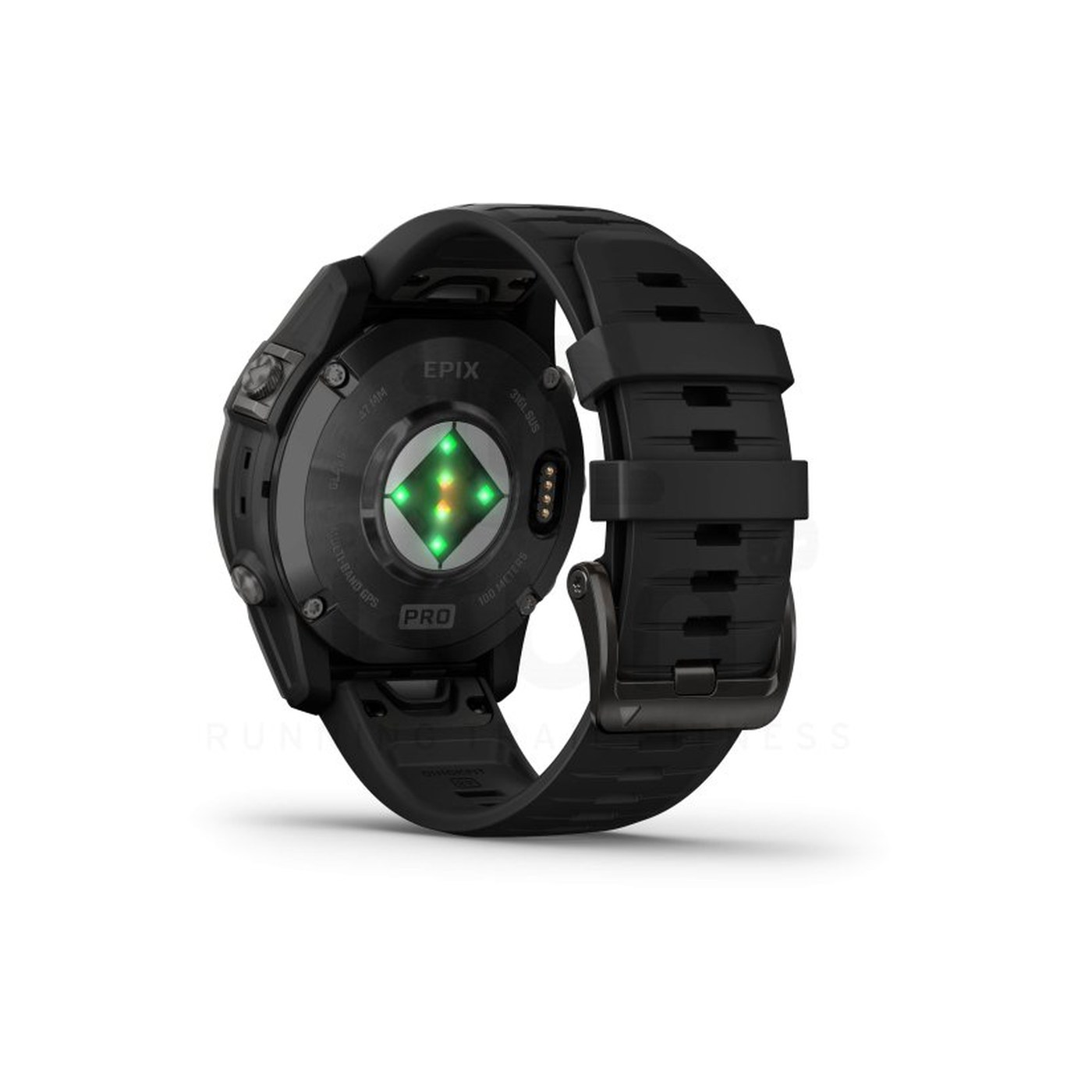
On test runs through rolling forest and technical trail, between 5:00 and 6:30/km, the epix Pro (Gen 2)'s multiband GPS proved very reliable, with minimal distance gaps against reference measurements over 20 to 30 km routes. The Elevate Gen 5 optical heart rate sensor stays stable overall on steady runs, though like most wrist sensors it shows occasional dropouts during sudden intensity changes, typical of hill intervals.
On battery life, the claimed 42 hours of multiband GPS hold up in real conditions. That's plenty for a marathon or a long trail run, but tight for a multi-day ultra without charging. Trail runners targeting races longer than 24 hours will have to rely on expedition mode, which cuts the GPS recording rate to stretch battery life to 14 days.
© Garmin, official photo used for editorial purposes
epix Pro (Gen 2) vs fenix 8: the comparison for choosing your premium Garmin
The two watches share a very similar base, which can make the choice tricky. Here are the main differences to know before buying.
| Criterion | Garmin epix Pro (Gen 2) | Garmin fenix 8 |
|---|
| Generation | Previous, still on sale | Latest generation |
| Screen | 1.3-inch AMOLED | AMOLED, multiple sizes including a larger version |
| Heart rate sensor | Elevate Gen 5 | Next-generation sensor |
| Multiband GPS battery life | 42 h | Higher, extended range |
| Extra features | LED flashlight | LED flashlight, diving depending on version |
| Price | From €849, often discounted | From €899 |
In short, the fenix 8 delivers a more polished, more recent experience, but the epix Pro (Gen 2) remains an excellent compromise if you find a good discount, with the core mapping and AMOLED features already there.
Garmin epix Pro (Gen 2) pros and cons
Pros
- Stunning AMOLED screen, readable in full sun and at night
- Full multi-continent maps included
- Very accurate multiband GNSS with SatIQ
- Rugged build, premium materials
- Now affordable thanks to regular discounts
Cons
- Multiband GPS battery life trails ultra-endurance Coros or Suunto models
- List price still high outside of sales
- Older model than the latest fenix 8 lineup
- Feature-rich interface with a learning curve
© Garmin, official photo used for editorial purposes
Our field verdict: who is the epix Pro (Gen 2) for?
The trail runner who wants full maps with no screen compromise
For trail runners who regularly navigate technical routes, the combination of multi-continent maps and an AMOLED screen is a real comfort, a step above what classic transflective screens offer.
The multisport hiker who wants a versatile watch
With more than 30 sport profiles and a complete training suite, the epix Pro (Gen 2) adapts as well to trail running as to cycling, ski touring or swimming.
The ultra trail runner chasing extreme battery life
On the other hand, runners who string together multi-day efforts without charging should look at a COROS Vertix 2S or a Garmin Enduro 3, which last longer.
Want to get the most out of the epix Pro (Gen 2)'s mapping and training load tracking? Whether you're structuring your trail race build-up or tracking your progress on the road, it fits naturally into a RunMorph training plan built around your goal.
RunMorph Coach verdict
Several years after launch, the Garmin epix Pro (Gen 2) remains one of the most complete outdoor watches on the market if you put the screen and maps ahead of extreme battery life. It's no longer the newest in Garmin's lineup, but its features-to-price ratio has improved markedly over time thanks to regular discounts.
It's not the watch for ultra trail runners who race for several days without charging, and it's not the cheapest in its category at full price either. For every other profile, from the regular trail runner to the multisport hiker, it remains a safe bet.
8.5/10: a premium Garmin that's still relevant, held back only by GPS battery life that trails the ultra-endurance specialists and a price that stays high outside of sales.