On a 180 km stage race through the Moroccan desert, just like on a short Tuesday evening run, the lightest pole on the market is worthless if it loosens up on the first rocky climb. The Guidetti Platinium Aéro Perf plays exactly that card: under 160 g per pole, a FlashLock lock billed as the fastest deployment on the segment, and French manufacturing used as a durability argument. RunMorph cross-checked the reviews available on this exact model to see what actually holds up.
© Guidetti, official photo used for editorial purposes
Guidetti Platinium Aéro Perf: betting everything on pure lightness
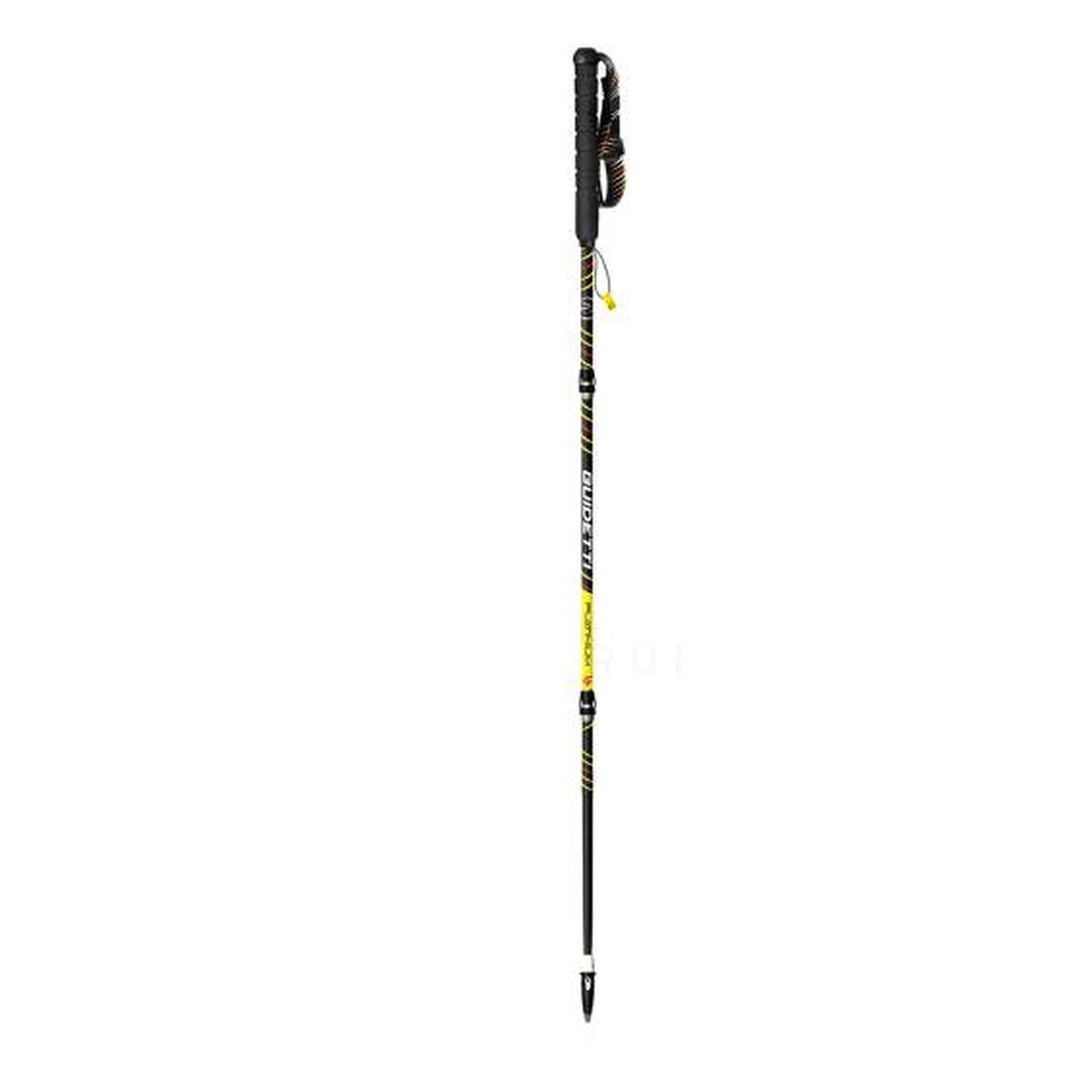
Guidetti builds its poles in Saint-Jean-de-Moirans, near Grenoble, with a team of around fifteen people. The Platinium Aéro Perf sits at the top of the brand's carbon range, alongside the Platinium Néo already reviewed by RunMorph, but with a different positioning: where the Néo relies on a comfortable glove strap, the Aéro Perf strips away everything that adds weight, glove included. The result sits between 141 g (105 cm size) and 159 g per pole (130 cm size), without the basket.
The carbon used, HR T900 with a high-resistance weave, is presented by the brand as a choice of stiffness rather than pure cushioning. In practice, the pole transmits push energy with little parasitic flex, a deliberate choice for performance rather than joint comfort.
RunMorph's advice: on a pole this light, check your size before buying. The Platinium Aéro Perf should be chosen based on your height and your use (technical climbs or flat-ground push), not by instinct like a classic hiking pole. Guidetti offers six lengths from 105 to 130 cm: a single centimetre already changes the feel in your hand.
© Guidetti, official photo used for editorial purposes
Who is it for?
The trail runner chasing an ultra or a skyrace
This is the exact profile the brand designed this pole for. Over a long race, every gram saved adds up across the tens of thousands of arm movements accumulated over the course. The Platinium Aéro Perf folds away as fast as it deploys, a real asset when the route alternates between runnable sections and technical climbs.
The mountain runner who already runs with light poles
Anyone who already owns a heavier pair and is chasing a measurable weight saving will find a concrete argument here: 141 g against 170 to 213 g for several models already reviewed by RunMorph. The difference is felt most on outings over two hours.
The trail runner who prioritises hand comfort
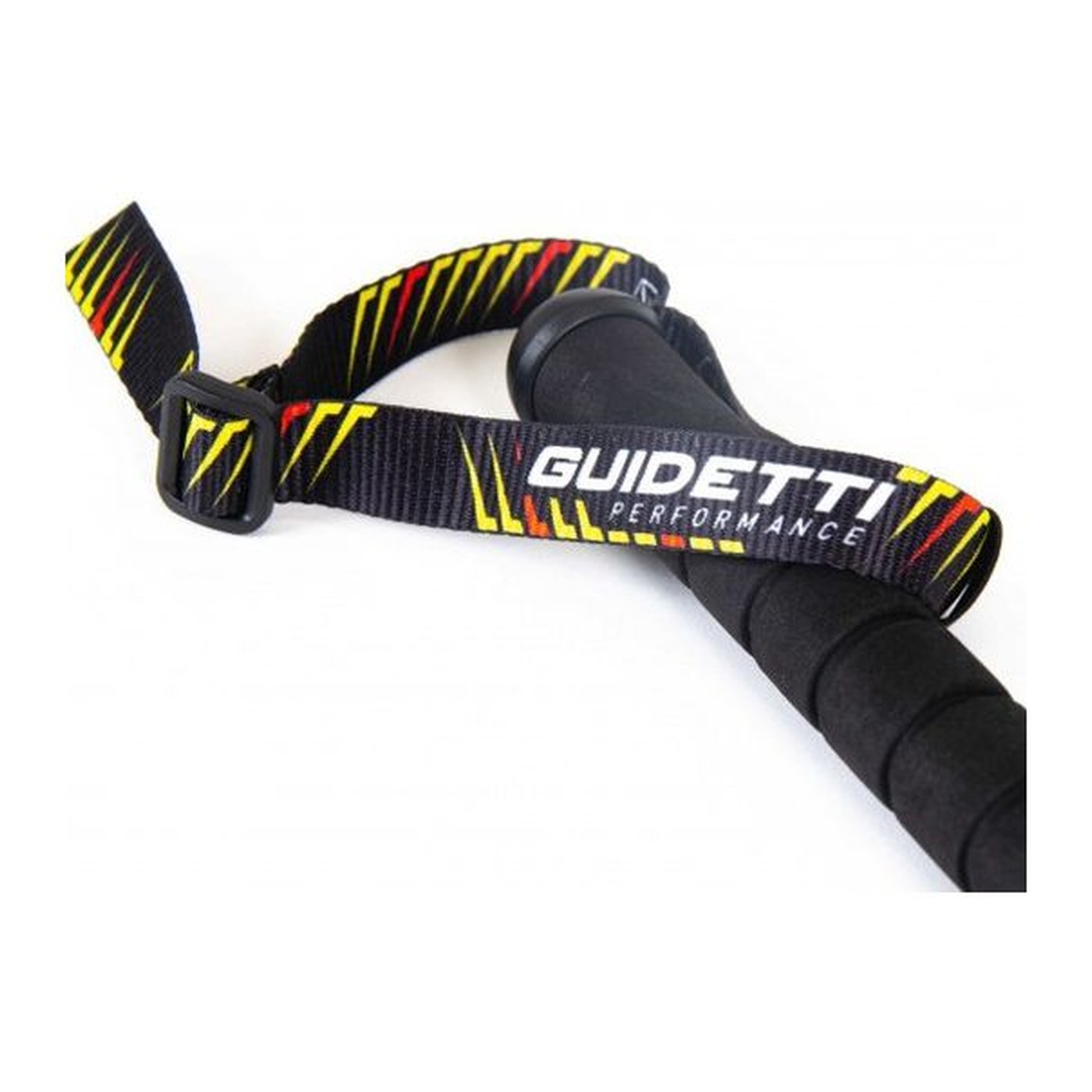
This is the profile to avoid here. The flat grip and minimalist strap, with no glove, require an active hold and do not suit anyone who likes to rest their palm on the pole during long descents. The Platinium Néo, with its glove strap, remains the RunMorph pick for that specific need.
Real-world testing: what runners who actually used it say
Two independent sources were read in full for this article, each covering a different strap version of the same pole (Perf, with a simple strap and no glove, and Pulse, with a classic strap, also glove-free but with a different adjustment): fewer than three full reviews exist so far on this exact model in French, and RunMorph flags that rather than inventing a broader consensus than actually exists.
The first review, a full field test published in French, confirms the energy return on climbs: the carbon's internal tension transmits the push from the ground to the wrist with no parasitic vibration felt in the forearm. The tester judges the pole lighter than a carbon Kiprun model already reviewed by RunMorph, but heavier than certain Leki poles that drop under 135 g. Grip stays effective in the rain and with sweat, and the locking system never jammed during the test. Two weak points are noted precisely: folding, which takes longer than deployment because of slightly stiff clips to pinch, and the upper part of the grip, flat, judged uncomfortable for anyone who likes to rest their palm on it on steep descents.
The second review comes from a test run during a 180 km stage race in the Moroccan desert, in extreme conditions of abrasive sand, constant wind and heat building up over several days. The locking system never jammed or developed play despite the sand and dust, the tip stayed intact despite impacts, and the carbon showed no major chipping by the finish. The wide baskets limited sinking into soft sand, and lateral stability was judged total even on unstable rocks. The tester does note two limits: a price judged high at around 170 euros, and classic straps that would benefit from thicker padding at the wrist on long, repeated pushes.
The two sources therefore agree on the reliability of the locking system and on real-world lightness, and diverge only on one secondary point, the comfort level of the strap depending on the version tested. Neither reports any breakage or mechanical failure over the course of testing.
© Guidetti, official photo used for editorial purposes
Guidetti Platinium Aéro Perf vs Guidetti Platinium Néo: the comparison
Both poles come out of the same French workshop and share the FlashLock Modulo system. The difference comes down to the weight-versus-comfort trade-off.
| Criterion | Platinium Aéro Perf | Platinium Néo |
|---|
| Unit weight | 141 to 159 g | 149 g |
| Grip | Thin foam, no glove | Removable glove, more enveloping |
| Indicative price | 170 euros (143 to 196 euros depending on retailer) | 179,99 euros |
| Ideal use | Long races, weight as priority | All-round trail use and hand comfort |
For technical mountain terrain with a lot of carrying on descents, the Platinium Néo remains the RunMorph pick. For an ultra or a skyrace where every gram counts, the Aéro Perf takes the lead. Looking outside the brand, the Leki Ultratrail FX.One Superlite goes even lighter (137 g) but at a higher price, while the Black Diamond Distance Carbon Z FKT plays on very similar ground in philosophy, lightness and no length adjustment.
How to fit it into your RunMorph training plan
On a trail plan, poles come into play as soon as cumulative elevation gain passes a few hundred metres per outing, especially on long weekend runs. The Platinium Aéro Perf earns its place on outings beyond two hours, where carrying heavier poles starts to be felt in the shoulders. To structure these climbing sessions and learn to pace effort over several weeks, the RunMorph trail plan progressively builds in elevation work and effort management on varied terrain.
© Guidetti, official photo used for editorial purposes
RunMorph Coach's verdict
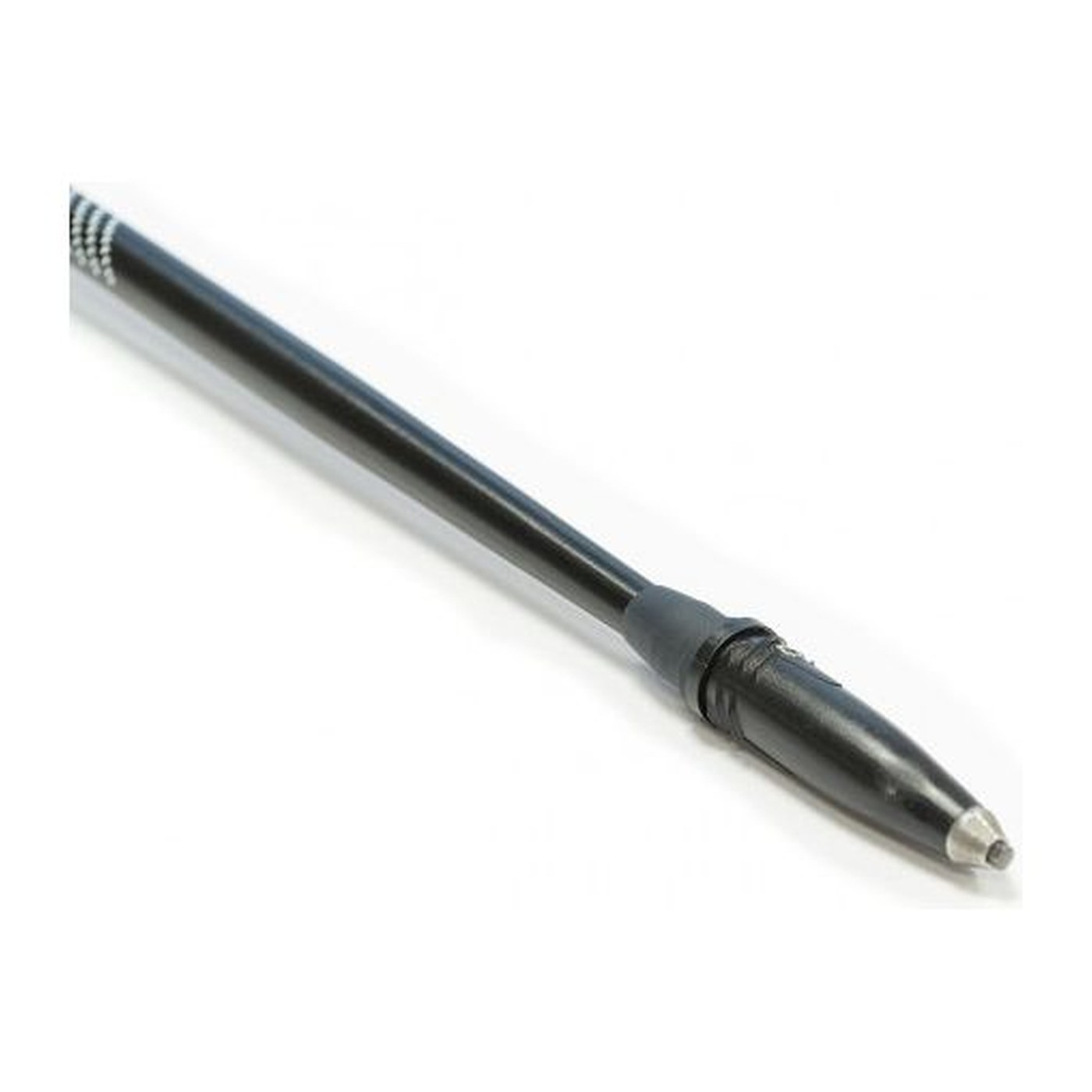
The Platinium Aéro Perf delivers on what it promises on paper: a weight among the lowest in its category, a locking system that gives up neither to sand nor dust over 180 km of testing, and a tip that bites well even on polished rock. The trade-off is paid in hand comfort: the flat grip and minimalist strap will not suit every profile, and the price, between 143 and 196 euros depending on length, stays high against more affordable carbon alternatives already reviewed by RunMorph. 7,6/10: a specialist's pole, not a first general-purpose buy.
Key takeaways for your training
- Very low weight: 141 to 159 g per pole depending on size, a real gain on long outings.
- Reliable locking: no jamming reported over 180 km of sand and dust across both tests read.
- Try the grip before buying: with no glove, it will not suit anyone looking for comfort on long descents.
- Choose your size carefully: six lengths available, a single centimetre changes the feel in your hand.
- Budget to plan for: expect between 143 and 196 euros depending on retailer and chosen length.
© Guidetti, official photo used for editorial purposes