Hoka claims a 5 mm drop on the Mach X 3. Independent lab measurements put it at 9.5 mm, nearly double. That's not a rounding error: the brand simply measures its shoes differently from the World Athletics standard. The rest of the Mach X 3 delivers on a simpler promise: fixing the flaw that left heels bleeding on the previous version, at the cost of an extra 12 g and value for money that's open to debate.
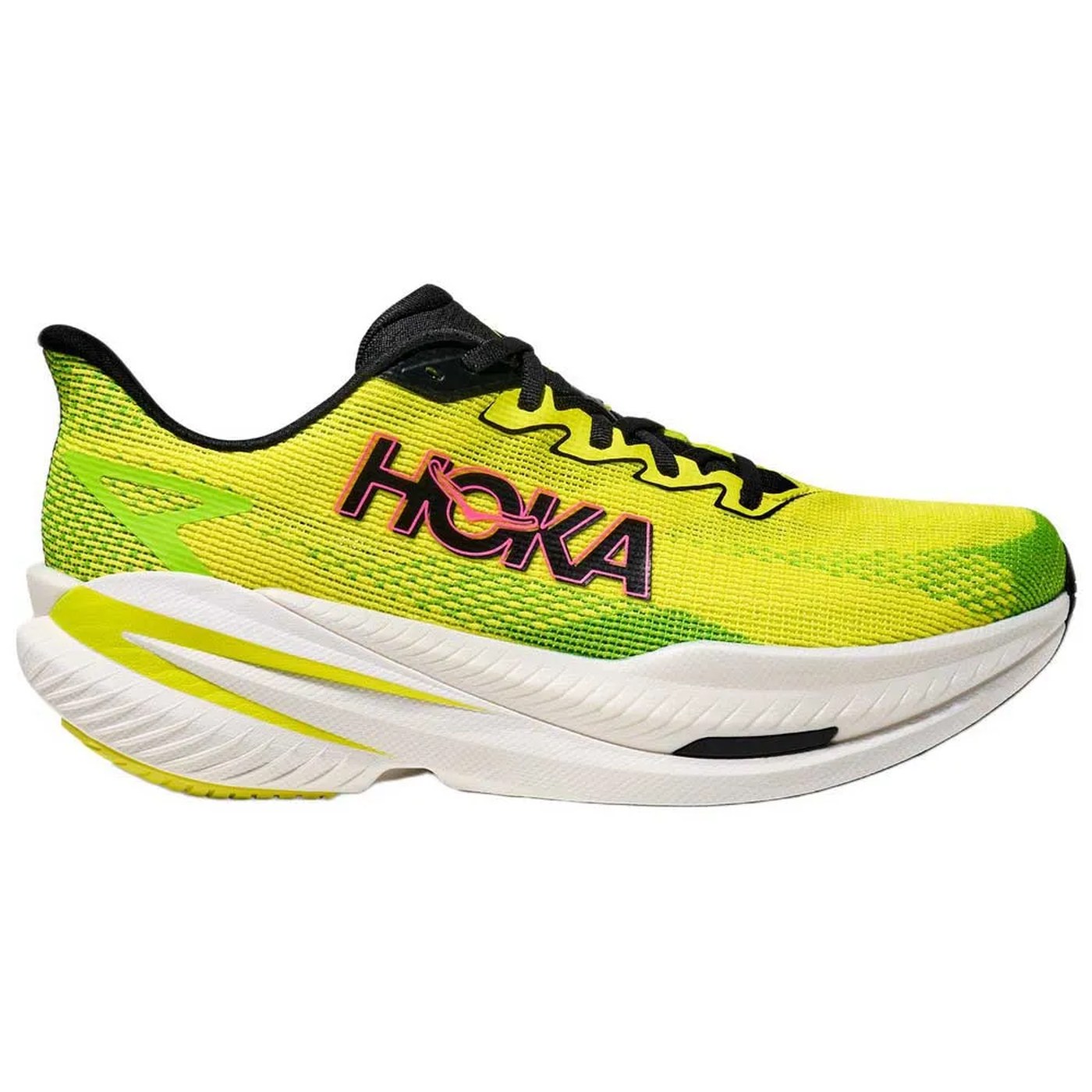
© Hoka, official photo used for editorial purposes
Hoka Mach X 3: the super trainer that fixes its biggest flaw, with a trade-off on weight
The super trainer category (maximalist plated shoes that sit between daily training and racing) has filled up in two years: Asics with the Superblast, Nike with the Vomero Plus, Saucony with the Endorphin Speed. Hoka has been defending its spot with the Mach X line since 2023. Version 2 had a problem nearly every independent tester picked up on: a heel collar that hurt, sometimes to the point of drawing blood. The Mach X 3 changes the upper and the collar to fix exactly that, without touching the underfoot build: same Pebax plate, same PEBA and supercritical EVA foam combo.
RunMorph's advice: if the Mach X 2 heel collar scared you off, the Mach X 3 deserves a second chance. If low weight for short intervals is your top priority, a Saucony Endorphin Speed 5 is still the better pick.
Mach X 3: what the brand claims vs. what was measured
On two specific points, the gap between the product page and independent lab measurements is clear. On everything else (foams, plate, upper), the measurements broadly back up the claims.
| Spec | Hoka's claim | Measured in an independent lab |
|---|
| Drop | 5 mm | 9.5 mm, nearly double |
| Weight (men's size 42) | 252 g | 264 g, 12 g more |
The drop gap isn't unique to this model. Independent measurements regularly find this kind of discrepancy on Hoka shoes, because the brand doesn't measure drop at the reference points World Athletics uses, but further back, close to the midfoot. In practice, the Mach X 3 behaves underfoot like a shoe with a drop of around 9 to 10 mm, not a 5 mm shoe. If you're used to low-drop shoes, the first few strides can come as a surprise.
PEBA up front, EVA at the heel: two foams, two behaviors
The underfoot build hasn't changed since version 2. The top layer of PEBA (a foam Hoka doesn't name) measures 32.5 on the Asker C scale, softer than the market average of 35.6. It returns 69.3% of energy at the forefoot, a solid figure. The bottom layer of supercritical EVA is firmer, at 41.6 Asker C versus an average of 39, and its energy return tops out at 58.9% at the heel, a figure the independent lab rates as weak at this price. The result underfoot: a shoe that pushes well off the forefoot but gives back less at the heel than other super trainers in the same price bracket.
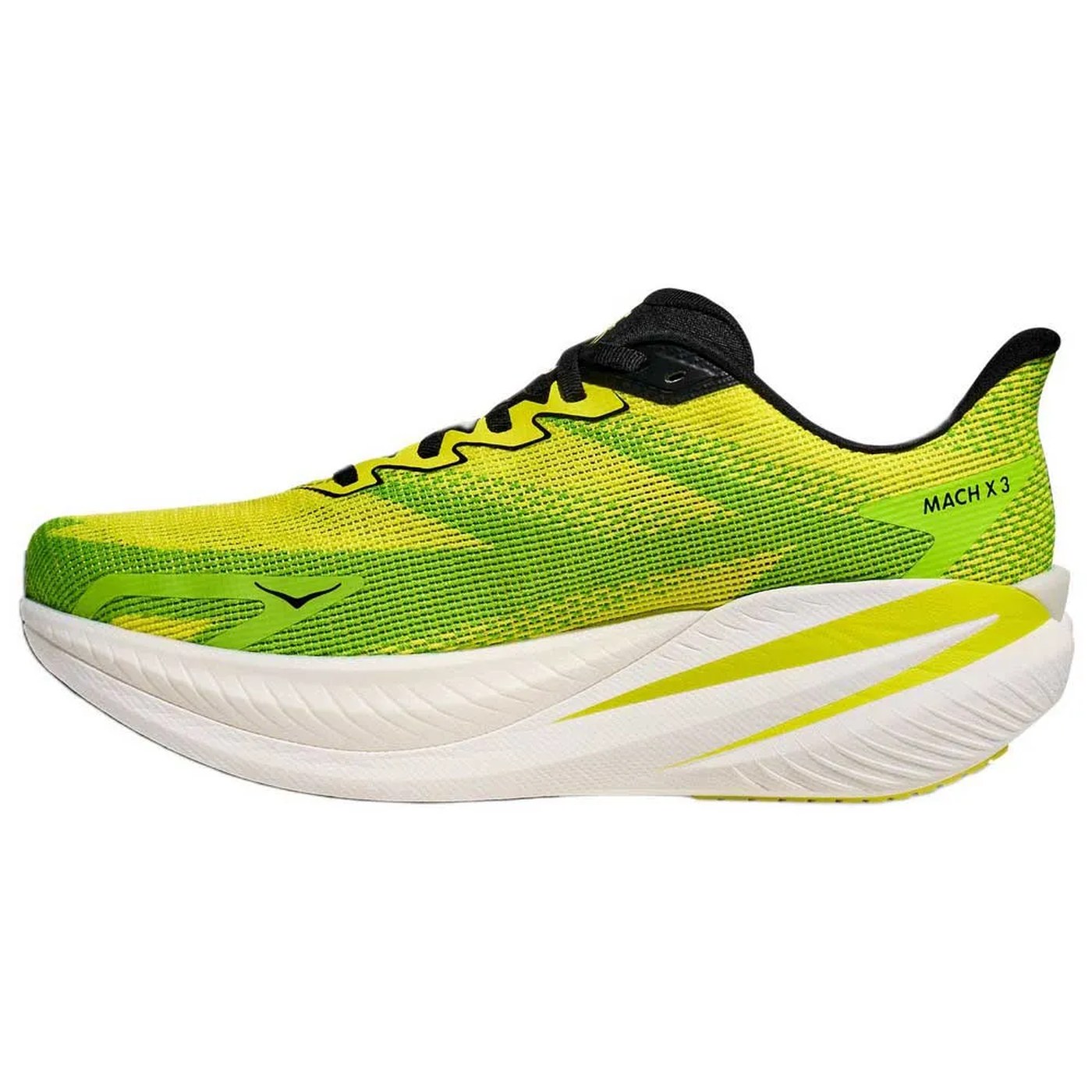
© Hoka, official photo used for editorial purposes
Fit: a narrower-than-average toe box, but testers don't agree on how it feels
Toe box width measures 70.8 mm, versus a market average of 73.2 mm: objectively, this fit is narrower than average. Vertical room, on the other hand, improves on the previous version: 28.5 mm versus 24.3 mm on the Mach X 2, or 4.2 mm more. That's real progress if you found the old version cramped over the top of your foot.
On how it feels in use, the sources clearly disagree. The lab measurements point to a narrow toe box. On the other hand, an American tester who expected a narrow shoe straight out of the box reports a true-to-size fit, with a forefoot even roomier than expected. At RunMorph, we read this split as the classic sign of a fit that varies a lot with foot shape, rather than a reliable consensus either way: on this particular model, trying before you buy is still the smart move, especially if you have wide feet.
Real-world testing: the heel collar is fixed, the rest divides opinion
The most documented point, and the one where sources agree most, is the heel collar fix. The previous version caused hot spots and, for some runners, bleeding at the heel: a flaw serious enough to show up in every independent review of the Mach X 2. On version 3, extra padding around the collar and the tongue, combined with a switch from a standard mesh to a Warp Knit upper, solves the problem: none of the sources compared here report any hot spot or irritation on the Mach X 3.
On whether the Mach X 3 is still competitive in its category, opinions split sharply. Some independent testers feel the underfoot build, unchanged for two generations, is starting to show its age against newer rivals, and recommend trying other shoes in the segment first before deciding. Other testers, by contrast, rank it among the best super trainers they've tested this year, praising its versatility from easy runs to pickups. At RunMorph, we think this split has less to do with the shoe itself than with how much the competition in this exact segment has stepped up in two years: the Mach X 3 hasn't gone backward, the market has risen around it.
A French tester who ran in this pair for several weeks confirms its lively push-off on 10 km pace blocks, with a midfoot-to-forefoot transition he describes as smooth and an effort he could hold with less perceived muscle fatigue. On grip, the same feedback reports reliable traction in dry conditions, but something to keep an eye on over wet pavement.
Which paces it works at, and where it falls off
Easy runs and base endurance: it does the job, but it's not the first choice. The measured 58.9% heel energy return is weak for the price, so the comfort on relaxed easy runs comes mostly from the thick foam, not from any real bounce. A more cushioned, cheaper shoe will do just as well here.
Long run: decent over 15 to 20 km, with weight as the limit. At 264 g measured instead of the claimed 252 g, it lacks the lightness of a dedicated fast long-run shoe, but the fixed heel collar stays comfortable over the distance with no hot spots.
Marathon pace: a good compromise, helped by the rocker and the Pebax plate that let you hold pace without forcing it, as long as you accept a heel that's less responsive than the forefoot.
Threshold and half marathon pace: this is where the Mach X 3 shines. Torsional stiffness measured at 17.8 N, stiffer than some carbon-plated racing shoes, combined with the strong forefoot energy return (69.3%), gives a clear push-off on 10 km to half marathon pace blocks.
Short intervals: less convincing. The measured weight (264 g) dulls its snappiness over 400-800 m reps, where lighter, less cushioned pairs remain a better fit.
The flaw two independent testers flag separately: the tongue
One of the weak points least visible in photos but most noticeable in use is the tongue construction. An American tester reports that it isn't attached to the inner sleeve under the laces, so he has to keep checking it doesn't fold during runs, a flaw he puts down to the lack of a simple gusset. An independent lab source, with no link to that tester, reaches a similar conclusion about the finishing quality of the same part, calling the edges poorly finished for a shoe at this price. Two independent observations landing on the same specific point, on a €190 shoe: that's the kind of flaw worth naming rather than burying in a generic list.
The other flaw: upper durability has slipped compared with the previous version
On how well the upper holds up over time around the toes, the independent measurement gives the Mach X 3 a 2 out of 5, versus 5 out of 5 for the Mach X 2 under the same test protocol. That's a clear step back, directly tied to the change of material (the switch to Warp Knit for more comfort). The trade-off isn't illogical: more comfort at the collar, less wear resistance around the toes. But it's worth knowing before you buy if you plan to keep this pair beyond 500 km, especially since the outsole doesn't change (wear identical to the previous version, see below).
Mach X 3 vs. Mach X 2: what changed
| Criterion | Mach X 2 | Mach X 3 |
|---|
| Measured weight | 247 g | 264 g (+17 g) |
| Measured drop | 10.9 mm | 9.5 mm |
| Heel energy return | 61.4% | 58.9% |
| Forefoot energy return | 68.5% | 69.3% |
| Toe box height | 24.3 mm | 28.5 mm (+4.2 mm) |
| Upper durability (toes) | 5 / 5 | 2 / 5 |
| Wet traction | 0.50 | 0.58 |
| Heel collar | Irritation reported, sometimes injuries | Fixed according to all 3 sources compared |
| Price | €190 | €190 |
Version 3 fixes the real problem of version 2 (the heel collar) and gains toe box height, at the cost of an extra 17 g and noticeably weaker upper durability. If your Mach X 2 never gave you heel trouble, there's no rush to upgrade: version 3 brings no pure performance gain, just a comfort fix. If the heel collar made you give up on this shoe, version 3 is clearly worth another try.
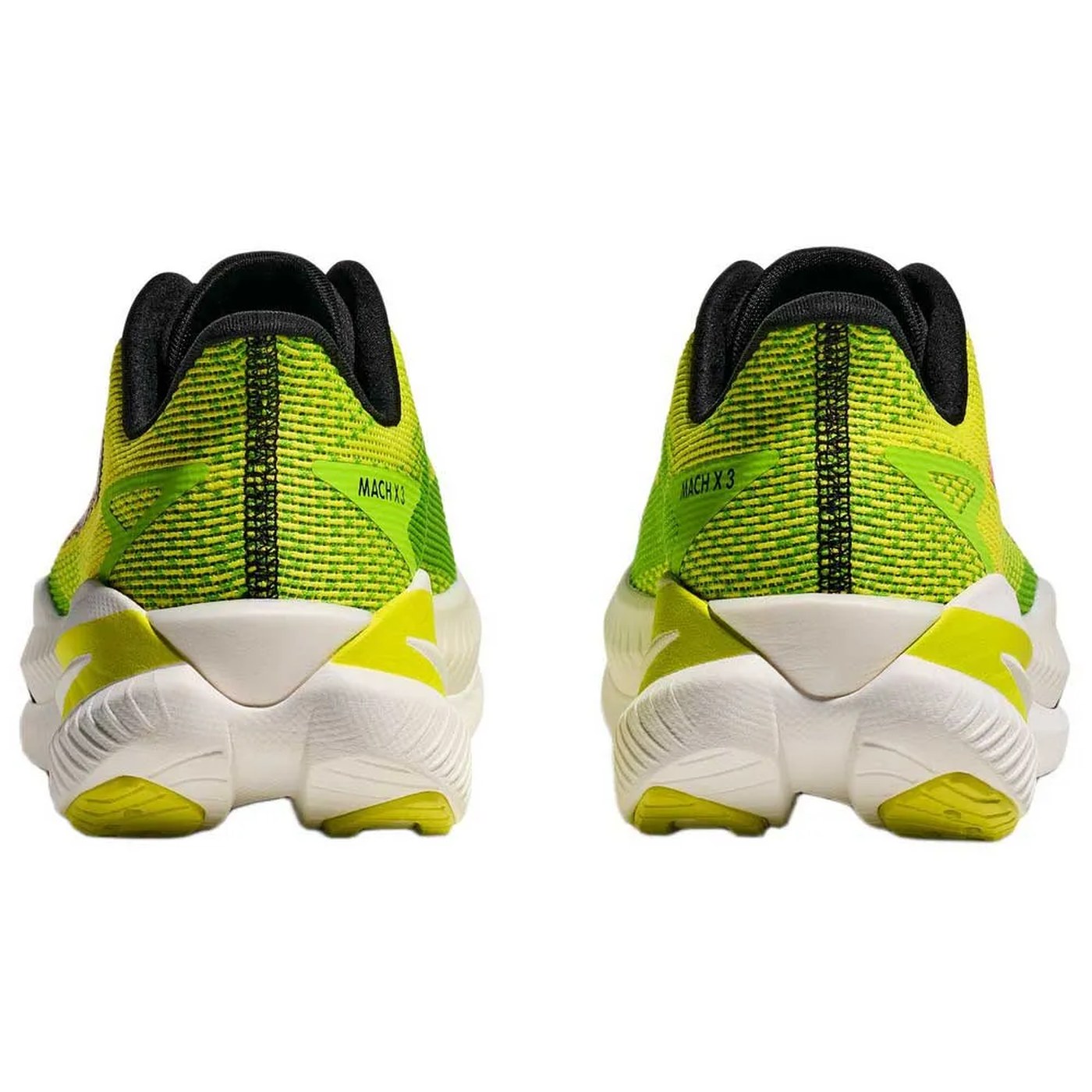
© Hoka, official photo used for editorial purposes
Mach X 3 vs. Nike Vomero Plus and Saucony Endorphin Speed 5: the comparison
| Criterion | Hoka Mach X 3 | Nike Vomero Plus | Saucony Endorphin Speed 5 |
|---|
| Positioning | Tempo super trainer | Daily super trainer | Fast training shoe with a nylon plate |
| Measured heel energy return | 58.9% | Higher according to independent measurements | Higher according to independent measurements |
| Strength | Forefoot responsiveness, heel collar now comfortable | Daily comfort, deep cushioning | Bounce, affordable tempo benchmark |
| Weakness | Value for money rated weak by independent measurements | Similar price bracket | Less versatile beyond the half marathon |
| Price | €190 | See dedicated review | See dedicated review |
The simple takeaway: if heel energy return is your top criterion (long runs, active recovery), the Nike Vomero Plus and the Saucony Endorphin Speed 5 do better on that specific point according to independent measurements. The Mach X 3 mainly makes sense if the heel collar on its predecessors gave you trouble, or if you specifically want the combination of a flexible Pebax plate and forefoot propulsion rather than all-over bounce.
Grip and durability: the outsole holds up, the upper less so
On outsole wear, the Dremel test gives 0.8 mm, identical to the Mach X 2 and rated solid by the independent measurements: at that rate of wear, an outsole lifespan of around 600 to 700 km is a reasonable estimate for regular road use. At €190, that works out to roughly €0.27 to €0.32 per kilometer based on outsole life alone, at the upper end of the super trainer segment, compared with €0.21 per kilometer for a classic €150 daily trainer lasting 700 km. The real lifespan limit, though, isn't the outsole but the upper, whose measured durability has dropped compared with the previous version (see above): with heavy use, the look and the hold around the toes are likely to deteriorate before the outsole itself.
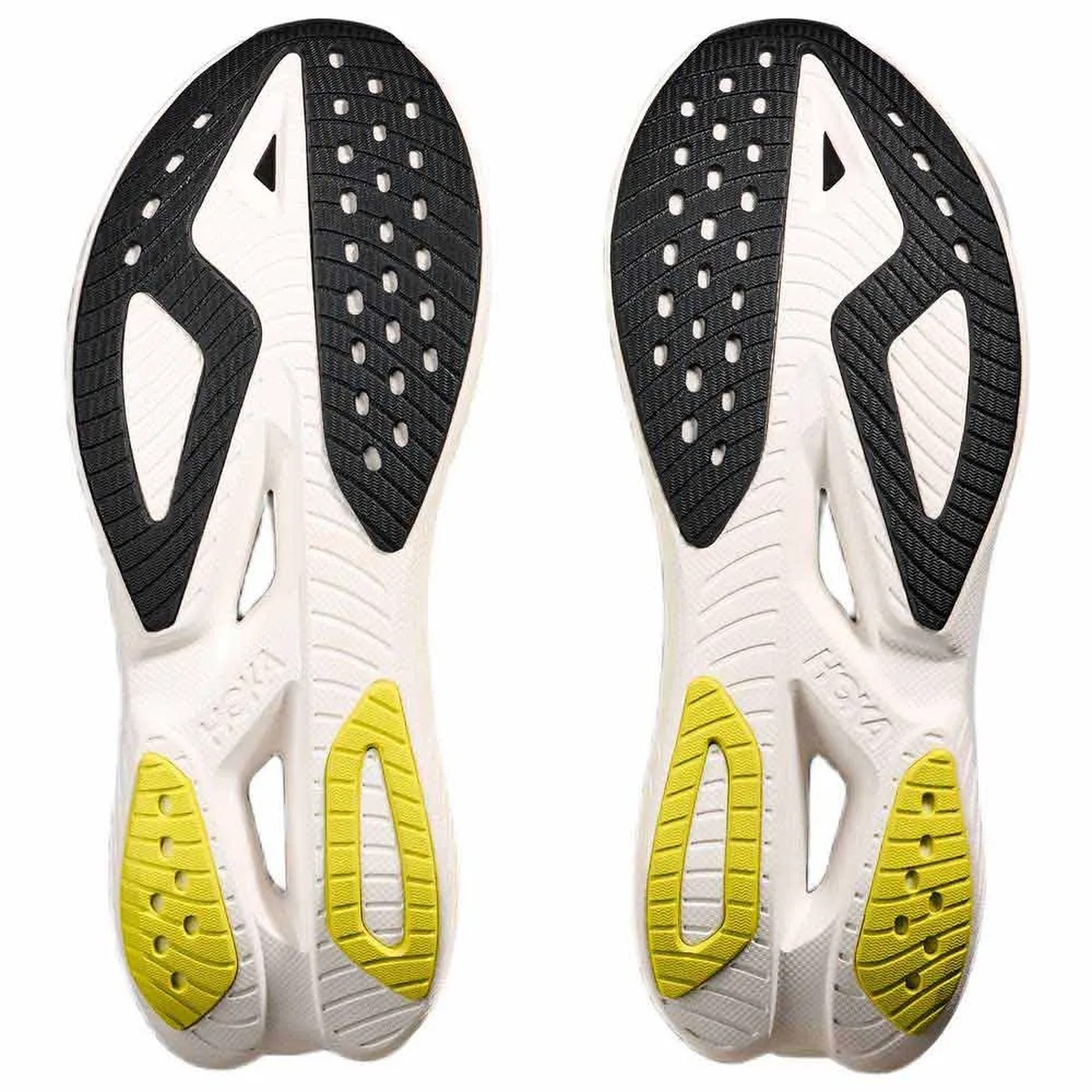
© Hoka, official photo used for editorial purposes
Our real-world take: who is it for?
The Mach X 3 is for the runner who wants one pair that can handle a relaxed easy run, a tempo block and a race up to the marathon, without stacking up specialized shoes. It's also, more specifically, for anyone who liked the Mach X 2's performance but gave up on it because of the heel collar: that problem is solved.
To build the tempo sessions and pace blocks where this shoe feels most at home, a structured RunMorph training plan lets you map out your quality sessions without getting lost, instead of improvising week after week.
RunMorph Coach verdict
The Hoka Mach X 3 keeps the promise it set itself: fixing the heel collar of the previous version, the only real flaw that stopped us from recommending the Mach X 2 without reservation. It succeeds completely, at the cost of an extra 17 g and weaker upper durability. At RunMorph, the score is pulled down by two concrete, measured factors: heel energy return rated weak for this price level, and value for money that doesn't fully convince against rivals that do better on that exact point. Forefoot responsiveness and torsional stiffness, on the other hand, remain a real strength in fast sessions. 7.7/10, weighted in favor of responsiveness and comfort (the core of what this shoe offers) but capped by value for money that doesn't match the best alternatives in the segment.
FAQ
Is the Hoka Mach X 3 good for beginners?
A beginner can use it, but it's not the first pair we'd recommend: at €190 and with a tempo-oriented profile, a neutral daily trainer around €150 better covers the needs of someone just starting out.
How many kilometers does the Hoka Mach X 3 last?
The outsole lasts around 600 to 700 km based on measured wear (0.8 mm in the abrasion test). The upper, however, shows signs of weakness earlier, according to the durability measurement around the toes (2/5).
Does the Hoka Mach X 3 run large or small?
The overall fit is true to size, but the toe box measures 2.4 mm narrower than the market average (70.8 mm versus 73.2 mm), something to check when trying them on if you have wide feet.
What's the difference between the Mach X 3 and the Mach X 2?
The heel collar has been redesigned to eliminate irritation and toe box height gains 4.2 mm, but weight goes up by 17 g and upper durability drops (2/5 versus 5/5 on the v2).
Is the Hoka Mach X 3 suited to the marathon?
Yes, with a good balance between long-distance comfort and responsiveness, as long as you accept a heel energy return (58.9%) lower than direct rivals in the same price bracket.