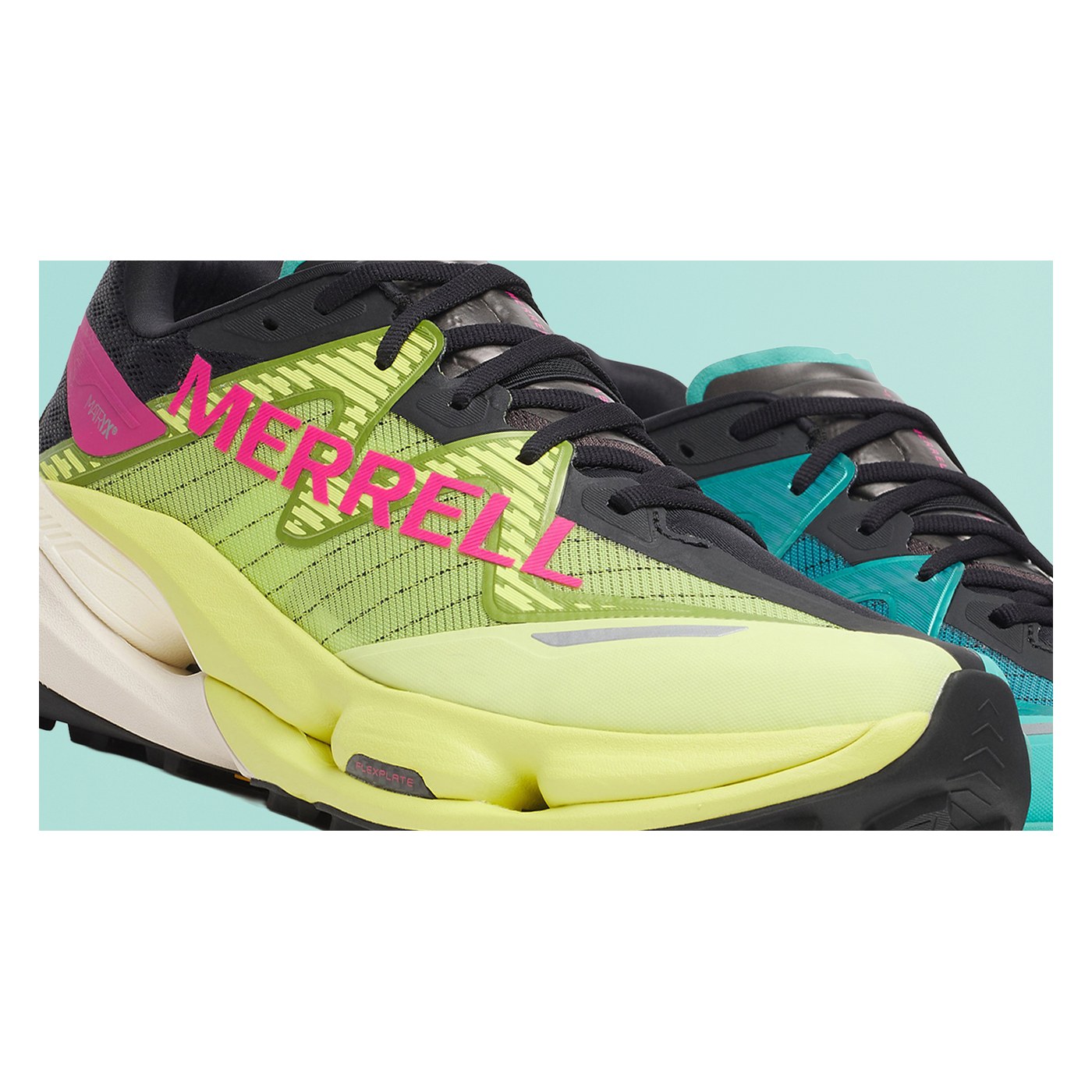
Five years of development inside the Merrell Test Lab, proven by the brand's elite team on some of the toughest terrain on the planet. The MTL SpeedARC Peak, on sale in the US since July 9, 2026, is Merrell's first trail super shoe: dual-density FloatPro PEBA foam, a full-length FlexPlate carbon plate and a Vibram Megagrip Elite outsole with 4 mm lugs. For podium hopefuls at the big skyrunning races and mountain ultras, it's a declaration of war on Hoka and On. Here is the RunMorph verdict.
Merrell MTL SpeedARC Peak Review: Carbon Skyrunning Racer
8.5/10
The essentials in 3 sentences
The MTL SpeedARC Peak is Merrell's first true trail super shoe, and it delivers: dual-density FloatPro PEBA foam over a full-length FlexPlate carbon plate, with a pod cutout outsole design that boosts both flexibility and propulsion on mixed terrain. The skeletal Vibram Megagrip Elite outsole offers some of the best grip on the 2026 market on dry to slightly wet ground. The one catch: at 305 g and 290 euros, it sits firmly in niche racing territory, not daily training.
8.5
/ 10 · RunMorph overall score
Who is it for?Trail and skyrunning racers looking for a race-day super shoe for technical terrain. Experienced runners tackling 50-80 km mountain races.
Who should skip it?Trail beginners. Runners on a tight budget. Very deep mud (the exposed lugs wear faster).
Merrell MTL SpeedARC Peak: five years of R&D packed into 305 grams
The MTL SpeedARC Peak is the product of a bold bet. Merrell, long known for hiking and affordable trail shoes, is taking direct aim at the trail super shoe segment ruled by the Hoka Tecton X 3, Brooks Cascadia Elite and On Cloudultra Pro. You recognize it at a glance: pod cutouts in the outsole expose the carbon plate from below, a visual signature as bold as it is functional. The SpeedARC Peak was also picked as official gear for the 2026 World Skyrunning Championships, and that counts for something.
RunMorph tip: If you're weighing the MTL SpeedARC Peak against the Hoka Tecton X 3, you're choosing between two different philosophies. The Tecton X 3 gives you more cushioning for long distances; the SpeedARC Peak gives you more responsiveness and ground feel for skyrunning and 40-80 km race distances. For your first runs in a trail super shoe, the RunMorph Trail Performance plans help you dial in race-day use without getting hurt.
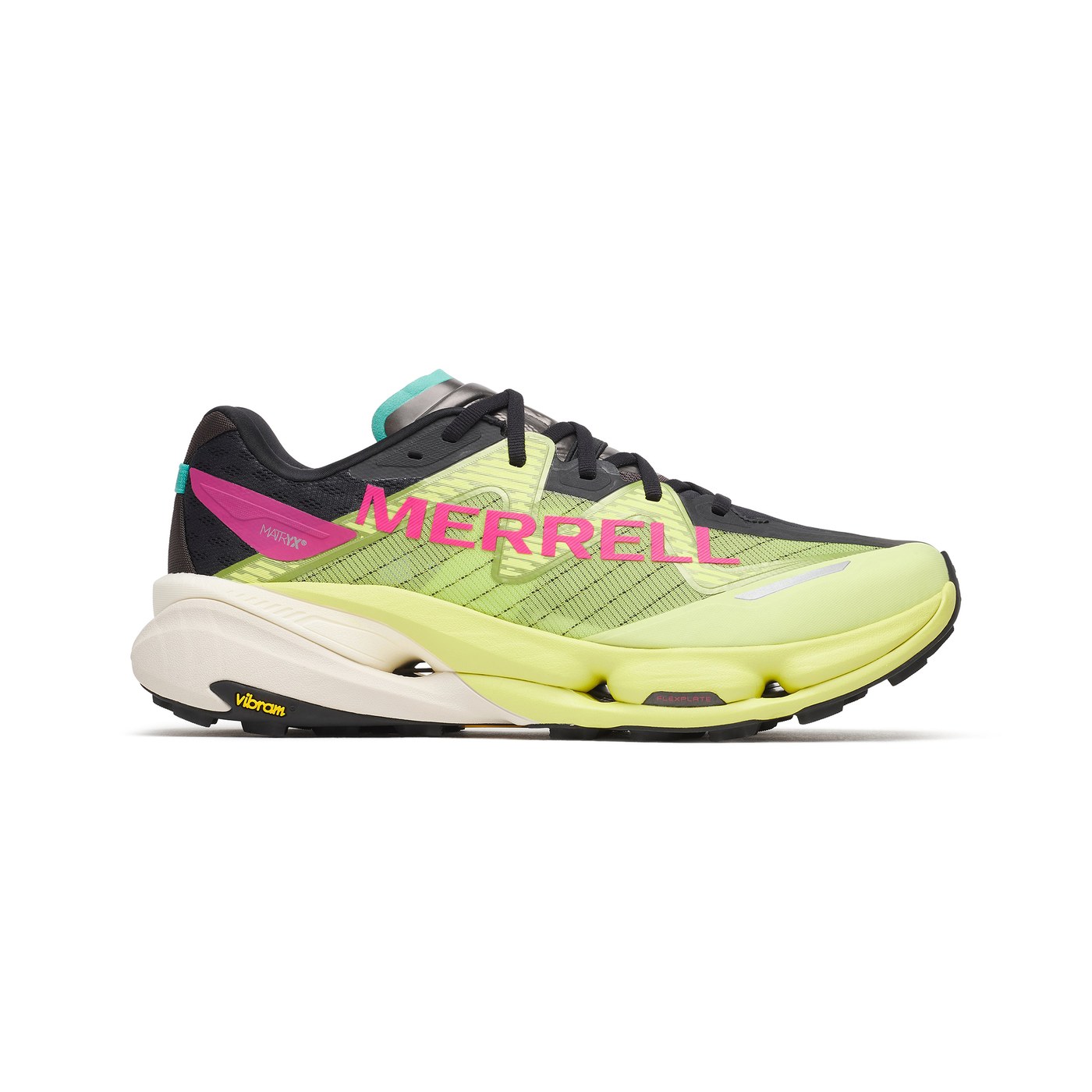
Technical specs
| Spec | Value |
|---|---|
| Brand / Model | Merrell MTL SpeedARC Peak |
| Official release | July 9, 2026 (US) · August 2026 (EU) |
| Type | Trail racing / skyrunning super shoe |
| Drop | 6 mm |
| Stack height (heel / forefoot) | 30 mm / 24 mm |
| Weight | 305 g (pair, EU 42) |
| Foam | Dual-density FloatPro PEBA (SpeedARC midsole) |
| Carbon plate | Full-length FlexPlate carbon |
| Outsole | Skeletal Vibram Megagrip Elite, 4 mm lugs |
| Upper | Matryx (Kevlar + high-tenacity polyamide) |
| Target distance | 40-80 km mountain trail and skyrunning |
| MSRP | €290 / 290 USD |
Who is the Merrell MTL SpeedARC Peak for?
The 40-80 km trail and skyrunning racer
You race in the mountains, with big climbs and dry mixed terrain, and you want results? The SpeedARC Peak is built for you. The FlexPlate carbon plate and dual-density FloatPro PEBA give you the propulsion of road super shoes, adapted to the chaotic ground of trail and skyrunning. The Vibram Megagrip Elite keeps biting where other outsoles skate.
The experienced 50-80 km mountain ultrarunner
Beyond pure racing, the SpeedARC Peak is a great match for 50-80 km mountain ultras that mix fast stretches on technical singletrack with rocky passes. The pod cutout design improves torsional flexibility, which cuts fatigue on the constant direction changes of rough, broken terrain. Look at the Saucony Peregrine 16 if you want something more affordable and versatile.
The runner who prizes Vibram Megagrip Elite
Vibram Megagrip Elite is the Italian maker's best-performing rubber on wet, rocky ground. Laying it out in a skeletal pattern (which leaves part of the midsole exposed) is a real innovation: it puts rubber exactly where you need grip and cuts overall weight. The result is grip that is clearly better than most in-house outsoles on wet ground, with no mud clogging.
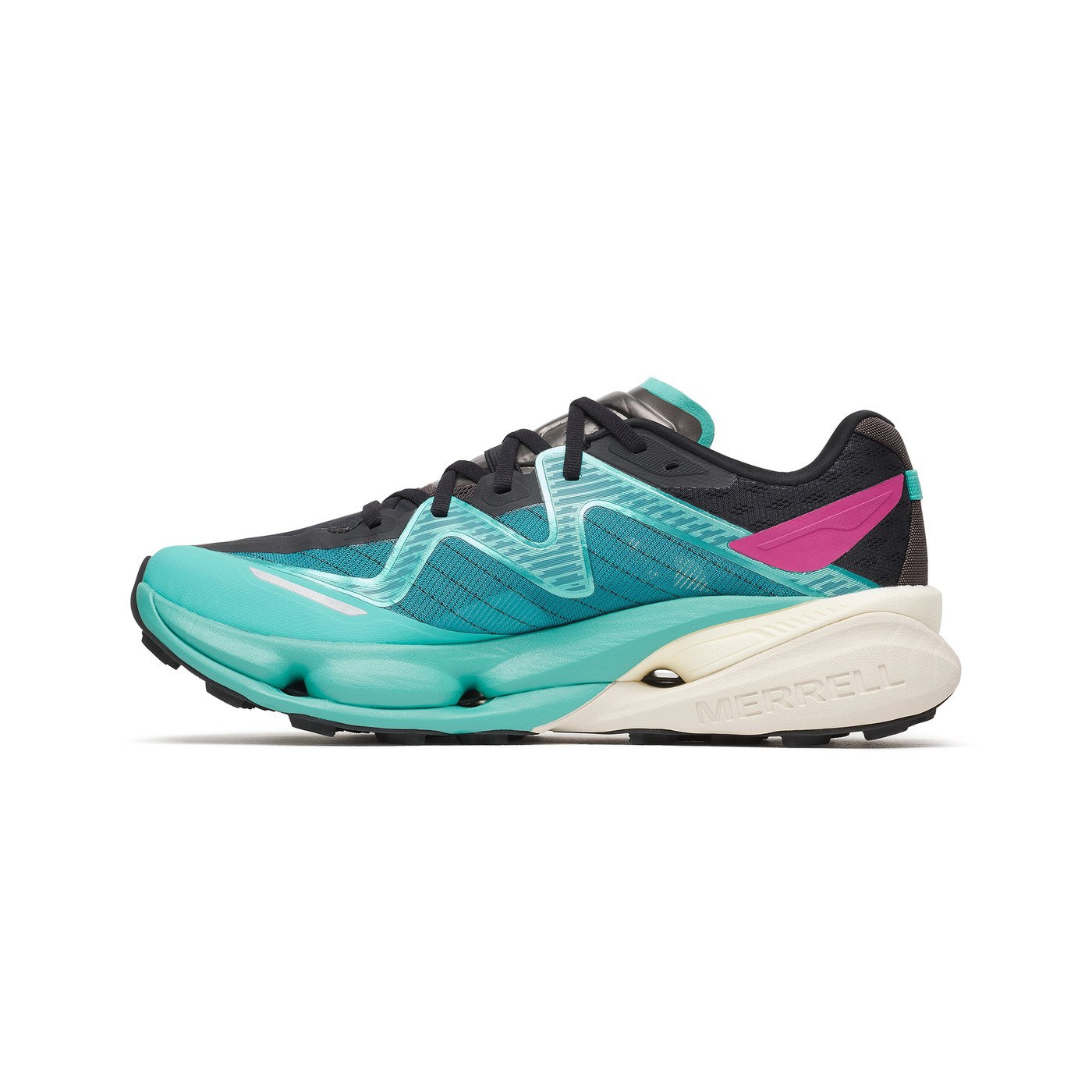
Comfort, ride and grip: the RunMorph field test
The MTL SpeedARC Peak surprises you from the first few meters. Despite its 305 g (reasonable for a trail super shoe), it feels light thanks to how quickly it responds. The dual-density FloatPro PEBA reacts faster than a standard EVA foam and gives you a noticeable bounce on every stride, even climbing. The feel differs from a Hoka Tecton X 3: less raw cushioning, more pop and precision.
The FlexPlate carbon plate is designed to flex laterally on uneven ground while keeping the longitudinal stiffness that drives propulsion. On slabs, loose rock and twisting technical trails in the Alps or the Pyrenees, you can clearly feel the plate adapt to the ground's irregularities without stiffening your stride in an uncomfortable way.
The Vibram Megagrip Elite lives up to its reputation: on wet rock, grip is outstanding and well above the market average. The partially exposed midsole pods of the skeletal design do raise a fair question about long-term durability, especially on very abrasive ground (granite, quartzite). Those exposed midsole sections will likely wear faster than the rest.
The Matryx upper (Kevlar + polyamide) is both structured and breathable. It shields you well from rocks on the sides without suffocating your foot. In the heat, ventilation stays decent. In the rain, the upper dries fast.
Merrell MTL SpeedARC Peak vs the competition: trail super shoes compared
| Model | Weight | Drop | Foam | Plate | Outsole | Price |
|---|---|---|---|---|---|---|
| Merrell MTL SpeedARC Peak | 305 g | 6 mm | Dual-density FloatPro PEBA | Full-length FlexPlate carbon | Vibram Megagrip Elite | €290 |
| Hoka Tecton X 3 | 294 g | 5 mm | Dual-layer PEBA + EVA | Dual parallel carbon | Vibram Megagrip | €230 |
| Brooks Cascadia Elite | 285 g | 8 mm | 100% PEBA | DNA Flash carbon | TrailTack Elite | €275 |
| On Cloudultra Pro | 278 g | 4 mm | Helion HF + Speedboard | Speedboard carbon | Grip rubber | €250 |
Against the Hoka Tecton X 3, the SpeedARC Peak is 11 g heavier but offers better grip thanks to the Vibram Megagrip Elite and better lateral flexibility thanks to the cutouts. The Tecton X 3 still wins on price (€60 less) and gives you more pure cushioning for 80-100+ km. Against the Brooks Cascadia Elite, the SpeedARC Peak is heavier but grips better in the wet.
How to fit the Merrell MTL SpeedARC Peak into your RunMorph training plan
The MTL SpeedARC Peak is a premium racing shoe, not a daily trainer. Save it for your goal races and your final 25-35 km prep runs at race pace. Training in it too often on abrasive terrain will wear out the exposed outsole sections early.
During a build, keep it for 2-3 course recon runs and the race itself. For daily training, pair it with a tougher, cheaper model like the Saucony Peregrine 16 or the Salomon Sense Ride 5. The RunMorph Trail Elite plans include a precise shoe rotation schedule based on the intensity and terrain of each session.
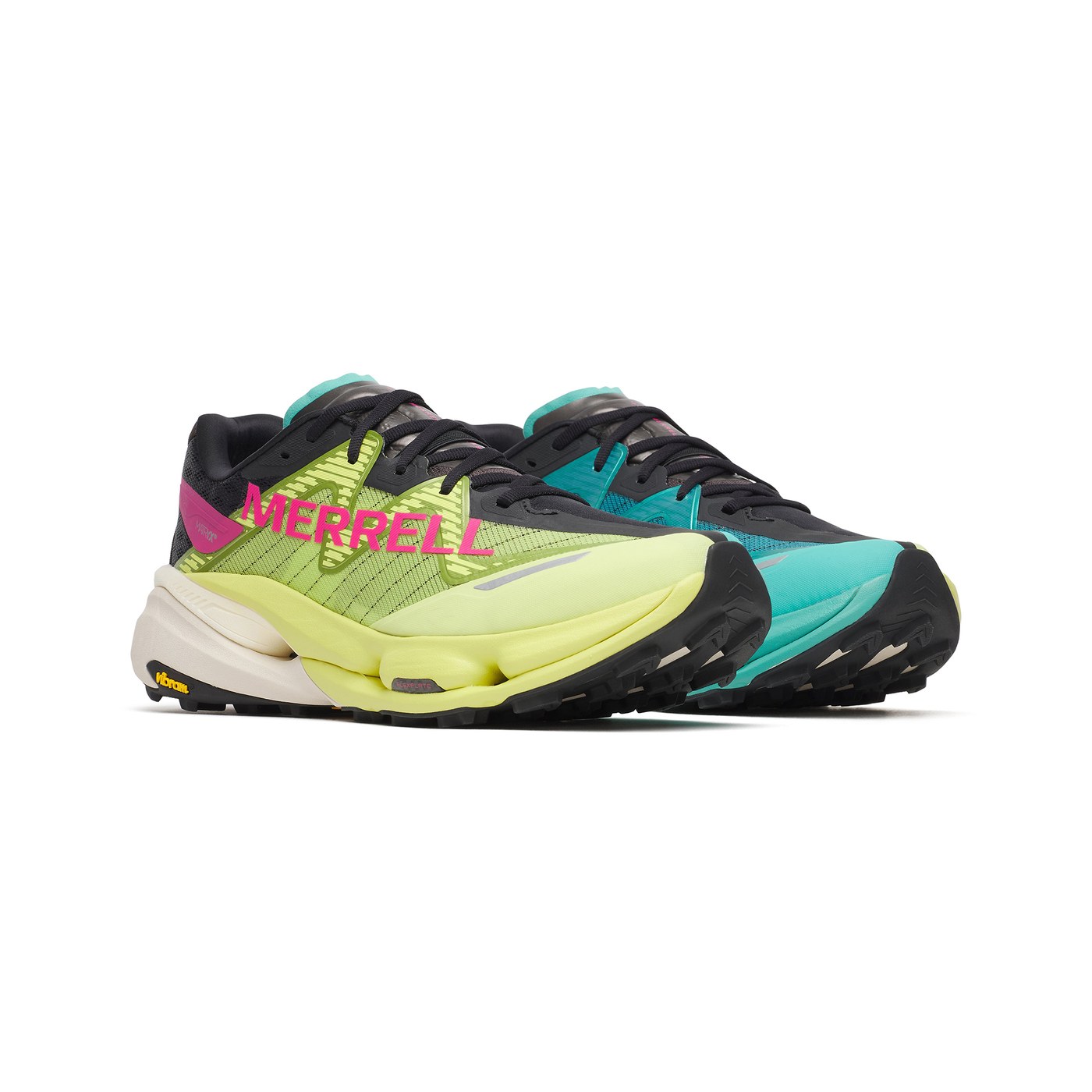
Merrell MTL SpeedARC Peak pros and cons
Pros
- Vibram Megagrip Elite: best grip in its class on wet ground
- Dual-density FloatPro PEBA: excellent responsiveness and energy return
- FlexPlate carbon plate: propulsion while keeping lateral flexibility
- Cutout design: unmatched adaptability on chaotic terrain
- Matryx upper: light, tough and breathable
- Proven at the 2026 World Skyrunning Championships
Cons
- €290: a premium price for serious racers only
- 305 g: not the lightest trail super shoe out there
- Durability of the exposed zones needs watching on abrasive terrain
- EU availability pushed back to August 2026
- A racing shoe, not a daily trainer
RunMorph Coach's verdict
Merrell makes a thunderous entrance into the trail super shoe segment in 2026. The MTL SpeedARC Peak is neither a crowd-pleaser nor an all-rounder: it's a racing weapon, built for skyrunning podiums and timed performances on technical 40-80 km ultras. The skeletal Vibram Megagrip Elite is a genuine design innovation, the dual-density FloatPro PEBA foam matches the best foams on the market, and the FlexPlate carbon plate delivers propulsion tuned for varied terrain.
At 290 euros, it targets a specific crowd: experienced trail runners who want a performance tool for their A-races. Not a shoe to buy for daily training. Final score: 8.5/10.
Key takeaways for your training
- Merrell's first-ever trail super shoe: five years of R&D at the MTL Lab, proven at the 2026 World Skyrunning Championships. A standout debut.
- Skeletal Vibram Megagrip Elite: the model's key technical innovation, putting rubber where it actually matters and trimming weight everywhere else.
- Dual-density FloatPro PEBA + FlexPlate carbon: propulsion on par with the best trail super shoes on the market, with lateral flexibility kept intact for chaotic terrain.
- A racing shoe, not a trainer: schedule 2-3 dedicated runs in it during your build to get used to it before your goal race.
- Budget for it in your plan: €290 is an investment. The RunMorph Trail Elite plans help you decide whether the SpeedARC Peak deserves a spot in your rotation, or whether the Hoka Tecton X 3 better fits your level and budget.