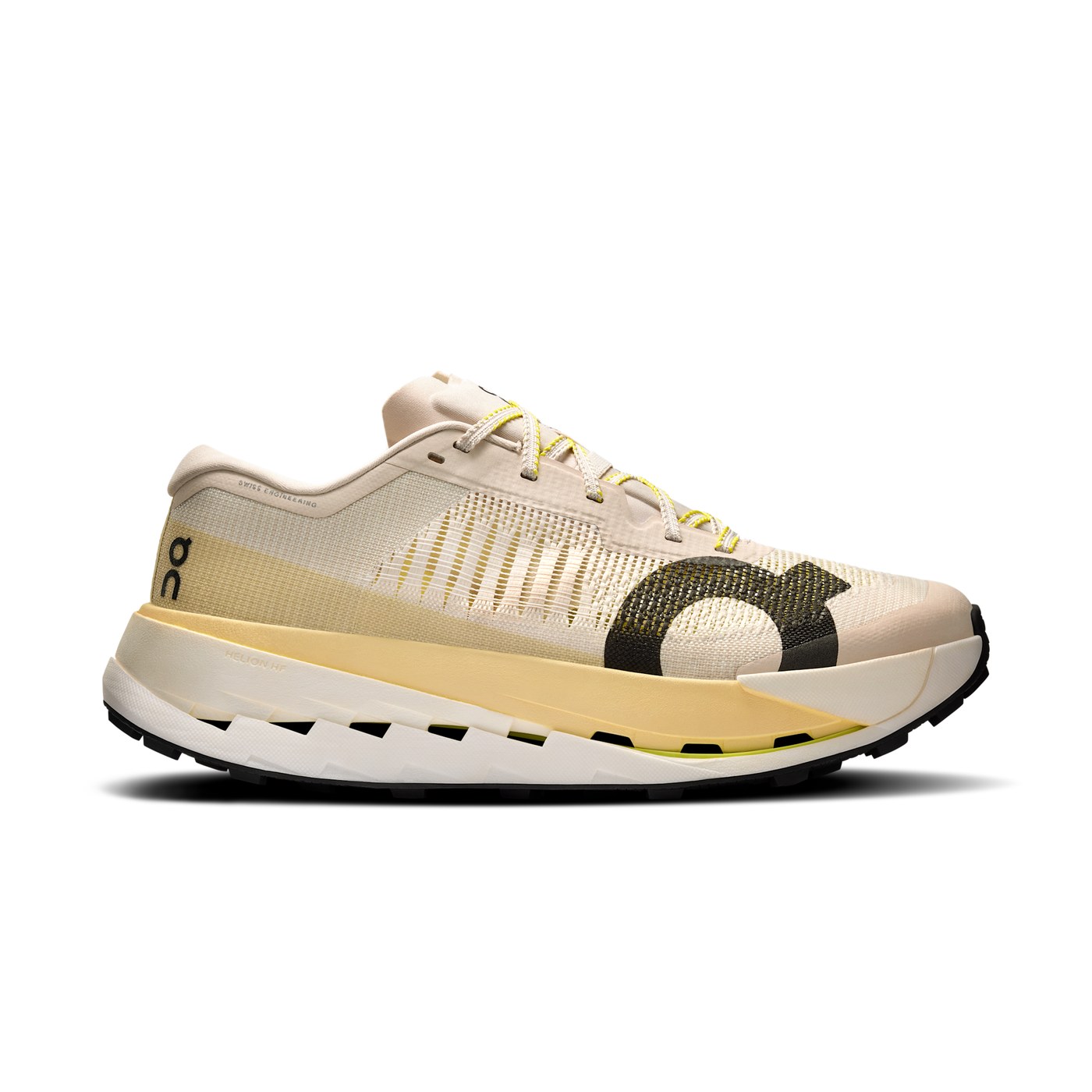
Released on June 19, 2025, the On Cloudultra Pro marks the Swiss brand's official entry into the top tier of ultra-distance trail running. A dual layer of Helion HF foam, a fiberglass Speedboard plate, a new-generation Missiongrip outsole, 260 g and 270 euros: every detail targets races longer than six hours. As a coach, I see a super shoe built for elite ultras that still speaks to 100 km finishers. Here's who it really suits.
On Cloudultra Pro Review: On's First Elite Trail Super Shoe
On Cloudultra Pro: On finally signs an ultra-trail super shoe
For years, On shone on the road (the Cloudboom Strike LS is its showcase) but struggled to land a true elite trail model. The Cloudultra Pro changes that. Built on feedback from Tom Evans, Western States winner, and from the On runners racing the 115 km Madeira Island Ultra-Trail, it goes head-to-head with the premium trail super shoes.
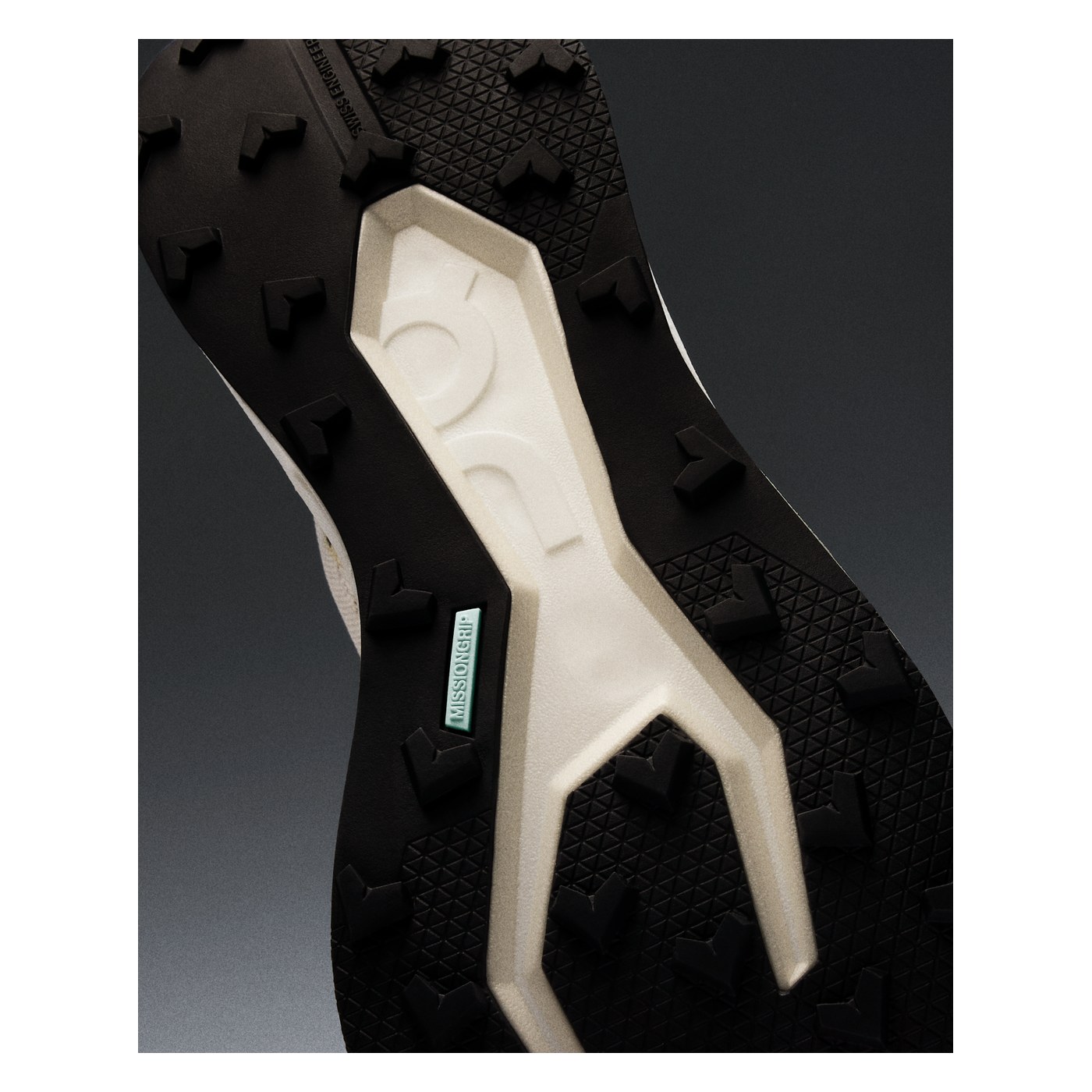
The Swiss brand leans on two major innovations. First, a new dual-density Helion HF foam architecture that maximizes energy return over the long haul. Second, a Missiongrip outsole in which every lug was optimized through FEA simulation (finite element analysis), starting from 200 initial designs. The result fits in one sentence: On's first true premium ultra-trail shoe, designed to chase podiums at 100 km and beyond.
RunMorph's advice: the Cloudultra Pro is not a daily trainer. It's a racing shoe for experienced runners chasing ultra performance. If you want one shoe for most of your runs, look at the On Cloudultra 3 (more affordable and more durable) or the Salomon Ultra Glide 4 (better priced). Save the Pro for your A races and your key long runs in the build-up.
© On, official photo used for editorial purposes
Objective technical specs
| Brand | On |
| Model | Cloudultra Pro |
| Release date | June 19, 2025 |
| Intended use | Ultra-distance trail, racing |
| Drop | 6 mm |
| Stack height (forefoot / heel) | 33 mm / 39 mm |
| Weight (size 42) | 260 g (men's), 215 g (women's) |
| Foam | Dual-layer Helion HF (supercritical hyperfoam) |
| Plate | Propulsive fiberglass Speedboard |
| Outsole | New-generation Missiongrip, 4 mm lugs |
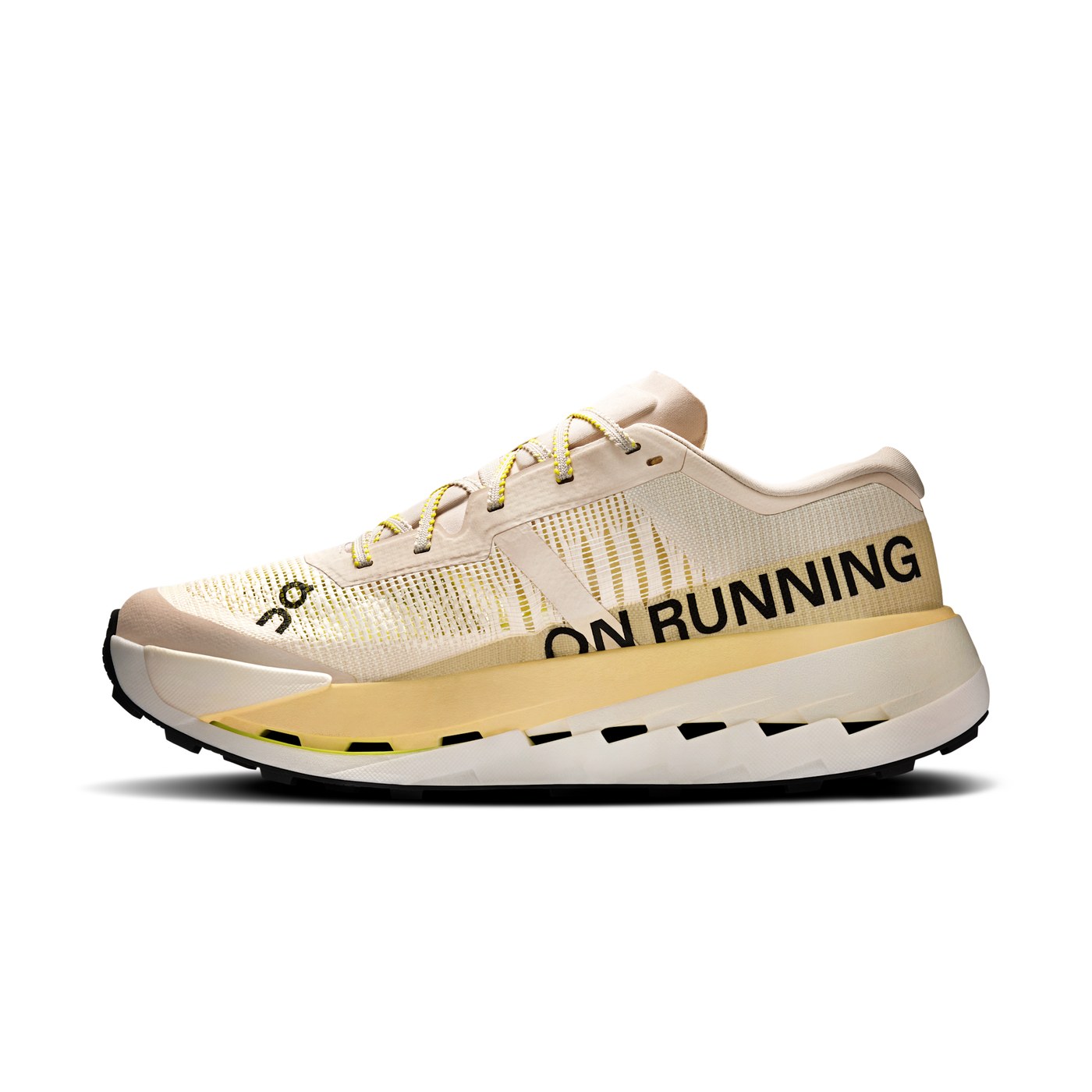
| Upper | Engineered Leno weave (durable, quick-drying) |
| Recommended distance | Ultra-trail (60 km to 100 miles) |
| Official price | 270 euros |
The key takeaway: 260 g for 39 mm of heel stack is an aggressive ratio, typical of road super shoes and adapted here to the trail. The 6 mm drop sits right in line with its rivals. And unlike many carbon plates, the Speedboard plate works as much for stability as for propulsion. That's deliberate: on the leg-breaking trails of a 100-miler, the full stiffness of a full-length carbon trail plate quickly becomes punishing.
Who is the On Cloudultra Pro for?
The experienced ultra runner chasing time
You race 80 to 170 km, you finish in the top third of the field, and you want a shoe that saves you time without abandoning you at km 90? The Cloudultra Pro is built exactly for you. The dual Helion HF and Speedboard combo keeps returning energy even when your quads start screaming. On runnable trails and not-too-technical singletrack, it's a real machine.
The 100 km finisher who wants to try a trail super shoe
Aiming to finish a 100 km in 12 to 15 hours? The Pro can transform the second half of your race. One warning, though: if you've never run in a plated super shoe, do at least three progressive long runs beforehand. Your calves and posterior tibialis need time to adapt to a more dynamic push-off than your usual daily trainers deliver.
Who I'd steer away from it
Beginner trail runners, short runs (under 30 km), highly technical terrain (big boulder fields, off-camber slopes, wet roots) and heavier runners (over 85 kg) looking mainly for protection: the Cloudultra Pro is not the right answer. Look at the Hoka Speedgoat 7 for technical ground or the Kiprun Kipsummit Max for value for money.
© On, official photo used for editorial purposes
Comfort, ride and grip on the trail
Step-in feel and upper
The Leno weave upper is a real success. It's a durable, airy weave that dries fast and locks the foot down on descents without squeezing it. The minimalist inner bootie leaves room for your toes late in long races, when your feet swell. The flat, unpadded tongue creates no pressure point on the instep. Personally, I find the fit neutral overall and slightly wide in the forefoot, which suits ultra use well.
Cushioning and propulsion
This is where the Pro impresses. The dual Helion HF layer works like a sandwich: the top layer absorbs impacts, the bottom layer gives the energy back. Paired with the Speedboard plate, you get a constant sense of propulsion without the sometimes tiresome stiffness of full-length carbon plates. On flats and gentle inclines, the shoe rolls forward effortlessly. On hard climbs, the cushioning holds up even after several hours, where many trail super shoes bottom out by km 50.
Stability and lockdown
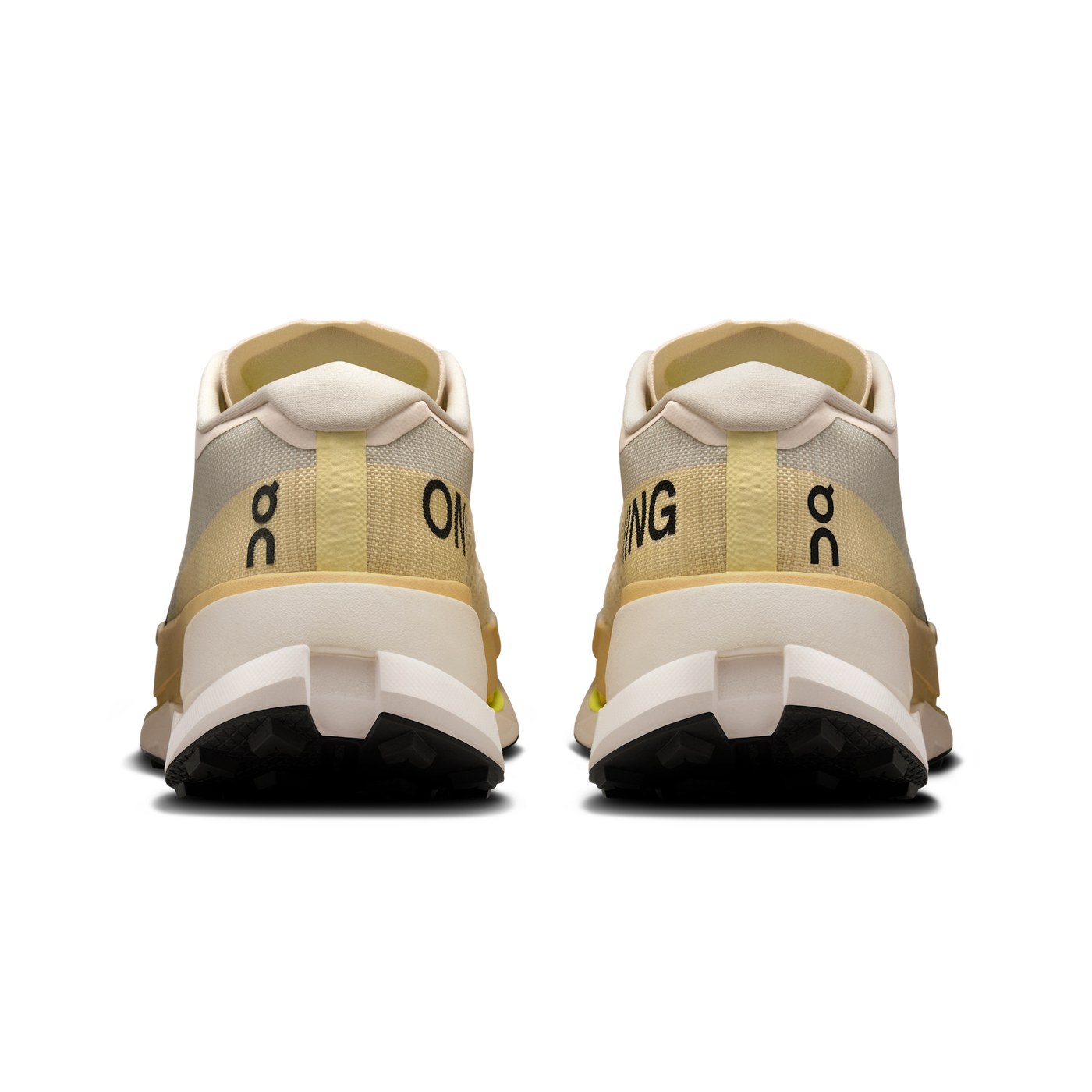
With 39 mm of heel stack, this is a high platform. On widened the base compared with previous models, which reduces the tippy feeling. On runnable trails and easy singletrack, there's nothing to report: the shoe holds. On steep off-camber sections or roots running across the path, you can tell this is a racing shoe, not a protective one. My advice as a coach: don't take the Pro out for technical mountain training. Keep it for race day.
Grip and the Missiongrip outsole
The FEA work paid off. The 4 mm V-shaped lugs bite well on dry dirt, packed wet dirt, gravel and dry roots. The Swiss brand's long-standing weak spot hasn't fully gone away: on wet rock and greasy mud, grip still has room to improve, and it's less aggressive than Vibram Megagrip or Salomon's Contagrip. For an ultra in dry or normal conditions, it's more than enough. For a rainy UTMB, I'd look elsewhere.
Durability
Over 200 to 300 km, the Helion HF foam holds up well (a consensus among testers worldwide, backed by early feedback from elite runners). The Missiongrip rubber seems more durable than the Cloudultra 2's, without matching the wear resistance of Vibram Megagrip. For a racing shoe, that puts it in the upper average: 600 to 800 km of useful life depending on your build and your terrain.
How it stacks up against the competition
The Cloudultra Pro lands in a fiercely competitive segment. Here's how it compares with its direct rivals.
Hoka Tecton X 3 (230 euros, 269 g): the Tecton X 3 is the benchmark carbon trail shoe on the market. Its parallel carbon plates make it snappier on the push-off, but it's less protective over very long distances. For a runnable 50 km to 100 km, the Tecton X 3 is still my first choice. For a 100-miler, the Pro takes the lead thanks to its deeper cushioning.
Adidas Terrex Agravic Speed Ultra 2 (250 euros, 276 g): the most direct rival. It's more protective, thanks to Continental Rubber and a very generous Lightstrike Pro foam. The Pro beats it on energy return and perceived lightness, but the Adidas remains more versatile on technical terrain.
Brooks Cascadia Elite (275 euros, 276 g): Brooks' trail super shoe, with its horseshoe-shaped SpeedVault+ plate. The Cascadia Elite is more stable on very rough terrain thanks to its cut-out plate, but it delivers less punch. Torn between the two for a technical trail of around 80 km? Go Brooks. For a runnable ultra, go Pro.
Salomon Ultra Glide 4 (150 euros, 280 g): no plate, more affordable, more durable. It isn't a direct rival in positioning (it's not a race shoe), but it's still an excellent option if you want a versatile ultra shoe under 200 euros, for long training runs and race day alike.
How to fit the On Cloudultra Pro into your RunMorph training plan
The Cloudultra Pro is a racing shoe, not a daily trainer. Here's how I schedule it with the runners I coach during an ultra build:
- Peak-phase long runs (45 to 70 km): use it for 2 to 3 runs in the final 8 weeks before your goal race, so your body gets used to the shoe's dynamics.
- Goal race: runnable ultra-trails such as the Diagonale des Fous, MIUT, Lavaredo Ultra Trail, Western States, or any ultra with less than 5000 m of elevation gain.
- Don't use it for: everyday easy runs, short runs, short hill sessions or very technical terrain. You'd waste the shoe and lose the propulsion benefit on race day.
To structure your build, explore the RunMorph training plans for trail and ultra. With a RunMorph trail plan, you slot the Pro into the right sessions (progressive long runs, race-pace simulations) and avoid the overuse trap that ruins supercritical foams.
© On, official photo used for editorial purposes
The RunMorph coach's verdict
As a coach, I applaud On for finally building a credible trail super shoe. For years, the Swiss brand struggled in this segment against Hoka, Salomon and La Sportiva. The Cloudultra Pro changes the conversation: it's a front-of-the-pack ultra shoe, engineered by On and proven on the podiums of Western States 2025.
Its strengths: exceptional cushioning that lasts, energy return even when you're tired, a durable and well-ventilated upper, and propulsion without excessive stiffness. Its weaknesses: grip that could be better on wet rock, limited stability on technical off-camber terrain, and a high price (270 euros) that makes it an investment for serious runners.
My score: 8.5 out of 10 for runnable ultra-trail use. The missing 1.5 points come down to the grip versus outsole aggressiveness trade-off, which rules the shoe out of very technical or very wet terrain, and the premium positioning that reserves it for experienced runners.
Key takeaways for your training
- A true trail super shoe: dual Helion HF plus Speedboard, lasting energy return, designed for runnable ultras.
- For experienced runners: save it for long runs and goal races, not for daily training.
- Good but not exceptional grip: Missiongrip bites well on dry and packed wet ground, less so on wet rock.
- Neutral, slightly wide fit: well suited to long distances when your feet swell, true to size.
- A 270 euro investment: worth it if you're preparing a major ultra-trail in the next 12 months. Otherwise, look at the Cloudultra 3 or the Ultra Glide 4.