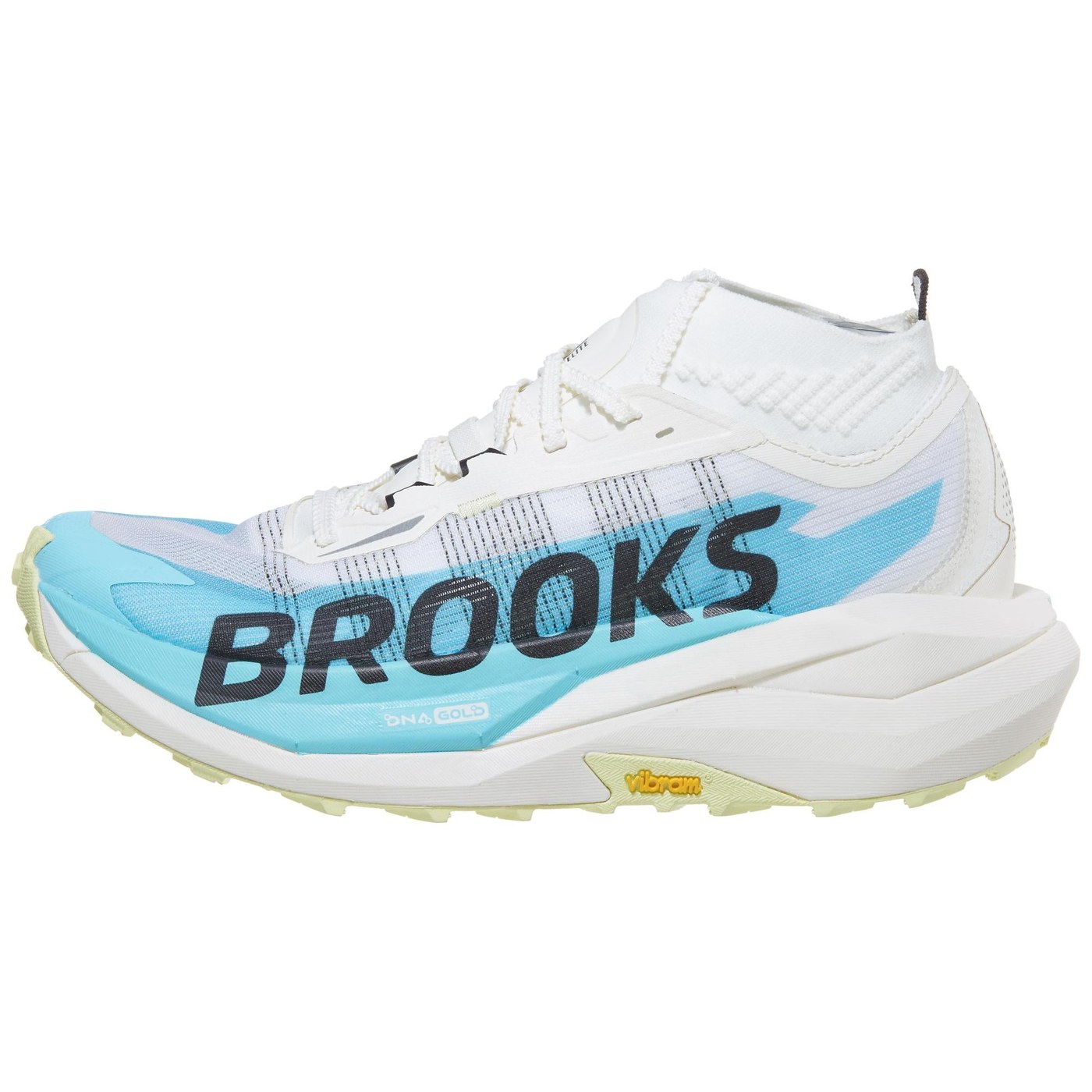
The Brooks Cascadia Elite is the brand's first true trail super shoe. SpeedVault+ carbon plate, 100% PEBA DNA Gold foam, Matryx Kevlar upper, Vibram Megagrip Elite outsole: it's all there. The result is an ultra-trail shoe that handles technical singletrack just as well as long runs on smooth, runnable trails. As a RunMorph coach, I see a €275 model that changes the game for Brooks in the ultra racing segment.
Brooks Cascadia Elite Review: Brooks' First 100% PEBA Trail Super Shoe
Brooks finally joins the trail super shoe club
The Cascadia has been a Brooks staple since 2003. Twenty versions later, the brand is rewiring the line's DNA by bolting on the full arsenal of high-end racing: carbon plate, supercritical PEBA foam, Matryx Kevlar upper. Brooks makes no secret of the goal: it wants to take on the Hoka Tecton X 3, the Adidas Terrex Agravic Speed Ultra 2 and the Nike ACG Ultrafly 2.
Alongside the Brooks Hyperion Elite 5 worn by the brand's elite marathoners, the Cascadia Elite brings the same technology to the trails. Released worldwide on March 1, 2026, priced at €275, weighing 276 g (men's size 9), with a 6 mm drop and a stack height of 40 mm at the heel / 34 mm at the toe. This is a genuine ultra racing shoe, built for 50 to 160 km.
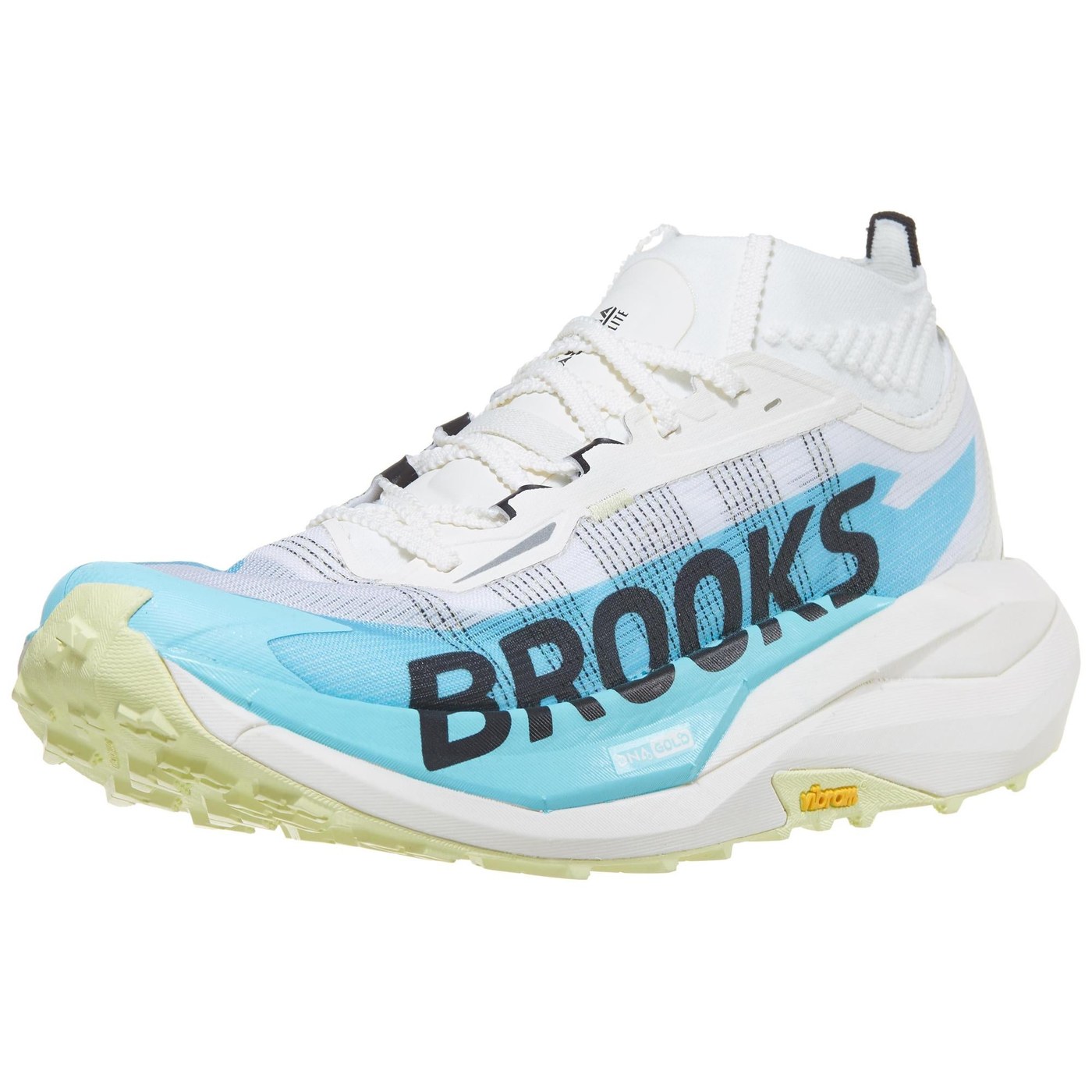
© Brooks Running, official photo used for editorial purposes
RunMorph's advice
If you're targeting a 50 to 160 km ultra in 2026 and can spend €275, the Cascadia Elite is a serious contender. It delivers more energy return than the Hoka Speedgoat 7 on runnable trails without giving up protection on technical descents. For very technical high-mountain ultras, I still prefer the Hoka Tecton X 3 or the Adidas Terrex Agravic Speed Ultra 2, which offer firmer lateral support.
Objective technical data
| Brand | Brooks |
| Model | Cascadia Elite |
| Year | 2026 |
| Type | Carbon trail super shoe, ultra racing |
| Drop | 6 mm |
| Stack height heel / toe | 40 mm / 34 mm |
| Weight | 276 g (men's, size 42.5) / 235 g (women's) |
| Foam | DNA Gold, 100% supercritical PEBA |
| Plate | SpeedVault+ carbon, horseshoe shape (3/4 length) |
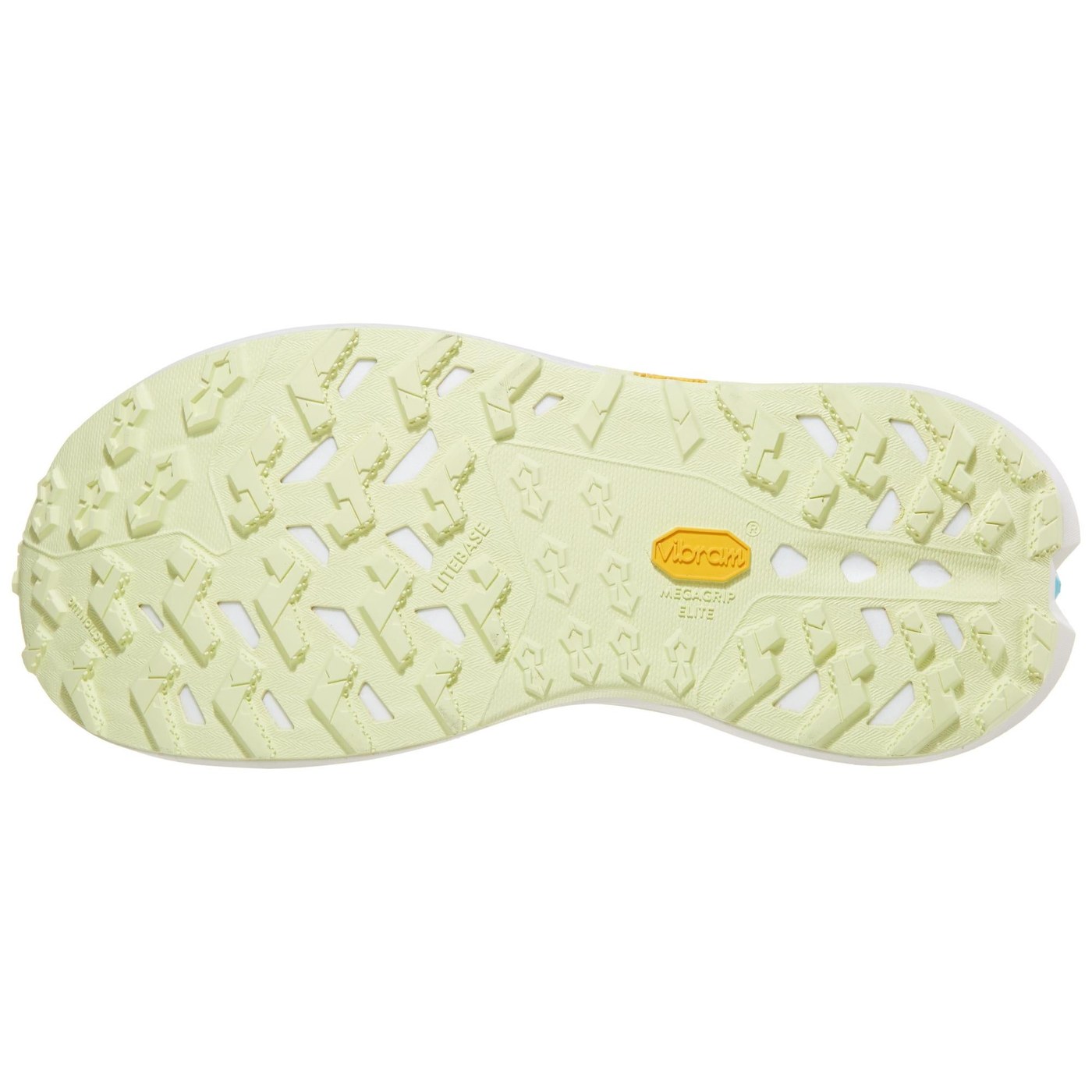
| Outsole | Vibram Megagrip Elite Litebase, 4 mm lugs |
| Upper | Matryx engineered woven + Kevlar fibers |
| Recommended distance | 42 km to 100 miles |
| Official price | €275 |
Three numbers to remember: 276 g (very light for 40 mm of stack height), 100% PEBA (the very best in running foam), Vibram Megagrip Elite Litebase (the best-performing trail outsole on the market today). Brooks isn't pretending: this is the same DNA Gold found in the Hyperion Elite 5, the brand's elite marathon shoe.
The 6 mm drop is in line with modern ultra-trail standards. If you're coming from a Salomon Speedcross 6 (10 mm), give your calves and Achilles tendon two weeks to adapt.
Who is this shoe for?
The performance-minded ultra-trail runner (50 to 160 km)
This is its core target. If you're aiming for Maxi-Race, MIUT, UTMB Mont-Blanc, Diagonale des Fous, CCC, Templiers or Échappée Belle with a time goal in mind, the Cascadia Elite gives you a direct technological edge. The horseshoe-shaped SpeedVault+ plate drives you forward without locking out natural pronation, and the DNA Gold foam keeps returning energy even after six hours of racing. That's rare in trail, where most carbon super shoes turn unpredictable past the fifth hour.
The heavy or powerful runner (75 to 95 kg)
With its 40 mm stack height and horseshoe plate (which, unlike a full plate, lets the foam deform sideways), the Cascadia Elite stays stable even when you're on the heavy side. That's an advantage over the Hoka Tecton X 3, which can feel narrow and unforgiving for bigger, powerful runners.
The marathoner moving to long trail races
If you're used to road super shoes (Vaporfly, Endorphin Pro, Adios Pro Evo, Cielo X1, Hyperion Elite) and want the same propulsion on the trail, the Cascadia Elite is made for you. The transition is immediate. The plate feels like what you know on the road, just with more cushioning and more protection.
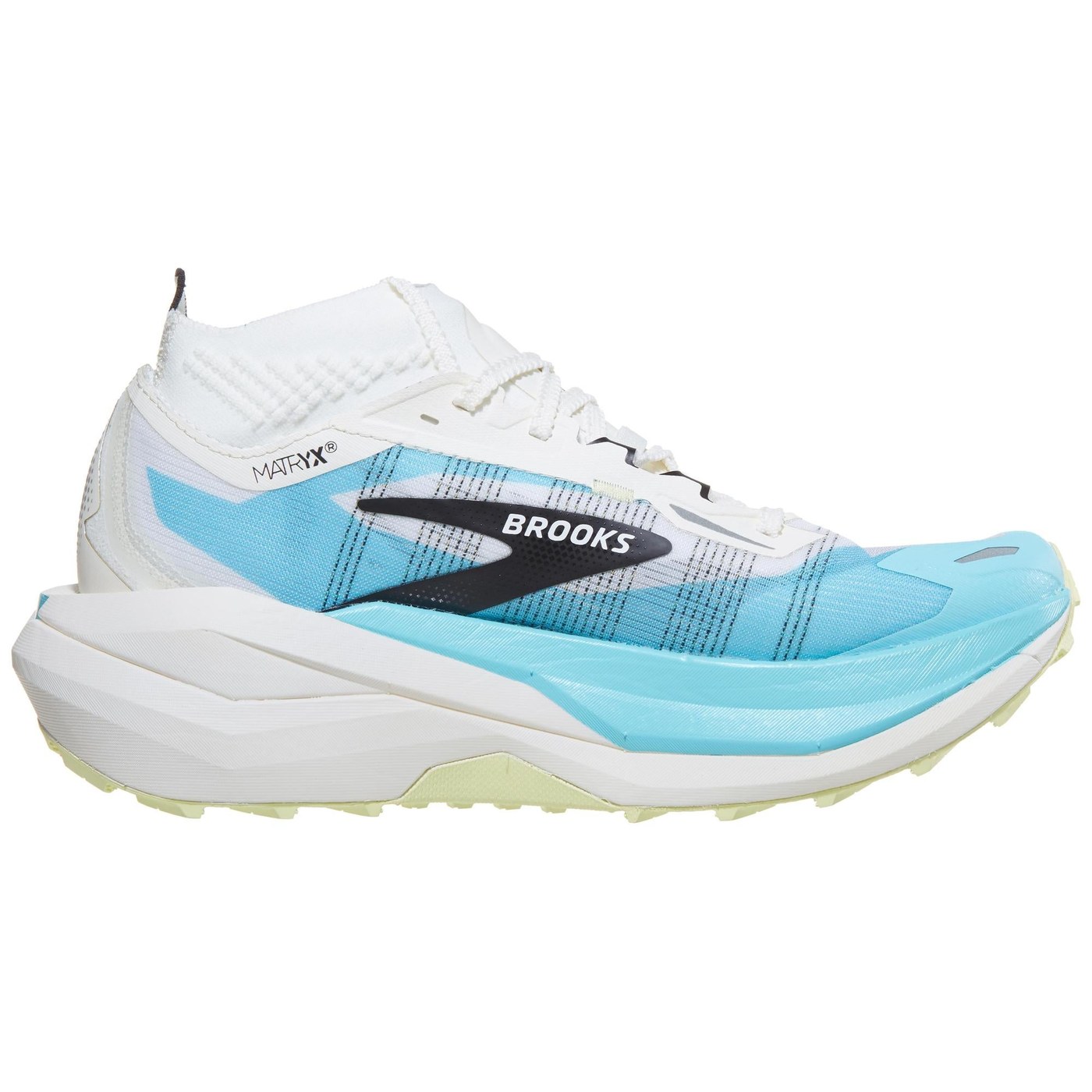
© Brooks Running, official photo used for editorial purposes
On the run: what you'll feel
First few kilometers: the shoe feels plush, softer than a Hoka Tecton X 3 at heel strike. The DNA Gold PEBA is far bouncier than conventional EVA foams, and the carbon plate does its propulsive job without you having to push. The shoe wants to roll forward, and it sets the pace.
On technical descents, you can feel the plate working with your foot instead of locking it in place. Unlike a full plate, the horseshoe design allows controlled pronation and better ground feel. The Vibram Megagrip Elite Litebase outsole grips wet roots, limestone slabs and loose dirt equally well, with better durability than the standard Megagrip.
On steep climbs (above 8%), the shoe shows its limits. At 276 g and with this much foam, it will never match a Salomon S/Lab Genesis on very technical sections where you have to scramble. But on runnable climbs (wide trails, gravel roads, easy singletrack), it stays efficient thanks to a plate that helps propulsion even at moderate pace.
Head-to-head with the direct competition
Vs Hoka Tecton X 3 (€260, 257 g, 5 mm drop): the Tecton X 3 is lighter and more precise on technical terrain, but less forgiving for a heavy runner. The Cascadia Elite wins on stability and comfort over ultra distances. For a technical 50 km mountain race, I take the Tecton X 3; for a 100-miler with runnable sections, I take the Cascadia Elite.
Vs Adidas Terrex Agravic Speed Ultra 2 (€240, 268 g, 8 mm drop): the Speed Ultra 2 is easier on the wallet and more stable on very technical descents thanks to its EnergyRods. The Cascadia Elite has a more premium foam (PEBA versus Lightstrike Pro) and a snappier transition. It's very close: it comes down to personal feel and drop preference.
Vs Hoka Speedgoat 7 (€155, 285 g, 4 mm drop): the Speedgoat 7 remains the default pick for mainstream ultra runners, and it's far more affordable. The Cascadia Elite adds the carbon plate, PEBA and Vibram Elite, which changes everything in terms of efficiency. But if you don't have a specific time goal for your ultra, the Speedgoat 7 does the job just fine.
Vs Asics Trabuco Max 5 (€180, 310 g, 4 mm drop): the Trabuco Max 5 bets on max-cushioned comfort with no carbon plate. The Cascadia Elite is more responsive but pricier and slightly less protective over 100 miles. If your goal is to finish a very long ultra pain-free, go with the Trabuco Max 5. If your goal is a respectable finish time, go with the Cascadia Elite.
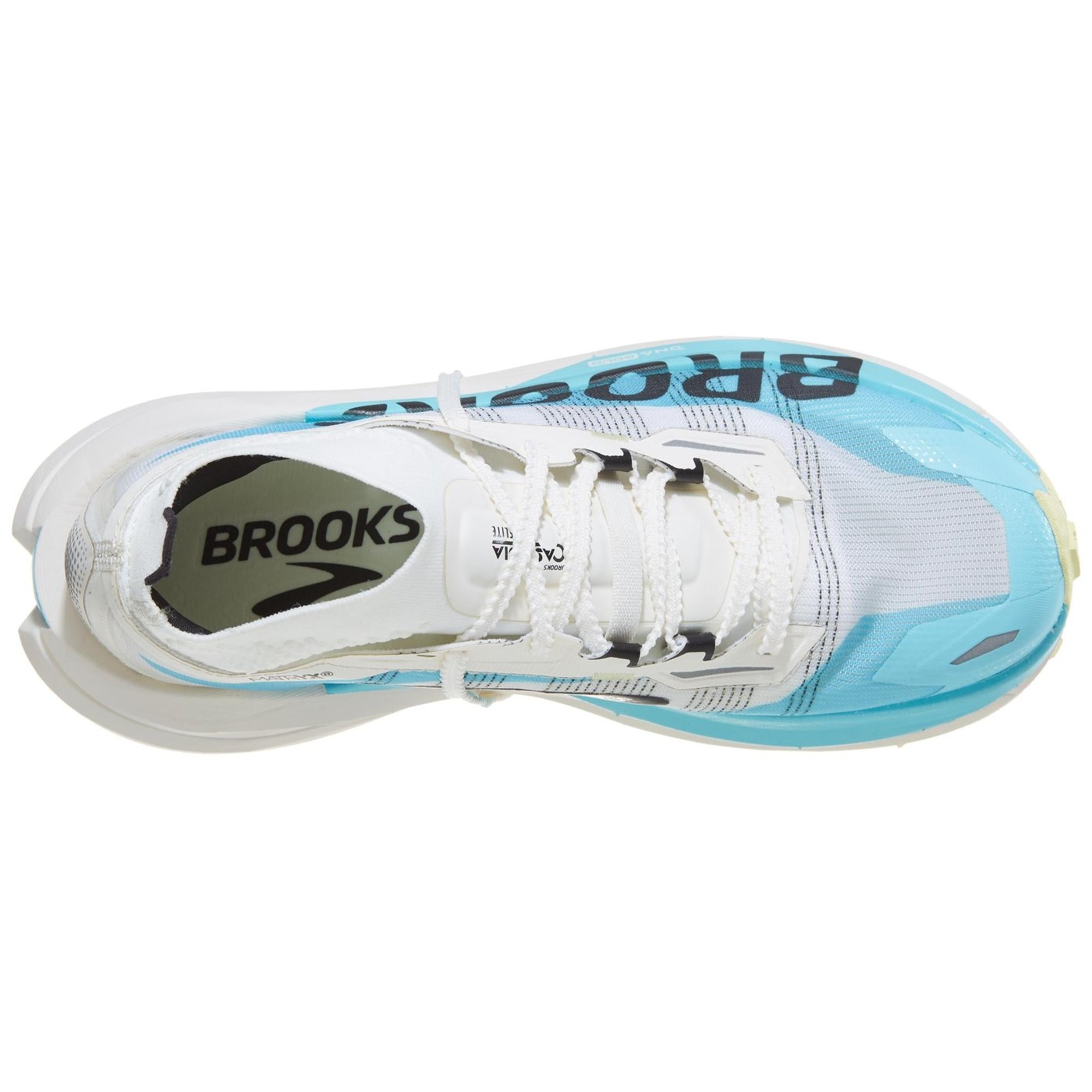
© Brooks Running, official photo used for editorial purposes
How to fit it into your RunMorph training plan
The Cascadia Elite is a shoe for racing and long quality sessions. Here's how I use it when programming RunMorph plans:
Quality long run (90 to 240 minutes). This is the ideal use: it gets your body used to the plate over time and breaks the shoe in before race day. Once or twice a month during an ultra-trail build.
Goal races: ultra-trails from 42 to 160 km. This is its main hunting ground. For a 100-miler, I still recommend testing the shoe on a long run of at least 4 hours before committing to it on race day. The carbon plate feel changes your running mechanics, and some runners can't tolerate it beyond 80 km.
Trail tempo (60 to 90 minutes). For race-pace sessions on runnable trails, the Cascadia Elite excels. The plate gives you a kick with every stride, and the foam absorbs impact better than a conventional trail shoe.
What I do not recommend this shoe for, at all: recovery easy runs (too lively, so save it for quality days where it gives you an edge), very technical high-mountain trails (choose a Salomon S/Lab Genesis instead), and short runs under 60 minutes (wasted potential).
RunMorph Coach verdict
The Brooks Cascadia Elite is a genuine success. Brooks proves it can build a world-class trail super shoe, not just a tricked-out version of the Cascadia 18. The DNA Gold PEBA + SpeedVault+ plate + Matryx Kevlar + Vibram Megagrip Elite combination is coherent from the ground up to the top of the upper. Its weight-to-stack-to-protection ratio is among the best in the segment.
My two reservations: the €275 price stays elitist (on par with the Tecton X 3 and more than the Speed Ultra 2), and the shoe isn't built for very technical high-mountain trails. For performance-minded ultra-trail runners racing up to 100 miles, it's one of the best shoes on the market today. For more versatile use, look instead at the Hoka Speedgoat 7 or the La Sportiva Prodigio 2.
Key takeaways for your training
- Brooks' first trail super shoe: 276 g, 6 mm drop, 40/34 stack height, 100% PEBA DNA Gold foam, SpeedVault+ carbon plate, Vibram Megagrip Elite Litebase outsole, Matryx Kevlar upper.
- Target: performance-minded ultra-trail racing from 42 to 160 km, runners from 65 to 95 kg, runners used to carbon super shoes.
- Strengths: PEBA foam that stays lively over the long haul, horseshoe plate that propels without locking the foot, very grippy Vibram Elite outsole, smooth transition.
- Limitations: high price (€275), poorly suited to very technical high-mountain trails, durability still to be confirmed beyond 600 km.
- Matching RunMorph plans: ultra-trail preparation (UTMB, Diagonale, Templiers, Maxi-Race), quality long runs, trail tempo.
© Brooks Running, official photo used for editorial purposes