In October 2023, Kelvin Kiptum laced up the Nike Alphafly 3 to run the Chicago Marathon in 2:00:35, smashing the world record. That's no accident: this third version packs everything Nike knows about propulsion, from ultralight ZoomX foam to a full-length carbon Flyplate and a dual Air Zoom pod under the forefoot. The real question: outside the Kenyan elite, is this rocket worth the €285 to €295 it'll cost you?
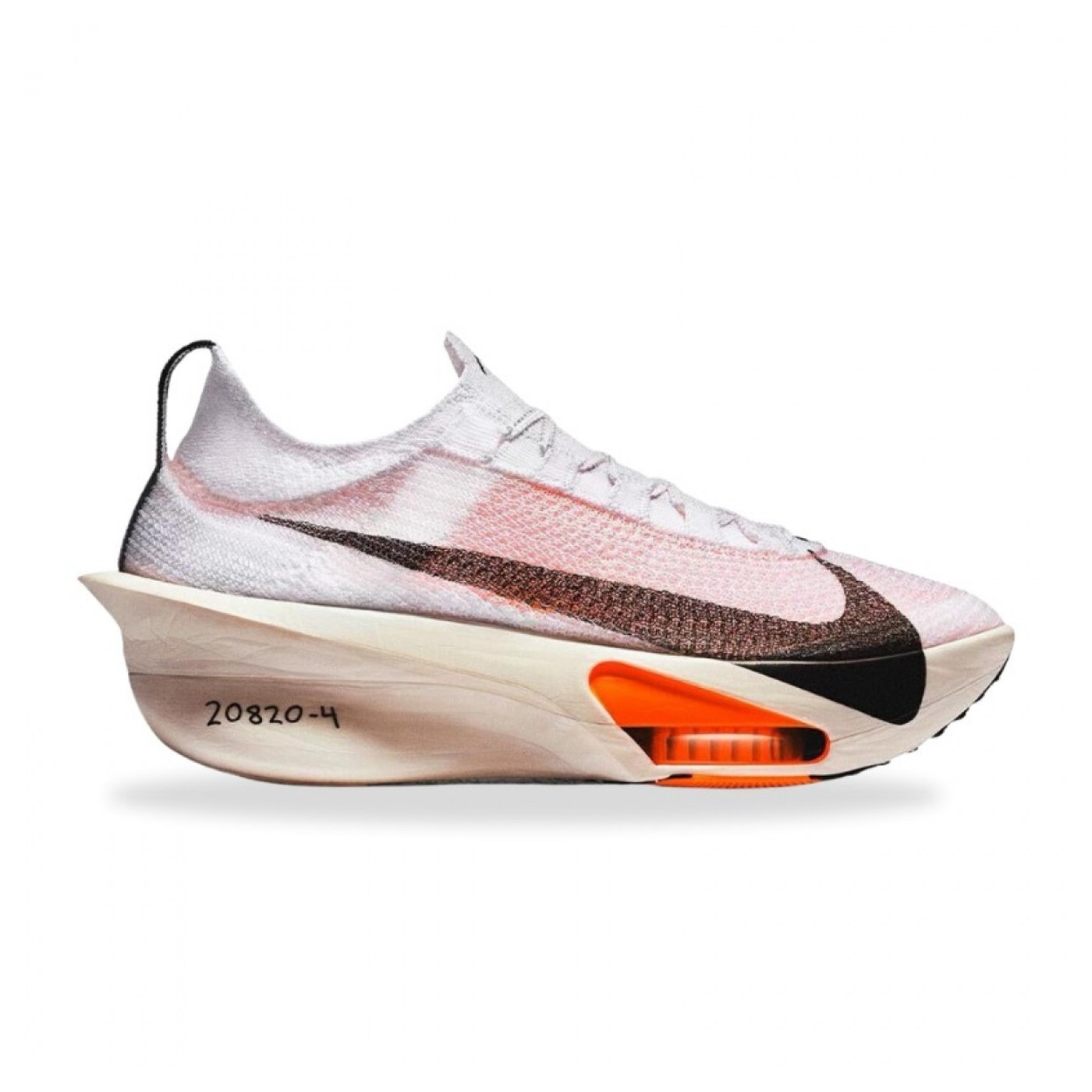
© Nike, official photo used for editorial purposes
Nike Alphafly 3: the shoe that redefined marathon racing
To understand the Alphafly 3, you need to go back to 2017, when Nike broke the two-hour marathon taboo with its Breaking2 project, and then to 2019, when the first Vaporfly Next% caused an uproar among the major governing bodies. Since then, Nike has kept pushing every dial: more ZoomX foam, more carbon plate, more Air Zoom pods in the forefoot. The Alphafly 3 is the culmination of that technological path.
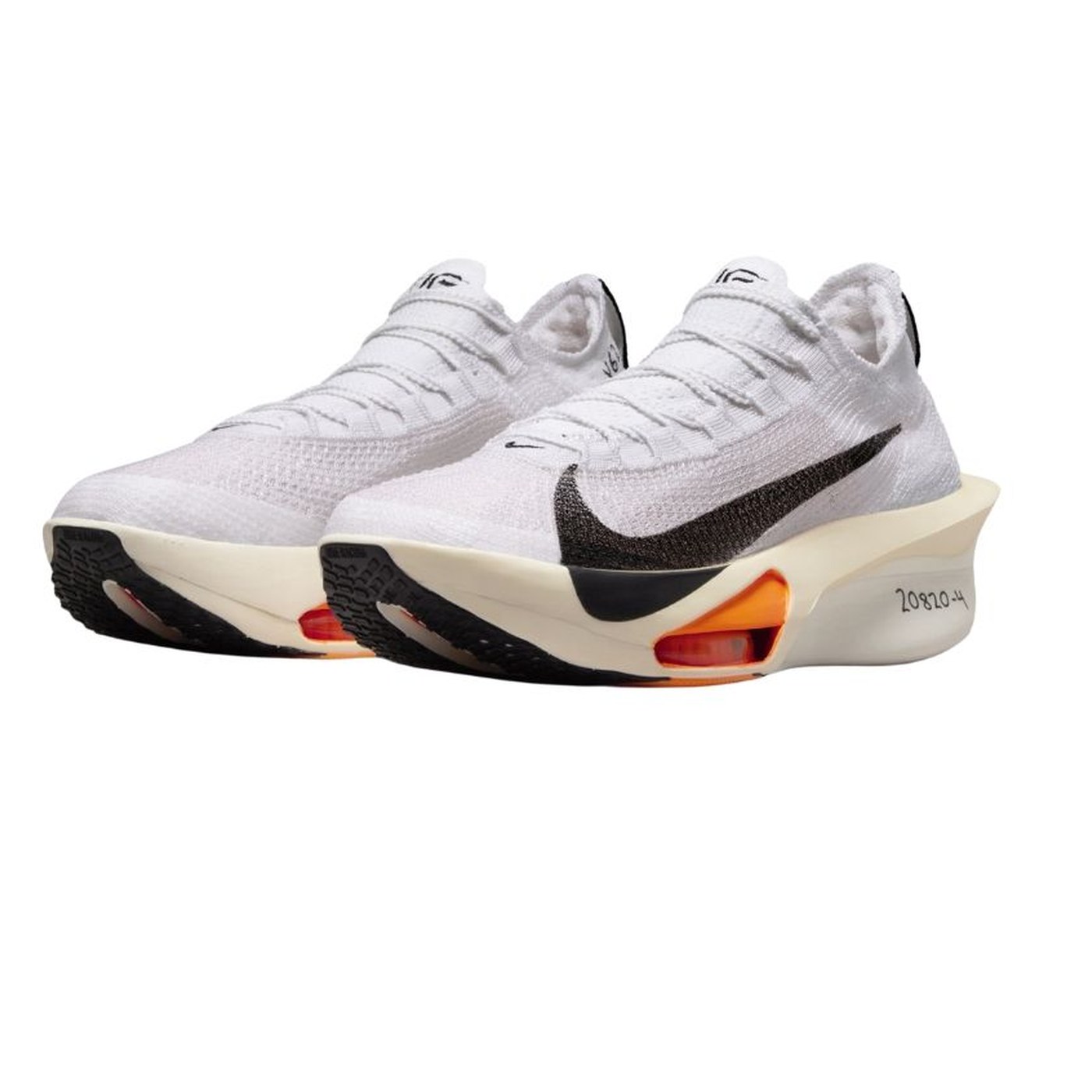
What sets the Alphafly apart from other super shoes is precisely that dual Air Zoom pod in the forefoot: two pressurized TPU air chambers that add an instant, tangible bounce at toe-off. The Nike Vaporfly 4 doesn't have these pods; it goes all in on ZoomX and the carbon plate. The Alphafly pushes forefoot propulsion further, at the cost of a less forgiving ride and a stiffer sole under the toes.
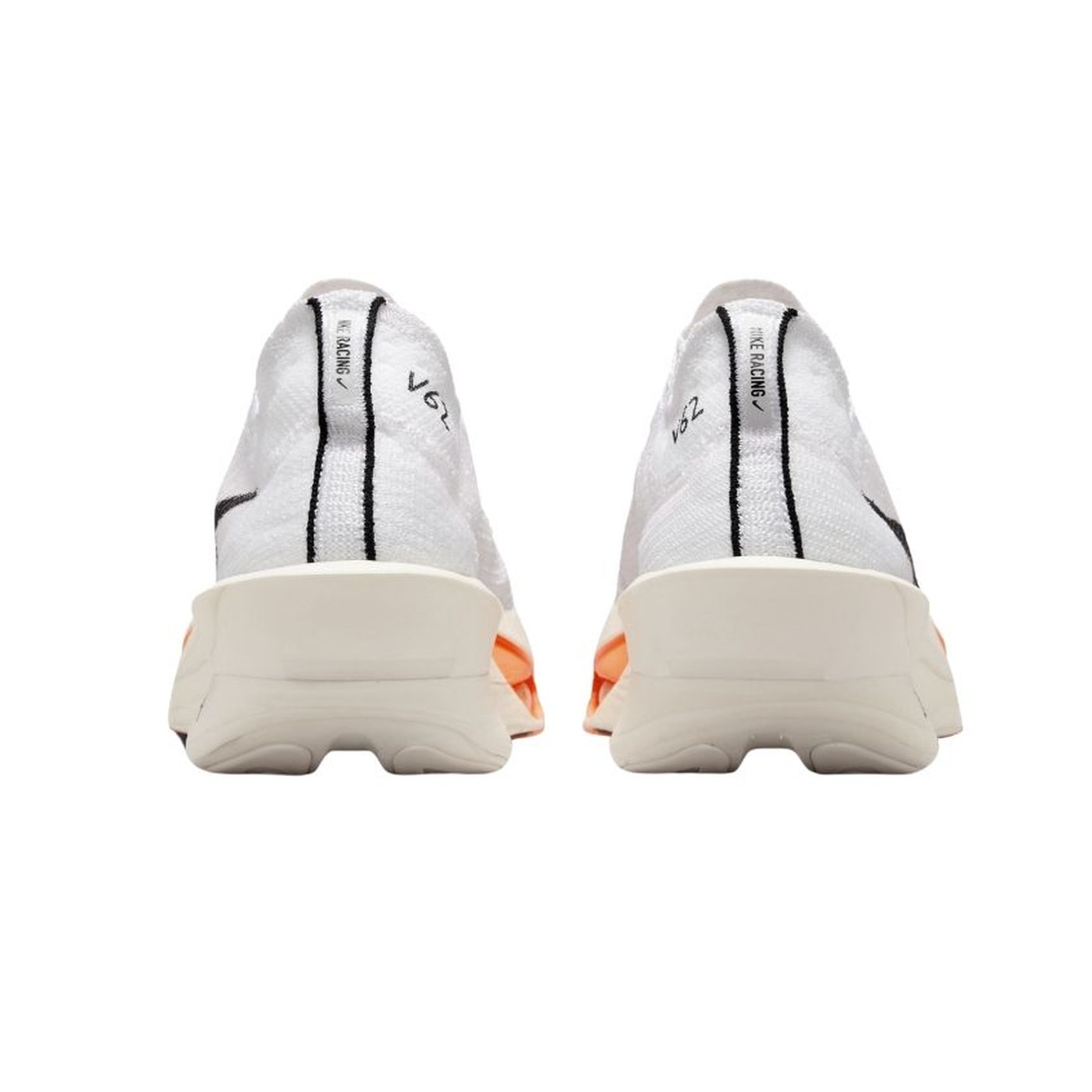
With version 3, Nike made significant changes compared with the Alphafly 2: a wider toe box, a more secure heel thanks to a more wraparound Atomknit 3.0 heel counter, and a Fast Shot outsole that extends further for better grip in corners. On the scale: about 198 to 205 g depending on size, which is 15 to 20 g lighter than the previous version.
In terms of market positioning, the Alphafly 3 isn't designed to compete with daily trainers. Nike clearly places it in the race-day category, alongside what Adidas does with the Adizero Adios Pro 4 or Saucony with the Endorphin Elite 2. It's a racing shoe, period.
© Nike, official photo used for editorial purposes
ZoomX, Flyplate and Air Zoom: what really changes underfoot?
ZoomX foam is made from PEBA (polyether block amide), a synthetic material found in a handful of premium foams on the market. It's about half the weight of standard EVA and delivers remarkable energy return: independent lab measurements put it above 85%, while a classic EVA foam tops out at 60-65%. In practical terms, every stride gives you back a significant share of the energy you put into it.
The full-length carbon Flyplate plays a complementary role: it stiffens the shoe along the sagittal axis, stops the forefoot from flexing and drives the energy forward. Without it, the ZoomX would bounce in every direction. With it, propulsion becomes directional. That's the mechanical principle behind every plated super shoe; the Alphafly applies it with exceptional rigor.
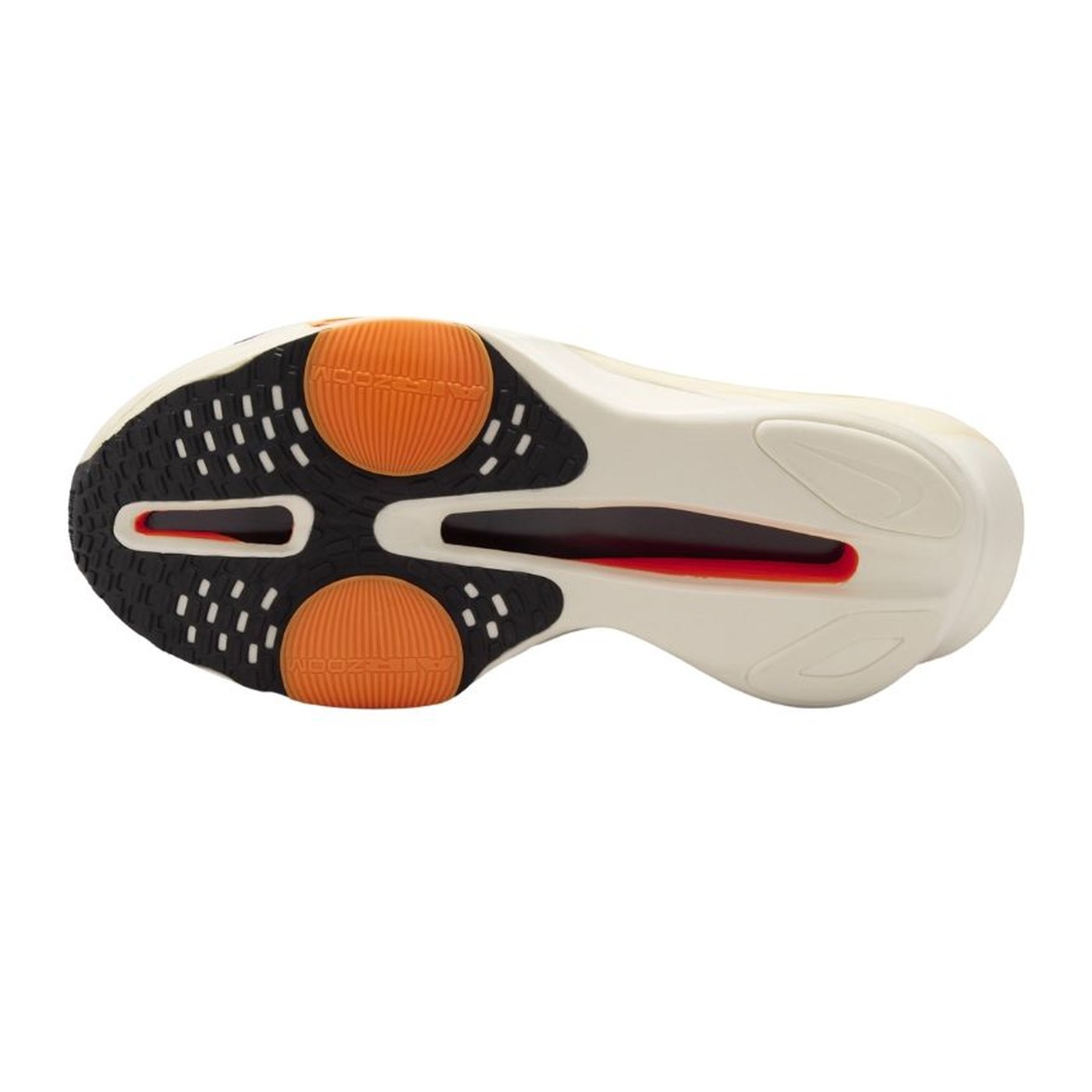
But what really separates the Alphafly from the Vaporfly is the dual Air Zoom pod in the forefoot. These two pressurized air chambers, placed just under the metatarsals, add an extra, instantly noticeable bounce as your foot leaves the ground. In the RunMorph field test, the feeling was unmistakable: a bounce within the bounce, a pop that gets very addictive at paces faster than 4 min/km. Slower than that, the effect fades; the Alphafly 3 is truly built for fast race paces.
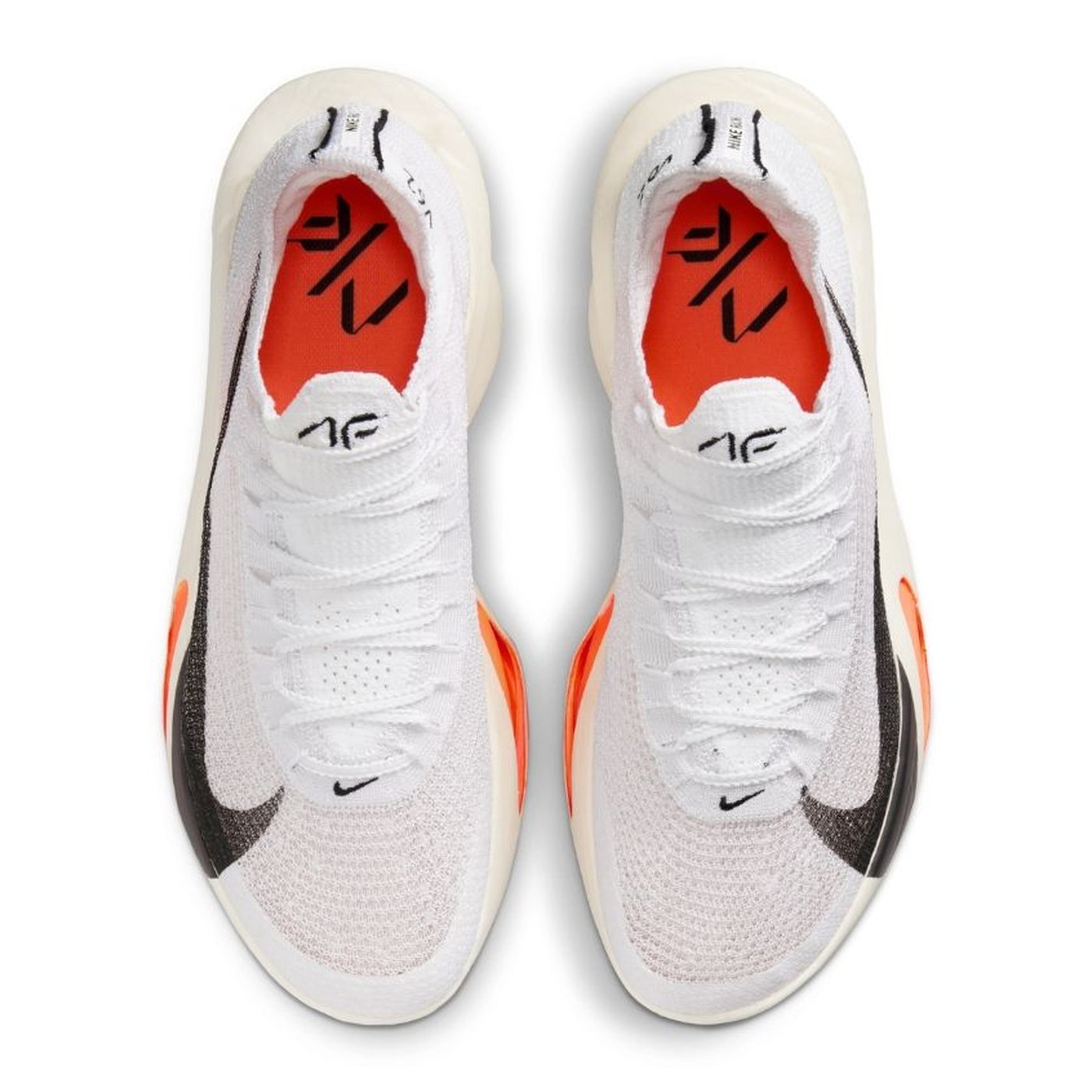
The Atomknit 3.0 upper is very thin and highly breathable, which helps keep the shoe featherlight. It fits slightly wider than the Alphafly 2 around the toes, a welcome upgrade for wide feet. Lateral support, on the other hand, is minimal: on tight corners or uneven ground, the shoe doesn't forgive any drift from your line.
© Nike, official photo used for editorial purposes
The field test: from 3:45 to 5:30 per km over 60 km
We tested the Alphafly 3 over 60 km in total, mostly on flat to gently rolling roads, at paces between 3:45 and 5:30 per kilometer. The first 15 km were get-to-know-you runs, the next 30 km included specific workout blocks (threshold and marathon pace), and a final 15 km long run showed how the shoe holds up over distance.
Below 4:30/km, the shoe hits its sweet spot. The pronounced rocker, the stiff Flyplate and the Air Zoom pods work together to create an almost automatic forward roll. Your stride naturally shortens and your cadence picks up: the Alphafly 3 raises your turnover without any conscious effort. The feel is clearly superior to anything a high-mileage super trainer offers, like the Hoka Clifton Pro or the Saucony Paramount Max.
Slower than 5:00/km, however, the forefoot stiffness becomes noticeable and less comfortable. The shoe is designed for powerful toe-offs: if you run slower, your natural biomechanics don't get the same benefit from the Air Zoom pods. For easy runs or recovery runs, the Alphafly 3 simply isn't the right tool.
Wear on the Fast Shot outsole after 60 km is very limited. The rubber zones under the forefoot and heel protect the ZoomX effectively. We estimate the shoe's lifespan at 300 to 500 km if you use it only for racing or quality sessions, which is respectable for a super shoe.
RunMorph tip: save the Alphafly 3 for your key races and the marathon blocks in your training. For the 80% of your runs done at an easy aerobic effort, a daily trainer like the Hoka Mach 7 or the Brooks Ghost AMP will protect your tendons better and extend the life of your investment.
© Nike, official photo used for editorial purposes
Alphafly 3 vs Vaporfly 4 vs Adios Pro 4: the comparison to help you choose
The marathon super shoe category has grown a lot since 2021, and comparing these models isn't a trivial exercise: the right choice depends on your level, your target distance and your biomechanics.
| Criterion | Nike Alphafly 3 | Nike Vaporfly 4 | Adidas Adios Pro 4 |
|---|
| Forefoot stack height | 32 mm | 29 mm | 35 mm |
| Drop | 8 mm | 8 mm | 6.5 mm |
| Weight (EU 42-43) | 198-205 g | 188-195 g | 215-220 g |
| Plate | Full-length carbon Flyplate | Full-length carbon Flyplate | EnergyRods 2.0 (carbon fibers) |
| Foam | ZoomX + dual Air Zoom | ZoomX only | Lightstrike Pro |
| Propulsion | Maximum | High | Very high |
| Long-run comfort | Average | Good | Good |
| Price | €285-295 | €255-270 | €270-280 |
| Versatility | Low (race only) | Medium | Medium |
The Nike Vaporfly 4 is the more accessible, more versatile option: lighter, less stiff, and just as usable on race day as in specific training. If you're running your first marathon with a sub-4 goal, the Vaporfly 4 is often the best entry point into super shoes.
The Adidas Adizero Adios Pro 4 takes a different approach with its carbon-fiber EnergyRods, which mimic the natural metatarsal stiffness of the bare foot. It delivers more progressive acceleration and suits runners with a pronounced forefoot strike. Over 10 km or the half marathon, the Adios Pro 4 can feel sharper; over 42 km, the Alphafly 3 takes the edge thanks to its bouncier ZoomX and its Air Zoom pods, which delay neuromuscular fatigue.
© Nike, official photo used for editorial purposes
Our field verdict: which runners and which distances?
The Alphafly 3 excels at one very specific job: road races from 21 to 42 km, plus high-intensity specific training blocks (marathon or half marathon pace). Outside that lane, its appeal drops fast.
If you're aiming to break 3:30 in your first marathon, the Alphafly 3 can make the difference over the final 10 kilometers, when neuromuscular fatigue builds up and every gram of propulsion counts. For elite or sub-3 runners, it's simply the best option on the market in 2024.
On the other hand, if your goal is to finish your first half marathon or run a 10K under 50 minutes, a more accessible, more versatile shoe like the Vaporfly 4 will be a better investment. And for your high-volume runs, check out our roundup of the best interval running shoes of 2026.
Prepare for your marathon or half with a dedicated plan
The Alphafly 3 is the tool; the RunMorph plan is the strategy. To handle the mileage of your marathon build or lock in your long runs on the way to a half, pair this shoe with a structured plan.
See RunMorph training plans
RunMorph Coach verdict: 9 / 10
The Nike Alphafly 3 deserves its reputation as the benchmark marathon shoe. No other model on the market in 2024 combines ZoomX foam, the Flyplate and Air Zoom pods so coherently into such an efficient propulsion system over running's signature distance. Kelvin Kiptum's world record in Chicago is no footnote: it's the most spectacular proof of what this technology can do on the feet of someone who knows how to use it.
The 9/10 score reflects one major caveat: value for money. At €285-295 for a shoe you'll only wear for racing or specific blocks, it's a hefty investment. But if you regularly race marathons and halves with ambitious time goals, no other shoe will give you this mechanical edge.
The only structural drawback is the limited lateral support on uneven ground. But on flat roads and on race day, that limitation disappears: the Alphafly 3 is the most effective fast-running machine the industry has produced to date in the marathon category.
FAQ
Is the Nike Alphafly 3 good for beginners?
No. The Alphafly 3 is a demanding racing shoe, designed for runners who have their stride under control and regularly run faster than 5 min/km. A beginner won't feel the benefits and risks injury because of the stiff forefoot.
How long does the Nike Alphafly 3 last?
Used for racing only, the Fast Shot outsole and ZoomX foam last between 300 and 500 km. With mixed daily training and racing use, lifespan drops to 200-300 km. To get the most out of your investment, save it for high-intensity sessions.
Does the Nike Alphafly 3 run large or small?
Runner feedback points to a true-to-size fit by Nike standards, with a toe box slightly wider than the Alphafly 2. If you're between sizes or have a wide forefoot, go up half a size.
What's the difference between the Alphafly 3 and the Vaporfly 4?
The Alphafly 3 adds the dual Air Zoom forefoot pod to the Vaporfly 4's ZoomX plus Flyplate combination, for extra forward propulsion. The Vaporfly 4 is lighter, more versatile and less stiff, which makes it more accessible for mixed training and racing use.
Is the Nike Alphafly 3 good for the half marathon?
Yes, it's actually one of its favorite playgrounds. Over 21 km at a fast pace, the Air Zoom pods and ZoomX foam maximize stride efficiency without the stiffness becoming a problem over time. Ideal for chasing a half marathon PR.