Hoka Clifton 10 Review: A Max-Cushion Daily Trainer Grows Up
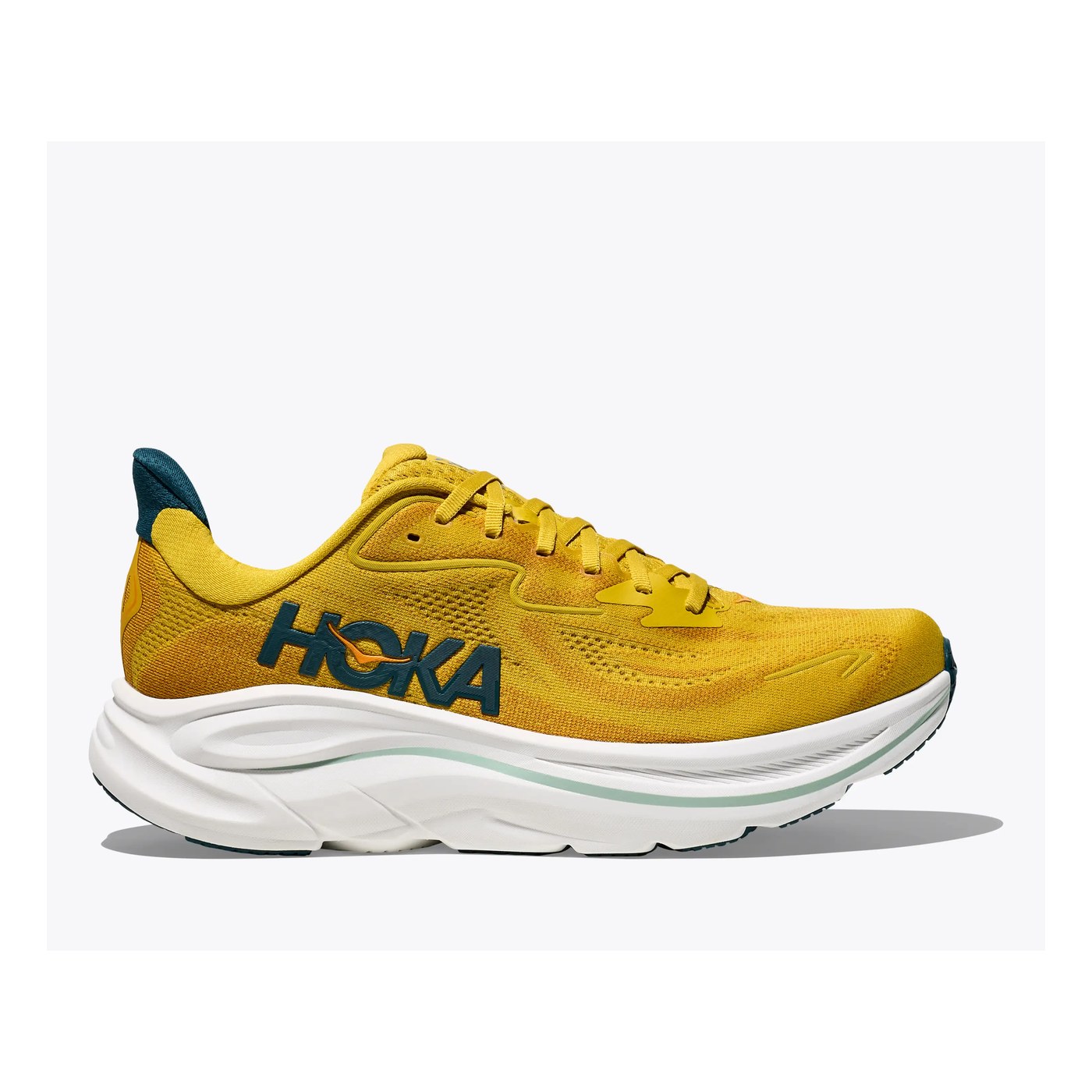
The Clifton 10: the shoe you can wear every day for a year.
For ten years, the Clifton has been one of the best-selling running shoes in the world. Why? Because it does not try to reinvent your stride. It tries to protect it, day after day, mile after mile, without ever letting you down. This tenth version is the culmination of that philosophy: welcoming comfort, reassuring stability and the kind of versatility that makes it the ideal pick for your main pair.
But Hoka made bold calls this year: the drop goes up from 5 to 8 mm, the CMEVA foam has been reworked and the geometry fine-tuned. Let's see whether the Clifton 10 kept its DNA while modernizing, or drifted away from what made it a hit.
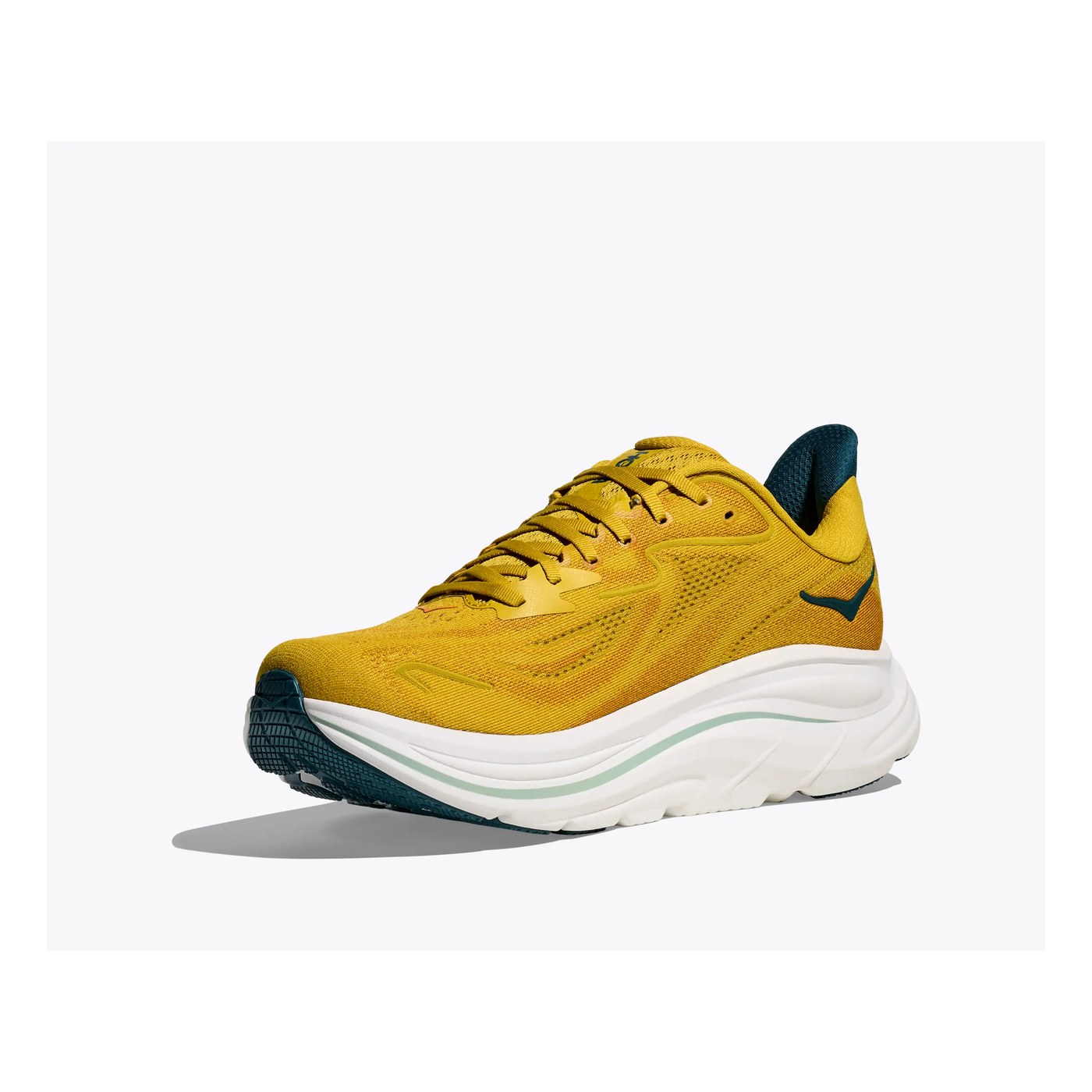
Hoka Clifton 10 specs
| Brand | Hoka |
| Model | Clifton 10 |
| Release date | April 15, 2025 |
| Use | Road, comfort daily trainer, long runs, recovery |
| Drop | 8 mm (vs 5 mm on the Clifton 9) |
| Stack height (forefoot / heel) | 34 mm / 42 mm |
| Weight (men's size 42) | 278 g |
| Foam | Reworked CMEVA, lighter and more responsive |
| Carbon plate | No |
| Upper | Breathable engineered mesh |
| Recommended distance | 5 km to marathon |
| MSRP | €160 |
| RunMorph score | 8.5 / 10 |
The Clifton 10: the backbone of the regular runner
Looking for a shoe that can soak up 5 runs a week for 8 months? For that profile, the Clifton 10 is probably the best choice on the market right now. Here's why:
- Signature Hoka comfort: 42 mm of stack height at the heel means maximum cushioning to protect your joints. On a long run at moderate pace, you feel that generosity: the shoe absorbs impact without sending the slightest harshness back to your foot. It is the very definition of a recovery shoe that can also handle everyday miles.
- Refined CMEVA foam: Hoka reworked its in-house formula to make it lighter and a touch more responsive. You don't get the pronounced bounce of a premium PEBA foam, but you gain pop over the Clifton 9. That is exactly the balance we expect from a daily trainer that is not built for speed.
- Drop raised to 8 mm: the big change this year. Hoka raised the drop to anticipate foam compression over the miles: on a heavily cushioned shoe, the effective drop shrinks as it wears. Starting at 8 mm out of the box, you stay close to a traditional stride, which opens the shoe up to heel strikers.
RunMorph's tip: the Clifton 10 is one of the few shoes you can buy "with your eyes closed" if comfort is what you want. It will not let you down. But it will not help you run fast either: for workouts and races, add a second, livelier pair such as the Mach 7.
Who is the Hoka Clifton 10 for?
Here is our coaching take, profile by profile.
Verdict: the Clifton 10 is the shoe I recommend to the widest range of runners. Beginners who want a reliable pair to get started, regular runners looking for a workhorse, marathoners seeking protection over the distance: everyone gets something out of it. The only real exception is the pure performance runner who wants pop at every pace. For that profile, look instead at the Hoka Mach 7 or the Asics Superblast 3.
Under the hood: the tech in detail
Reworked CMEVA foam: lighter, more responsive
CMEVA is Hoka's in-house EVA, compression-molded to strike a balance between cushioning and durability. On the Clifton 10, Hoka refined the formula to shed weight without giving up any of that generous cushioning. It does not feel like a high-end supercritical foam. It is more controlled, more understated, but that is exactly what we expect from a reliable daily trainer. The shoe holds up well over the miles: count on 700 to 1000 km before you feel a real drop-off.
Drop raised to 8 mm: an anti-aging strategy
Going from 5 to 8 mm of drop is no small change. Hoka is anticipating gradual foam compression: on a shoe this cushioned, the heel packs down faster than the forefoot, which naturally lowers the effective drop after a few hundred kilometers. By starting at 8 mm out of the box, Hoka makes sure you finish the shoe's lifespan with a drop still close to 5-6 mm, the old starting value. It is a mature call that slightly penalizes low-drop fans but locks in the experience for most runners.
Meta-Rocker geometry: a guide for your stride
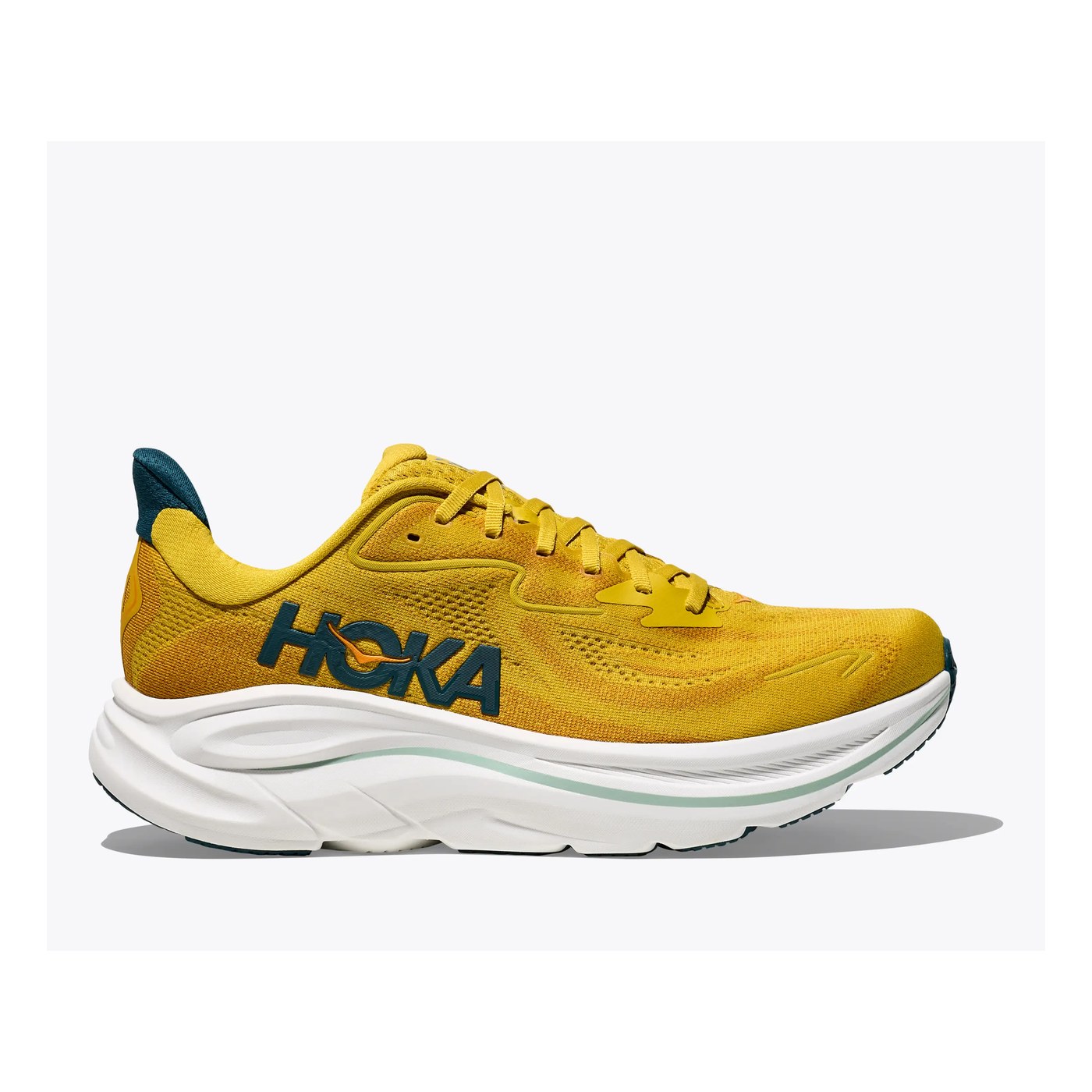
The Clifton 10 keeps the Meta-Rocker profile found across the whole Hoka lineup. This curved geometry rolls naturally under your foot with every stride, cutting the effort needed to push off. At easy-run pace, the rocker stays in the background. On a long run, a few kilometers in, you realize you seem to be running with less effort: that is exactly what this geometry delivers. The Clifton 10 does not make you faster. It makes you more economical.
Outsole: improved durability
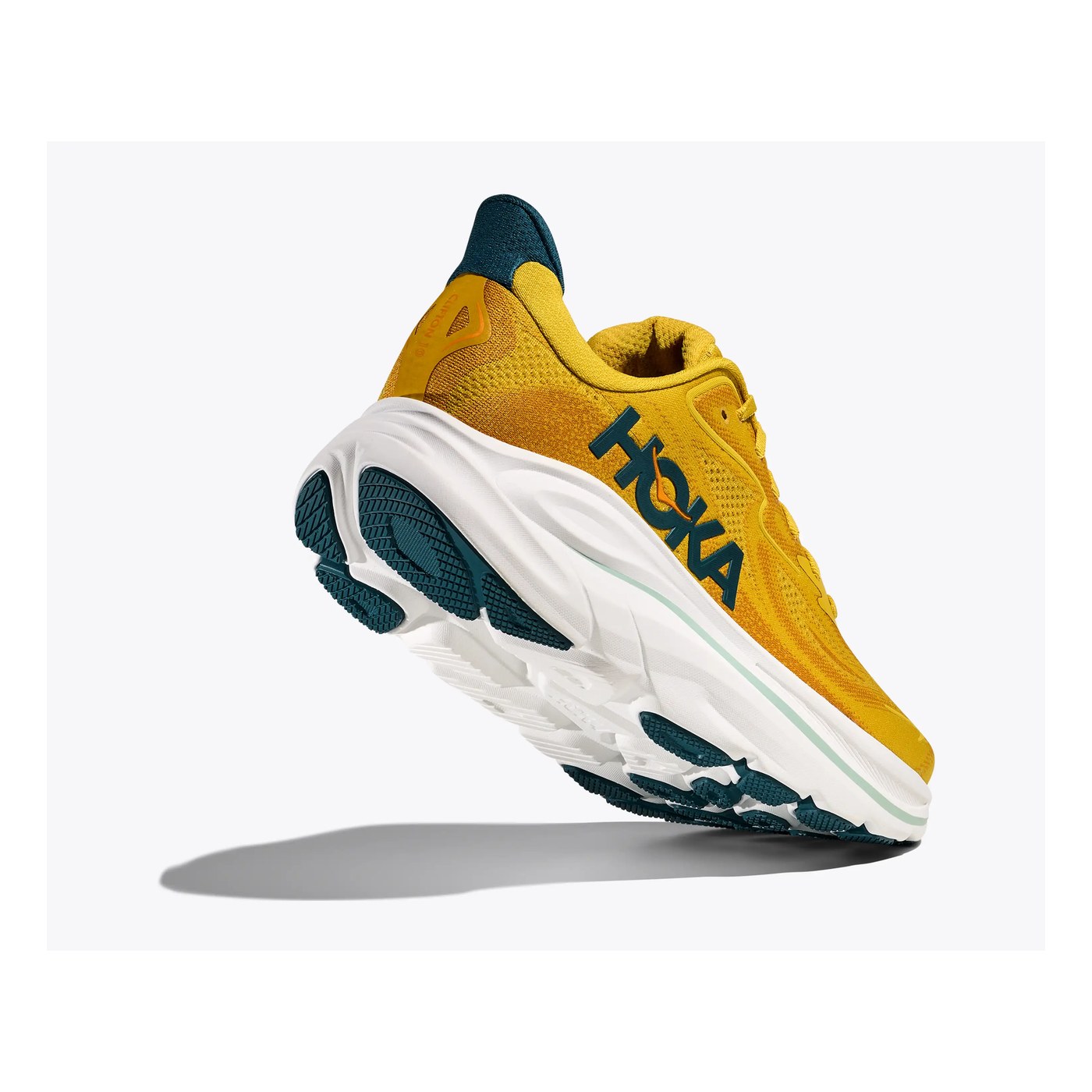
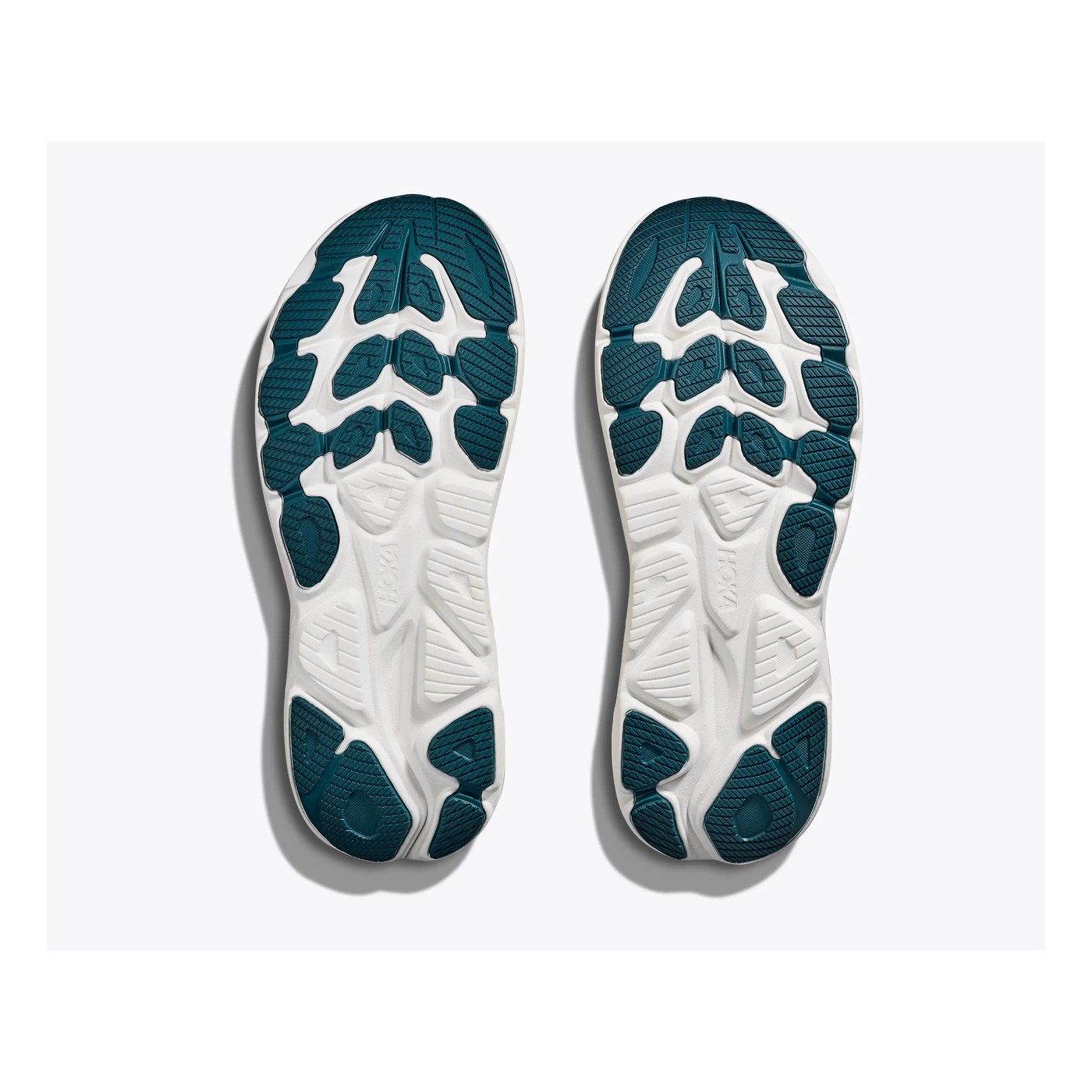
The outsole rubber has been reworked for better durability. On dry asphalt, grip is excellent. On wet surfaces, it stays decent without reaching the top of the category. The outsole pattern is designed to keep weight down while placing rubber in the main wear zones (outer heel and forefoot). The result: an outsole that holds up well on the road, especially for an average-build runner.
What French reviewers say
Wanarun points out that the Clifton 10 stays true to its DNA while gaining polish. The review praises the signature comfort and overall stability, but notes that responsiveness lags behind recent super trainers.
Lepape-Info highlights the Clifton 10's versatility and its outstanding comfort on long runs. The verdict is clear: for the intermediate runner who wants a do-it-all pair, it is one of the best options on the market.
Running Lab confirms the Clifton's status as the benchmark in the comfort segment, calling the move to an 8 mm drop a mature choice that broadens the shoe's audience. Value for money is rated excellent at €160, and even better on sale.
Our RunMorph coaching take. The consensus is clear: the Clifton 10 is one of the undisputed benchmarks among comfort daily trainers. It does not try to stand out through pure innovation, but through total reliability. That is exactly what we expect from the tenth version of a cult shoe.
Quick comparison
Clifton 10 vs Nike Pegasus 42. A head-to-head between the two best-selling daily trainers on the market. The Pegasus 42 is livelier and more connected to the ground, with its 10 mm drop and Air Zoom. The Clifton 10 is softer, more protective and more focused on pure comfort. Verdict: Pegasus if you prioritize responsiveness, Clifton if you prioritize comfort.
Clifton 10 vs Hoka Mach 7. Two Hoka shoes with opposite philosophies. The Mach 7 is a fast, precise super trainer built for workouts. The Clifton 10 is a comfort daily trainer built for protected volume. Verdict: Mach 7 if you want one shoe with some pop, Clifton 10 if cushioning comes first.
Clifton 10 vs Asics Gel-Nimbus 28. Two benchmark max-cushion shoes. The Gel-Nimbus 28 is even softer and geared more toward heavier runners or protective long runs. The Clifton 10 stays more versatile and more responsive. Verdict: Gel-Nimbus 28 if you want ultimate comfort, Clifton 10 for broader use.
Fitting the Clifton 10 into your training
The Clifton 10 shines as the main shoe for a runner focused on volume and comfort. Here is how to use it smartly:
- As your only shoe: if you run 30 to 50 km a week and your main goal is to keep running for years without injury, the Clifton 10 can do it all: easy runs, long runs, recovery, a first marathon. This is the most common scenario.
- As your recovery pair: in a 2-pair rotation, the Clifton 10 is ideal for recovery runs after a hard session and for protective long runs. Keep a livelier pair such as the Hoka Mach 7 or the Adidas Adizero EVO SL for workouts.
- For a marathon run for fun: the Clifton 10 is one of the best shoes for finishing a marathon without suffering. Not for setting a PR (for that, you lace up the Nike Vaporfly 4), but for crossing the line with fresh legs.
RunMorph's tip: many beginners buy their first pair looking for "the most responsive one". That is a mistake. Early on, you need to protect your joints and build volume without getting hurt. The Clifton 10 is exactly the shoe you need for that phase. You can move on to livelier models once you have 6 months of consistent running behind you.
The RunMorph coach's verdict
As a coach, the Clifton 10 is the shoe I recommend to the widest range of runners. Why? Because it pulls off the feat of being protective for beginners, versatile for regular runners and reliable for marathoners chasing comfort, all at once. Very few shoes tick every one of those boxes.
The jump from the Clifton 9 to the Clifton 10 is a smart one: Hoka anticipated foam wear by raising the drop, while refining the foam for more responsiveness. The result is a more mature shoe, better built to last. If you loved the Clifton 9, give yourself time to adjust to the 8 mm drop: you will feel the difference on your first runs. If you have never tried the line, this is the ideal version to start with.
The only real drawback: the lack of pop at fast paces. If you do a lot of speed work or you are chasing an ambitious time goal, the Clifton 10 is not made for that. But that is precisely its role: to be the shoe that carries you 70-80% of the time, not the one that shaves minutes off your 10 km.
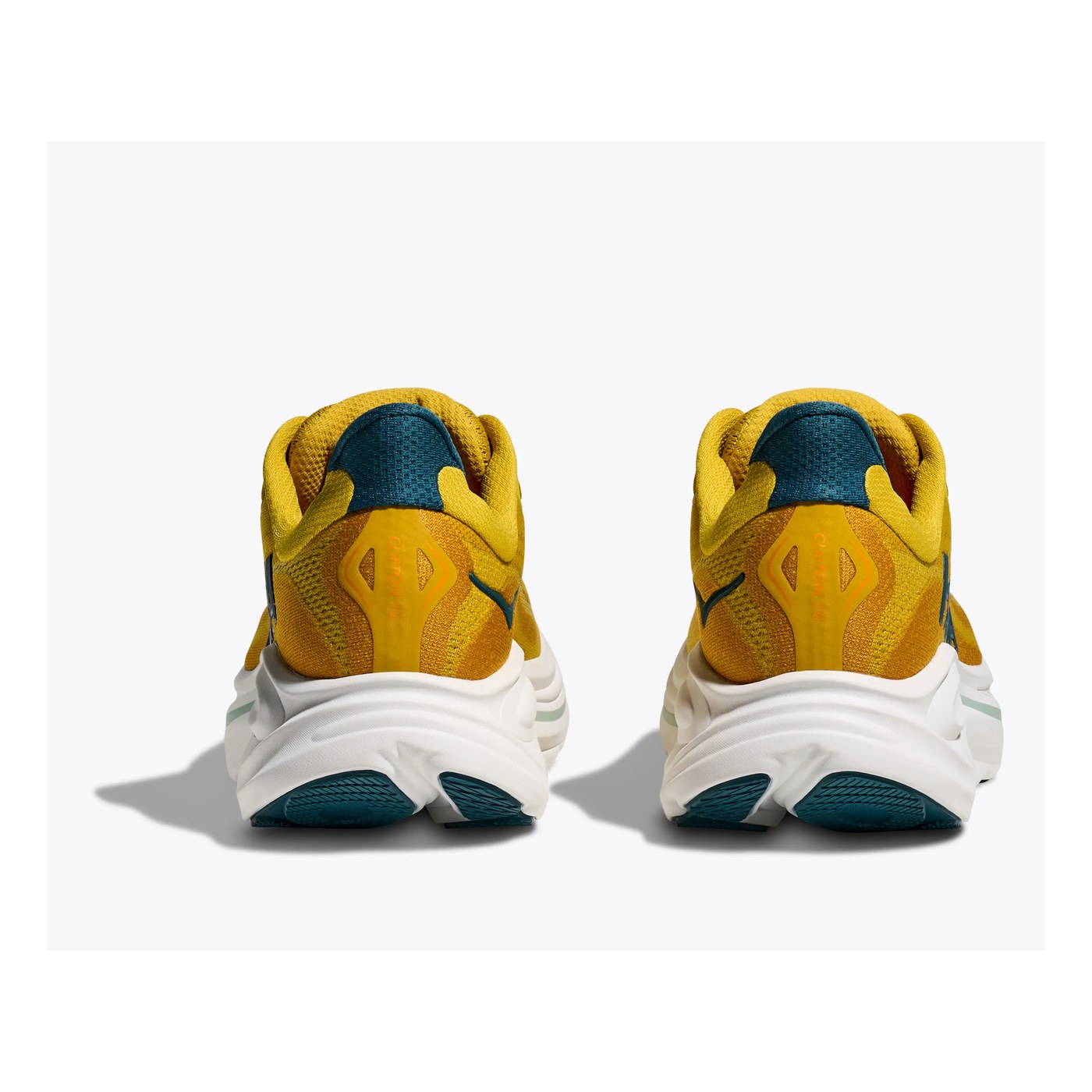
RunMorph score: 8.5 / 10. At €160, it is a very reasonable investment for such a durable shoe. Better still: with the Clifton 11 on its way, you will easily find the 10 on sale for around €120. Buy it if you want a reliable shoe for everyday running and long distances. Look elsewhere if you want pop at every pace.
Key takeaways for your training
- The benchmark comfort daily trainer: the Clifton 10 is built for 70-80% of your runs (easy runs, long runs, recovery).
- 42 mm stack height + Meta-Rocker: maximum cushioning and a geometry that guides your stride for better efficiency.
- 8 mm drop: raised to anticipate foam compression, which opens the shoe up to heel strikers.
- 278 g in size 42: average for the max-cushion segment, light for the amount of cushioning.
- Broad audience: beginners, regular runners and marathoners looking for comfort will all get something out of it.
- Not for pure performance: lacks pop at fast paces. For intervals, get a dedicated shoe.
- Excellent value for money: €160 new, often on sale for €120 now that the Clifton 11 is arriving.
FAQ
Is the Hoka Clifton 10 good for beginners?
Yes, it is actually one of the best shoes for getting into running. Its outstanding comfort, natural stability and versatility make it an ideal pair for your first kilometers and your progression to a first 10 km or half marathon. The 8 mm drop is perfectly suited to a beginner's traditional stride.
How many kilometers does the Clifton 10 last?
Count on 700 to 1000 km before a noticeable drop-off. The CMEVA foam is one of the most durable in the segment, and the move to an 8 mm drop means you will finish the shoe's life with geometry that still works.
Does the Clifton 10 run large or small?
The fit is true to size, roomier in the forefoot than the Mach 7. It is one of the most accommodating Hokas for wide feet. If in doubt, go with your usual size: no need to adjust.
What is the difference between the Clifton 10 and the Clifton 9?
Three major changes: the drop goes up from 5 to 8 mm, the reworked CMEVA foam is lighter and more responsive, and the geometry has been adjusted with a more pronounced Meta-Rocker. Overall comfort stays similar, but the ride feels noticeably different. If you loved the 9, allow 1-2 weeks to adapt to the 10.
Is the Clifton 10 a good marathon shoe?
Yes, especially for a marathon run for fun or a first marathon where the goal is to "finish". The generous cushioning protects your legs over the distance, which lets you keep a clean stride all the way to the finish line. For an ambitious time goal (sub-3h30), a carbon-plated shoe like the Nike Vaporfly 4 is a better fit.
Recommended reads
- Hoka Mach 7: the full RunMorph review
- Nike Pegasus 42: the full RunMorph review
- Getting started with running: the complete guide