September 16, 2026Nike Vomero 18 review: 297 g on the scale vs 325 g claimed, the unfiltered test
7.6/10
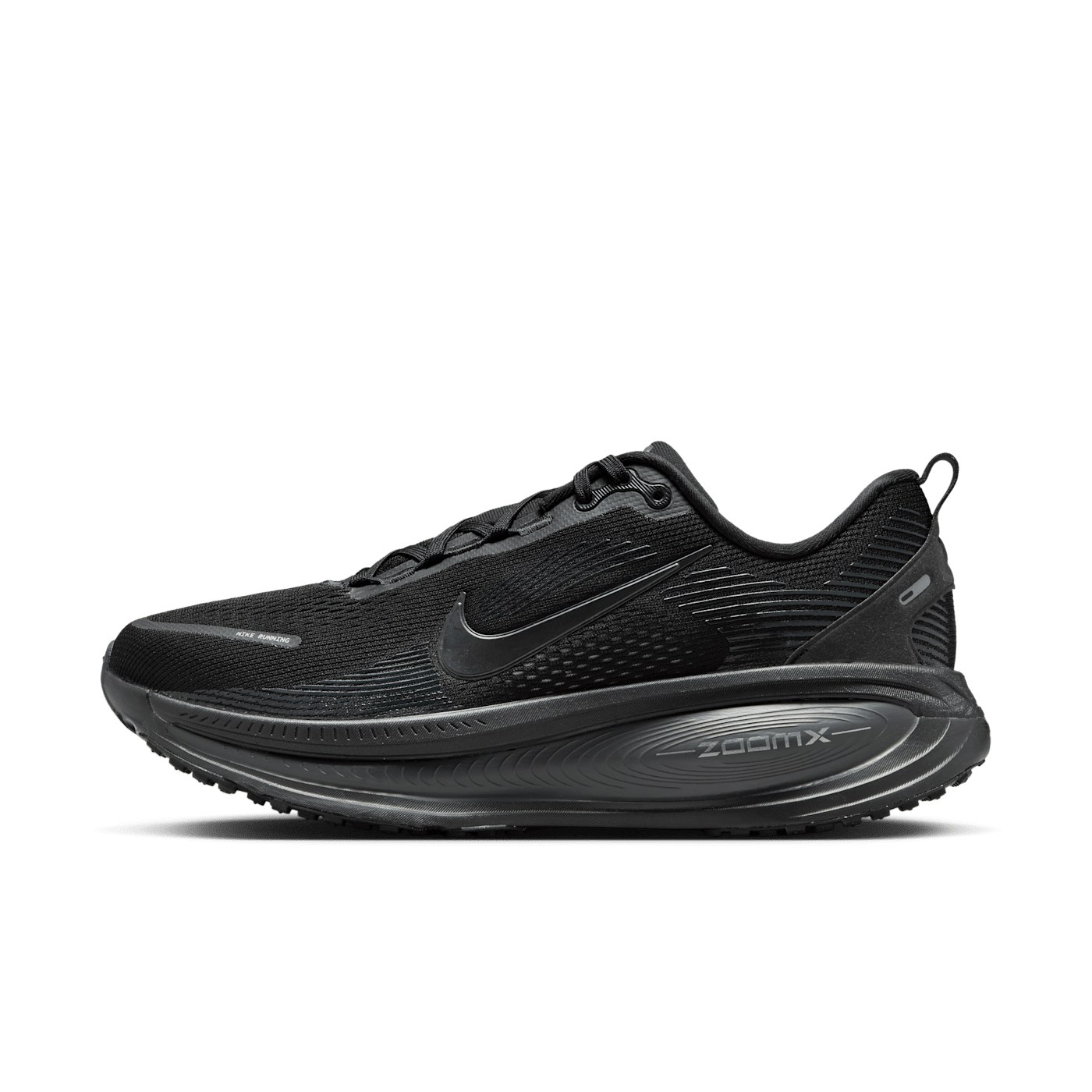
Claimed at 325 g, it weighed in at 297.5 g on an independent lab's scale. As the successor to the Nike Invincible 3, the Vomero 18 promises maximum comfort for piling up training weeks without a second thought. On cushioning, it largely delivers. The moment the concrete gets wet, it falls apart: lab data puts its wet-surface traction at 0.38, one of the lowest scores in the segment. Here's the unfiltered review, numbers included.
© Nike, official photo used for editorial purposes
The bottom line in 3 sentences
The Vomero 18 is Nike's max-cushion daily trainer: 42.7 mm of measured heel stack, dense ZoomX foam sitting on a ReactX core, and cushioning that soaks up 80+ km weeks without complaint. The downside is known and measured: 0.38 traction on wet concrete and an energy return of just 4.6/10, which limits it to paces between easy runs and marathon effort. At €159.99 in September 2026, down from €190 at launch, it's still the cheapest premium max-cushion shoe, but its outsole wears fast.
7.6
/ 10 · RunMorph overall score
Cushioning and protection
9.2 / 10
Who is it for?Regular runners chasing maximum cushioning for daily mileage, heavier beginners, runners coming back from injury.
Who should skip it?Fast runners doing threshold and interval work, winter runners pounding wet concrete every day.
Nike Vomero 18: the Invincible's successor makes one clear choice, maximum comfort
With the Vomero 18, released on February 27, 2025, Nike reshuffled its comfort lineup. The Invincible 3, Nike's max-cushion benchmark since 2023, steps aside: the Vomero 18 takes over its role but changes the recipe. Where the Invincible 3 used very soft, unstable ZoomX, the Vomero 18 goes with dense ZoomX, a firmer and more stable training formulation, sitting on a ReactX core that Nike claims is 13% more responsive than the React foam it replaces.
In the 2026 lineup, the hierarchy is crystal clear: the Pegasus 42 remains the everyday all-rounder, the Vomero 18 moves up a notch in protection, then come the Vomero Plus (full-length ZoomX, 45/35 mm stack, 275 g claimed) and the Vomero Premium (55.5 mm stack, two Air Zoom units) for anyone who wants even more foam. That makes the Vomero 18 the entry ticket to Nike's max-cushion club, at €190 at launch and €159.99 in September 2026.
© Nike, official photo used for editorial purposes
Nike Vomero 18: the objective specs
| Spec | Data |
|---|
| Type | Road shoe, max-cushion daily trainer |
| Claimed weight | 325 g in EU 44 (Nike France) |
| Measured weight | 297.5 g (lab size EU 42.5), 292 g recorded by an independent test in EU 42 |
| Drop | 10 mm claimed, 10.3 mm measured |
| Measured stack | 42.7 mm at the heel, 32.4 mm at the forefoot |
| Midsole foam | Training-formulation ZoomX on a ReactX core |
| Upper | Engineered textile mesh, padded tongue |
| Launch price | €190 |
| Price seen in September 2026 | €159.99 |
| Release date | February 27, 2025 |
Nike Vomero 18: what Nike claims vs what was measured
The gaps between marketing and measurement are the first big takeaway of this review. Point by point:
| Data | Claimed | Measured |
|---|
| Weight | 325 g (EU 44) | 297.5 g (lab EU 42.5) |
| Drop | 10 mm | 10.3 mm |
| Heel stack | not disclosed | 42.7 mm |
| Forefoot stack | not disclosed | 32.4 mm |
| Energy return | not disclosed | 4.6/10, below the segment average |
| Wet concrete traction | not disclosed | 0.38, a poor score |
| Stability | not disclosed | 8.1/10, excellent for 42.7 mm of stack |
Read the weight comparison with care: Nike quotes an EU 44, the lab weighed an EU 42.5. Even adjusted for size, the Vomero 18 still sits about 28 g above the average of daily trainers measured by independent labs. That's the price of comfort.
© Nike, official photo used for editorial purposes
Training ZoomX plus ReactX: the recipe for comfort without collapse
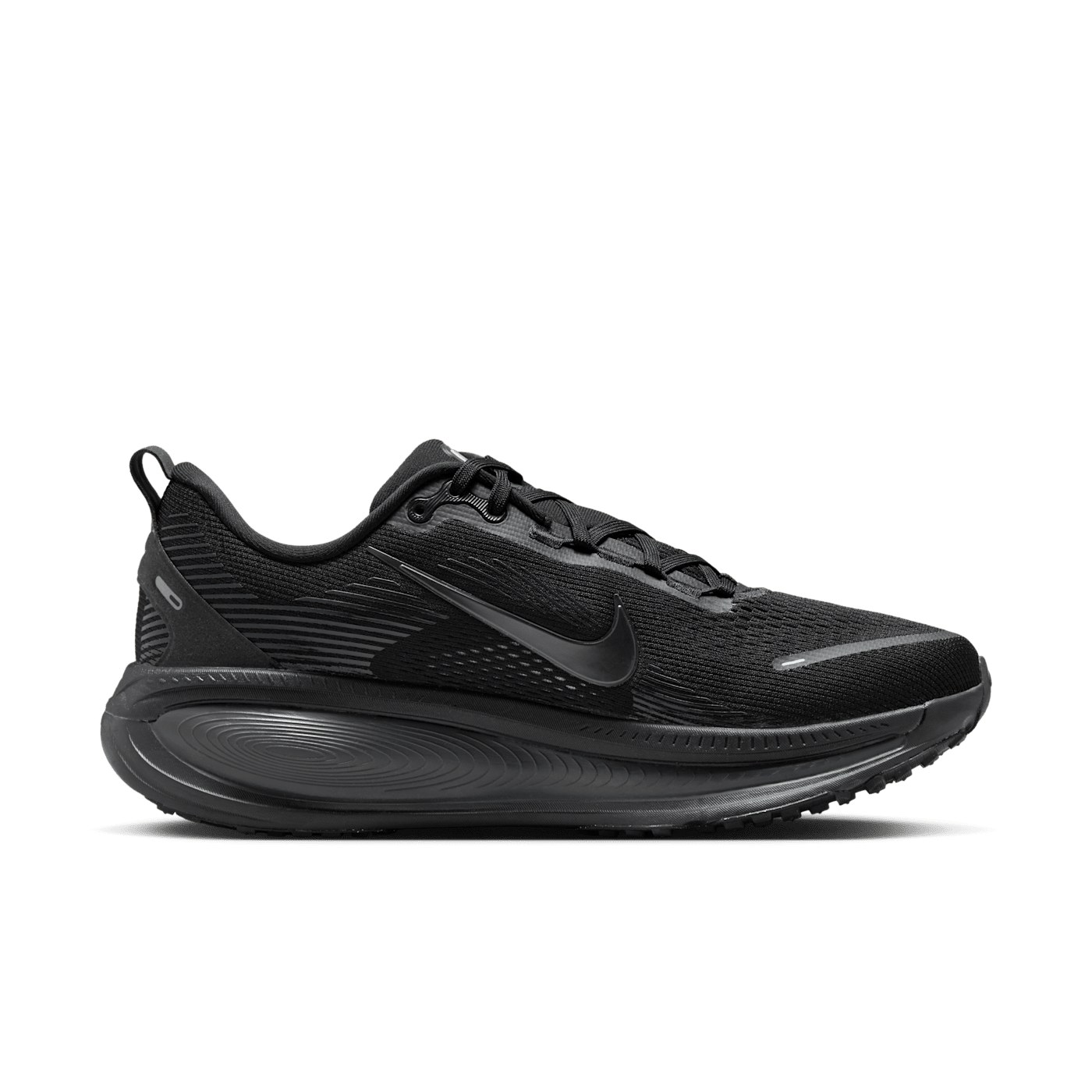
The whole Vomero 18 story lives in its midsole. The top layer is ZoomX, the same foam family as the Vaporfly, but in its training formulation: denser, firmer, built to take hundreds of kilometers without packing out like race-day ZoomX. Underneath, a ReactX core fills out the heel and forefoot. Underfoot, the combo behaves exactly as advertised: a plush initial contact, then support that doesn't bottom out, unlike the Invincible 3, whose full-length ZoomX deformed heavily under load. The measured stability of 8.1/10 for 42.7 mm of stack confirms the upgrade: it's one of the best stack-to-stability ratios in the max-cushion segment.
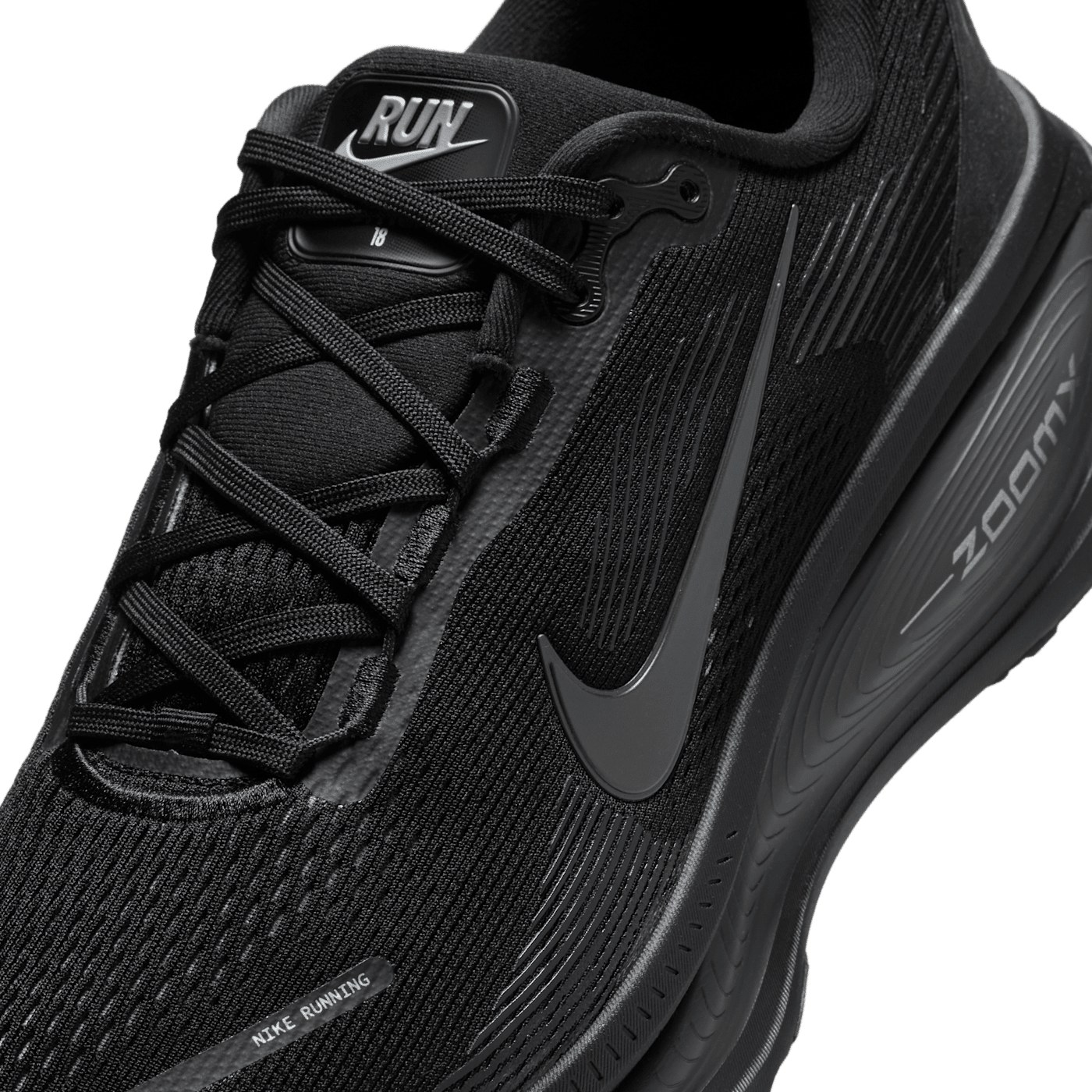
The engineered textile mesh upper favors durability over breathability. Ventilation readings put the Vomero 18 in the lower half of the segment: keep it for cool or mild runs, because it traps heat once temperatures climb past 20 degrees.
Vomero 18 fit: welcoming, with plenty of forefoot volume
The fit is the shoe's second big strength. Testers agree: the forefoot is roomy, with vertical volume near the top of the max-cushion class, and the padded tongue removes any pressure on the instep. If you have narrow feet, go down half a size, especially if you run sockless in summer. If you have wide feet or wear orthotics, the Vomero 18 is one of the most accommodating daily trainers on the market, with no irritating seams reported so far. The heel is locked in well: no slippage was recorded on downhills.
© Nike, official photo used for editorial purposes
Real-world testing: what the combined reviews actually say
At RunMorph, we cross-check long-term tests before we call it. On the Vomero 18, the consensus is clear. Lab data shows exceptional cushioning and surprising stability for such a tall stack. Real-world feedback points the same way: a volume shoe built to stack runs back to back without your legs paying the bill, with cushioning that feels soft but lively, never mushy, thanks to the ReactX under the ZoomX layer. Testers who logged more than 100 km report no metatarsal fatigue, a sign that the 42.7 mm stack is doing its shock-absorbing job. Customer reviews speak for themselves: 4.8/5 from 1,251 reviews on Nike's French store, one of the highest ratings in the brand's running catalog.
The flip side shows up everywhere too: the same testers note an outsole that wears quickly, especially on the lateral lugs if you tend to roll onto the outside of your foot, and a ride that loses its fun as soon as the pace picks up.
RunMorph's advice: if you're torn with the models above it, read our review of the Vomero Plus and the one on the Vomero Premium before you decide. And if your goal is an easy comeback, our comparison with the Invincible 3 will save you from buying twice.
At which pace it works, at which pace it falls off
Easy runs and aerobic base (5'45"/km and slower): this is its playground. The dense ZoomX absorbs every footstrike, the modest 4.6/10 energy return doesn't hurt at this pace, and the 8.1/10 stability is reassuring when your legs get tired.
Long run (25 km and more): this is where the Vomero 18 shines. The 297 g measured and 42.7 mm of stack exist precisely for this job: protecting your legs when the volume climbs past 2h30.
Marathon pace (4'30"/km to 5'15"/km): decent. ReactX responds better than a classic EVA foam, but the weight starts to show toward the end of the session.
Threshold and half-marathon pace (4'00"/km to 4'30"/km): it falls off. The 4.6/10 energy return measures as low: every footstrike absorbs but gives nothing back, and you have to make up the difference. For this kind of work, the Pegasus 42 or a carbon shoe gets the job done with 80 g less underfoot.
Short intervals (200 m, 400 m): avoid. Good stability, but the weight and lack of rebound kill any acceleration.
Flaw #1: 0.38 wet traction, a real problem for wet winters
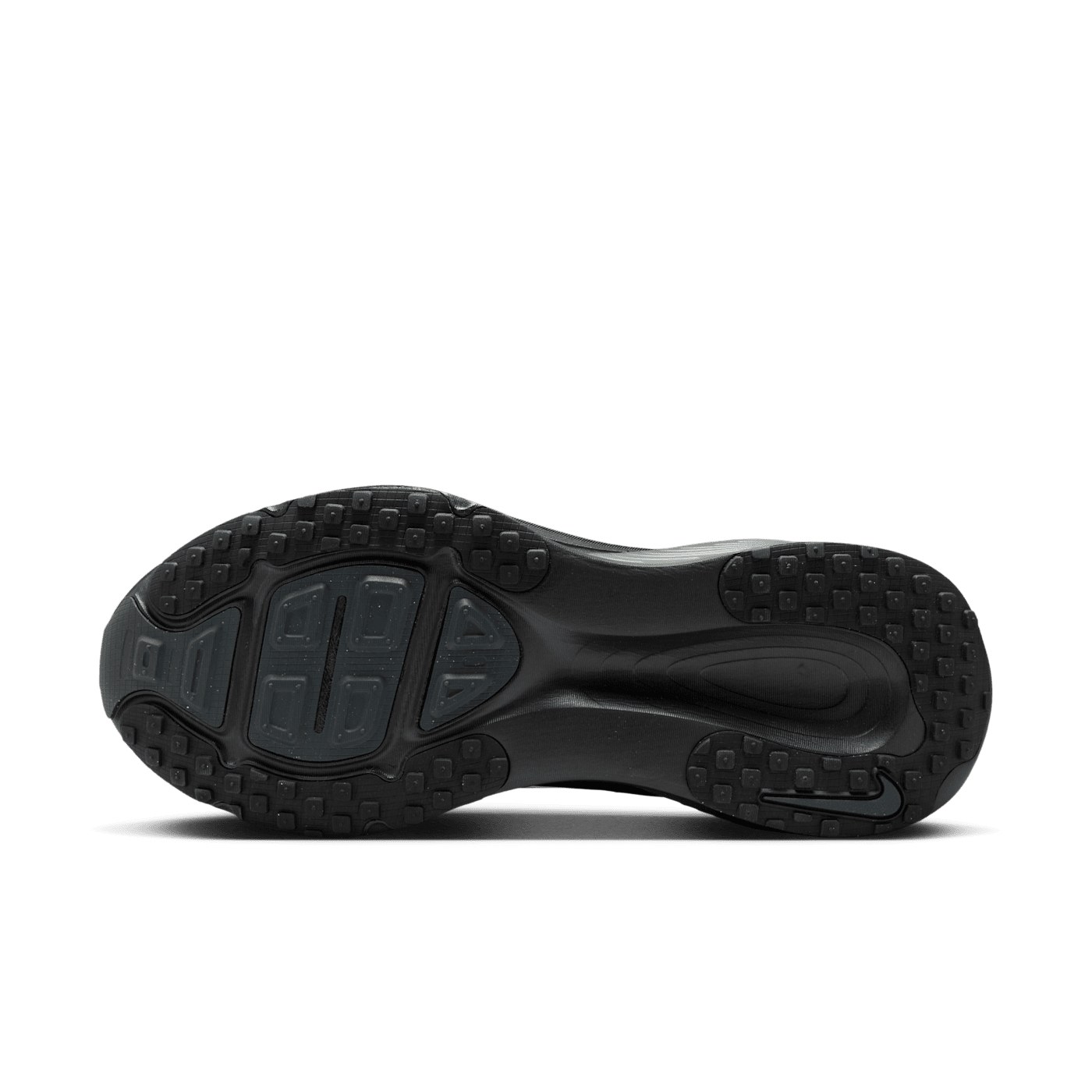
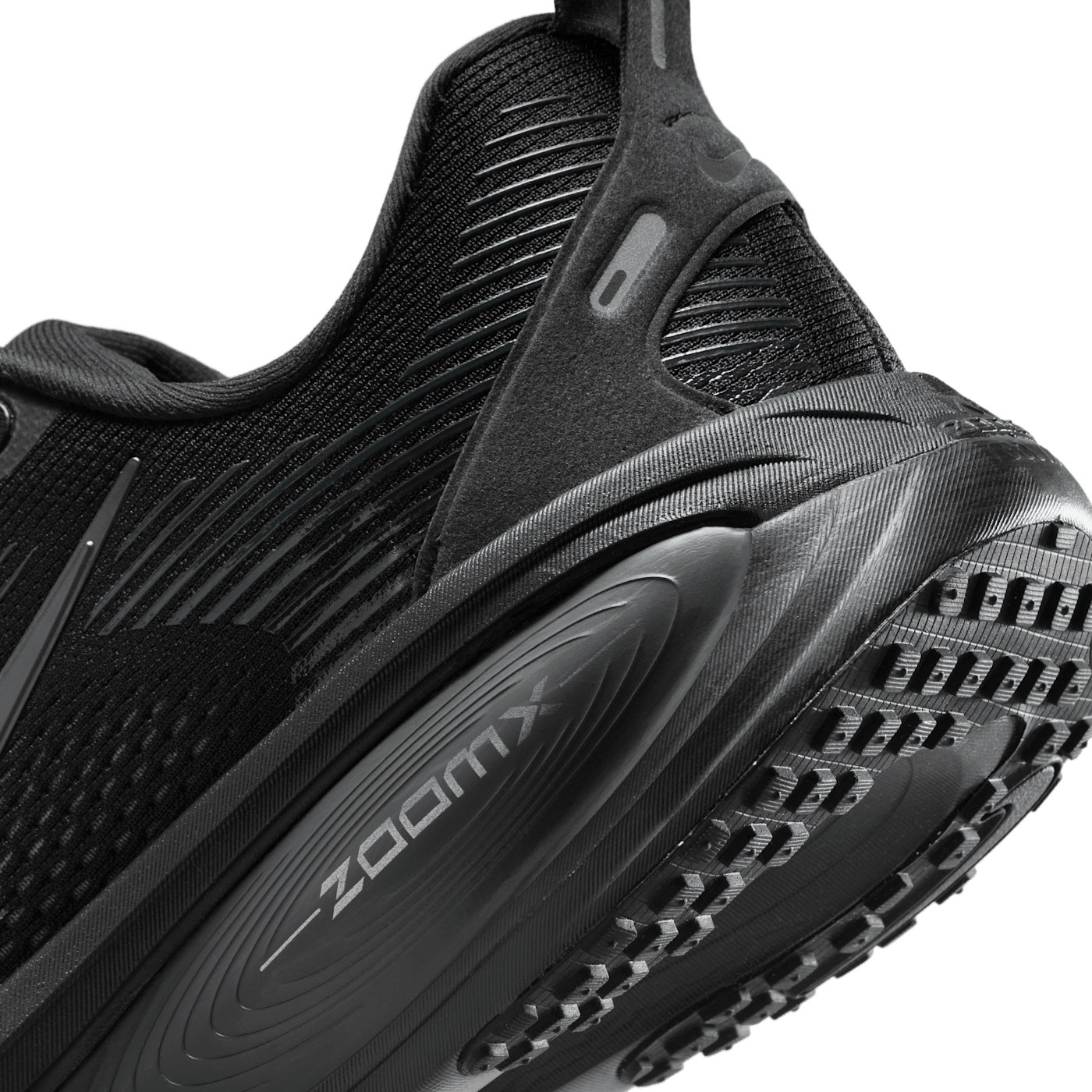
This is the number nobody else will give you: on wet concrete, independent measurements credit the Vomero 18 with 0.38 traction, one of the lowest scores among daily trainers tested over the last two years. For perspective, the Gore-Tex version of the same model measures 0.64 thanks to a different rubber compound. In practice, on wet roads from October to March: painted crosswalks, smooth paving slabs, dead leaves, the Vomero 18 slips where a Bondi 9 or a Gel-Nimbus 28 grips. If you run in the rain all year round, this is the factor that should drive your decision, not the cushioning.
© Nike, official photo used for editorial purposes
Flaw #2: 4.6/10 energy return and an outsole that wears fast
The second major flaw has two parts. First, rebound: 4.6/10 measured is what you get from €110 shoes, not from a pair that launched at €190. On a long run at marathon pace, the Vomero 18 swallows energy without giving it back, and you feel the gap against a Glycerin Max 2 as soon as the pace rises. Second, wear: wear readings show outsole rubber that quickly loses thickness in the contact zones, cutting real-world lifespan to about 450-500 km for a 75 kg runner, versus 650 km and more for the thicker outsoles of its rivals. That's the figure behind the cost-per-kilometer math further down.
Vomero 18 vs Vomero 17: should you upgrade?
| Criterion | Vomero 17 | Vomero 18 |
|---|
| Foam | ReactX + forefoot Zoom Air | Dense ZoomX on a ReactX core |
| Claimed weight | 314 g (EU 44) | 325 g (EU 44) |
| Measured heel stack | about 39 mm | 42.7 mm |
| Drop | 10 mm | 10.3 mm measured |
| Measured stability | decent | 8.1/10 |
| Launch price | €160 | €190 |
The takeaway is simple: the Vomero 18 adds 11 g but, above all, gains in cushioning and stability thanks to the ZoomX layer. If your Vomero 17 has fewer than 300 km on it, keep it: the gap doesn't justify buying now. If it's nearing the end of its life, the 18 is a clear upgrade in protection, not in pop.
Vomero 18 vs Bondi 9 vs Glycerin Max 2: the comparison that settles it
| Criterion | Nike Vomero 18 | Hoka Bondi 9 | Brooks Glycerin Max 2 |
|---|
| Measured heel stack | 42.7 mm | 43 mm | 45 mm |
| Measured weight | 297.5 g | about 309 g | 318 g |
| Measured stability | 8.1/10 | good, wide base | decent |
| Wet traction | 0.38, poor | decent | decent |
| Energy return | 4.6/10 | moderate | highest of the three |
| Price, September 2026 | €159.99 | about €165 | about €190 |
The quick read: in the rain or year-round, take the Bondi 9, its grip makes up for the extra 12 g. For ultra-long runs and maximum foam, the Glycerin Max 2 offers the best energy return of the three, but at a premium. For daily mileage in dry conditions at the best price, the Vomero 18 wins, €30 cheaper than the Brooks. The Fresh Foam X 1080v15 remains the most versatile alternative if you'd rather not choose.
Pros and cons
| Pros | Cons |
|---|
| Cushioning measured at 9.2/10, among the best in the segment | Wet traction measured at 0.38, dangerous in winter |
| 8.1/10 stability with 42.7 mm of stack | 4.6/10 energy return, fast paces suffer |
| Price down to €159.99, the lowest among premium max-cushion shoes | 297 g measured, about 28 g above average |
| Roomy fit, forgiving for wide feet and orthotics | Outsole wears fast, about 450-500 km |
Traction and durability: the cost per kilometer puts prices in perspective
The fast outsole wear changes the economics. With 450 to 500 km of real-world life for a 75 kg runner, 297 g of cushioning and rubber that thins out quickly, the Vomero 18 comes in at about €0.32 per kilometer (€159.99 divided by 500 km). The Bondi 9, whose thick outsole lasts 600 km and more, drops to around €0.27. At the other end, a Pegasus 42 at €140 that lasts 700 km goes below €0.20. So the Vomero 18 isn't a bad investment, but it's an investment in comfort, not longevity: you're paying for premium cushioning, not for lifespan.
Our real-world take: who is it for?
The beginner or comeback runner
This is target number one. The forgiving fit, the protection of the stack and the 8.1/10 stability cover for everything: irregular strides, muscles not yet conditioned, runs that keep getting longer. The Vomero 18 is one of the best entry points on the market for sticking to a comeback plan.
The heavier runner or post-injury runner
Above 80 kg or coming back from shin splints, the shock absorption of the dense ZoomX makes a measurable difference during high-volume weeks. This is where the investment is most clearly justified.
The marathoner building volume
For 60-90 km weeks with a Sunday long run, the Vomero 18 is your workhorse. Keep a carbon shoe for quality sessions and race day. And if you want to structure that volume, your RunMorph marathon training plan tells you exactly where to place every run.
RunMorph Coach verdict
7.6/10. The score isn't the average of the bars: it's weighted by what the shoe is built for, with cushioning and traction front and center (30% and 20%), energy return and price next (20% and 15%), and stability as a supporting factor (15%). That adds up to 7.6: the score of a very good comfort daily trainer, dragged down by its only real measured weakness, 0.38 traction in the wet, and by rebound too thin to justify the launch price.
Key takeaways for your training
- 42.7 mm of measured heel stack: maximum protection in Nike's daily lineup.
- 297.5 g on the lab scale, about 28 g above the daily trainer average.
- 0.38 wet traction: in the rain, pick a Gore-Tex version or a competitor.
- 4.6/10 energy return: faster than marathon pace, grab a more responsive shoe.
- 8.1/10 stability: one of the safest max-cushion shoes on the market.
- About 450-500 km of lifespan, or €0.32 per kilometer at €159.99.
Nike Vomero 18 FAQ
Does the Vomero 18 run big?
Yes, slightly. Testers find the forefoot roomy: with narrow feet, go down half a size. With wide feet or orthotics, stick to your usual size, the mesh upper handles the volume.
Is it made for running a marathon?
At marathon pace (4'30"/km to 5'15"/km), yes: the 42.7 mm stack protects you all the way to kilometer 42. If you're aiming for sub-3:30, the 297 g weight and the 4.6/10 energy return make you work too hard in the closing kilometers.
Vomero 18 or Vomero Plus?
The Vomero Plus goes up to a 45/35 mm stack of full ZoomX at a claimed 275 g, for about €30 more. If you run more than 70 km a week or you're targeting ultra-long distances, the Plus is worth the difference. Otherwise, the 18 is enough.
Can you run in the rain with it?
That's its measured weak spot: 0.38 traction on wet concrete, versus 0.64 for its Gore-Tex version. If you regularly run in the rain, the GTX version or a competitor with grippier rubber are better choices.