The Hoka Zinal 3 is a statement of intent from a brand whose lineup has often put on weight in recent seasons. Supercritical EVA foam, 253 g, repositioned 5 mm lugs: Hoka is reminding everyone that a trail shoe can still be radical. At €160, it's the tool for trail runners who want to go fast without paying for a carbon super shoe.
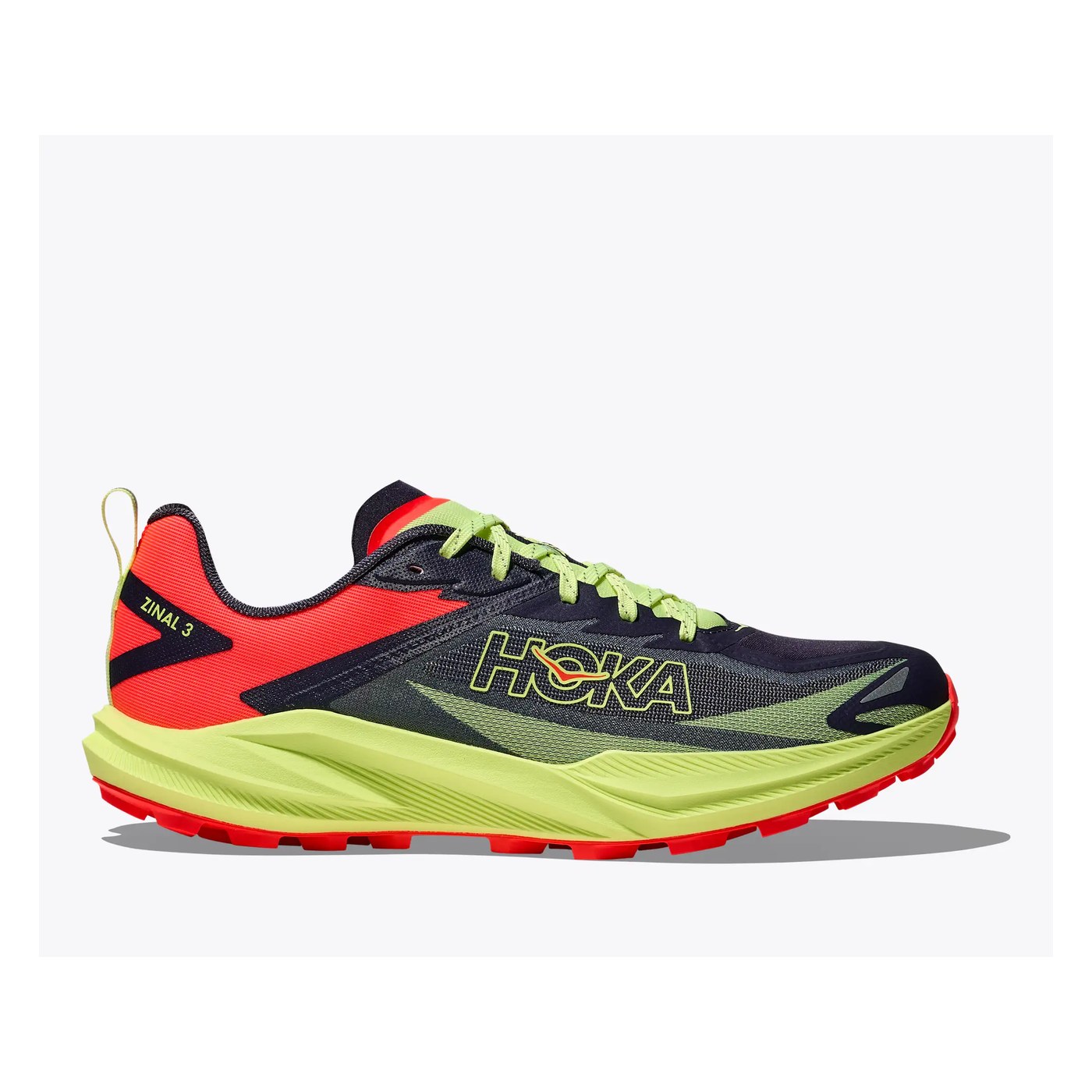
© Hoka, official photo used for editorial purposes
Hoka Zinal 3: the brand gets back to trail running basics
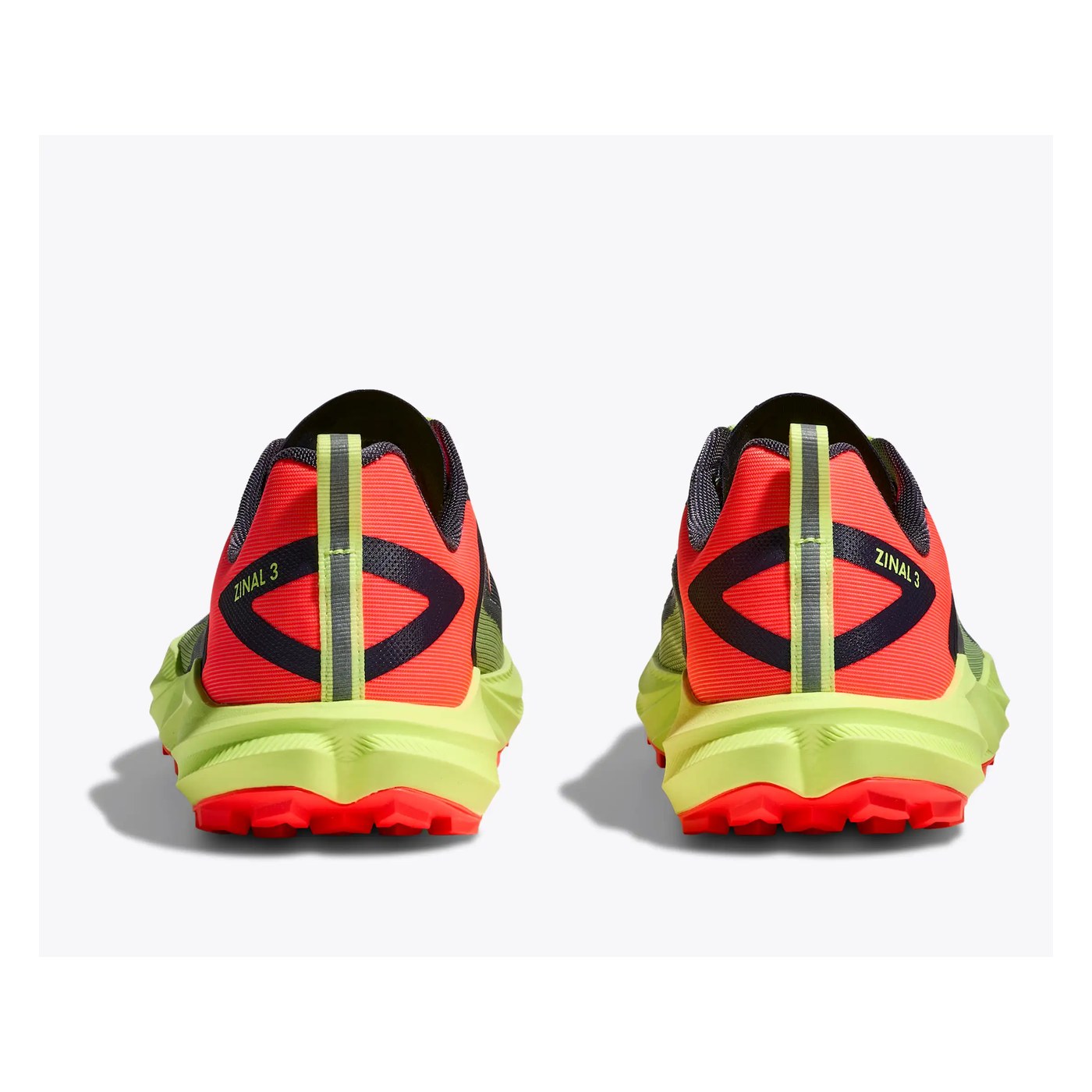
For several seasons, Hoka has mostly made headlines with ever taller, ever softer shoes: the Bondi 9, the Skyward X 2, the Clifton Pro. The Zinal 3 deliberately goes the other way. With a stack height of 31.8 mm at the heel and 26.8 mm at the forefoot, it has one of the lowest, most dynamic profiles in Hoka's entire trail lineup. This refocus on low weight and precision comes with a real technological step forward: supercritical EVA foam (SCF), absent from previous versions.
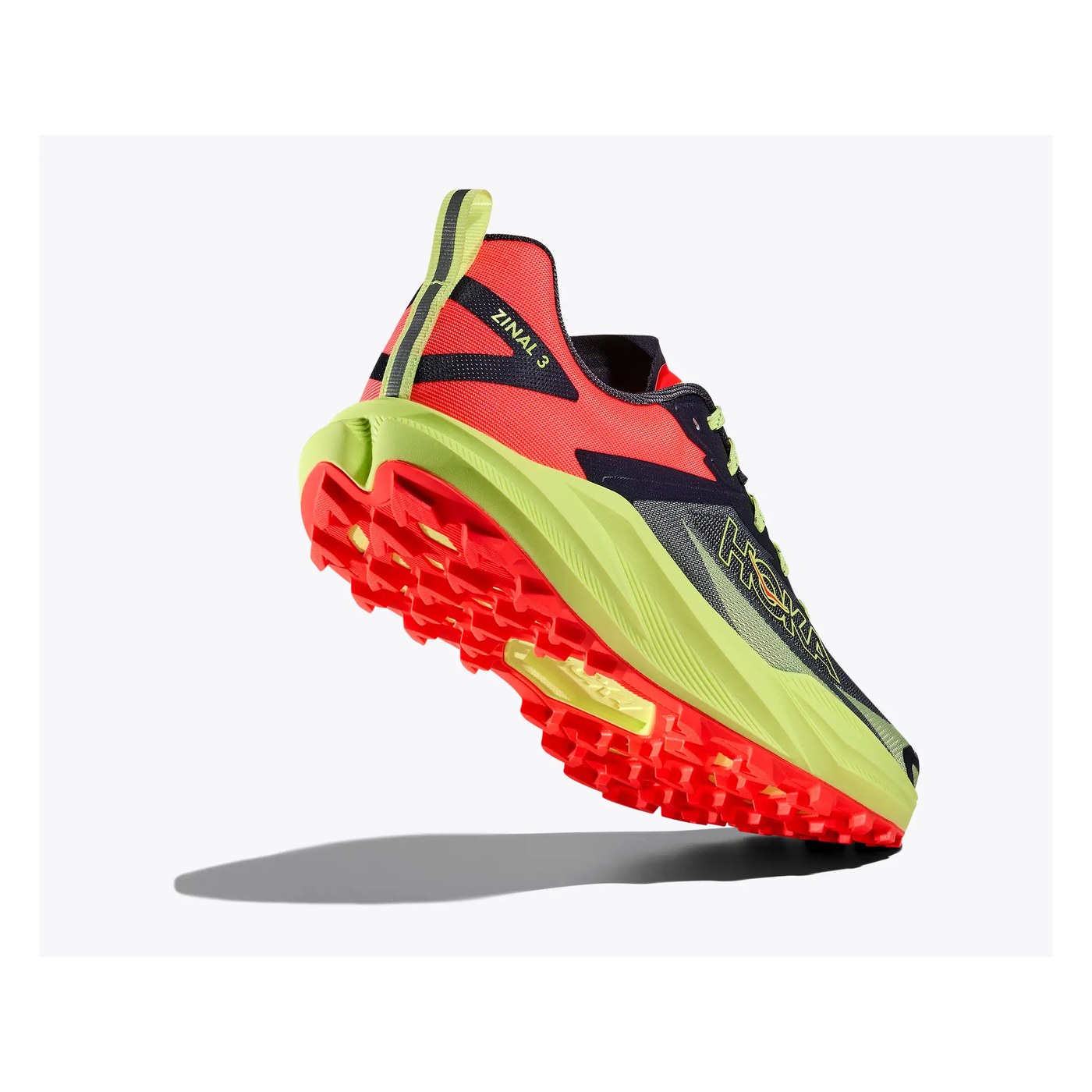
From the start, the Zinal has been Hoka's speed shoe, raced on legendary courses like Sierre-Zinal (which gave it its name) and the short, fast UTMB events. Version 3 doubles down on that promise by modernizing the technical package without betraying its DNA: a new outsole in Hoka's proprietary rubber with repositioned 5 mm lugs, plus an ultra-breathable, stretchy Leno-weave upper that moves with the foot. It's not a revolution in profile. It's technical maturity, fully achieved.
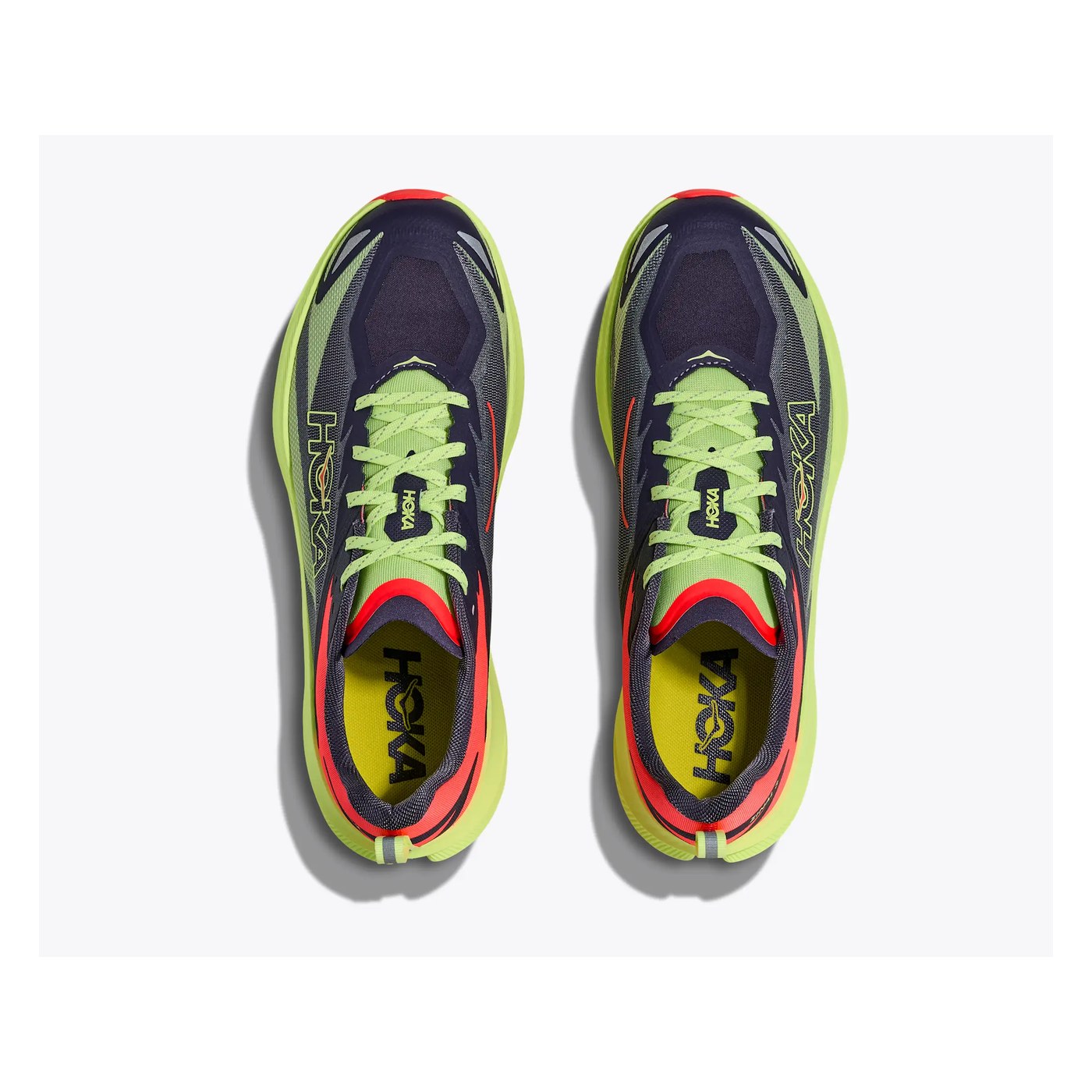
© Hoka, official photo used for editorial purposes
SCF foam: what really changes underfoot?
The big news on the Zinal 3 is its supercritical EVA foam (SCF, for SuperCritical Foam). Here's how it works: during manufacturing, standard EVA is infused with CO₂ or nitrogen under high pressure. When the pressure drops, microbubbles form that make the structure denser while making it lighter. The result is a foam that's lighter and bouncier than conventional EVA, though it doesn't reach the level of PEBA foams (ZoomX, IncrediRUN, FF Turbo).
On the trail, you feel the difference compared with earlier Zinal versions: the V3 is livelier underfoot, with a more immediate response at every footstrike. It's not the liquid bounce of a carbon super shoe, and that's exactly the point: keep the runner connected to the ground for precision on technical trails. The low stack (31.8 mm at the heel, 10 mm less than a Hoka Speedgoat 7) adds to the close-to-the-ground feel that technical trail runners look for.
The new stretch upper also deserves a mention. Built with a Leno weave (pairs of warp threads twisted around each other like a double helix), it's remarkably light while keeping enough structure to avoid pressure points. The integrated rock-guard toe cap is reassuring on rocky ground without adding weight. Note that the V2's integrated gaiter is gone, replaced by a conventional collar: a choice that saves weight and makes the shoe easier to put on, but may disappoint fans of previous models.
RunMorph tip: the Zinal 3 is not an easy-run shoe. Its real playground starts the moment you pin on a bib. For daily training on trails, look instead at the Hoka Speedgoat 7 (more versatile on all terrain) or the Saucony Peregrine 16. Save the Zinal 3 for your quality sessions and race days.
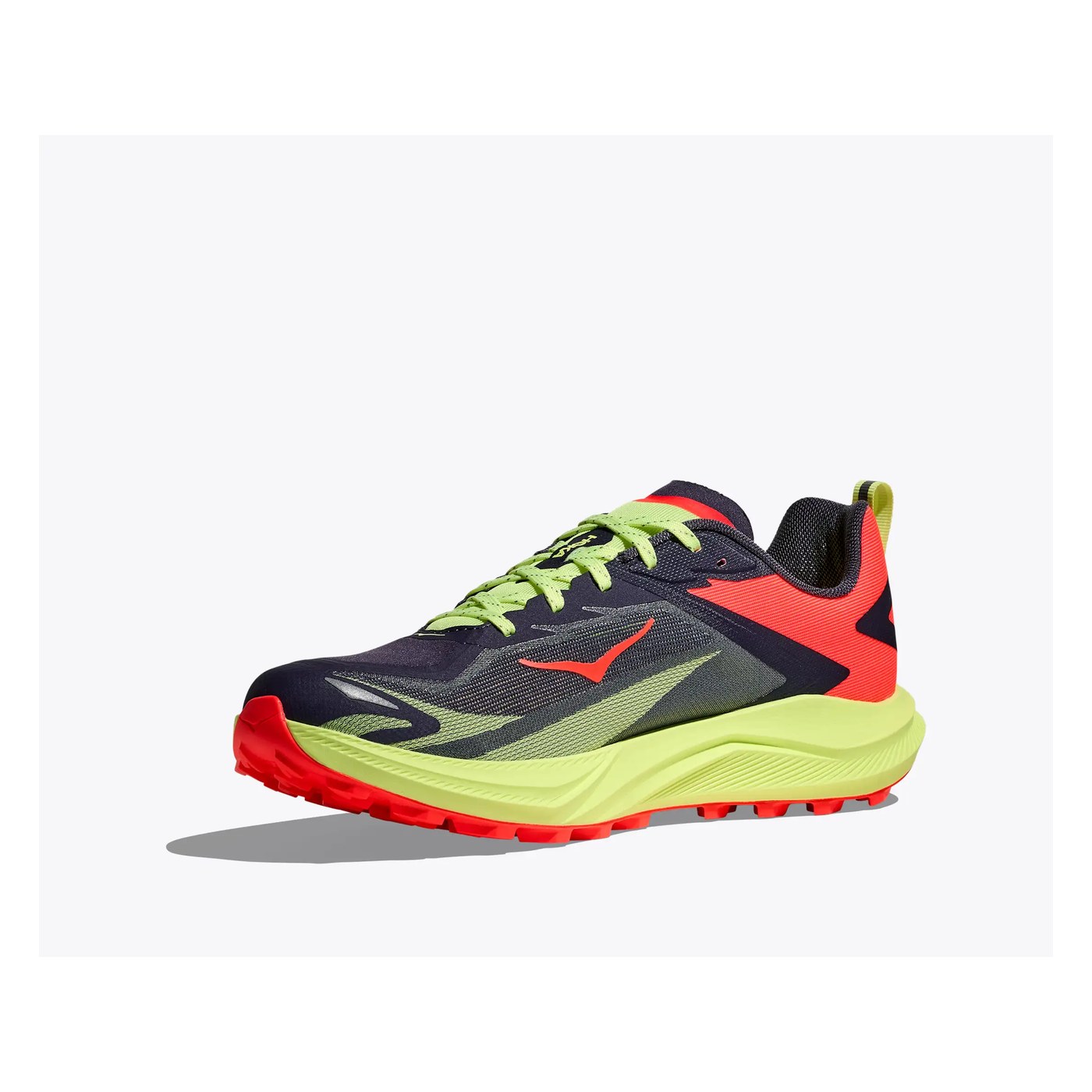
© Hoka, official photo used for editorial purposes
Our field test: how it behaves from 4:30 to 6:30 min/km
The Zinal 3 shows its character within the first few kilometers on the trail. The Leno upper is surprisingly structured for something so light: it stretches with your stride without cramping your toes, and lateral hold is enough for off-camber footing on traverses. On technical terrain at a sustained pace (5:00 to 6:30 min/km uphill, 4:30 to 5:30 on runnable descents), the Zinal 3 is in its element.
Hoka's J-Frame (a technology that prevents overpronation without overcorrecting your stride) and the wide base give you natural, reassuring stability on uncertain footing. The repositioned 5 mm multidirectional lugs bite well on dry rock, hardpacked dirt and roots. The SCF foam's energy return shows on the climbs: less muscle fatigue on the runnable sections, thanks to a clean return of energy at every step.
The main limitation shows up in very muddy or very wet conditions. The new proprietary Hoka outsole, which replaces the Vibram Megagrip found on earlier models in the lineup, is less convincing there, according to objective data from comparative tests. In deep mud or on waterlogged ground, rivals like the Inov-8 TrailFly Speed V2 (Graphene Grip) or the Adidas Terrex Agravic TT (Continental) have the edge.
© Hoka, official photo used for editorial purposes
Hoka Zinal 3 vs the competition: the comparison to help you choose
| Criterion | Zinal 3 | Inov-8 TrailFly Speed V2 | Adidas Agravic TT | La Sportiva Prodigio 2 |
|---|
| Weight (M) | 253 g | ~245 g | ~265 g | ~275 g |
| Drop | 5 mm | 6 mm | 6 mm | 6 mm |
| Foam | EVA SCF | TPEE | LIGHTMOTION+ | Foamed EVA |
| Lugs | 5 mm Hoka | 4-5 mm Graphene | 5-6 mm Continental | 4 mm |
| Stack | 31.8/26.8 mm | ~28/22 mm | ~32/26 mm | ~30/24 mm |
| Price | €160 | ~€170 | ~€180 | €160 |
| Key strength | Low weight + SCF bounce | Graphene grip on rock | Continental grip in mud | Versatility |
Against the Inov-8 TrailFly Speed V2, the Zinal 3 wins on SCF foam bounce and overall comfort, but gives ground on grip in extreme conditions (Graphene Grip is still the benchmark on wet rock). For a runner stringing together trail marathons and skyraces on mixed, dry terrain, the Zinal 3 is the best choice. For Les Templiers or very muddy races, the Inov-8 is the one to pick.
Against the Adidas Terrex Agravic TT, heavier but armed with a Continental outsole that's unbeatable in mud, the Zinal 3 comes out ahead on dry terrain and in fast mountain races. The weight difference (about 12 g) may seem minor, but you feel it over 40 km. Against the La Sportiva Prodigio 2 at the same price (€160), the Zinal 3 is lighter and snappier, but less versatile on very technical descents.
Hoka Zinal 3 pros and cons
Pros
- Remarkably light: 253 g for a trail racing shoe
- SCF foam: a real leap forward from the V2, excellent responsiveness on the trail
- Unbeatable value: €160 for serious racing
- Leno upper: light and structured without running hot
- Repositioned 5 mm lugs: effective on varied dry terrain
- J-Frame: natural stability without overcorrection
Cons
- Proprietary outsole less convincing than Vibram on wet mud
- The V2's integrated gaiter is gone (a divisive choice)
- Low stack (31.8 mm): not suited to 80 km+ ultras
- Durability to watch on abrasive rocky terrain
© Hoka, official photo used for editorial purposes
Who is the Hoka Zinal 3 for?
The competitive trail runner on short to mid-distance races (15-50 km)
Do you race vertical kilometers (VKs), trail marathons or 20 to 50 km mountain races with a bib on? The Zinal 3 is made for you. Its low weight and snappy ride make the difference on race day, where every gram and every millisecond of response counts. It excels from start to finish over distances where muscle fatigue doesn't yet call for a max-cushion shoe.
The demanding trail runner, for quality sessions
Even outside races, the Zinal 3 earns its place in quality sessions on the trail: uphill intervals, trail tempo runs, fast technical outings. It gives you proprioceptive feedback that more cushioned shoes can't, and helps you sharpen your foot placement on varied terrain. It's a work tool, not a leisure shoe.
The runner on a tight budget who wants a true racer
At €160, the Zinal 3 is one of the cheapest trail racing shoes on the market with real technical credentials. If you want a serious race shoe without spending €220 to €300 on a carbon-plated trail super shoe, it's the best answer right now.
How to fit the Zinal 3 into your RunMorph training plan
The Zinal 3 is a trail-specific work tool, not a versatile daily trainer. In your RunMorph plan, save it for trail sessions at a sustained pace or for races: uphill intervals (30s/30s on a climb), trail tempo (20 min at your trail 10 km pace), or technical 25 to 50 km efforts on race day. It fits perfectly into a performance-focused trail running build for short to mid distances.
For training long runs over 50 km or active recovery days, choose a more cushioned shoe like the Hoka Speedgoat 7 or The North Face Altamesa 500 V2 to save your legs. The winning strategy: easy runs in comfort, key sessions in the Zinal 3.
Check your RunMorph trail plan to see exactly which sessions to use your Zinal 3 for, based on your race goal.
RunMorph Coach's verdict
The Hoka Zinal 3 is a success in its category. Hoka took the risk of going back to a light, precise racing shoe in a lineup that sometimes leans too far toward comfort and volume. The arrival of SCF foam is a concrete step forward: more bounce, same low weight, better responsiveness on the trail than the V2.
At €160, it's hard to beat in the carbon-free trail racing segment. Its limits are clear and owned: it's not a mud shoe (outsole less effective than Vibram on greasy ground), nor a long-distance ultra shoe (stack too low for 80 km+). But if your playground is 15 to 50 km on varied technical trails at a fast pace, the Zinal 3 is one of the best buys right now.
RunMorph score: 8.5 / 10