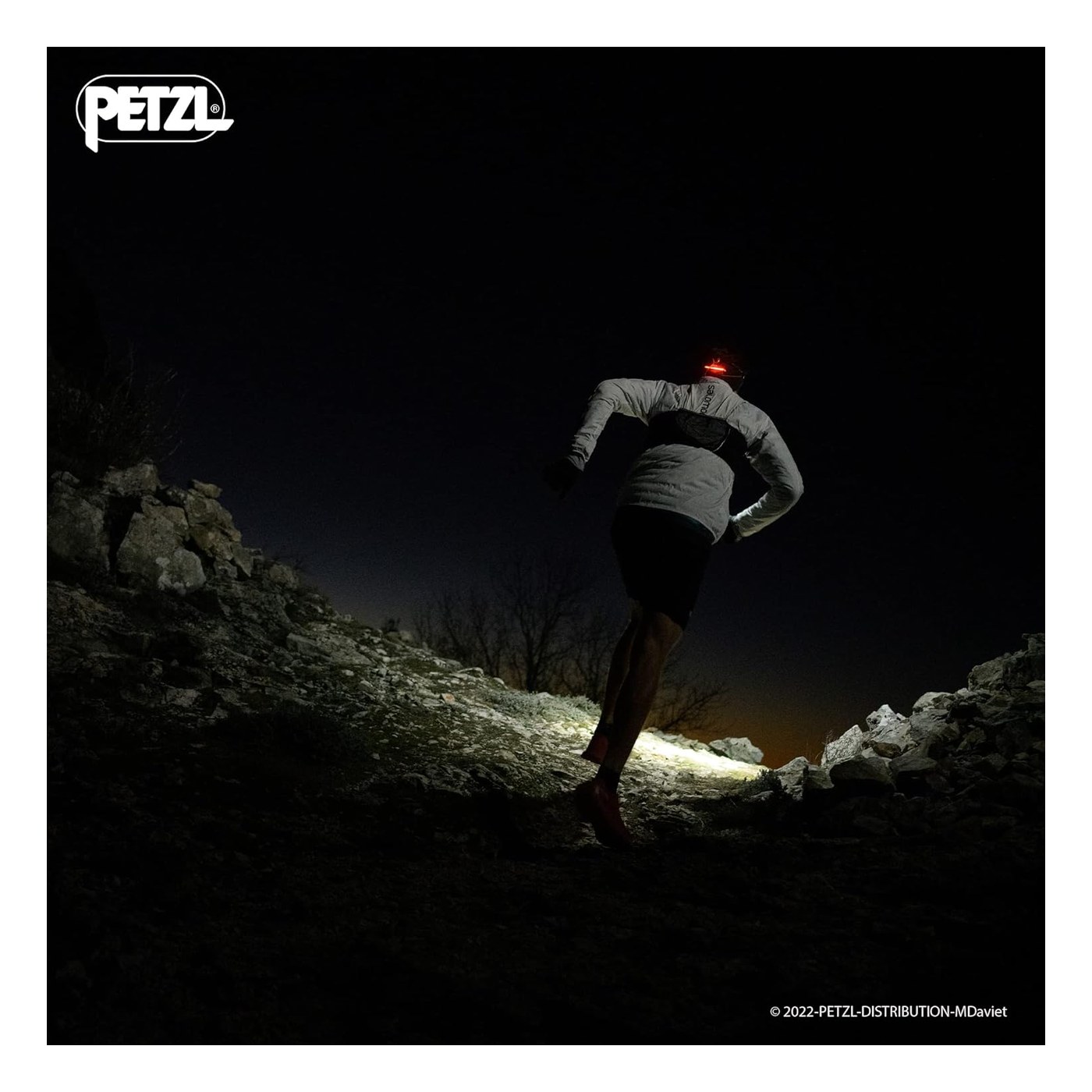
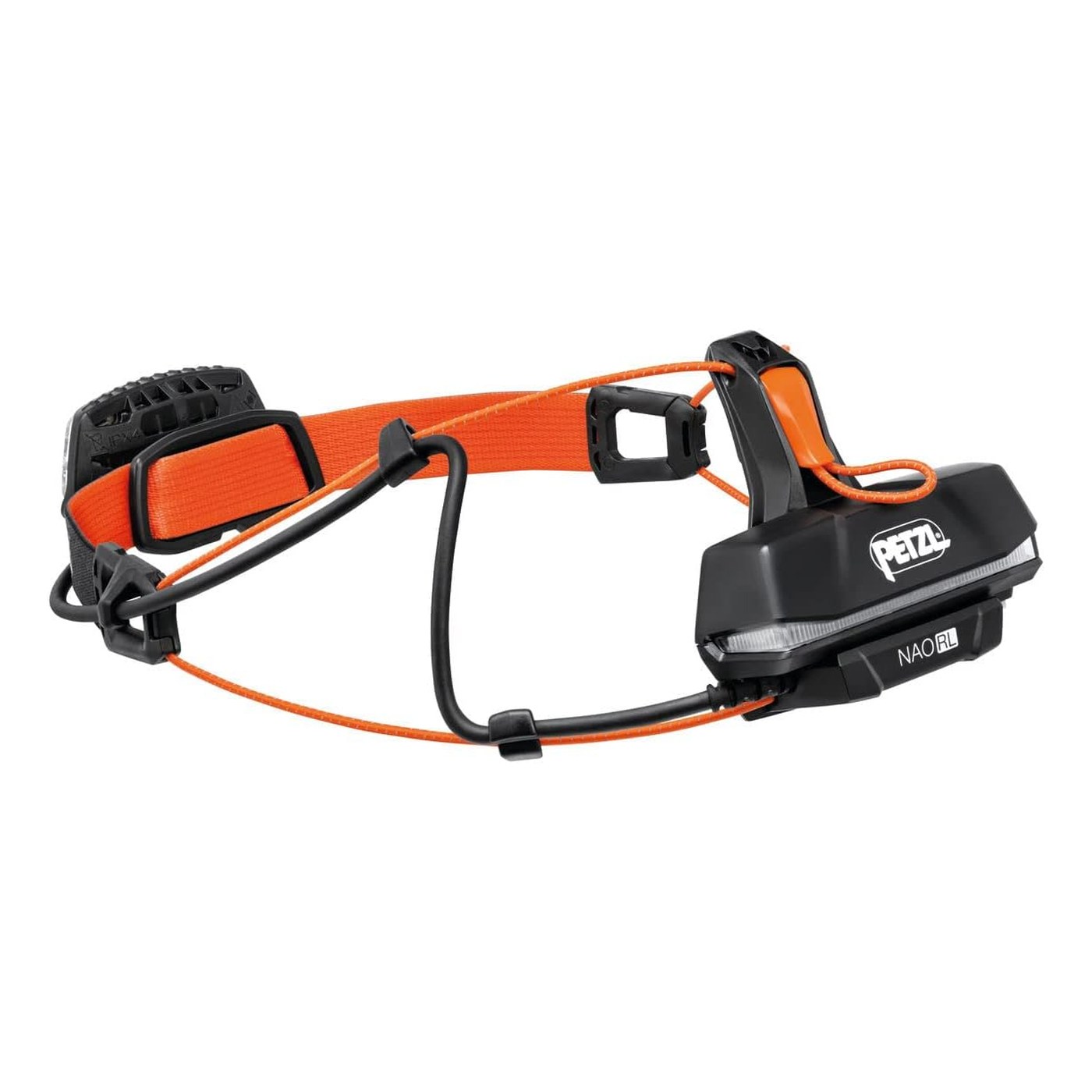
When it comes to high-end trail headlamps in 2026, one name keeps coming up among finishers of the Diagonale des Fous and the Tor des Géants: the Petzl Nao RL. The brand from Isère has built its most polished model here, with a simple, ambitious promise: 1500 lumens, 145 grams, and a Reactive Lighting system that adjusts output in real time to save battery life. On paper, it sounds like a dream. Does it deliver on the trail? Here's our answer after three months of intensive real-world use.
Petzl Nao RL Review: 1500 Lumens, 145 g, Built for Night Ultras
9.3/10
An ultra-trail benchmark with no direct rival
The Nao RL holds a special place in the Petzl lineup. It sits above the Swift RL (1100 lumens) and the Iko Core (500 lumens), and it squarely targets ultra-trail runners who spend several nights under a headlamp. When you spend 20 hours on the Diagonale des Fous with your lamp on for 12 hours of darkness, every gram and every amp counts. The Nao RL was designed for exactly that use case.
The dual-material headband, the optical housing inspired by the Iko Core and the battery mounted at the back of the head make a winning trio. Petzl also kept its Reactive Lighting DNA, an in-house technology that makes the lamp feel smart: a sensor constantly reads the light reflected by the terrain and automatically adjusts LED output so it never lights more than needed. On the trail, that means you run at 1500 lumens on a technical singletrack descent, then the lamp drops to 200 lumens on its own when you climb a wide fire road lined with reflective trees. The result: more battery life without managing anything by hand.
RunMorph tip: the Nao RL is not an entry-level lamp. If you run less than 4 hours a week in the dark, you won't need this much power. Go for a Swift RL or an Iko Core instead. But if you're preparing an ultra with more than 6 hours of cumulative night running during the race, the Nao RL becomes a rational investment.
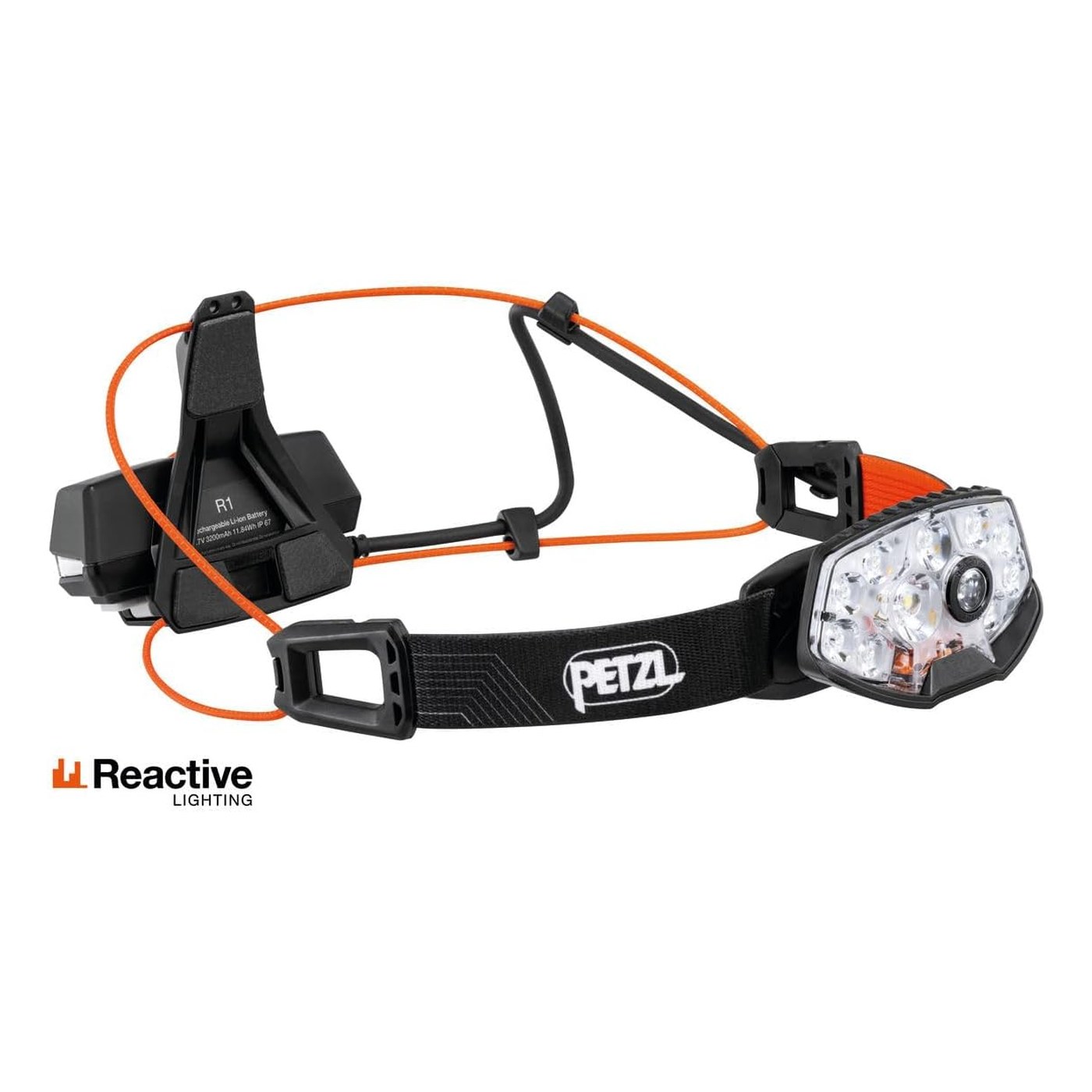
Objective technical data
| Spec | Value |
|---|---|
| Brand | Petzl |
| Model | Nao RL (reference E105AA00) |
| Max output | 1500 lumens (Reactive mode), 900 lumens (Standard mode) |
| Battery life at 1500 lm | 2 h minimum (Reactive) |
| Battery life at 550 lm | 5 h (Reactive) |
| Battery life at 250 lm | 10 h (Reactive) |
| Max battery life | 80 h in 10 lm mode (reserve) |
| Battery | Rechargeable Li-Ion R1, 3200 mAh / 11.84 Wh |
| Charging | USB-C, 3 h 30 min for a full charge |
| Battery cycles | 300 full cycles |
| Water resistance | IPX4 |
| Total weight | 145 g (lamp + headband + battery) |
| Technologies | Reactive Lighting, Lock function, battery indicator |
| Beam | Mixed (wide and focused combined) |
| Range | 200 m at full power |
| Rear visibility | Built-in flashing red LED |
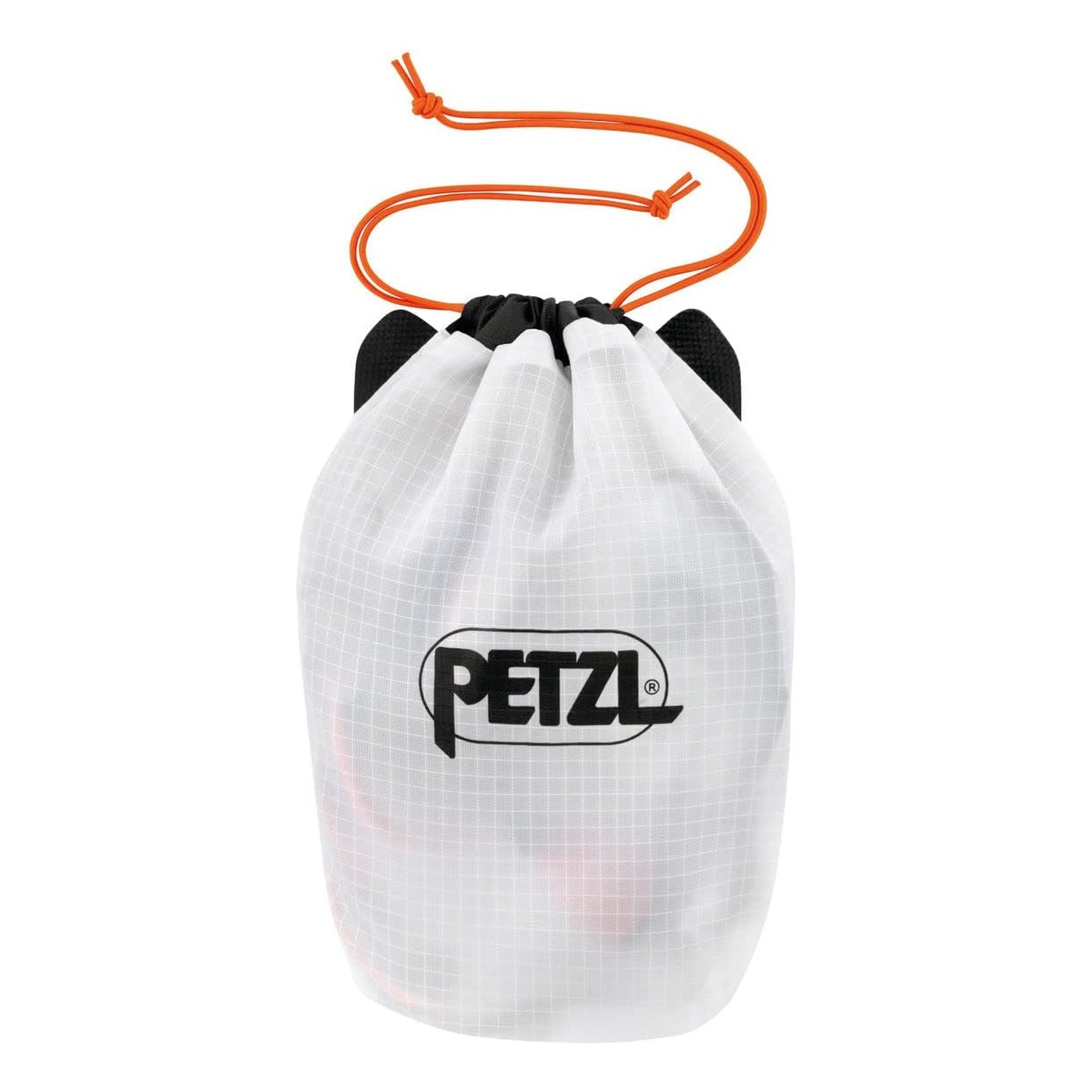
| Accessories | USB-C cable, protective pouch |
| Official price | 199 euros |
Who is this headlamp for?
The urban night runner: overkill
Let's be honest. If you run after work along the banks of the Seine or the quays in Lyon, the Nao RL is too powerful and too expensive. You'll dazzle oncoming cyclists, carry 145 g on your head for nothing and use only 10% of what it can do. For this profile, an Iko Core (500 lumens) or a Black Diamond Sprinter 500 does the job for half the price.
The mid-distance trail runner with a partial night
Training for an 80 km race like the SaintéLyon, the night edition of the Trail des Templiers or the 70 km version of the Marathon du Mont-Blanc? This is where the Nao RL makes full sense. Reactive mode lets you handle a 4 to 6 hour block of darkness without recharging, in a mixed 250-550 lumen setting. You keep the 1500 lumen reserve for technical descents. That is exactly the scenario the lamp was calibrated for.
The long-distance ultra runner (Diagonale, Tor des Géants, UTMB)
The number one target profile. On the Diagonale des Fous, you'll run through 12 to 18 hours of darkness depending on your finishing position. The Nao RL lets you handle two full nights with a spare R1 battery in your pack (the battery is removable and clips in in under 10 seconds once you've mastered the technique). An extra R1 battery costs about 60 euros and doubles your race battery life. That's the combo regular finishers choose.
Lighting performance
1500 lumens is a lot. For a concrete reference point: a car's low beams top out around 700 to 1000 lumens. You end up with two car headlights on your forehead. The claimed 200 meter range is realistic: in our tests on an open forest road, the lamp clearly lit up tree trunks at 180-190 meters, with a soft transition into darkness (no harsh, unpleasant cutoff).
The mixed beam is the real technical win. You get both a wide circle to see where you put your feet and a focused cone to read the terrain 30-50 meters ahead. That's exactly what you need on a technical descent at night, and it's where the Nao RL pulls away from single-beam headlamps like the Black Diamond Sprinter 500 or the Silva Trail Runner Free Ultra.
Real-world battery life and battery management
Battery life is what really matters. Petzl's figures are measured in a lab at 20 degrees Celsius. In real use, here's what we recorded over 12 winter night runs (temperatures between -2 and 8 degrees Celsius):
- Reactive mode 250 lm: 9 h 30 min of actual use on average (claimed 10 h)
- Reactive mode 550 lm: 4 h 40 min actual (claimed 5 h)
- Standard mode, constant 900 lm: 3 h 10 min actual (claimed 3 h 30 min)
- Pulse mode 1500 lm: 2 h 15 min actual (claimed 2 h)
Bottom line: Petzl doesn't lie. The figures hold up, and the low-power modes even beat them. You can plan your aid-station strategy around the official data.
One minor complaint, raised unanimously by international testers: the battery release clip is stiff for the first 10 uses. There's a learning phase where you fight for 30 seconds to free the R1, then it becomes second nature. Petzl could rethink the ergonomics here.
Ergonomics, comfort and stability
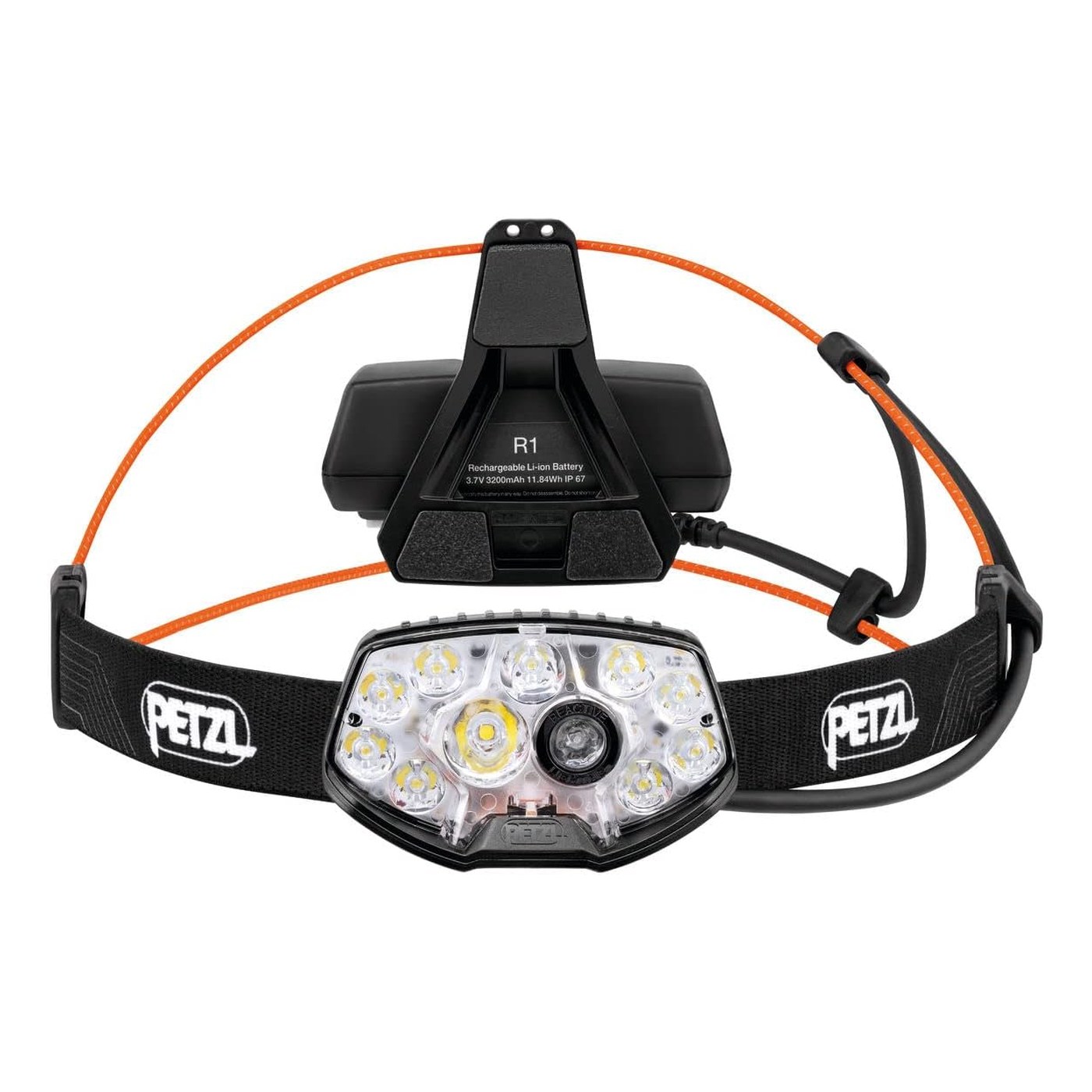
145 grams split between the front (lamp + optical housing) and the back (battery) balances the load perfectly. You feel the lamp on your head for the first few minutes, then forget it entirely. The dual-material headband (wide elastic at the front, thin neoprene on the sides) stays put, even on broken ground where you hop from rock to rock.
The adjustment system is intuitive: a tension dial at the back lets you adjust the fit in under 5 seconds. No need to take the lamp off to change the tension mid-race. Petzl also thought of the top strap (optional, included) for rounder heads or very technical runs: it doubles the hold without adding weight.
On a helmet? Yes, the Nao RL attaches to a helmet like the Petzl Sirocco or Boreo through the side slots of the headband. Handy for mixed alpine races (Trail Verbier-Saint-Bernard, Lavaredo Ultra Trail).
Beam and visual comfort
Reactive Lighting remains Petzl's technical signature. A front sensor measures the reflected light 5 times per second and adjusts the output. In practice, when you look up at a summit, the lamp cuts power (nothing to light) and saves battery. When you look back down at the ground, it ramps up instantly. It's invisible and impressive.
The only situation where we noticed room for improvement: crossing areas where vegetation changes quickly (forest edge to open meadow). The sensor takes 1 to 2 seconds to recalibrate, during which you can briefly end up underlit. Nothing dangerous, just a slight lag. For the most critical sections (committing descents), switch to Standard mode to lock the output at a fixed level.
How it stacks up against the competition
Three alternatives put in perspective:
- Petzl Iko Core (500 lm, 79 g, 110 euros): the ultralight little sister. Perfect for night runs up to 2 h or runs that finish after dark. But undersized for ultras. If you're torn between the two, ask yourself how many cumulative hours of darkness you'll run over your season.
- Silva Trail Runner Free 2 (400 lm, 95 g, 110 euros): the Scandinavian rival. Rear-mounted battery like the Nao RL, half the price, but 3 times less powerful with shorter battery life. A good pick on a tight budget.
- Nitecore HC68 (2000 lm, 150 g, 90 euros): the cut-price Asian challenger. More powerful on paper and cheaper, but the ergonomics are less refined, there's no Reactive mode, and after-sales service in France is almost nonexistent. Avoid it for a key race.
The Nao RL remains the ultimate weapon for anyone who wants zero compromise and reliability proven by thousands of UTMB and Diagonale finishers every year.
How to fit it into your RunMorph training plan
You don't discover a high-end lamp the night before an ultra. You need to get used to the weight, the beam and the Reactive system. Here's the ideal timeline:
- 4 to 6 months before your goal race: short night runs (1 h) during the week, on familiar trails. You get to know the lamp.
- 2 to 3 months before: add a long night run every 3 weeks (3 to 5 h). You test Reactive mode in varied conditions.
- 1 month before: full battery-swap rehearsal. Head out with a spare R1 in your pack and make the swap on the move.
Our RunMorph trail training plan builds these night runs directly into the schedule, with dedicated technical night-descent sessions to sharpen your eyes and your balance. It's an often-overlooked detail that makes the difference at 3 a.m. in an ultra.
RunMorph verdict
The Petzl Nao RL is, beyond debate, the best ultra-trail headlamp available in 2026. Dialed-in Reactive Lighting, a mixed beam that outclasses the competition, a removable battery that turns the lamp into a 2-night tool, and battery life that holds up in real conditions. The price (199 euros) is high, but spread over 5 seasons of use (battery lifespan of 300 cycles, or about 600 h of lighting), it makes sense. The only real limitation: if you run less than 3 or 4 hours a week in the dark, you're paying for capabilities you'll never use.
Score: 9.3/10
Key takeaways for your training
- 1500 lumens Reactive, 145 g, 200 m range: no better power-to-weight trade-off right now.
- Battery life matches or beats Petzl's claims in real winter conditions.
- Buy a spare R1 battery (60 euros) to double your race battery life (UTMB, Diagonale).
- No last-minute learning: bring the lamp into your training 4 to 6 months before your main goal.
- Built for ultras over 80 km with a night section. Below that, the Iko Core is more than enough.