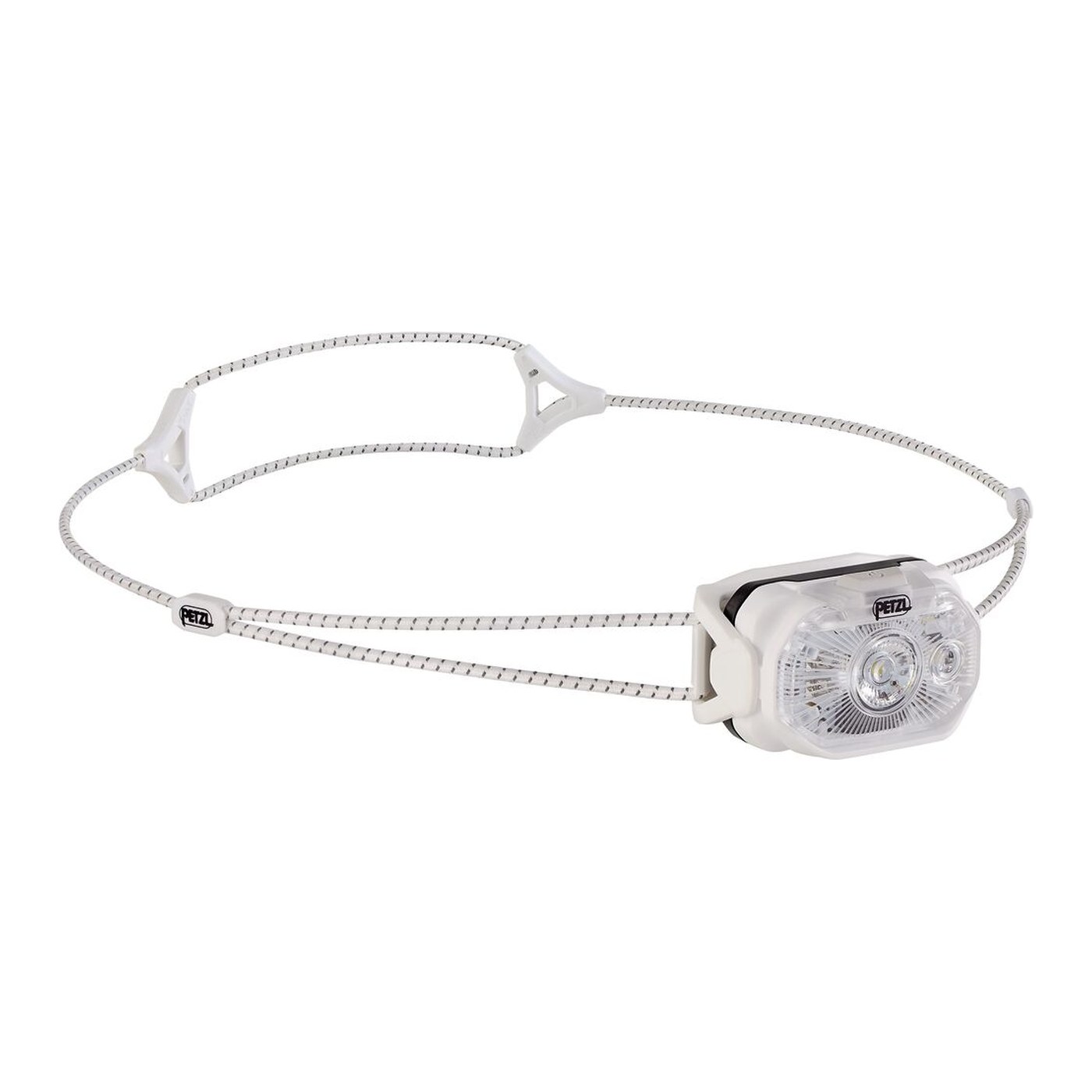
Petzl is replacing the Bindi with a headlamp that is barely heavier and almost twice as powerful. The Swift LT weighs 43 g and claims 380 lumens, against 35 g and 200 lumens for its predecessor. On paper, it is the ideal backup headlamp. The question is whether it can handle a real night run.
© Petzl, official photo used for editorial purposes
Petzl Swift LT: the Bindi goes from 200 to 380 lumens
For years, the Bindi was Petzl's pocket headlamp: 35 g, 200 lumens, a cord headband. To replace it, the brand kept the concept and changed almost everything else. The Swift LT adds 8 g and gains 180 lumens. It also borrows the Swift name, that of Petzl's high-end trail headlamp.
Make no mistake: the link with the Swift RL stops at the name and the thin headband. The RL weighs 100 g, goes beyond 1000 lumens and adjusts its output on its own. The LT has no sensor and no automatic mode. One button, three white levels, red light. That is it.
The real story is elsewhere. At 43 g, the Swift LT enters the ultralight headlamp segment, up against the Black Diamond Deploy 325 and the Silva Smini Fly. Its pitch: more light than the Bindi without getting bigger.
RunMorph's advice: if you mostly run in town or on wide paths for 30 minutes to 1h30, the Swift LT is enough. If you string together longer trail runs at night, keep it as a backup and use a more powerful main lamp, such as the Nitecore UT27 or the Petzl Swift RL.
© Petzl, official photo used for editorial purposes
380 lumens and 70 metres: what does it really light up?
Petzl rates its figures to the ANSI standard, so they compare across brands. At 380 lumens, the Swift LT reaches 70 m. That is 2.2 times less than the roughly 150 m of 900-lumen trail headlamps such as the Evadict Ontrail 900.
The beam is wide only. No spot to look far ahead. On a smooth trail, it is comfortable: you see your feet and the edges well. On a fast descent, you lack depth to anticipate the rocks.
According to testers, the 100-lumen mode gets the most use. A mountaineer used it for six weeks. He spent most of his night hikes at 7 lumens, then 100 lumens on technical ground, and 380 lumens only for a few seconds to spot a passage. For a runner, 100 lumens for 6 hours is the cruising setting on lit roads or wide paths.
A trail club runner wore it for his evening VO2max sessions, crossing unlit woods. He found that partners with more powerful headlamps lit the ground far better. Put simply, in a group the Swift LT cannot compete with an 800-lumen lamp.
Battery life: 2 hours on max, and a drop within the first hour
Petzl claims 2 hours at 380 lumens, 6 hours at 100 lumens and 60 hours at 7 lumens. On the middle setting, the brand also provides 2 hours of reserve when the battery runs low.
In the field, the picture is more mixed. The VO2max runner saw the output drop after about an hour on high. It is a flaw shared by most small headlamps: an 880 mAh battery cannot hold 380 lumens for long without heating up or draining. On the other hand, a hiker took it on ten-day treks without ever running out of battery, sticking mostly to the low levels. Another tester set off with the indicator already red and still managed three hours of walking on low, with a few bursts on max.
Who to believe? It mostly depends on the mode you use. Stay at 100 lumens and the Swift LT easily covers a 2-hour run. Leave it at 380 lumens and count on one hour of strong light, no more.
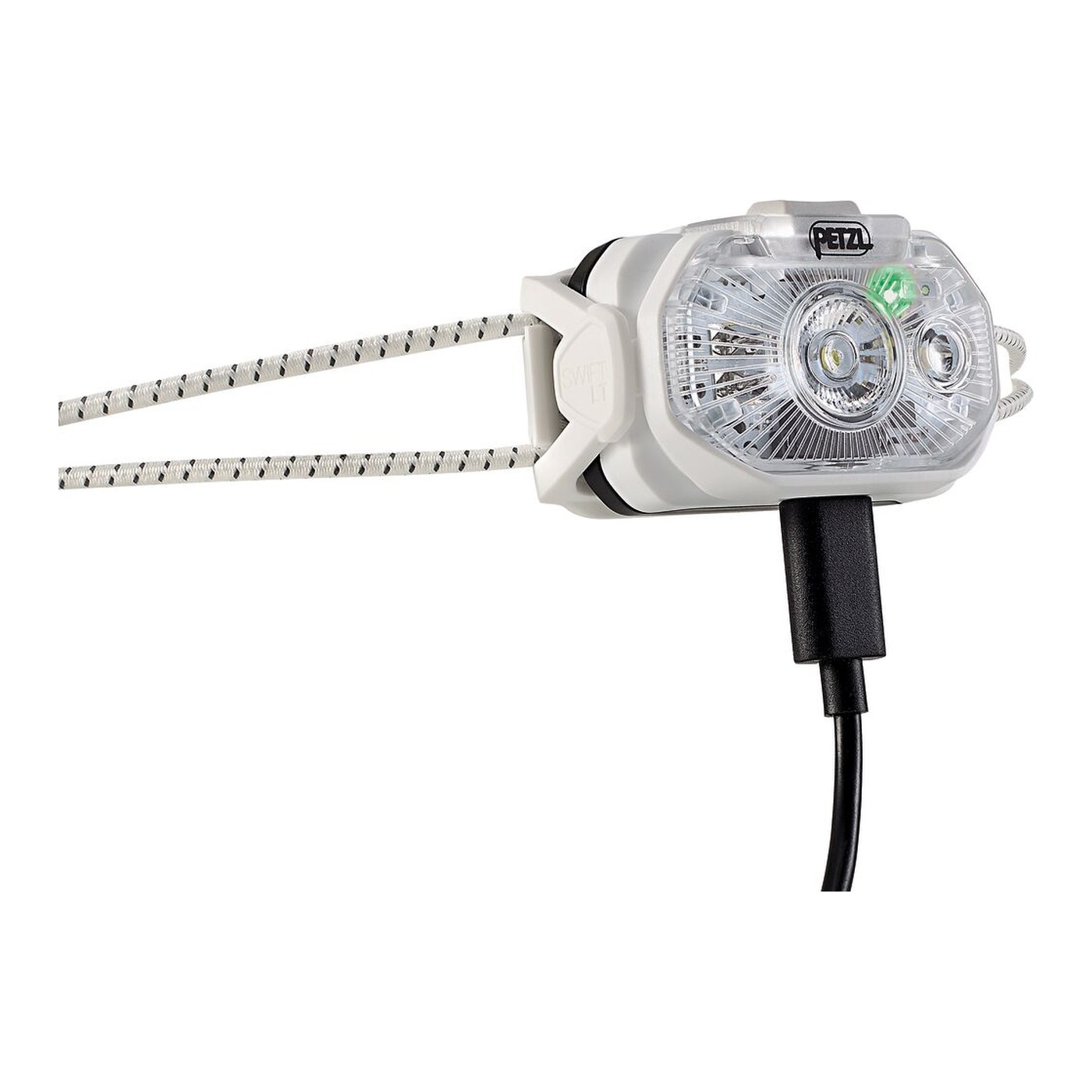
The battery indicator lights green or red when you switch off. Simple and useful before heading out.
© Petzl, official photo used for editorial purposes
Comfort and hold: the cord headband divides opinion
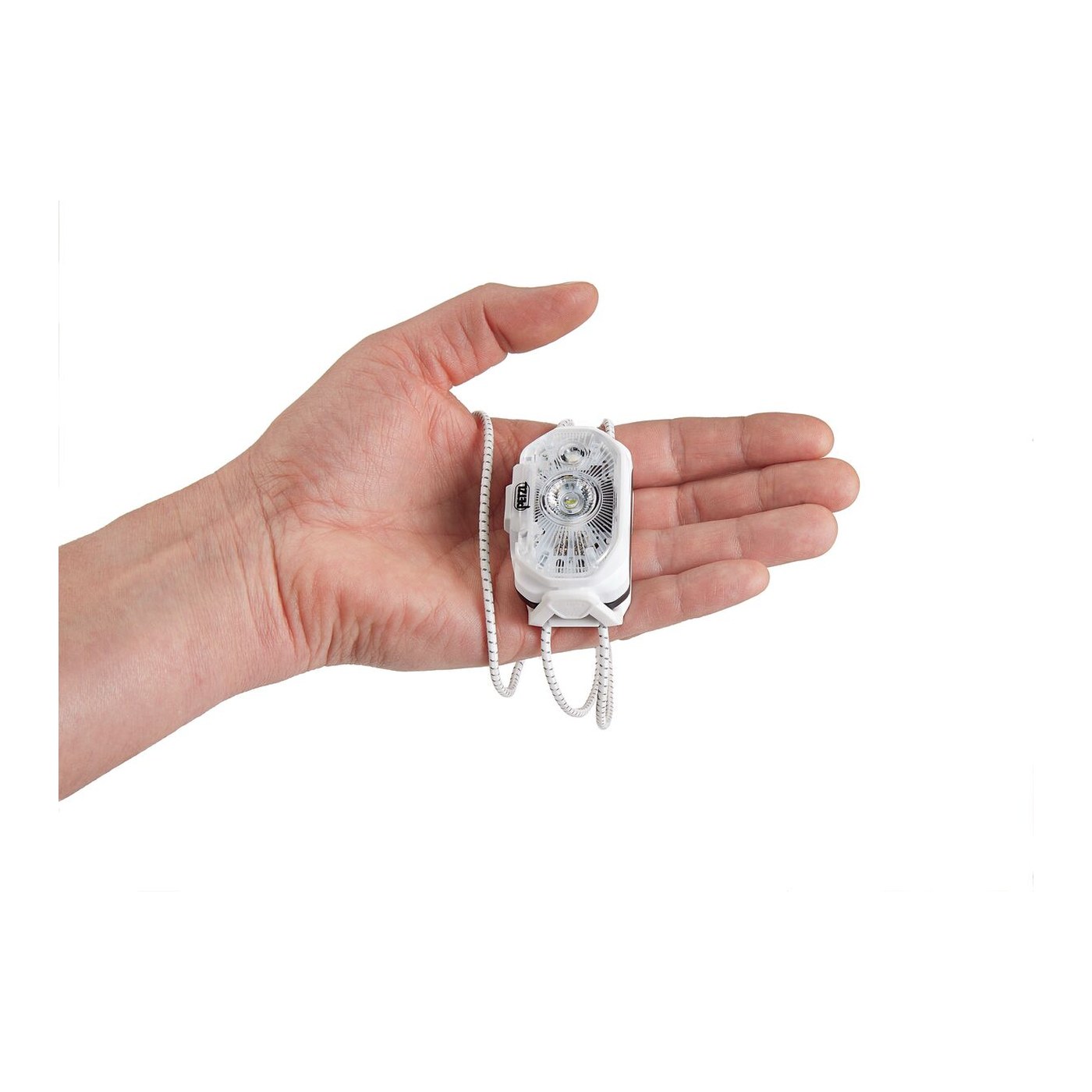
At 43 g, the Swift LT disappears on your head. Every tester says so, and it is its main selling point. It fits in the palm of your hand and slips into a shorts pocket.
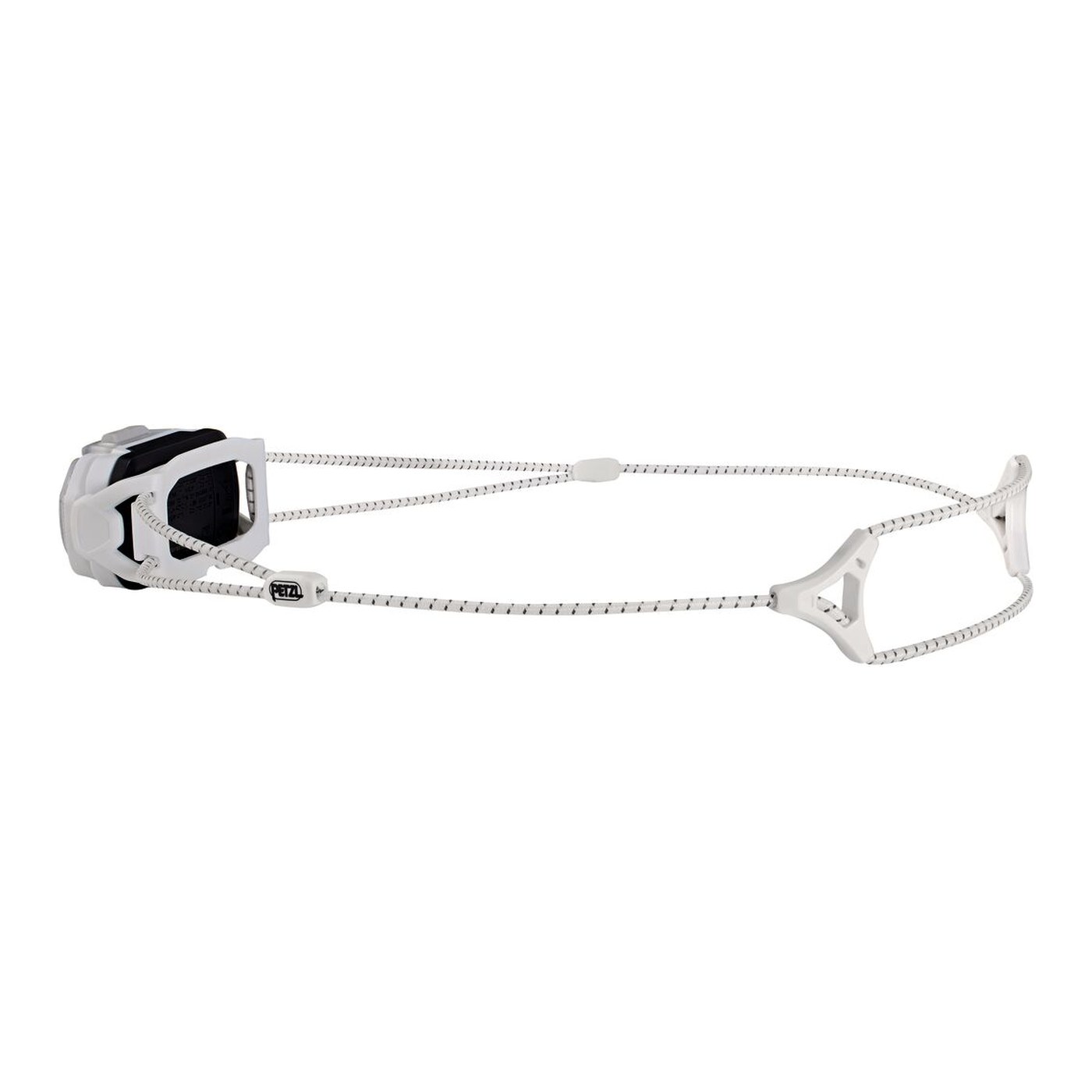
The cord headband is more debated. One tester wore it on bare head, on a helmet, over a beanie and on a cap: it never moved, even when running. Two others report discomfort after several hours on a bare forehead. There is no plate or foam behind the housing, so pressure builds if you tighten it too much. The fix is simple: wear it over a cap or beanie, or loosen it a notch.
An unexpected plus noted by one runner: the thin cord holds less sweat and odour than a wide fabric band. A quick rinse cleans it.
In use, one large button does everything. A long press switches to red, a double press from red triggers the flashing mode. Testers operate it easily with gloves. A lock prevents it from turning on by accident at the bottom of your bag.
© Petzl, official photo used for editorial purposes
Field test: what four real reviews say
RunMorph cross-checked four user reports published since summer 2026. Three come from testers in Outzer's private test programme, who received and kept the lamp. They include a mountaineer (six weeks in the mountains), a 53-year-old trail runner (night VO2max sessions with his club) and a hiker (ten-day treks). The fourth is a French review published at the end of September 2026 on an outdoor gear website. No lab measurement of beam distance or battery life was available at the time of writing.
There is clear agreement on three points: lightness, the simplicity of the single button and USB-C charging. Two testers give it 10 out of 10. The most critical score comes from the only runner in the panel, the one who used it in real running sessions. That is also the most useful feedback for you.
His conclusion matches RunMorph's: the Swift LT is perfect for trail runs under 3 hours, mountain approaches and any use where every gram counts. It is not meant to replace an 800 to 1200-lumen headlamp for an ultra.
Major flaw: output that cannot keep up on technical ground
380 lumens and 70 m of reach, with no spot, is the Swift LT's limit. On a technical singletrack descent at 5'00/km, you need to see 15 to 20 m ahead to place your feet. The wide beam manages it, but with no margin, and only on max, so for about an hour.
In practice, for a trail runner preparing a night race like the SaintéLyon or a 4 a.m. start, it is not a main lamp. It is a very good backup lamp, which is exactly what many races require in their mandatory kit.
Petzl Swift LT vs Bindi and Black Diamond Deploy 325: the comparison
| Model | Weight | Max output | Runtime on max | Red | Indicative price |
|---|
| Petzl Swift LT | 43 g | 380 lm | 2 h | Yes (steady and flashing) | €54.90 |
| Petzl Bindi | 35 g | 200 lm | Varies by mode | Yes | End of line |
| Black Diamond Deploy 325 | 48 g claimed, 38 to 40 g weighed | 325 lm | 2h30 | No | €60 to €65 |
The simple rule: if you already own a working Bindi, keep it for town and switch to the Swift LT only if you run on trails. Between the Swift LT and the Deploy 325, the Petzl offers 55 more lumens, a red mode and a lower price. The Black Diamond keeps the edge with half an hour more runtime on max.
Our take: who is it for?
The winter city runner
Running from 6 to 7 p.m. between November and February? At 100 lumens, the Swift LT gives you 6 hours of light, enough for a week of easy runs without recharging.
The trail runner who wants a backup headlamp
At 43 g, it ticks the mandatory kit box without weighing you down. It slips into the front pocket of your vest.
The runner heading out at dawn in the mountains
For an hour of climbing before sunrise, it is more than enough, and it packs away as soon as it gets light.
Running at night this winter: the Swift LT is a good companion for your evening easy runs. To structure your season, check out the RunMorph 10K training plan, or the trail plan if you are preparing a trail race in spring.
How to fit it into your RunMorph training plan
In a trail plan, weekday runs often happen by headlamp between November and February. Use the Swift LT for easy runs and intervals on wide paths. Keep a more powerful lamp for the technical weekend long run if it starts before dawn.
RunMorph Coach verdict
The Swift LT does what the Bindi already did, only better: a headlamp you always take because it weighs nothing. With 380 lumens, it finally becomes usable on easy trails.
The 7,8/10 score mainly weighs its weight, simplicity and price, its real reasons to exist. Brightness and reach pull the score down. If you run less than 2 hours at night on smooth ground, buy it. If you run longer or on technical terrain, take the Nitecore UT27 as your main lamp and keep the Swift LT as a backup.