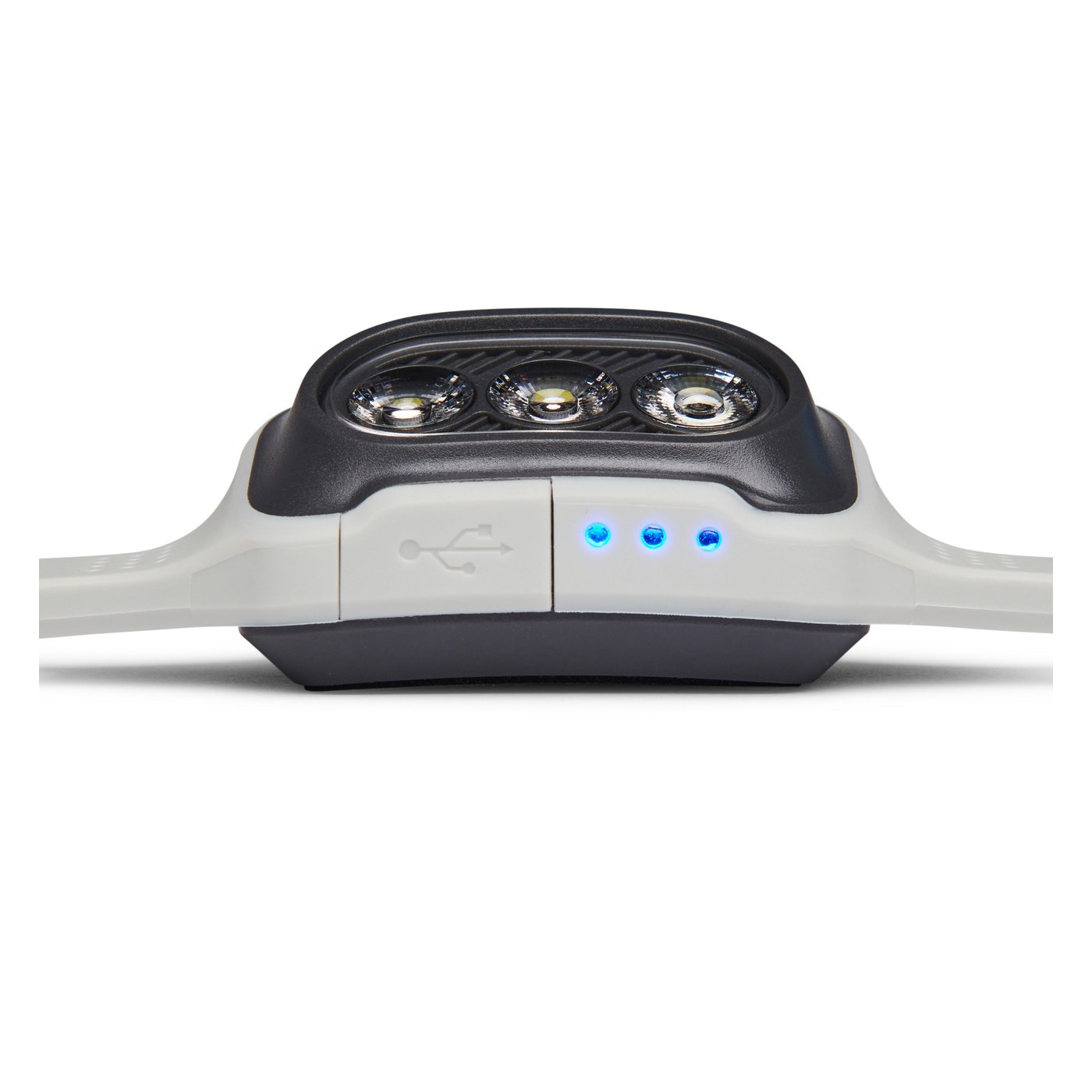
Black Diamond Deploy 325: 38 Grams Measured for a Minimalist Urban Running Headlamp
7/10
Black Diamond built its trail headlamp reputation on raw power: 1100 lumens for the Distance LT 1100, already reviewed by RunMorph, a sturdy front-mounted housing, built for ultra-distance battery life. The Deploy 325 takes the opposite approach entirely. 325 lumens, a housing barely bigger than a two-euro coin, and one single goal: making you forget you're wearing it.
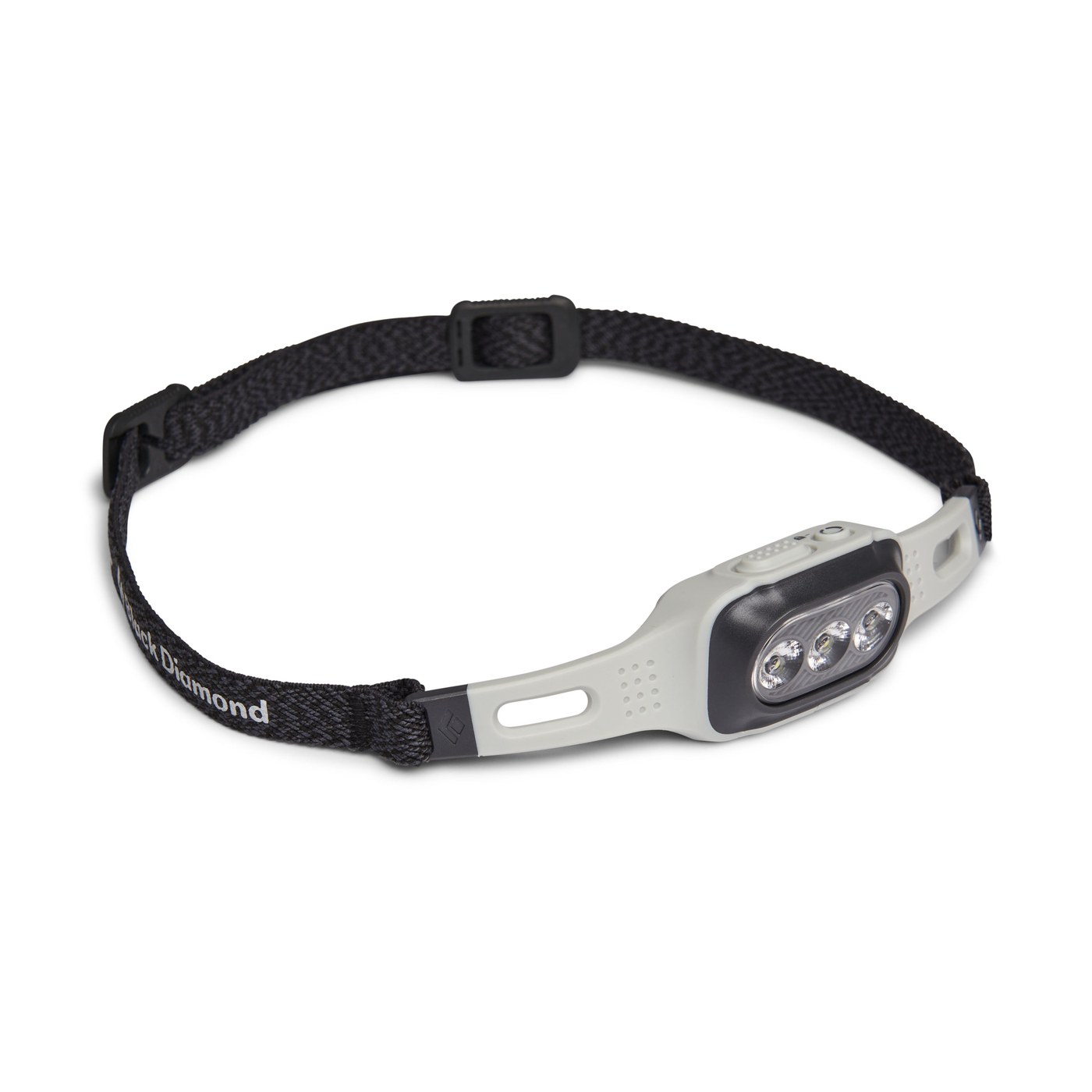
The Deploy 325 is a minimalist headlamp built for city running and short everyday outings, not for technical night trail. Its featherweight build (48 g claimed, 38 to 40 g measured across two separate weigh-ins) makes it one of the lightest units RunMorph has ever reviewed, well below the 100 to 200 g trail references in the catalogue. At 325 lumens peak output, it's aimed at downtown runs, not ultra-distance nights.
7.0
/ 10 · RunMorph overall score
Power
6 / 10
Battery life
6.5 / 10
Beam quality
7 / 10
Comfort/weight
9.5 / 10
Value for money
6 / 10
Who it's forCity and suburban runners who want a discreet headlamp to leave permanently in their bag, for 30-minute to 1h30 evening runs.
Who it's not forTrail runners stacking several hours of technical night terrain: the 52-metre beam distance and the 2h30 peak-power runtime show their limits fast.
Black Diamond expands into everyday ultralight territory
Two Black Diamond headlamps already sit in RunMorph's catalogue. The Sprinter 500 targets urban night running, with its built-in red flasher. The Distance LT 1100, on the other hand, is built for night trail, with its front-mounted housing and PowerTap mode. The Deploy 325 fills a third gap the brand had left open: everyday ultralight, where weight matters more than raw lumens.
The minimalist headlamp market already exists, led by the Petzl Bindi since 2018. Black Diamond enters with a different pitch: more lumens (325 versus 200) in a comparable size, at the cost of a shorter peak-power runtime. The name "Deploy" refers to the flat housing that slips easily into a shorts pocket, not to any folding or lantern function, despite what the name might suggest.
Deploy 325 spec sheet
Brand
Black Diamond
Model
Deploy 325 (Deploy Run Light)
Max output
325 lumens (2h30)
Medium output
180 lumens (4.3 h)
Low output
6 lumens (30 h)
Beam distance
52 m (max) / 40 m (medium) / 7 m (low)
Claimed weight
48 g, battery included
Measured weight
38 to 40 g across two separate weigh-ins
Battery
Built-in Li-ion 680 mAh, non-removable
Charging
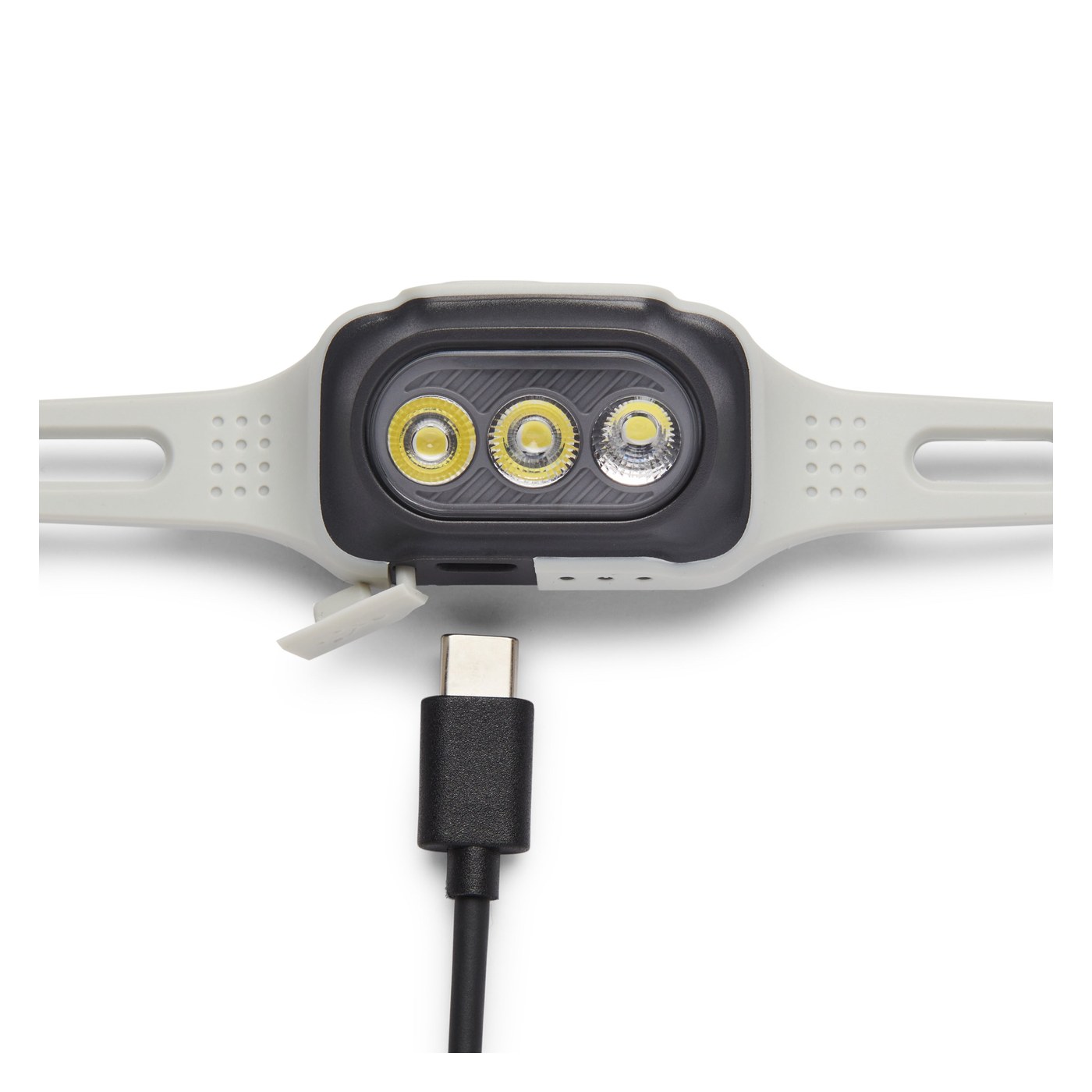
USB-C, fast charge
Water resistance
IPX4
Red light
No
Colours
Alloy (grey), Creek Blue
Street price
60 to 65 euros depending on retailer
Worth noting: the brand's own page doesn't show a stable euro price (69.95 US dollars converted, roughly 65 euros). French retailers charge somewhat variable rates around 60 euros. And there's another detail that bucks the trend: the gap between the claimed weight (48 g) and the measured weight (38 to 40 g). Most headlamps weigh more once they hit the scale. This one does the opposite, likely because the marketing figure includes packaging or a different strap than the one testers actually weighed.
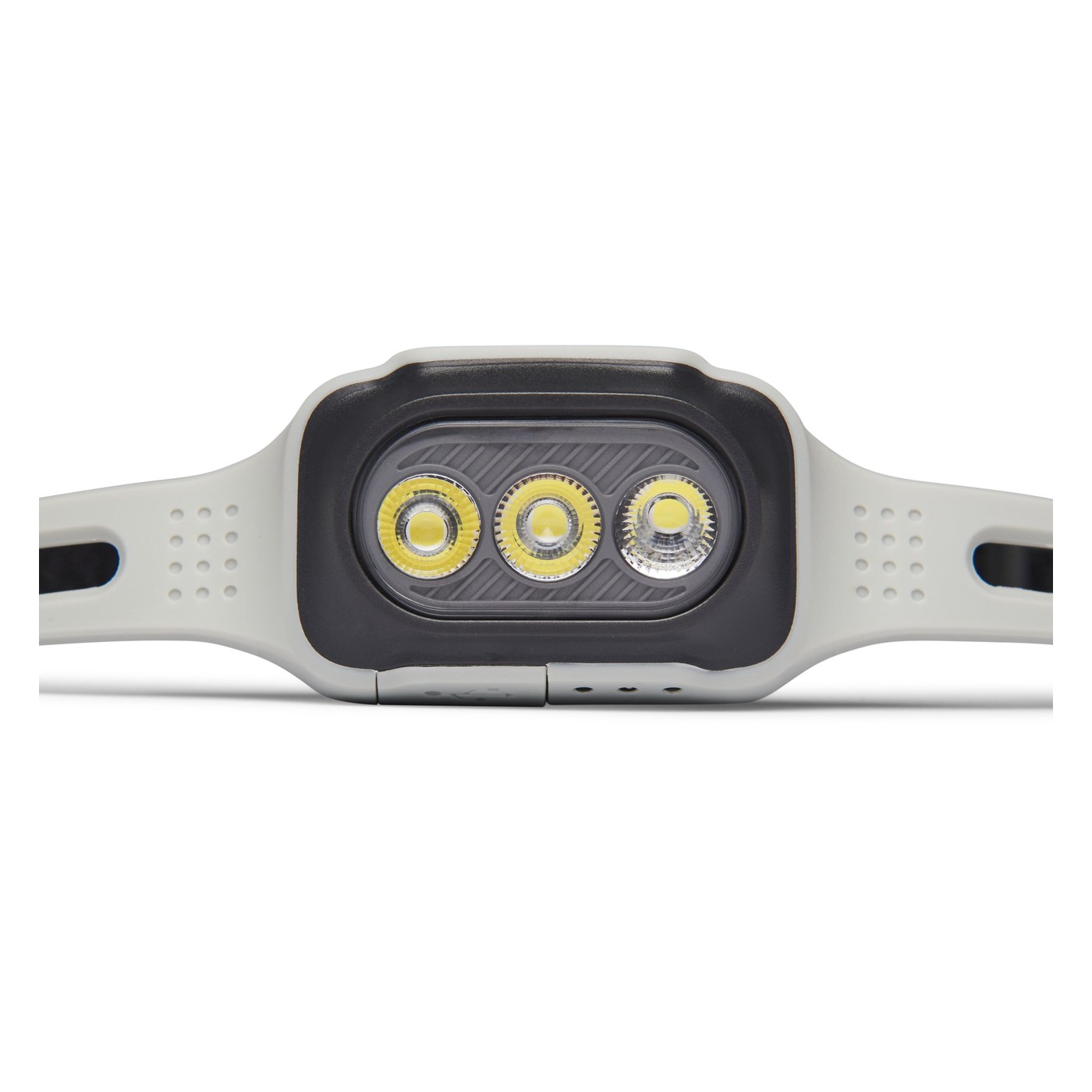
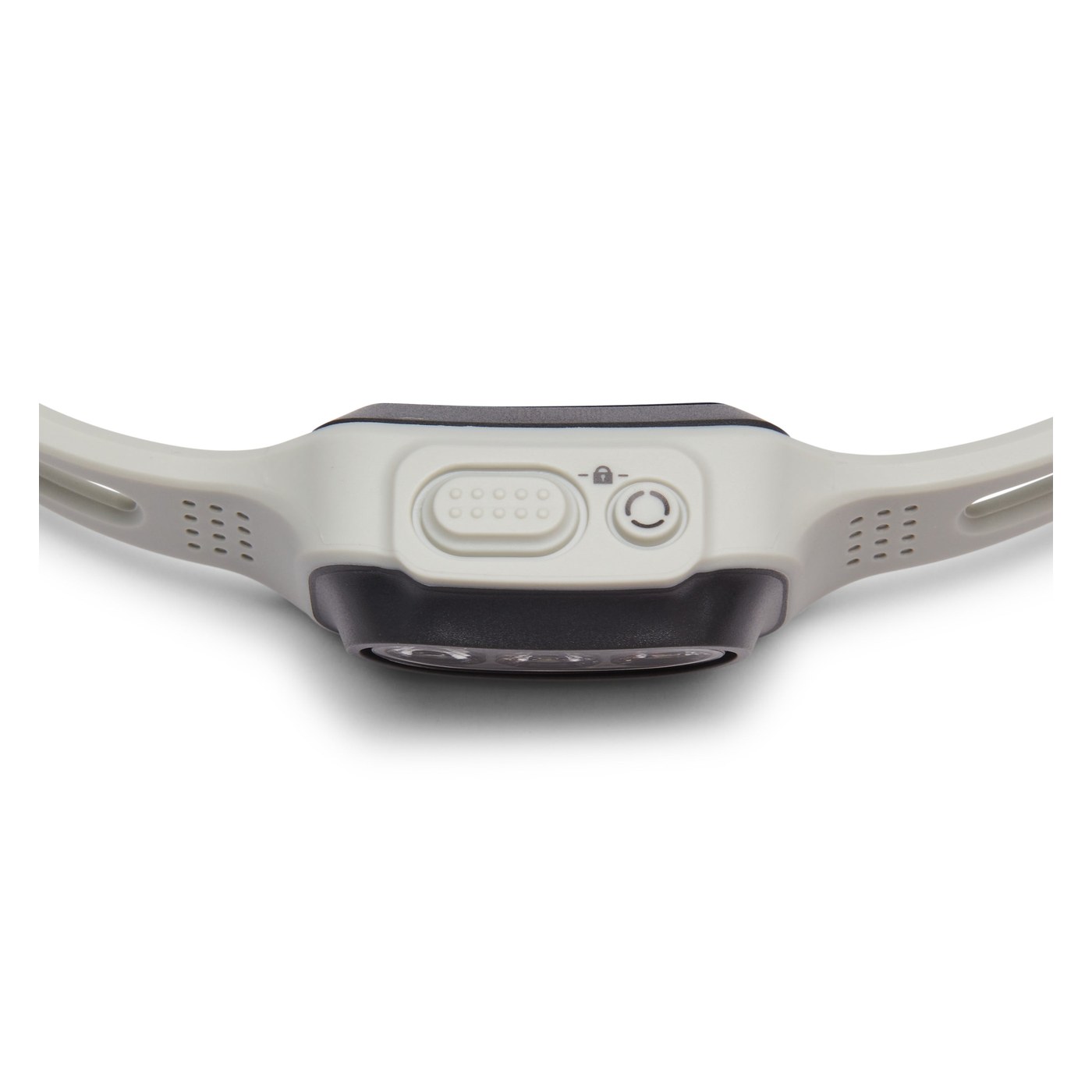
Three LEDs sit inside a soft rubber housing, with no visible metal heatsink. Switching power mode automatically adjusts the beam angle: low mode widens the spread for close-range light, high mode narrows it to throw further. One real-world review confirms this automatic handling removes the need to fumble with a manual setting mid-stride, a genuine plus on a lamp with no dial.
The trade-off: no rear red light, unlike the Sprinter 500 from the same maker, and a built-in Li-ion battery that can't be swapped. The day it stops holding a charge, the whole unit needs replacing, not just a cell. On a 60-euro product meant for daily use, and therefore plenty of charge cycles, that's a point worth knowing before buying.
RunMorph's advice: the Deploy 325 isn't a technical descent headlamp. For rough trail or several hours of night running back to back, the same brand's Distance LT 1100 or the Nitecore UT27 remain safer picks.
Real-world testing: what independent reviews show
No French-language review dedicated to the Deploy 325 has been found so far, a real blind spot given the product's still-limited distribution network in France. Two reviews from the UK and the US, used here purely to enrich the analysis and never cited by name to the reader, nonetheless agree on the essentials.
The first, based on six months of real-world use (running, cycling, camping), describes a lamp that doesn't shift on the head. Worn directly under a cap, it never needed to come off at sunrise. No pressure points reported, no bounce at running pace. This tester calls it a must-keep item permanently stashed in a trail pack. He does note it's not his first pick for a technical ultra night, a role he reserves for a more powerful lamp from the same brand.
The second review, from the UK, lands on a more measured verdict: excellent in its own lane, meaning the local evening run, but explicitly not recommended for hiking or long-distance trekking. Both sources independently back up the battery life Black Diamond claims (2h30 on max, 4.3 h on medium). Neither flags any notable gap between the manufacturer's figure and real-world use.
One of the two reviews also confirms a useful detail: the 180-lumen medium mode turns out to be the one used most in practice, with max mode mostly serving to get through a poorly lit stretch before dropping back down to save battery.
Black Diamond Deploy 325 vs Petzl Bindi: the comparison
Both lamps chase the same use case: light city running, a headlamp you forget is in your bag. The Petzl Bindi stays lighter on paper and cheaper to buy, but caps out at 200 lumens against 325 for the Deploy 325. On battery life, the gap narrows: the Bindi holds around 1h30 at full power according to one real-world measurement, against 2h30 claimed for the Deploy 325.
Criterion
Black Diamond Deploy 325
Petzl Bindi
Max output
325 lm
200 lm
Claimed weight
48 g
35 g
Max runtime
2h30
~1h30 (measured)
Battery
Built-in Li-ion, non-removable
Built-in Li-ion, non-removable
Water resistance
IPX4
IPX4
Street price
60 to 65 euros
40 to 50 euros
RunMorph's verdict on this match-up: the Bindi stays the reference pick when price and weight outrank everything else. The Deploy 325 earns its keep when those extra 125 lumens make the difference, say on a poorly lit pavement or a park stretch with no streetlights.
Pros and cons
Pros
Featherweight build confirmed by two separate real-world weigh-ins (38 to 40 g)
Beam angle adjusts automatically with power mode
Stays put under a cap, no bounce reported at running pace
Fast USB-C charging with a three-LED charge indicator
30 hours of runtime available in eco mode for emergencies
Cons
325 lumens peak, well behind the trail references in the catalogue
52-metre max beam distance, limited for technical terrain
Built-in battery can't be replaced, worth watching on heavy daily use
No rear red light for city visibility
IPX4 water resistance only, not built for prolonged heavy rain
Fitting the Deploy 325 into your RunMorph training plan
Its natural habitat: evening runs in town or on the outskirts, as the days get shorter and the session stays under 1h30. That's typically the profile of a runner building an aerobic base rather than chasing technical ultra-trail.
At RunMorph, this profile most often fits a beginner progression: short, regular sessions, usually run in the evening, where the headlamp mostly serves to be seen and to spot an uneven kerb rather than to light up a sloped trail. The RunMorph Beginner plan is built around exactly this kind of short weekday session, with a light headlamp as the only technical gear needed. For a 10k goal that already includes evening interval sessions, the 10k plan relies on this same pattern of short, frequent runs.
The Deploy 325 keeps one precise promise and doesn't try to keep another. On its own turf, short and frequent city running, it gets nearly everything right: unbeatable weight, consistent comfort, a beam that adapts without any input from the runner. Off that turf, the 2h30 runtime and the 52-metre beam distance show their limits fast.
Value for money is the most debatable point. At 60-65 euros, it costs more per lumen than an all-rounder like the Evadict Ontrail 900, which delivers nearly three times the power at the same price. What you're paying for here is weight and finish, not raw lumens.
RunMorph score: 7.0/10. A very good pick for anyone wanting a daily-companion headlamp, and one to skip if your target is night trail or ultra-distance.
Key takeaways for your training
Record-low weight: 38 to 40 g measured against 48 g claimed, a rare gap that works in the runner's favour.
325 lumens peak: enough for a pavement or a park, not for technical night trail.
2h30 max runtime: built for short outings, not ultra-distance nights.
Non-removable battery: a point to watch on long-term durability before buying.
60 to 65 euros: a price justified by comfort and weight, not by raw power.