Among heart rate sensors, the chest strap is still the accuracy benchmark, but it has a flaw plenty of runners know well: it slips, it chafes, and sometimes it just stays forgotten at the bottom of your bag. Polar has built an entire lineup around this trade-off between accuracy and comfort, and the Verity Sense is now its most polished piece.
© Polar, official photo used for editorial purposes
Polar Verity Sense: the armband that wants you to forget the chest strap
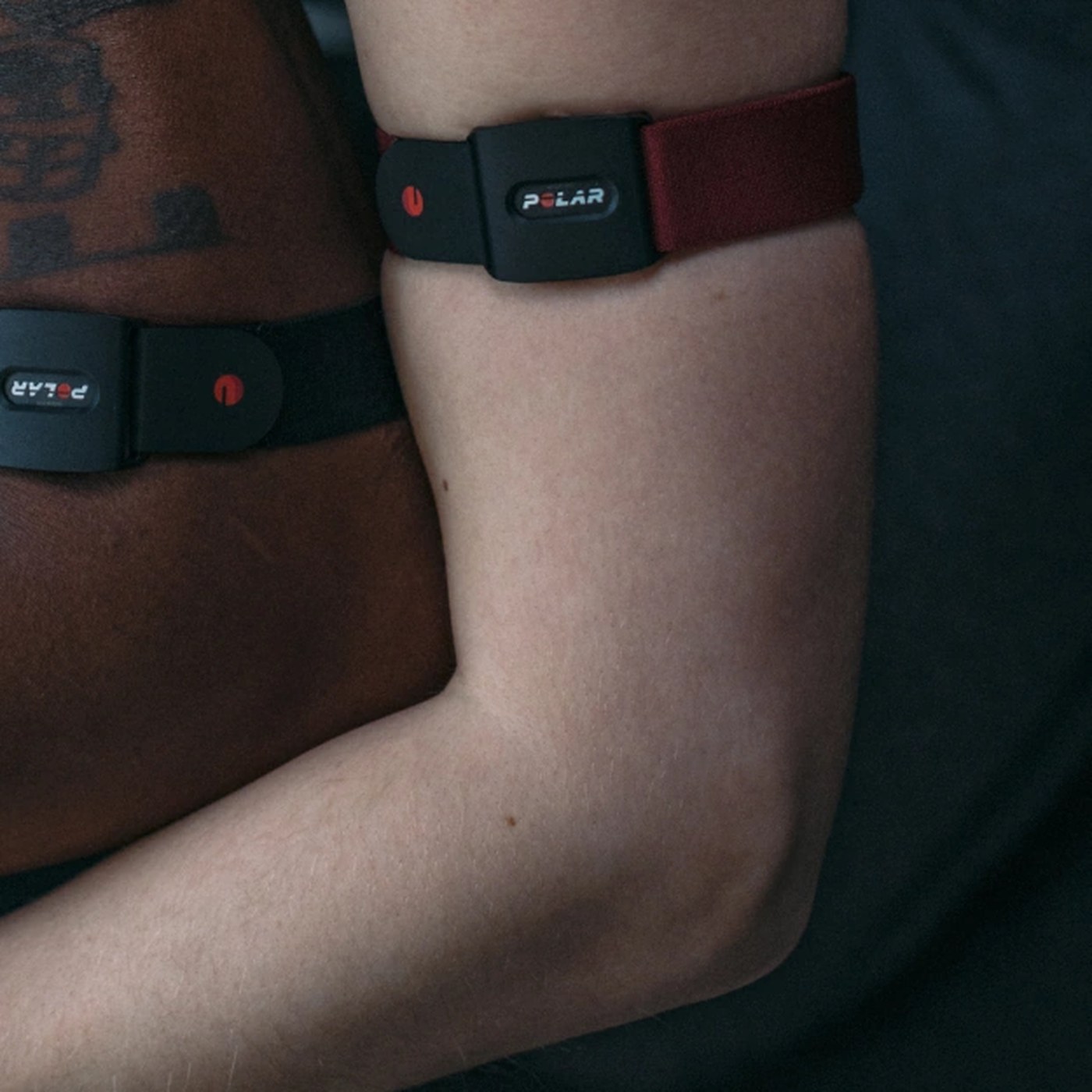
Polar's heart rate sensor lineup follows a clear logic. The Polar H10 remains the absolute accuracy benchmark thanks to its electrical (ECG) measurement, while the Verity Sense plays a different game: comfort and versatility. You wear the optical sensor on your upper arm or forearm, or clip it straight onto your swim goggles. That keeps it far from the sternum, where so many runners ended up ditching the chest strap because it chafed or slipped late in a long run.
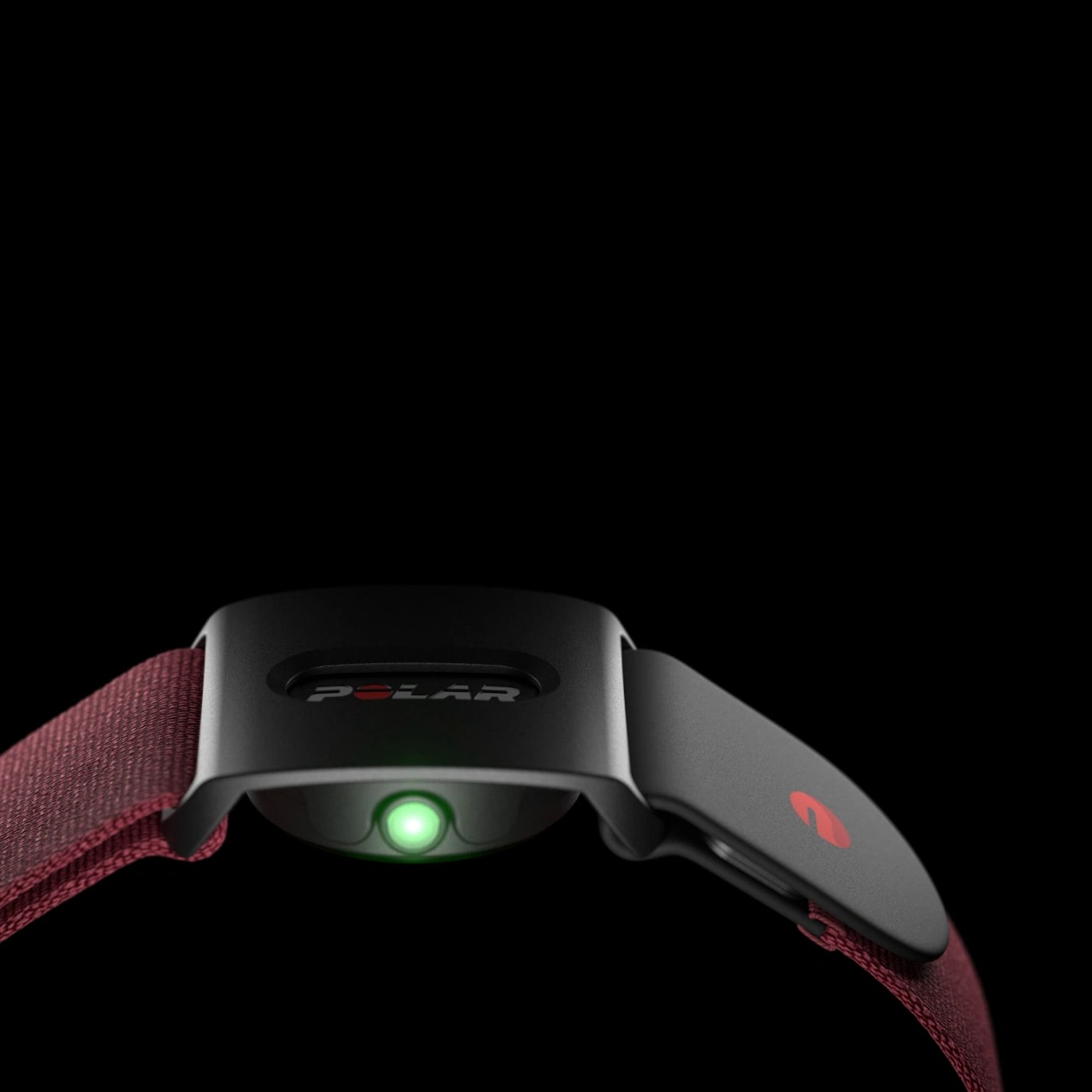
The pod weighs just 5 grams once detached from the band (19 g with the textile band), in a compact 30 x 30 x 9.5 mm package. Polar promises accuracy close to a chest strap for endurance efforts. Optical measurement, however, remains statistically more sensitive to motion artifacts than electrical measurement when your pace changes very abruptly.
RunMorph's advice: the Verity Sense is an excellent companion for long runs and triathlon, but if accuracy on very short intervals (200-400 m reps) is your absolute priority, the Polar H10 or the Garmin HRM 600 remain the most reliable choice.
Optical technology: how does the Verity Sense read your heart?
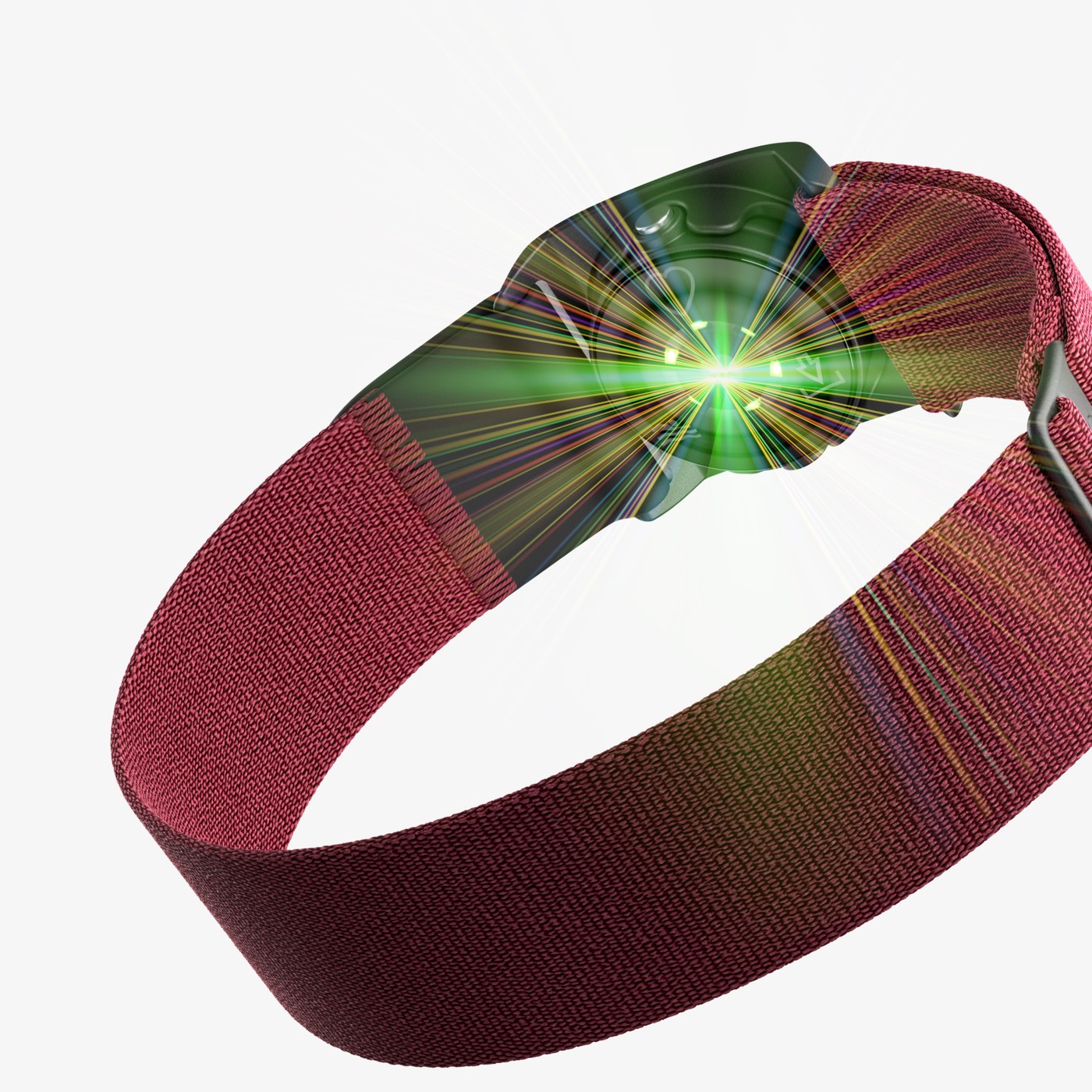
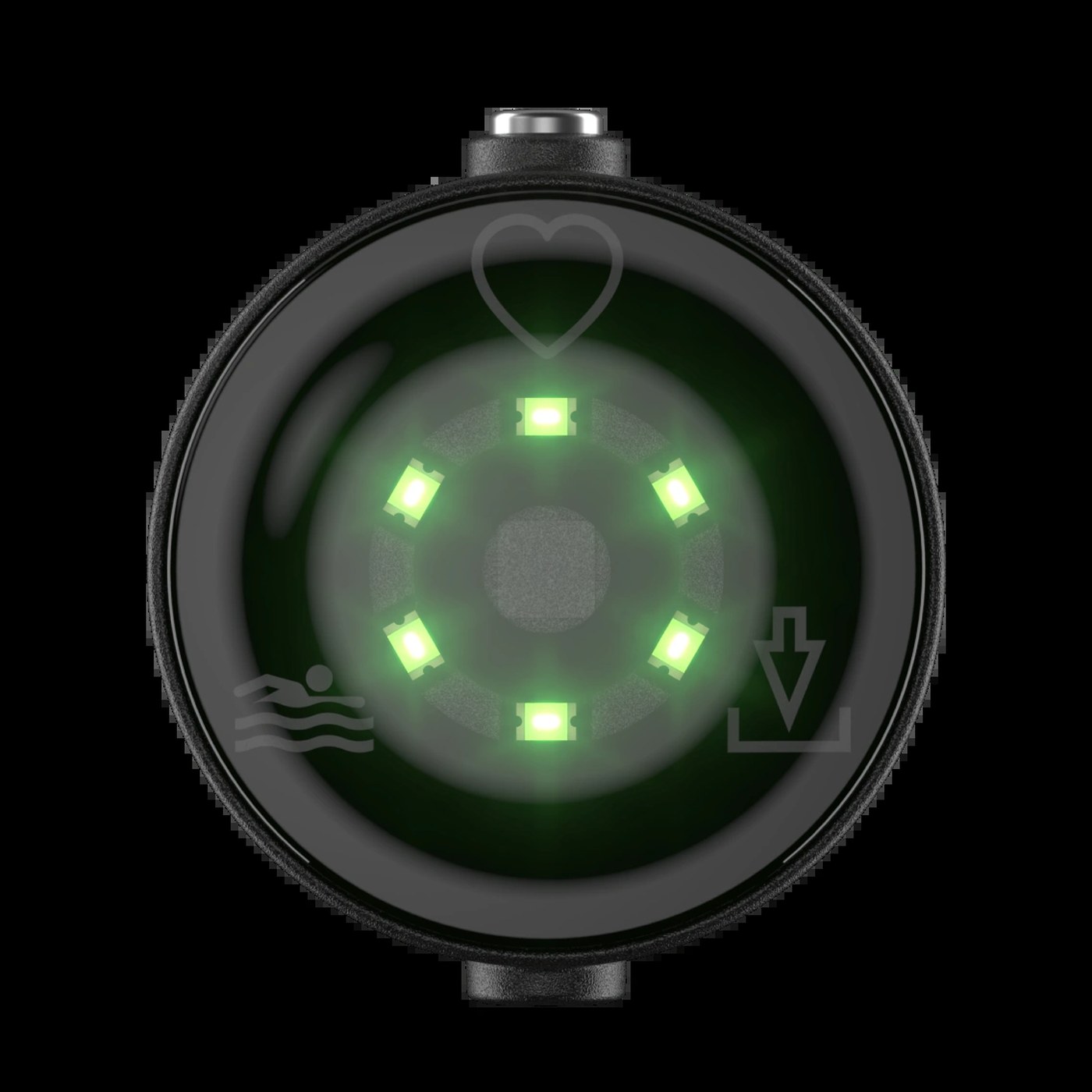
The Verity Sense uses a green LED optical sensor that measures changes in blood volume under the skin (photoplethysmography, or PPG). It's the same family of technology most GPS watches use on the wrist, with one difference: the Verity Sense sits on your forearm, where the skin is thinner and blood flow less irregular than at the wrist. That cuts out some of the artifacts caused by hand movements and by gripping poles or handlebars.
In practice, you get very stable readings on easy aerobic runs, long runs and in the pool, and a slight loss of responsiveness on the very fast heart rate swings typical of short intervals. Independent lab testing agrees on this point: arm-worn optical sensors now come close to ECG in continuous use, but still trail slightly on very brief peaks.
© Polar, official photo used for editorial purposes
Field test: from long runs to the pool
On runs ranging from easy runs at 6'00/km to threshold segments at 4'15/km, the Verity Sense tracked expected values very closely, with a near-zero gap against a reference chest strap over the first forty-five minutes. The gap widens slightly on back-to-back, very abrupt pace changes (30/30 or 15/15 sessions): the optical sensor takes one to two seconds longer to reflect the actual rise in heart rate. That delay has no impact on an endurance session, but it can slightly skew your reading of a very short interval workout.
In the pool, with the clip on your goggles, the approach changes: the sensor reads heart rate at the temple. It works remarkably well and avoids the classic problem of chest straps losing contact underwater. This is clearly one of the Verity Sense's big strengths over a standard chest strap, and a strong selling point for triathletes.
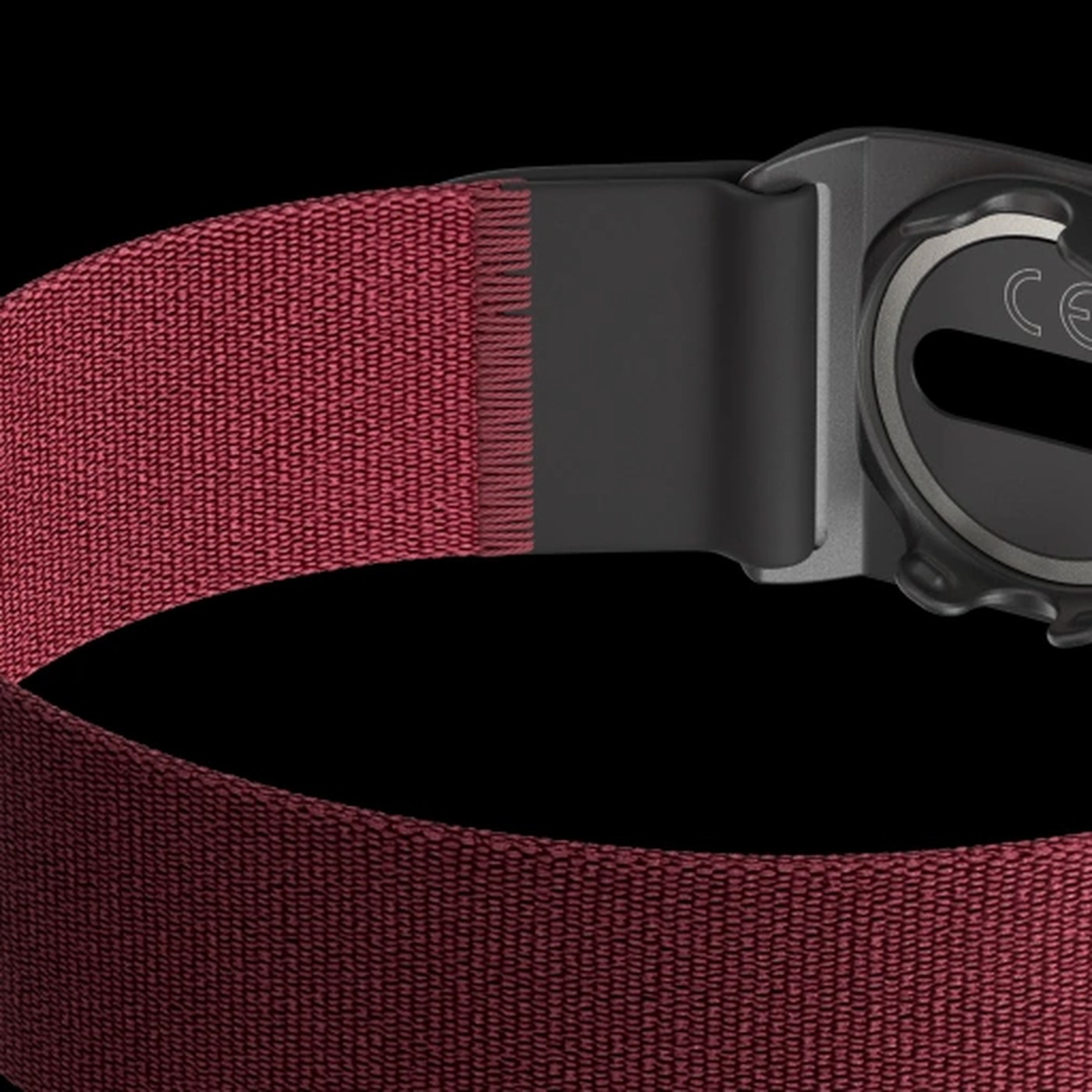
The textile band, available in several lengths, doesn't budge even after several hours of effort in wet conditions, and the pod never came loose from the clip during the sets we tested.
Polar Verity Sense vs Polar H10: head to head
Choosing between the two Polar sensors mostly comes down to whether you prioritize raw accuracy or comfort. Here's how they compare, with the Coros HR Monitor, the closest competing armband, added for reference.
| Criterion | Polar Verity Sense | Polar H10 | Coros HR Monitor |
|---|
| Measurement type | Optical (arm) | Electrical / ECG (chest) | Optical (arm) |
| Short-interval accuracy | Very good | Excellent | Very good |
| Long-session comfort | Excellent | Good (can chafe) | Excellent |
| Battery life | 30 h | Up to 400 h (coin cell) | ~30 h |
| Swimming | Yes (goggle clip) | Not recommended | No |
| Price | €99.90 | ~€90 | €89 |
Against the Coros HR Monitor, the difference comes down mainly to the ecosystem. The Verity Sense broadcasts over dual-channel Bluetooth and ANT+ at the same time, which makes it compatible with virtually every running GPS watch, bike computer and app on the market, whereas some competing armbands limit the number of simultaneous connections.
Pros and cons
Pros
- Very comfortable, you forget it's there on long runs
- Excellent for swimming thanks to the goggle clip
- Dual Bluetooth + ANT+ connectivity
- 16 MB of internal memory, 600 h of storable data
- Recycled and bio-based materials (Black and Dark Red colorways)
Cons
- Slightly less accurate than an ECG chest strap on very short intervals
- Extra textile band sold separately if you need another size
- No screen: everything goes through the app or the paired watch
© Polar, official photo used for editorial purposes
Our take: who is the Verity Sense for?
The runner who hates chest straps
If your chest strap chafes or slips late in a long run, the Verity Sense fixes the problem simply by measuring somewhere else. Comfort is clearly better, and you don't give up much accuracy in everyday use.
The triathlete and the swimmer
This is the ideal profile: the goggle clip works very well underwater, where most chest straps lose the signal. One sensor to run, swim and ride.
Team sports players and gym-goers
Worn on the arm, the Verity Sense will never get in the way of a technical movement the way a chest strap can, which also makes it a good pick for CrossFit, soccer or basketball.
© Polar, official photo used for editorial purposes
© Polar, official photo used for editorial purposes
To structure your sessions with reliable heart rate data (easy aerobic running, threshold, intervals), the Verity Sense fits perfectly into a RunMorph training plan: pair it with your watch or phone to track your heart rate zones on every run, from marathon prep to getting back in shape.
The RunMorph Coach verdict
The Polar Verity Sense delivers on its promise: a comfortable, versatile heart rate sensor you can rely on every day, covering one use the Polar H10 doesn't handle as well: swimming. Accuracy trails slightly on very explosive efforts, but for the vast majority of endurance, threshold and even classic interval sessions, the gap is negligible next to the comfort gain. 8.4/10: a credible alternative to the traditional chest strap, and sometimes even a better one.