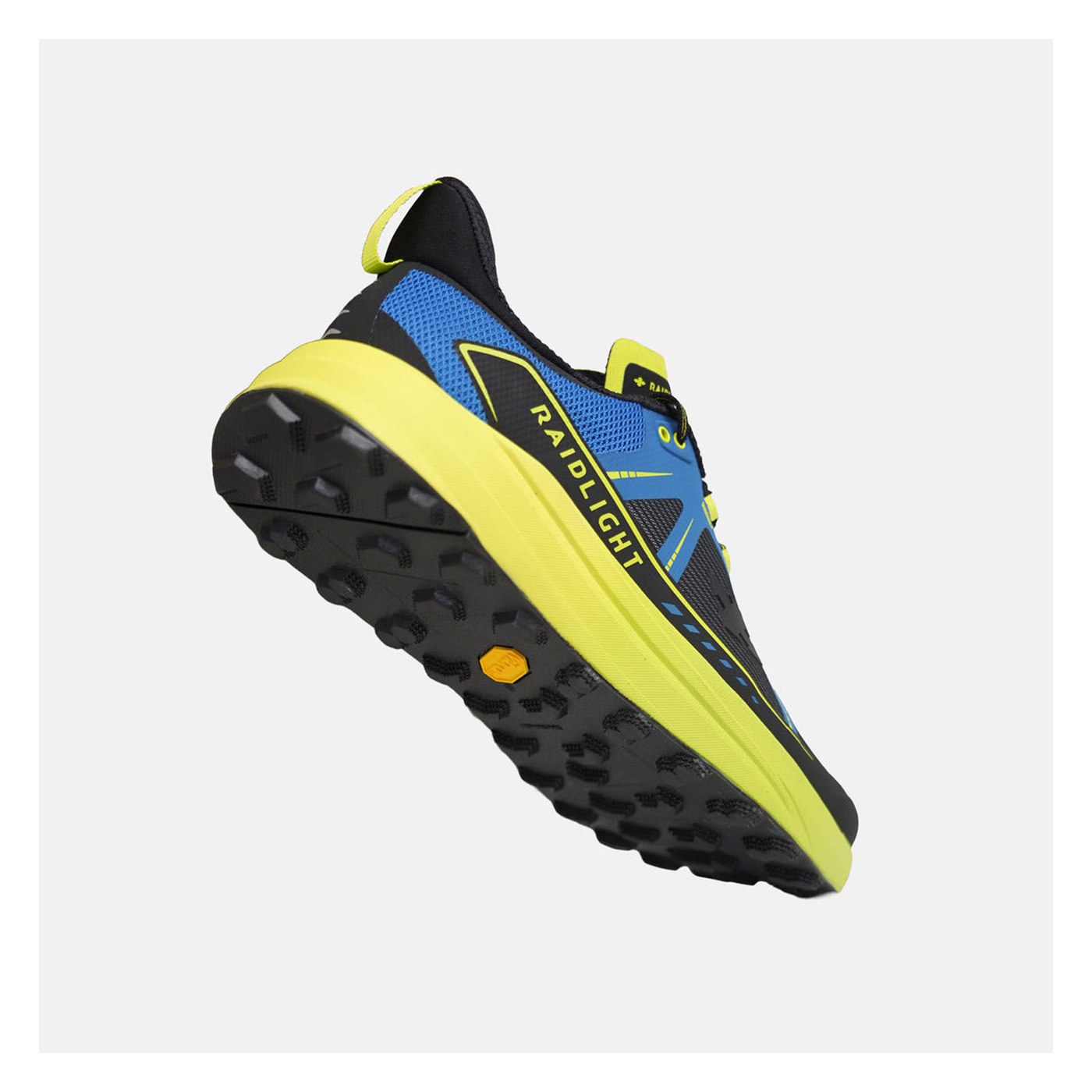
Raidlight, a French brand RunMorph knows for its trail poles and hydration vests, is finally stepping into shoes with the Ultra Max. The name promises ultra-distance. Two independent testers, read in full, describe a shoe that runs a bit heavier than advertised and far less enduring than its name suggests.
© Raidlight, official photo used for editorial purposes
Raidlight finally launches a shoe, and picks ultra-distance as its battleground
Raidlight has lived for years off its hydration vests and poles (the brand notably makes the Compact Z Carbon, already reviewed at RunMorph). The Ultra Max is its attempt to carve out space where Salomon, Hoka and Nnormal already share the field. The name sets an ambitious target. Both field tests read for this article describe a shoe that really holds up for 40 to 70 km, far short of the hundred miles its label hints at.
The marketing promise drifts from the observed real-world use. That is the thread running through this review: a firm, protective shoe built to last on rock, but clearly positioned below its own name.
Ultra Max: what Raidlight advertises versus what was measured
Two independent field testers laced up the Ultra Max and recorded figures that do not always match the spec sheet.
| Data point | Advertised (Raidlight) | Measured in field testing |
|---|
| Weight (size close to 42) | 280 g | 293 to 295 g, weighed by one tester in size 42.5 |
| Drop | 6 mm | 6 mm (estimated, not measured with calipers by the second tester) |
| Heel stack | 30 mm | 30 mm, confirmed by both sources |
| Price seen in stores | €149.90 (official price) | €150 to €169 depending on retailer and timing |
The weight gap is the clearest one. Fifteen grams more than advertised is 5% more on the scale. For a shoe whose name promises ultra-distance, every gram counts over the last 80 km.
The fit: a toe box that splits opinion
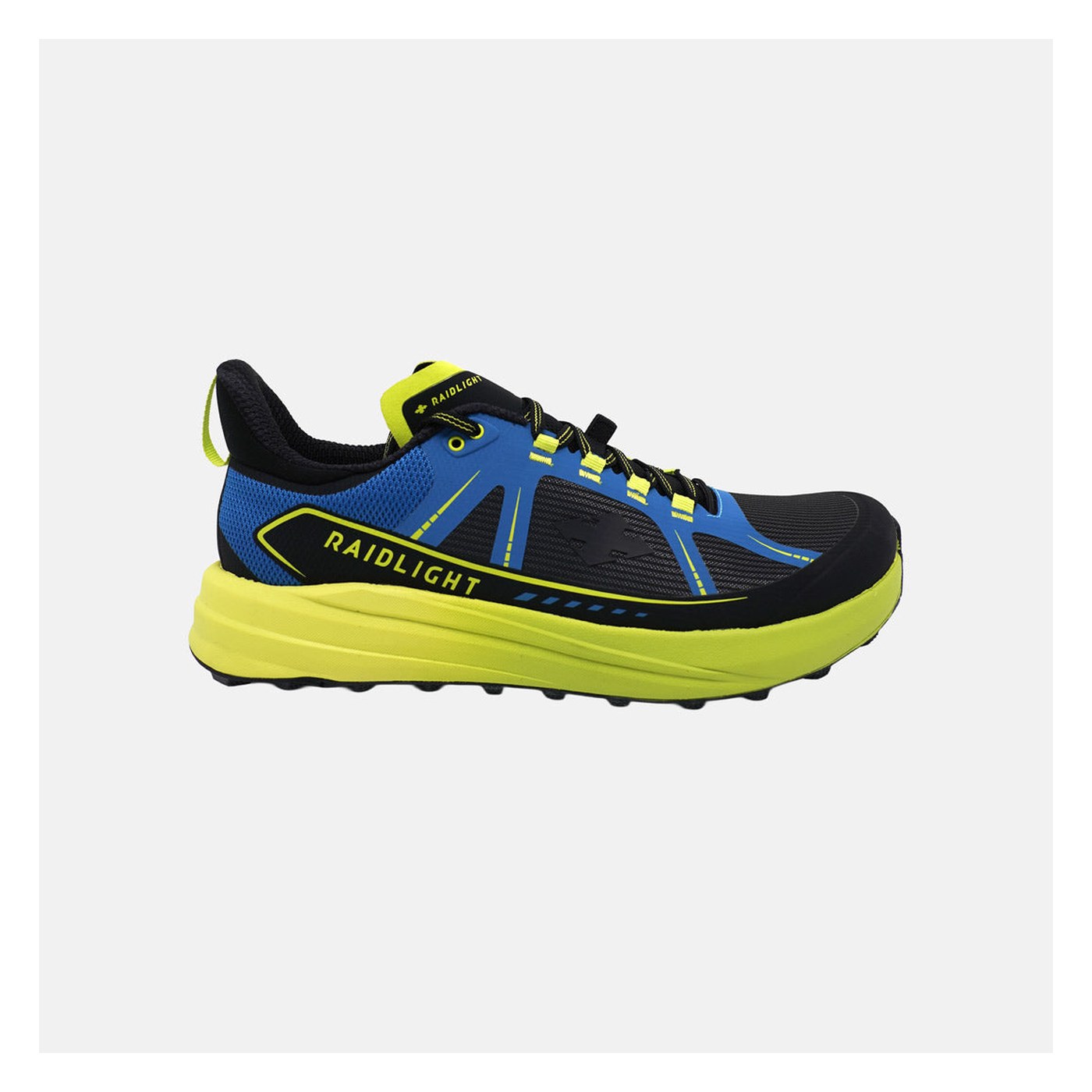
The wide standard fit Raidlight advertises checks out at the heel and midfoot, with both testers rating the hold as secure. The forefoot, though, tells two different stories depending on the source. One tester finds it narrower than the Ultra 4, the Raidlight model it succeeds. The other flatly recommends sizing down half a size: the shoe runs long but stays tight across the forefoot width. Neither source states the toe box's vertical volume, which remains a blind spot in this review, against an average of roughly 18 to 20 mm usually cited for this kind of mountain shoe.
At RunMorph, this divergence reads as a clear signal: try it on before buying if you have a wide forefoot, or budget half a size of room.
© Raidlight, official photo used for editorial purposes
Field testing: a firm platform built for rock
Both tests agree on the essentials: the Ultra Max delivers a precise strike on rocky ground thanks to a firm platform and a generous rock plate. One tester praises the balance between hold and ground feel on demanding alpine trails. The other confirms the firmness but finds it tiring over distance, with little rebound, far from a carbon-plated super-shoe.
RunMorph's advice: if you want plush cushioning to absorb 100 km back to back, look instead at the Hoka Speedgoat 7. The Ultra Max targets a different crowd: runners who want to feel the terrain.
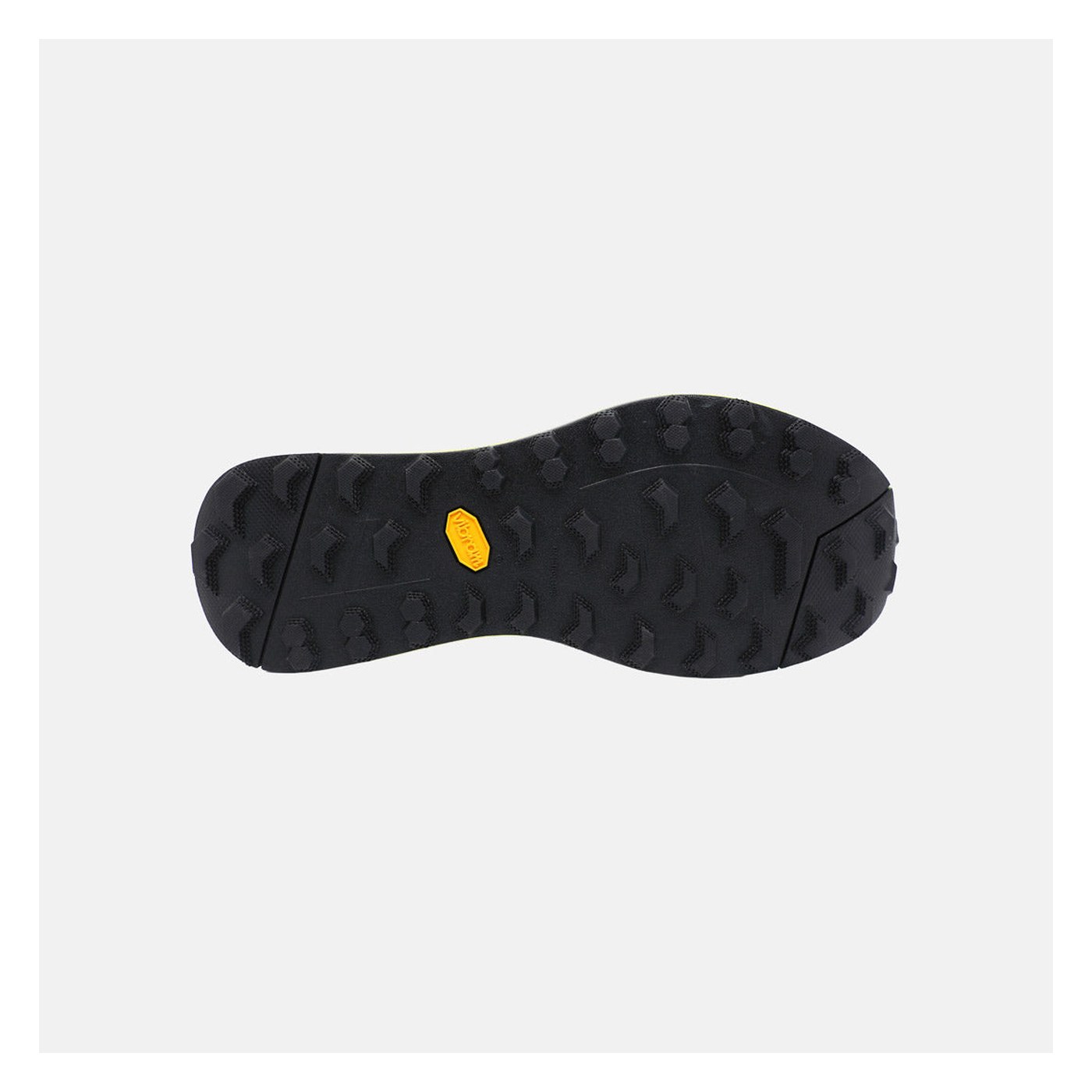
The 3 mm Vibram Megagrip lugs win over both testers on dry rock, roots and gravel. Both sources also agree on the flip side: mud, wet leaves and sand neutralize that grip noticeably. One of the two even notes unpredictable behavior on muddy sidehills, where the firm sole can slip without warning.
What pace it works at, and where it falls apart
Easy and base endurance runs: fine. The foam's firmness does not hurt at slow paces, though it does not add any particular comfort either.
Long runs: holds up well for 2 to 3 hours on technical terrain, carried by the rock plate and heel hold.
Trail marathon pace: falls apart quickly. The foam's lack of energy return, noted by both testers, does not support a sustained push.
Threshold and half-marathon pace: workable on fast, dry terrain, penalized as soon as the ground turns technical or wet by the grip loss already documented.
Short intervals: not what it is built for. The firm platform and the 293-to-295 g weight hold back the snappiness that kind of work needs.
The defining flaw: an ultra name, a 70 km range
This is the clearest point raised in both field tests. One recommends the Ultra Max for races of 40 to 50 km up to small ultras of 80 to 90 km, and judges it too demanding for most runners beyond that on a 100-miler. The other places the ceiling even lower, between 40 and 70 km, and flags muscle fatigue in the calves and outer thighs over the distance. For a shoe named Ultra Max, the gap with its own name's promise is the most defining flaw noted in this review: it performs like a mid-distance technical trail shoe, not a 100-mile shoe.
Raidlight Ultra Max vs Raidlight Ultra 4: the in-house comparison
Within the Raidlight range, the Ultra Max succeeds the Ultra 4. One of the two tests rates it clearly better on overall balance than its predecessor, though with a narrower toe box.
| Criterion | Ultra 4 (previous generation) | Ultra Max |
|---|
| Toe box | Roomier | Narrower, worth trying on first for wide feet |
| Overall balance | Reference of the range until now | Rated clearly better by one tester |
| Positioning | Versatile trail | Technical trail, 40 to 90 km |
The simple takeaway: anyone who owned the Ultra 4 and wanted more precision on rocky terrain can upgrade, as long as they check their size first. Anyone who needed a wide forefoot may want to keep the older version.
Raidlight Ultra Max vs Hoka Speedgoat 7 and Salomon Ultra Glide 4
In the long-distance trail segment, the Ultra Max crosses paths with two references already reviewed at RunMorph.
| Criterion | Raidlight Ultra Max | Hoka Speedgoat 7 | Salomon Ultra Glide 4 |
|---|
| Positioning | Technical terrain, 40 to 90 km | Versatile trail, market reference | Ultra-distance, road-to-trail comfort |
| Cushioning | Firm, little rebound | Generous, plusher | Progressive, built for distance |
| Price | €149.90 | €165 | €150 |
The simple takeaway: if the terrain is rocky and technical under 90 km, the Ultra Max answers the need precisely, at a fair price. If the goal is a 100-miler or a string of long runs over several months, both rivals hold up better.
© Raidlight, official photo used for editorial purposes
Grip and durability: what it costs per kilometer
Neither source ran the shoe to full wear. The more detailed one notes slight wear on the forefoot creases after about a hundred kilometers, a mesh judged abrasion-resistant, and a heel collar that absorbs water and dries slowly. Taking a conservative 500 to 600 km lifespan, consistent with a firm foam that sees little rebound stress, the Ultra Max's cost per kilometer sits around €0.25 to €0.30 at the official €149.90 price. That is comparable to the Salomon Ultra Glide 4 (€150 for a similar advertised durability range), and better value than premium carbon-plated models that often run past €0.40 per kilometer.
Our take: who should buy it?
The Ultra Max suits a light-to-medium runner tackling technical mountain routes of 40 to 90 km, who values precise foot placement over plush cushioning. It fits naturally into trail training focused on technicality rather than raw volume.
To build the long runs that prepare for that kind of goal, the RunMorph Trail plan structures the load progression without sacrificing recovery, which matters even more with a shoe whose limited rebound tires the legs over time.
RunMorph verdict
The Ultra Max delivers on a different promise than its name suggests. At RunMorph, the overall score of 6.8/10 reflects that gap: stability and dry-terrain grip weigh in its favor, but the weight above spec, the limited energy return and a real-world range shorter than what "Ultra Max" evokes pull the average down. It is a good mid-distance technical trail shoe sold under a label that promises more than it delivers.
FAQ
Is the Raidlight Ultra Max good for a 100-miler?
No. Both field tests place it between 40 and 90 km, and one of them explicitly judges it too demanding for most runners beyond that distance.
What is the Raidlight Ultra Max's real weight?
Raidlight advertises 280 g in size 42. One tester weighed it at 293-295 g in size 42.5, about 5% more than advertised.
Does the Raidlight Ultra Max run big or small?
It runs on the long side lengthwise according to one tester, who recommends sizing down half a size, while staying narrow across the forefoot for the other.
What is the difference between the Raidlight Ultra Max and the Ultra 4?
One tester rates the Ultra Max clearly better on overall balance, but its toe box is narrower than the Ultra 4's, worth checking before buying.
Does the Raidlight Ultra Max grip well in the rain?
No. The 3 mm Vibram lugs lose effectiveness noticeably on mud, wet leaves and sand, a point confirmed by both field tests read for this review.