Salomon's Ultra Glide line has come a long way since its beginnings: comfortable foam for easy terrain at first, then more performance with each iteration. With the Ultra Glide 4, Salomon laid a solid foundation. With the S/Lab Ultra Glide 2, the brand steps up a level: next-generation optiFOAM+ PEBA and a Matryx upper, all in an S/Lab version built for ultra-trail competitors. 270 dollars, 41 mm of stack height. We tested it over several months and several hundred kilometers.
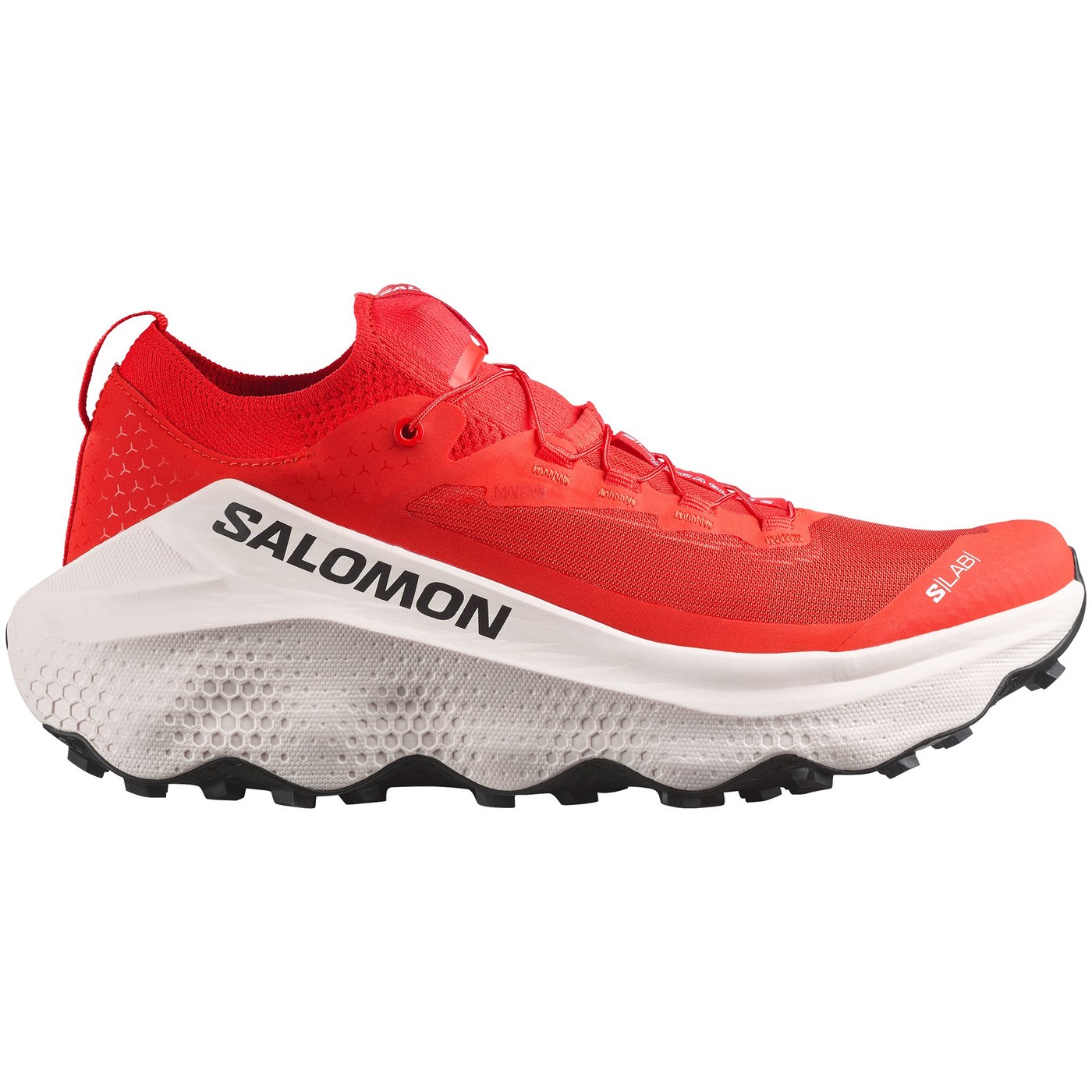
© Salomon, official photo used for editorial purposes
S/Lab Ultra Glide 2 vs Ultra Glide 4: what's the difference?
Salomon's Ultra Glide range has two branches: the mainstream series (Ultra Glide, now on version 4) and the S/Lab series (S/Lab Ultra Glide, now on version 2). What they share is the overall architecture and the maximalist philosophy. The difference lies in the materials.
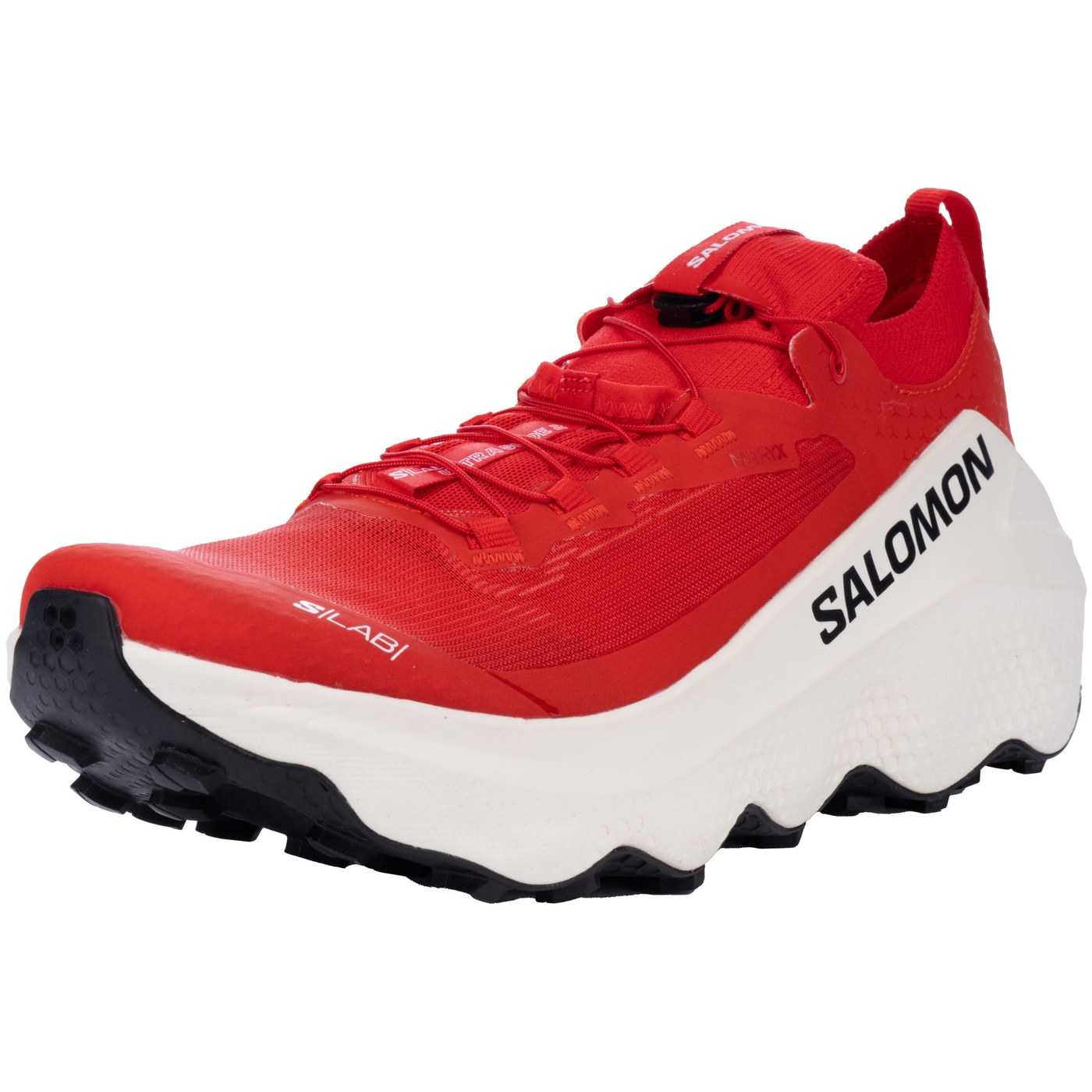
The Ultra Glide 4 uses optiFOAM, a foam that delivers good cushioning at an accessible price. The S/Lab Ultra Glide 2 moves upmarket with two innovations. First, the top layer of the midsole switches to optiFOAM+, a PEBA foam (bio-based polylactic acid) that stores and returns energy better with every stride. Second, the upper moves to Matryx, a woven fiber structure with Kevlar threads that resists abrasion from the rocks and uprooted trees you meet on technical ultras.
Specs
| Brand | Salomon |
|---|
| Model | S/Lab Ultra Glide 2 |
|---|
| Use | Ultra-trail, long-distance trail running |
|---|
| Stack height heel / forefoot | 41 mm / 35 mm |
|---|
| Drop | 6 mm |
|---|
| Midsole (top) | optiFOAM+ PEBA (light, energy return) |
|---|
| Midsole (bottom) | optiFOAM (durable protection) |
|---|
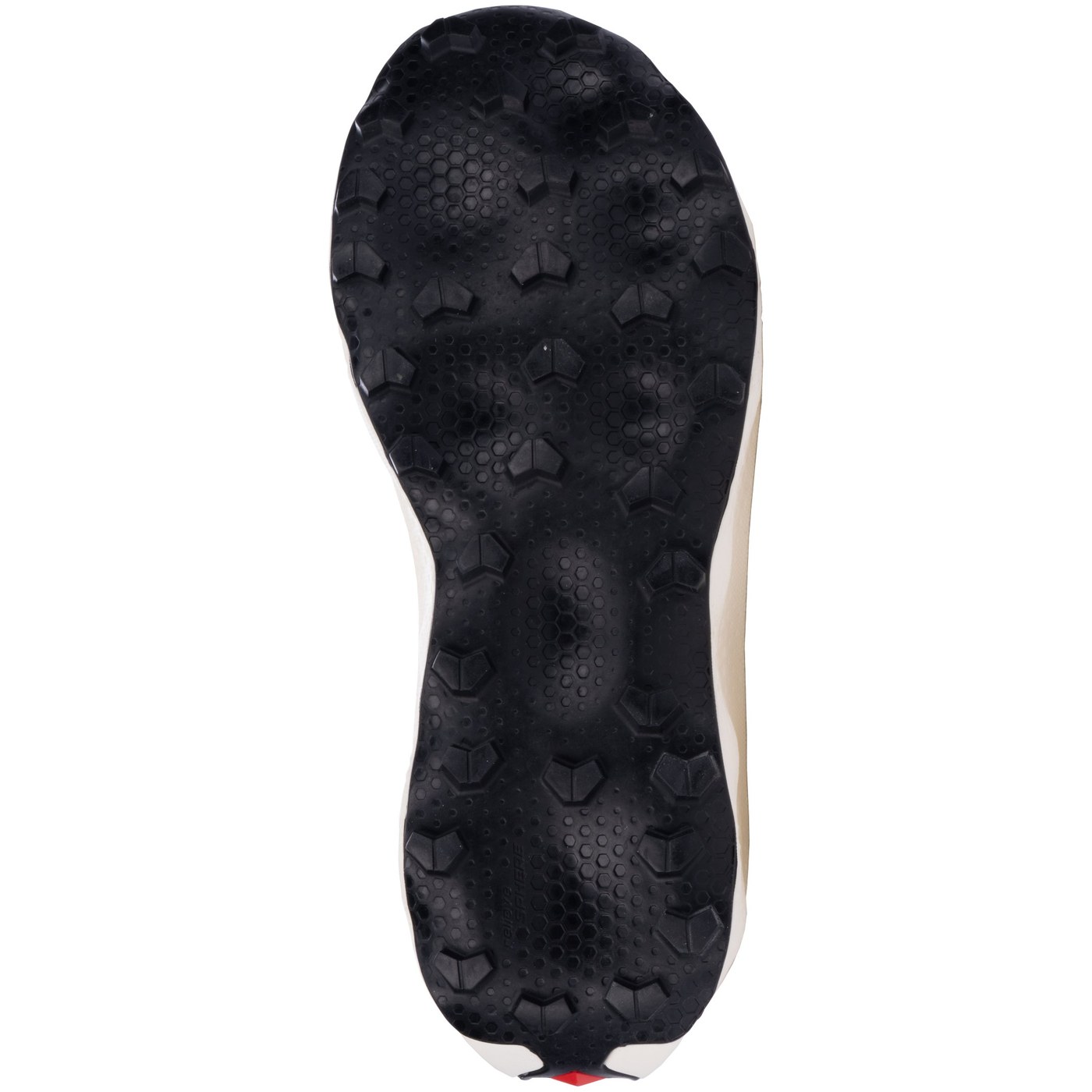
| Outsole | contaGRIP All Terrain, 4 mm lugs |
|---|
| Upper | Matryx woven (Kevlar + polyamide) |
|---|
| Technology | relieveSPHERE (pressure distribution) |
|---|
| Colorways tested | Fiery Red / Vanilla Ice |
|---|
| Price | ~270 dollars / ~€250 |
|---|
| Availability | Since February 2026 (Dauwalter collab: June 2026) |
|---|
© Salomon / SkyRun, photo used for editorial purposes
optiFOAM+ and a dual layer: why PEBA changes everything in ultra
PEBA foam (polyether block amide) has been the benchmark for racing midsoles since 2022. It offers higher energy density than classic EVA: lighter for the same volume, with a higher energy return rate. On a single stride, the difference is subtle. Over 1,000 strides per kilometer, multiplied by 80 or 100 km of trail, the accumulated energy savings become significant.
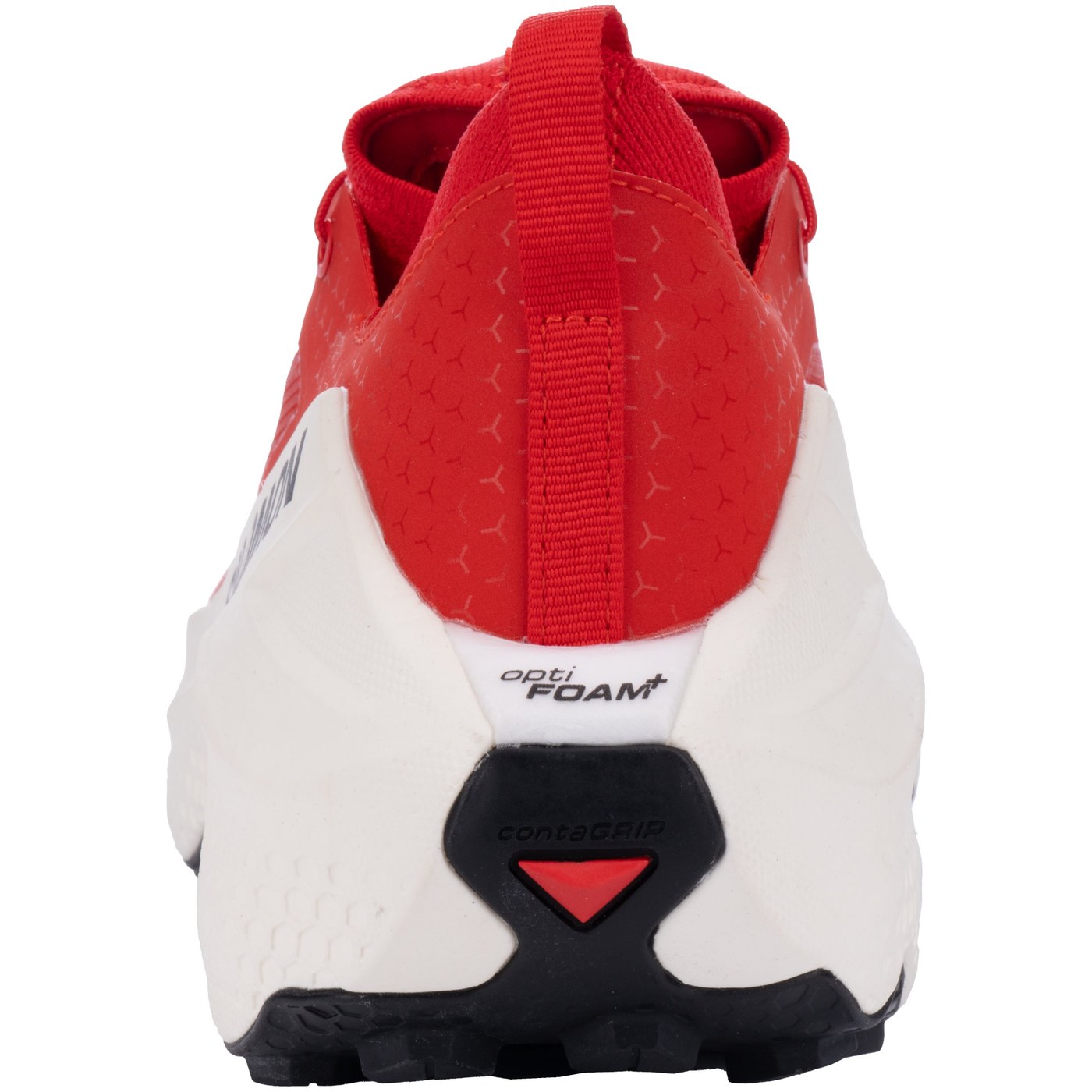
The dual-layer architecture of the S/Lab Ultra Glide 2 is smart. The optiFOAM+ (PEBA) top layer handles energy return and lightness. The optiFOAM (treated EVA) bottom layer brings protection on rocky ground and durability. The result is a shoe that behaves like a racing shoe on runnable sections and like a shock absorber on technical terrain.
relieveSPHERE technology spreads pressure across the whole foot at impact, reducing localized stress points. On ultras over 12 hours, that means less discomfort under the metatarsals in the final hours.
RunMorph note: the S/Lab Ultra Glide 2 has no carbon plate. That's a deliberate choice for ultra-trail: a rigid plate works well on even surfaces but tires the foot on very uneven terrain over long durations. The optiFOAM+ PEBA alone generates the energy return this kind of course needs.
© Salomon / SkyRun, photo used for editorial purposes
On the trail: from alpine climbs to ultra distance
We tested the S/Lab Ultra Glide 2 in a range of setups: 20 to 35 km runs on mixed terrain (forest trails + rocks + climbs), and ultra training camps totaling 60 to 80 km over 2 days. Here's what stood out.
Cushioning on landing: from the first kilometer, it feels generous without being mushy. optiFOAM+ is slightly firmer than the optiFOAM in the Ultra Glide 4, which makes the cushioning more dynamic: you feel the rebound rather than just the absorption. On runnable terrain, your stride picks up naturally.
Grip in varied conditions: the 4 mm contaGRIP All Terrain lugs give solid grip on mixed ground, forest trails, dry rock and wet grass. In deep mud or on smooth wet rock, the limits show, as on any shoe without aggressive lugs. For very technical, wet trails, a shoe with deeper lugs is still the better choice.
The Matryx upper put to the test: after several passes through dense undergrowth (branches and stones hitting the sides), the Matryx upper shows no visible wear. Lateral hold is clearly better than a standard mesh, which reduces the work your ankle does on off-camber traverses.
Behavior under fatigue: between km 50 and km 80, feet tend to swell. The S/Lab Ultra Glide 2 has enough volume in the toe box to absorb that swelling without pinching. The classic laces (no Quicklace system on this model) let you dial in the tension precisely.
© Salomon / SkyRun, photo used for editorial purposes
Comparison: S/Lab Ultra Glide 2 vs the 2026 trail super shoes
| Shoe | Stack height | Foam | Plate | Grip | Price |
|---|
| Salomon S/Lab Ultra Glide 2 | 41/35 mm | PEBA optiFOAM+ | No | contaGRIP 4 mm | ~€250 |
| Salomon Ultra Glide 4 | 38/32 mm | optiFOAM | No | contaGRIP 4 mm | ~€140 |
| Hoka Tecton X 3 | 38/35 mm | PEBA CompressLite+ | Dual carbon | Vibram Megagrip | ~€260 |
| On Cloudultra Pro | 39/35 mm | Helion HF | No | Trail rubber | ~€270 |
| Asics Trabuco Max 5 | 40/32 mm | FF Blast Max | No | Asics Grip | ~€180 |
Against the Hoka Tecton X 3, the S/Lab Ultra Glide 2 delivers similar energy return thanks to PEBA, without a carbon plate. The Tecton X 3 is slightly more propulsive on even terrain, but the Salomon takes back the advantage on technical descents thanks to a stiffer upper and a sole that stays more comfortable deep into fatigue. The Hoka's Vibram Megagrip offers better grip on wet rock.
Against the On Cloudultra Pro, the S/Lab Ultra Glide 2 offers plusher cushioning and more generous stack height, better suited to ultras over 80 km. The Cloudultra Pro is snappier and better suited to short and mid-distance trail races with runnable sections.
Who should choose the S/Lab Ultra Glide 2
The S/Lab Ultra Glide 2 is built for specific profiles:
- The 50 to 160 km ultra-trail runner: this is the shoe's home turf. The dual-layer PEBA cushioning handles long hours without tiring your feet. From 50 km on, the difference compared with a classic EVA shoe becomes tangible.
- The runner on mixed technical terrain: rocks, roots, off-camber sections, stony descents. The Matryx upper and the contaGRIP outsole handle all of it without flinching.
- The runner preparing for a major trail race: UTMB, Grand Raid de la Réunion, Tor des Géants. The S/Lab Ultra Glide 2 is both the long-run training shoe AND the race shoe for these formats.
RunMorph Coach's verdict
The Salomon S/Lab Ultra Glide 2 is one of the most coherent ultra-trail shoes on the market in 2026. The combination of optiFOAM+ PEBA, the Matryx upper and 41 mm of stack height answers exactly what an experienced ultra-trail runner needs: durable cushioning, foot protection on technical terrain and abrasion resistance over long formats.
The only reservation is the price. At 270 dollars, it's a premium shoe for runners who take their running seriously enough to invest in the right tool. If you run one ultra a year and the rest of your season is short distances, the Ultra Glide 4 at €140 covers 80% of your needs at half the price.
RunMorph score: 9/10