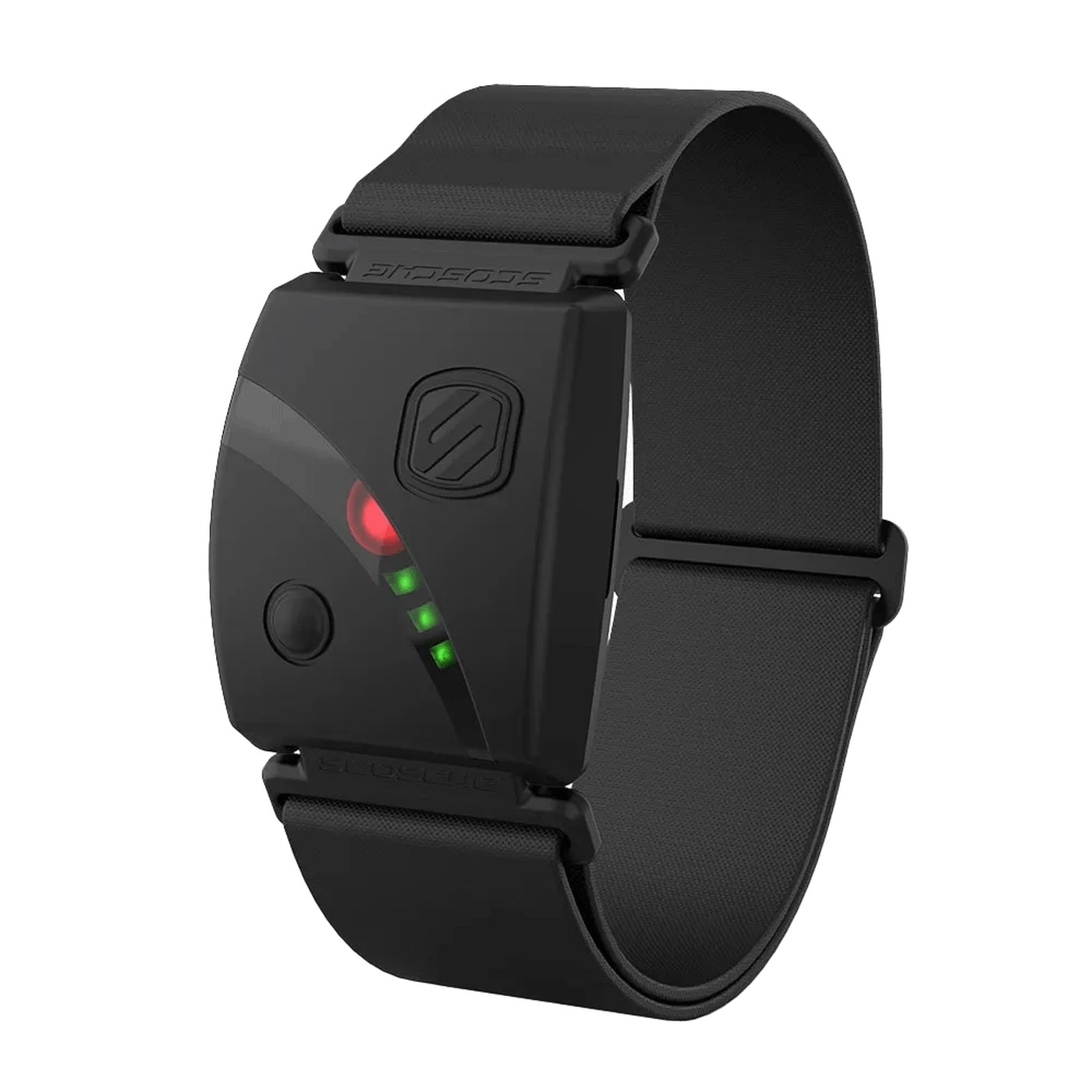
Ditch the chest strap without giving up accuracy: that's the promise most optical heart rate armbands struggle to keep over the long haul. The Scosche Rhythm24 has been taking that bet for several years now, and it's still one of the few arm sensors claiming close to 24 hours of battery life. RunMorph put it under the microscope to find out whether it still deserves its place against the competition.
8.2
The essentials in 3 sentences: the Scosche Rhythm24 holds its own against a chest strap on the indoor trainer and during intervals, but slips a little during warm-ups and when swimming. Its 24-hour battery life and onboard memory remain the benchmark in this segment. Its mobile app, available in English only, is still its main weakness.
An optical heart rate armband still holding its ground in the running accessories market
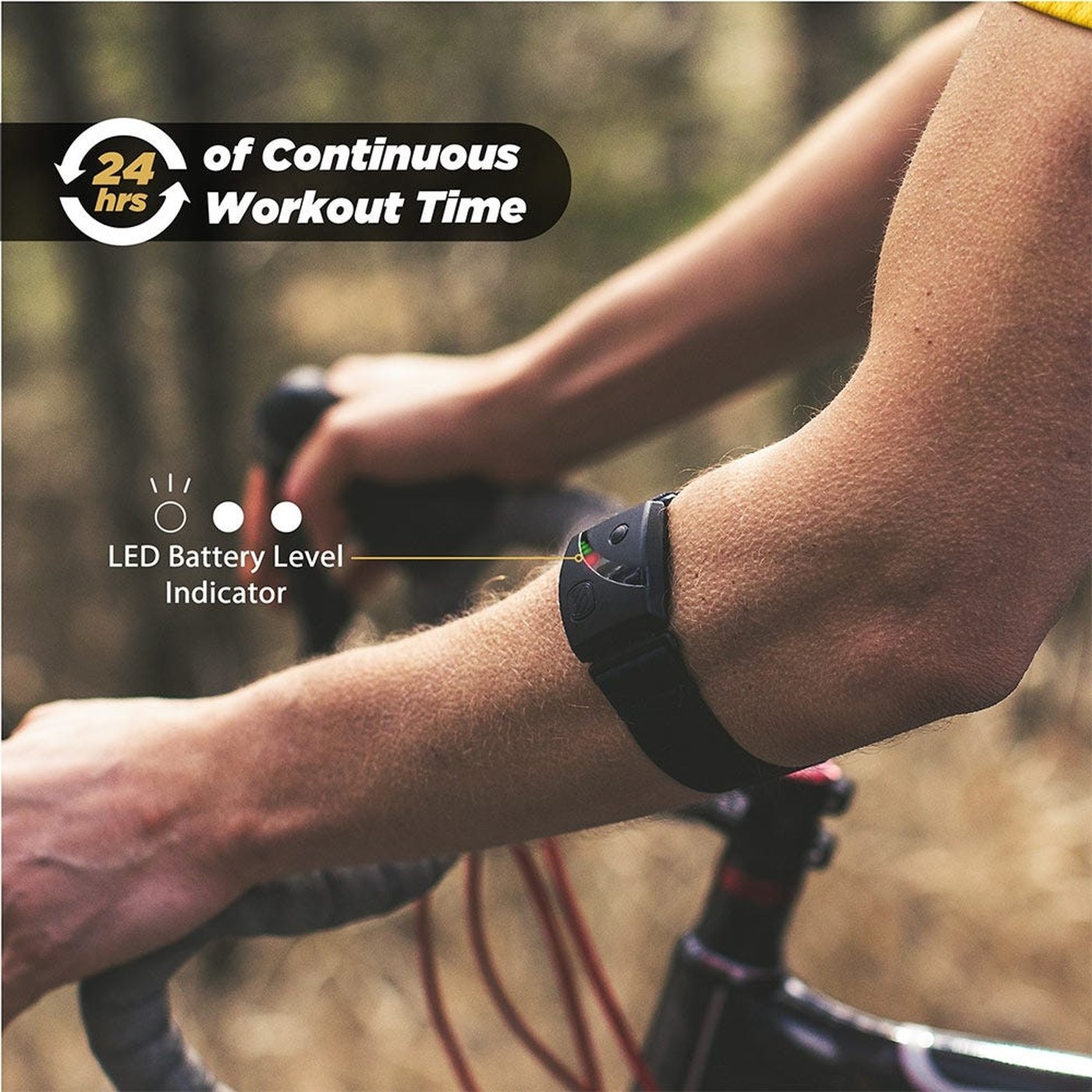
The market for arm-worn heart rate sensors has largely settled into three families: general-purpose optical armbands like the Polar OH1+, recovery- and sleep-focused sensors like the Whoop, and long-battery armbands like the Scosche Rhythm24. The latter fills a precise niche: runners who want to drop the chest strap without constant recharging. While most optical arm sensors top out at 10 to 20 hours of battery life, the Rhythm24 claims up to 24 hours of continuous use, the figure that has built its reputation since launch.
Strictly speaking, the sensor isn't new: Scosche has refined it in small steps since it was unveiled, without ever pulling it from its catalog. That kind of commercial longevity, rare among connected accessories, says a lot about how solid the technical package is. RunMorph hadn't reviewed a Scosche sensor yet, so this was a chance to fill the gap with a product that's still actively sold and documented by several independent testers.
Specifications
Feature
Scosche Rhythm24
Sensor type
Optical armband (arm, biceps or forearm)
Optical sensor
Dual green + yellow LED (Valencell / PerformTek technology)
Connectivity
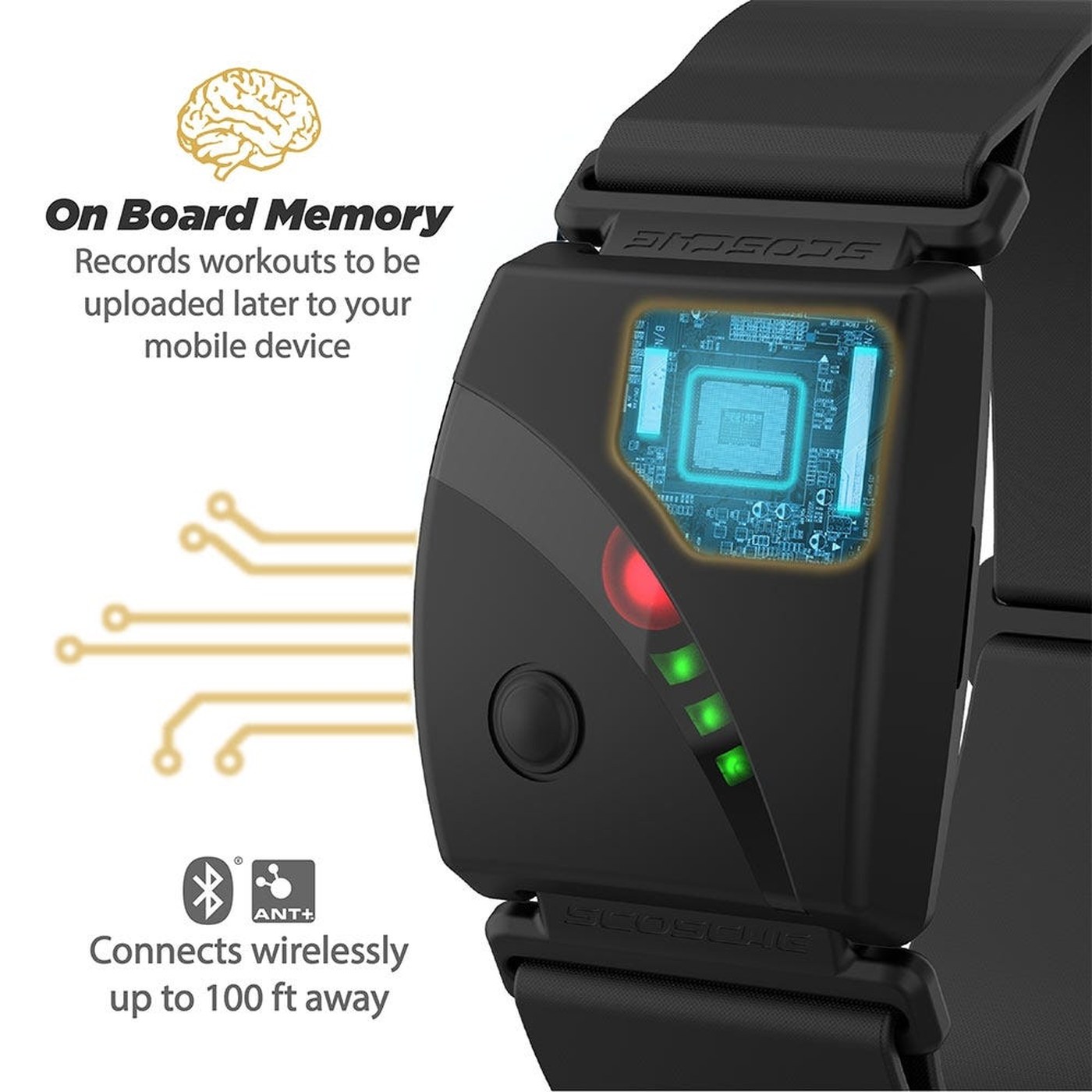
Simultaneous ANT+ and Bluetooth Smart
Battery life
Up to 24 hours continuous
Onboard memory
Up to about 13 hours of training stored without a connected device
Water resistance
IP68, submersible to 3 meters according to the brand
The Scosche Rhythm24 uses an optical sensor supplied by Valencell (also found in other brands' products), combining a green LED and an orange LED to read blood flow more reliably across a range of skin tones. Scosche markets the same dual-wavelength approach under its own name, PerformTek. Either way, the goal is identical: cut the measurement errors caused by skin pigmentation, a common problem with single-LED optical sensors.
You wear the pod on the upper forearm, biceps or triceps, never on the wrist. Most optical armband makers require this placement: it reduces motion artifacts compared with wrist-based readings, and it's far more comfortable than a chest strap on long runs. The sensor's internal memory stores several hours of training, which is especially useful for swimming, since ANT+ and Bluetooth signals don't travel underwater. Data is recorded locally, then synced once you're out of the pool.
Field test: how good are its readings really?
RunMorph compared feedback from several testers who pitted the Rhythm24 against benchmark chest straps. Their results diverge depending on the protocol used, and we'd rather flag that than smooth it over.
The most thorough review available in French comes from nakan.ch, which put the armband through five separate protocols against a Garmin HRM-Tri chest strap and a Polar OH1+ worn at the same time. On the indoor trainer, with no vibration or cold in play, the Rhythm24's curve tracks the strap's almost perfectly. On hill intervals, the armband follows rapid heart rate changes well, with the roughly five-second lag typical of optical sensors. During a threshold block, however, the tester saw a clear overestimate during the warm-up, then a one-off gap of seven to eight beats per minute versus the strap on the first rep, before the reading settled. On the mountain bike, accuracy stays good overall, but dropouts appear after a pause. Finally, when swimming, the armband struggles to follow heart rate changes, while a Polar OH1 worn at the temple did better in this particular comparison.
By contrast, an English-language review run against a Polar H10 chest strap and the wrist sensor of a Garmin Forerunner 935 on standard runs never found more than one to two beats per minute of difference. It showed no overestimated peak effort and no lag during the cooldown, two common flaws of wrist sensors. The gap in severity between the two reviews comes down largely to protocol: nakan.ch pushed the sensor into demanding situations (threshold, mountain biking, swimming), while the English-language review stuck to more standard running. The site montre-cardio-gps.fr confirms the brand's claimed specs (twice the battery life of the previous generation, onboard memory, dual connectivity) but doesn't run an independent timed comparison.
The nakan.ch tester also checked whether sunscreen, which filters part of the light spectrum, interfered with the optical reading: no bias showed up over several runs done with and without sunscreen under the armband.
Scosche Rhythm24 vs Polar OH1+: head to head
Criterion
Scosche Rhythm24
Polar OH1+
Battery life
Up to 24 hours
10 to 12 hours
Onboard memory
About 13 hours
Yes, more limited
Size
Bulkier
More compact and discreet
Connectivity
Simultaneous ANT+ and Bluetooth
ANT+ and Bluetooth Smart
App
English only
Multilingual, more intuitive
Positioning
Battery life and multisport versatility
Comfort and ease of use
The choice comes down fast: the Rhythm24 is for anyone who refuses to recharge their sensor every week and wants to record long sessions in standalone mode. The Polar OH1+ is more compact and easier to live with day to day, at the cost of much shorter battery life.
Pros and cons
Who is it for?
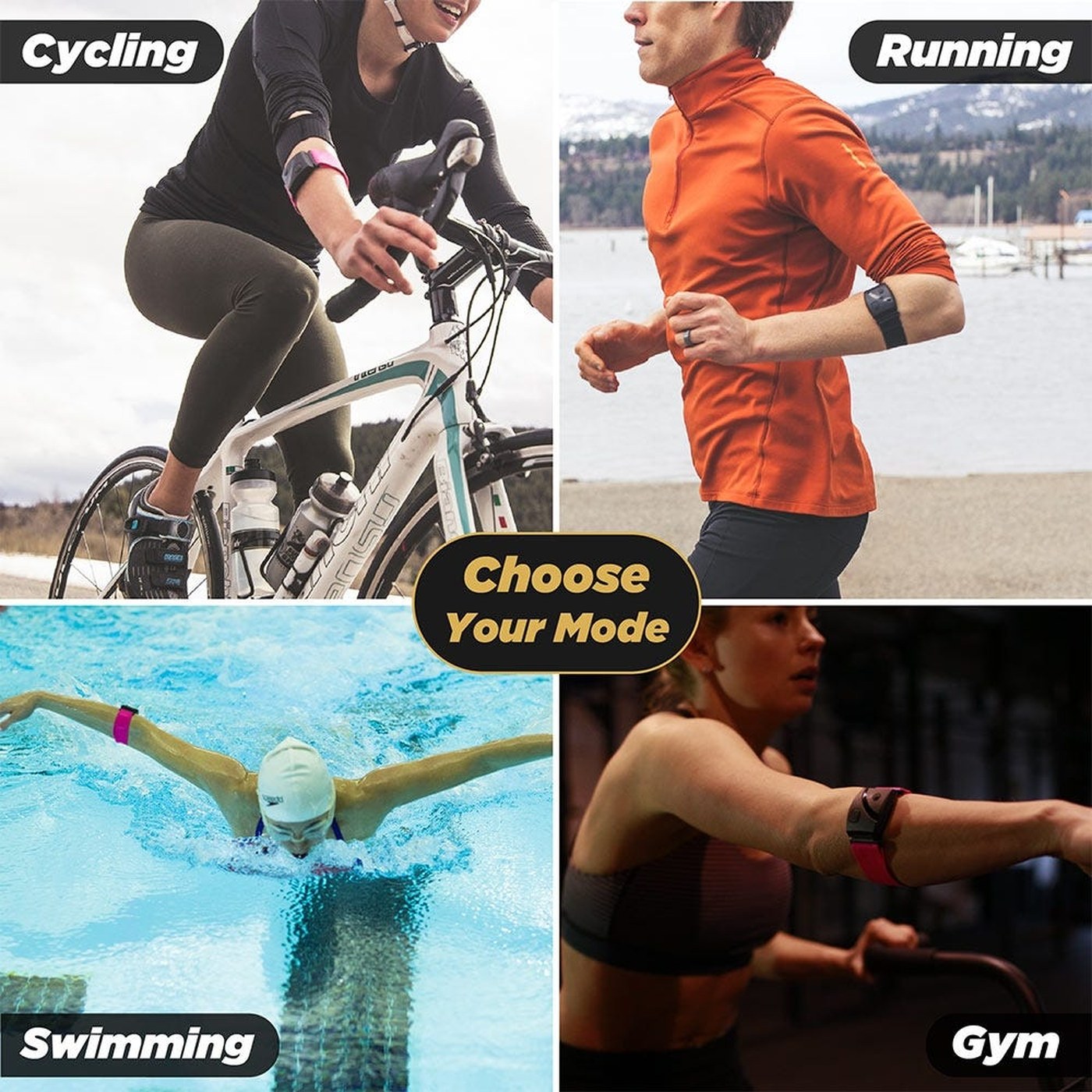
The Scosche Rhythm24 suits runners who stack up long runs without recharging their gear often, triathletes who want a single sensor that tracks all three disciplines, and swimmers who want standalone heart rate recording in the pool or open water.
Who should skip it?
It's a weaker fit if you want the most compact sensor possible, or if you prioritize maximum accuracy on threshold efforts and sudden pace changes, where a chest strap remains more reliable.
What RunMorph takes away from this review: the Rhythm24's battery life and onboard memory make it a serious ally for long sessions and multisport, but its English-only app and weaker accuracy on hard efforts and in the water leave it a notch behind the best chest straps on the market.
Progress with a training plan built around your gear
A heart rate sensor, however accurate, is only as good as what you do with it. RunMorph offers personalized training plans built on your heart rate zones, whether you wear a chest strap or an optical armband like the Rhythm24. Discover RunMorph plans and turn your heart rate data into real progress.
RunMorph Coach's verdict
Several years after launch, the Scosche Rhythm24 remains one of the few optical heart rate armbands that deliver 24 hours of battery life without flagging. Cross-checked tester feedback shows solid accuracy on steady efforts and intervals, and shakier results during warm-ups, at threshold and in the water. Its mobile app, English-only and not very intuitive, still holds back adoption among non-English speakers. RunMorph gives it 8.2/10: a smart choice if you prioritize battery life and multisport, less obvious if you want absolute accuracy on hard efforts.
Key takeaways for your training
Place the armband on the upper forearm or biceps, never too tight, to limit measurement artifacts.
Select the mode that matches your activity (running, cycling, swimming) before you start recording: the algorithms adjust accordingly.
On threshold efforts or very hard intervals, keep in mind that an occasional gap versus a chest strap is still possible.
Use the onboard memory for swims when you're not wearing a compatible watch.
Recharge the sensor once a week rather than waiting for the battery to run flat.