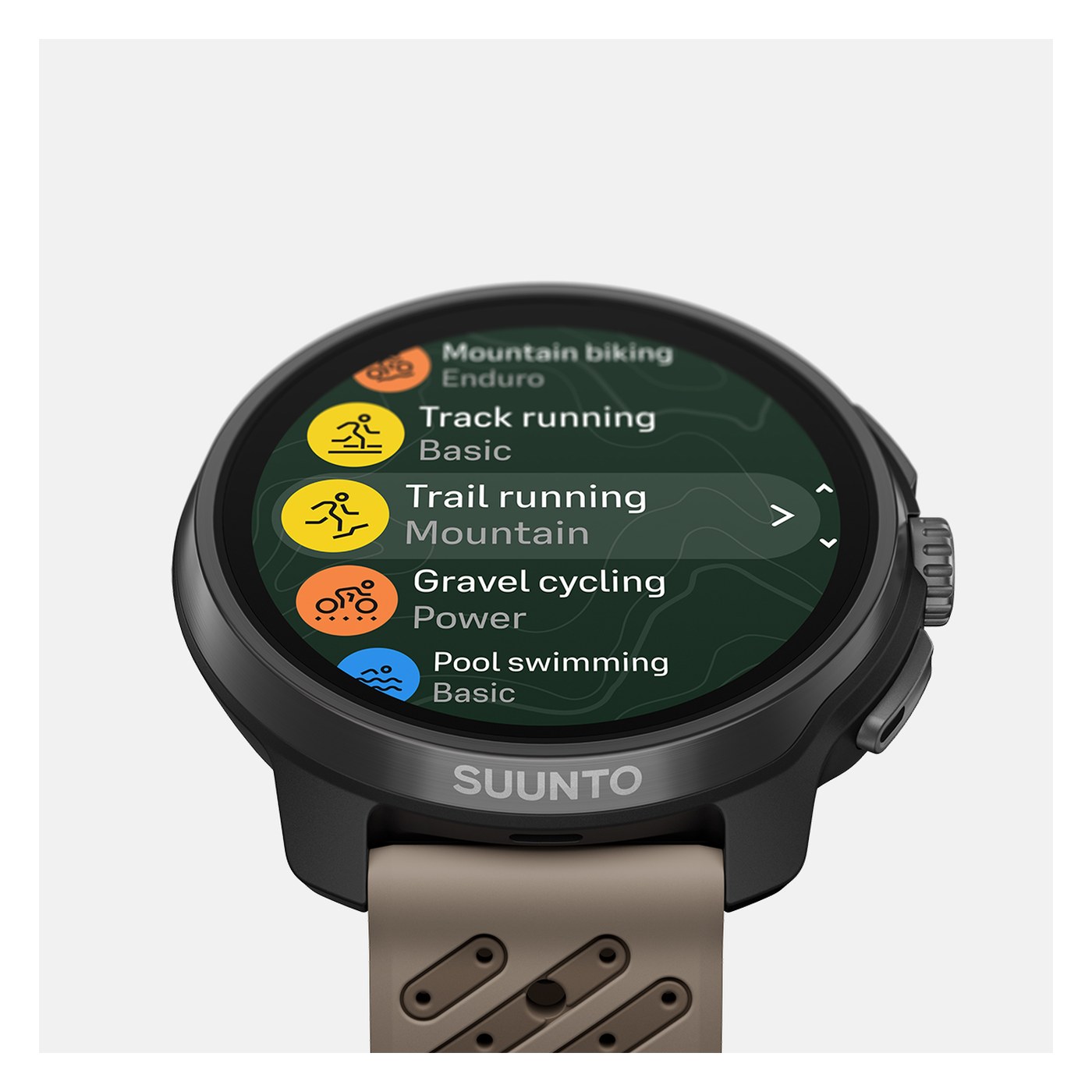
The Suunto Race 2 marks the Finnish brand's aggressive return to the premium AMOLED segment. A 49 mm titanium or stainless steel case, a 1.5-inch 2000-nit display, multi-band GPS, free worldwide offline maps and 55 hours in performance mode. Want a trail watch that owns its difference against Garmin and Coros? As a coach, I'll tell you what it's really worth.
Suunto Race 2 Review: 55-Hour Battery and Offline Maps for Trail
9/10
Suunto Race 2: a historic brand comes back swinging
For three or four years, Suunto was stuck with the image of a brand that struggled with heart rate accuracy and lagged behind on displays. The first Race started to turn things around in late 2023. The Race 2 drives the point home. It was released on August 27, 2025, and in France it starts at 499 euros for the steel version (Coral Orange, Wave Blue, All Black, Feather Gray) and 599 euros for titanium (Titanium Black, Titanium Trail). New heart rate sensor, new caseback optimized for wrist-based readings, 466 by 466 pixel LTPO display at 2000 nits, dual-band GPS, 16 days of battery life in daily use. On paper, it's the brand's most complete watch since the Suunto 9 Baro, and one of the most interesting premium AMOLED watches of 2026 in its price bracket.
RunMorph's advice. As a coach, I'd been waiting for this update. The Race 1 laid the groundwork, but the optical heart rate and the finish of the crown left the job unfinished. The Race 2 fixes all of that and keeps its best argument: a price well below a Garmin Forerunner 970 for very similar trail features. If you're torn between the Garmin ecosystem and something else, this is the most credible alternative today, as long as you accept that the Race 2 doesn't have the software depth of the high-end Forerunners.
© Suunto, official photo used for editorial purposes
Specs
| Brand | Suunto |
| Model | Race 2 Titanium Trail |
| Release date | August 27, 2025 |
| Case size | 49 mm, 12.5 mm thick |
| Weight | 76 g (steel) to 67 g (titanium), strap included |
| Display | LTPO AMOLED touchscreen, 1.5 inches (38 mm), 466 x 466 pixels, 2000 nits, sapphire glass |
| Smartwatch battery life | 18 days (wrist HR on) to 30 days (wrist HR off) |
| Multi-band GPS battery life | 55 hours in performance mode |
| Tour GPS battery life | 200 hours in economy mode |
| GNSS | Dual-frequency multi-band (L1 + L5), GPS, GLONASS, Galileo, BeiDou, QZSS |
| Sensors | Next-generation optical heart rate, barometer, accelerometer, gyroscope, compass, SpO2 pulse oximeter, skin temperature sensor |
| Maps | Free worldwide offline topo maps, Heatmaps, Climb Guidance |
| Sport profiles | 115+ modes (road, trail, track, cycling, swimming, skiing, etc.) |
| Music storage | No |
| Contactless payments | No |
| Water resistance | 100 meters (10 ATM) |
| Smartphone connectivity | Suunto app for iOS and Android, Strava, TrainingPeaks, 300+ partners |
| Price | 499 euros steel, 599 euros titanium |
Who is the Suunto Race 2 for?
The trail runner who wants a real alternative to Garmin
This is where the Race 2 plays its best card. Free worldwide offline maps, Suunto Heatmaps to find popular routes (or avoid them), Climb Guidance that anticipates climbs in real time, turn-by-turn navigation. At 599 euros in titanium, you get trail features very close to what Garmin offers on its Forerunner 970 at 749 euros. Multi-band GPS accuracy is excellent under tree cover and in deep gorges, the 55-hour battery life easily covers a 100-mile race, and the sapphire glass holds up over time. If you run trails regularly and you're not already locked into the Garmin ecosystem, it's the smartest buy in the segment.
The road runner who wants a big screen and a distinctive look
The Race 2 is also a very convincing road watch. The 1.5-inch display is huge and stays readable in direct sun thanks to its 2000 nits, which makes all the difference when you check your pace during intervals. The standard running modes (road, track, intervals), ZoneSense for tracking intensity in real time and Suunto Coach for daily training feedback all work well. You lose Garmin-style detailed city maps, but for a road runner who never uses navigation, that's no loss. The 49 mm case is still bulky: if you have a slim wrist, the steel version is more comfortable than you'd think, despite its 76 grams.
The triathlete and multisport athlete
The 115 sport modes cover open water swimming, cycling, trail, ski touring, cross-country skiing and even freediving down to 100 meters. Triathlon mode chains the disciplines with automatic transitions. Dual-frequency GPS stays accurate even on lakes and along the coast, and ANT+ connectivity supports bike power meters and external heart rate straps. It's not an ultra-specialized triathlon watch (no music storage, no contactless payments), but for the trail or mountain triathlete, it ticks the right boxes.
© Suunto, official photo used for editorial purposes
GPS accuracy and heart rate sensor: the real progress
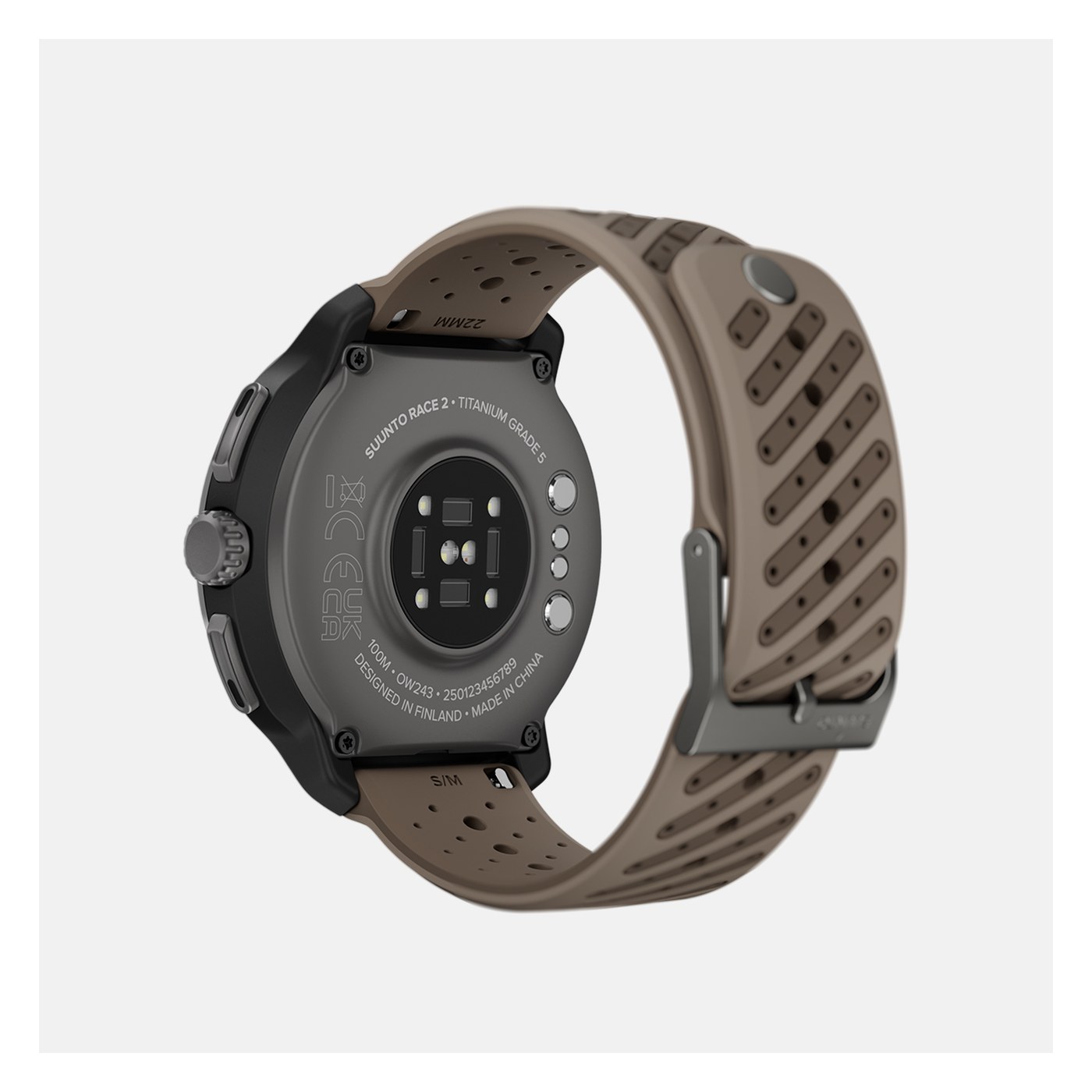
This was Suunto's historic weak spot, and the Race 2 tackles both issues head-on. On the GPS side, the dual-frequency L1 + L5 module delivers clean tracks in dense forest, deep gorges and urban canyons. Independent tests carried out internationally put the Race 2 on par with the best multi-band watches on the market, with some corner-cutting on very tight, technical switchbacks. In sessions compared against dedicated GPS references, the track stays consistent over 95 to 98 percent of the route. In open conditions (road, track, half marathon), there's no noticeable difference from a reference watch. On technical trails, you get distances accurate to within 1 or 2 percent on long runs, which is exactly what you should expect from a watch at this price.
On the optical heart rate side, this is the brand's most spectacular improvement in five years. The new caseback optimized for wrist readings, paired with the next-generation sensor, finally puts Suunto in the same league as Garmin and Polar. Tracking at a steady pace is very clean, heart rate zones are stable, and threshold work and efforts at maximal aerobic speed are handled better than on previous generations. On very short intervals (30/30 or 200 meters), you'll notice the usual lag of an optical sensor, but this is a real success. For threshold sessions or detailed analysis, I still recommend a chest strap (Polar H10, Garmin HRM-Pro), but for everything else, the wrist is enough.
Maps and navigation: the knockout punch
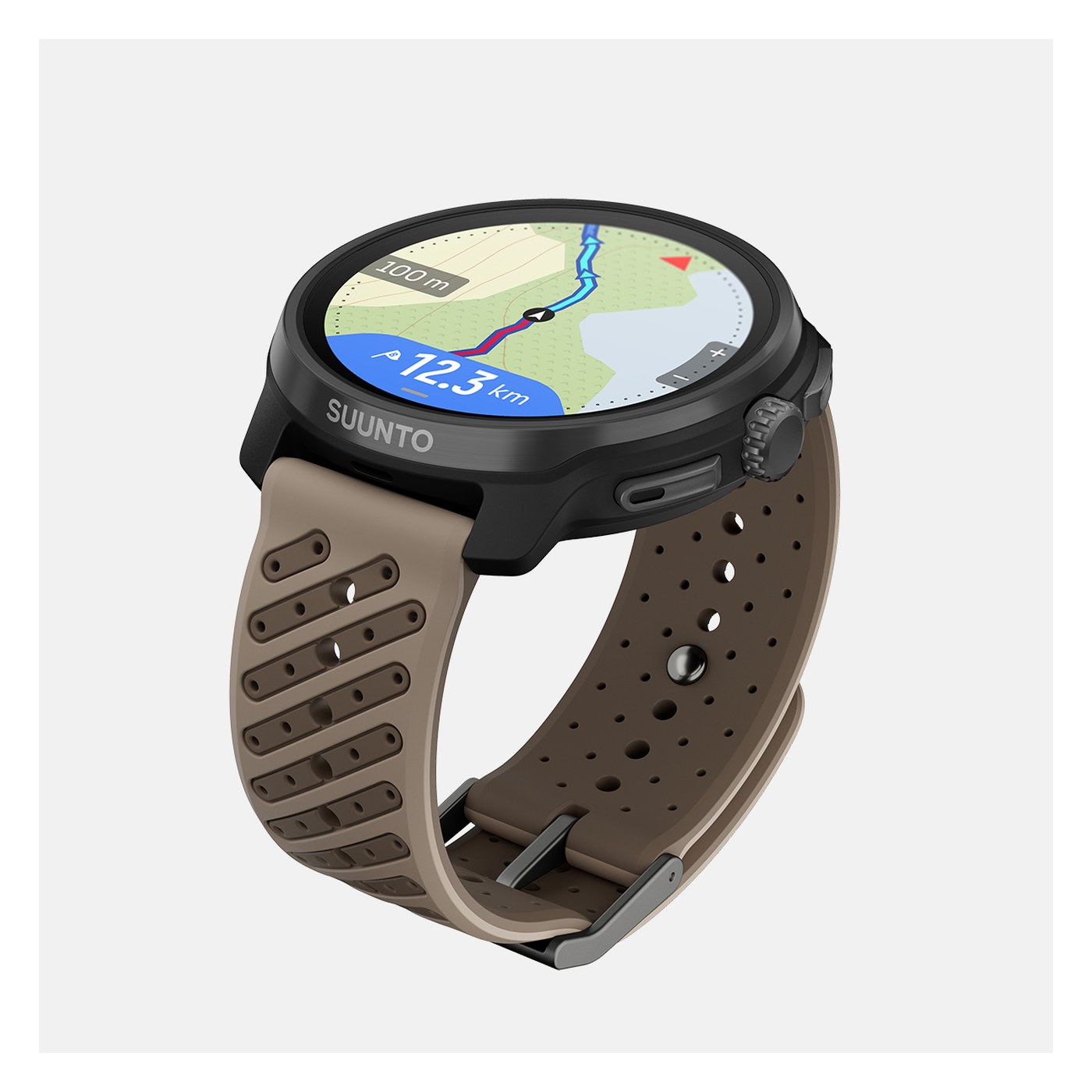
This is Suunto's differentiator. Worldwide topo maps are free and download straight to the watch, while Garmin charges for extended coverage on its lower-tier lineups. The 466 by 466 pixel resolution makes the display especially sharp: progressive zoom with the crown, a very readable topo base map, satellite layers and heatmaps. Turn-by-turn navigation works with imported GPX files, with vibration alerts at every change of direction, an on-screen elevation profile and remaining distance indicators. Climb Guidance is the tool that convinced me most during trail testing: the watch detects upcoming climbs on your route and gives you, in real time, the average grade, the remaining elevation and the estimated time to the top. If you're preparing for a mountain trail race, it's a real coaching asset.
© Suunto, official photo used for editorial purposes
Training and recovery metrics
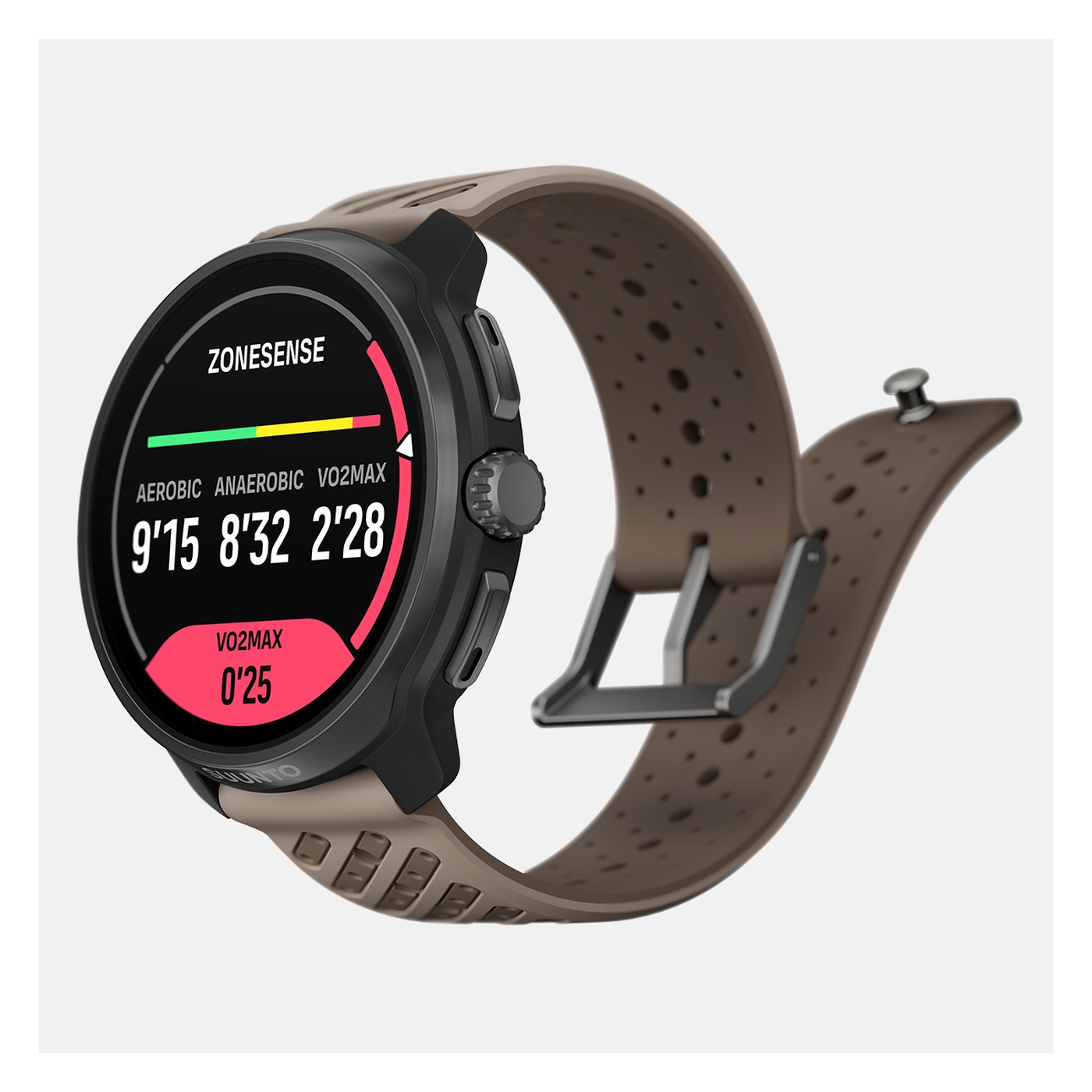
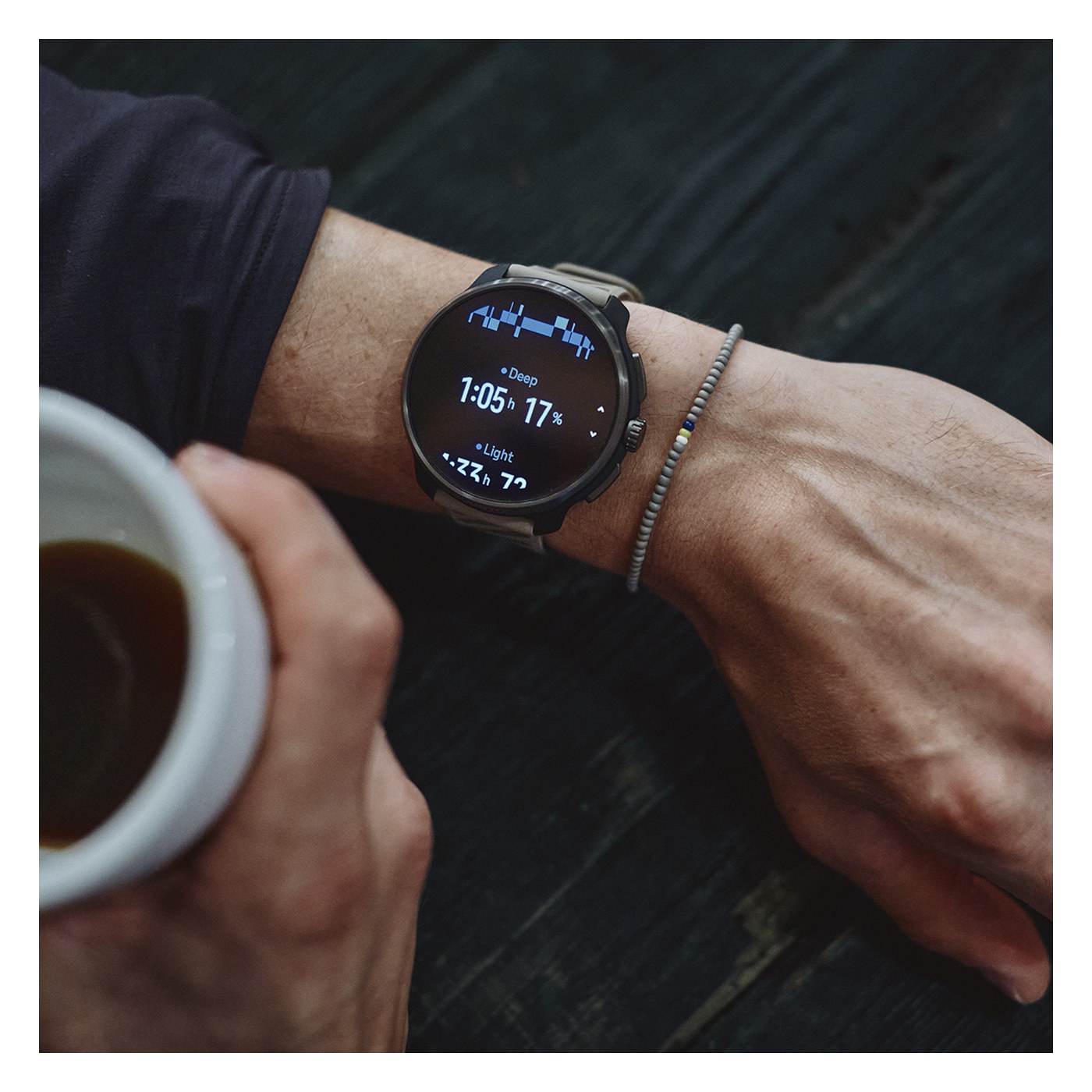
Suunto has rebuilt its software suite. Suunto Coach continuously analyzes your training load, recovery and progress, and gives you actionable feedback on the watch and in the app. Conceptually it's very close to Garmin's Training Status or the EvoLab on the Coros Pace 4, and it's now well integrated: you see the trend of your estimated VO2max, your Training Load over the last 7 and 28 days, your Recovery Time after each session and a detailed sleep score (duration, stages, quality). ZoneSense is the most original tool: it combines heart rate, pace and perceived effort to estimate your actual intensity in real time (aerobic zone, anaerobic, VO2max). If you want to move beyond heart-rate-only training and learn to read your sessions differently, it's an excellent learning tool.
One caveat: the Suunto Coach suite is still a little thinner than Garmin's when it comes to adaptive training plans and virtual racing. If you want a watch that serves up a workout adjusted to your condition every morning, Garmin is still ahead. Suunto gives you the raw material to steer your own plan instead, which suits runners who are gradually learning to train on their own.
Real-world battery life
In the field, the claimed figures hold up and sometimes get beaten. In daily use (heart rate on, notifications, raise to wake), you easily get 12 to 14 days between charges, where the spec sheet claims 18 days in theory. In multi-band GPS mode (the most accurate), I measured 55 to 60 hours of actual use, which easily covers an ultra-trail like UTMB or a 100-mile race without any worry. In tour mode (standard GPS, less accurate), the claimed 200 hours are credible for a multi-day expedition. To date, it's one of the best battery lives of any AMOLED watch on the market. It beats the Garmin Forerunner 970 (21 hours multi-band) for very long outings. The Coros Pace 4, at 38 hours multi-band, stays ahead on price but lacks full mapping. Charging over USB-C with the magnetic clip is fast: count on about 90 minutes from 0 to 100 percent.
Comparison with the competition
Three direct rivals deserve a look. The Garmin Forerunner 970 remains the benchmark for premium running watches at 749 euros: TopoActive Europe maps, LED flashlight, an unmatched Connect ecosystem, music storage and Garmin Pay. The Race 2 answers with free worldwide maps, a bigger screen, better multi-band battery life and a price 150 to 250 euros lower. If you don't need music or contactless payments, the Race 2 is the better buy for pure trail running.
The Coros Pace 4 at 269 euros is the unbeatable value-for-money pick in the segment. Same multi-band GPS, same AMOLED, a very complete EvoLab suite. It gives you 80 percent of a Race 2's value for half the price. But it has no full mapping, no rotating crown, and its polymer case looks like a toy next to Suunto's titanium. If your budget tops out at 300 euros, go for the Pace 4. If you want a trail watch that will last five years, step up to the Race 2.
The Polar Vantage V3 at 599 euros is the most understated contender. Benchmark heart rate (Polar is still the gold standard for heart data), dual-frequency GPS, a 1.4-inch AMOLED and an excellent Polar Flow software suite for recovery tracking. But it suffers from a less open software ecosystem (few third-party apps) and weaker mapping. For a triathlete who bets everything on heart rate data, it's an excellent choice. For technical trail running, the Race 2 takes the edge.
How to fit it into your RunMorph training plan
The Race 2 really shines when you're preparing for a long trail race or an ultra. Offline maps let you import your recon routes, Climb Guidance teaches you to pace your efforts on climbs, and the 55-hour battery life lets you record everything in a race like UTMB or the Diagonale des Fous without the slightest stress. Pair it with a Salomon Adv Skin 12 hydration vest to carry your bars, bottles and poles, and you have a top-level setup for mountain races.
On the training side, build Suunto Coach feedback into your planning: use the watch's heart rate zones to set up your threshold and fartlek sessions in our RunMorph training plans (10 km, half marathon, marathon, trail), and rely on ZoneSense to check the real intensity of a long run. On the road, use the 1.5-inch screen during races to read your splits without squinting. The Race 2 rewards runners who take the time to set up their data screens and read the weekly feedback from the Coach suite.
© Suunto, official photo used for editorial purposes
The RunMorph coach's verdict
The Suunto Race 2 is the most convincing premium trail watch of 2026 outside of Garmin. It fixes the brand's two historic weaknesses (optical heart rate, software polish) while keeping its best assets: a giant AMOLED display, free worldwide maps, impressive multi-band battery life and a premium titanium case. At 599 euros in titanium (Titanium Trail or Titanium Black), it delivers exceptional features for the price against the Garmin Forerunner 970. Its limits are clear: no onboard music, no contactless payments, and a Suunto Coach ecosystem one step behind Garmin Connect on adaptive plans. But for a trail runner or road runner who wants something other than the ubiquitous Garmin, it's the smartest buy in the segment.
RunMorph score: 9/10. An excellent watch and a credible, desirable alternative to Garmin that deserves a spot on the wrist of any demanding runner looking for a real technological identity.
Key takeaways for your training
- Premium trail: free worldwide offline maps and Climb Guidance make the Race 2 a real alternative to Garmin on technical trails.
- GPS accuracy: dual-frequency L1 + L5 on par with the best on the market, with clean tracks under tree cover and in deep gorges.
- Heart rate fixed: the new optical sensor is finally reliable at the wrist, though a chest strap is still recommended for very intense sessions.
- Long-distance battery life: 55 hours multi-band and 200 hours in tour mode, ideal for ultras and expeditions.
- Features for the price: 599 euros in titanium for features very close to a Forerunner 970 at 749 euros, the best deal in the premium trail segment.