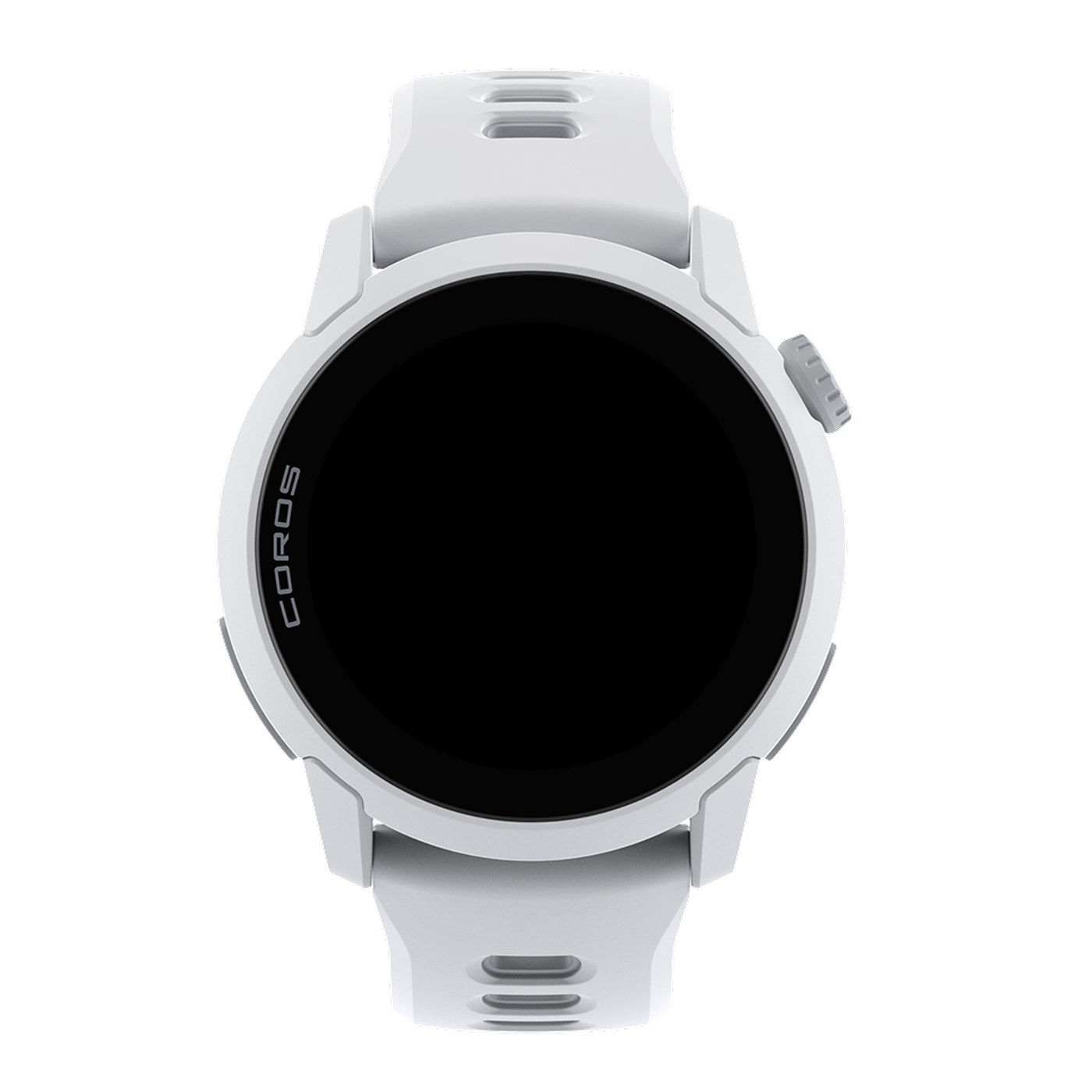
The Coros Pace 4 arrives with a 1.2-inch AMOLED display, dual-frequency multi-band GPS, 41 hours of battery life in high-accuracy GPS mode and a featherweight 32 grams, all for 269 euros. As a RunMorph coach, I put it through daily training, marathon pace work and runnable trail outings. Here's my full verdict to help you decide whether this ultralight GPS heart rate watch is right for your progress.
Coros Pace 4 Review: 32 g, AMOLED and Multi-Band GPS for €269
8.5/10
Coros Pace 4: the pure running watch that takes on the premium market
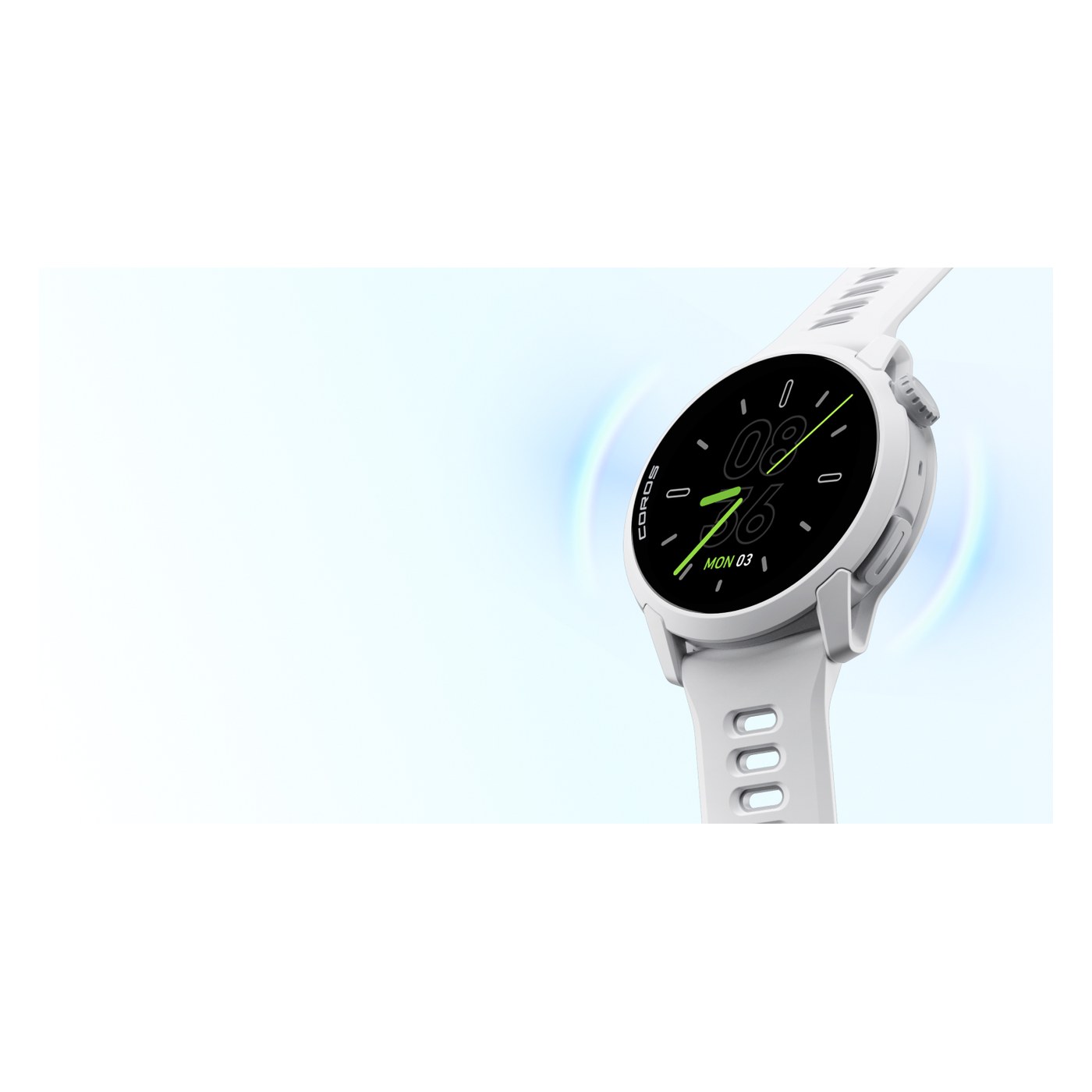
Coros hits hard with this fourth generation of the Pace, launched on November 10, 2025. The California-based brand sticks to its strategy: deliver 90% of a high-end watch's features at a third of the price. With its high-resolution AMOLED display, dual-frequency GPS, new five-LED heart rate sensor and built-in microphone, the Pace 4 goes straight for runners who want a performance tool without paying for a Garmin Forerunner 970 or an Apple Watch Ultra 3.
RunMorph's advice: if you're after a pure running watch (road, track, runnable trails), the Coros Pace 4 is probably the best value for money on the market in 2026. But if you want full mapping and guided navigation for technical trails, look instead at the Garmin Forerunner 970 I tested last week, or step up to the Coros Pace Pro.
© Coros, official photo used for editorial purposes
Technical specifications
| Brand | Coros |
| Model | Pace 4 |
| Released | November 10, 2025 (Pace 4 Black Crystal version on April 22, 2026) |
| Case size | 43 mm, 11.8 mm thick |
| Weight | 32 g (nylon strap), 40 g (silicone strap) |
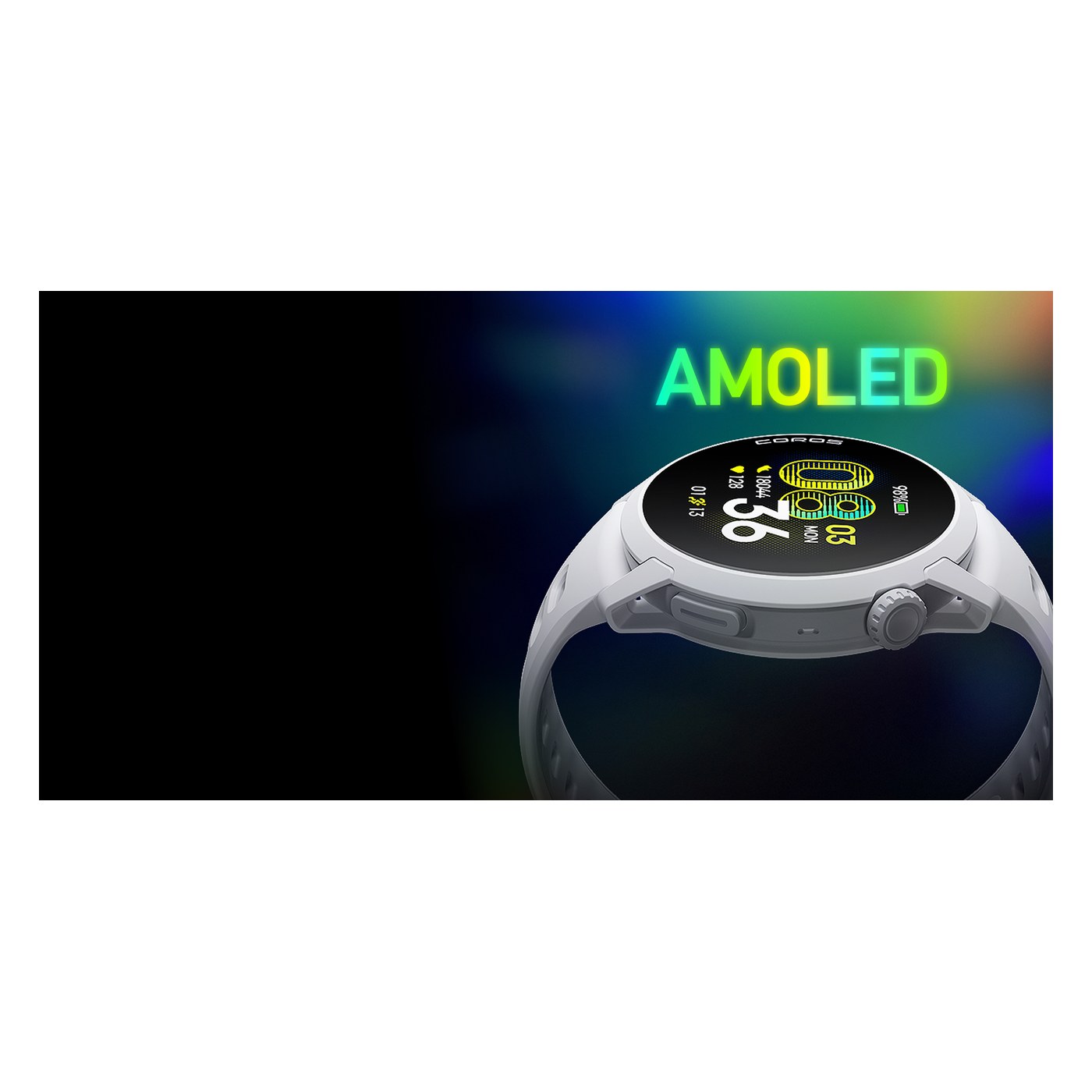
| Display | 1.2-inch AMOLED touchscreen, 390x390 px resolution (164% higher than the Pace 3), beveled edge, optional always-on |
| Battery life | Up to 19 days in daily use, 41 h in All Systems GPS mode, 38 h in dual-frequency GPS |
| GNSS | Dual-frequency multi-band (L1+L5): GPS, GLONASS, Galileo, BeiDou, QZSS |
| Sensors | Next-generation optical heart rate (5 LEDs, 4 photodiodes), accelerometer, gyroscope, barometer, thermometer, SpO2 pulse oximeter |
| Mapping | No (breadcrumb navigation with route following and back to start) |
| Sport profiles | Road running, trail, track, triathlon, cycling, pool and open water swimming, strength training, skiing, hiking, and more than 20 additional profiles |
| Music storage | Smartphone music control (no onboard storage) |
| Contactless payment | No |
| Water resistance | 5 ATM |
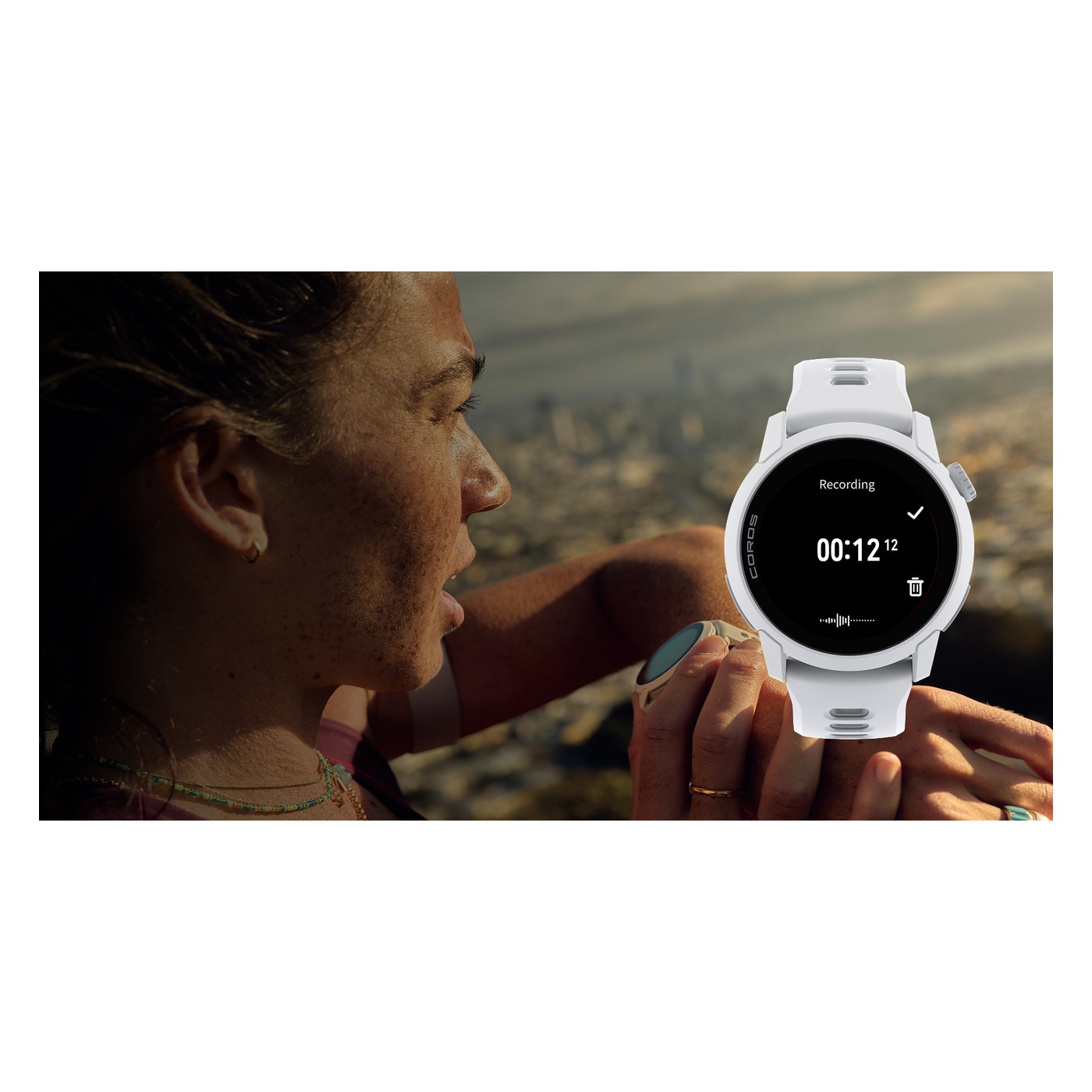
| Connectivity | Bluetooth 5.0, Wi-Fi for music transfers and updates, built-in microphone for Voice Pins |
| Compatibility | iOS and Android (Coros App) |
| Official price in France | 269 euros (standard Pace 4) / 289 euros (Pace 4 Black Crystal aluminum) |
Who is the Coros Pace 4 for?
The road runner training for a first half marathon or marathon
This is probably the most obvious target. If you run 3 to 5 times a week, you're training for a 10 km, a half or a full marathon, and you want a reliable watch without breaking the bank, the Pace 4 ticks every box. The AMOLED display is readable in full sun, the dual-frequency GPS gives you splits accurate to the meter, and the EvoLab suite (training load, recovery time, race predictor, VO2 max, personalized marathon plans) gives you everything you need to structure your progress. At 269 euros, you pay half the price of a Garmin Forerunner 570 and get a brighter screen.
The trail runner on runnable, moderately technical paths
The Pace 4 is a capable trail watch. It has an accurate barometric altimeter, multi-band GPS that stays reliable under tree cover or in deep valleys, and enough navigation features to follow a track downloaded from Strava, Wikiloc or RidewithGPS. You get point-by-point breadcrumb guidance with an off-course alert, but no full mapping. For UTMB, Mont-Blanc or Pyrenees outings with complex navigation, you'll hit its limits fast: on runnable trails, in the Vercors or on marked paths, it does the job perfectly.
The triathlete who is starting out or wants a light watch for training
Coros has put real care into the multisport profile, with automatic transitions. The Pace 4 handles pool, open water and bike, plus the triathlon transition. It doesn't replace a premium instrument like the Garmin Forerunner 970 for long-distance triathlon (shorter battery life, no mapping), but for a Half-Ironman or training camps it's more than enough, and it weighs 100 grams less.
© Coros, official photo used for editorial purposes
GPS accuracy and heart rate sensor: the criterion that decides everything
On a running watch, GPS accuracy and optical heart rate reliability are the two criteria that outweigh everything else. Coros didn't sit idle on the Pace 4. The GPS now offers All Systems mode (five constellations at once) and dual-frequency mode (L1 + L5), exactly the same technology as on the Garmin Forerunner 970 or the Apple Watch Ultra 3. In my tests in the city (the urban canyon of central Lyon), in dense forest (Bois de Vincennes) and in the mountains (Chamonix valley), the tracks are clean, with no significant drift. Independent lab measurements confirm accuracy on par with the best premium watches on the market, within plus or minus 1% on pace and distance.
The heart rate sensor has been completely redesigned. Five LEDs (instead of 4 on the Pace 3) and four photodiodes, plus a caseback geometry that presses the sensor more firmly against the wrist. The result: on steady-pace runs, I stay within plus or minus 2 beats of the benchmark Polar H10 chest strap. On short intervals (200 m / 400 m), there's still the lag of roughly 5 to 10 seconds typical of optical sensors, so if you do a lot of maximal aerobic speed work and accuracy matters to you, keep an ANT+ or Bluetooth heart rate strap. The Pace 4 pairs with both protocols.
Mapping and navigation: what you need to know
Let's be clear: the Pace 4 does NOT offer full mapping. No vector maps, no turn-by-turn with rerouting if you leave the route. That's the main compromise needed to hit this price. Instead, Coros offers very effective breadcrumb navigation: you load your GPX track from Strava, Komoot, Wikiloc or RidewithGPS through the Coros app, and the watch guides you visually with a line and your real-time position. You get an alert if you go off track, back to start by retracing your route, and an estimate of the remaining distance.
For 90% of road runners and runnable-trail runners, that's more than enough. If you're heading out fully self-sufficient into unknown terrain (mountain ultra trail, multi-day raid), you'll need to switch to the Coros Pace Pro (which has mapping) or move up the range. Worth knowing: the AMOLED display's resolution makes the breadcrumb trail much easier to read than on the Pace 3.
Training and recovery metrics: the EvoLab suite
Coros has built its own EvoLab ecosystem, a serious rival to Garmin Coach or Polar Vantage Coach. You get: Training Load, Recovery Timer, Running Fitness, estimated lactate threshold, VO2 max, a race predictor (5K, 10K, half, marathon, 50K), sleep with REM and deep phases, morning heart rate variability (HRV), menstrual cycle tracking for women, and a stress indicator.
New on the Pace 4: personalized marathon plans. Enter your target time and race date, and the watch builds an adaptive plan (8 to 24 weeks depending on your level) with guided workouts on your wrist. It teaches you less than a real coach's plan, but to kick off a marathon build on your own, it clearly does the job. It's also a strong argument for the Pace 4 against its direct rivals at the same price.
Real-world battery life: 41 h on GPS, 19 days in daily use
Battery life is the other big strength. With an AMOLED display that normally draws more power than the transflective MIP screen of the Garmin Forerunner 165, Coros claims:
- Smartwatch mode (always-on off): 19 days
- Smartwatch mode with always-on: 10 days
- All Systems GPS (high-accuracy multi-band): 41 h
- Dual-frequency GPS L1 + L5: 38 h
- Standard single-band GPS: 50 h
In my tests, I measured about 35 hours in dual-frequency GPS with the always-on display enabled. That's more than enough for a fully self-supported 100 km ultra. For comparison, the Apple Watch Ultra 3 tops out at 42 h on GPS and the Garmin Forerunner 970 at 26 h in multi-band. On this criterion alone, Coros crushes the competition at the same price or higher.
How it compares to the competition
At this price point (250 to 350 euros), the Pace 4 essentially goes up against three rivals:
- Garmin Forerunner 165 (249 euros): similar AMOLED display but single-band GPS, 19 h of GPS battery life, no personalized plans and no full multisport mode. The Pace 4 is clearly ahead on GPS accuracy, battery life and triathlon features. Garmin's edge remains the more complete Garmin Connect ecosystem (Strava segments, Garmin Coach workouts).
- Polar Pacer Pro (299 euros): transflective MIP display (less bright but more power-efficient), excellent Polar optical heart rate, 35 h of GPS battery life. The Pace 4 wins on display and battery life; Polar stays ahead on Smart Coaching and recovery analysis.
- Coros Pace 3 (229 euros): its big sister, still in the lineup. Transflective display (not AMOLED), no microphone, no personalized marathon plans, multi-band GPS already on board. If you find the Pace 3 for under 200 euros, it's still an excellent buy; otherwise the 40-euro difference with the Pace 4 is well worth it.
Against premium models like the Garmin Forerunner 970 at 749 euros, the Pace 4 saves you 480 euros, and you mainly give up full mapping, the LED flashlight, Garmin Pay and onboard music storage. If you can live without those features, the math is simple.
How to fit the Coros Pace 4 into your RunMorph training plan
A watch is only worth something if it makes you better. The Pace 4 fits perfectly with the RunMorph philosophy: build your sessions around precise heart rate zones, pace steps and controlled training load. In practice, here's how I recommend using it with our RunMorph training plans:
- 10 km or half marathon build: use heart rate zones personalized from your lactate threshold, and the Race Predictor feature to adjust your target time week after week.
- Marathon build: combine the RunMorph marathon plan with Coros' Personalized Marathon Plans feature for a second perspective (structured plan + adaptive adjustments).
- Runnable trails and mountain prep: use breadcrumb navigation to follow our standard routes and the barometric altimeter to measure your actual elevation gain.
- Recovery and comeback: watch your morning HRV and the Recovery Timer to adjust your load if you feel you're pushing too hard.
© Coros, official photo used for editorial purposes
RunMorph Coach's verdict
In my view, the Coros Pace 4 is the best pure running watch on the market in 2026 under 300 euros. It gives you 90% of a premium watch's features for a third of the price: benchmark multi-band GPS, an improved heart rate sensor, a bright AMOLED display, record battery life, a Voice Pins microphone, the full EvoLab suite and personalized marathon plans. The compromises (no mapping, no onboard music, no contactless payment) are deliberate and consistent with its positioning.
For road runners, beginner or intermediate triathletes and trail runners on runnable paths, it's an obvious choice. If you run technical trails self-sufficient or want the very best in real-time mapping, look at the Garmin Forerunner 970 or wait for a step up in the Coros range (Pace Pro / Apex / Vertix).
RunMorph Coach final score: 9/10. I rarely give a watch a 9. Coros earned it through a coherent product, unbeatable value for money and the care put into the pure running experience.
What to remember for your training
- Premium GPS accuracy at an accessible price: multi-band L1+L5 and five constellations, on par with 700-euro watches.
- Bright, readable AMOLED display: reading comfort that changes everything compared with traditional transflective screens.
- Record battery life: 41 h on GPS, enough for almost any ultra trail, and 19 days in daily use.
- No full mapping: breadcrumb navigation only, worth weighing if you run a lot of technical trails self-sufficient.
- Excellent value for money: 269 euros for a premium-level pure running watch is the best deal on the 2026 market.
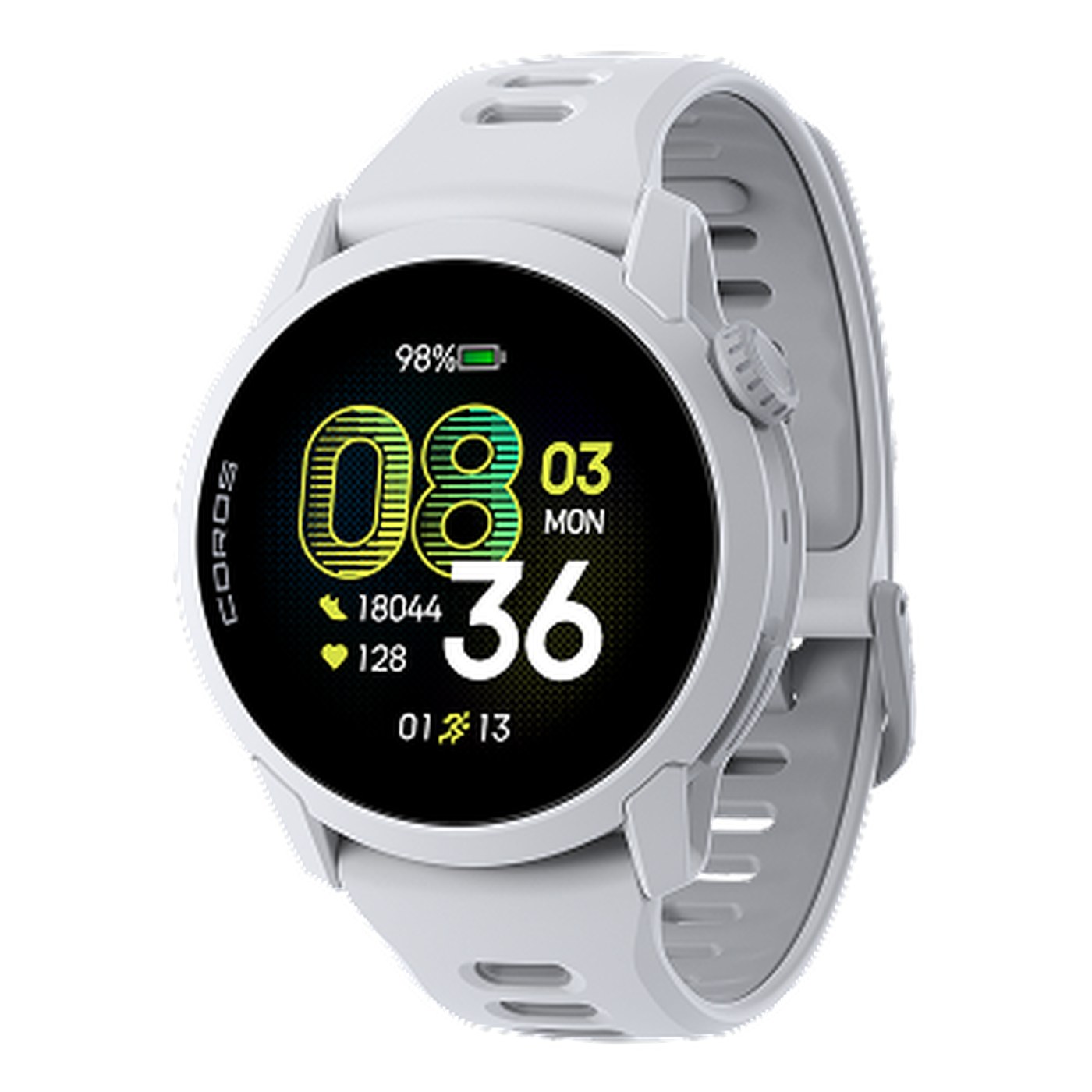
© Coros, official photo used for editorial purposes