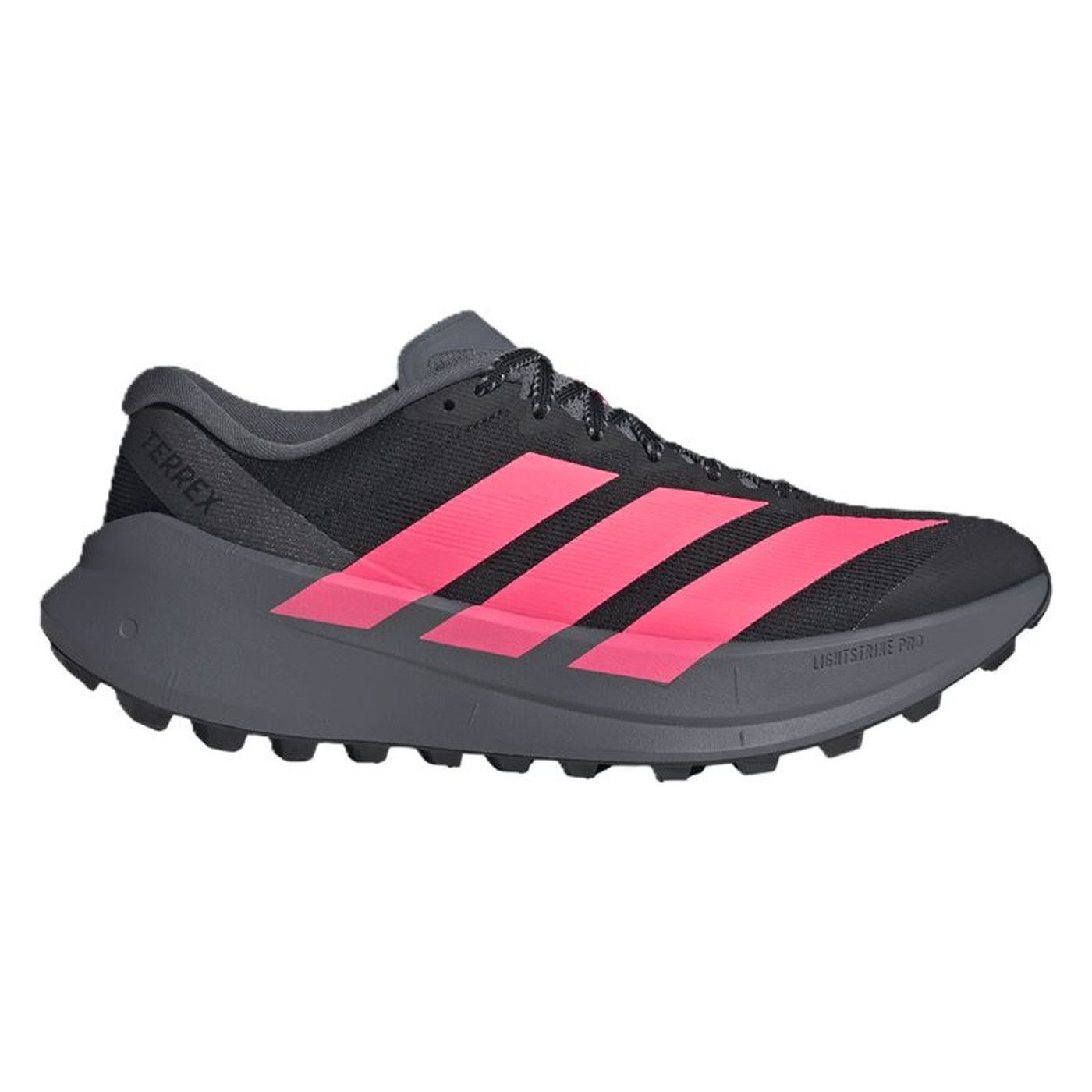
Adidas took the foam from its star daily trainer, the Adizero Evo SL, and put it on a lugged Continental outsole. On paper, 39 mm of heel stack. Under the calipers, a lab finds 31,8. That is not a hidden flaw: it is the key to understanding who this 160 € Terrex Agravic SL is really for.
© Adidas, official photo used for editorial purposes
Adidas Terrex Agravic SL: the Evo SL that went off-road
Adidas built its 2025 road lineup around one simple idea. Put the foam from its racing shoes, Lightstrike Pro, into a training shoe priced under 160 €. The Adizero Evo SL was born from that, and it sold everywhere.
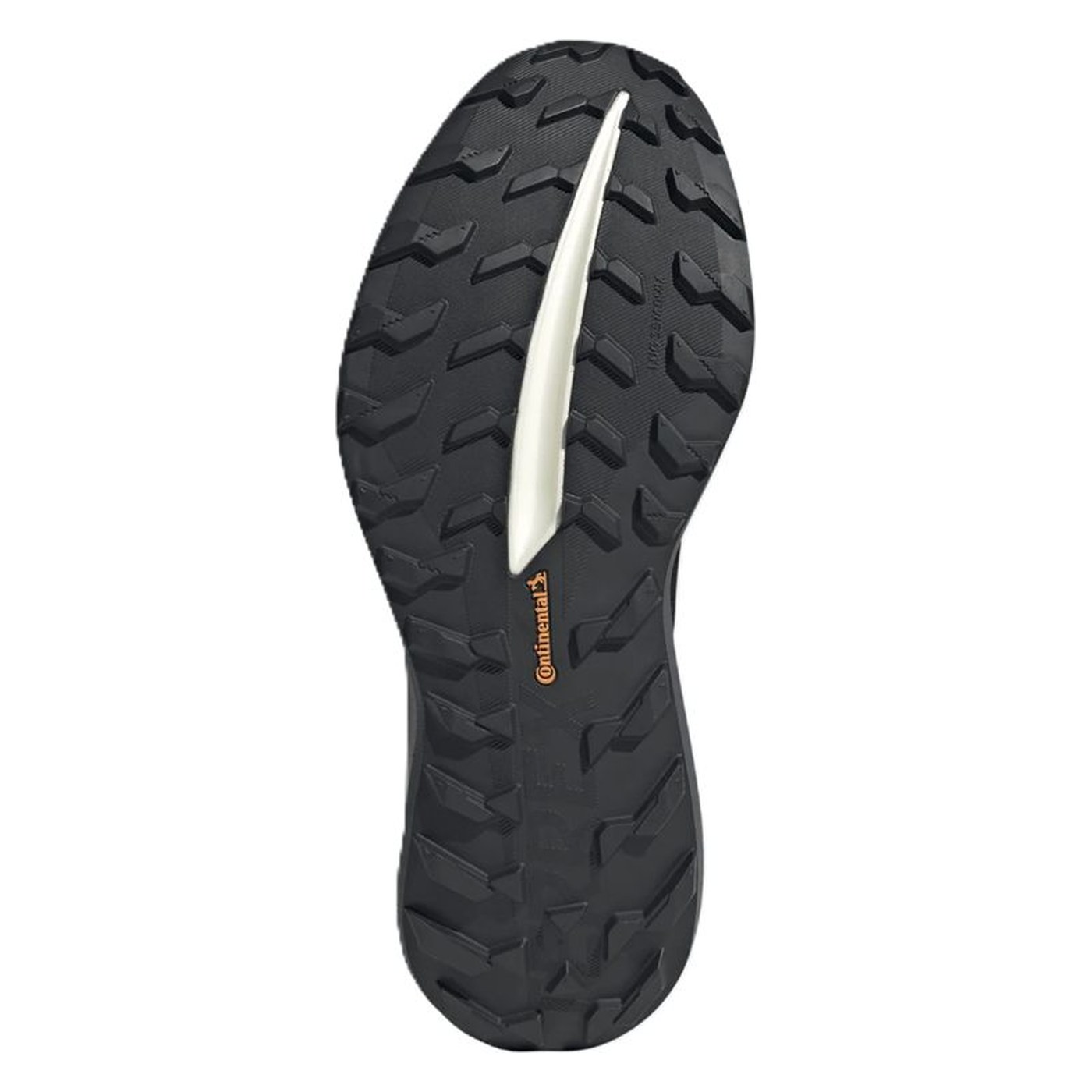
The Agravic SL, released in June 2026, applies the same recipe to trail. Same full-length foam, an upper designed for trails and a Continental outsole with lugs claimed at 3,5 to 4 mm. Five months after launch, there is still little hindsight on long-term wear.
Positioning matters here. The Agravic Speed Ultra 2 is built for racing, the Agravic TT for protection. The SL slots in between: fast training on easy terrain. A lab gives it 93/100 on gravel, 71 for mixed use and only 42 on technical terrain. This whole review comes down to that gap.
RunMorph's advice: if your runs look like forest roads and flowing singletrack, the Agravic SL is one of the fastest pairs around at this price. If you run in the Alps or the Pyrenees, look at the Hoka Speedgoat 7 or the Salomon S/Lab Genesis instead.
Agravic SL: what the brand claims vs what was measured
Adidas claims 39 mm at the heel and 33 mm at the forefoot. The lab measures 7,2 mm less at the heel and 4,6 mm less at the forefoot. Part of the difference comes down to method: brands often measure with the insole in and on a different size. But the gap at the rear goes far beyond what those details can explain.
| Data | Claimed | Measured in the lab |
|---|
| Heel stack | 39 mm | 31,8 mm (average: 33,0 mm) |
| Forefoot stack | 33 mm | 28,4 mm (average: 25,8 mm) |
| Drop | 6 mm | 3,4 mm (average: 7,2 mm) |
| Weight (EU 42) | About 280 g | 281 g |
| Lug depth | 3,5 to 4 mm | 3,0 mm (average: 3,5 mm) |
| Rubber coverage | Full | Full, with a thin central cutout |
Put simply, the Agravic SL is not the max-cushioned shoe the spec sheet suggests. It is a mid-stack shoe at the heel and a thick one up front. That is its real quirk: 28,4 mm under the metatarsals is 2,6 mm more than the trail average.
© Adidas, official photo used for editorial purposes
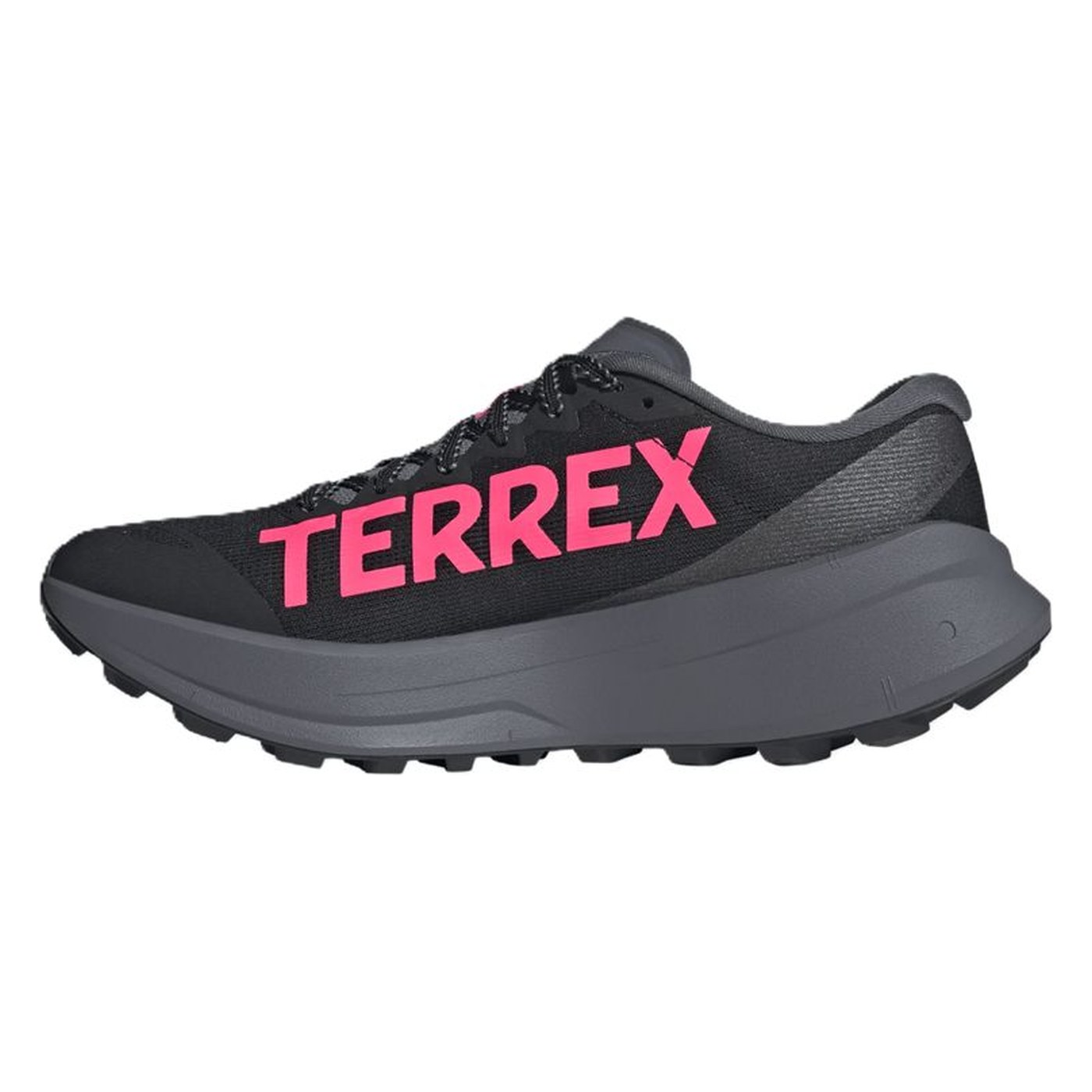
Lightstrike Pro on trail: what does it change underfoot?
Lightstrike Pro is a TPE-E foam, the family of racing foams. On the Agravic SL, Adidas tuned it slightly denser than on the road. The hardness reading confirms it: 38,8 on the Asker C scale, against an average of 38,1. In other words, standard firmness, neither plush nor harsh.
Energy return reaches 68,4 % at the forefoot, against an average of 59,8 %. At the heel, 62,5 %. Those are fast road shoe numbers, rare in trail shoes under 200 €. Shock absorption follows suit: 132 SA at the heel versus an average of 122.
One caveat, and it matters. The lab notes that the full-length Continental outsole dampens some of the bounce. The number is good, the feel less spectacular than on the Evo SL. If you expect the pop of a road shoe, you will be a little disappointed.
Agravic SL fit: wide on the ground, pointy up front
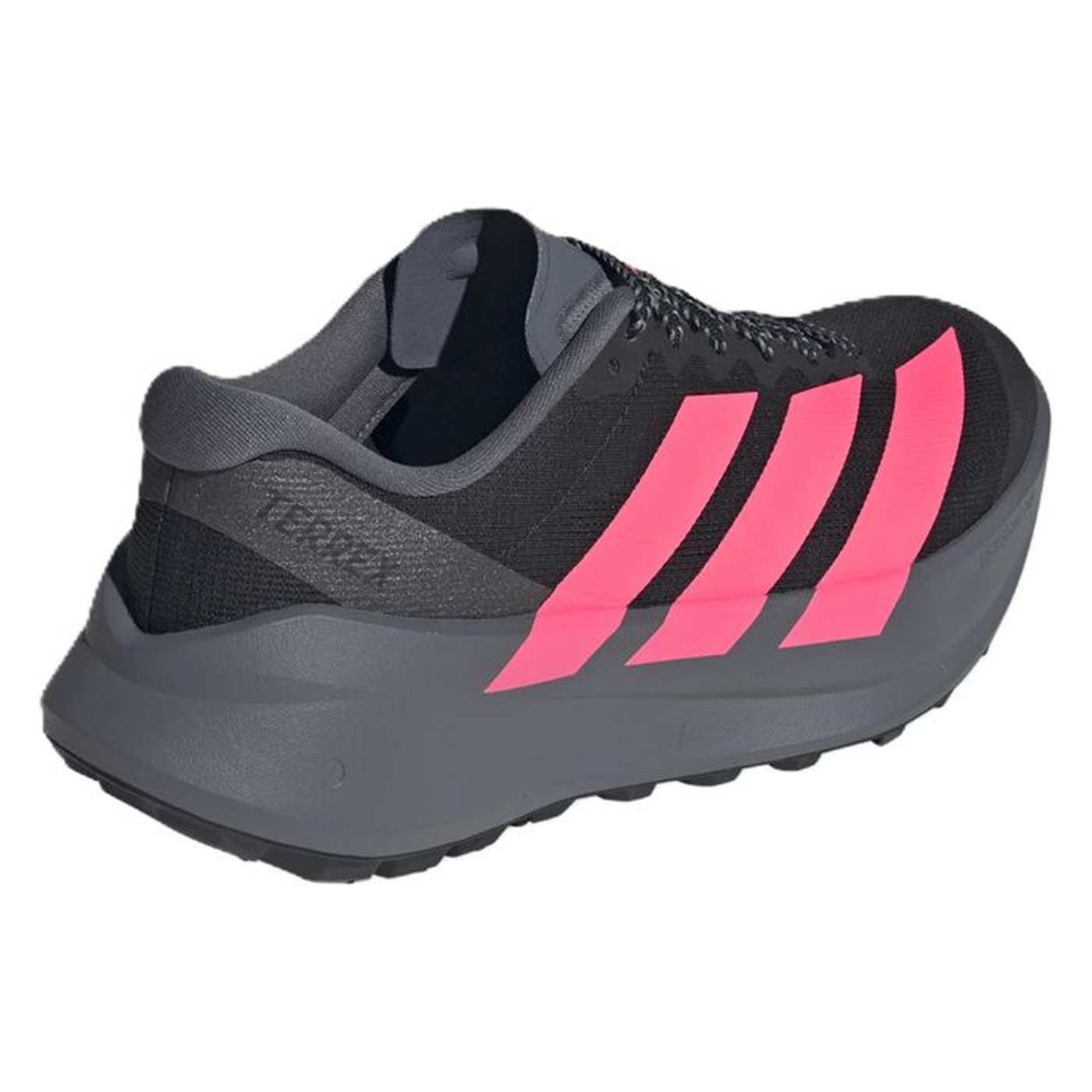
The platform is very wide: 123,0 mm at the forefoot, against an average of 114,3 mm. At the heel, 91,6 mm, close to normal. That base gives you a planted feel on paths. The toe box tells a different story. It measures only 71,9 mm wide at the big toe, against an average of 74,3 mm, with a pointed shape.
Vertical volume is normal: 27,0 mm of height, versus an average of 26,9 mm. Your toes do not rub on top, they lack room on the sides.
Length splits opinions. A German tester recommends going down half a size. Buyers surveyed by the lab find the shoe runs a little large, and the measured internal length (273,1 mm versus 269,3 mm) backs them up. A British tester, on the other hand, finds it true to US sizing. In practice, if you are between two sizes, take the smaller one.
The midfoot is roomy. Journal du Trail confirmed it: a narrow foot floats and has to crank down the lacing, which puts pressure on the instep. The tongue is only 2,1 mm thick versus an average of 6,4 mm, which does not help.
© Adidas, official photo used for editorial purposes
Out on the trail: fast paths, dry singletrack and limits on scree
Four tests form the basis of this review: a full lab teardown, the Journal du Trail test run in the mountains, a German test with scores and a British test. None gives a precise mileage. So the insight on wear comes mostly from lab measurements.
They all agree on one point. On hardpack, forest roads and gravel, the shoe moves fast. The German tester gives it 9/10 for ride feel. Journal du Trail describes balanced cushioning that filters vibrations well. The pronounced rocker helps you roll through effortlessly on the flat.
Grip is the other strength. On wet concrete, the rubber scores 0,89 in the friction test, against an average of 0,69. On dry slabs and rock, Journal du Trail rates it excellent. The German tester finds it secure on stones and damp rock.
Opinions split on two surfaces. In mud, 3,0 mm lugs are not enough: Journal du Trail points it out, and it makes sense. On wet roots and polished rock, the British tester stays cautious. That does not contradict the lab's 0,89, which measures a smooth, flat surface. The rubber sticks, but the lugs lack the depth to bite.
Then there is stability, the real disagreement. The German and British testers find it secure and more stable than the Agravic TT. Journal du Trail describes a foot sliding sideways on off-camber ground and scree. Honestly, both findings hold up. It depends on your foot. The 123 mm platform keeps the shoe stable on the ground. The wide midfoot lets a narrow foot move around inside. With a wide foot, you benefit from the stable base. With a narrow foot, you deal with the float.
RunMorph's advice: before your first technical run, use a lace lock (runner's loop) on the last two eyelets. On a narrow foot, that is what cuts down the sideways sliding reported on off-camber terrain the most.
The paces where the Agravic SL works, and where it falls short
Easy runs and base mileage: it works. Shock absorption of 132 SA at the heel and medium-firm foam make easy runs on paths comfortable.
Long run: it works up to 42 km on easy terrain. Beyond that, the thin upper and the narrow 71,9 mm toe box become the limiting factor as your feet swell.
Marathon pace: this is its sweet spot. The 68,4 % forefoot energy return and the rocker help you pick up the pace on runnable sections.
Threshold and half marathon pace: it holds up, on easy terrain. The British tester finds it lively at tempo. Flex stiffness of 17,0 N, a bit stiffer than the 14,9 N average, keeps the toe-off firm.
Short intervals: it falls short. At 281 g and with a full-length outsole that mutes the bounce, a lighter racing pair like the Speed Ultra 2 will do better on short hill repeats.
A real drop of 3,4 mm: heel strikers will feel it
This is the first major flaw. Adidas claims a 6 mm drop, the lab measures 3,4 mm, when the trail average sits at 7,2 mm. For a midfoot striker, the difference goes unnoticed: the lab estimates you will feel something closer to a 6 mm drop.
For a heel striker, it is a different story. The heel carries only 31,8 mm of foam and the shoe tips forward quickly. The lab writes that these runners will struggle to find their rhythm. If you are coming from a pair with 8 or 10 mm of drop, your calves and Achilles tendon will work harder for the first few weeks. Ease into it on short runs.
© Adidas, official photo used for editorial purposes
Upper and protection: the weak spot on technical terrain
Second major flaw. The upper scores 2/5 for abrasion resistance at the toes, against an average of 3,1. Journal du Trail also questions how well it holds up on aggressive terrain and notes weak protection against rocks, both at the front and on the sides. The TPU band is about 1 cm high.
Opinions differ here too: the German tester considers the upper sturdy. On paths, he is right. On scree, the thin mesh will take hits it was not built to absorb. The trade-off is a positive one: breathability rated 4/5, against an average of 3,3, and an upper that dries fast after a stream crossing.
Agravic SL vs Evo SL and Agravic Speed Ultra 2: choosing within the family
| Criterion | Agravic SL | Adizero Evo SL | Agravic Speed Ultra 2 |
|---|
| Use | Fast trail, easy terrain | Road, fast training | Trail racing, long distances |
| Foam | Lightstrike Pro | Lightstrike Pro | Lightstrike Pro |
| Outsole | Continental, 3 mm lugs | Road rubber | Continental, trail lugs |
| Ride | Controlled, bounce muted by the rubber | More bounce | Snappier, less stable |
| Retail price | 160 € | 150 € | 250 € |
If you run 80 % on pavement with a few paths, stick with the Evo SL. If you are training for a trail race and want maximum bounce, the Speed Ultra 2 goes further, but the lab describes it as noticeably less stable. The Agravic SL is the sensible training pair of the family.
Agravic SL vs Nike ACG Zegama and La Sportiva Prodigio Pro
| Criterion | Agravic SL | Nike ACG Zegama | La Sportiva Prodigio Pro |
|---|
| Lab score | 8,6/10 | 8,9/10 | 8,5/10 |
| Measured weight | 281 g | 306 g | 272 g |
| Shock absorption | High | High | Medium |
| Energy return | High | Medium | High |
| Grip | High | High | High |
| Upper durability at the toe | Low | Very low | Good |
The short version: the Zegama cushions just as well, but weighs 25 g more and returns less energy. The Prodigio Pro offers a sturdier upper and 9 g less, for a higher price. At 160 €, the Agravic SL gives the best balance of bounce and price of the three. For long distances with lots of rocks, the On Cloudultra 3 protects the forefoot better, at the cost of low energy return.
Grip and durability: what does each kilometer cost?
The outsole is the best argument for longevity. The lab abrasion test removes 0,5 mm of rubber, against an average of 0,9 mm. Watch out for one detail: the rubber is only 1,3 mm thick, against an average of 1,9 mm. It wears slowly, but there is not much of it.
The upper is the other limiting factor, with its 2/5 score at the toe. On runnable terrain, a lifespan of 700 to 900 km looks realistic. That is a RunMorph estimate, since no long-term test has been published to date.
At 160 €, that works out to 0,18 to 0,23 € per kilometer. On sale at 117,90 €, it drops to 0,13 to 0,17 €. For comparison, the Speedgoat 7 comes to 0,21 to 0,28 € per kilometer using the same method. On easy terrain, the Agravic SL is cheaper to run in.
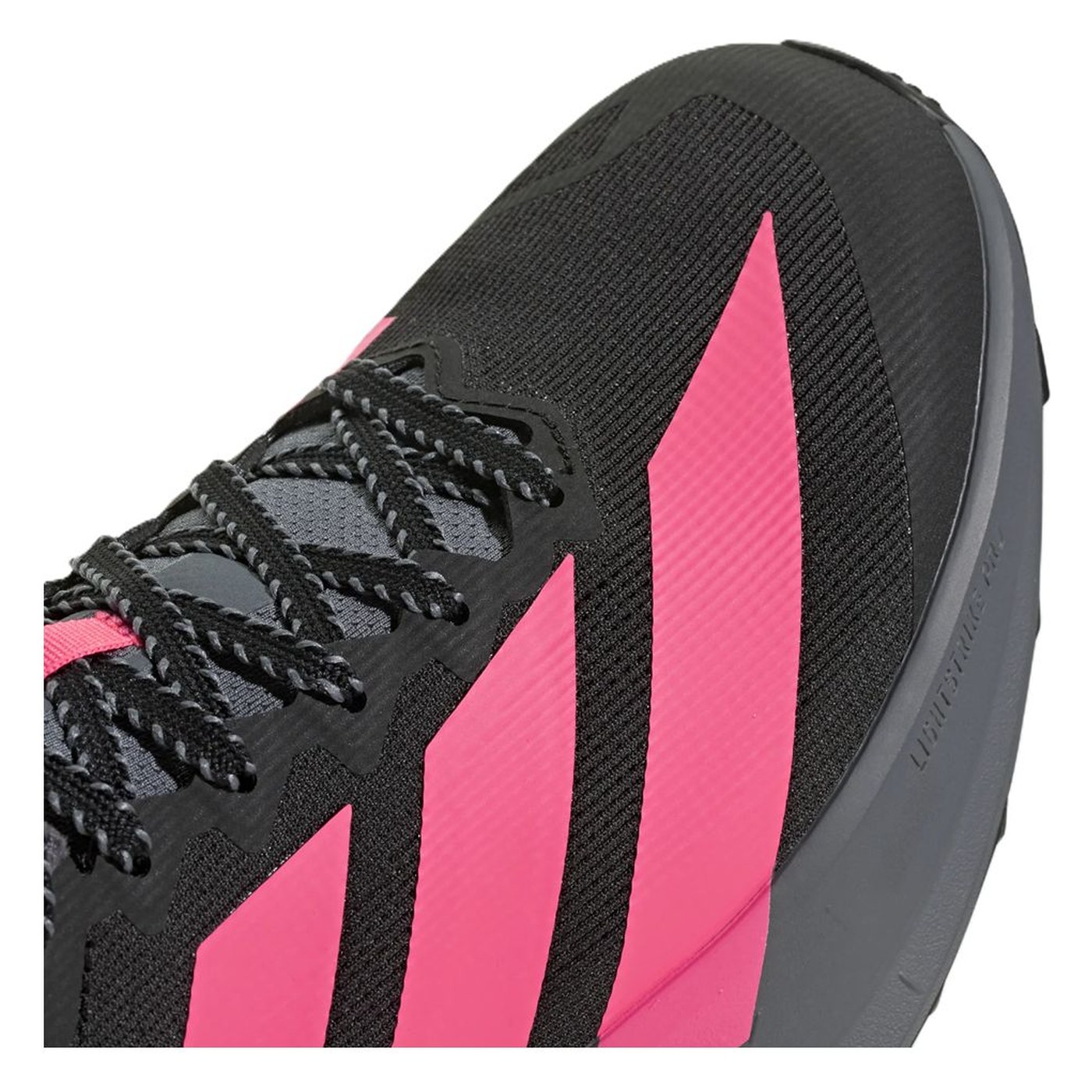
© Adidas, official photo used for editorial purposes
Our take: who is the Agravic SL made for?
The road runner moving to trail
You already run in the Evo SL or a fast road pair, and you are adding trails. The Agravic SL gives you a similar feel, with real trail rubber. It is the smoothest transition on the market at 160 €.
The runnable-trail runner
Your routes are forests, hills and gravel, over 10 to 42 km. The 93/100 score on gravel says it all. For this profile, it is one of the best pairs under 200 €.
The midfoot striker who wants a single pair
With 28,4 mm up front and an outsole that wears slowly, you can use it for easy runs, long runs and faster paces on paths.
Training for a short trail or a trail marathon on runnable terrain?
The Agravic SL is made for piling up kilometers at a steady, fast pace on paths. To know how many fast sessions to fit in each week and when to extend your long runs, follow a RunMorph trail training plan tailored to your goal.
The RunMorph Coach's verdict
The Agravic SL delivers on its promise on one specific terrain: easy, fast trail. On that terrain, nothing under 200 € combines this much energy return, this kind of rubber and a weight of 281 g. The 8,6/10 score reflects the lab's rating. It weighs cushioning, responsiveness and grip first, since those define a fast training shoe. Stability, rated 6, counts for less, because the shoe is not sold for high mountain terrain.
It is not for you if you land on your heels, have narrow feet or mostly run on scree. In that case, the Hoka Speedgoat 7 will protect you better. For pure mountain running, go for the Salomon S/Lab Genesis.
Adidas Terrex Agravic SL FAQ
Does the Agravic SL run large?
Slightly. Its measured internal length is 273,1 mm, against an average of 269,3 mm, and one tester recommends going half a size down.
Can you run an ultra in it?
On easy terrain, the lab considers it capable of long distances. Journal du Trail caps it at 42 km, because of a thin upper rated 2/5 for durability at the toe.
Is it good in mud?
No. Its lugs measure 3,0 mm, below the 3,5 mm average. It grips very well on dry ground and rock, not in deep mud.
How is it different from the Adizero Evo SL?
Same foam, but Continental rubber with 3 mm lugs and a 123 mm wide platform at the forefoot. The bounce is more contained than on the road version.